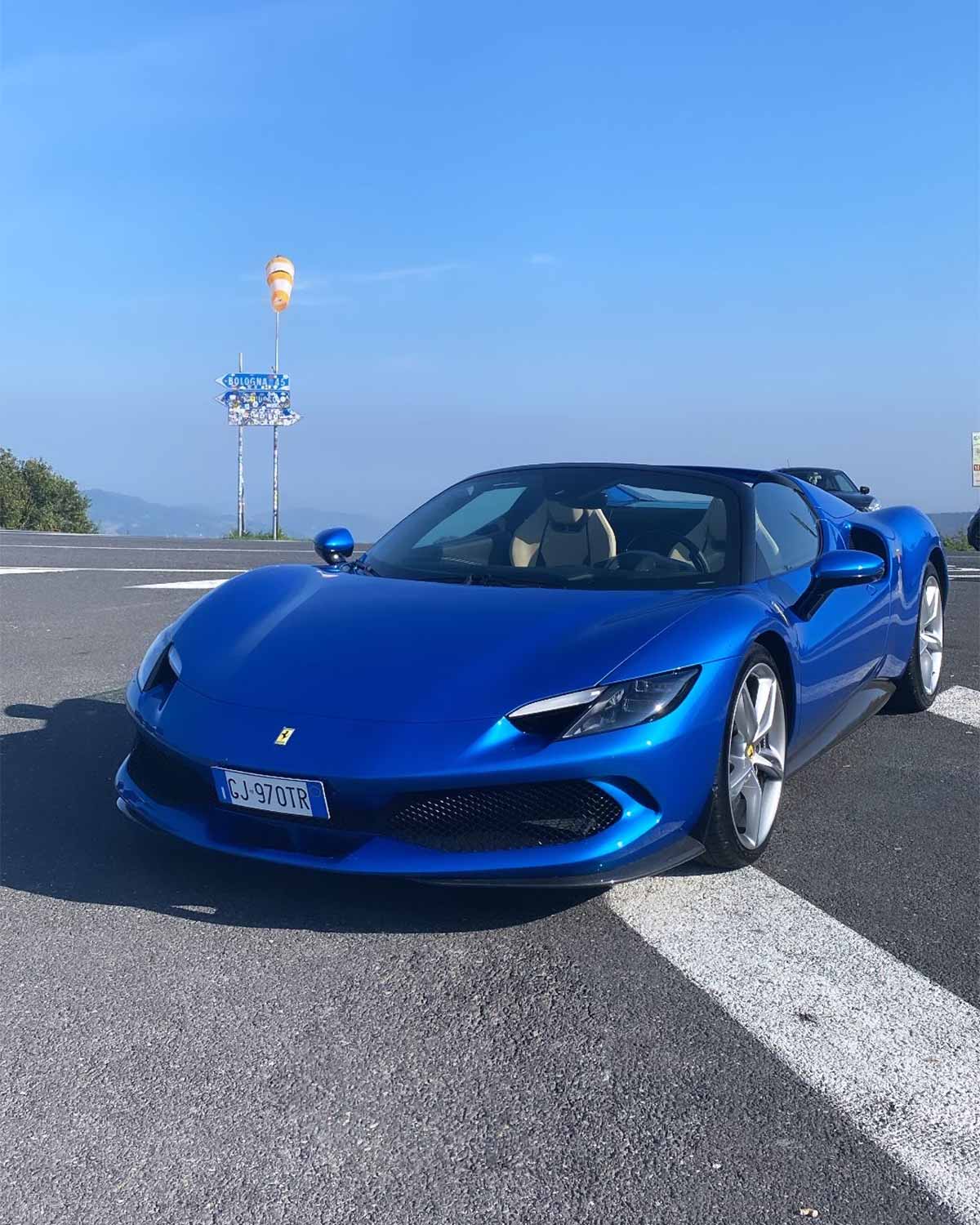
It was a cool morning at Fiorano Modenese. The sun peeked out from the horizon, bathing the six parked Ferrari 296 GTS cars in a warm, gentle glow. The brief was simple: drive to the beachside town of Forte dei Marmi via the Futa Pass, a long road that weaves and curves its way through the Tuscan-Emilian Apennine Mountain range. We had four hours to tackle the 300-km journey, which might be a challenge for other cars. A Ferrari is not like any other car.
The first third of the journey was uneventful. Unlike South-east Asia, Italian roads have minimal traffic lights. Intersections are usually roundabouts that split into multiple directions. Traffic, too, was sparse and the 296 GTS gobbled up the gravel easily.
Then, I hit the Futa Pass.
The first several corners saw me easing the 296 GTS into the bends, feathering the accelerator and getting used to the brakes’ responsiveness. I became bolder once I realised how planted the car was even through a tight corner at 100kph.
Soon, I was flying through the Futa Pass, a huge grin on my face. I never felt like I was losing control of the car even though some portions of the road had loose gravel and small potholes. The shorter wheelbase helped with the 296 GTS’s agility and the brake-by-wire system was predictable and tuned perfectly. The harder you press, the progressively stronger the braking force becomes, which makes cornering a joy.
A Ferrari owner once confided that he found many supercars undriveable at low revs. They were just too uncomfortable. Ferrari cars, however, have impeccable engineering. They are fine for city driving but can buck like a wild horse when you push it far enough. The 296 GTS is a perfect specimen for this analogy.
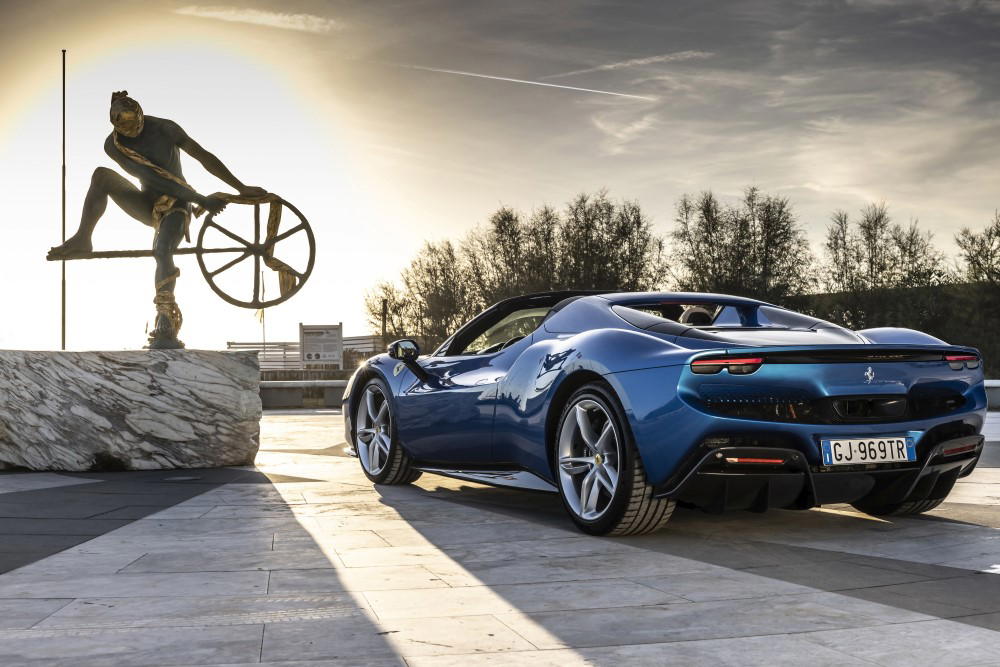
Soon enough, I started descending the Futa Pass to tackle the final third of the journey — long, uninspiring stretches of highway. Fortunately, traffic wasn’t heavy, so I could let the 296 GTS gallop freely and use all 654 horses on tap. I cannot confirm or deny if I committed several speeding violations. In my defence, I cannot read Italian road signs. The sonorous grunt of the engine — a 2.9-litre twin-turbo V6 — made many drivers give way in advance and I saw several waving at me as I zoomed past them. In Italy, Ferrari is a religion.
I reached the destination with time to spare, even with a 30-minute pit stop along the way to take photos and videos and use the washroom, and a temporary detour after making a wrong turn and ending up in a bus park.
If you’ve ever driven for four hours straight, you’ll understand how tiring it can be. I was knackered and fatigued, but it was an incredibly fun drive. Ferrari has knocked it out of the park with the 296 GTS.