
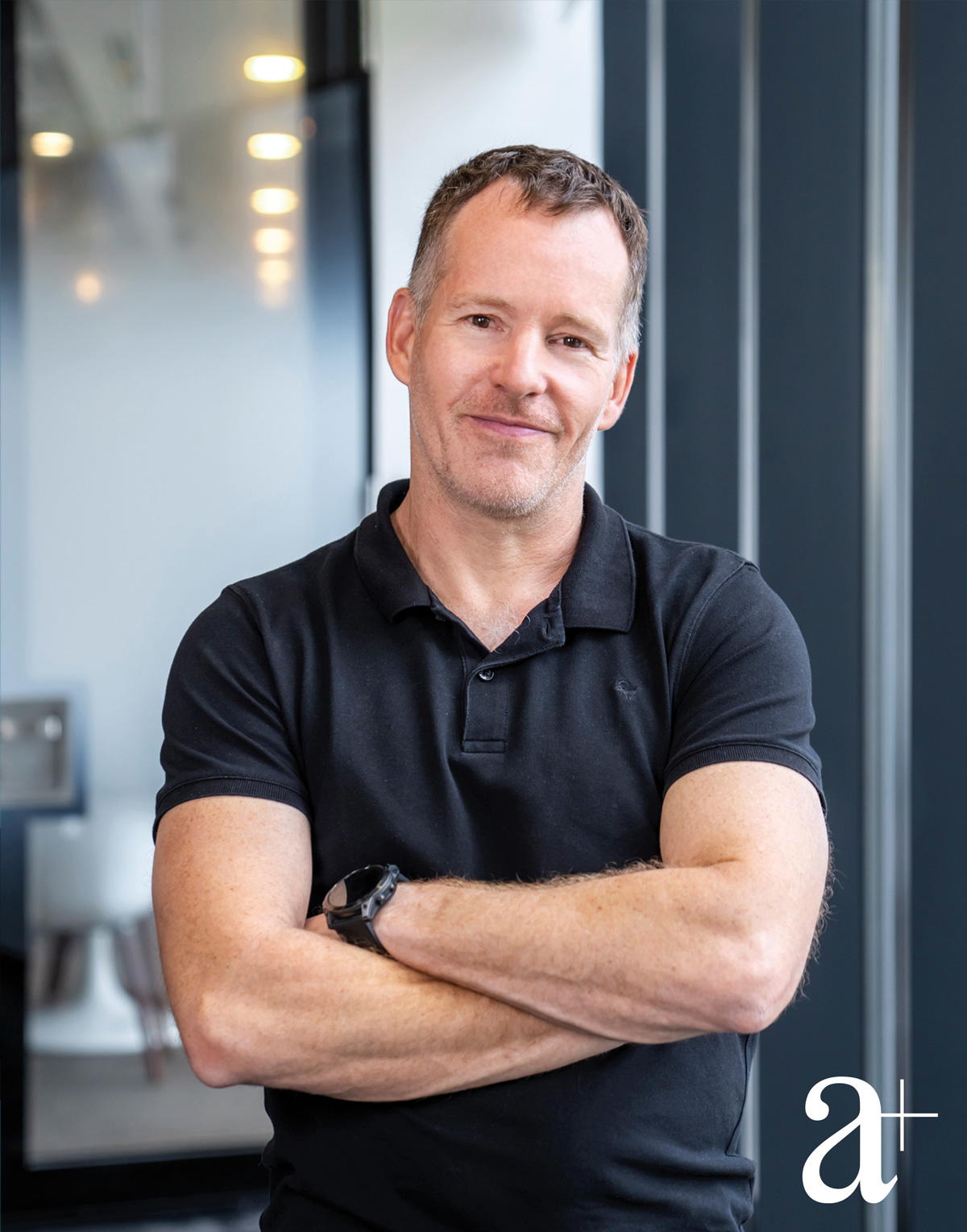
It is crucial that an Al-Qaeda hostage avoids hyperbole when trying to be funny. “Exaggeration is often carried out for comedic effect, right? But when I said, ‘Jeez, it’s raining cats and dogs’, my captors looked up and went, ‘What? There are no cats and dogs. You’re lying’,” Stephen McGown recounts.
This made him learn to never underplay or overplay things while in captivity. Mastering the art of saying things exactly as they are was critical to augmenting his odds of survival.
McGown was abducted by Al-Qaeda terrorists in 2011. Following a stint as an investment banker in London, he’d decided to move back to his hometown of Johannesburg and took the opportunity to embark on a cross-continental motorcycle trip with some acquaintances. The group was lounging on a porch in Timbuktu, Mali when ambushed by young men wielding AK-47 assault rifles.
McGown’s initial reaction was confusion. “There were problems in the east of Mali, but they were about 500km away. To be kidnapped for something I have no opinion on was very peculiar. I wasn’t there to be a hero. I was there because I enjoyed exploring Africa, riding motorbikes, and being outdoors,” he recounts.
It however became clear that the extremists were unappeasable when one man in his group was quickly gunned down. He and his two remaining companions were ordered to leave their belongings behind and board the waiting vehicles, which departed for the Sahara Desert. The arid region is a hideout haven for terrorists no thanks to negligible governance.
While jouncing along the dirt roads, McGown noticed something in his trouser pocket. The citizen of both South Africa and the UK was petrified to learn it was his British passport. “I thought I’d left everything on the patio. I’d seen videos of guys from the UK being executed and thought, ‘This is the end of me’. There was another car behind mine, so I couldn’t throw it out.”
The travel document eventually fell into the hands of his captors, but he’d live to see another day. In fact, at the end of five years and eight months, he was allowed to walk free and is to date the longest-held, surviving Al-Qaeda hostage.
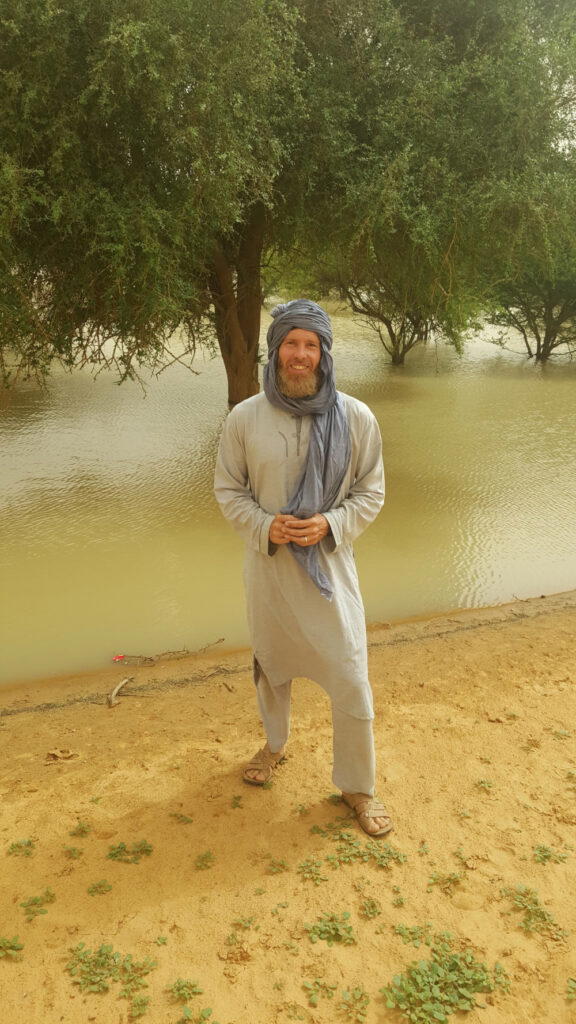
McGown and his two fellow captives were never beaten. “We were prisoners of war, not slaves, the 49-year-old explains.
Still, they were subjected to brutal death threats and mind games. “There were times I thought I was going to die, usually when we were handcuffed, blindfolded, and being screamed at. We may not have understood the language, but we could hear guns being loaded as we were being pushed around.”
To evade arrest, his captors ensured their captives were always on the move, or as McGown puts it, “dragged all over the Sahara”. Information given to the captives was kept scarce, so he never knew what was happening or where they were going. “We didn’t need to know anything except what they wanted us to know,” he says.
In the rare instances the hostages were given details, it was always about good things because unhappy prisoners make volatile prisoners, McGown points out.
The three men were occasionally made to appear in proof-of-life videos, a process McGown found unnerving because he only had one shot at sending a one-minute message each time. There was no such thing as retakes. If he failed to get enough information out to his family, the next chance might only arise up to 15 months later, he says.
The video process often enthused his captors because they didn’t grasp the bigger picture, he avers. “They were kids, so they’d get excited. They didn’t understand what the war was about,” he adds solemnly. The youngest terrorist he encountered was just eight years old.
Life as an Al-Qaeda hostage was as dull as it was dreadful. Because the three captives weren’t treated as slaves, they weren’t put to work, but that meant they spent a lot of their time twiddling thumbs. To alleviate boredom, they would seek out tasks. For instance, while their captors initially built them their huts every time they set up base at a new camp site, they began volunteering to do it themselves even if under strict instruction. “They would tell us exactly where to put everything. ‘Can it be here?’ ‘No, it has to be right there’,” McGown relays. “Of course, this was for strategic reasons. We had to hide from surveillance planes and people coming over the sand dunes.”
The captives also religiously scavenged their captors’ trash. Plastic bags were used to shield themselves from the desert’s thundery showers. Empty honey squeeze bottles—the Al-Qaeda guys, McGown says, were big fans of the sweet liquid—were used to collect water to wash their faces and hands. Blankets were made by sewing rice sacks together.
If something was useful, it didn’t matter if it was sullied. “Whenever they slaughtered an animal, they’d hang it from a tree with a rope, and two weeks later, when we’d change camps, us hostages would retrieve the bloodied rope. We needed it to build the huts. We’d strip the rope to make a few more pieces, then tie them all together.”
It was during this ordeal that McGown also learnt that anything can be used as a weapon. Had his captors felt so inclined, they could have killed him by running over him with a car or smashing his head in with a log, he points out. Dangerous instruments weren’t necessarily required. “You know how metal knives and forks are banned on aeroplanes? It’s a load of crap because you can bludgeon someone to death with a teacup,” he illustrates. “There are a million ways to die, and you become very aware of this when you’re in a vulnerable position.”
Interestingly, one of the things that greatly perturbed him during his time in captivity was an acrimonious relationship with a fellow captive. It got to a point where he preferred being around his captors than the fellow hostage. “I’ve always found my greatest happiness in people. I love to laugh and be silly, and friends back home were joking that I would find friends in Al-Qaeda. So, when they eventually learnt that it was the two of us who didn’t get along, they were like, ‘What the hell?’” he lets on.
“You expect captors to be a bunch of terrorists, right? But you don’t expect certain things from a person who’s supposed to be on your side.”
Good thing, then, that they weren’t destined to spend the rest of their lives around each other. Over time, the militants made the call to free the three men and staggered their releases. McGown was the last to be let go, and after five years and eight months, was driven out of the Sahara and into a city in Mali.
It was an “anticlimactic event,” he jests, for he’d imagined leaving in a helicopter. “But unless every Al-Qaeda man on the ground had been informed I’d be leaving in a helicopter, I’d have been shot out of the sky, so there was some risk there as well,” he says with a guffaw.
Imaginably, adapting to life in the free world was a long-drawn process. To help himself make sense of things, he turned to therapy, but found it unproductive. “The therapist just wasn’t equipped to deal with my issues. I saw him three times and did all the talking for an hour each time. I’d think to myself, ‘Are you going to tell me what I should do now?’ and he’d just look blankly at me. And then I’d say, ‘Right, see you next week’”.
“After the third time, I was like, ‘Yeah, this isn’t helping me’. Then it occurred to me that a lot of my rehabilitation, specifically me processing my situation, had already been done in the desert.”
McGown has several takeaways from his harrowing ordeal. A big one: that we are enough even with our imperfections and inadequacies. It doesn’t matter if we don’t have the skills needed for a particular situation—we can pick them up as we go. As long as our heads are in the right place, he asserts, we can do anything. This belief was what accelerated his reintegration into this part of the world.
“Of course, there were challenges when I first came back. It didn’t help that I didn’t understand half the conversations going on around me. But I knew that whatever happens, I’m in control.”
Stephen McGown on recultivating resilience in civilisation
On top of engaging in speaking engagements, McGown now assists governments, secret services, and people who have been held hostage or are currently being held captive. His goal is to launch a programme focused on mental health and its broader function: survival. “Being kidnapped made me depressed. I felt lost. So, I created my own programme in the desert because I realised that I had some serious issues that, if unresolved, would get me killed,” he explains. “I had to get myself together to stay alive in the desert, so I dreamt up the programme. When I walked out of there after six years, my mind was clear, and I want to start helping others through mental health workshops.”
He has no plans to return to Mali, not for a long time anyway. If anything, he finds the risk appetite of today’s travellers unthinkable. “People do crazy trips in Africa now. It’s crazy because now it’s publicly known that Al-Qaeda’s presence in Mali is massive,” he says. “There are people running through the Sahara and their friends are going, ‘What an incredible guy.’ Yes, it’s really incredible until next week, when he has a gun to his head and his wife, parents, friends, and the government are inconvenienced.”
For all that he has been put through, McGown reckons life is best lived when we remember that the world doesn’t revolve around us. “When things go wrong, it impacts everybody else, too. I still have an adventurous spirit and still want to have fun. Life is about living and enjoying yourself, but we must not be selfish and do dumb things.”