
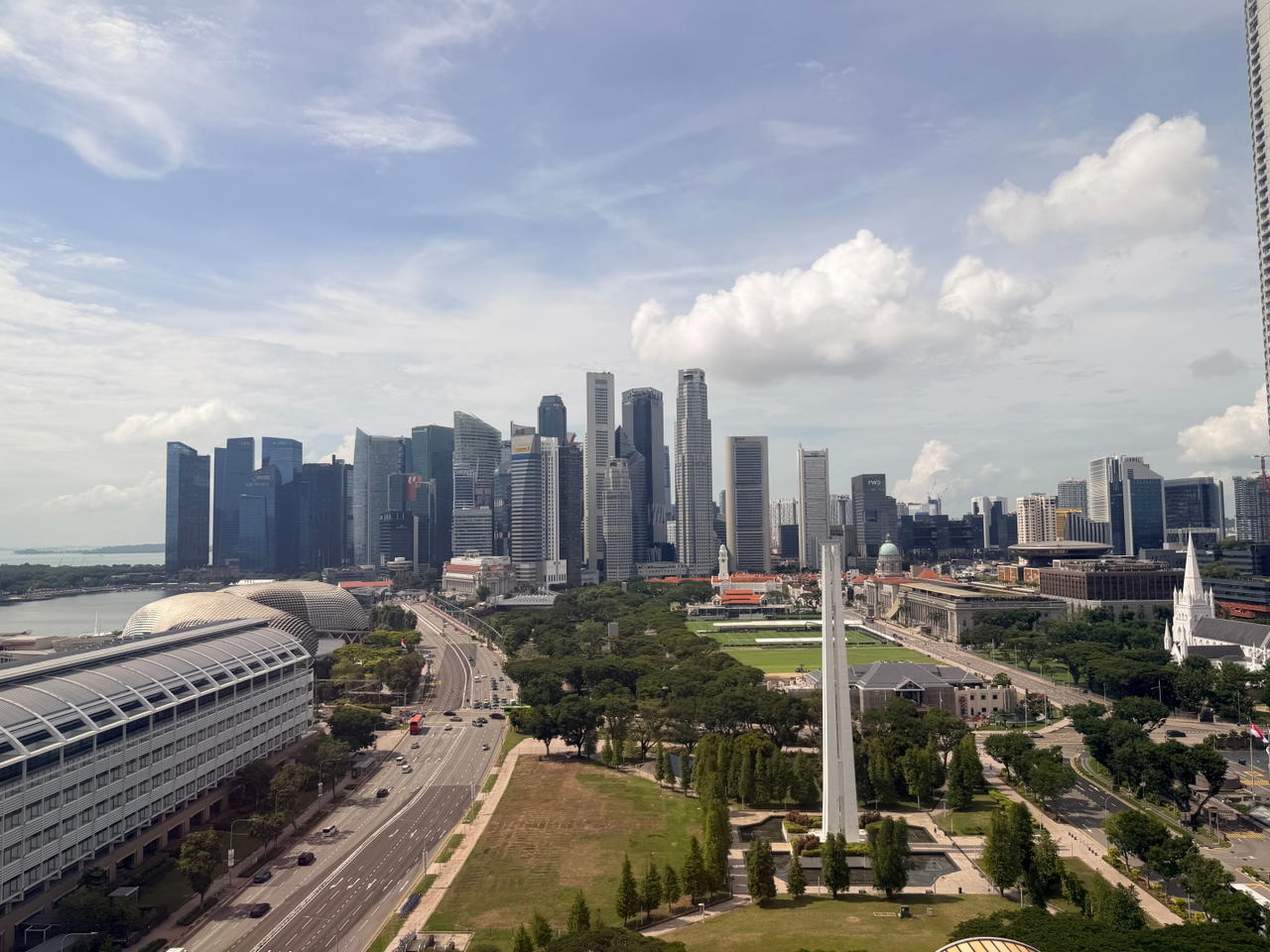
It is 2pm on a weekday. In a CBD office tower, the air-conditioning hums along at 23 deg C. Twenty storeys below, a delivery rider waits at a traffic light, insulated bag on his back, the road throwing heat back up at him.
As climate change brings more very hot days and warmer nights, this heat is shifting from an inconvenience we can cool our way out of to something that is changing how we live. It could push outdoor work into earlier or later shifts, turn a 10-minute walk to the MRT into more Grab rides, and move children’s play and exercise indoors.
Against this backdrop, Singapore has designated 2026 as the Year of Climate Adaptation, with the National Adaptation Plan (NAP) due in 2027. It is the first time that the country’s coping mechanisms for heat, floods, rising seas, and water and food security will be part of one long-term, whole-of-government strategy that will be constantly updated as science advances.
A new Heat Resilience Policy Office has already brought together the Ministries of National Development, Health, Manpower, and Social and Family Development. In addition, the public is being consulted through National Adaptation Conversations this year.
“Designating 2026 as Singapore’s Year of Climate Adaptation is a strong signal that we are rising to the climate challenge as a society,” says Dr Samuel Chng, Research Assistant Professor at the Lee Kuan Yew Centre for Innovative Cities, Singapore University of Technology and Design, where he heads the Urban Psychology Lab. “Its significance will depend on whether that attention translates into lasting changes in how we design places, organise work, and support vulnerable residents.”
WHO GETS TO ESCAPE THE HEAT?
An office worker may avoid the hottest hours, while a cleaner or delivery rider has fewer options. A household may own an air conditioner yet struggle to afford to run it. As Dr Chng adds, “An advisory has limited value if people cannot follow it without losing income or access to essential services.”
Employers of construction workers could schedule strenuous outdoor tasks during cooler hours, offer paid cooling breaks, and provide shaded, ventilated rest areas close to worksites. Staffing, deadlines, and output targets should accommodate those breaks, so workers are not made to compensate by speeding up later.
Supervisors should also have clear authority to pause or adjust work when conditions become unsafe, including when Pollutant Standards Index (PSI) readings are deemed unhealthy or unsafe by the National Environment Agency (NEA).
Communication with the public must be just as practical. According to Dr Chng, heat alerts should be paired with specific instructions subject to the setting such as adjusting outdoor work or modifying activities at schools. Through neighbourhood notices, community networks, and digital channels, it should also be easy to find details about nearby cooling spaces, including their hours of operation and access arrangements.
SHOULD KIDS STAY INDOORS?
Children should not have to give up outdoor play simply because temperatures are rising. Schools and childcare providers can adapt activities to reduce heat exposure while preserving opportunities for children to stay active.
“Schools could schedule outdoor play and PE sessions during cooler parts of the day where possible, provide more shade over play areas, and ensure drinking water and sheltered rest spaces are nearby,” Dr Chng points out. During particularly hot days, activities could be shortened, breaks added, or sessions moved to suitable indoor spaces.
Dr Yak Sin Lin, a family physician at Raffles Medical Group, adds that parents, teachers, and childcare providers can refer to Wet Bulb Globe Temperature (WBGT) readings on the myENV app to assess heat stress risks and determine whether outdoor activities should be adjusted based on conditions and the intensity of an activity.
Child-friendly businesses running outdoor programmes also have a role to play. They should provide shaded rest areas and drinking water, plan activities to accommodate heat conditions, and establish clear thresholds for shortening or moving activities indoors.
The uncomfortable truth is that heat does not fall equally. “Heat is already revealing differences in how much control people have over their daily lives.”
SHADE AS A NEW CURRENCY
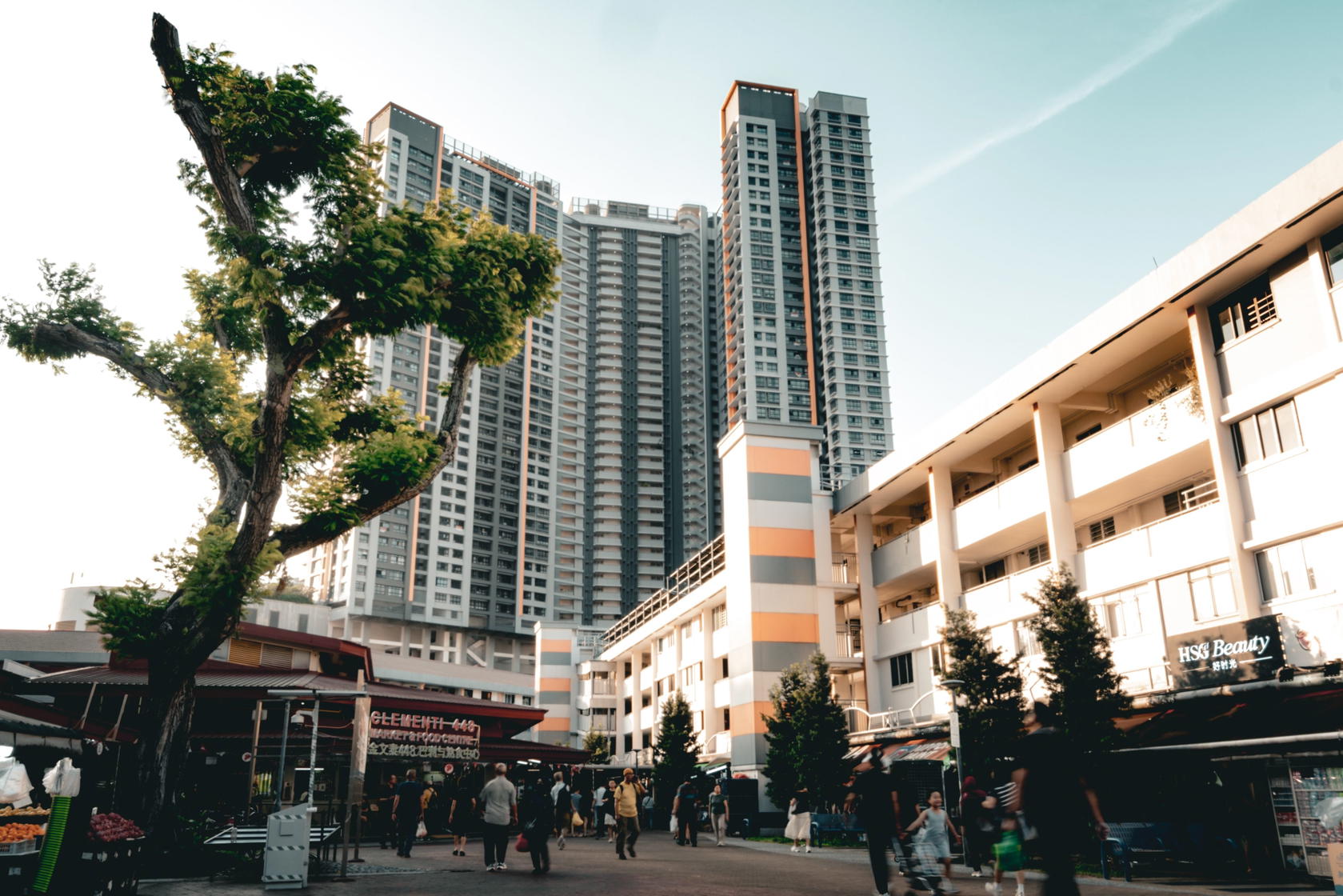
If heat shapes behaviour, it also shapes neighbourhoods. Getting to the MRT under mature trees feels very different from walking along an exposed road. If shade becomes premium, comfort could follow suit. The goal must be shade for all—in every estate.
“Urban greening should support this wider approach through connected shade along everyday routes to schools, markets, and public transport. Protecting mature trees and coordinating planting with airflow and sheltered walkways can help keep outdoor life accessible.”
In practice, that means a shaded walk to the bus stop or MRT, a playground below a leafy canopy, or a market street that catches the breeze. As long as daily routes remain comfortable, people keep walking, lingering, playing, and chatting with neighbours rather than retreating to air-conditioned rooms.
Architect Zhenry Goy of Goy Architects is more hopeful. “I’m still optimistic that we can find alternative solutions to design measures that don’t involve us living in an air-conditioned box 24-7,” she says.
As she points out, many answers already exist in the region’s vernacular architecture: large roofs with shaded verandahs or patios that buffer the indoors from the outdoors, cross-ventilation, placing buildings so they catch the wind, and creating the stack effects that allow warm air to escape.
Dr Chng also prioritises reducing demand. “Buildings are another part of this challenge. Their resilience depends on their design, maintenance, and how well they perform when cooling is disrupted,” he notes.
Cooling can fail through a power outage, a broken chiller, a grid strain during a heatwave, or when a household switches off the air-con to save money. Poorly designed buildings quickly become heat traps. He suggests reducing the amount of heat entering buildings through shading and appropriate roof and facade designs, as well as natural ventilation when possible.
A desiccant dehumidification system and district cooling also deserve consideration, he continues, judging them by their actual energy consumption, affordability, and reliability. “District cooling can make air- conditioning more efficient, but we also need to reduce the amount of cooling buildings require.”
Cutting that demand, as both Dr Chng and Goy highlight, starts with stopping heat getting in with deep overhangs, external sunshades, reflective or planted roofs, insulated walls, and heat-blocking glass, along with natural ventilation. Indoors, ceiling fans allow thermostats to be set a degree or two higher without sacrificing comfort.
MEASURING WHAT MATTERS
Dr Chng hopes the NAP will contribute further improvements in homes and public spaces, effective workplace protections, and practical arrangements for schools and community organisations during hotter periods. April and May are often the hottest months, when the NEA’s advisory warns of high heat stress about half the time, mostly between 11am and 3pm.
“Behavioural adaptation requires collective support,” he says. “Community organisations can coordinate check-ins and provide accessible cooling spaces. These could be brief phone calls or visits by volunteers or neighbours, with residents’ consent, during warmer periods.”
Priority could be given to older residents living alone or people with limited mobility. Check-ins could indicate whether their home is very uncomfortable, whether they can access a cooler space, and whether they need practical assistance. Volunteers should have clear guidance on when to refer concerns to care providers or emergency services.
The heat is not the only stress on the horizon. “For droughts and regional fires, preparedness also requires water contingency planning, regional cooperation, and arrangements for maintaining essential activities during haze,” Dr Chng adds.
Other risks are also compounded by the heat. Hotter, drier spells speed up evaporation from reservoirs just as demand for water rises, drying out peatlands in the region, making fires more likely and spreading haze to other countries. Haze drives people to stay indoors with windows closed, relying more on air-conditioning for comfort.
In his view, the yardstick should be human, not just concrete: whether people can sleep comfortably, work safely and remain active outdoors.
“Ultimately, the proof of Singapore’s success in climate adaptation would be in whether people can continue participating in everyday life as temperatures rise, and whether that ability remains within everyone’s reach,” he says.
Dr Chng continues: “Success would mean an older resident can reach the market along a shaded route with places to rest; a child can continue outdoor play with suitable timing and shade; and an outdoor worker can take cooling breaks without losing pay or facing unrealistic targets.
“At home, residents should be able to find relief without unaffordable energy bills. We should assess whether these improvements reach the people most exposed to heat, alongside citywide measures such as greenery and cooling efficiency.”