We lament at times that Singapore lacks the sort of artistic culture and upbringing that countries such as the United Kingdom, France or even Japan, have become known for. But what we often fail to take into account is that Singapore is relatively young as a nation. The formative years of our independence were focused on building up infrastructure for sectors that would boost economic independence; the arts were unfortunately not one of them.
That’s not to say there wasn’t a creative scene in Singapore back in the day. Cathay-Keris Films — the now-defunct production studio of today’s Cathay Organisation — was the epicentre of the Malay film industry in the region, producing a spate of award-winning films from the 1950s to the early 1970s.
As for fashion, written accounts of Singapore’s fashion history date back to colonial times. It was in 1879 that Isabella Bird, a British explorer and travel writer, first set foot in Singapore. Bird details what she witnessed on the streets in her 1883 book The Golden Chersonese And The Way Thither — from the “Malays in red sarongs” to the “Sikhs in pure white Madras muslin”, to the “Chinamen of all classes, from the coolie in his blue or brown cotton, to the wealthy merchant in his frothy silk crepe and rich brocade”.
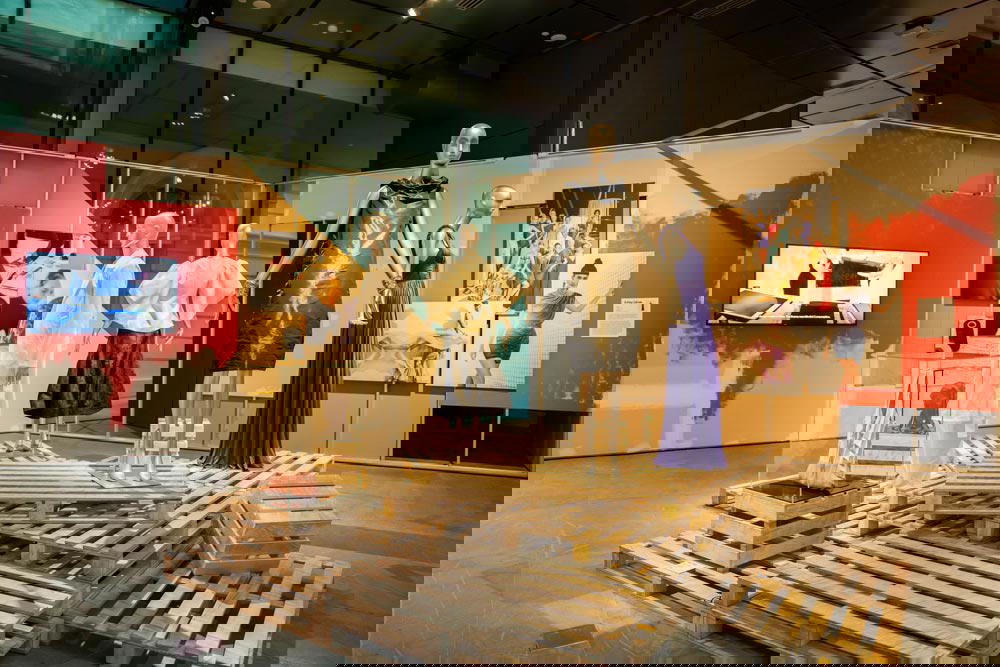
Singapore’s port city heritage goes as far back as pre-colonisation. Its prime position in the region meant that there were constant exchanges of arts and culture between countries, including fashion. We perhaps have sacrificed and forgotten about this as we aimed towards becoming a first-world nation. Yet, the fashion scene and community in Singapore remain ever-present, shaped now by a more globalised perspective than ever before.
#SGFASHIONNOW seeks to bring to the fore Singapore’s current state of contemporary fashion and some of its players. The annual series initiated by the Asian Civilisations Museum (ACM) in partnership with LASALLE College of the Arts, was first introduced in 2021 and is a continuous dialogue between both institutions as seen through the eyes of a new generation of Singapore’s fashion future. LASALLE’s BA(Hons) Fashion Media and Industries students pitch ideas and concepts to a panel of judges who then select one winning pitch to materialise into a full-scale exhibition.
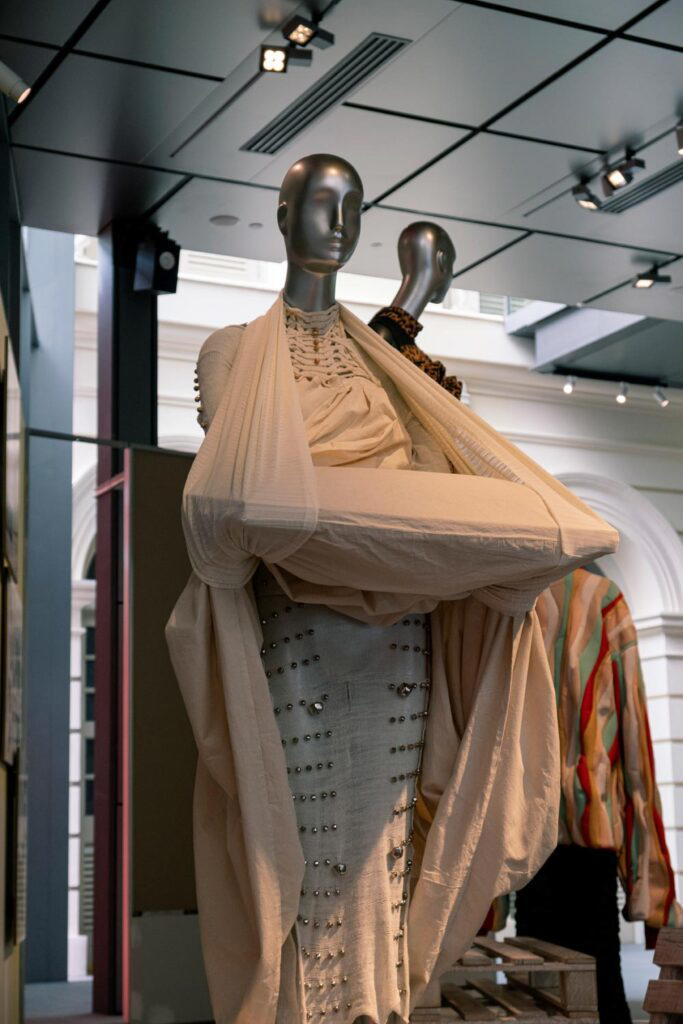
For its second iteration, #SGFASHIONNOW (running until 16 October) revolves around the theme of ‘Architecture of Drapes’ but not in the literal sense. The winning pitch was headed by Ethan Lai who looked into an essay by Bradley Quinn titled ‘Fashion Space’.
“It’s really interesting when I was reading it. Quinn talked about the parallels between fashion and architecture as design entities that require the physical human body to navigate,” Lai explains. “It led me to, in a way, challenge people’s preconceived notions of the theme. Because when you hear ‘Architecture of Drapes’, I think most people would just think about designs that maybe reference architecture, but I wanted to negate that and come up with something different.”
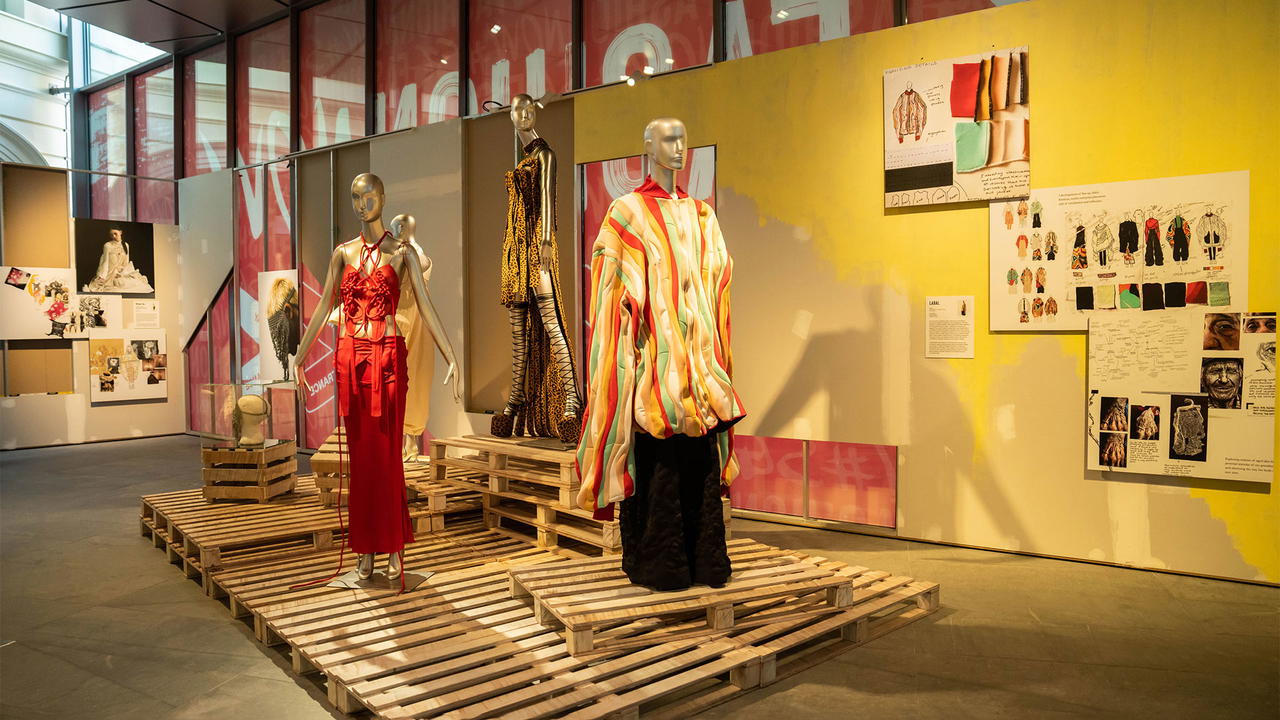
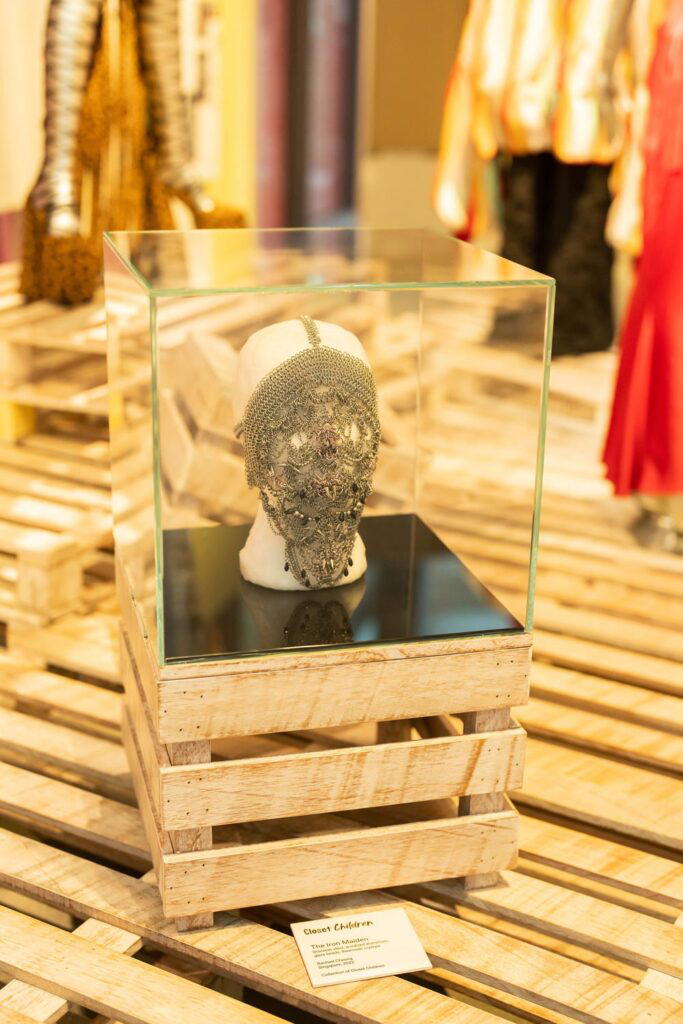
The result is an #SGFASHIONNOW that’s far more diverse than its first incarnation. Held at the ACM’s Contemporary Gallery, works are categorised into three: construction, deconstruction, and freeform. A selection of 16 Singaporean designers were brought together. Four of them were pre-selected by ACM — Thomas Wee, Max Tan, Ashley Isham, and the winner of Singapore Stories 2021 (a competition organised by Singapore Fashion Council) Jon Max Goh — while Lai and his team brought in the rest.
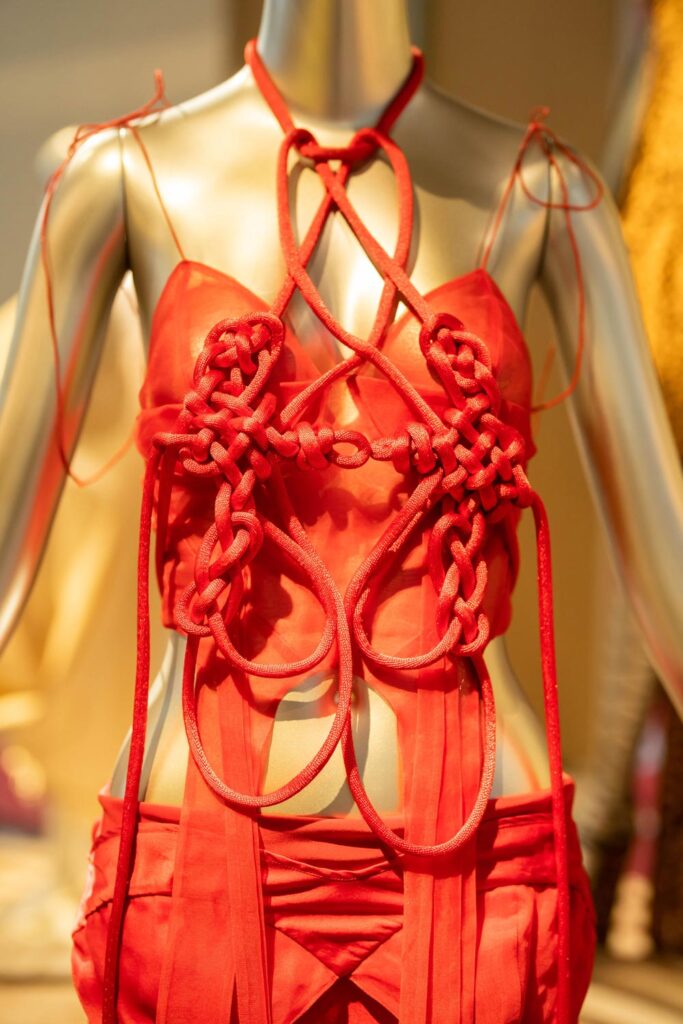
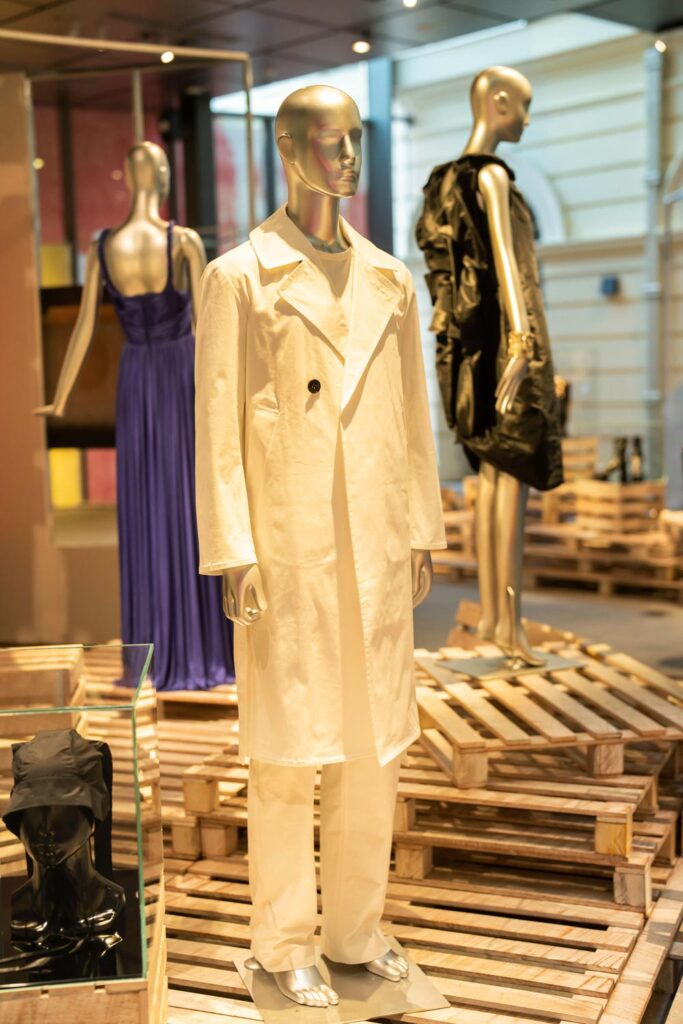
“They’re fantastic examples of this idea of Asian fashion which we are very strong proponents of at ACM and really encapsulates our unique approach to fashion. But also because each of these designers are really from different generations so there’s this very, I think, important intergenerational story that we want to present as well,” says curator Dominic Low who worked with the students for this year’s #SGFASHIONNOW.
Daniela Monasterios-Tan, lecturer at LASALLE, concurs. “I think this link between knowing who were the designers before and who is practicing now, is one that’s important to not break because otherwise, you’d always think that we’ve never had a fashion history, when we do,” she expresses. “Fashion itself has to be more understood and appreciated, not just as commerce but as something that provides jobs, that is an expression of creativity, and that is part of a community of creatives in Singapore and the different people involved in it.”
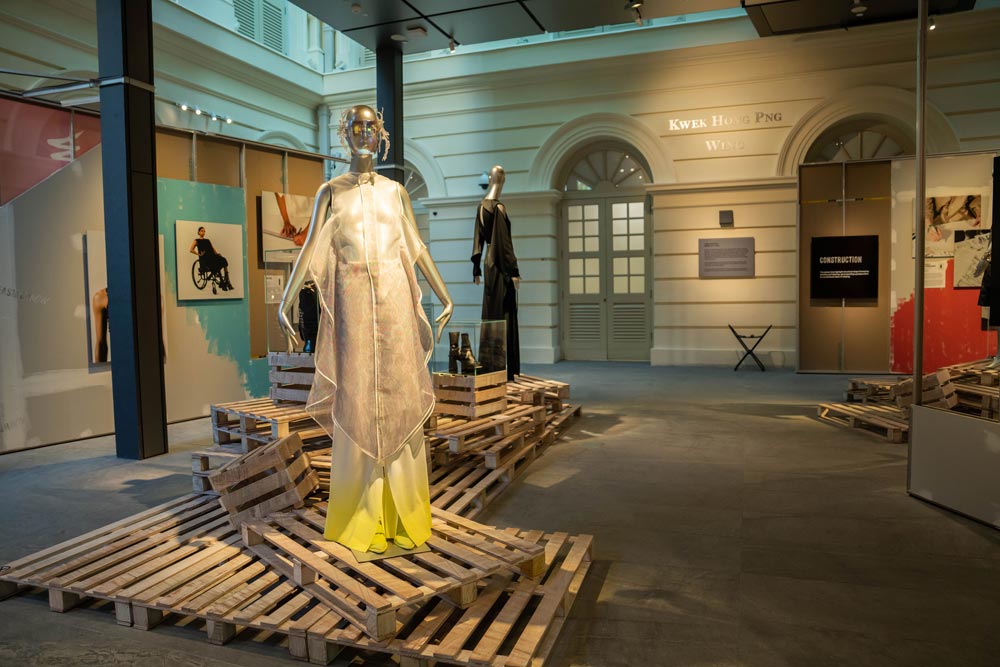
It’s partly why Lai actively chose to highlight a range of young designers that exemplified the many different facets of Singapore’s fashion community. He believes that ACM’s broad accessibility is the perfect platform to introduce these designers. Putri Adif, for example, designs one-of-a-kind pieces that contrast western influences with Malay heritage. Her contributing piece to #SGFASHIONNOW is a corset made with a printed batik fabric.
Current Central Saint Martins student Bryan Yeo’s conceptual garment was inspired by his memory of his mother’s relationship with Catholicism, effectively creating a piece that serves as a portable praying altar and trimmed with rosary beads. Then there’s shoe designer Firdaos Pidau’s platform boots designed for Charles & Keith, representing Singapore’s commercial fashion exports.
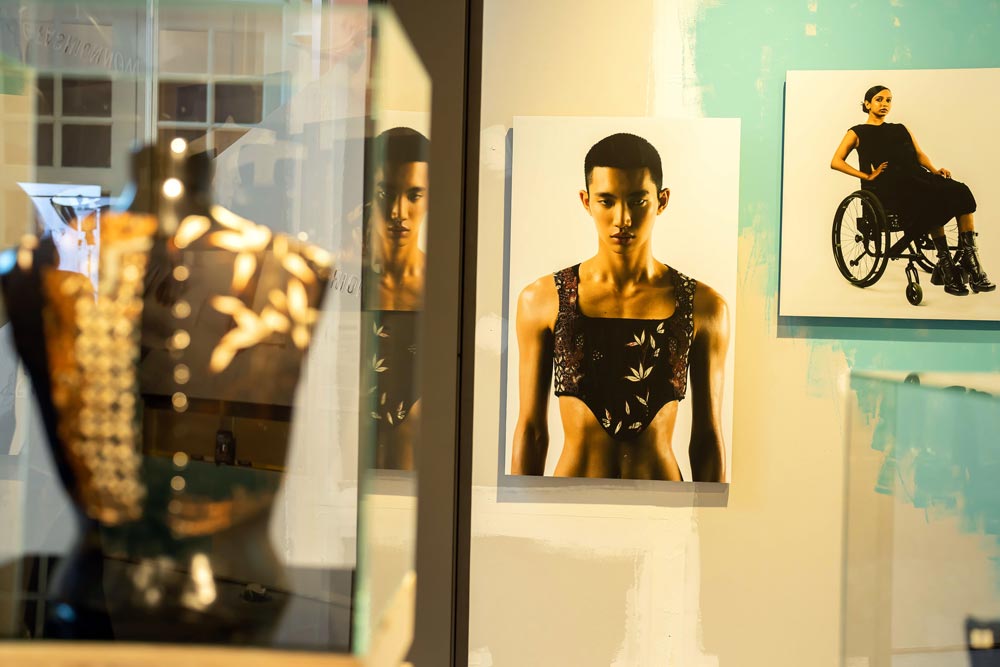
Diversity and inclusivity are not only present in the selected works; they were also reflected in the imagery produced by Lai for the exhibition. Models chosen for the accompanying shoot are racially diverse and also included a transgender model, a quadriplegic, a non-binary model from Misc. Management, and a model represented by Platinum Angels Management that exclusively represents models over the age of 50.
“The fact that these two agencies exist show that there is a desire for different types of people to be represented. I think that was quite a big one — that it is obvious when you speak to Gen Zs and image makers, there’s this desire for different types of beauty and reality,” Monasterios-Tan attests.
It’s exactly that point-of-view that makes #SGFASHIONNOW different from other fashion-leaning exhibitions that have been shown here. It takes tapping into the creative minds of a younger generation to not only ascertain what their peers value, but also to begin to steer things towards a more progressive future. And fashion, in essence, is partly about being progressive.
The exhibition series (at the time of writing, Low is set to brief a new batch of LASALLE students for the third edition of #SGFASHIONNOW) is only a snapshot of Singapore fashion. But what’s apparent is in how the industry has evolved and diverted from the preconceived notions of it being one-note. And that most importantly, there is value in them.
“At some level, fashion is kind of applicable to each and every one of us. But at the same time, what is too familiar can be something that people start taking for granted. You tend to place less importance on things that are too familiar to you,” Low says. “What’s wonderful in fashion exhibitions is that you can take it out from that everyday context and put it within a museum context and hope visitors rethink or challenge their assumptions.”
All three hope that #SGFASHIONNOW sparks conversations — whether it’s getting people interested in finding out more about Singapore fashion or even questioning why a designer was or wasn’t included in this year’s line-up. For Lai especially, as a young creative, he hopes that it helps to encourage other young creatives to feel that they too can be part of the scene and be seen.
It may sound cliché, but what makes Singapore fashion unique has evidently always been rooted in our multicultural identity, tied to our heritage as a port city. There is an inherent diversity to it. We may have lost it along the way but if the latest #SGFASHIONNOW exhibition tells us anything, is that we’re ready to fully embrace it once again in the local fashion context and in whatever form that may be.