
The world’s most storied houses are looking backwards to move forwards, mining their archives and developing a contemporary design language that emphasises architectural tension and material subversion. Here, the biggest names in high jewellery unveil the new creations worth knowing now.
Boucheron
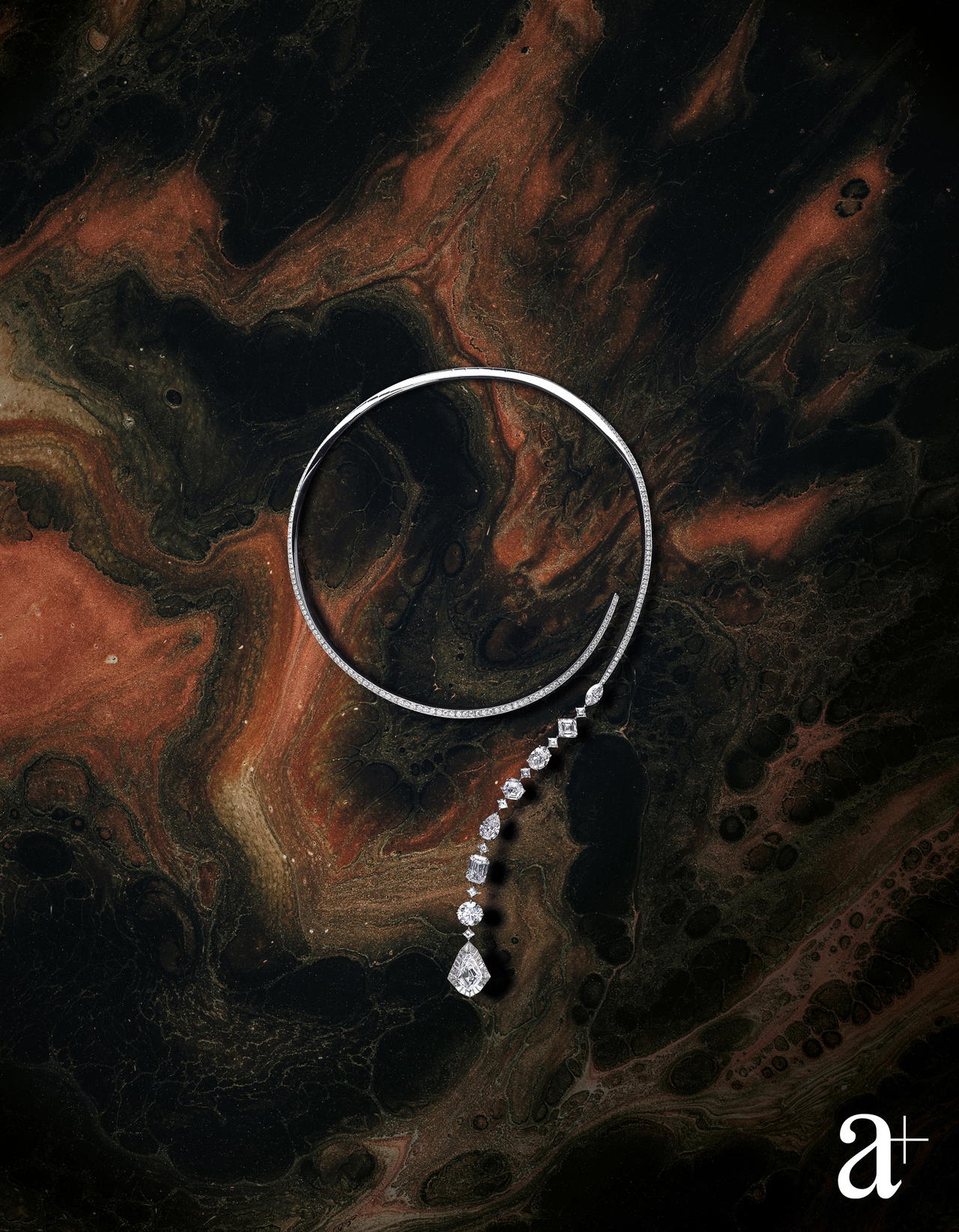
Nom: Boucheron, Prénom: Frédéric, Boucheron’s latest Histoire de Style collection, is a clever distillation of its DNA. Creative director Claire Choisne has cast the spotlight on founder Frédéric Boucheron’s obsession with subverting the rigid codes of 19th-century Place Vendôme. Drawing on the latter’s background as the son of a draper, the collection treats precious gold and stones like soft textiles, displaying how they move against the skin.
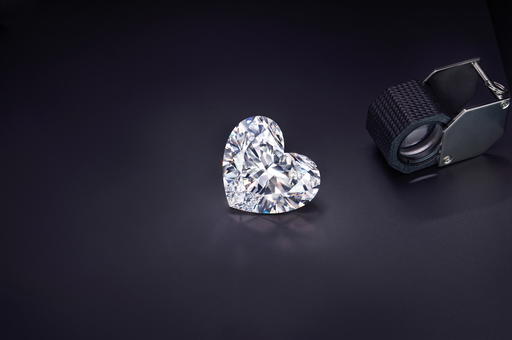
Among the four pieces launched, our favourite is The Spark, a reimagined Question Mark necklace that’s a modern evolution of the house’s 1884 signature. Choisne has stripped the motif back to its graphic skeleton. It features a rhythmic descent of eight distinct diamond cuts—including Asscher, hexagonal, and emerald—culminating in a scintillating 5.01-ct kite diamond. Despite its icy, rigid appearance, a series of hidden articulations has the piece mimicking the suppleness of silk against the collarbone.
More info here.
Cartier
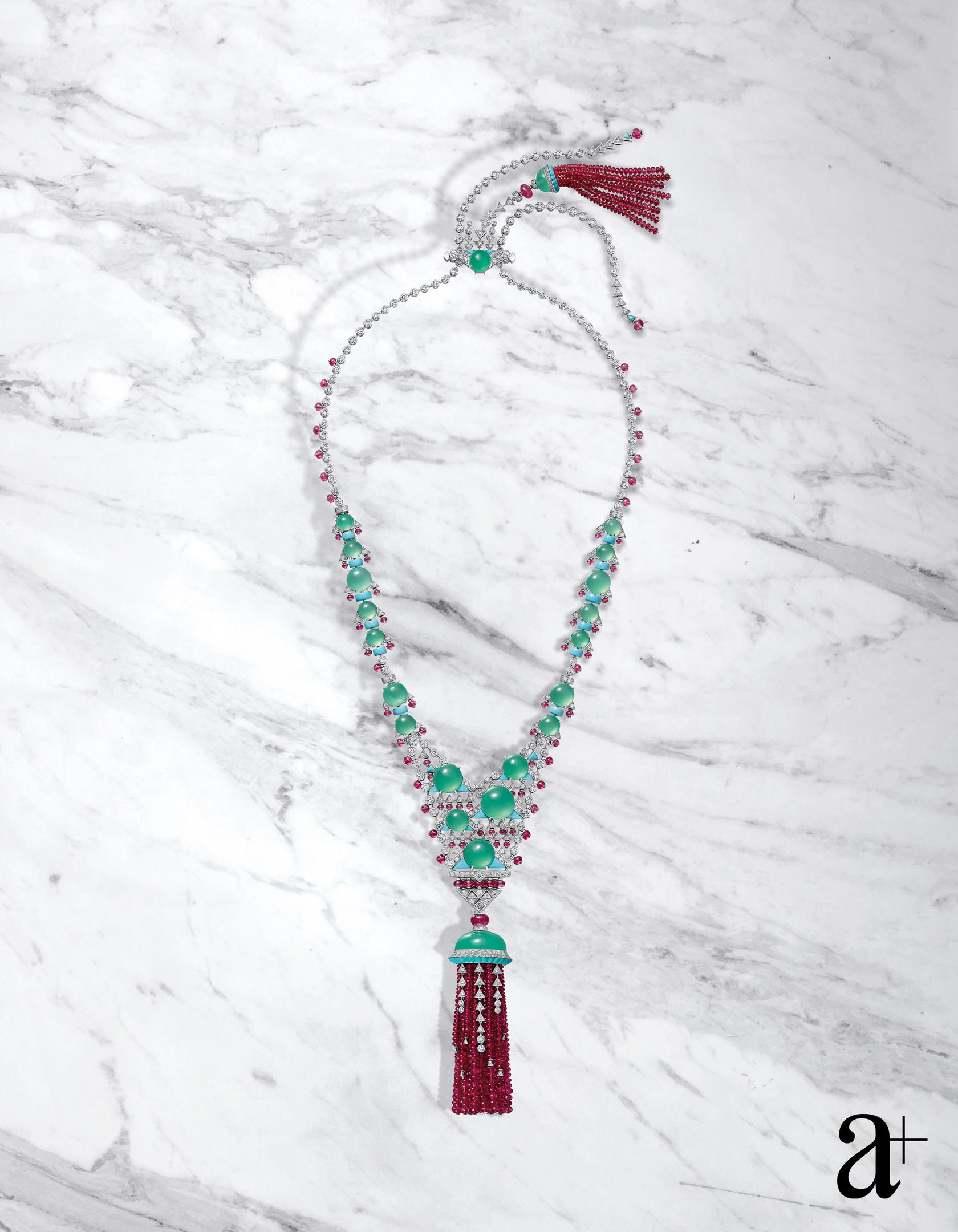
The final chapter of Cartier’s En Équilibre collection continues a design philosophy that highlights the tension between empty spaces and solid forms. Rather than the dense, heavy settings of traditional high jewellery design, the maison embraces a more architectural approach. En Équilibre explores a “tightrope” aesthetic, in which symmetry is constantly challenged by off-kilter arrangements that still feel grounded.
Its standout piece is the Ondora necklace, an abstract geometric study of a jellyfish’s ethereal, drifting movement. It is a bold revival of Cartier’s early 20th-century colour palette, contrasting the acid-bright green of chrysoprase with the deep saturation of spinels and bright hits of turquoise. In a testament to its obsession with versatility, the necklace features two matching pendants, one adjustable at the back. As a result, the stones move and breathe against the body, like their translucent, deep-sea inspiration.
More info here.
Chaumet
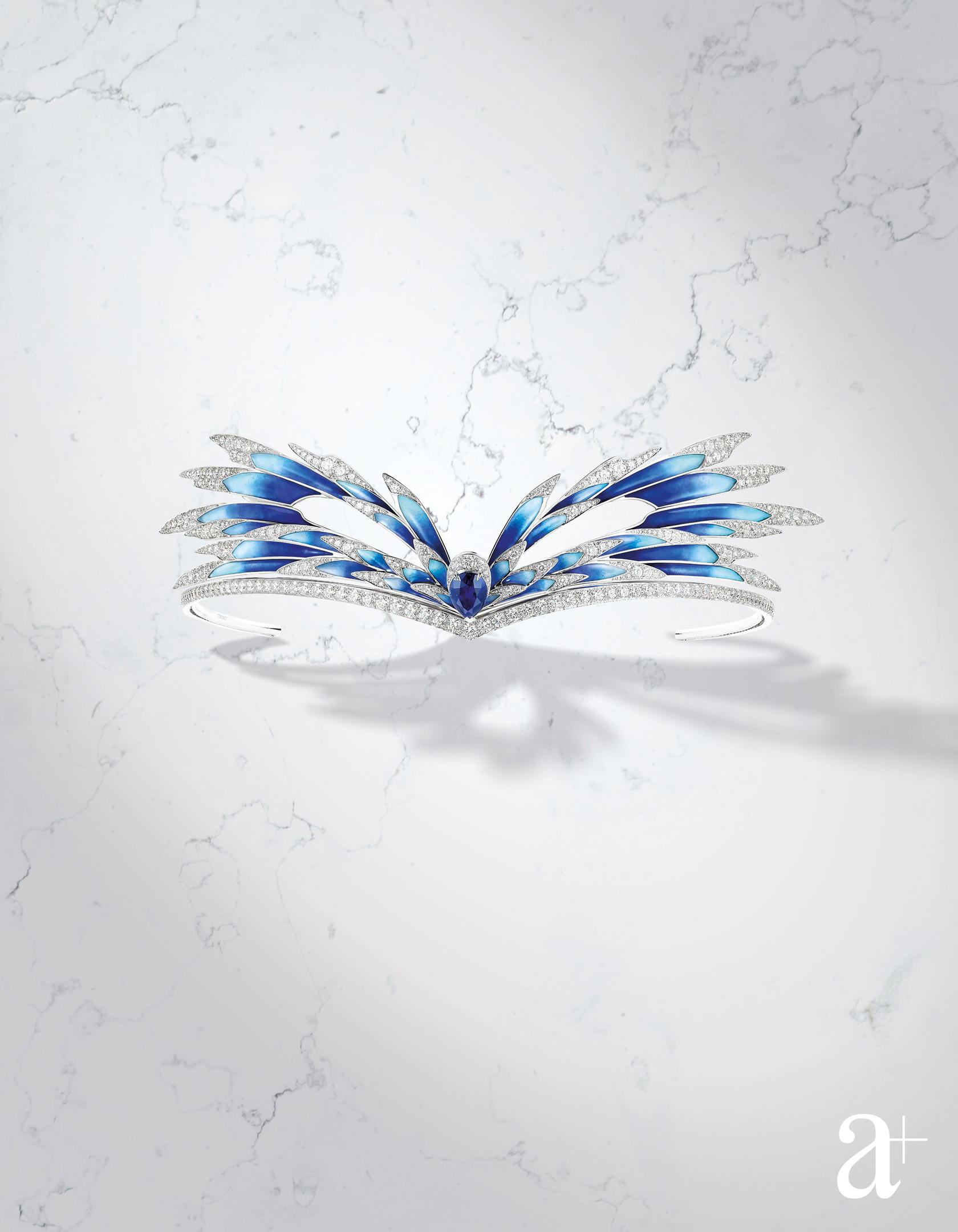
With the Envol collection, Chaumet pays tribute to its Napoleonic origins, which were influenced by Empress Joséphine’s ornithological obsession and Belle Epoque winged tiaras. The collection is inspired by the eagle, an emblem of imperial power repurposed as a symbol of femininity. Rather than focusing on the bird itself, the maison focuses on the mechanics of its wings, rendered in the rare, luminous depth of grand feu enamel, a technique used throughout its history.
It took 850 hours of benchwork to perfect the Envol aigrette tiara, the collection’s star piece. With its 3.92-ct Madagascar sapphire, the piece can be reconfigured. The pave diamond and enamel wings can be detached to act as separate brooches or as a mask to frame the eyes for a more theatrical look. Even after centuries, Chaumet’s motifs remain resolutely modern, a nod to former patron Gertrude Vanderbilt Whitney’s avant-garde spirit.
More info here.
Dior
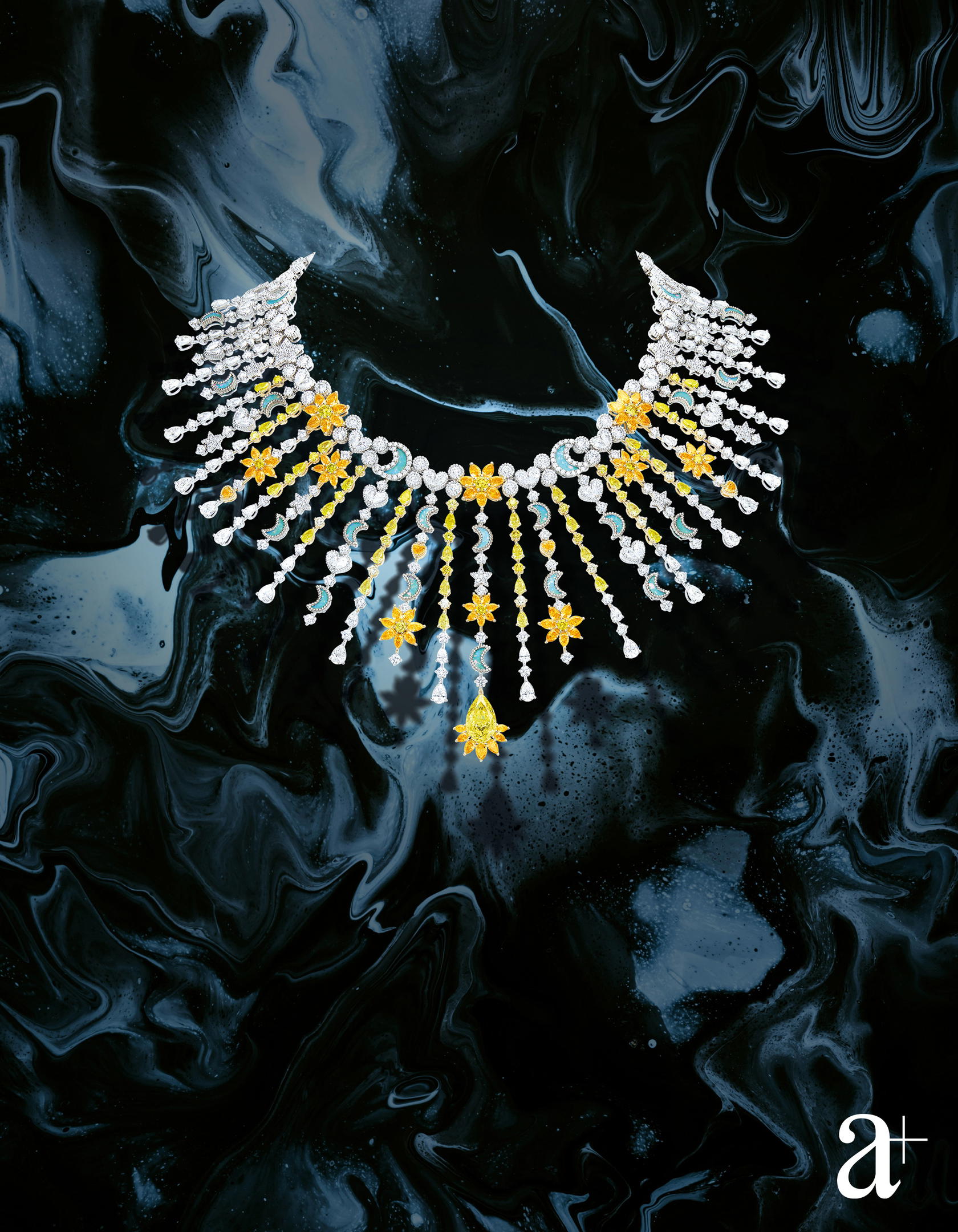
The Belle Dior collection continues Victoire de Castellane’s tradition of treating Christian Dior’s biography like a cabinet of curiosities rather than a sacred temple.
This season, the emphasis shifts to the graceful fringing of mid-century ball gowns, reimagining couture structural braids as flowing, vertical pendants. By reducing the stiffness of traditional goldwork, de Castellane captures the movement of flowering stems and the heavy drape of silk, creating a weightless bouquet of 57 pieces. Soleil Celeste is Belle Dior’s most eccentric element.
Keeping with the founder’s well-documented affinity for divinatory arts and superstition, and characteristically irreverent, this talismanic arrangement combines white, orange, and yellow diamonds, with some fashioned into hearts and stars, as well as crescent moons made of black opal doublets, mounted on turquoise.
More info here.
Tiffany & Co.
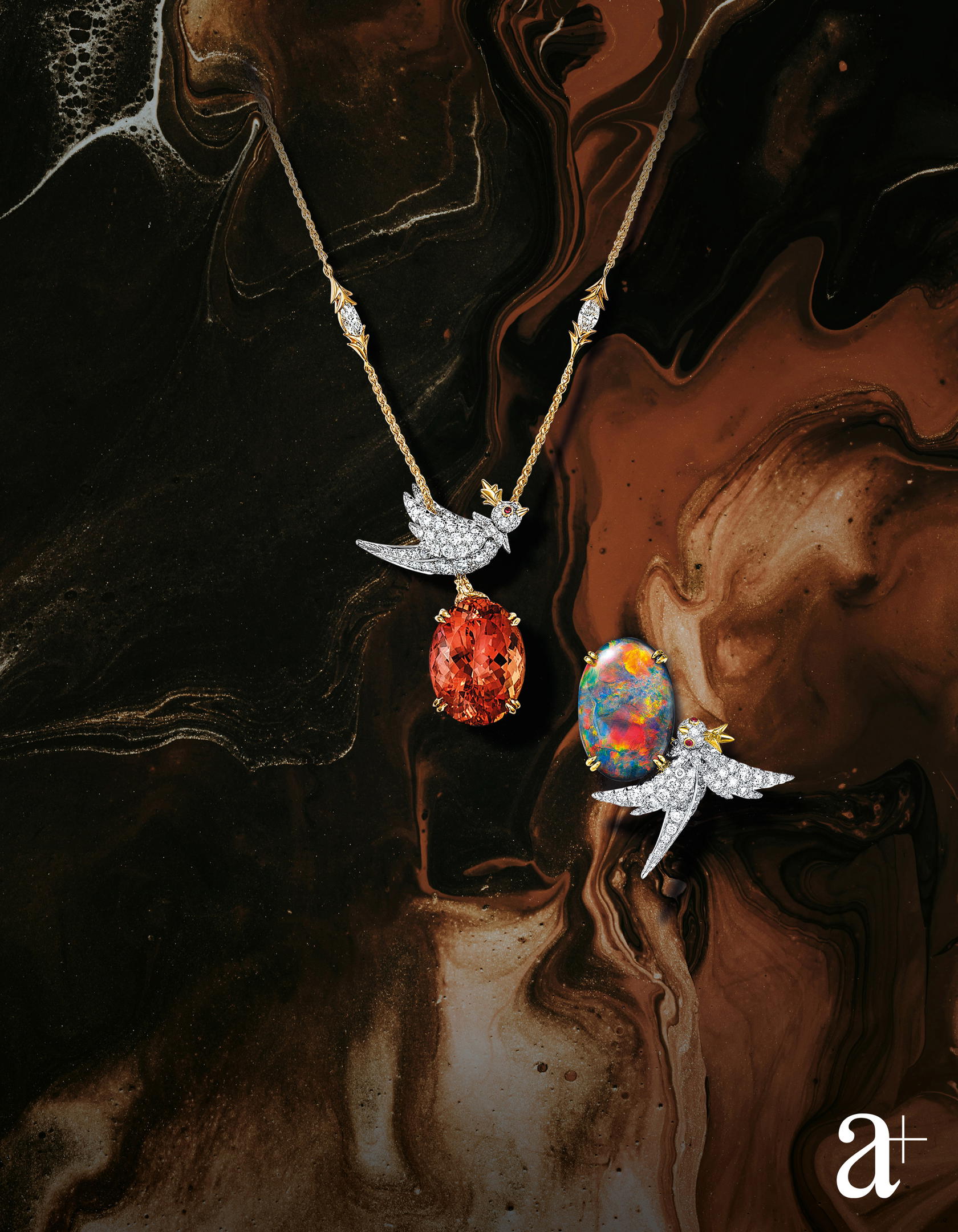
Traditionally, Jean Schlumberger’s feathered protagonist has been a solitary icon, but the Love Birds capsule introduces a more social dynamic. The collection pairs diamond-set birds with gemstones that reflect or challenge one another, often pairing a faceted stone with its cabochon counterpart.
In one striking duo, an oval rubellite of 36ct finds its reflection in a 62-ct round cabochon rubellite, offering two distinct perspectives of the same saturated hue. There are also pairings that create a sense of poetic tension between two different gemstones, such as morganite with rubellite or black opal with orange topaz. Pendant designs now feature a seamless internal channel through which the chain passes. This gives the impression that, rather than tethered to the setting, the bird is flying.
More info here.
Graff
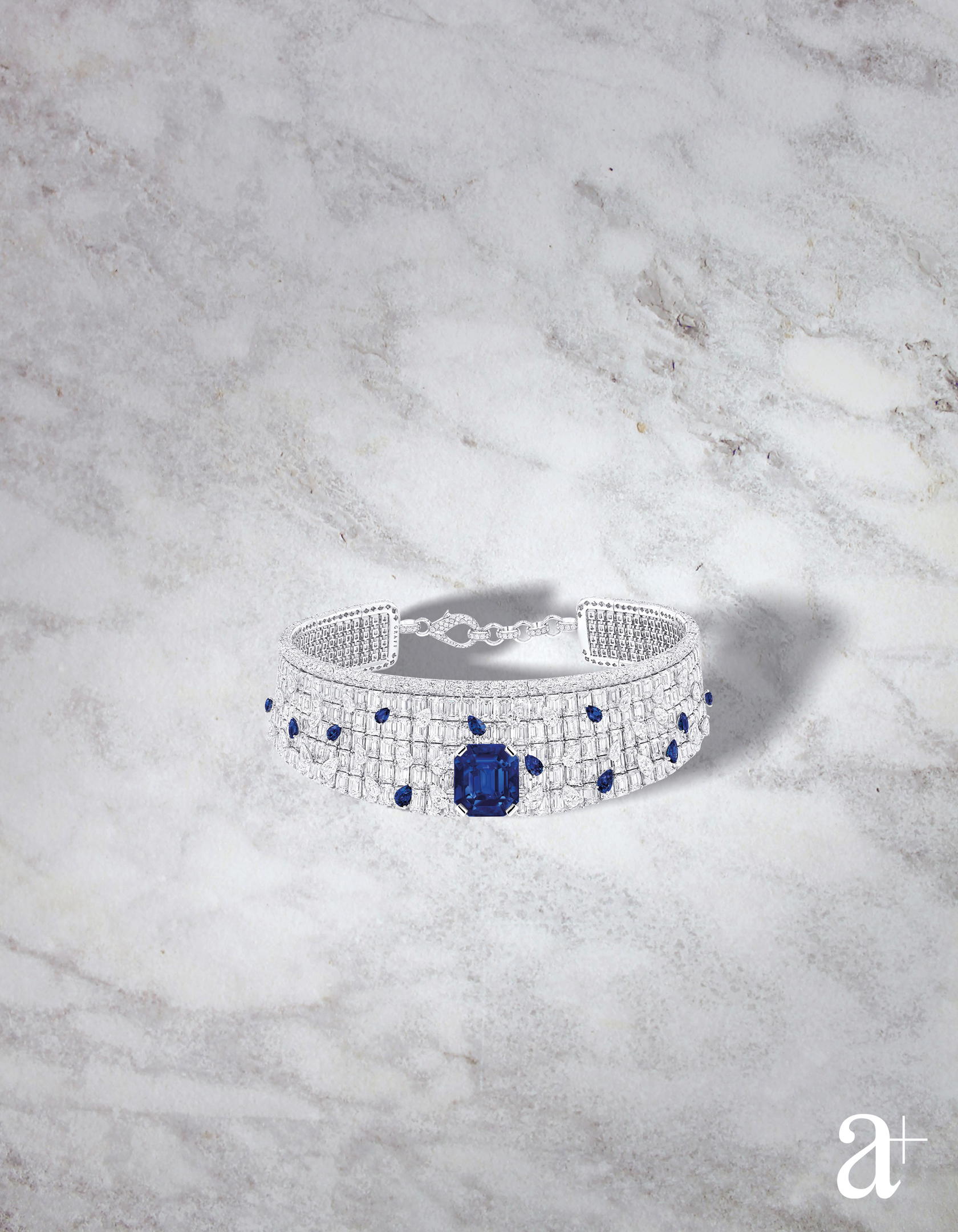
During the haute couture season, Graff debuted a high jewellery masterpiece inspired by the physics of a droplet hitting a still pool. It features geometric diamond surfaces that simulate fluid by capturing fractured reflections of water in motion—a task that demanded hundreds of hours of work in Graff’s workshop. An eye-watering 200ct of gemstones are set into the sapphire and diamond choker. The centrepiece is a 31-ct, unheated sapphire of a deep, velvety hue. It is surrounded by a seamless expanse of emerald-cut white diamonds, from which pear-shaped sapphires radiate outwards. The effect is architectural yet rhythmic, drawing strength from the precise balance of geometry and the sheer carat weight of the stones.
More info here.
Van Cleef & Arpels
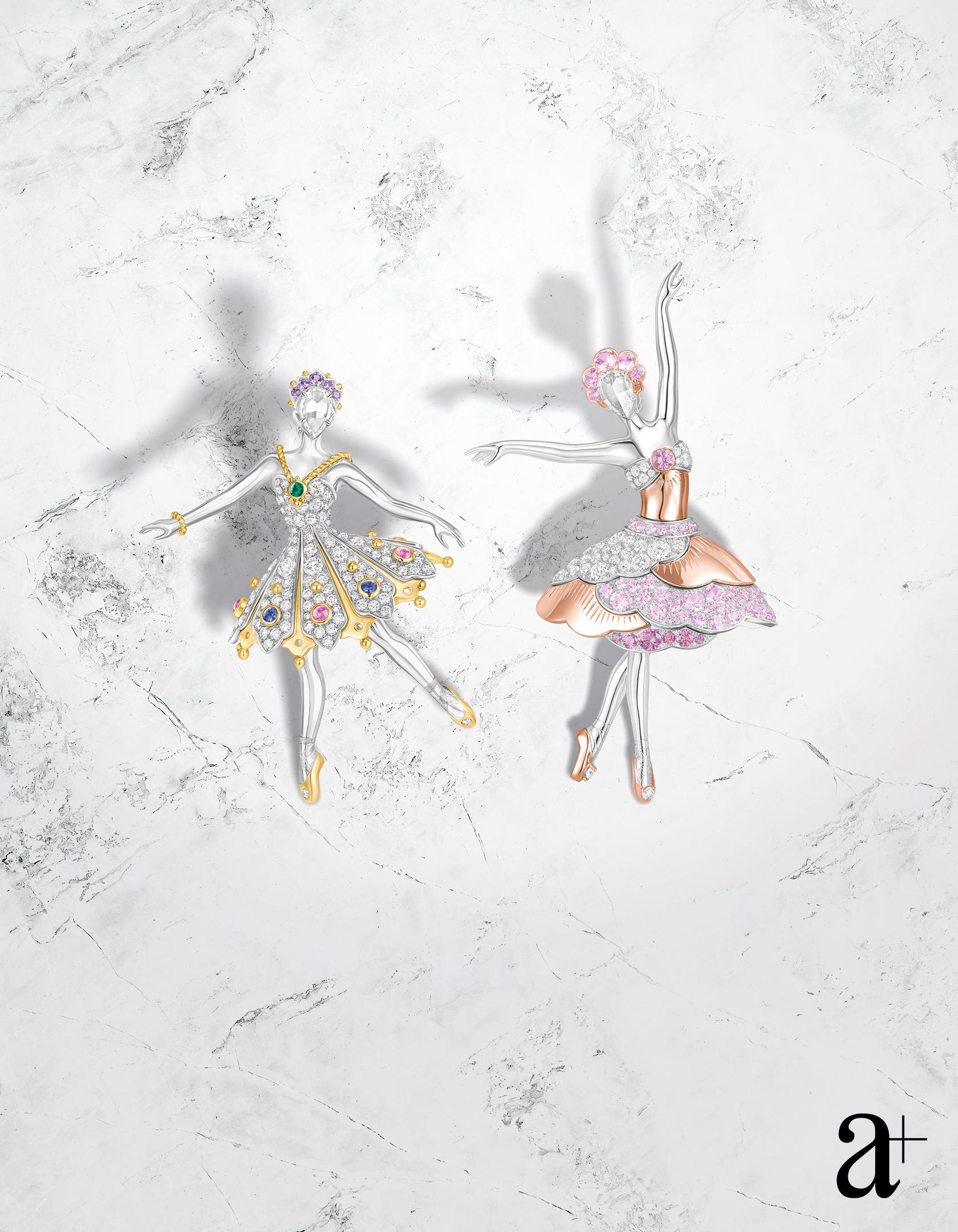
Since the 1940s, Van Cleef & Arpels’ ballerina clips have served as a recurring motif, translating dancer agility into gold and gemstones. Ballet Précieux continues this tradition with 12 new figurines, each a miniature 3D sculpture demonstrating its skills at depicting the specific cultural aesthetics of a classical repertoire. Rather than static icons, these clips are hand-carved from wax to capture the muscular tension of a dancer mid-leap, then cast in gold.
The Rose de Bengale clip, inspired by the 1889 ballet Le Talisman, features the goddess Amravati in a diamond-set leotard detailed with golden braids and cabochons—a nod to its ancient Indian setting. Using ornamental patterns that mimic traditional decorative screens, its skirt is particularly clever. The Nutcracker-inspired Masha clip employs guilloche gold to evoke the pleated silk of a princess’s gown.
More info here.