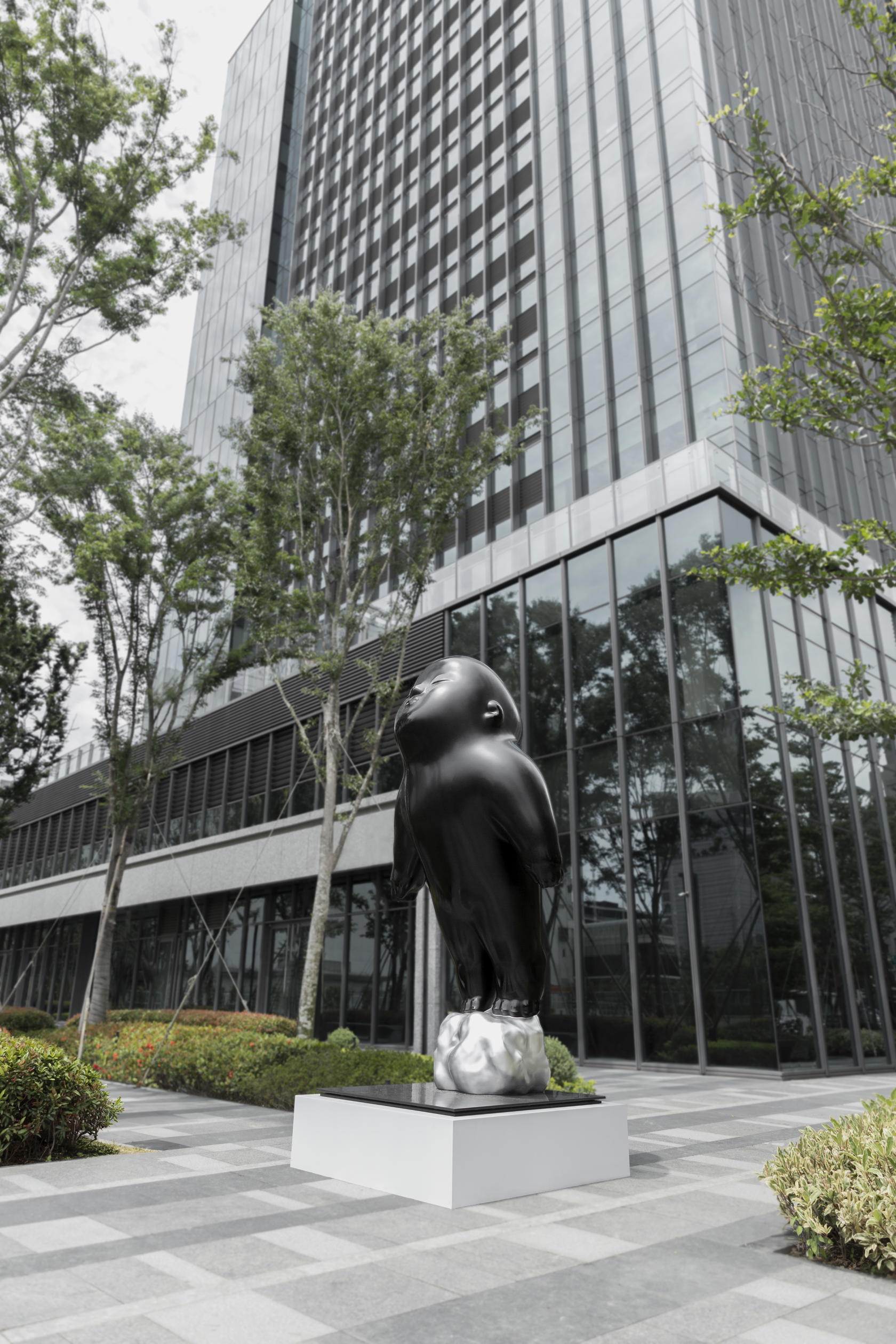
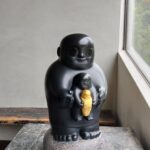
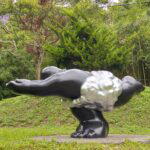
How cute, I thought when I first encountered ‘Sky’ (天空) by Li Chen (李真) at Twilight House, the artist’s residence-studio in Miaoli, Taiwan. About the height of a table lamp at 50cm, the bronze sculpture is unexpectedly playful with its half-smile and rounded body.
‘Sky’ (2012) belongs to Li’s Spiritual Journey Through The Great Ether series, known for its voluminous black bronze forms. I saw neither longing nor loss, themes often associated with the work. It was shaped by the death of his father. “I didn’t know where he had gone,” he’d said. “I thought that if I could, I’d fly to be with him and speak a few more words with him before coming back down.”
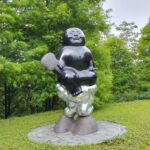
A version sold at Poly Auction for HKD1,888,000 (S$311,532) in 2017, while a three-metre version was shown at the inaugural exhibition of Asia Art Center’s flagship gallery in Taipei in 2021.
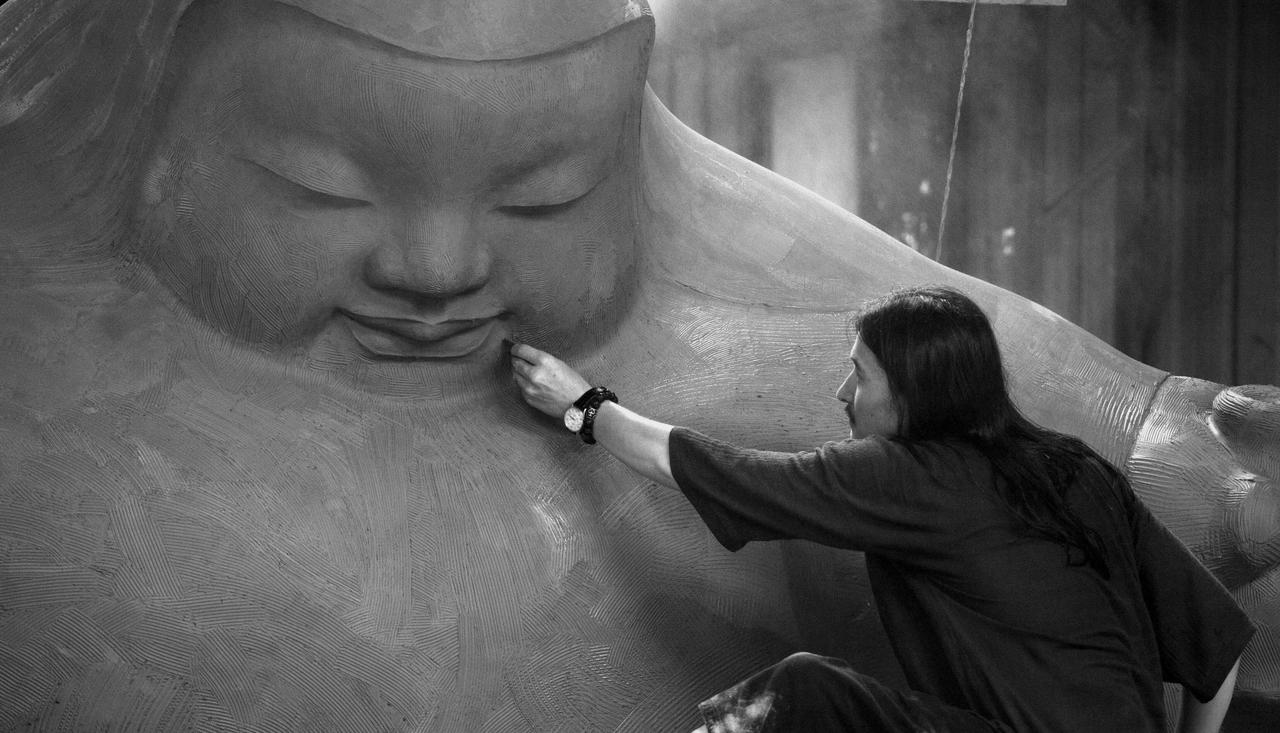
Li began his career making temple sculptures but left the trade after eight years in search of creative autonomy. At his first solo exhibition, ‘Energy of Emptiness’ (1999), in Taipei, he met Thomas Lee of Asia Art Center; in 2004, they began an official collaboration. In 2007, he became the first artist from the Chinese-speaking world to mount an individual presentation at the Venice Biennale.
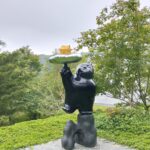
As soon as I arrived at Twilight House, I encountered ‘The Pursuer’ (追燭), ‘Pure Land’ (無憂國土), and ‘Flickering Moonlight’ (浮光). Li emerged from the three-storey residence and led us inside. Smaller works populated the space: ‘Offering’ (供養) in what was once his son’s bedroom; ‘Adherents’ (公幽人清) in a loft studio; ‘The Pavilion’ (蘭亭) in a tea room.
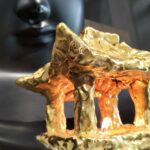
We lingered at the last, where a tea light sat within a golden pavilion. He pointed to what he called “tear stains”. “Do you think these are tears of joy or sorrow?” he asked, then chuckled.
Twilight House
You share a lot about feeling guilt towards your family.
When I started out in 1999, I promised my wife, “Give me 20 years to pursue my passion.” But I never stopped; I got busier, my exhibitions got bigger, and my projects got larger. Now I want more time with my family, and because of that, I made a conscious effort to slow down. The guilt, however, hasn’t gone away.
What does slowing down mean for you, and how has it changed your creative process?
When I was younger, I believed more was more. I could make dozens of sculptures a year. An idea would come, and I’d think, “That’s a sculpture.” Now I ask myself whether it truly deserves to become one. I think reduction is one of life’s most precious skills.
When I slowed down, different inspirations emerged. I started noticing things I never did. I’d be at home spending time with my wife doing ordinary things, and suddenly these moments would find their way into my art. People imagine artists sitting around all day thinking profound thoughts, but hey, we do household chores too!
Can you describe an example?
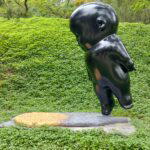
One of my most recent sculptures began with the lion. In Chinese culture, it protects temples, homes, and wealth, which led me to think about human desire, and how if we hold onto something too tightly, our hands will tire. Then, one morning, as I was in the kitchen washing vegetables to cook for breakfast, I saw the dishwasher “swallowing up” the dishes, and heard flushing from the toilet. Suddenly these three images came together! Isn’t that funny?
Is humour important to your work?
Of course. If work becomes too serious, it becomes rigid. Why can’t art make people smile?
Do you mind when people interpret your work differently from your original intention?
Not at all. People often talk about “misreading” art. I don’t think that’s a problem. One artwork should generate many readings. Some people thought one of my sculptures looked like Nezha. Others saw something completely different. That’s wonderful. Art should create dialogue; a sculpture should not be silent. Sometimes, misunderstanding can even enrich the work. If I explain everything, there’d be no room for imagination. But I do leave clues [laughs] because I also want people to understand how I think.
Absurdity is a theme many of your works examine.
Life itself is absurd; we were born without choosing to be born. Human nature doesn’t change much. We change technology, clothes, and systems—but our desires, loneliness, and weaknesses remain. We upgrade objects constantly. Relationships do not work like that. If a phone breaks, you replace it. If a system changes, you adapt. But if a person dies, you grieve. That difference is important. Objects are temporary, human relationships are not.
How should your work be understood?
People see many things—absurdity, spirituality, surrealism, expressionism. My work reflects a plural world. I am not trying to fit into a Western lineage. I am not Western and cannot pretend to be one. Western art history has its own continuity—from Leonardo da Vinci to Rodin and beyond. Different conditions shaped that lineage. Asia has a different history. Different experiences and sensibilities produce different forms of expression. We are often inheriting rather than originating frameworks. It is simply history. So the question becomes: what is our own language?
You often speak about how qi yun (气韵) is integral to this language.
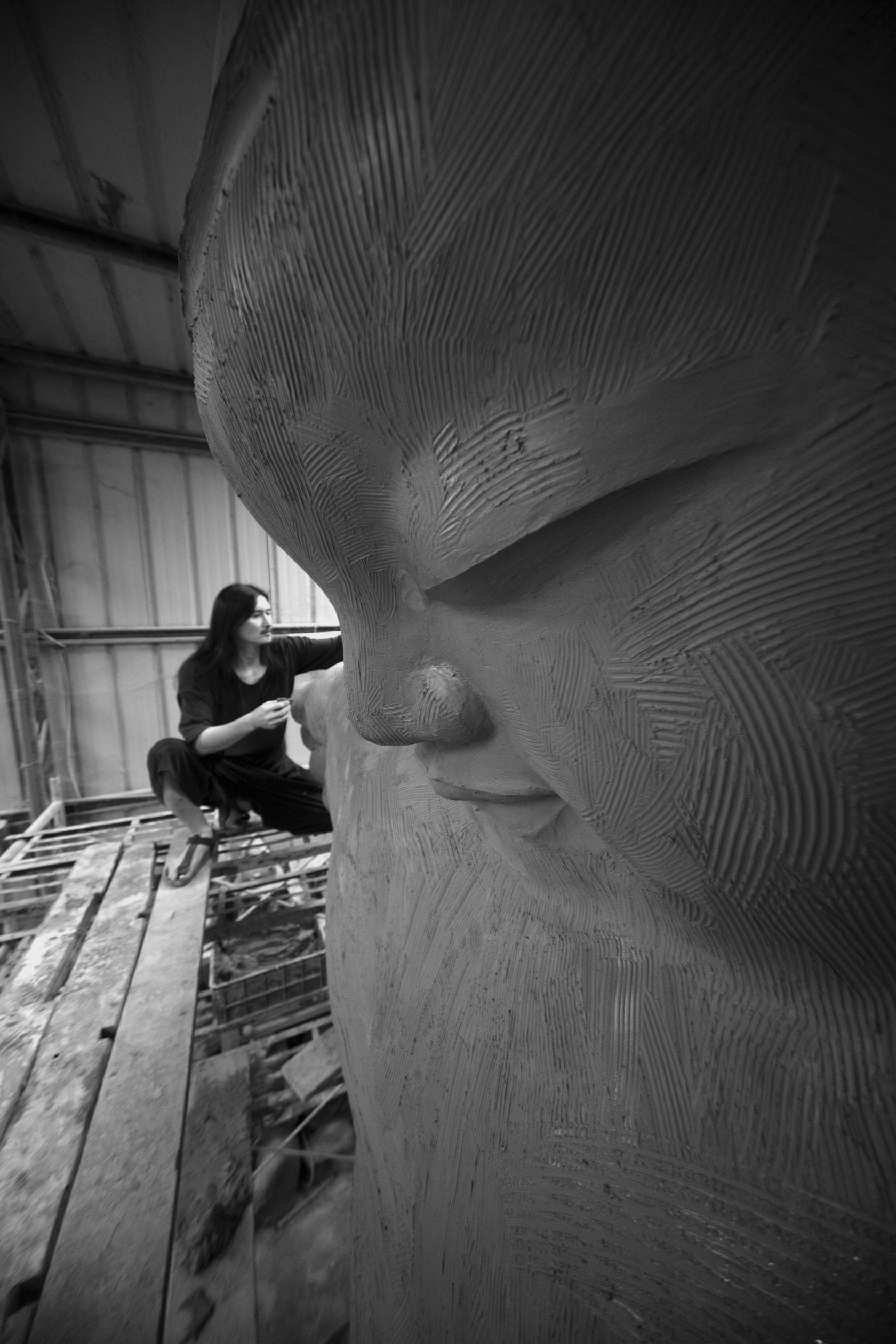
Qi yun—spirit, resonance, vitality—is central to Eastern aesthetics. Painting expresses it easily because ink moves. To create it in sculpture, which is solid, my solution is simple: form is on the outside, energy is on the inside. The surface carries weight, but the interior carries movement and breath.
Finally, what keeps you going as an artist?
Curiosity. Life is interesting, desire is interesting, absurdity is interesting. I don’t create because I have answers; I create because I still have questions.
Upcoming exhibitions at Asia Art Center here.