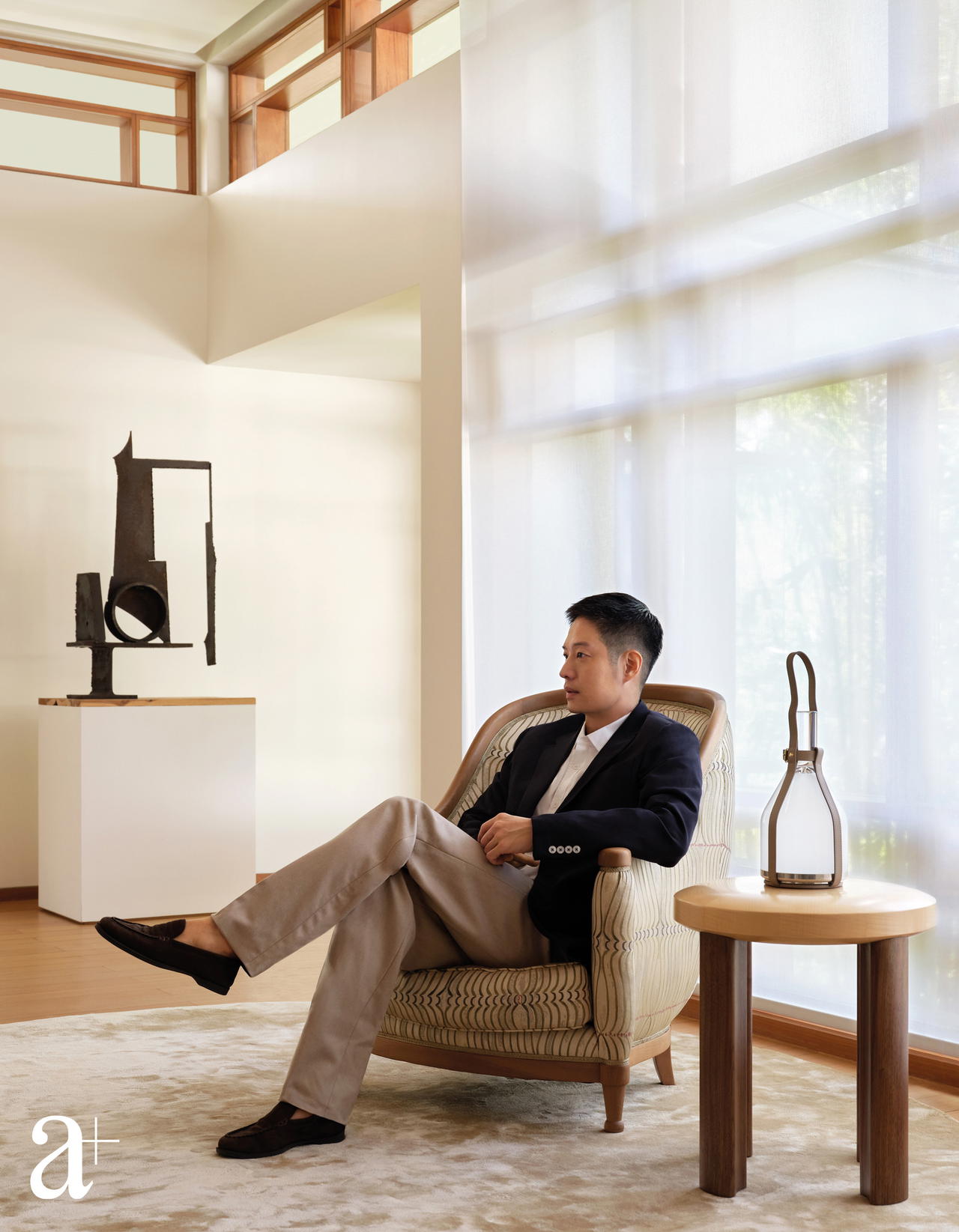
No one would have a TV in their living room if it were up to Robert Cheng. “People go, ‘I need to do up my living room. How should I centre it around my TV?’,” says the founder of architectural and interior design studio Brewin Design Office. “But a television is not a fireplace. You don’t need it in the living room.”
In his book, a living room should encourage conversations and include flexible seating arrangements to facilitate them. If it must accommodate a TV, the device should be concealable behind a sliding panel, he suggests.
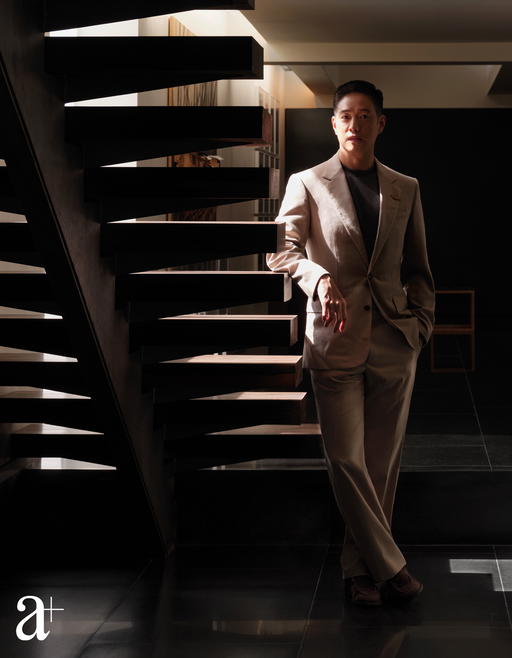
The urbane 49-year-old is making his case in his office at Henderson Road. He has just returned from Kyoto where he was overseeing the finishing touches for Capella Kyoto, which will open by the time this story goes to press. His firm designed the interiors of the luxurious 89-room, four-storey hotel where rates start at $3,200 per night.
Although Brewin was incorporated in 2012, it only became operational in 2015 because Cheng spent some time “testing the waters and making mistakes”. As a member of the family behind the real estate and lifestyle retail group Wing Tai, he is no stranger to the risks and rewards of entrepreneurship.
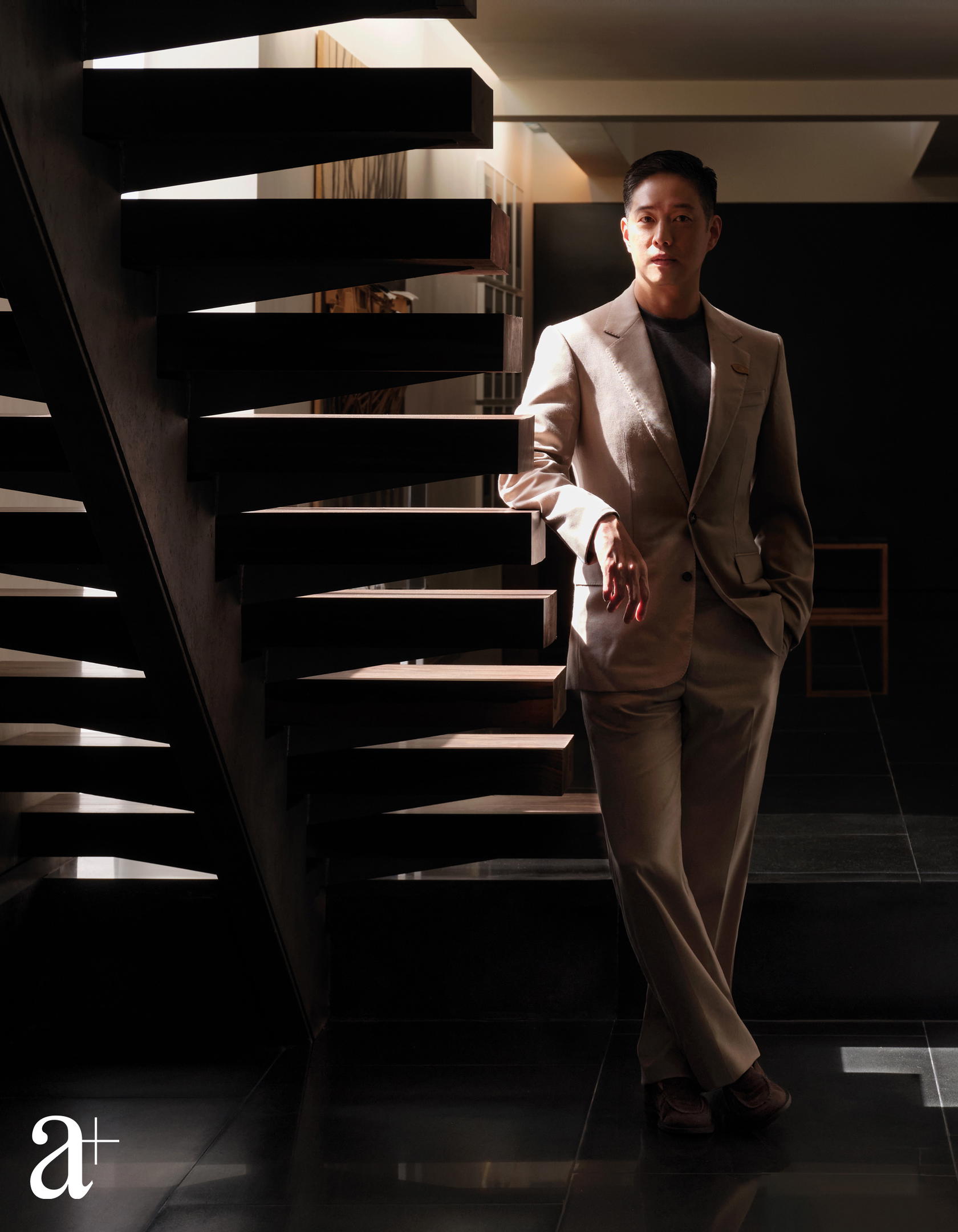
Wing Tai’s Singapore properties include Winsland House I and II, Lanson Place Winsland, and residential developments realised in collaboration with master architects such as Jean Nouvel, Toyo Ito, and I.M. Pei. Beyond Singapore, the company also has assets across Malaysia, Australia, China, Japan, and the Philippines. It champions collaborations with internationally-renowned master architects to bring a level of design thinking and architectural excellence to Singapore that elevates the broader built environment.
Founded by his late grandfather Cheng Yik Hung in Hong Kong as a garment manufacturer in 1955, Wing Tai opened its first Singapore factory in 1963 before parlaying its retail business into property development. His father, Edmund Cheng, is Wing Tai’s deputy chairman and a trained architect who had a profound influence on Cheng’s interest in design. He has also played a key role in shaping the local cultural landscape, serving as Chairman of the Singapore Art Museum and other related organisations such as National Arts Council, The Esplanade, and Singapore Tourism Board, advancing the country’s promotion of arts and culture on the global stage.
Cheng is a chip off the old block. Also trained as an architect, he often approaches interior design from an architectural perspective, though he admits that he occasionally looks for solutions in the wrong places: “I bark up the wrong tree sometimes if I approach a design problem too architecturally when I should have taken an interior
design angle.”
Good thing substantive discussions usually rectify the problem and elevate the quality of his output. “There are certainly clients who can be very demanding. That said, the right questions, rapport, and discourse push me to do better work.”
Cultural differences
Cheng had a third-culture upbringing. He was born in Pittsburgh, spent his early years in Singapore, and went to boarding school in the UK. He later pursued a double major in fine art and architecture at Rhode Island School of Design, and a Master of Architecture in urban design at Harvard Graduate School of Design.
Prior to starting Brewin, he spent a decade working for Calvin Tsao at Tsao & McKown Architects in New York City and Jean Nouvel at Ateliers Jean Nouvel in Paris. He eventually returned to Singapore to be close to his parents. Between the ages of 12 and 33, he only saw them two months a year, he recounts wistfully.
The urge to return was accompanied by a growing desire to contribute to the local interior design industry. “I found that there was a sort of bleakness in the number of firms doing good work here,” he explains cautiously. “I was in my early 30s back then, so I don’t want to sound like I was old enough to judge, but it was clear to me how work was produced in Singapore. Also, I wanted the independence of not working for somebody else and exploring things on my own—very much like an artist.”
Brewin focused on residential projects during the first six years before it began undertaking work with property developers and hotel operators, many of which are based in Hong Kong. Aside from Capella Hotels & Resorts, the company’s commercial clients also include Four Seasons Hotels & Resorts, Conrad Hotels & Resorts, Sino Land, Shun Tak Holdings, Swire Properties, Pontiac Land Group, Great Eagle Holdings, Nomura Real Estate Development, and ARA Asset Management.
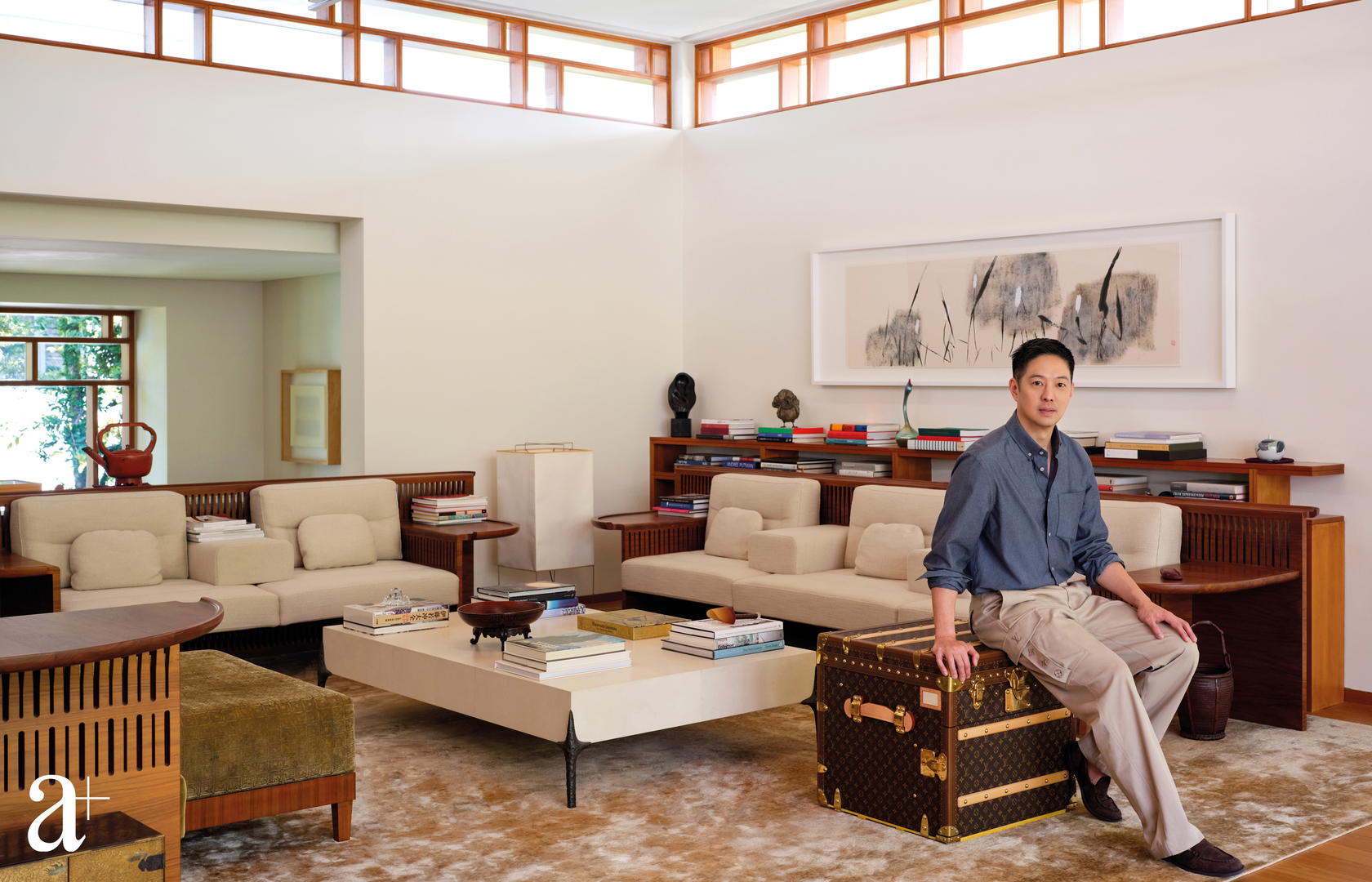
Imaginably, Cheng’s cross-border career experiences have given him a nuanced perspective on differing design approaches. He observes that while many designers in this part of the world gravitate towards narrative-led concepts, often poetic and whimsical in nature, the best studios tend to anchor their work in deeper research, historical context, and material understanding. “There’s a difference between a story that is imagined, and one that is uncovered or rooted in something real. The latter tends to result in spaces that feel more grounded and enduring.”
Designs can have greater depth when they reflect facts, Cheng posits. It is why interior designers in the west are typically more research-oriented and analytical, he adds. “As an example, if you’re looking to open an Art Deco-influenced bar in Europe or the US, the designer won’t just be looking at pretty pictures and replicating the designs; they’ll find out more about the designers of that period and their motivations. For instance, was there a shortage of resources during that era that led to the extensive use of a specific material?”
In addition, Cheng notes, we aren’t as disposed to heed expert advice here. “You will find that there is more—I wouldn’t say respect—but acknowledgement of a design professional’s vision in the west. Over here, it is common to have clients ask for multiple options.”
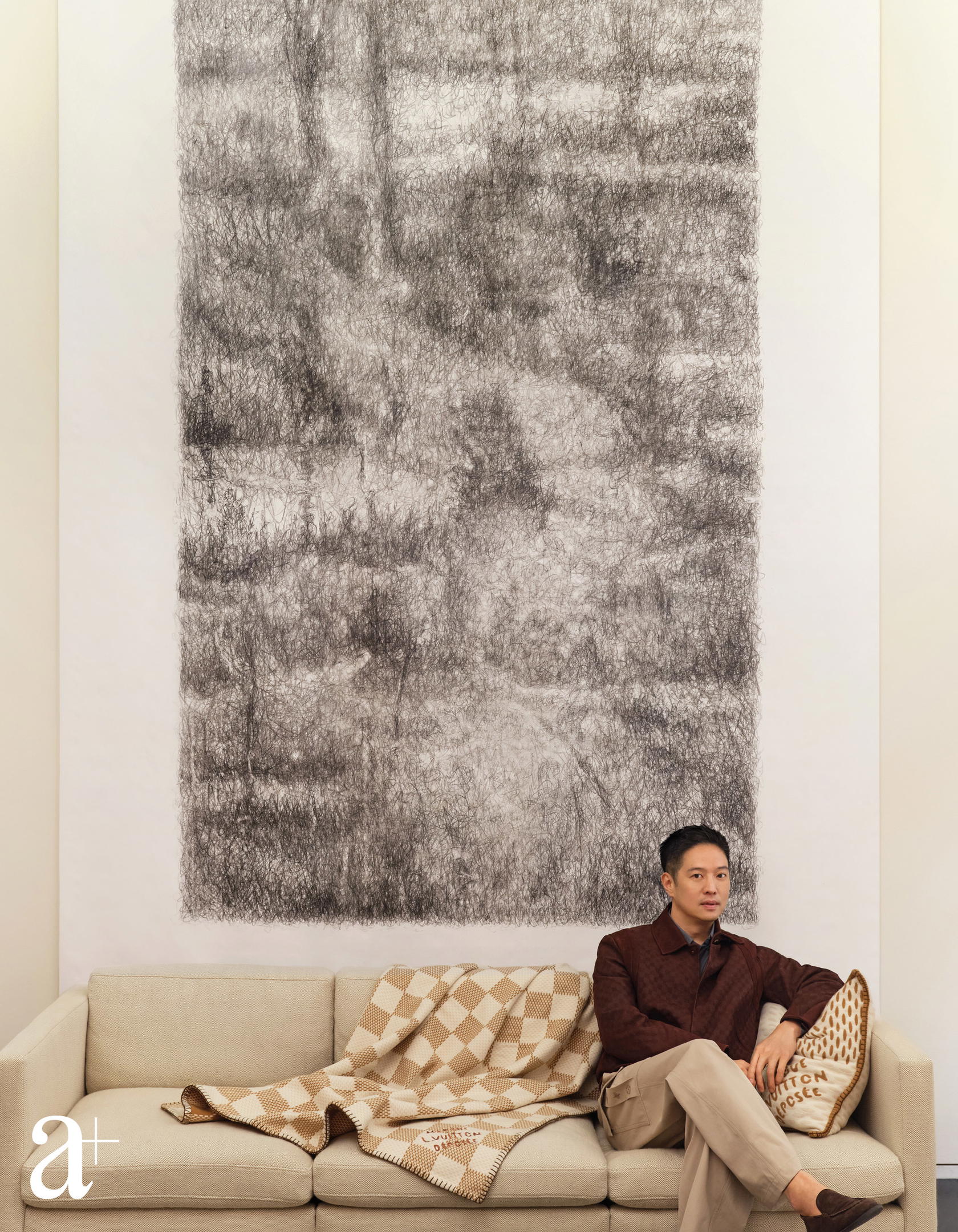
Photo: Wee Khim.
It’s the one cultural habit that really gets his goat. “These aren’t difficult people; often they’re really sweet, but there is a habit of seeking reassurance through the demand for more choices. It’s something many architects and designers in Singapore and Southeast Asia will recognise.”
Suffice to say, it is a pattern he hopes will be broken over time. “The best work tends to come from trust and clarity. When the process becomes too focused on generating a certain number of options, it can be harder for the strongest idea to come through.’”
Pushing the envelope
Cheng’s biggest design hot take: people are overly reliant on Pinterest. The problem is compounded when designers consider it an authoritative resource because it hampers their own creativity. “It’s one thing to take inspiration, but another to copy a trend that completely informs an entire firm’s body of work,” he says.
“For example, three years ago, curves were trending, so everything was in the form of a semicircle or a ball. The platform began shaping the language of design, but if I were to be critical and think about what my firm would produce, I’d say, ‘Look, let’s think out of the box. Let’s respond in a unique way’.”
It doesn’t help that, at least in his experience, 40 percent of the current pool of interior design images on Pinterest have been generated by AI. “You want to see something that has been built by another designer, but instead you’re forced to gauge whether it’s a rendering or a real design or building.
“This is dangerous because there’s a huge gap between the beautiful rendering of a hotel lobby and how everything really comes together.”
Robert Cheng on the reality of bringing ideas to life
Simply put, while something may appear visually pleasing at first glance, its success and longevity are ultimately defined by how well the other detail-related aspects are resolved and executed in reality. “The proportions of a space aren’t taken into consideration anymore. Sometimes, the priority is simply to make the rendering look compelling, but that can create a disconnect between the image and the reality.”
Nevertheless, Cheng acknowledges that AI enables us to work at an unprecedented speed and scale. He reckons it will help architects create more futuristic buildings, “if that’s what the description of future buildings will be”, given its current focus on visual ideas.
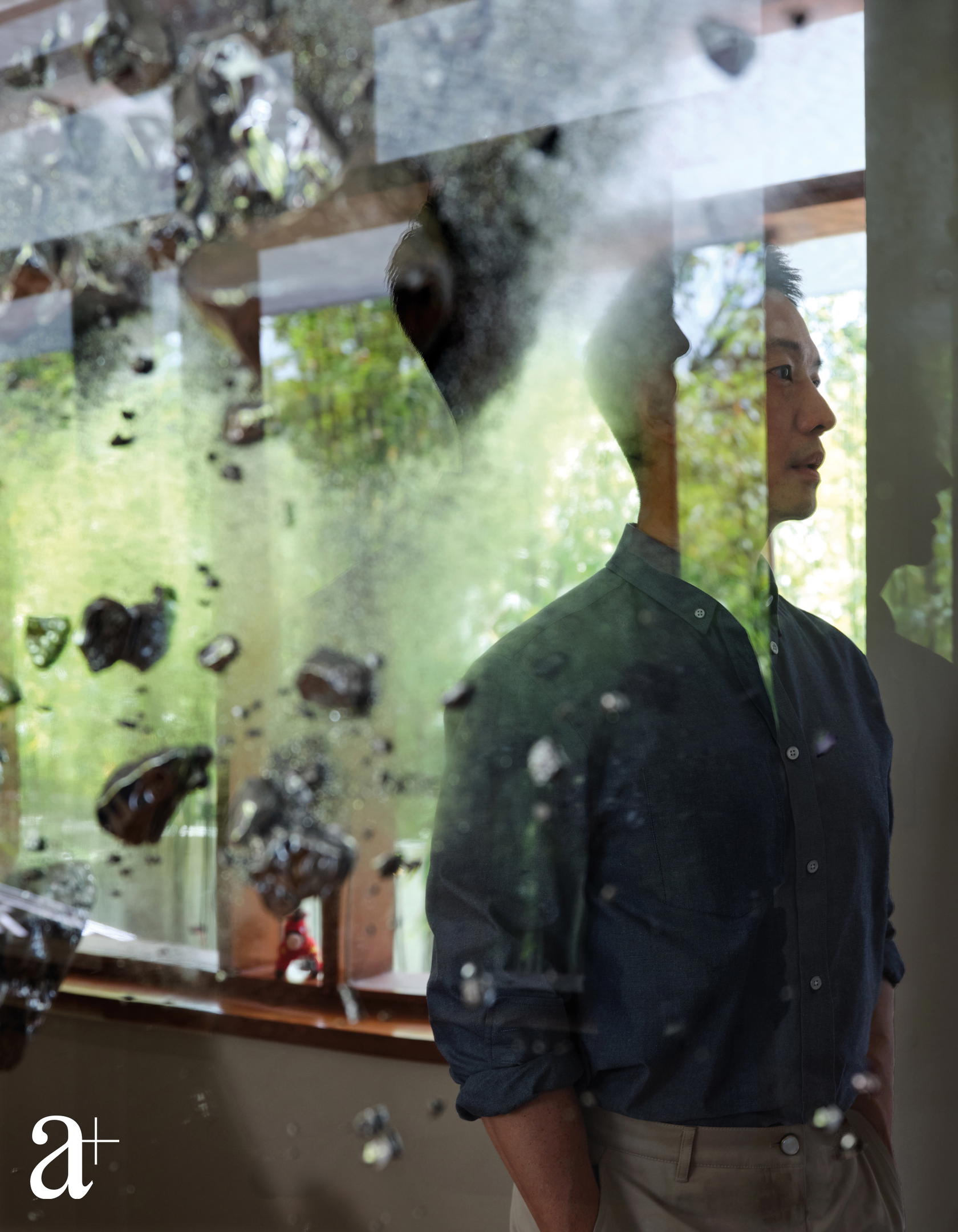
That said, he hopes for traditional architectural principles to be preserved. They involve circulation, feeling, and the experience of walking through a space—the less tangible things. “There is a difference between looking at a building while driving on the highway and weaving through it.
“I don’t know if AI can really get there yet. I’m sure it can, but I think it may start to prioritise what is easily generated or visually immediate, rather than the more nuanced spatial qualities that are only understood through movement and physical experience.”
Has he ever had to tell a client that a bigger budget doesn’t translate into a better design? “Shamefully, no,” he says as he breaks into laughter—one of the few moments he responds without gravitas. “I’ve had clients tell me, ‘If I give you nothing and you can come up with something, it means you’re the best designer’. My answer to that has always been ‘No’. We’re responsible with budgets, of course, but we have more to play with when we have a bigger budget.”
Brewin has several exciting projects on the horizon. Among them are Capella Nanjing, due to open in 2027, and further down the line, Capella Shenzhen and Capella Tokyo. The firm is also working on a project in Yamanakako, Japan.
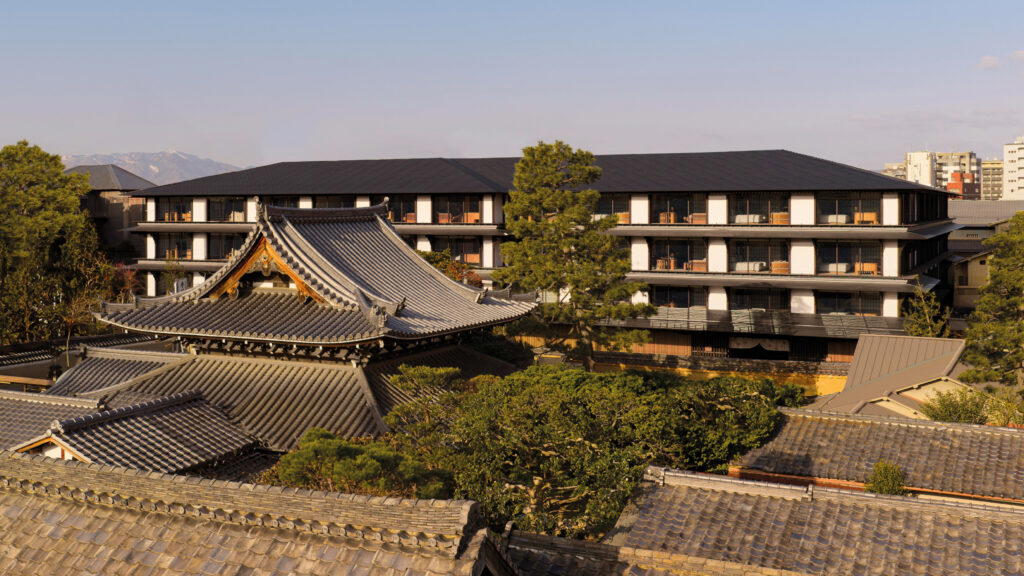
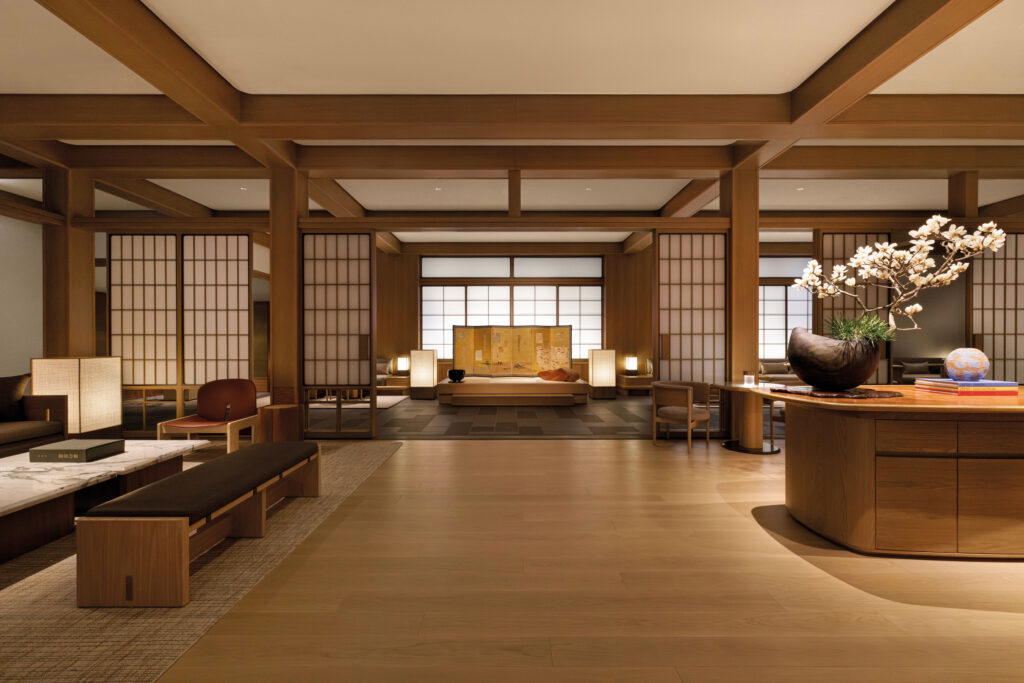
If Cheng hadn’t delved into architecture and interior design, he might have been a fashion designer, he lets on. Design will always be in his wheelhouse and he still enjoys fashion. The edgiest item in his closet is a pair of red leather boots he’s never worn.
But that’s all hypothetical. Not only is he making a splash in the luxury hotel industry, but he also believes that the interior design field has yet to produce its best work. “I hope to keep pushing the boundaries. I want to build a firm that is not just about me, and to grow a team of partners and associates to collectively build a language, vision, and voice that will go down in history.”
He would however think twice about passing on an interior design legacy to his two children. “It’s a tough life in this industry,” he says. “It’s not tough because it’s hard to make a living, but because we’re at the beck and call of a brief and must deal with people’s idiosyncrasies. It takes its toll and you can become jaded.
“Still, this is why I want to have renewed energy. I want to keep meeting like-minded clients and designers.”
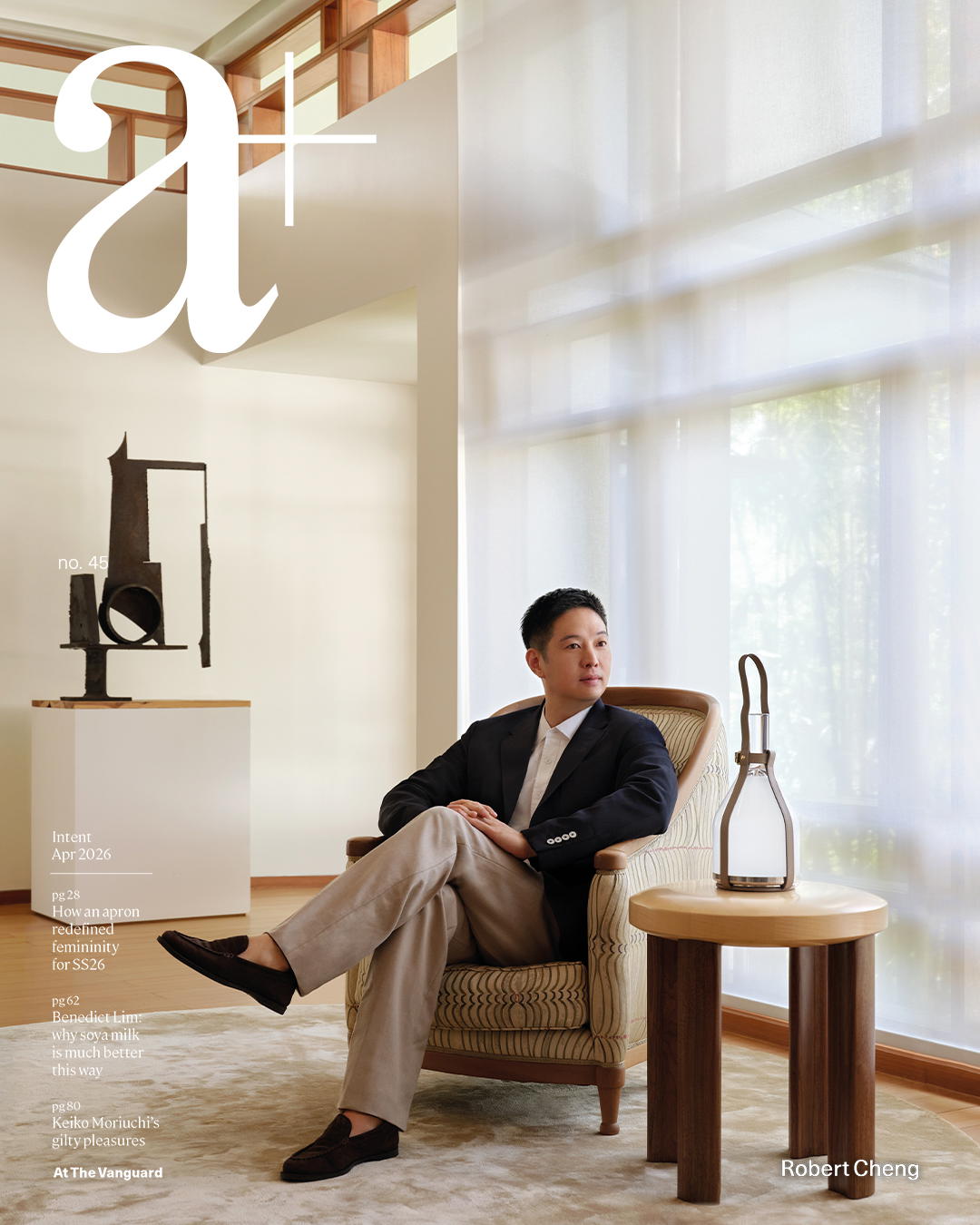
Photography Wee Khim
Styling Chia Wei Choong
Grooming Wee Ming using Ouai and Tom Ford Beauty
Photography assistant Ivan Teo