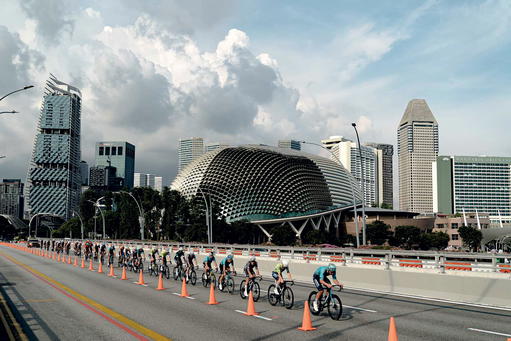
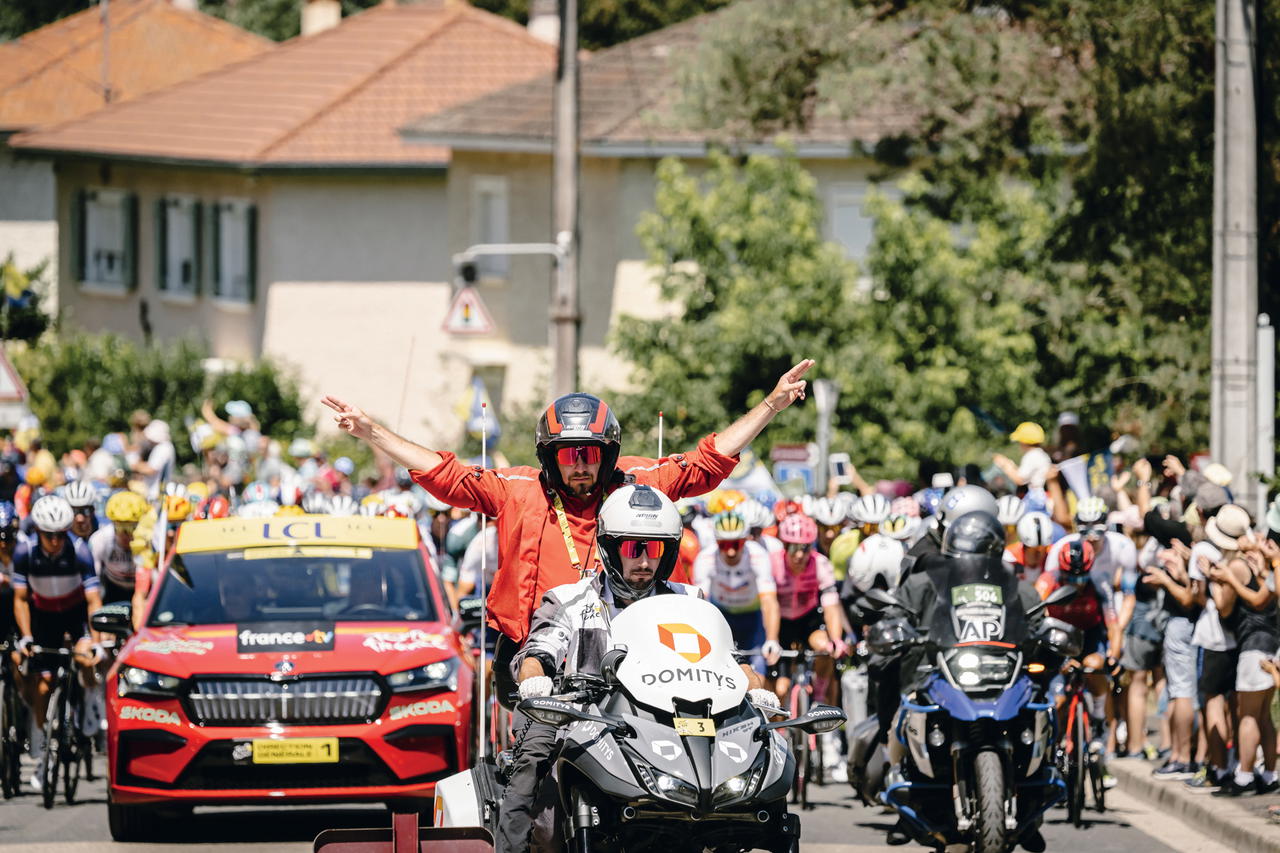
At the Tour de France (TDF) EFGH Singapore Criterium 2026, the racing may unfold at full speed, but the work behind it begins long before the first rider crosses the start line. Beyond course design, there are issues such as safety, logistics, television production, and the intricate choreography of an entire race convoy to consider.
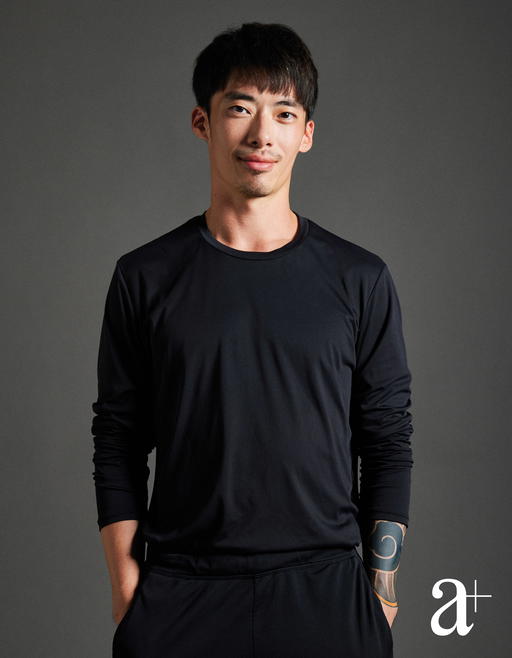
Few understand what goes into making that happen better than Jean-Marc Marino, Race Director of the TDF EFGH Singapore Criterium. A former cyclist, Marino completed his first professional race in 2005 at the age of 21, before turning professional in 2006. Over a career that lasted until 2014, he competed in several of cycling’s biggest races, including TDF, La Vuelta, Paris-Nice, Criterium du Dauphine, and the Belgian Classics.
While he has never won a professional race, victories were never the measure of his role. Marino’s experience and ability to read a race allowed him to support his team and its leaders, including Peter Sagan, in his role as road captain. Of all the races he competed in, the Tour de France remains his most memorable.
After retiring from professional cycling, he joined Amaury Sport Organisation (A.S.O) in 2015, initially as a VIP driver for guests across its different races. In 2016, he trained in race regulation before joining A.S.O full-time as an assistant race director. Years spent working across different races and learning the many facets of race organisation eventually led to his role as a race director—a natural progression that combined his experience inside the peloton with his understanding of the race from an organiser’s perspective.
Ahead of the Singapore Criterium, Marino speaks to us about life inside the peloton, the challenges of transforming Singapore’s city streets into a professional race circuit, and why the introduction of a Team Time Trial adds a new dimension to the weekend.
When did your love for cycling begin?
It started with a simple feeling of freedom. As a kid, having a bike meant endless possibilities—there was always a road to explore, a horizon to chase, and new landscapes to discover. Then I found a cycling club and uncovered a new side to the sport: competition. We learnt tactics, built trust, and found ways to win races. That added a whole new dimension to something I already loved. Cycling has always been a lifelong game of joy. Even as it evolved into my profession and my current role, I never let go of that core sense of freedom and delight.
How close is the event today to what A.S.O envisioned in 2022, and what has been the biggest surprise?
It has developed beyond what we initially imagined in 2022. A.S.O’s exceptional relationship with the local organisation is a major reason. Despite our friendship, we also have a high level of professionalism.
As a result of this strong collaboration, we have built a very special event. Today, riders genuinely want to be part of this event. For me, the biggest, most positive surprise has been how quickly it has developed its own identity and become special on the cycling calendar.
What does a race director do to manage race day?
The work starts long before the cyclists roll off. It is a flurry of planning: mapping the course, ensuring safety, selecting riders, coordinating their travel arrangements, drafting race regulations and working closely with the race commissaires. We also design and schedule the day’s events and activities to keep the programme engaging from start to finish.
On race day itself, I work closely with the president of the Commissaires’ Panel to ensure the race unfolds smoothly and fairly, overseeing intermediate competitions and classifications as they arise.
In Singapore, what are the biggest technical challenges?
Safety is our top priority. We adhere to all Union Cycliste Internationale (UCI) safety regulations and strive to exceed minimum requirements. On an urban circuit like Singapore, every potential hazard is identified, clearly marked, and protected. We use specialised barriers and extra protection, including safety padding in areas where crashes could be more severe.
Another key focus is the quality of TV production. As it represents TDF in Southeast Asia, we partner with the same TV production team and apply the same standards of excellence, precision, and professionalism to deliver a world-class broadcast.
How do you work with the local authorities to minimise disruption to residents and road users during the planning?
We balance showcasing Singapore’s route with minimising disruption to daily life. By partnering closely with local authorities, we design smart diversions and alternative routes, so road and pedestrian traffic can continue as smoothly as possible.
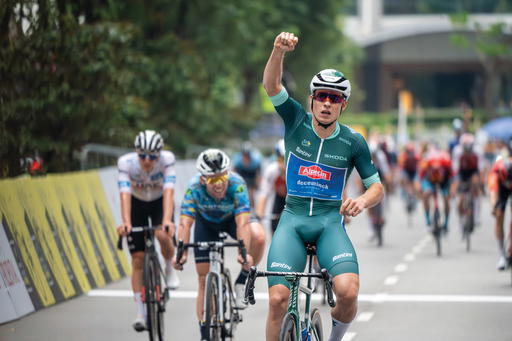
Jasper Philipsen, Biniam Girmay, Paul Seixas, and Isaac Del Toro are confirmed. How does having riders with such different strengths excite you?
It is a great line-up with some of the world’s best sprinters facing two of the most exciting young talents in international cycling. Their contrasting strengths and racing styles will make the competition fascinating.
Is Singapore fundamentally a sprinter’s race, or does the circuit allow aggressive riders opportunities to break away and surprise the favourites?
Yes, absolutely. Sprinters and their teams may have difficulty controlling this circuit, so I expect a very open race. Of course, the sprinters will be among the favourites, but riders like Del Toro and Seixas can be unpredictable and are not afraid to attack. If they decide to make the race hard and take their chances, it could become exceedingly difficult for the sprinters to handle everything. This year’s race could prove to be exciting because of its unpredictability.
Why introduce the Team Time Trial format?
Cycling’s Team Time Trial is one of its most elegant disciplines. Besides speed and performance, it represents the true meaning of teamwork. Each rider has a role to play, and the team must work together. The TDF Team Time Trial in Barcelona showed that again. It was an incredible day for cycling in general because each team approached it differently. We thought: why not bring that spectacle to Singapore?
What role does Singapore play in A.S.O’s broader ambitions for cycling in Southeast Asia?
A.S.O is always looking for new opportunities, but our priority is to strengthen our relationship with Singapore and continue growing together with our local partners. We are here for the long term, to develop the event step by step and help promote cycling across Southeast Asia.