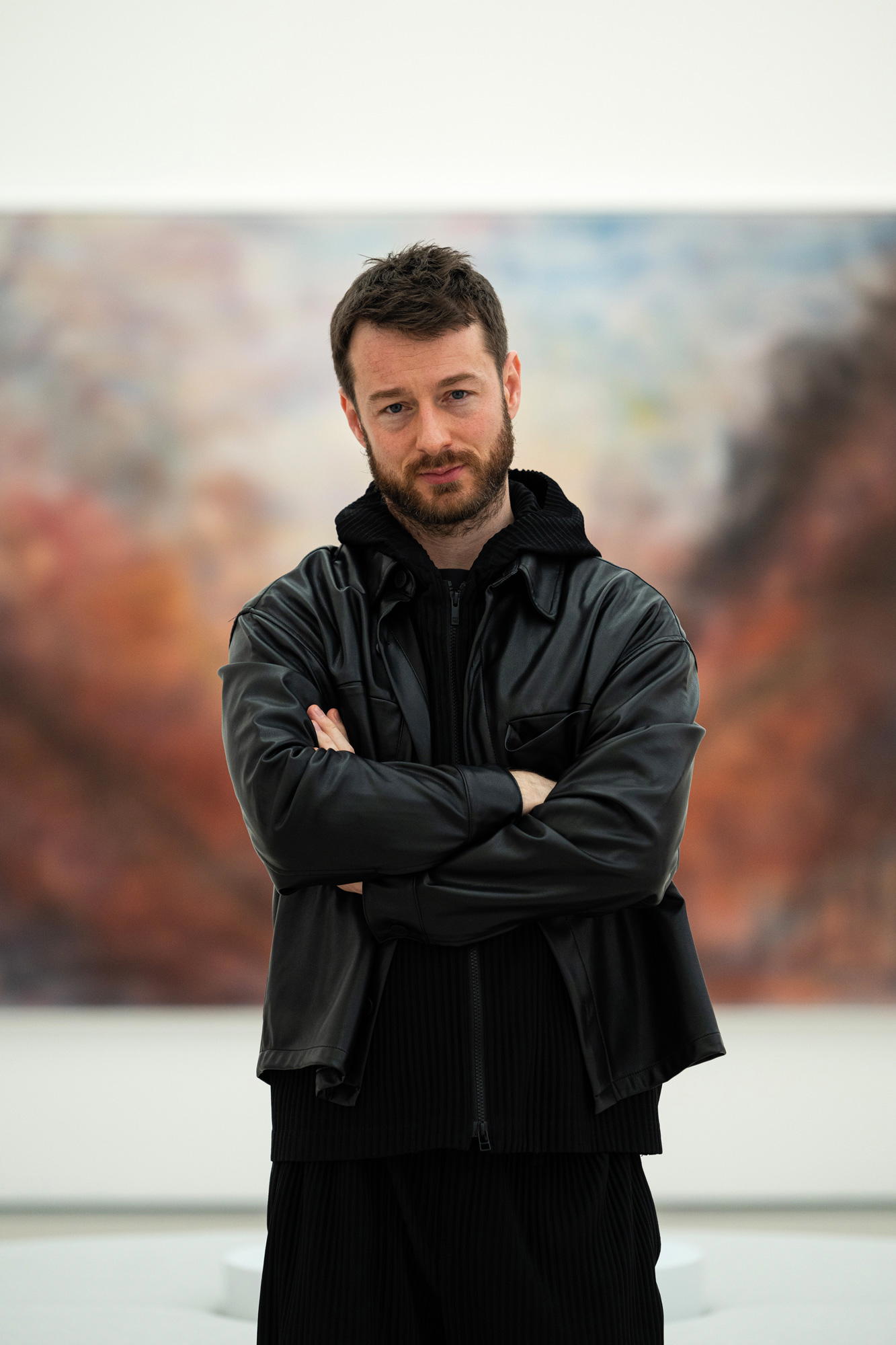
The sound is loud enough to rattle the railway arches near London’s Waterloo Station, Oliver Beer stands before an enormous canvas as harmonies surge through his studio.
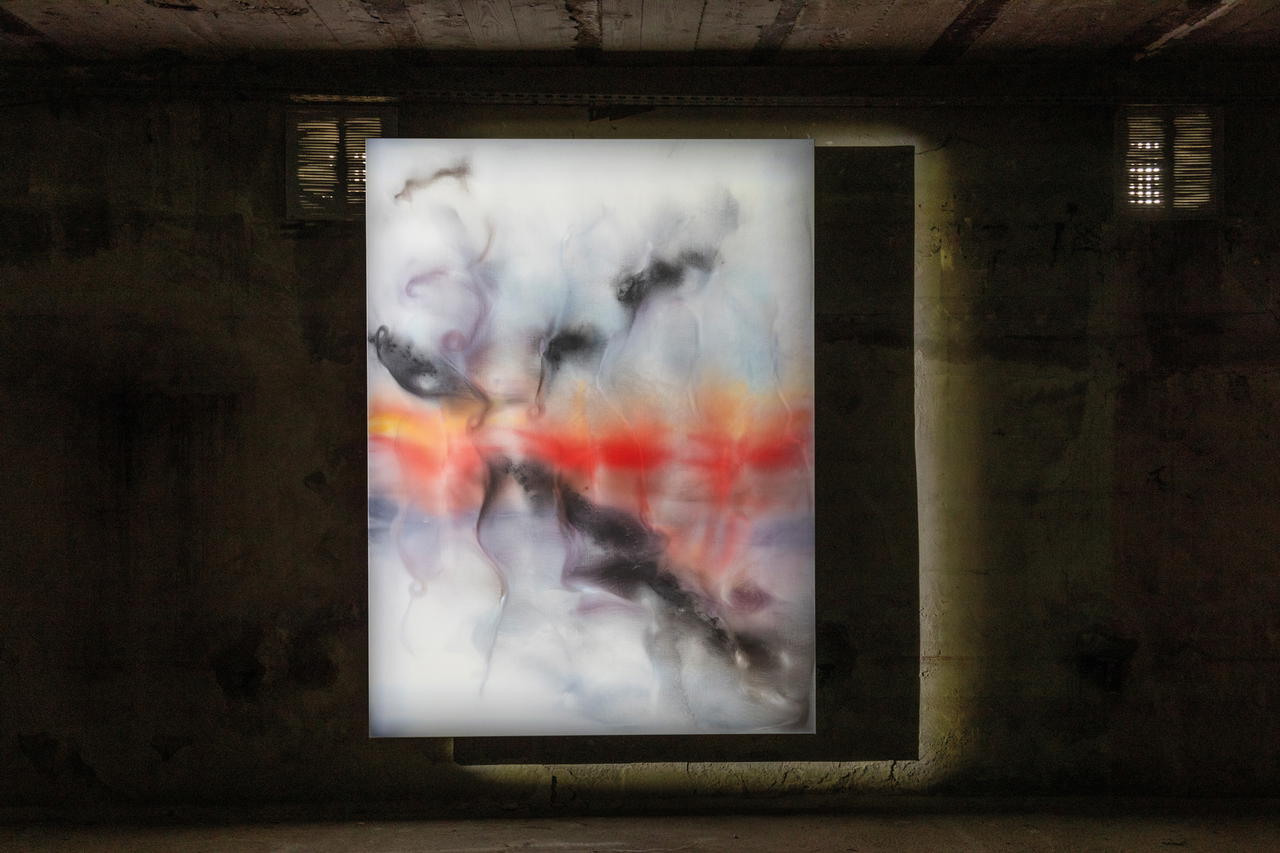
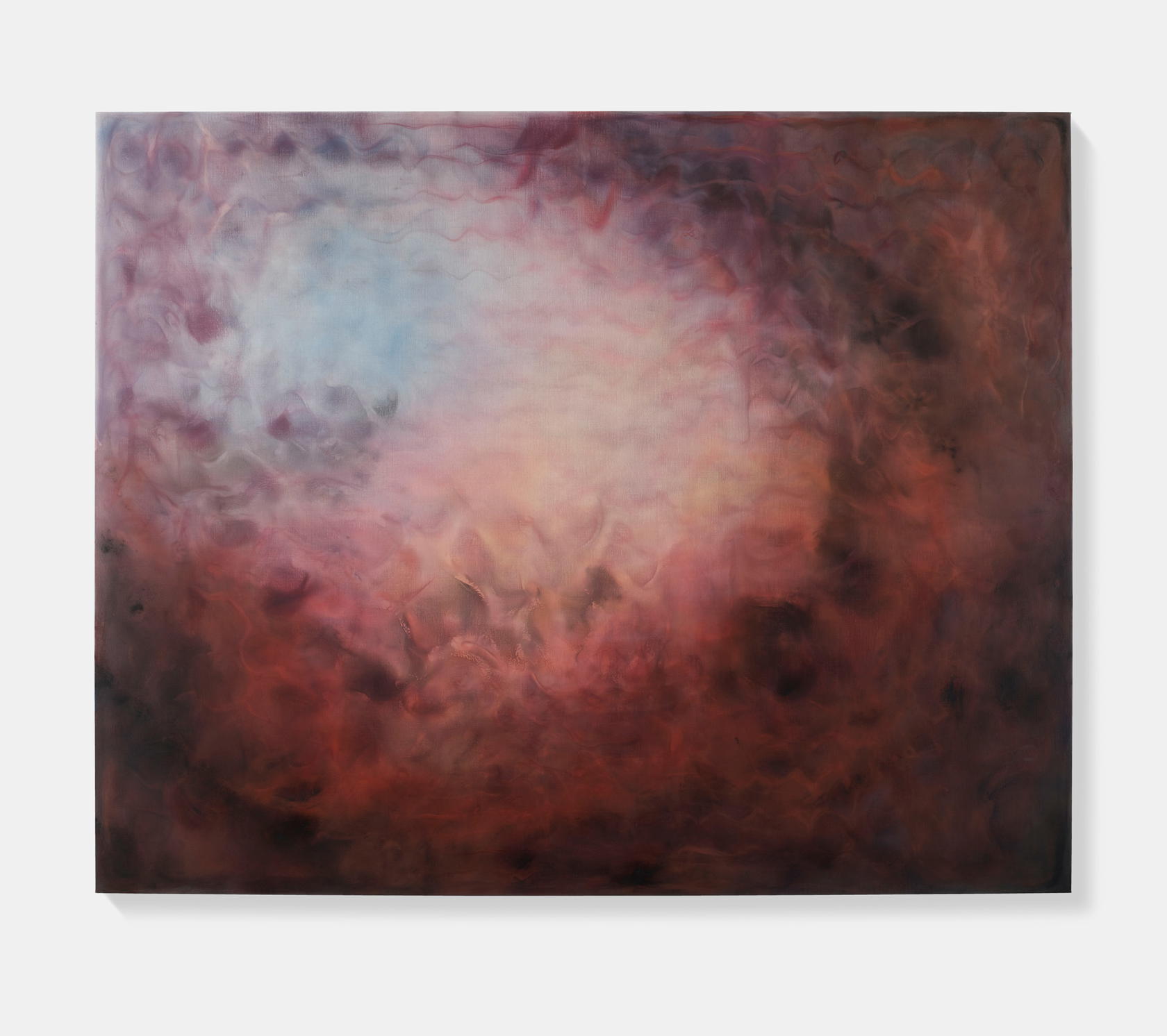
He does not have a brush in his hand. Instead, sound serves as the instrument. Speakers emit carefully calibrated frequencies through the horizontal surface, nudging ultra-fine pigments into motion until they settle into intricate, pulsating forms. The process is both physical and strangely contemplative.
The method of making these paintings, he says, is similar to playing the piano. As intense as they are, they are also so addictive and mesmerising that he can lose himself for hours. “It’s almost like a form of meditation.”
That synthesis of music and image has become one of the most distinctive artistic practices of his generation. Unlike many contemporary artists who explore sound, Beer pushes the relationship much further by letting vibrations sculpt the painting itself. Rather than representing music, his hypnotic ‘Resonance Paintings’ depict its direct physical imprint, creating glowing landscapes of colour by transforming invisible harmonics.
The seeds of that idea were planted long before Beer became an artist. When he was eight, a piano serendipitously found its way into his life. An eccentric pianist fleeing a bailiff asked to hide her Steinway piano in his family shed. After teaching him over eight weeks, she disappeared, leaving him to continue on his own.
Discovering that every object and architectural space possesses its own musical note, he made the bathroom resonate and the tunnels of the London Tube sing with natural frequencies.
It led Beer to study musical composition at London’s Academy of Contemporary Music. He later played with British indie band GoodBooks before attending Ruskin School of Art at University of Oxford. In reality, it was less a change of direction than an expansion of the same fascination.
“I knew I never had to separate art and music—no one ever told me I had to. I could always see the shape of sound in my mind and hear what every space would sound like. Shape and sound are so fundamentally connected.”
PAINTING WITH MUSIC
That conviction led Beer to an early experiment, collaborating with the university’s physics department, while still at Oxford. Vibrations across the surface of an Irish drum scattered flour into beautiful, nebulous forms. The demonstration drew on cymatics—the science of visible sound and vibration—yet he immediately recognised artistic possibilities that others had overlooked. “I found it insane that no one had ever taken this principle far enough to paint with the same precision or depth as you make music.”
The breakthrough did not happen overnight. It was more than a decade later that Beer began to explore in private, teaching himself an entirely new visual language before showing anyone the results.
Now, he no longer waits to see what waveforms will be produced. He already knows: “I know what patterns will shape according to which notes I play. I can paint the same painting twice.” The result is a practice that sits between painting and composition, where each note leaves a tangible trace.
In his lifelong quest for resonance, Beer has explored opera houses, museums, and architectural landmarks far beyond his studio. But nowhere was this more transformative than in the prehistoric painted caves of Dordogne in Southwest France.
SINGING WITH THE PEOPLE BEFORE US
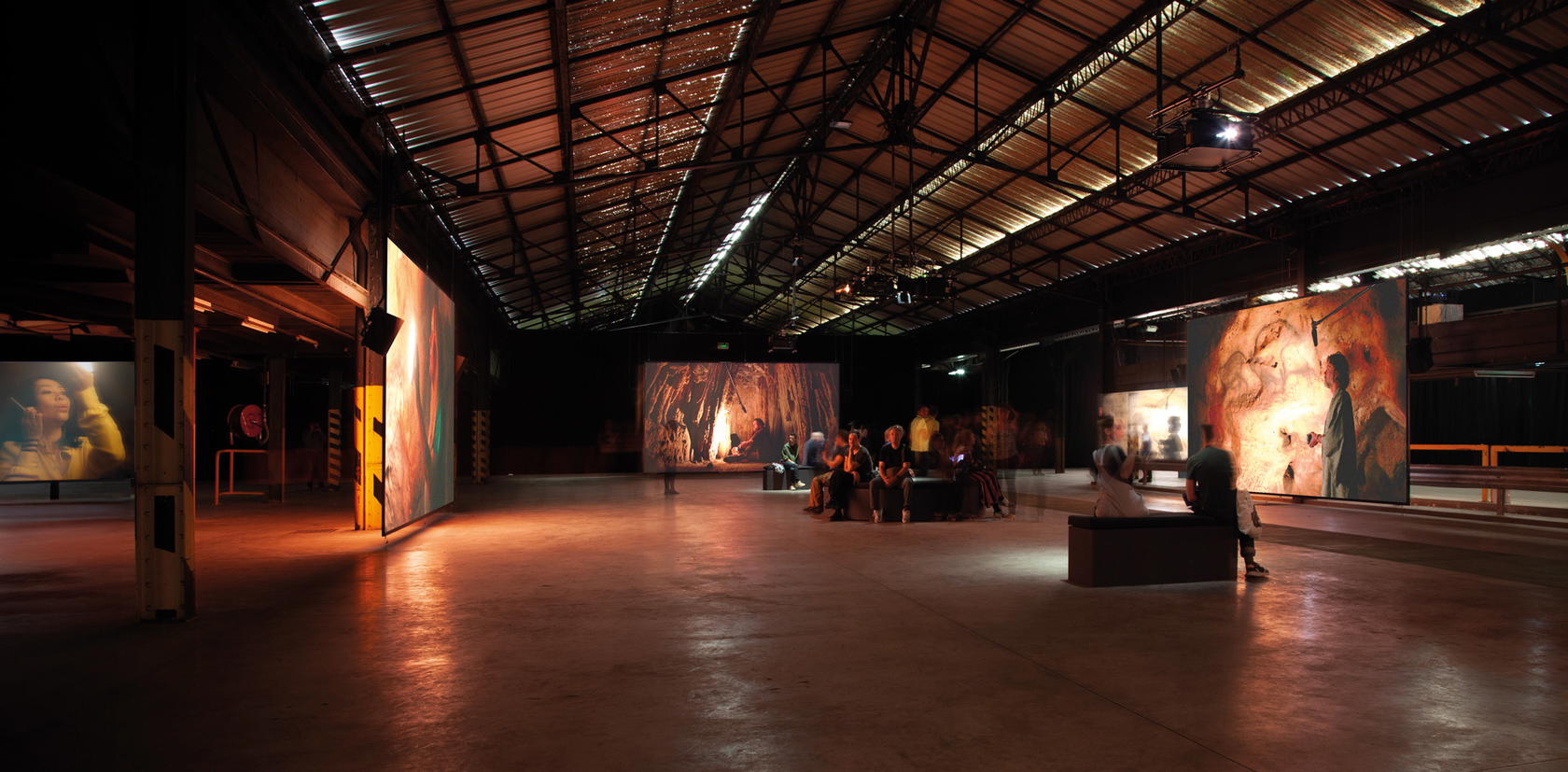
For his video opera, “Resonance Project: The Cave”, Beer spent three years singing and recording with eight vocalists, including Rufus Wainwright, Michiko Takahashi and Woodkid, inside a cave decorated by Palaeolithic artists. What began as an inquiry into acoustics grew into something far more profound.
“It was totally wild. It was one of the most important artistic experiences of my life,” he says. “Going into the place where the earliest marks made by human beings in Europe and discovering a relationship between those paintings and music from 17,000 years ago was mind-blowing.”
He observed that the cave’s painted chambers often aligned with its most resonant acoustic points, suggesting that people sang the very same notes in the same spots. “It was almost a kind of vindication to understand that people had come before us and sung what I was singing, what we were singing together,” he reflects.
Whether vibrating pigments across a vast canvas or singing into the darkness of a prehistoric cave, Beer’s work returns to the same simple proposition. Sound is not merely heard, but felt, seen and shared.
Etched in Beer’s memory is a solitary negative handprint on one cave wall. Standing beside it, he contemplated a connection that transcends millennia. “The note I sang was like a voice print, the musical equivalent of holding your hand up to the print of that person’s hand. It’s like holding your voice up to their voice.”
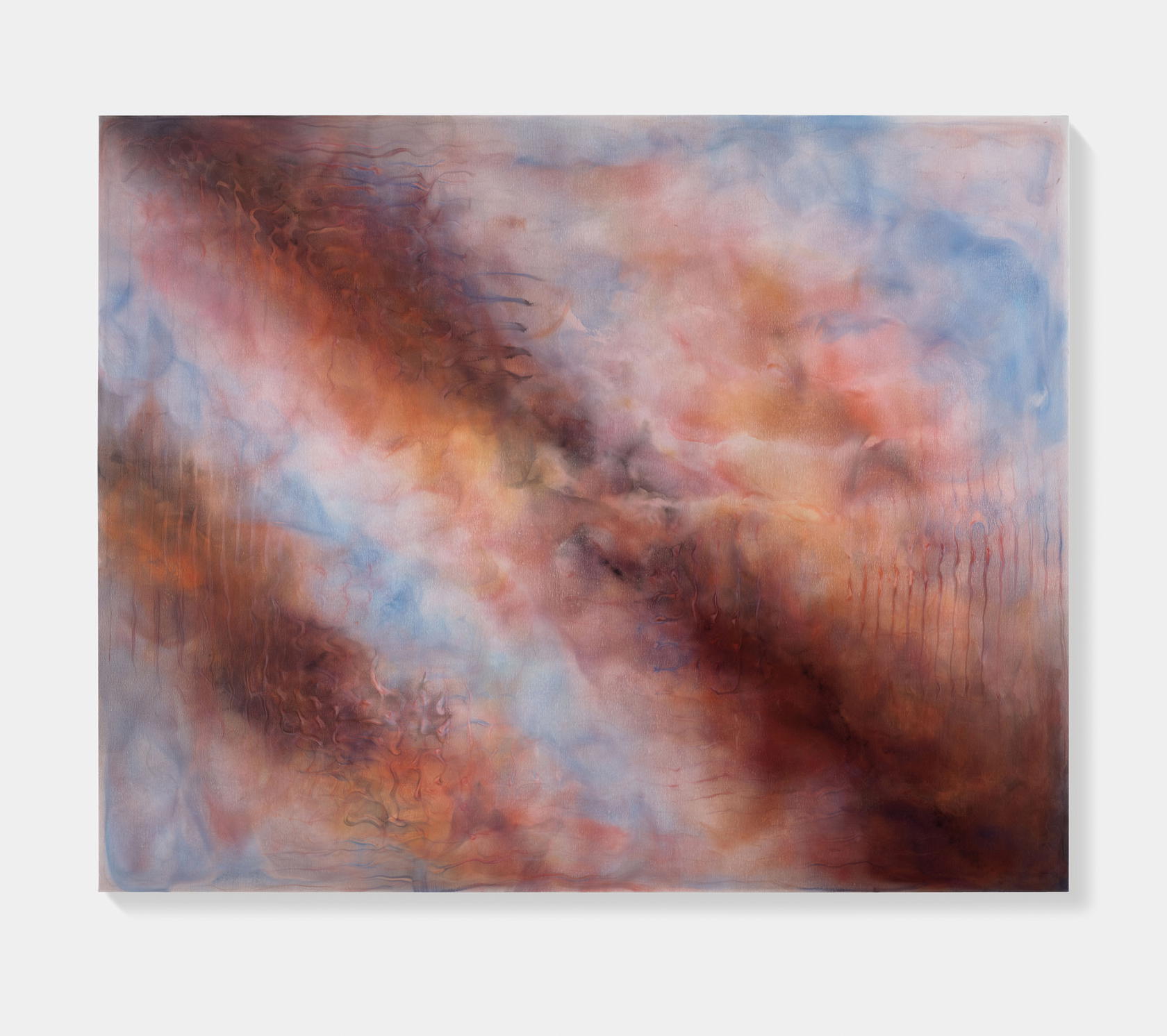
Those experiences found their fullest expression in Beer’s recent summer exhibition, “The Sky in the Cave”, at Thaddaeus Ropac in London. Large-scale ‘Resonance Paintings’, moving images, and music transformed the gallery into an immersive environment where visitors journeyed from the mineral darkness of the earth towards resplendent skies.
“I went into the cave expecting it to be very cold, dark and difficult,” he says. “But when you resonate with the cave, the space is transformed; the paintings above you almost become the roof of the Sistine Chapel. It’s this incredibly complex feeling of no longer being in the cave. Space is expanded and compressed at the same time.”
To create the new paintings, Beer returned to the same natural black and red pigments used by Palaeolithic painters, letting the colours evolve. Earthy ochres gradually dissolved into indigos, pinks, celestial blues and soft yellows, mirroring an ascent from subterranean depths to open sky. The exhibition was accompanied by a limited-edition vinyl soundtrack featuring music recorded inside the cave.
“When we were in the cave, the music was the key to unlocking the paintings. It’s also the key to the paintings in the exhibition. The music is transformed by the paintings, and the paintings are transformed by the music.”
This dialogue between sound, space and image continues to gather momentum. After its debut at the 2024 Lyon Biennale, “Resonance Project: The Cave” travels to the Kiasma Museum of Contemporary Art in Helsinki in November.
PLAYING BY EAR
In the autumn, Beer’s monumental commission will also be unveiled at Large, the new contemporary art centre on Ile Seguin outside Paris. Approximately 14m long, it is his largest ‘Resonance Painting’. Additionally, a major public sculpture in the shape of an acoustic stone arch for the Beaufort Triennale on the Belgian coast follows in Spring 2027.
Beer, however, has never been concerned with scale. Whether vibrating pigments across a vast canvas or singing into the darkness of a prehistoric cave, his work returns to the same simple proposition: sound is not merely heard, but felt, seen, and shared.
In an increasingly noisy world, his art offers something unexpectedly rare—a reason to stop, listen, and discover that the oldest frequencies still move us.