As the world groans under the weight of the crises of geopolitical fracture, economic uncertainty, a warming climate, and rapid technological change, there is a growing need for spiritual reconnection. Into that landscape, “Mariko Mori: All That Shines”, which opened at the Mori Art Museum in Tokyo on 31 October and runs through to 28 March 2027, offers a note of hope as it presents the work of a visionary artist who has spent three decades asking how everything might be more interconnected.
Born in 1967, Mori is widely regarded as one of the most significant contemporary artists to emerge from Japan in the past 50 years. Her practice probes life, death, and the cosmos, weaving Buddhist and Eastern thought with cutting-edge technology.
“Mariko Mori: All That Shines” is her first major institutional retrospective in Japan in 24 years, since “Pure Land” at the Museum of Contemporary Art Tokyo in 2002.
Organised by the Mori Art Museum in collaboration with The Solomon R. Guggenheim Foundation, the show features roughly 40 works, including performance-based photography and video, drawing, sculpture, and large-scale interactive installations, from more than three decades.
Her father, Kei Mori, a scientist and university professor, is known for inventing the Himawari solar lighting system based on fibre optics. Her mother, an art historian, the value of paying attention to details.

Speaking to me over Zoom, unhurried and choosing her words, Mori recalls her first brush with artistic freedom to a specific day: arriving in Philadelphia during her father’s visiting-scholar tenure at the University of Pennsylvania.
It was her first day at the preschool. As she remembers, the other children were already close to finishing their work with drawings covering adult-sized, life-size sheets of paper on the walls.
Before she had even begun drawing, her large sheet of paper had already been mounted on the wall, and she could only reach the lower part to draw on. It was her first encounter with art education, and her first exposure to freedom to work on a larger scale, with no limitation.
“In my early 20s, after my father’s passing, I confronted the fragility of life and began to wonder: does human existence truly end?” Mori writes in her artist statement.
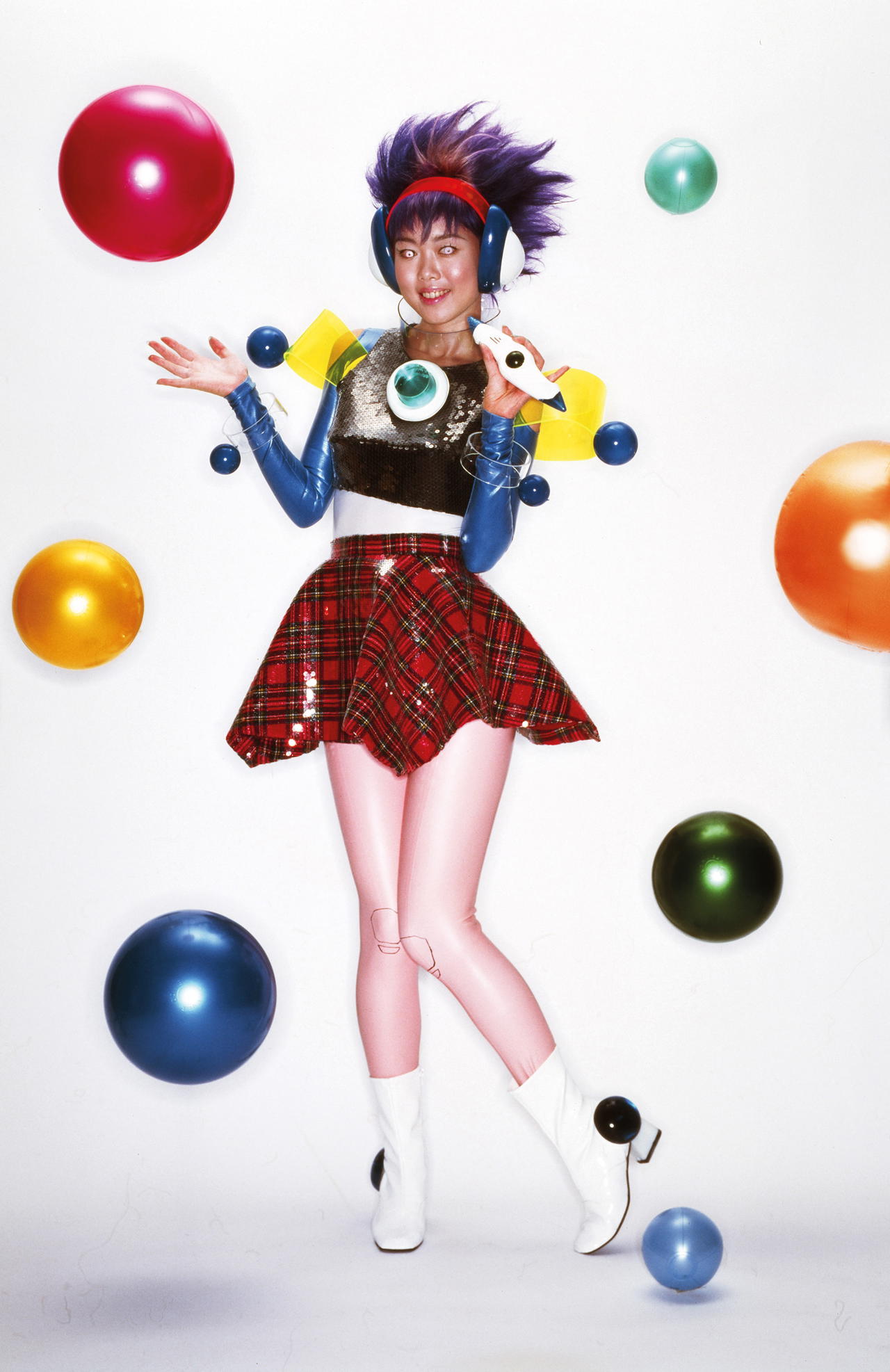
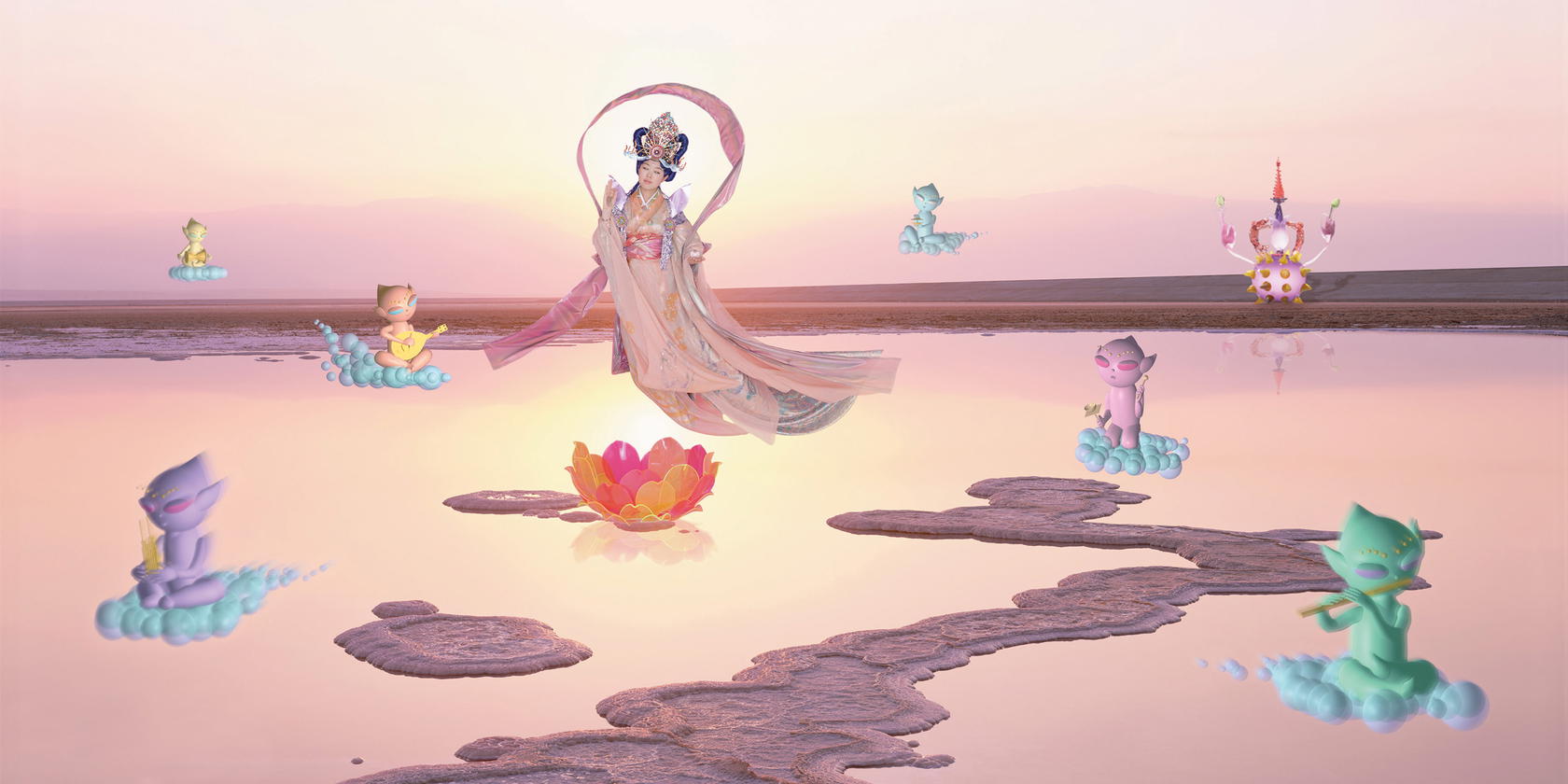
She made her name with the ‘Cyborg’ series from the mid-1990s. The elaborately staged, sci-fi-inflected photographs and videos portrayed her as a run of futuristic personas loose in ordinary Japanese life: a cyborg riding the subway, an office lady serving tea in a male-dominated corporate workspace.
In her quest for truthfulness, she first sought answers in Buddhism, then in astrophysics books, before travelling to ancient cities and sacred sites around the world—Giza, Lalibela, Angkor Wat, Teotihuacan, Machu Picchu. She also visited Neolithic sites in Japan, from Idojiri and Oyu, and those in Western Europe like Orkney and Newgrange.
Along the way, she came up with a guiding principle that has anchored her work since: if something like a soul exists, it might be light.
“Although life and death may seem to be separated on a material level, they may not be fundamentally divided on a deeper level. That sensation lives quietly within my works as an inner light, nameless, yet breathing,” she says.
As the century turned, and global tensions rose after the September 11 attacks, her focus shifted from an individual, technologised identity to something more collective.
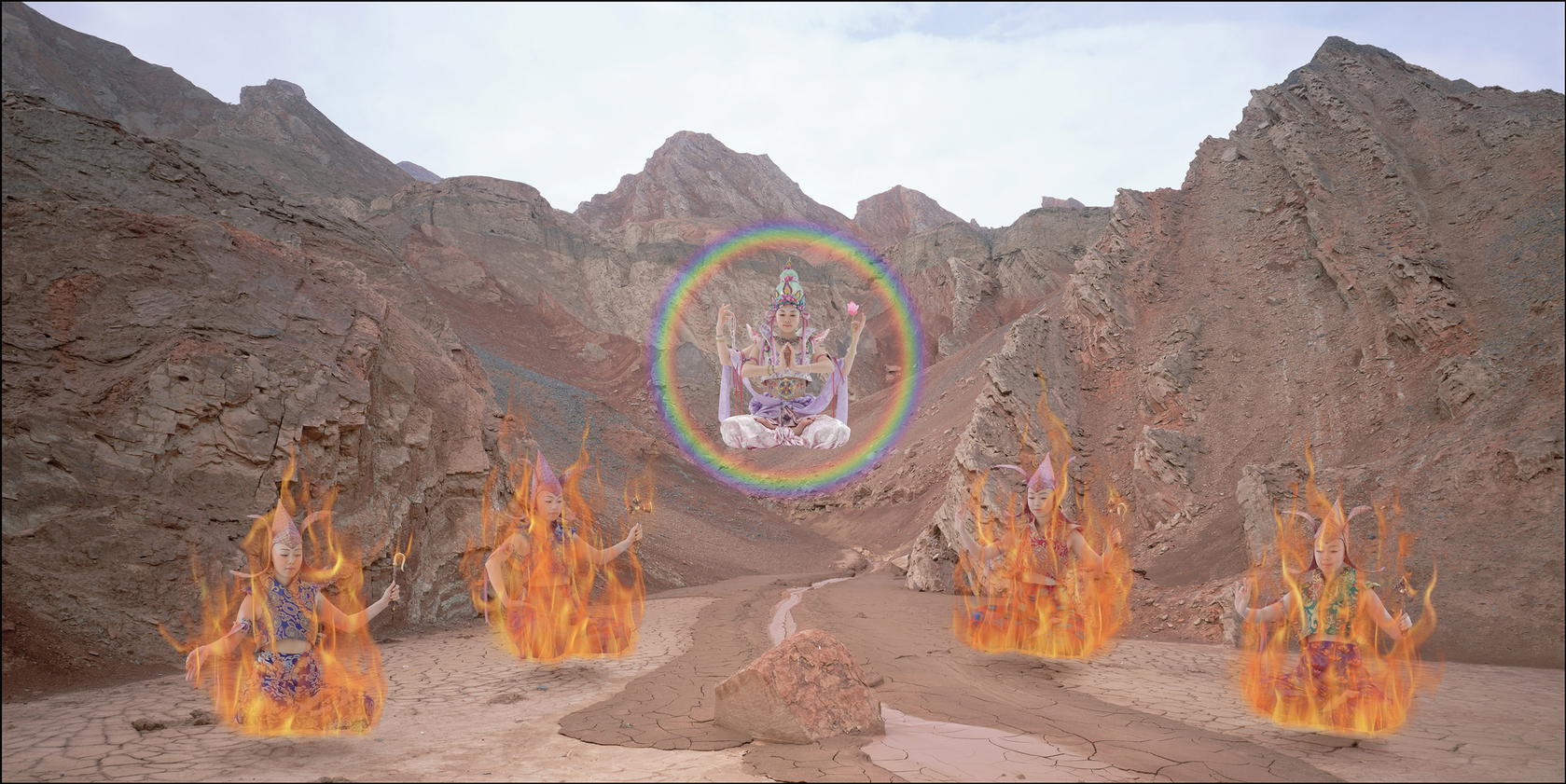
Oneness, as she calls it, advocates the interconnectedness of all life across time and space. This extends from deep geological history to the scale of the universe—grounded in research and collaboration with scholars and scientists on subjects such as animism, prehistoric Jomon culture, ancient Celtic cultures, the Buddhist Yogacara philosophy, astrophysics, and elementary particle theory.
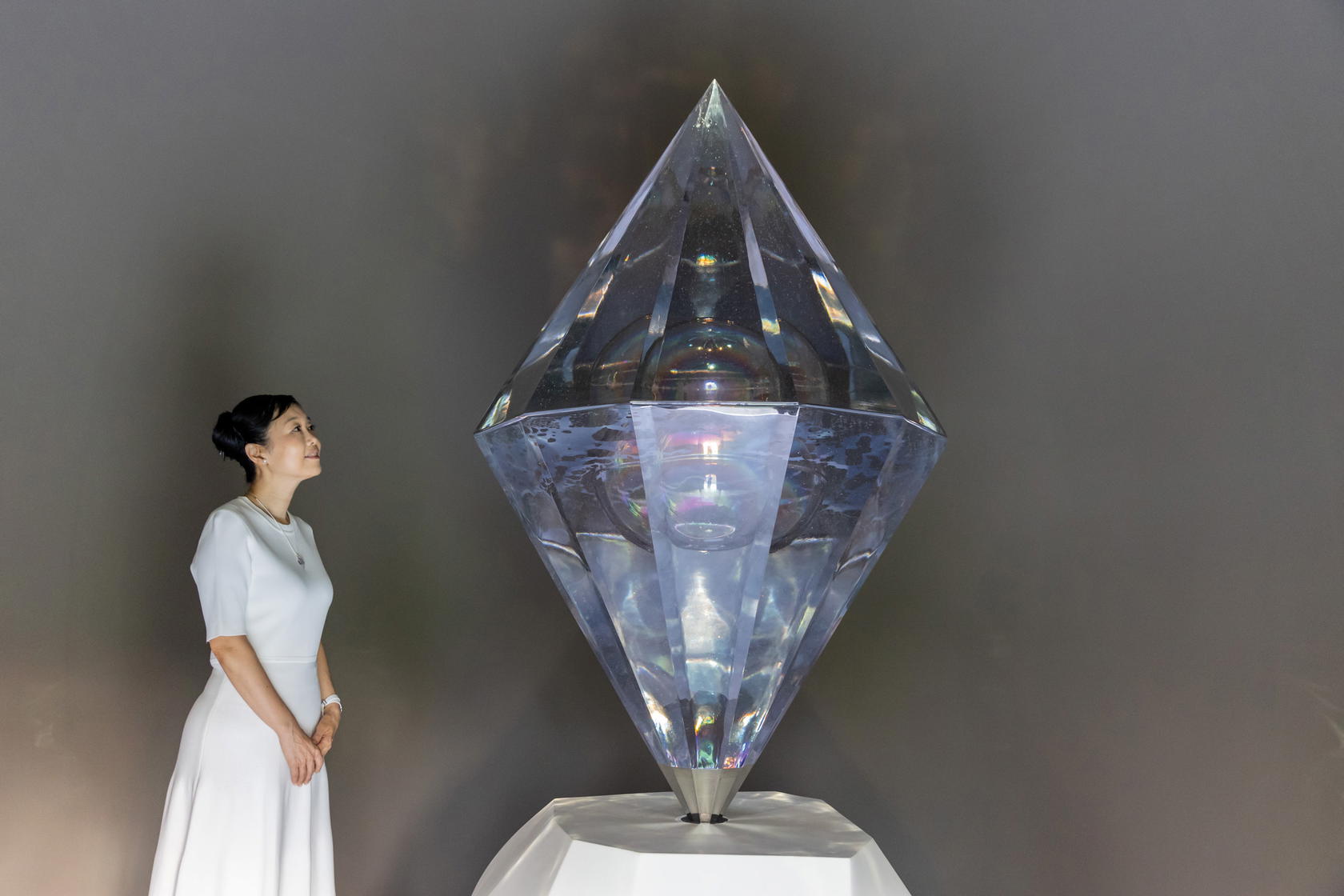
‘Wave UFO’ (1999–2002) is among her best-known works, centred on a functional brainwave biofeedback interface. . Inside a biomorphic fibreglass pod, participants’ brain activity is captured and translated into a shared, shifting visual field above their heads. “I wanted to visualise and share the inner universe of how we were connected,” she reflects.
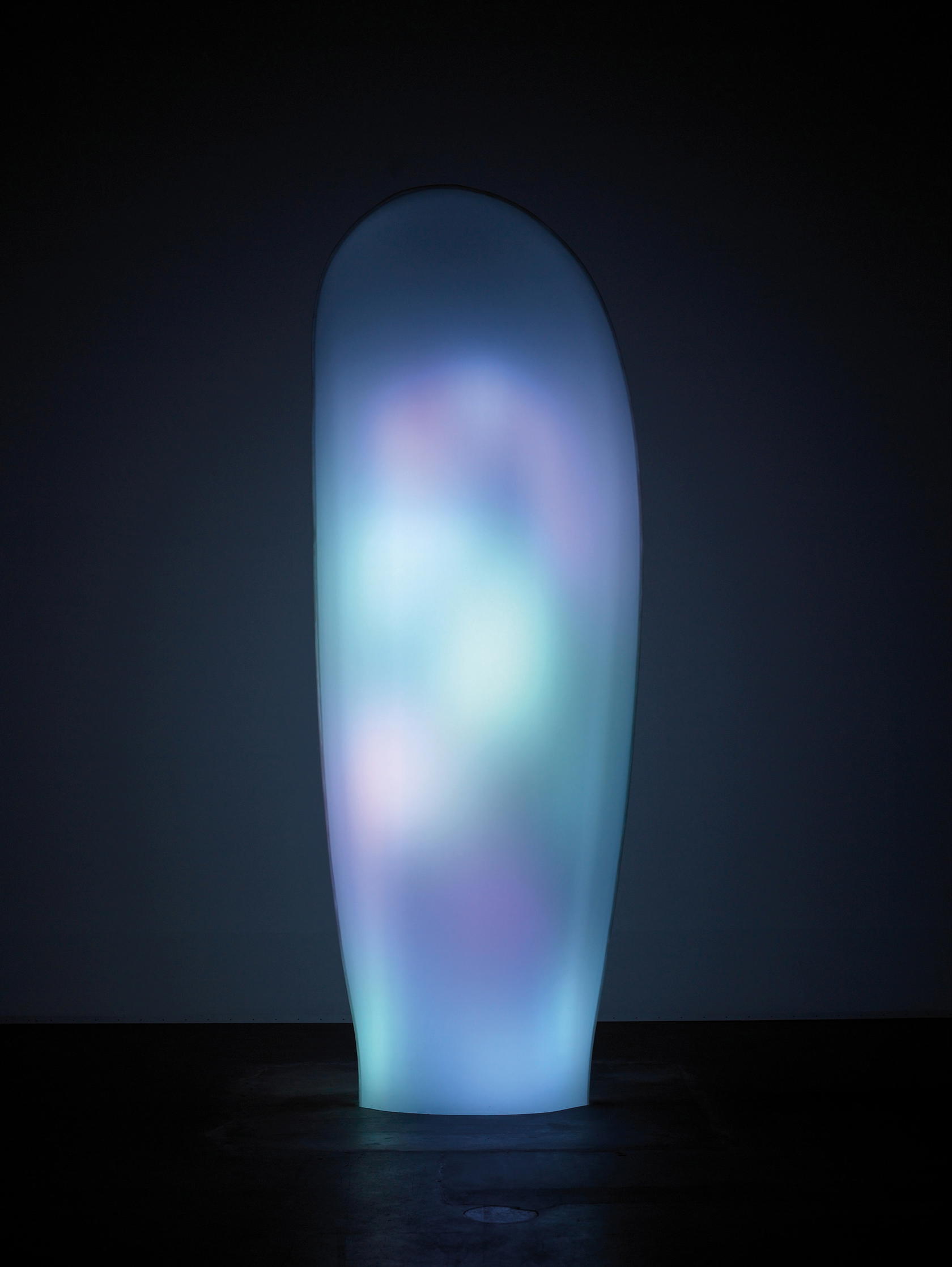
The exhibition also spotlights ‘Tom Na H-iu’ (2006), a monolith-like sculpture wired to real-time data from Japan’s Super-Kamiokande neutrino observatory, translating real-time neutrino detection events, including those from the sun and the atmosphere, into pulses of light. In addition, it incorporates a simulation mode based on supernova SN1987A’s 1987 neutrino burst.
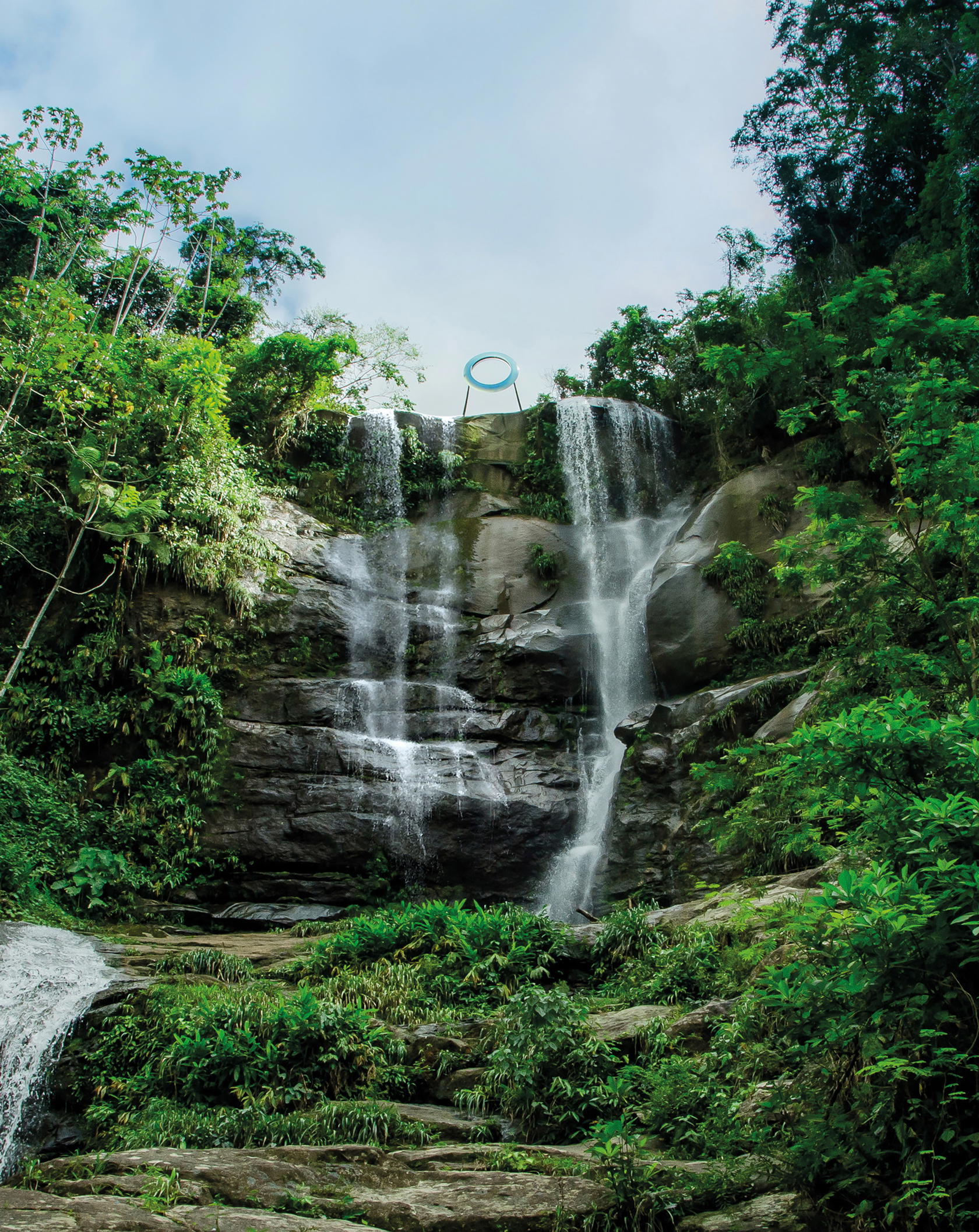
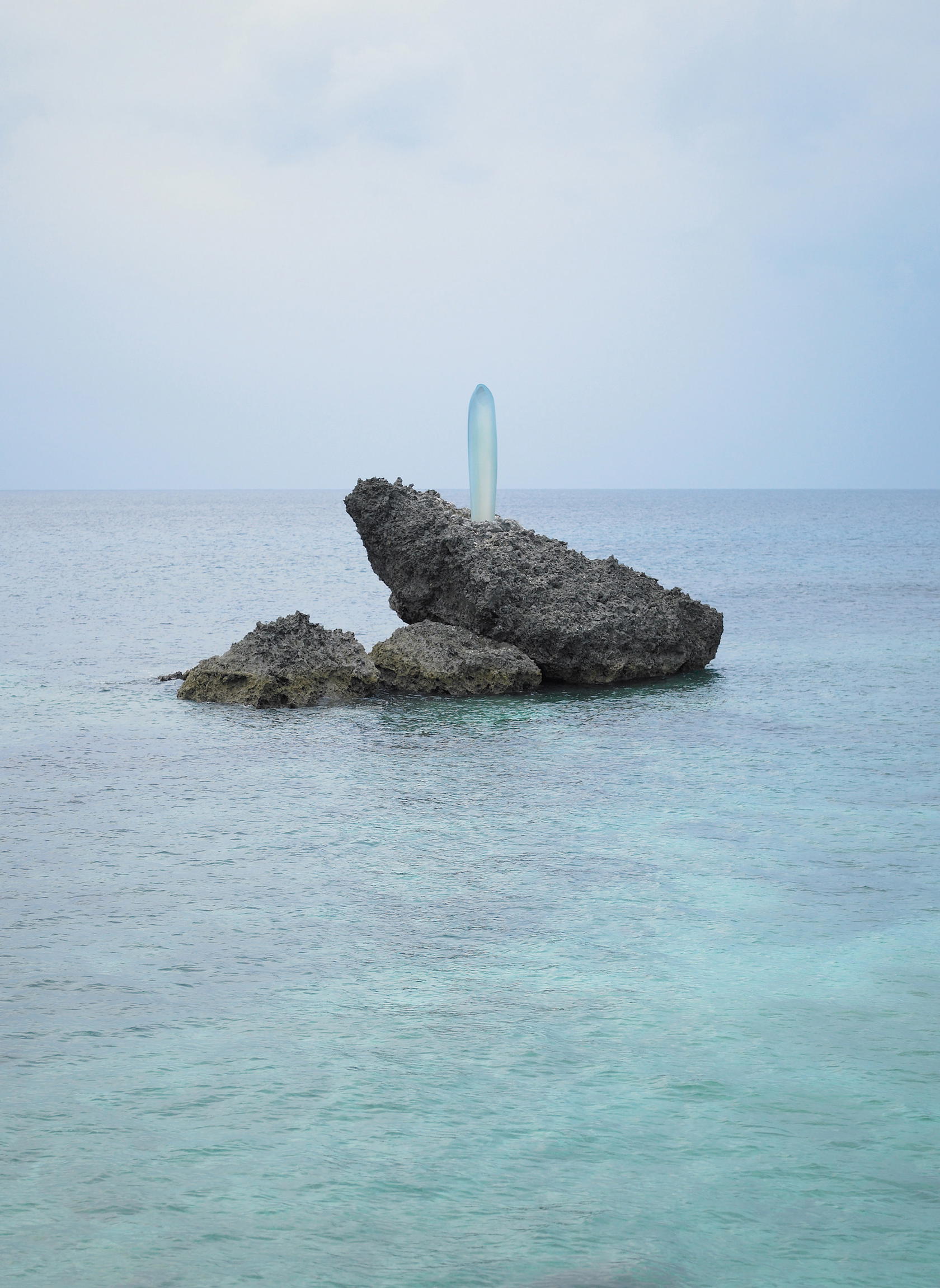
These works are presented alongside video documentation of monumental, site-specific outdoor pieces. They include ‘Primal Rhythm: Sun Pillar’ (2011) at Seven Light Bay on Miyako Island in Okinawa and ‘Ring: One with Nature’ (2016), a luminous ring suspended at the peak of of Rio de Janeiro’s Véu da Noiva waterfall. Both shift colour through the day and align with the sun on the winter solstice. Both trace back to the Faou Foundation, which Mori established in 2010 to permanently install artworks in unique ecological settings worldwide, in service of environmental consciousness, ecological preservation, and reverence for nature through art.
She says, “Nature becomes like a mirror to yourself. In human society, we always draw distinctions—self versus others, humans versus nature—but before pristine nature, you realise you’re nothing special. You’re just part of the nature you belong to.”
Mori now divides her time between the US and Japan, spending part of each year in a pearlescent house on Miyako Island called Yuputira, named for the island’s sun god.
She finds the coral reefs magnificent —their colours and species endlessly varied—and the sea itself, a beautiful world on its own. Yet she also notes that the human world is no less enchanting: Tokyo’s Shibuya, in her view, is equally alive and brimming with energy.One ritual, however, grounds her above all: the Way of Tea.
She began practising tea ceremony around 30, following her grandmother’s death; her grandmother had been a tea ceremony teacher, and the practice started to stay close to her. “I wanted to reconnect with my grandmother because I missed her,” she says.
She found the practice condensed Buddhism, Zen, Shinto philosophy, and Chinese philosophy into a state of oneness where host and guest moved together. “It’s an installation in a way, embracing all the senses. Although the act is simple, it’s deeply rich,” she notes.
For 30 years, Mori’s work has been discussed largely within a Western contemporary art history, she reflects. This retrospective, the first in over two decades, offers a chance to reach Eastern audiences. For the first time, she is also working with generative AI to produce new imagery.e In a way, it is an extension of what she has been doing for decades in computer-graphics, although teaching a computer to understand what you are saying is a different kind of work.
Also, it can make “interesting mistakes—ones a human collaborator might never consider. In her opinion, technological curiosity is not going away; the key is how deliberately we use it. “AI is an unpredictable collaborator, and the outcome can be terrible or wonderful.”
Mori pulls me back to the exhibition’s title, “All That Shines”, and the invisible light at the heart of her practice: that all living beings have this inner radiance.
When I ask Mori about suffering and grieving in a world that feels fundamentally broken, she does not reach for a system or doctrine. Instead, she uses meditation as a means of “stepping out of the world”, often in the presence of nature. Gaining objectivity towards the present, she suggests, gives us the power to imagine beyond it.”Our minds can be really powerful projects, projecting the future,” she says. “If we keep our minds focused on compassion, love, freedom, and art then there’s a different reality you project. We can change that reality.”