
On June 1, Nicolas Bos assumed the role of CEO of Richemont Group, a prominent luxury conglomerate renowned for its ownership of esteemed houses such as Cartier, IWC Schaffhausen, Vacheron Constantin, and Van Cleef & Arpels—the latter of which Bos has overseen since 2013. His journey within the company commenced in 1992 when he joined the Cartier Foundation for Contemporary Art in Paris, which would lay the groundwork for his dedication to the arts.
Transitioning to Van Cleef & Arpels in 2000, Bos occupied pivotal positions, including creative director and head of North America, ultimately ascending to global president and CEO in 2013. Throughout his leadership, he was instrumental in driving the brand’s global expansion while ensuring it remained true to its raison d’être as a jeweller.
His innate talent for blending creativity with business acumen elevated the maison to new heights while nurturing an innovative and artistic culture. Bos’s passion for the arts permeated every aspect of his work from introducing breathtaking jewels to cultivating meaningful partnerships with artists and cultural institutions.
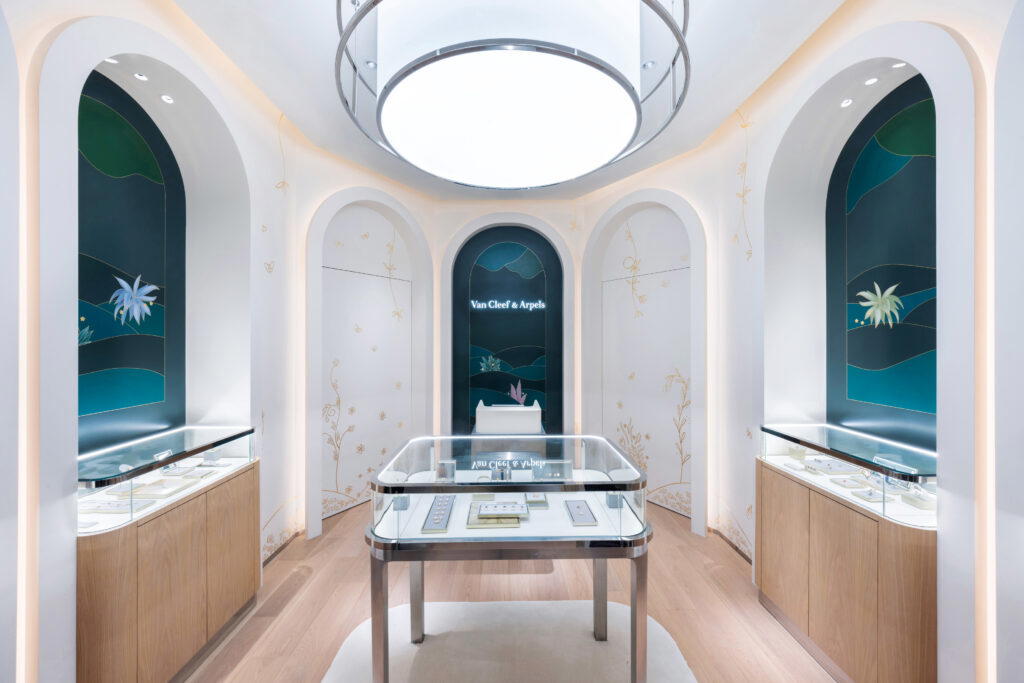
Boutiques have evolved beyond simple sales spaces. How has Van Cleef & Arpels embraced this shift?
Retail is a constantly evolving landscape. Van Cleef & Arpels draws inspiration from its flagship boutique at the Place Vendôme, which opened 120 years ago. While it serves as a commercial space for selling jewellery and meeting clients, it is also about sharing expertise and providing an experience.
Understanding the craftsmanship and the quality of stones and their origins enhances your appreciation of what you see and potentially buy. Due to developments in countries like Singapore, our boutiques are concentrated in highly commercial areas. This prompted us to create a separate presentation of heritage and historical pieces that is not commercial—an immersive experience requiring more time but quiet and in a place with lesser footfall. The unusually configured Raffles Singapore store provided the perfect environment for that.
Are there plans to angle the brand towards a more lifestyle orientation, such as opening cafés?
It’s an important question as there are a lot of brands going down that path. However, no, I don’t see us as a lifestyle brand. As a jewellery company, our raison d’être is to design, craft, and sell jewellery. Whether it’s education or another aspect, jewellery is central to our initiatives. We are a jeweller and retailer. Since the founding family days, these have been two of the company’s strengths. In jewellery, expertise comes from the creation of the product, and in retail, it comes from the customer experience.
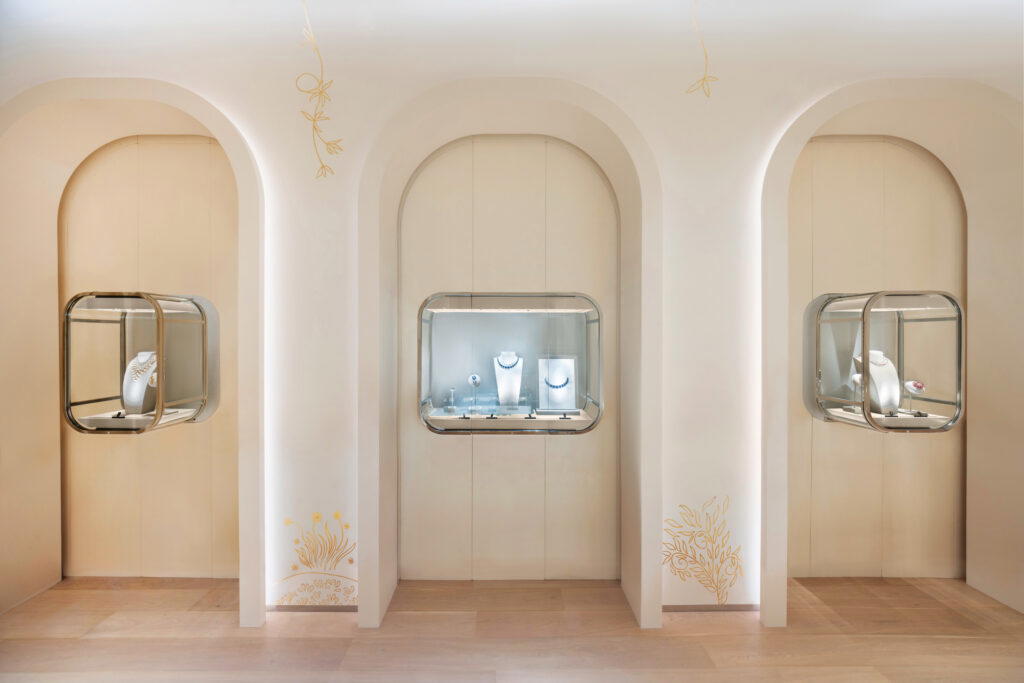
Nature is a frequently used source of inspiration for jewellers. What makes the maison’s interpretation of nature different?
I don’t know if it’s different; it’s specific. Nature has been a source of inspiration for jewellery since ancient times, and there’s an obvious reason for that. Jewellers often work with precious and challenging materials that last for a very long time, if not an eternity. Historically, the concept of beauty has been linked to ephemeral things, and nature embodies this idea with its fleeting beauty. It always challenges jewellers to create something unique that will last forever.
Van Cleef & Arpels’ creations are figurative but not naturalistic. They are inspired by magic, fairy tales, and whimsical elements, and we strive to capture nature’s asymmetry. We have developed a unique style that uses subtle, pastel colours over the years. Although we continue to enrich our work with new stories and approaches, we remain true to our original vision.
Dancers have elegantly embodied the sophistication of Van Cleef & Arpels since 1941. How difficult is it to capture movement and grace in jewellery pieces?
It’s challenging, but that is also the beauty of the exercise. Even though it only lasts for a moment, it’s about capturing a real sense of what you see on stage. We have worked with dancers and choreographers to create accurate representations of masculine and feminine bodies in three dimensions. Costumes and colours are essential to conveying whimsical and magical elements, especially with gemstones and colour combinations.
How does the maison balance fostering in-house artistic growth and collaborations with independent artists, and how are these collaborators selected?
We rarely collaborate with artists on jewellery creation. We work with them instead on the environment around the creations. There are, however, a few exceptions when it comes to specific techniques and craftsmanship.
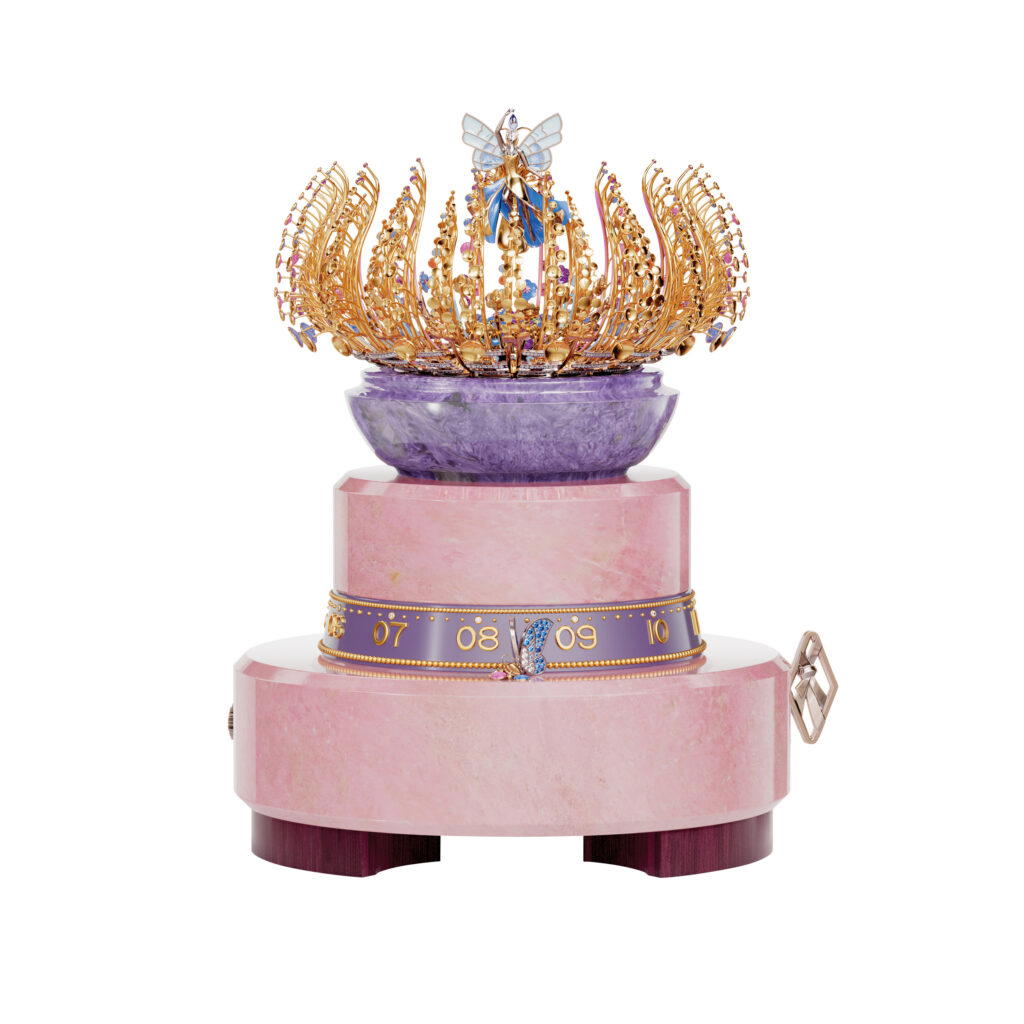
For instance, François Junod is likely the best, if not the only, expert on automatons today. While we excel in watches and jewellery, automatons are a different category, so we collaborate with experts such as Junod when we lack the expertise. Our house drives the aesthetics, with people like Junod providing technical interpretation.
The strong link between aesthetics and technique means that some aesthetic choices come from technical aspects and vice versa. We also work with other specialised craftsmen, such as stone sculptors or wood artists, for advice on materials we don’t typically use.
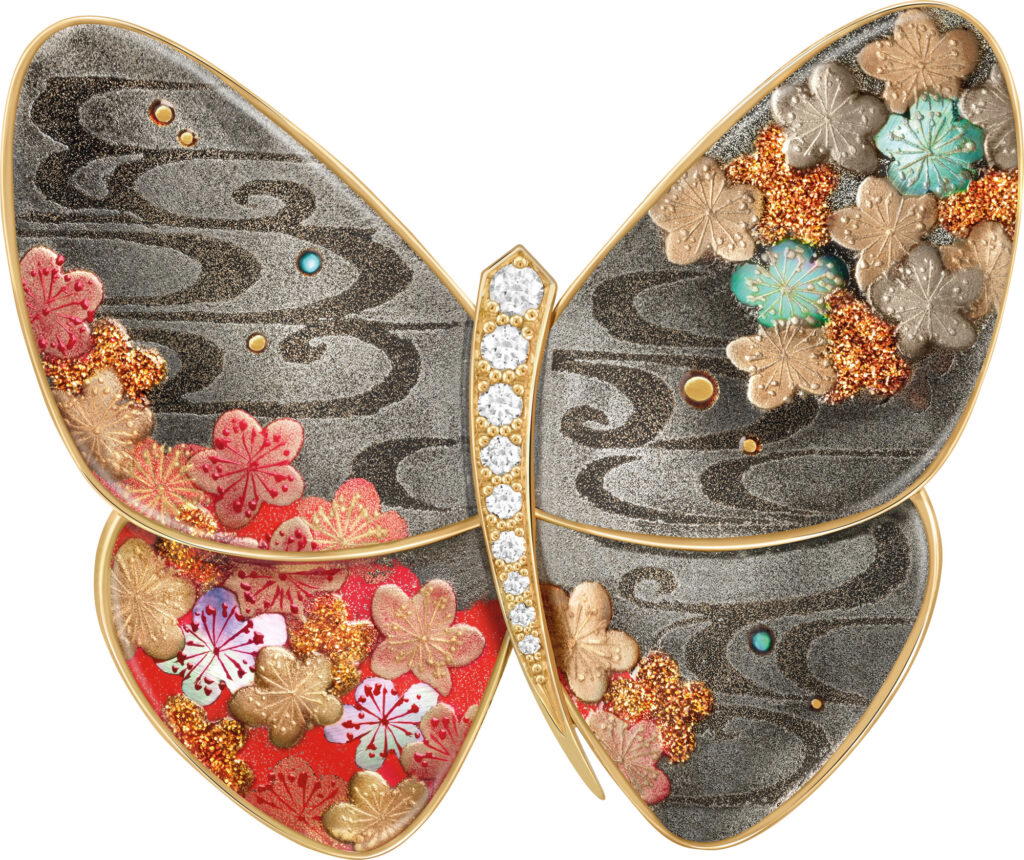
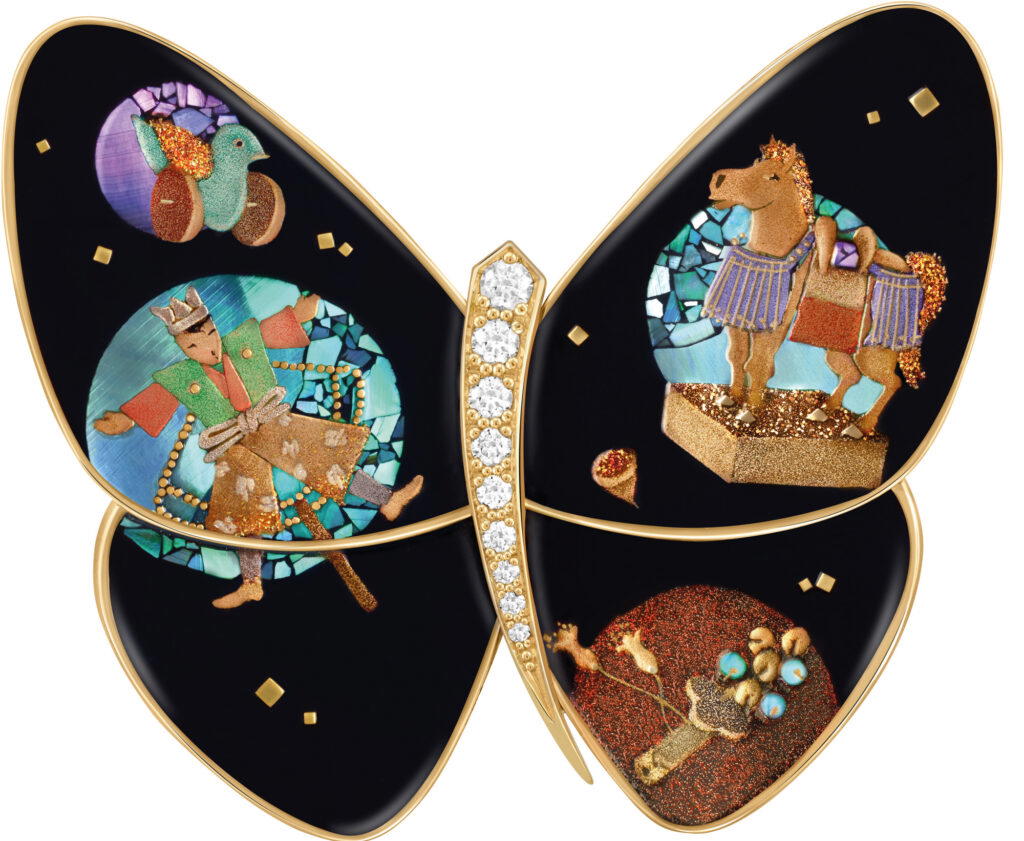
Japanese lacquerware artist Junichi Hakose is another exception. Together, we developed specific aesthetics, combining Van Cleef & Arpels’ butterfly motifs with traditional Japanese designs expressed in traditional Japanese lacquerware with urushi.
What kinds of initiatives does Van Cleef & Arpels support to assist emerging artists?
Quite a lot, and across different fields. Our goal is to make art and dance more accessible to a broader audience. We support the restaging of historical dance pieces and new productions and works by emerging artists, which are selected in collaboration with institutions. Each year since 2015, we have awarded the Fedora – Van Cleef & Arpels Prize for Ballet to a new choreographic creation.
Additionally, we provide scholarships and partnerships with universities to artists, art historians, and researchers in jewellery and craftsmanship through L’École, School of Jewelry Arts. We also collaborate with high schools and professional schools to identify talented craftsmen and give them opportunities to develop their skills. Furthermore, we work with design schools in Europe, the United States, Japan, and China. Our programmes focus primarily on decorative art related to jewellery and dance.
Training skilled artisans is a long-term investment. To ensure these skills are maintained well into the future, how does Van Cleef & Arpels nurture and develop the next generation of craftsmen?
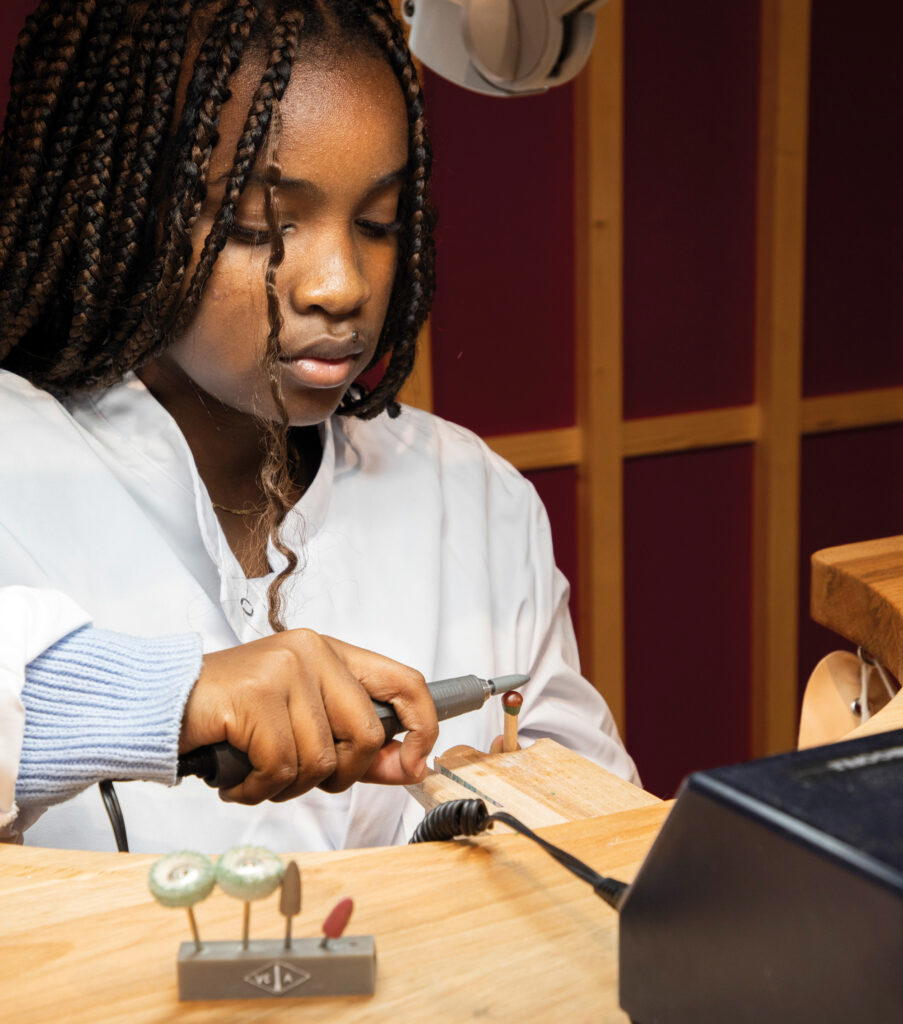
We launched a programme called “de Mains en Mains” by Van Cleef & Arpels three years ago to work with schools to introduce 13- and 14-year-olds to the world of jewellery through an immersion programme. If they show interest, we help them enter professional schools, develop their talents, and offer internships.
In our workshops, we have a “pépinière”, which is like a nursery. We accept students from professional schools and invite them to intern at our workshops. If they’re interested, we also offer them employment. This approach is great because it trains the next generation of artisans and provides opportunities for existing ones to teach.
We must also train the next generation of trainers since the best craftsmen may not necessarily be the best teachers. It requires a great deal of patience and a willingness to explain.
Van Cleef & Arpels does not seek celebrity or social media influencers endorsements. How does this align with its goal to connect with the next generation?
It’s a choice. However, that doesn’t mean they’re not interesting. It is just a different way of working. We prefer direct contact. We use digital tools and networks, but we don’t necessarily follow social media rules. We have a presence on TikTok because it’s a unique platform and we use the available channels to tell our stories.
So far, we’ve been successful without relying on influencers. Perhaps it’s because we don’t aim to be a global brand or a lifestyle company; we are a jewellery house. Despite not actively pursuing this route, the level of appreciation for our brand has been good. This shows that there are alternative ways to succeed.
How do you find that sweet spot between your creative instincts and the corporate demands of steering the company?
If you’re very creative but lack a sense of business, you won’t last long. Conversely, you won’t be very successful if you’re all business without creativity. You need to have both a strong identity and business acumen.
Choosing stories and themes with the team is one of my favourite things. I love that there are elements of literature and poetry. Personally, there are many things I enjoy that I don’t include because they don’t fit within the brand’s identity.
Culture and art should never be exclusive, so we carefully choose the right stories to tell. We aim to include elements with real cultural context that allow those interested in academics to dig deeper. However, even if you do not find it interesting, there is still a universal meaning to be appreciated.
You have been with the house since 2000, an eternity in most luxury brands. Are there any achievements or milestones that you are most proud of, and how do you think they contributed to the success of the maison?
Van Cleef & Arpels has progressed incrementally rather than through major disruption, which makes me happy. Instead of a sense of revolution, there is a sense of continuity within the brand. The company has grown significantly over the past 20 years, with more team members and numerous opportunities. I appreciate this organic evolution.
Additionally, I am proud to have been part of the transition from a family-run company to a corporate organisation. The family members are no longer working with us, but we have maintained a good relationship with them. Their pride and satisfaction at how we have upheld their name and legacy are evident to me whenever I meet them. This is a great compliment [for us] and shows that the brand is headed in the right direction