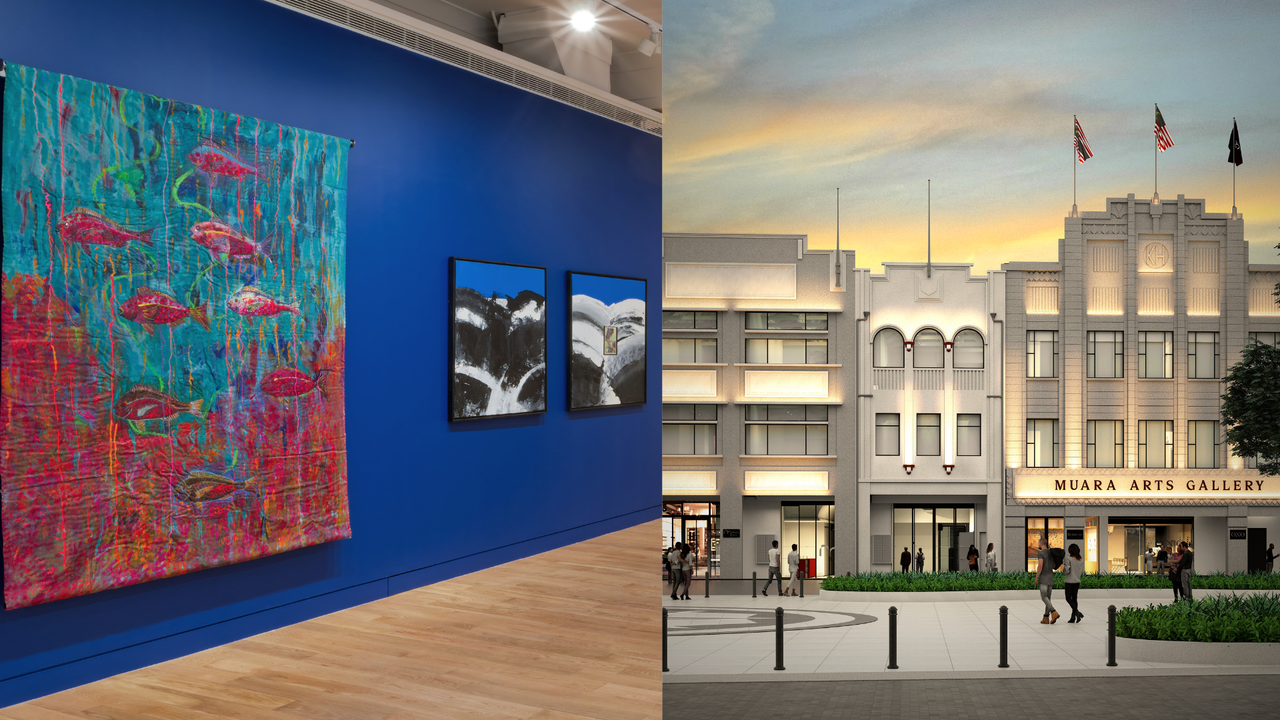
Occupying six restored shophouses in Kuala Lumpur’s oldest square, a new not-for-profit arts institution opened last weekend as part of a larger project breathing new life into the city’s historic commercial heart.
Muara Arts is run by Creador Foundation, a non-profit founded by Shanthi Kandiah and Brahmal Vasudevan, and funded by Vasudevan’s private equity firm Creador. A theatre, shops, restaurants, and cafes will soon join the gallery under the foundation’s far-reaching adaptive reuse programme.
“This exhibition, particularly, has given me a sense of the immense potential for a Southeast Asian space,” says Kandiah, speaking to a+ at the press junket for Muara Arts’ debut exhibition A–Z of Southeast Asian Art: A Critical Dictionary.
Curated by Consultant Artistic Director Lydia Yee and Zheng Feng Ang, the exhibition takes cues from Singaporean artist Ho Tzu Nyen’s The Critical Dictionary of Southeast Asia, a video work that interprets the region through alphabetised concepts: A for Archipelago, B for Buffalo, C for Corruption, D for Decay.
Pairing Ho’s dictionary entries with works by more than 40 artists from Southeast Asia and its diasporas, A–Z takes viewers on a whirlwind tour through the region’s contemporary art practices and runs till 4 April 2027.
“This gives us such an opportunity to connect and see parallels in the region, which I don’t think gets done enough,” Yee says.
MATERIAL WORLD
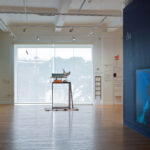
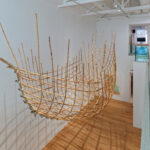
Wending through the galleries, visitors quickly notice the exhibition’s sheer material diversity. It spans a dazzling array of mediums, from tulip petals and buffalo skin to delicate yellow tulle, fashioned by Bruneian artist Yasmin Jaidin into hanging bundles of rice.
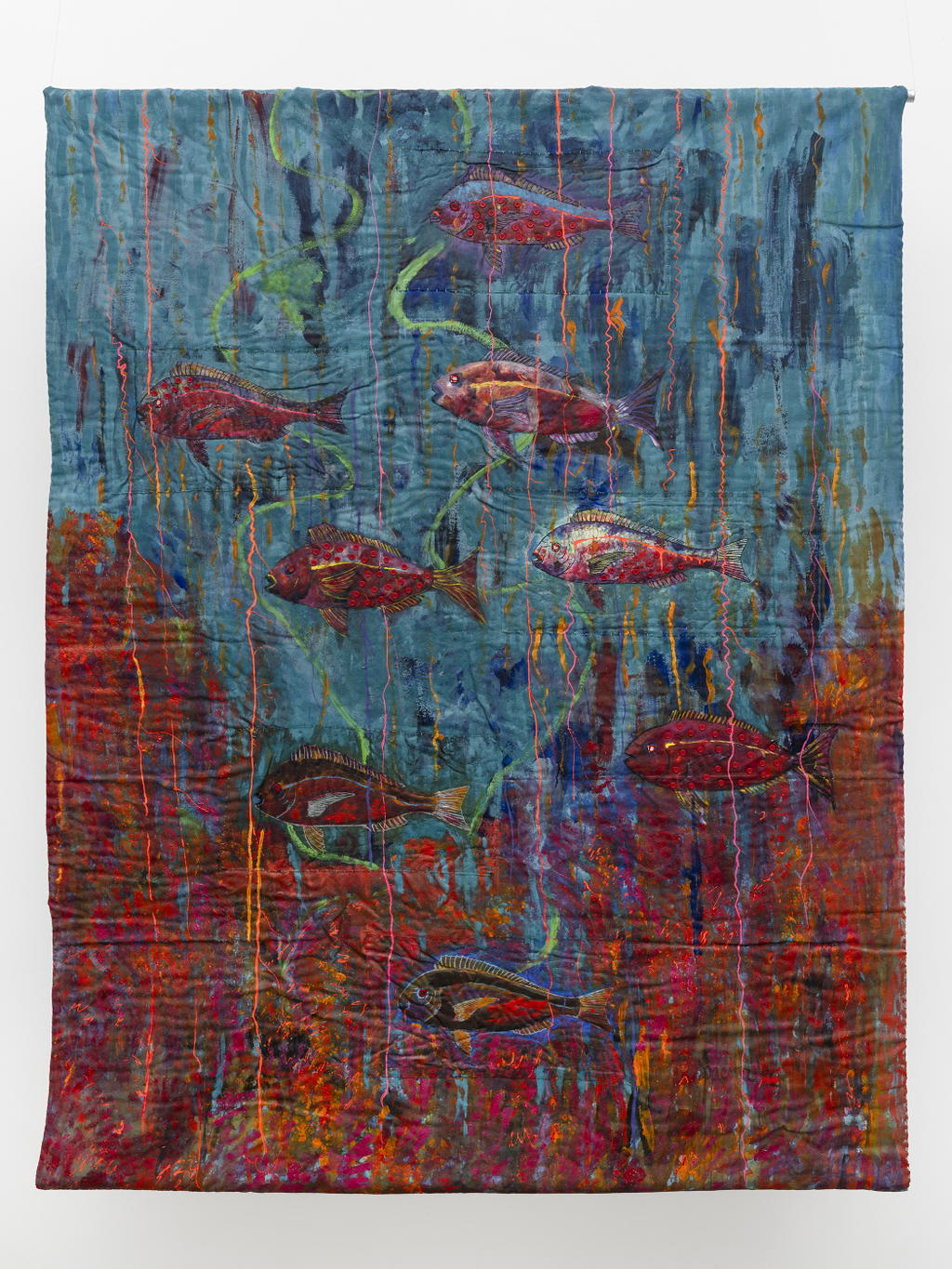
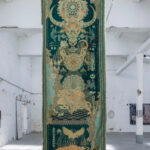
Near the start of the alphabet, the sumptuous colours and patterns of Marcos Kueh’s tapestry lend the humble water buffalo an imposing, totemic presence.
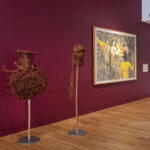
Further on, Phan Thảo Nguyên’s abstract lacquer paintings, arranged with silk paintings in a panelled sculptural form, resemble riverside detritus and sediment more than the arch maidens and ornamental flowers of the medium’s conventional applications.
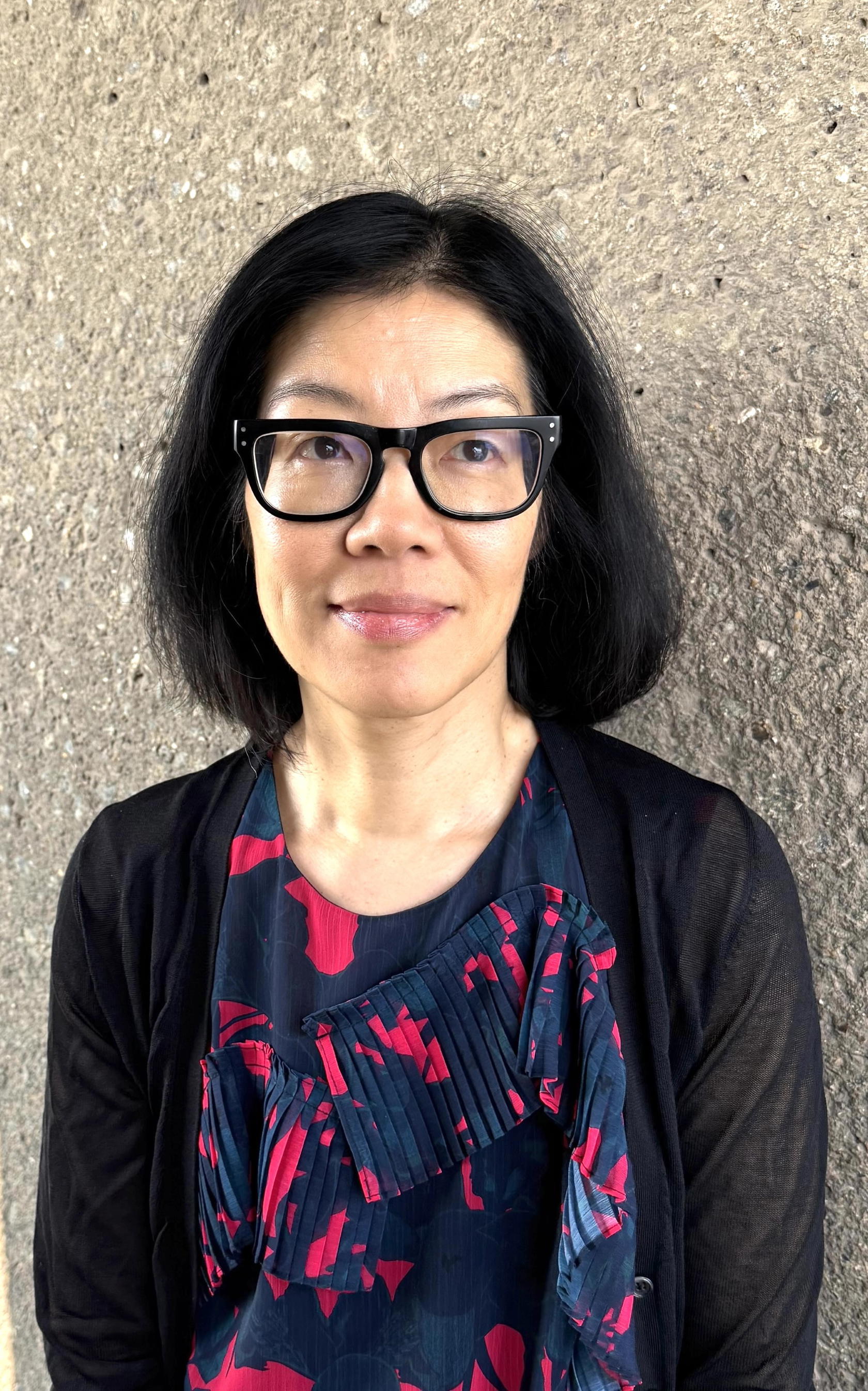
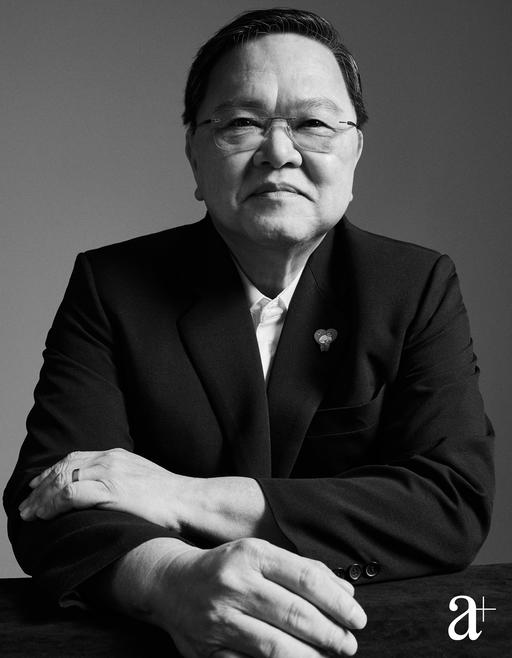
phenomenally important to helping her team develop a new model for exhibition making.Photo: Muara Arts
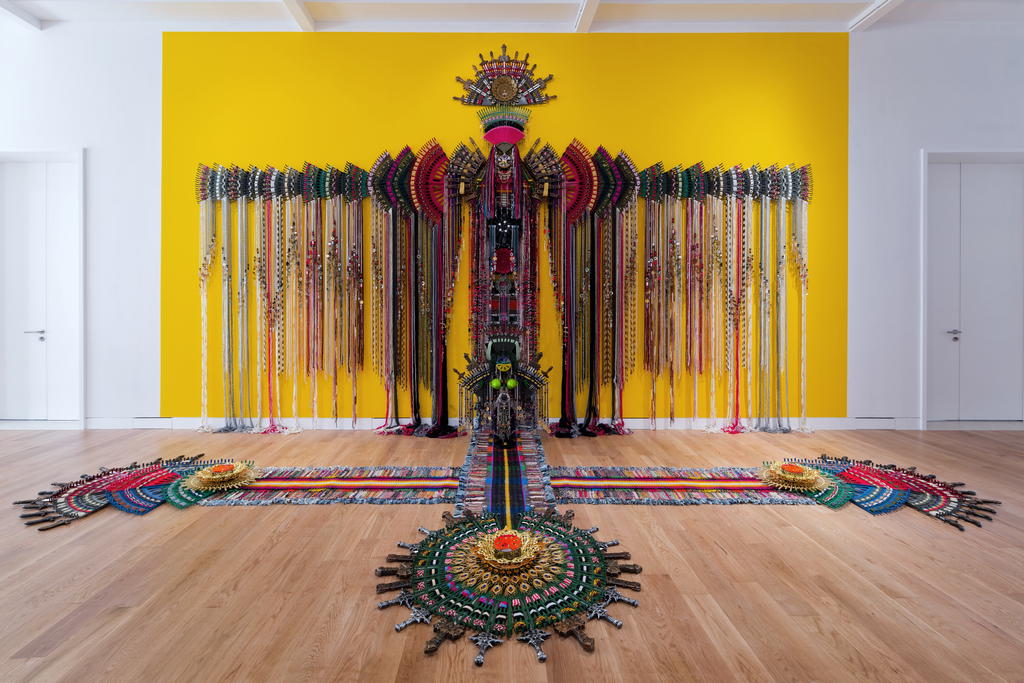
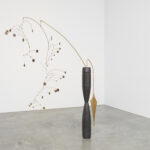
Other pieces, like Alfredo and Isabel Aquilizan’s wing feathered with sickle blades, repurpose the materials of work and war. Meanwhile, Tuấn Andrew Nguyễn’s Balancing on the Weight of the Unresolved is a column of perverse loveliness, its Calderseque mobile of hammered artillery brass weighed down at the base by stacked bomb shells.
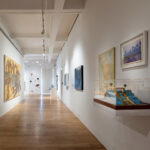
The modest, mazy shophouse spaces mean that A–Z’s general effect skews more intimate than splashy. But there are still showstoppers like Anne Samat’s sensational mother-and-child installation, which by combining traditional weaving techniques with mass-produced objects alchemises—even apotheosises—the ordinary dross of modern life.
In its tactile heterogeneity, A–Z reflects how Southeast Asian artists are transporting oft-denigrated materials—local mediums, historically dismissed as “craft” by Euroamerican commentators, and machine-age debris—into high art’s rarefied world in culturally specific ways.
TRUTH AND POWER
An astonishing canvas by Indonesia’s Banny Jayanata anchors one of the show’s most intriguing sections. Nearly 4m in length, it depicts three men struggling to free a companion trapped beneath a fallen tree. Its writhing brushwork, tortured forms and forceful power are uncontainable, despite its cramped placement along a narrow corridor.
Facing Jayanata’s work, the stark slashes of Maryanto’s monochromatic mangrove painting and the piteous disarray of Izat Arif’s construction-site diorama round out this sobering triad of environmental degradation and human failure.
Other works critically dissect and negotiate the region’s histories. In The Construction of Eight Single-Storey Classrooms for Public Elementary Schools (2026), for instance, Pio Abad and Frances Wadsworth Jones rely on a single photograph and 3D-printing to reconstruct a smuggled crown, laying bare deposed presidential couple Ferdinand and Imelda Marcos’ embezzlement and corruption.
Then, Arlette Quỳnh-Anh Trần’s video work The Curator Ghost (2024) reimagines a Vietnamese archaeologist’s life as a startling sci-fi parable, revealing how national narratives are constructed—or defied—by institutions and individuals.
A SOUTHEAST ASIAN ART PRIMER
Though it features work from all 11 countries in the region, A–Z does not presume itself a survey of contemporary Southeast Asian art. It is worth noting that artists from Indonesia, Malaysia, the Philippines, and Singapore dominate the line-up, providing roughly two-thirds of the works on show.
As its alphabetical framing suggests, the exhibition instead functions as a primer: a brief introduction to key names, approaches, and concerns, with Ho Tzu Nyen’s work offering a clear, approachable structure for traversing the region’s endlessly complex artistic practices.
It is an ambitious endeavour, providing visitors with a strong entry point into Southeast Asian contemporary art, which subsequent exhibitions and programmes will bolster.