

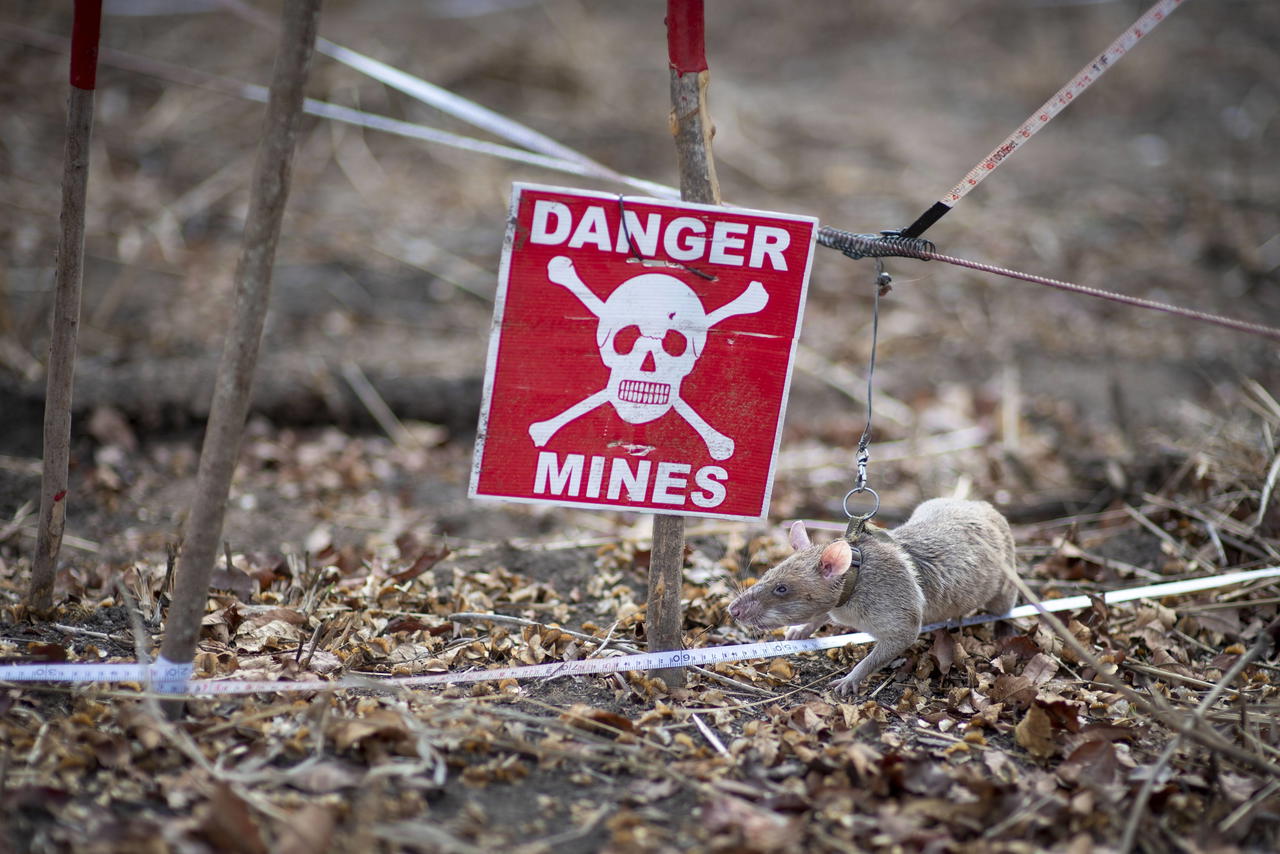
Cambodia remains blighted by an estimated four to six million landmines and munitions left over from decades of conflict. To facilitate land release, the process of clearing contaminated land so that it becomes safe to use, Apopo Cambodia trains African giant pouched rats to detect chemical compounds in TNT explosives. Nicknamed HeroRats, these rats sweep the ground quickly and ignore scrap metal, turning days of metal-detector work into minutes.
“They have a bloodhound-level sense of smell and they’re highly trainable. We can reliably link behaviours to rewards with simple Pavlovian conditioning,” says Tom Grundy, Apopo’s marketing manager.
The species also offers practical advantages: an eight-to-nine-year lifespan (versus two to three for most rats) and a robust build that handles rough terrain. Taxonomically, they’re closer to hamsters or possums than household rats, so ‘rat’ is a bit of a misnomer, Grundy adds.
Founded in Belgium in the 1990s, Apopo developed detection-rat technology before launching its Cambodian unit in 2014 with the Cambodian Mine Action Centre, the country’s lead demining agency. The non-profit organisation subsequently moved its headquarters to Tanzania so as to conduct research and training closer to the humanitarian problems it aims to address.
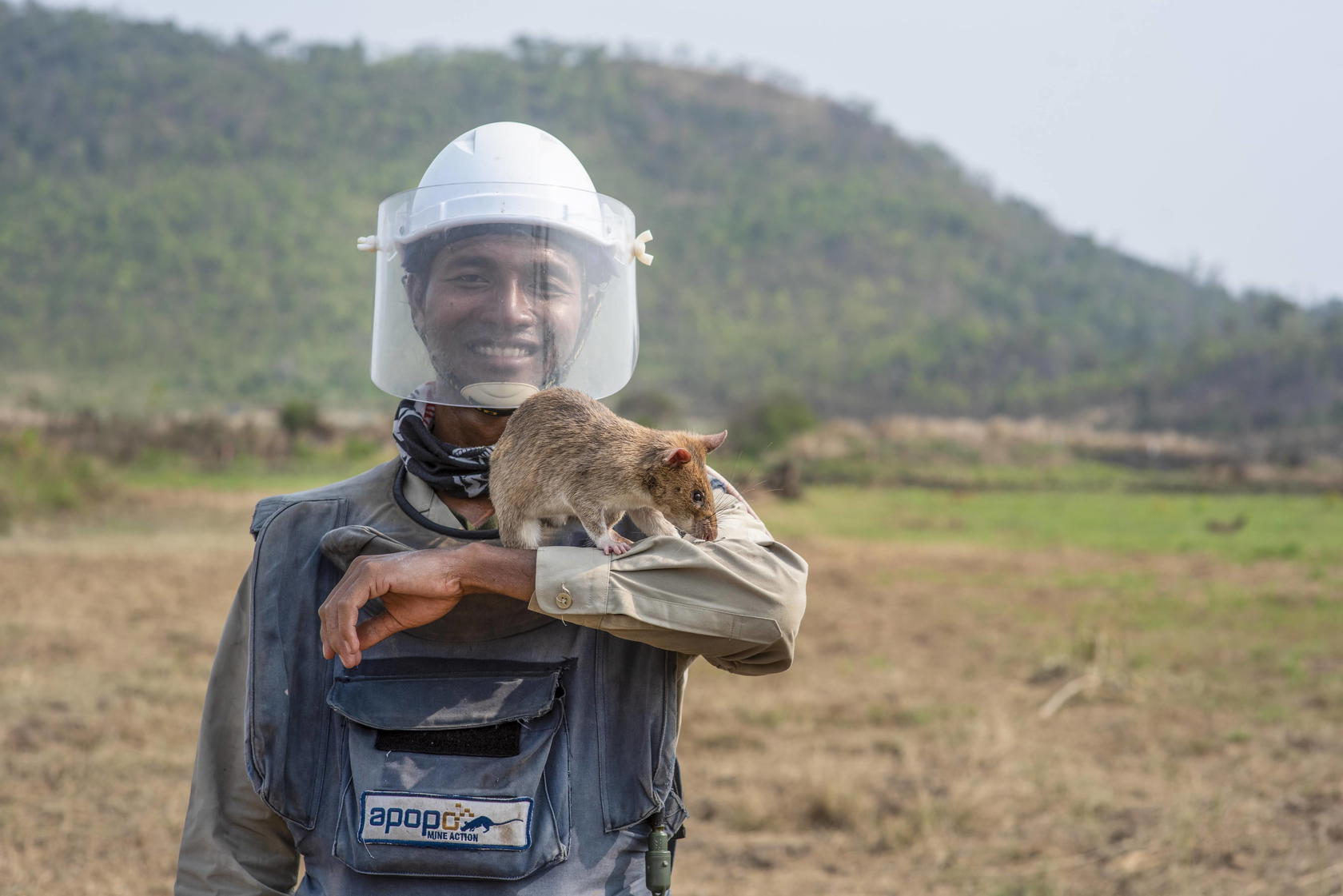
Located in Siem Reap, Apopo Cambodia’s visitor centre currently houses 12 rats that are either retired or used for demonstrations that help explain its work. The rest, about 30, are deployed to minefields in five teams, each animal paired with two handlers. Young recruits arrive from Apopo’s Tanzanian breeding and training programme every two years.
A key advantage of employing these rats for landmine detection is their speed. The same area that a HeroRat can cover in 40 minutes can take days to survey with a metal detector.
The results are tangible. To date, Apopo Cambodia has cleared over 33 million square metres of land, destroying over 5,000 landmines and 40,000 unexploded bombs. Earlier this year, HeroRat Ronin became the first rodent to locate more than 100 mines and other war remnants, earning a Guinness World Records citation for helping people who have “lived fearful for decades that one misstep could end their lives.”
The method extends beyond battlefields. Apopo also trains the animals to detect tuberculosis. “We use TB detection rats as a failsafe on clinic-tested human sputum samples from clinics in Tanzania and Ethiopia,” says Michael Raine, Apopo Cambodia Program Manager.
“If a sample is clinic-negative but rat-positive, it’s rechecked with internationally recognised methods. If TB is confirmed, Apopo notifies the clinic, so it can provide the patient with treatment.”
Michael Raine on Apopo’s TB detection protocol
While conventional microscopy normally takes four days, the TB detection rat can check 100 samples in 20 minutes. Apopo is improving clinic detection rates by 48 percent, according to research.
Dogs play a complementary role. Apopo’s HeroDogs, technical survey dogs that have also been trained to detect landmines and other explosives, cover large areas fast to flag zones with likely contamination. The rats are deployed afterwards to clear the areas.
Because a HeroDog tends to share a deep bond with its handler, it can be sent 25 metres up a hillside and come straight back. This complements how HeroRats operate . “Rats don’t care who they work with, which is also an advantage. This makes it easy to transfer them between handlers.”