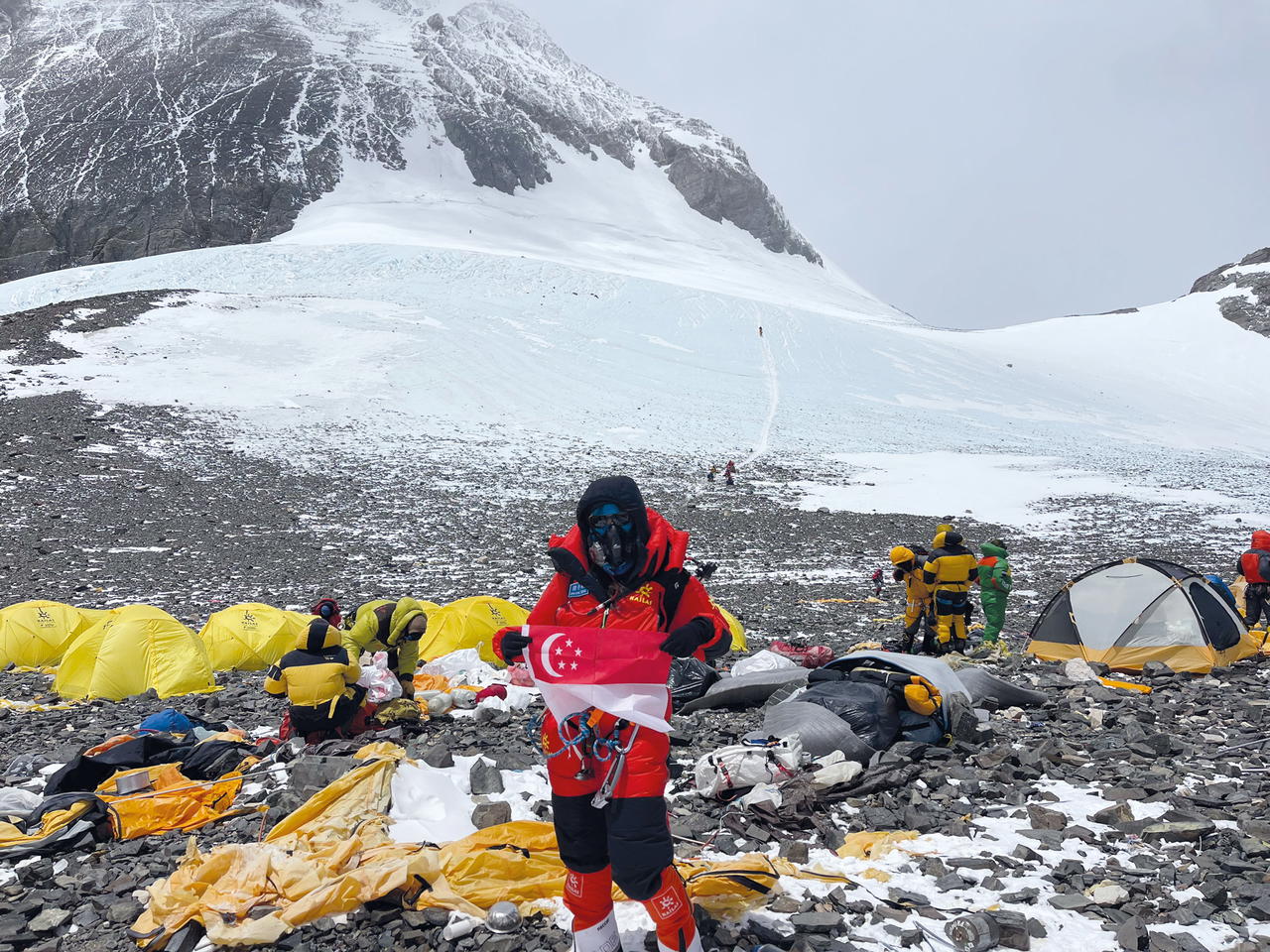
Vincere Zeng may seem unassuming, but her petite frame belies her incredible strength and resilience. In conversation, her steely, matter-of-fact demeanour emerges as she recounts her ascents of the world’s highest peaks, detailing dizzying altitudes and life-or-death decisions with hardly a hint of sentimentality.
With her relentless focus, the 33-year-old has achieved what few have. In 2023, she became one of only two Singaporean women to summit K2, the second-highest mountain on Earth at 8,611m. She is also the first Singaporean and South-east Asian to reach the summits of Everest, Lhotse, and K2—all in one year.
NEVER INTERESTED IN SPORTS
Born in China, Zeng moved to Singapore on a scholarship at 16 and later studied mathematics at Nanyang Technological University. Her student days were a whirlwind of parties, clubbing, shopping, extracurricular activities, and backpacking trips. Her interest in sports and exercising was pretty much non-existent.
Then her life changed in 2015 when she volunteered in Tanzania to teach mathematics and English to children in a town that lay in the shadow of Mount Kilimanjaro, Africa’s tallest peak at 5,895m. She walked an hour to school every morning through cornfields, dusty trails, and winding roads. “I used to joke that that was my training for Kilimanjaro,” Zeng says.
Moshi was a peaceful place, and she formed cherished relationships with the local children. She recalls their fascination with her mid-length hair compared to their cropped hairstyles. “I can still see their smiling faces.”
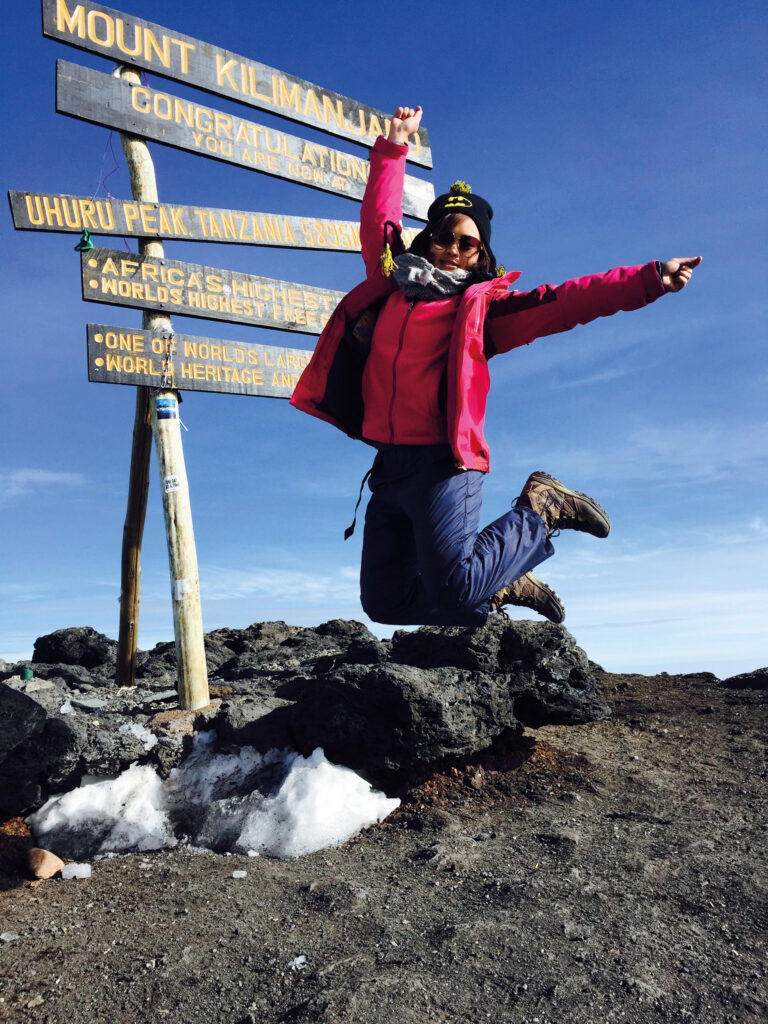
She and a friend decided to climb Mount Kilimanjaro on a whim. She laughs, “At that age, you just want to do cool things, and climbing the highest mountain in Africa sounded cool.”
Little did she know then that this spontaneous adventure would change her life forever. They took the Machame route, a moderately challenging seven-day trek. Along the way, Zeng surprised herself with her speed and resilience: “My guide was so proud, saying, ‘You’re faster than the porters!’” This experience ignited a passion for the mountains and pushed her limits.
HER DECISION TO GO PRO
Bitten by the mountaineering bug, Zeng set her sights on bigger challenges. In 2017, she summited Mera Peak at 6,476m in Nepal. Her mother was furious when she returned with a sunburnt face. She refused to speak to her daughter for two years, hoping to discourage her from mountaineering.
A later attempt at Argentina’s Aconcagua failed because of inadequate gear and preparation. It was this setback that fuelled her commitment to mountaineering.
“At that time, I wasn’t a professional—just a young girl trying to be cool, still feeling pretty optimistic about myself. But that climb ended up being one of my biggest failures. I still wasn’t taking it seriously. I knew I had to train properly, get the right gear, and stop wasting time and money.”
At Aconcagua, she met climbers pursuing the Seven Summits—the highest peaks on each continent. Among them was an Italian astronaut who showed her a photo of Mount Everest from space. It left such a deep impression that she committed to a training regimen of five to six days that included road running, trail running, and rock climbing. She also participated in endurance races of 50km to 100km monthly in places like Malaysia and Indonesia.
I didn’t stop to see the beauty of it; it was dark, cold, and windy. I was just going, moving fast.
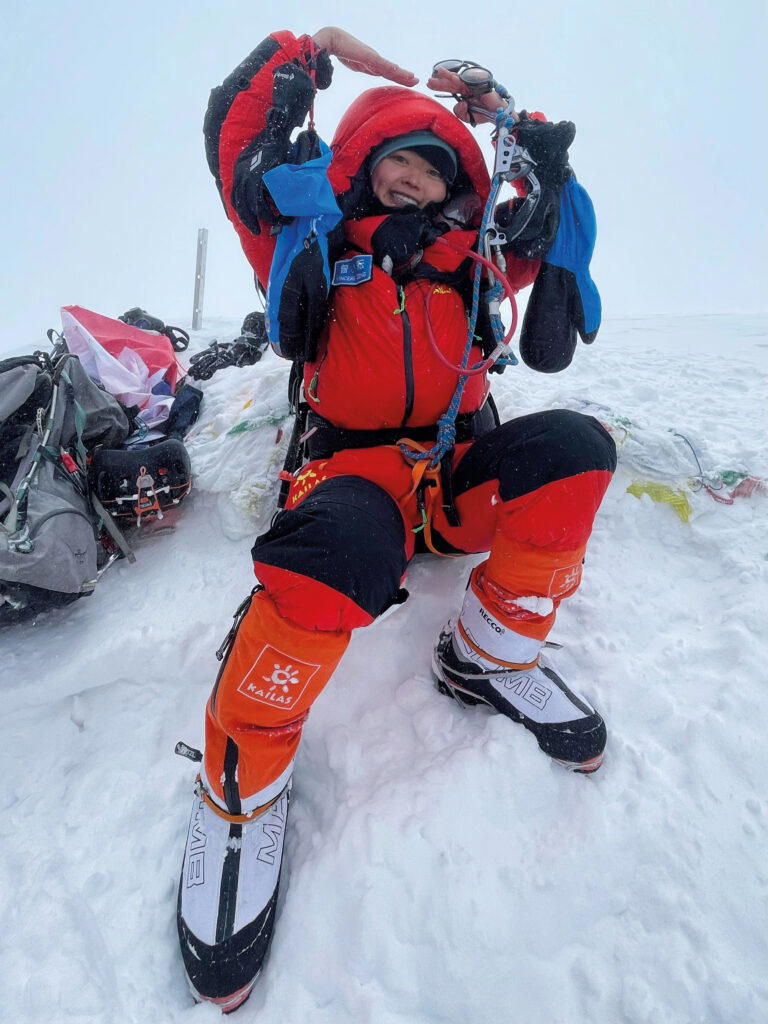
Vincere Zeng, as she began her Mount Everest ascent in May 2023
Zeng admits that she hated running initially, but having a goal helped her push through. “Each completed race gave me a sense of achievement, and that’s how I kept moving forward.”
Since then, she has climbed upwards of 30 mountains above 5,000m while working full-time for IT firm SAP as a transformation programme manager. Despite the pandemic delaying her plans to summit Everest in 2020, she remained focused, ensuring she was always “Everest-ready”. In 2021, she also became a Singaporean citizen.
HER WAY TO THE TOP
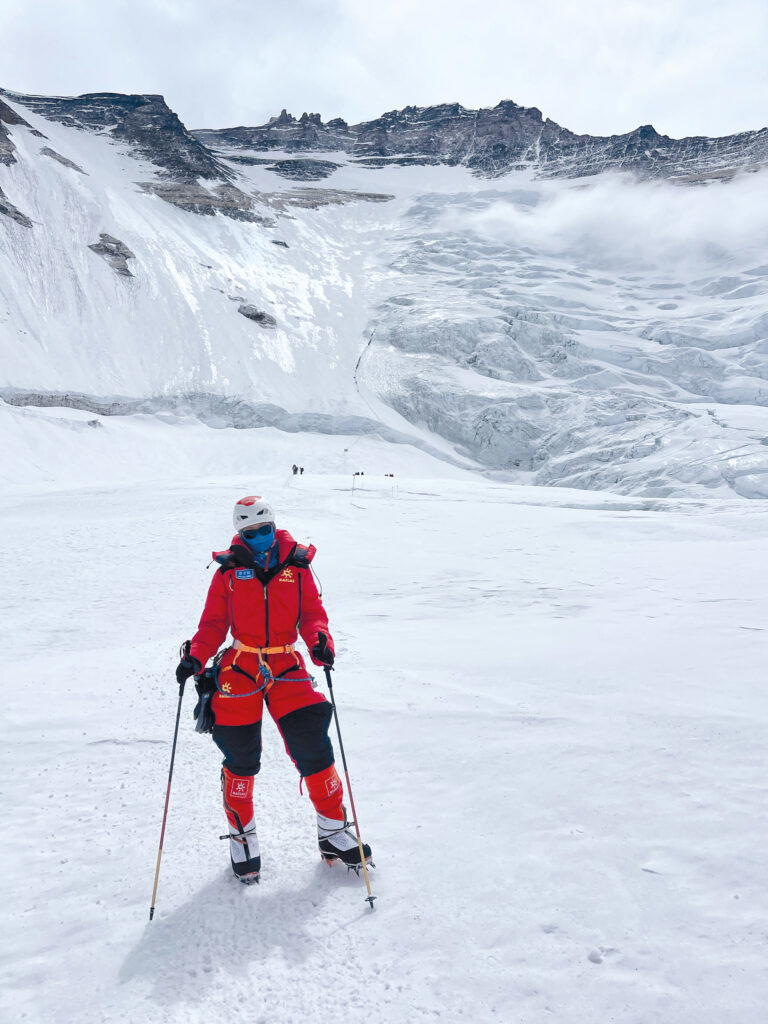
In May 2023, Zeng finally got her chance to climb Everest (8,849m), after years of preparation. The journey was physically and emotionally daunting. After contracting influenza early on, she then had Covid-19 and spent some time recovering in Kathmandu before continuing her summit attempt. To avoid the queues, Zeng began her ascent early on summit day, 18 May. “I didn’t stop to see the beauty of it; it was dark, cold, and windy. I was just going, moving fast.”
At 8,800m, just before the summit, she needed to change her oxygen bottle and felt herself losing consciousness. She faced another challenge when the contact lens in her eye was blown away by the wind. Even so, she navigated carefully, gripping the rope and relying on her experienced Sherpa guide to reach safety, with only 800-degree vision in one eye.
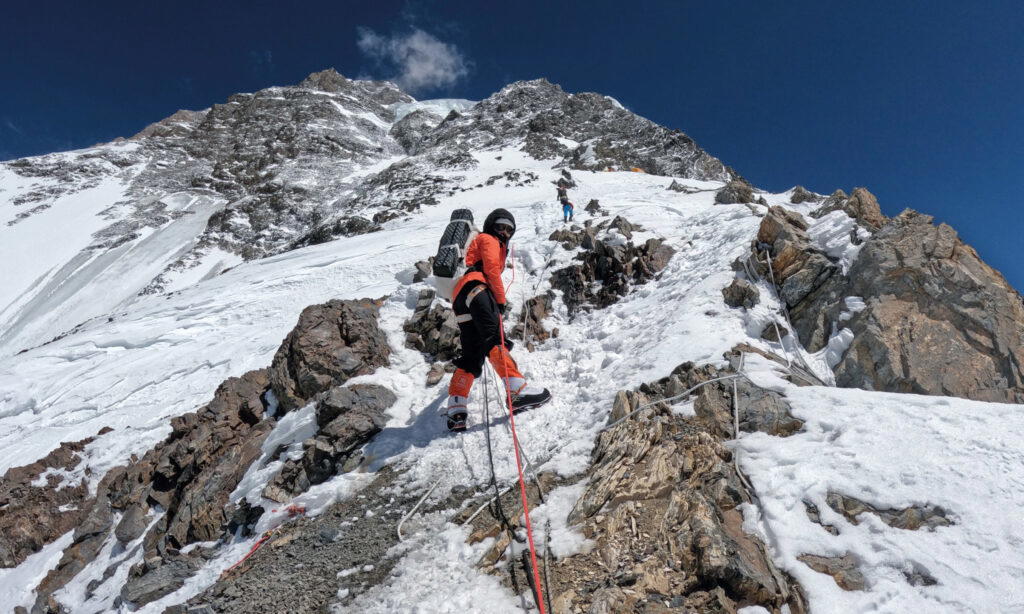
Zeng was among the first to stand on Everest that day, facing fierce winds in total darkness. The next day, she conquered Lhotse, the fourth-highest mountain at 8,516m, becoming the first Singaporean and first South-east Asian woman to complete the Everest-Lhotse “double header”.
Her triumph, however, was overshadowed by grief. Eighteen climbers died and multiple climbers went missing during that year, making it the deadliest in Everest’s history. Zeng also faced profound loss—several climbers, including friends, either perished or went missing during that tragic season. Two other friends ended up in the ICU after their climbs.
“I lived through and heard the news during and after the summit push, so I couldn’t truly celebrate my summits because I was emotionally devastated,” she says.
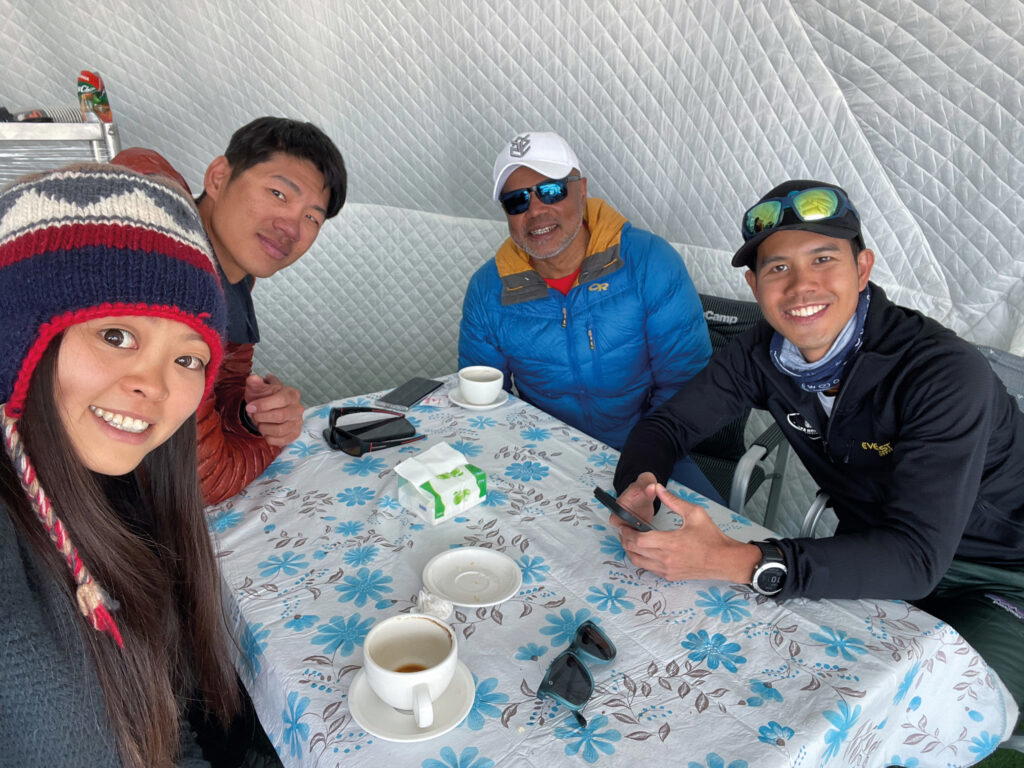
“No room for mistakes”
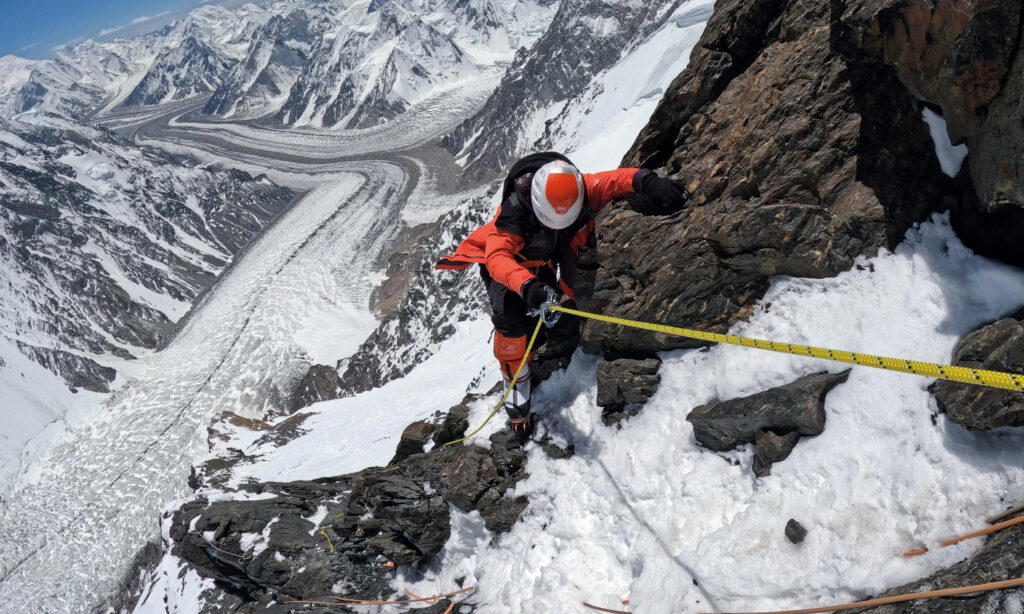
A month after completing Everest, Zeng set out for the notorious K2, whose technical terrain is in sharp contrast to Everest’s more open and flatter terrain. It required advanced skills in rock climbing and ice climbing while carrying heavy packs and using crampons for traction. “Every step I took, my legs trembled, and my heart raced. There was no room for mistakes.”
The unstable weather caused a narrow summit window, resulting in heavy snowfall, wind, and fog. “With Everest, I was confident I would make it. But with K2, each day was a question of whether the weather would cooperate.”
On 27 July, however, a brief weather break gave Zeng a narrow opportunity to make her final summit push. With minus 20 deg C temperatures and blustering winds, the ascent was harrowing. Taking on K2’s most dangerous section, the Bottleneck—a narrow gully with an incline of over 70 degrees and a massive serac overhead—was a crucial part of the climb.
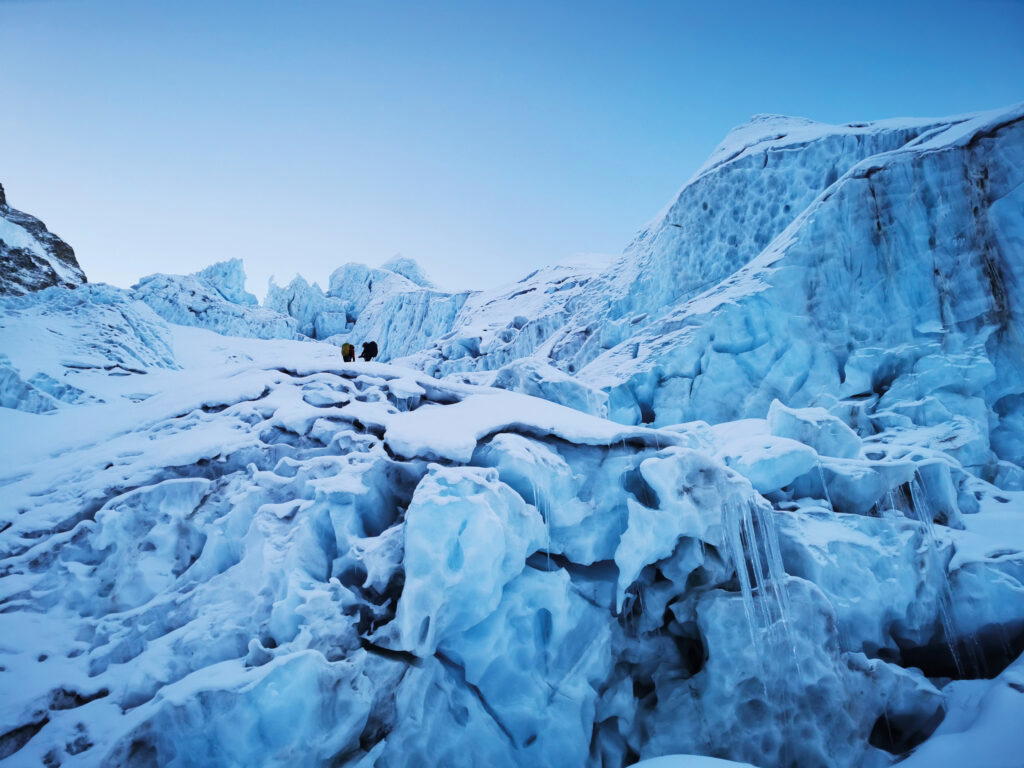
While Zeng was there, she witnessed the rescue of a Pakistani climber hanging upside down on a rope in freezing temperatures. “I waited two hours on a loose anchor in the most dangerous part of the climb, as rescuers worked to save him, and avalanches loomed. There were 200 people behind me, so I couldn’t turn back. That moment, I just focused on not creating another rescue mission for myself,” she says.
As she pressed forward, snowy conditions delayed securing ropes to the summit and she was forced to reduce the flow rate of her oxygen tank due to the prolonged wait. By shifting her weight, shaking her head, and using her crampons to carve steps in front of her, she kept herself awake. Finally, Zeng reached the summit, cementing her place in history.
MORE “INTERESTING MOUNTAINS”
Zeng continued climbing after the record-breaking year and attempted Kangchenjunga, the third-highest mountain in the world at 8,586m, located in the eastern Himalayas. However, poor weather and snow conditions forced the team to turn back.
When you’re up there, you get a sense of infinity. You’re just a dot next to a massive mountain.
Vincere Zeng, on mountaineering’s valuable life lessons
With numerous speaking engagements, she has since used her spotlight as an opportunity to share valuable lessons and inspire others to pursue their dreams, even if that means getting active. “Giving back is one of my key performance indicators. I’ve achieved my goal if I can inspire just one person or encourage them to stay active through my story.”
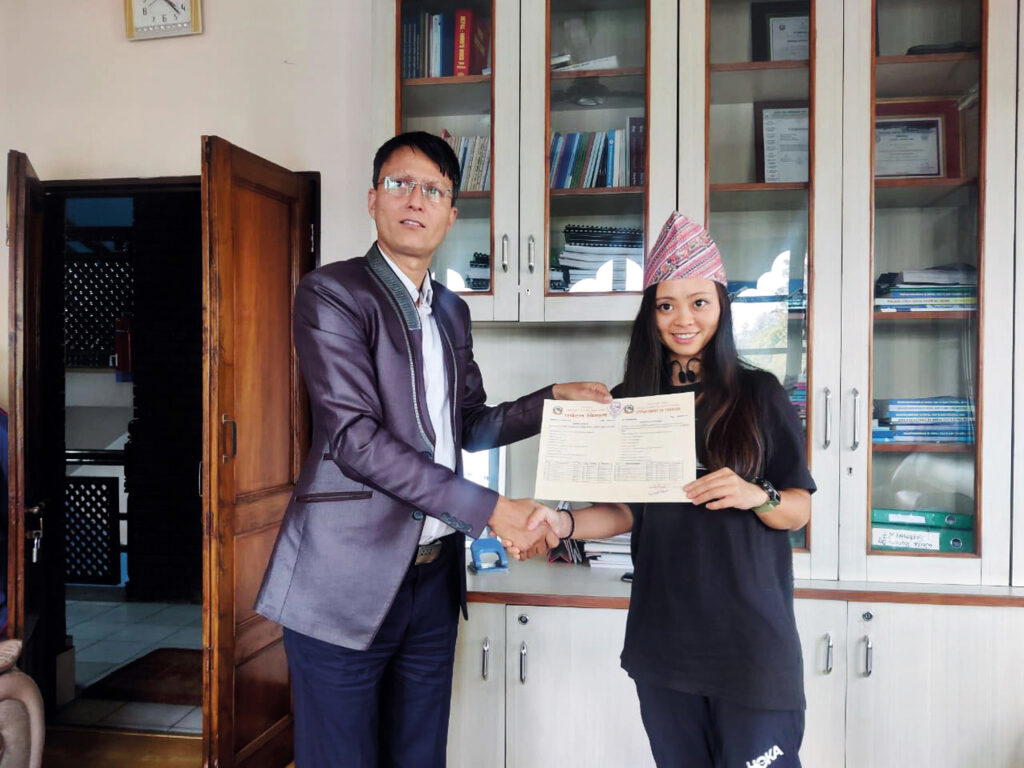
She also hopes to demonstrate that living at sea level does not limit Singaporean women’s ability to excel at high altitudes and challenge gender norms in the male-dominated sport of mountaineering.
In her opinion, mountaineering is an extremely niche sport in Singapore, with little awareness and encouragement. As recognition of her achievements grew, so did the external noise, making it essential for her to cultivate inner stability through trail running and climbing.
Mountaineering has taught her valuable life lessons, helping her see obstacles in a new light. “When you’re up there, you get a sense of infinity. You’re just a dot next to a massive mountain,” she says.
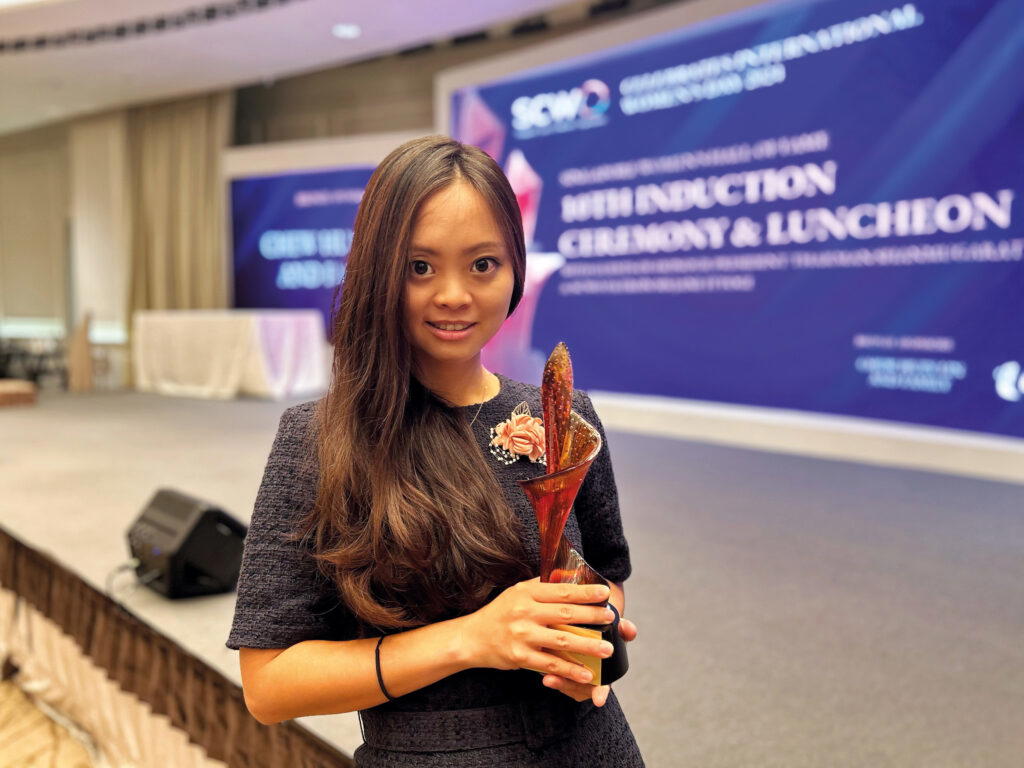
This perspective reduces the burden of adversity. Far from done, she aims to summit more of the world’s peaks over 8,000m, which she calls “interesting mountains” with highly technical terrain and less developed trekking routes.
In addition to advanced climbing techniques, she plans to train in alpine climbing. “Once you enter the international mountaineering community, you realise how much there is to learn and grow.”
Climbers tend to form a bond unlike any other, regularly exchanging tips on gear, training, and technology. Zeng relies on an unwavering focus on the present in her mountaineering approach and stresses the importance of mindfulness in navigating the mental strain associated with summit attempts. “I focus on each breath and every step,” she explains.
Despite its inherent dangers, she speaks calmly about mortality at extreme altitudes, saying that acute mountain sickness is a peaceful death. As a person who regularly tests their limits in some of the planet’s most unforgiving landscapes, her outlook reflects a practised acceptance of risk.
Besides climbing, Zeng is an avid adventurer with many interests. She has dived in Iceland’s stunning Silfra fissure, snowboarded in Xinjiang and the French Alps, and paraglided in India and China. She also paints, reads, and practises mindfulness through yoga, Tibetan singing bowl therapy, and meditation.
Her steely facade vanishes, however, whenever she talks about her love for mountains. “It’s a luxury to discover a passion that makes you feel truly alive. I’m grateful to keep doing what I love.”