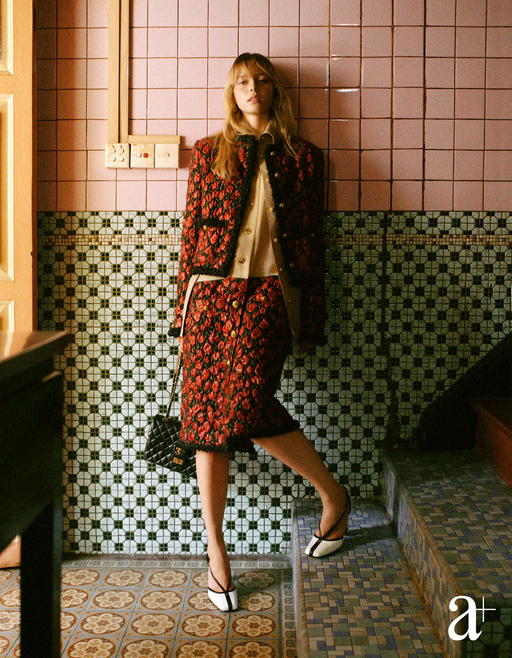
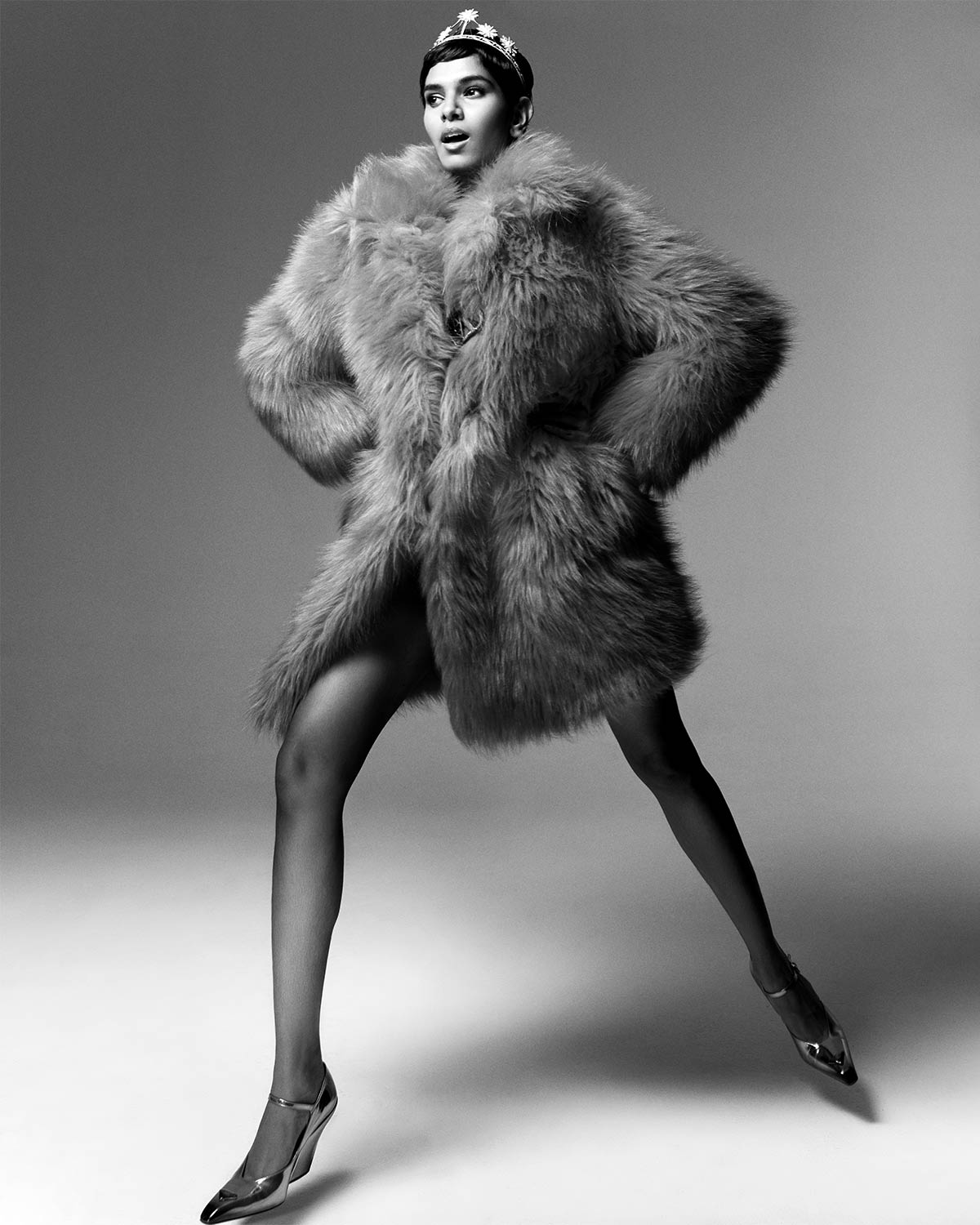
“I’m turning 22 in November,” Nandita Banna quickly interjects mid-question, a gesture I am grateful for as I feared over-ageing her.
Here’s the thing about the reigning Miss Universe Singapore: her demeanour comes across as someone who’s lived. Then again, for the past year, she has indeed lived a life that not many would ever get to experience.
“I don’t think I was ever this mature last year. I was introverted; kind of shy,” Banna explains. “In representing your country, you’re doing these things for others. For me, it was a personal journey of stepping out of my comfort zone and being more comfortable with myself.”
It’s hard to imagine that a person who consciously chose to pursue modelling would be anything but confident. Yet, like many success stories, Banna didn’t grow up with the laser-focused intention of becoming a fashion model; it was something others saw because of her physical appearance.
When she was studying at Raffles Institution, Banna’s friends urged her to answer an open call for volunteer models for the institution’s Raffles Runway, a fashion design co-curricular club that holds an annual runway show. At first, she hesitated but then gave it a go, crediting her dance background for her love of being on stage (and liking public attention, “sort of”).
As a result of that tiny step, she was introduced to the local modelling scene and connected with photographers and makeup artists. Li Wanjie, a Raffles Institution schoolmate and fashion photographer, then signed Banna to his modelling agency Misc. Management in 2020. To say that it hasn’t been a whirlwind since then would be to underestimate the kind of fast-paced ascension that Banna has experienced.
She was lensed in several issues of Vogue Singapore, dressed in flirty fashion for a Pomelo campaign, and even walked the runway for Louis Vuitton during a reimagining of its spring/summer 2021 womenswear show in Singapore.
“The Louis Vuitton show changed my life and pushed me to consider things like Miss Universe Singapore,” she excitedly recounts. Up to that point, her modelling experiences — while integral in building up her portfolio and confidence — revolved almost exclusively around Singaporean brands and local shoots. “That was the moment where it was actually a name brand that people knew and one that they recognise. And it’s not something a lot of people get to do,” she adds.
On the green screen set-up staged at the ArtScience Museum, Banna walked alongside seasoned models such as Kaigin Yong (who opened the show), Diya Prabhakar and Nicole Liew, as well as other aspiring models like herself, before an audience of fashion media as well as prominent Singaporeans in the entertainment industry.
Even though something of that scale — a runway show by an international fashion house that was live-streamed all over the world — would perhaps impress most, it did little for Banna’s parents. All that mattered to them was that she wasn’t skipping any classes for it.
Before Banna was born, her parents moved to Singapore from Andhra Pradesh, a region in southeastern India. She describes them as “traditional Indian parents” who emphasised education and impressed upon her the typical path to success through it. Banna struggled to reconcile their unyielding belief with the joy and fulfilment she found in her creative, atypical pursuits.
“In junior college, they were like, ‘Once you finish JC, you can do modelling’. Then, when I was in university, ‘Once you finish university, you can do modelling’. As a result, I asked myself, ‘How long will I push this?’ Banna laughs, remembering how frustrating it was.
The determination to see how far she could go as a fashion model led her to keep things from her parents, such as sneaking off for shoots under the guise of schoolwork.
The Miss Universe Singapore competition helped change their mindset. Just like her foray into modelling, the pageant world wasn’t even something that was on Banna’s radar; Singapore has Daniel Boey to thank for that.
The show director for the Louis Vuitton runway show, he saw something in Banna. “Hey, I’m working with Miss Universe Singapore this year,” he told her manager. “Would you be interested in sending Nandita [Banna]? I think she would be a good fit.” Banna’s immediate response? She remembers saying, “I want to do fashion”.
In fairness, pageants have always had a poor reputation for being shallow displays of beauty and womanhood. Also, the majority of Banna’s knowledge of the pageant scene was limited to such portrayals in popular culture. But she decided to take a stab at it anyway, with the mindset of not aiming for the win.
“I didn’t see it as something that was worth doing. But as I went through the competition process, I realised that it was much more than just pretty pictures. You actually have to learn how to speak better, develop your personality, do community service, and know who you are and who you want to be,” she says.
It would be no mean feat for just about anyone. But for a young woman shy of turning 21, diving deep within herself was scary, especially as she was still finding her way through life and figuring out a balance between passion and education. Still, Banna trusted the process, changed her perception of the pageant world, grew up quickly, and earned the crown.
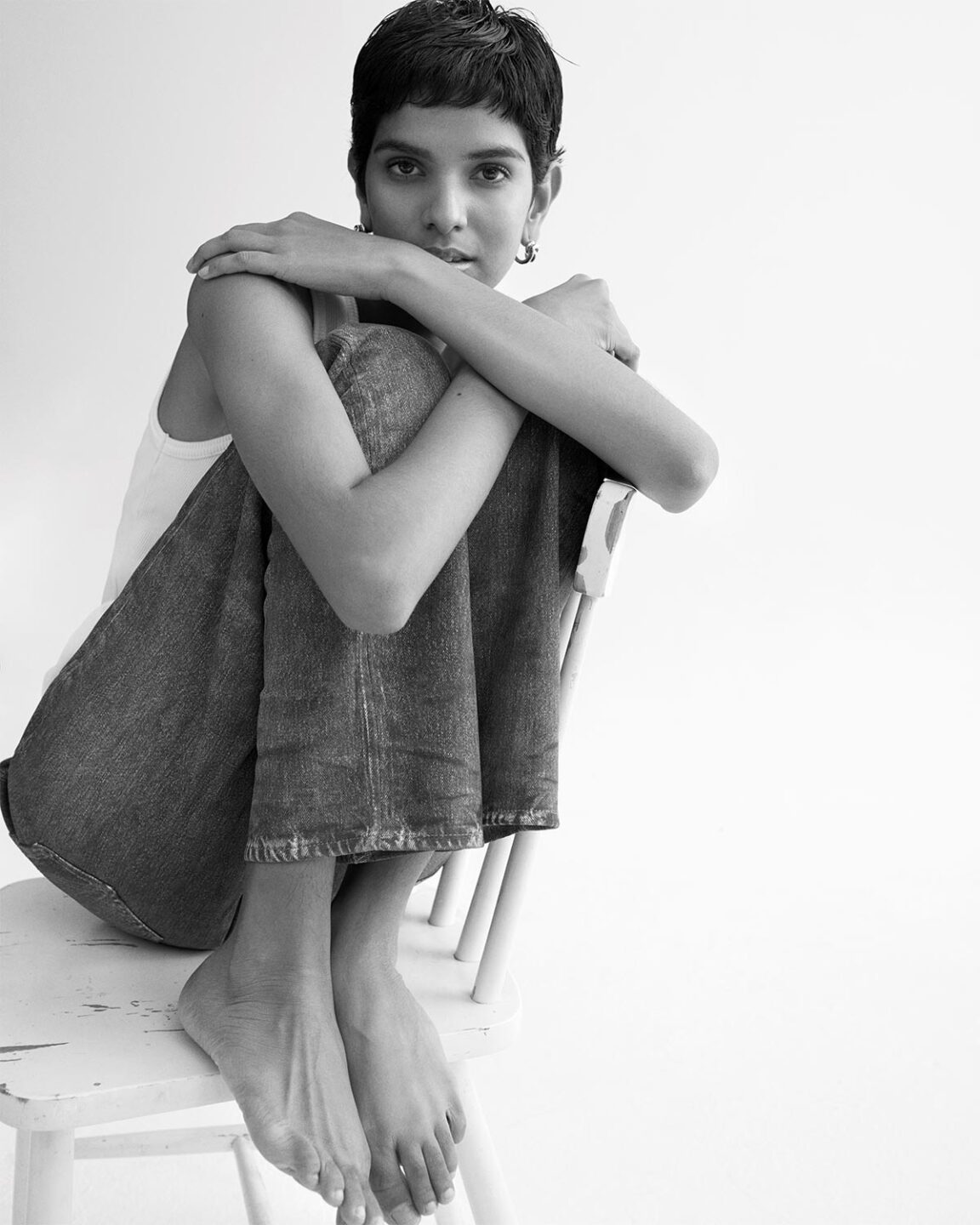
Photo: Joel Low.
Next, came the Miss Universe competition. Historically, Singapore has never had a stronghold on the Miss Universe stage. The furthest our country’s representative had gone was a top 10-placing in 1987, achieved by Marion Nicole Teo. Needless to say, there was little expectation for Banna — both by her and the Miss Universe Singapore organisation. But that’s not to say that she didn’t feel any pressure at all.
“I kind of rushed the process, whereas some of these girls had been training for years and wanted this since they were 14,” says Banna.
Arriving in Israel and suddenly being surrounded by other hopefuls from 80 countries and territories was initially quite intimidating. “However, I realised that everyone was the same way I was. Even the girls who had trained all their lives had never done this before,” she adds. It was this epiphany that kept her calm during the second half of the two-week event.
She recounts a moment the night before the live taping as she was showering. A fleeting moment of “What if I get chosen?” came to her mind that was almost immediately brushed off, but not before practicing some rehearsed reactions should she manage to be a semifinalist. Yet, when it actualised, it was all for naught.
As Singapore was announced as one of the top 16 countries, Banna could not hide her shock. She made her way to host Steve Harvey, strutting with confidence before understandably losing her balance and composure for a tad while still visibly reeling from the wave of emotions that took over.
“It’s been over 30 years since Singapore has made it to the semi-finals so I’m just so excited right now,” Banna exclaimed, mustering as much poise as she could.
With the 34-year drought historically broken, all Banna wanted to do was call her parents. As she missed out on the top 10 positions, she headed backstage and grabbed her phone. It had blown up with texts.
Banna initially struggled with the relative overnight fame she experienced despite her position among the top 16. “After winning Miss Universe Singapore, I had 600 Instagram followers to something like 18,000,” she says.
Today, that number has almost tripled, with Banna having a better handle on the attention she receives — both critical and overly loving. As a Singaporean with immigrant parents, she faced criticism and questions regarding her nationality and felt the need to hide her Indian heritage, avoiding posting anything related to her culture on social media.
There was a concerted attempt to appear more “Singaporean”, but that didn’t last long. “I have India’s flag in my bio even though, obviously, I’m born and bred in Singapore. It’s just to acknowledge that I do have extended family there, I do have cultural roots there, and I go back every year to visit them,” she explains.
This newfound maturity is what she also wishes to impart to the incoming Miss Universe Singapore. “Don’t compare yourself to other people,” she insists, adding that doing so often diminishes one’s own strengths. Banna now switches it up by questioning differently — “How can I get inspired by someone?” and “How can I get to that level?”
Her reign will end this month and there is no doubt that the winning finalists will have some big heels to fill. But Banna cautions that it’s unfair to put that level of pressure on 2022’s Miss Universe Singapore.
“I think people sometimes don’t realise that each year, you sign an individual girl. She’s not a model that could be improved from previous years. It’s not like you’re adding on to the same person,” she explains.
Like the rest of the representatives the world over, none will have the privilege of experience.
In the same way, Banna will miss the entire experience. “No matter what, you’ll always be Miss Universe Singapore,” I proffer.
“Yes, definitely. But I think I’ll miss that I can’t do it again. It’s a once in a lifetime thing!”
Photography: Joel Low
Styling: Chia Wei Choong
Hair: Sean Ang using Shiseido Professional
Makeup: Keith Bryant Lee using Dior Beauty
Photography Assistant: Eddie Teo