Strapped into headgear that would not seem outré at a Star Trek convention, a fresh-faced researcher from the Indian Institute of Technology in Madras paces restlessly before an inscrutable TEDx audience, blinking beneath sweat-beaded brows.
Haltingly, he highlights India’s resource-scant healthcare industry, to which he attributes high mortality rates among cardiac disease patients. This predicament, he strenuously insists, can be solved by portable health monitoring devices such as the handy smart technology-enabled ECG reader he’d co-developed.
That was in 2014, when the glimmerings of digital therapeutics were vaguely understood by public health authorities. Jump cut to the present, and what was once little more than an inchoate field in biotechnology has swelled titanically into a US$5.09 billion industry, nudged by a pandemic that underscored the need for remote healthcare. And the same earnest, albeit slightly gauche orator now boldly helms Biofourmis, Singapore’s latest unicorn soaring over the global health-tech sector.
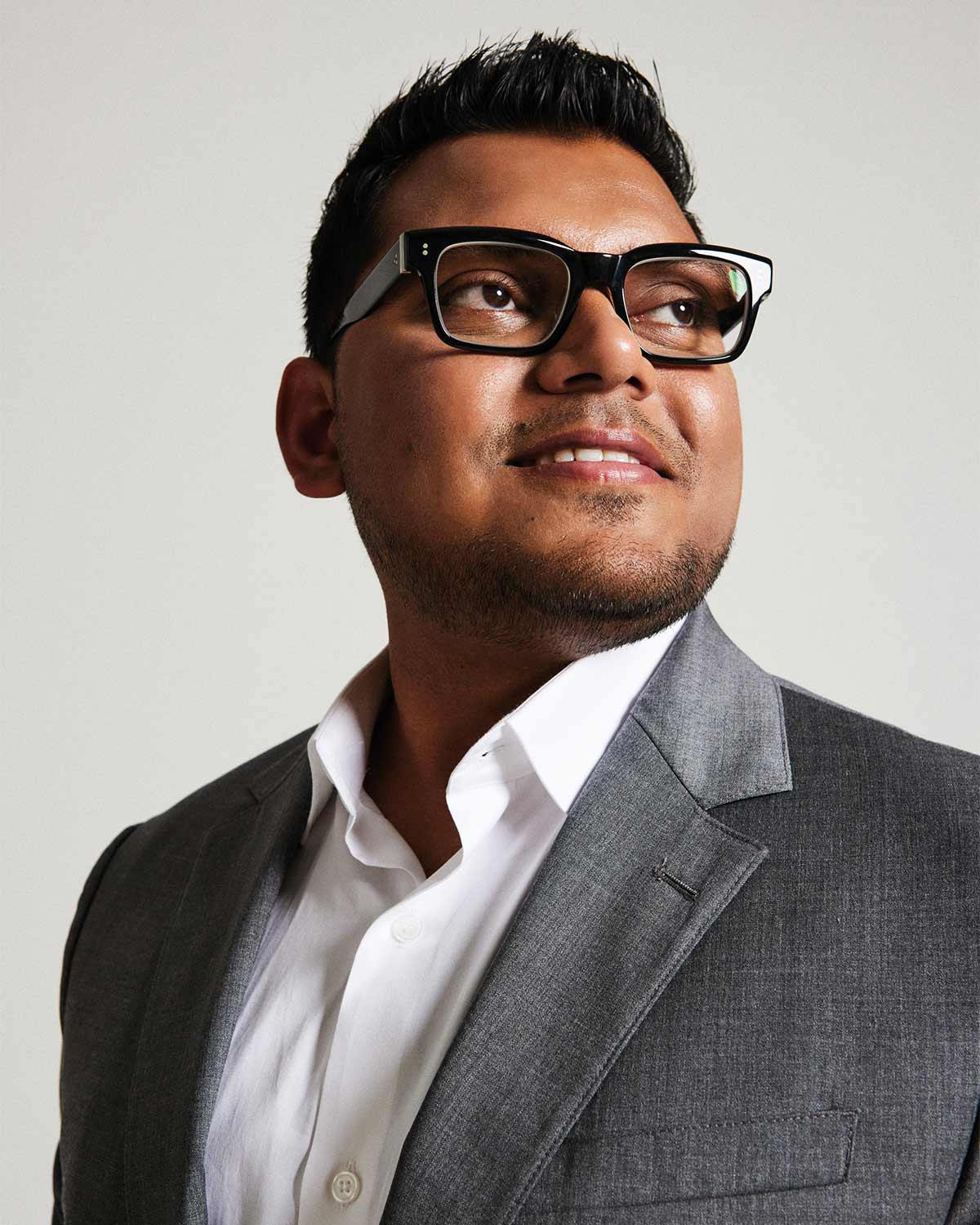
Sheathed in an added veneer of self-assurance, Kuldeep Singh Rajput tells me he’s always been a tinkerer. Raised in Belgaum — a balmy city at the foothills of the Western Ghats — by a school principal mother and father who was the state deputy director of education, he was innately drawn to engineering. “For our undergraduate thesis, my teammates and I built a wheelchair for the paralysed, which could be manoeuvred non-invasively using brain waves. That piqued my interest in how technology can be used to solve medical problems,” he recounts.
It sits on the same plane of exuberant, buzzy innovation you might expect from Elon Musk’s headline-grabbing Neuralink, which aims to connect computers to human brains.
Biofourmis’ blue-sky vision of helping patients manage chronic conditions through Artificial Intelligence (AI) materialised during his year-long stint at MIT (Massachusetts Institute of Technology) Media Lab in Boston. Here, he’d helped build algorithms and software for sleep apnoea and cardiac arrythmia detection.
“I saw the trend of bulky monitoring devices that typically cost tens of thousands of dollars becoming smaller, cheaper and commoditised. At the same time, there was so much available data that overwhelmed clinicians and insurers didn’t know what to pay for,” he relates.
What if he could predict disease complications using data analytics captured by such streamlined devices? Later, throughout his post-graduate studies largely spent building brain implants for neuro modulation at National University of Singapore (NUS), the young researcher nursed his white-hot ambition.
The overall cost of care for heart failure is over $160 billion, but the biggest unmet clinical need comes from the fact that less than one per cent of patients are on optimal dosage.
Kuldeep Singh Rajput
He’d already brazened out the cut and thrust of prototype development at MIT and NUS, and was ready to disrupt healthcare. So, he put his PhD programme on the backburner — a decision that led to his mother refusing to speak to him for six months — and founded the company in 2015. BiovitalsHF, its digital medicine platform issued expedited clearance by the US Federal Drug Authority, parses individuals’ vital statistics to predict clinical complications from heart disease and suggest optimal therapeutic dosage.
“The overall cost of care for heart failure is over $160 billion, but the biggest unmet clinical need comes from the fact that less than one per cent of patients are on optimal dosage. Less than 20 per cent of these patients receive guideline directed therapy — that’s a big problem,” he stresses, citing a 2018 study published in the Journal of the American College of Cardiology.
You might assume that sentiment would place him at odds with Big Pharma and its eye-watering sales targets, but their relationship is far from adversarial. The Boston-headquartered firm helps pharmaceutical companies to accelerate drug development by monitoring their efficacy and safety in clinical trials.
In Singapore, the hefty economic burden of chronic disease placed by an ageing population was thrown into sharp relief by its recent whittling down of approved cancer drugs covered by insurance.
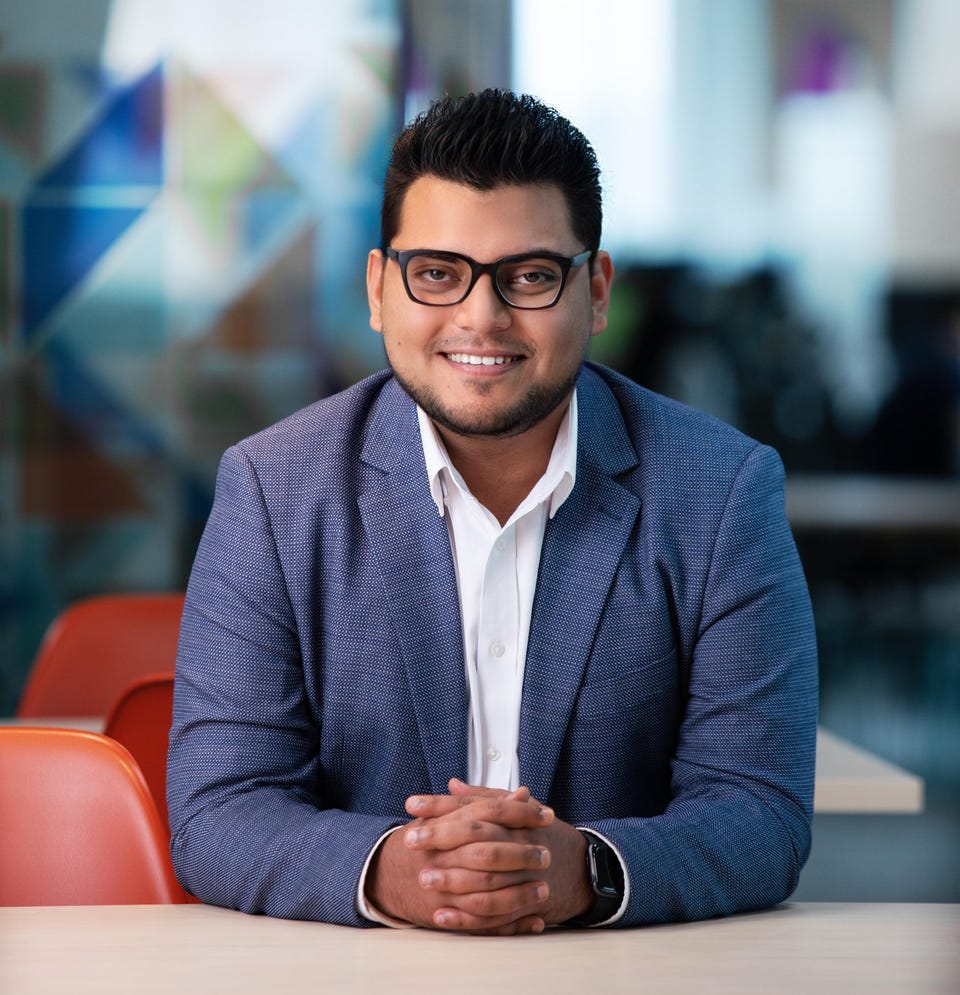
And Biofourmis’ 30-year-old CEO envisions a rejiggered public healthcare system. “We need to move away from the model of charging people for a service without taking accountability for the cost outcomes, especially in countries like Singapore where you have the national healthcare system. I strongly believe that Singapore has every opportunity to become the poster child for value-based healthcare,” asserts Rajput, whose polite froideur betrays a quiet force of character.
To that end, Biofourmis Care — its multidisciplinary clinical care team-supported platform that boasts a hospital at home programme for acute conditions, remote patient management for post-discharge care and virtual speciality care for longitudinal chronic disease management — is undergirded by cost reduction. “We take part of the savings from reducing annual cost of care to insurers or improving operational efficiencies and readmissions for our hospital system partners,” he explains.
Shoot for the stars
His case for a new and more effective paradigm is borne out in shiny investor optimism and the endorsement of private and public health providers including Singapore’s Ministry of Health, which deployed Biofourmis’ remote monitoring platform for Covid-19 patients. It isn’t surprising, considering MOH’s skew towards preventative, community-based healthcare. In August, the company scored another US$20 million in its $320 million Series D round.
As we know, scaling a company to such prodigious proportions is often hedged by hard lessons. “It was initially tough for me to say no. Trying to solve an engineering problem is not always going to result in the right business decision. We had an array of products and each of them could have spawned five to six companies; I had to stay very focused.”
Now, he’s applying his entrepreneurial savvy to his sideline passion, global horse racing and breeding operation Gandharvi. The pet project sprang from a desire to continue his great grandparents’ legacy of horse-breeding. “I’ve always been fascinated by horses, their speed and elegance. They are just majestic animals. When I was growing up, I used to watch races and always wanted to own my own racehorse,” he effuses.
Then, there’s also a clutch of investments in start-ups, notably including Neuroglee Therapeutics, his younger brother Aniket’s firm that develops digital therapeutics for people with neurodegenerative diseases. To say that Rajput played an influential role in his only sibling’s career trajectory wouldn’t be specious.




Aniket tells me he’s been privy to Biofourmis’ inception and like Kuldeep, he pumped the brakes on his PhD to start his company. It’s clear the 27-year-old defers to his older, more assertive brother.
“Kuldeep is more driven by outcomes. He is, of course more aggressive while I like to always take a step back and think through decisions before I make my move. But at the end of the day, we tend to share the same thought processes,” he cautiously reveals.
On a sun-dappled October morning at their stables at Singapore Turf Club, I witness their easy banter, even as Kuldeep admonishes his sibling for demonstrating inadequate oversight over Neuroglee’s finances at their last meeting. His advice for a visibly wincing Aniket is delivered unsparingly but cogently — no different from what you’d expect from your average venture capitalist.
Aniket notes that he’s thankful for such constructive feedback, and they typically engage in healthy debate in the wee hours of the morning. Together, the pair run Gandharvi, whose sustainability Rajput’s wagering his bets on. He tells me Singapore’s horse racing industry has cantered through the pandemic’s initial restrictions to live races in ruddy health, thanks to online punting.
“There’s so much turbulence in the market but the horse racing industry’s the strongest it has been over the past 10 years. That gives me enough confidence to say it is a great investment,” he maintains.
Given his recent blistering horse acquisition spree and keen foresight — as evinced by eight-year-old footage that could one day be regarded TEDx canon — the competition on the tracks may be sweating bullets right about now.
Producer: Cara Yap
Videography: Marcus Lin
Photography: Mun Kong
Styling: Chia Wei Choong
Hair & Makeup: Aung Apichai from Artistry Studio, using Tom Ford and Kevin Murphy