
Global growth has slowed—from 3.3 percent in 2024 to just 2.9 percent this year, according to Morgan Stanley—amid trade tensions and geopolitical conflicts. A rebound is not expected by next year.
Meanwhile, as economists from the Monetary Authority of Singapore revised their growth projection to 1.7 percent, they are bracing for the challenges ahead. Significantly, their report also forecasts a 2.2 percent unemployment rate by year-end.
So, we should be adjusting our spending habits to cut, curb, and save. You know, focusing on necessities such as housing and healthcare, learning how to cook simple meals at home, and using the same outfits over and over. Not splurging on blind boxes.
Hold on. What is a blind box? In case you’ve been living under a rock, a blind box is a sealed package that hides a toy figurine. There are “basic” designs in each collection, as well as “secret” ones. Those who find the element of mystery—or uncertainty— difficult to deal with often purchase the entire series of 12 no-repeat toys. However, staff often remind shoppers that the “secret” might not necessarily be among them.
These palm-sized surprises propelled Chinese toy company Pop Mart onto the Hong Kong Stock Exchange in December 2020, with an IPO priced between HK$31.30 (S$5.13) and HK$38.50 per share, raising US$676 million. Over the last 12 months, its shares have leapt more than 470 percent, making it the top gainer in the MSCI China Index.
Currently worth more than US$46 billion (S$59.1 billion), the company’s founder, Wang Ning, is among China’s 10 richest men with an estimated net worth of US$20.6 billion.
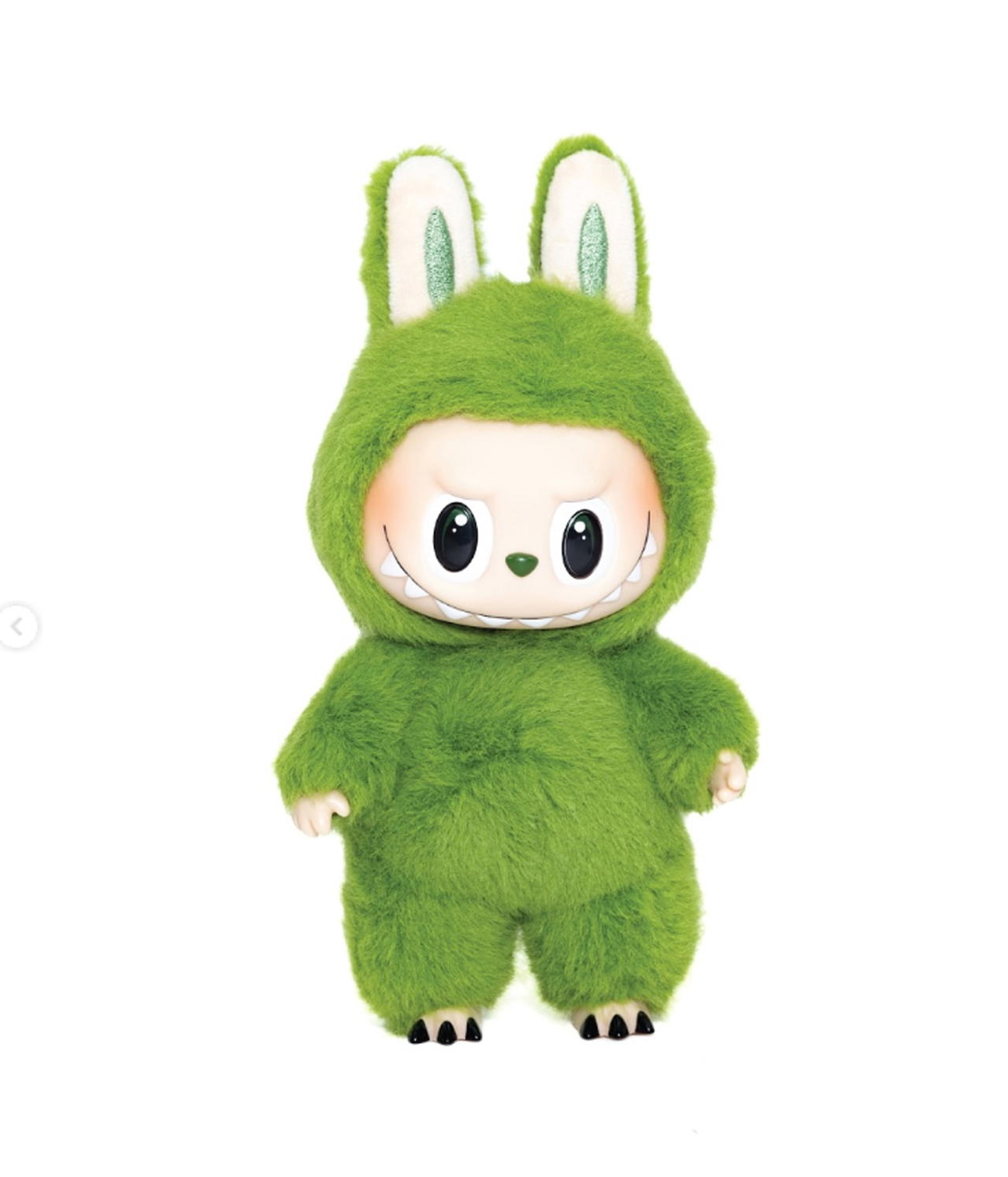
Pop Mart’s Labubu, the elfin plushie with furry coats, pointy ears, beady eyes, and razor-tooth grins, is a global phenomenon. Created by Hong Kong-born artist Kasing Lung, who lives in the Netherlands and worked as a children’s book illustrator, Labubu draws inspiration from Nordic folk tales. She is part of The Monsters, along with her friends Zimomo, Tycoco, and Spooky.
EVERYBODY LOVES LABUBU
Labubu’s rise to fame speaks volumes about our times. In April 2024, Blackpink darling and style superstar Lisa posted two Instagram stories: one of her holding a giant Labubu plush toy and the other of her carrying the Labubu charm.
Jeremy Lee, Pop Mart International’s Business Director for Southeast Asia, revealed during an interview for The Usual Place podcast that “She didn’t inform my supply chain [about her post], ‘I’m going to do this tomorrow, so get ready your stocks, ya?’ So, we were caught off-foot!”
Lisa was more than a fan; she became an ambassador. “If she doesn’t have a tail, she’s called Labubu,” she giggled in a video to share her “secret obsession”, which has attracted 2.7 million views on YouTube. People haven’t looked back since.
Besides Lisa, fellow K-popsters Rose, Seventeen hotties Joshua, Hoshi, and Vernon, and celebrities like Rihanna, Dua Lipa, Hailey Bieber, Liu Yifei, and David Beckham have also flaunted their Best (furry) Friends Forever. Singaporean tastemakers like Kim Lim, Jeanette Aw, and Jamie Chua have also fallen under their spell.
There have been more than 2 million TikTok posts with the hashtag #Labubu so far, with 65 percent of views coming from 18-24 year olds. Instagram’s number is a bit lower at over 1.1 million posts. Viral clips of the toy’s unboxing and styling tips also sparked a newfound FOMO. If it’s good enough for Lisa, it will do for us, yes?
Let’s be fair: during the economic slowdown in 2001 (and another one in 2008), women didn’t stop spending on makeup. With belts tightened, they strutted into the malls, and bought lipstick. One from Estée Lauder alone would have set them back by about US$22 (now about US$40) then. Known as the lipstick effect, this theory suggests consumers will skip big-ticket purchases in favour of little luxuries.
There is no doubt that blind boxes fulfill this need. Aside from Pop Mart, they are available at Action City, Miniso, Toys R Us, Don Don Donki, Otaku House, Simply Toys, and The Green Party. Amazon and Carousell also have sellers.
With prices starting at $9.90 each, they offer great value for money for a generation of consumers struggling with more than financial hardship. Many collectors view the toys as emotional investments and comforts, psychologists have pointed out.
It seems that unboxing these packages and anticipating what might be inside triggers the release of dopamine. A study by Universiti Putra Malaysia’s School of Business and Economics—“Unveiling the enigma of blind box impulse buying curiosity: the moderating role of price consciousness”—published last December in the online scientific research journal ScienceDirect, supports this. More than 300 respondents cited surprise, novelty, and curiosity as reasons for repeat purchases.
In mental health experts’ opinion, such micro-moments of joy can help people build problem-solving skills and strengthen resilience. Besides being reminders of our childhood, the toys also provide brief relief from daily stressors and a sense of control amid the chaos.
Of course, blind boxes have spawned their fair share of chaos. Prices can be jacked up many times over at Internet reselling platforms, with some limited-edition Labubus going for as high as US$7,000. Pop Mart stores have also had to deal with snaking queues, and angry, rowdy customers. In Seoul, for instance, one outlet suspended sales for safety reasons in June.
THE MARKETING BEHIND BLIND BOXES
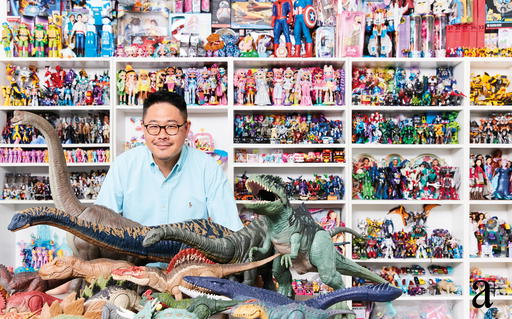
Interestingly, this blind box boom offers businesses important lessons on consumer behaviour. Jian Yang, Managing Partner at Distilleri, a strategic communications consultancy and a toy collector for over four decades, believes Labubu was hardly a marketing strategy: “It was a stroke of luck because Lisa had it.”
Pop Mart was there long before Labubu became an It-toy, so the initial success had nothing to do with marketing. He credits the team for riding the hype well once it began.
Yang, whose team has worked with clients like Mattel, Toys R Us, Giga, BYD, and the National Council of Social Services, says brands should acknowledge that blind boxes are not the new business strategy: “Get in fast, get out fast.” Rather, they are like hype toys. Now who remembers what happened to those very-expensive Beanie Babies and Bearbricks from the 1990s and 2000s?
Also, it is challenging to create different blind box experiences all the time. Most haven’t been particularly good, he says, but there are a few notable exceptions, such as MGA Entertainment’s Hello Kitty and Friends mystery capsules and Jurassic World collectibles. “It’s about hitting hard, trying stuff, then moving on. That is admirable from the perspective of marketing, business, and product innovation.”
Though characters are a fad, Yang feels that the concept of unboxing something you don’t know will endure. This is the first time both collectors and non-collectors are enjoying blind boxes simultaneously—and there are plenty of characters to choose from at Pop Mart, including Crybaby, Dimoo, and Skullpanda, while Action City carries Sanrio, Butter Bear, Disney, among others.
“Keeping the market fresh keeps consumers coming back for more. I don’t even collect Labubu, and I already have 29. I don’t even know how that happened!”
This just goes to show, we are still spending—just more mindfully.