A pair of Google speech-to-text powered frames for the hearing impaired. An app that filters expletives and spam to help people with intellectual difficulties communicate in socially acceptable ways.
Those are among the wizardry of gadgets bred by non-profit Engineering Good, including through its recent Tech For Good Festival held in October. The annual youth hackathon connects developers and designers with the disability community, their blueprints made publicly accessible.
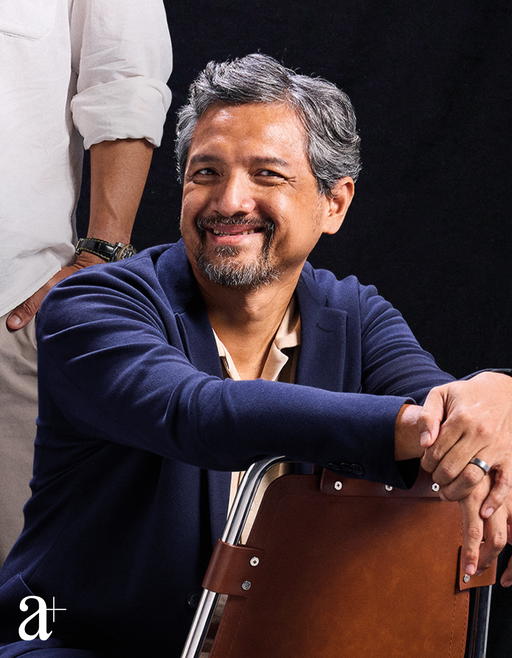
It’s a bracing change of pace considering the cutthroat tech sector known for its spikily guarded nature. The initiative was spearheaded by Engineering Good’s founding member Johann Annuar, whose altruistic sensibilities have been an organisational bedrock.
The 48-year-old’s humanitarian journey began on a spontaneous visit to a scuzzy refugee camp in Pakistan’s craggy mountains. This was amid an 18-month cycling expedition from Turkey to New Zealand where he’d been mugged and contracted malaria. “I started thinking, this is my element, lighting up a whole town, setting up solar panels and building communication lines; that’s something I could do to give back.”
“I believe in skills-based volunteering; you shouldn’t volunteer at Food for the Heart if you aren’t good at cooking or you might just poison someone,” he deadpans in typical bone-dry humour.
The engineer lent his expertise to development organisation Raleigh Singapore and eventually co-founded Engineering Good as engineering’s answer to Doctors Without Borders, where he also volunteers. The mission was ultimately stalled out by a paucity in Singaporeans willing to spend months at a time building infrastructure overseas, and they soon pivoted towards home.
What started out as projects modifying toys for special education schools has burgeoned into a structured organisation that collaborates with government agencies to develop assistive technologies for the disabled, as well as enhance digital inclusion. The latter’s a pet project of Johann’s, who sees a palpable digital divide despite Singapore’s smart city moniker.
“There’s a danger of those in the low-income bracket being left behind without basic technology, and the poverty cycle will be much harder to break,” he asserts. Covid-19, for one, has implacably hastened digital adoption across the board.
“These days, you can no longer list Microsoft Word as a skill on your CV; yet there’s still a good section of Singaporeans who’ve never used the software. My goal is to ensure that everyone gets on the first rung of the digital ladder, which means getting them laptops,” he declares.
To that end, Engineering Good has doubled down on their efforts to refurbish used laptops donated by the public to financially disadvantaged students, having disbursed more than 7,000 machines since the Circuit Breaker in 2020. The team also trains the community in laptop repair.
The father-of-two notes the Ministry of Education’s (MOE) efforts to distribute tablets to students as a “step in the right direction,” though he has his reservations.
“Tablets are unsatisfactory because they are consumption rather than creation devices. You don’t write a report or edit movies on them. The loaned devices are also crippled by MOE’s software that blocks sites, which I find to be a very paternalistic Singaporean way of doing things.”
He adds that his non-profit’s effectiveness in propelling the laptop programme forward stems from its lack of bureaucratic albatrosses common to the public sector. “They have a different way of thinking that has to shield people from liabilities more than moving the country forward.”
Though Engineering Good doesn’t quantify their impact as they don’t work directly with beneficiaries — “Engineers don’t have a lot of EQ so you shouldn’t let us out in public,” he drolls — there are heartening personal accounts. Take for instance, the primary school student from the wrong side of the tracks (his parents were either incarcerated or uncontactable), who coded his own game after receiving a laptop.
“He still didn’t do well for his PSLE, but if this one kid grows up and gets a job at Facebook, we would have done our job.”
Photography: Mun Kong
Styling: Chia Wei Choong
Hair & Makeup: Aung Apichai from Artistry Studio, using Tom Ford and Kevin Murphy