Dragonflies are a recurring motif at Jin Ting Wan, from intricate garnishes to porcelain serving plates. The name of this Cantonese fine dining restaurant, atop Marina Bay Sands Tower 1, translates literally as “golden dragonfly”.
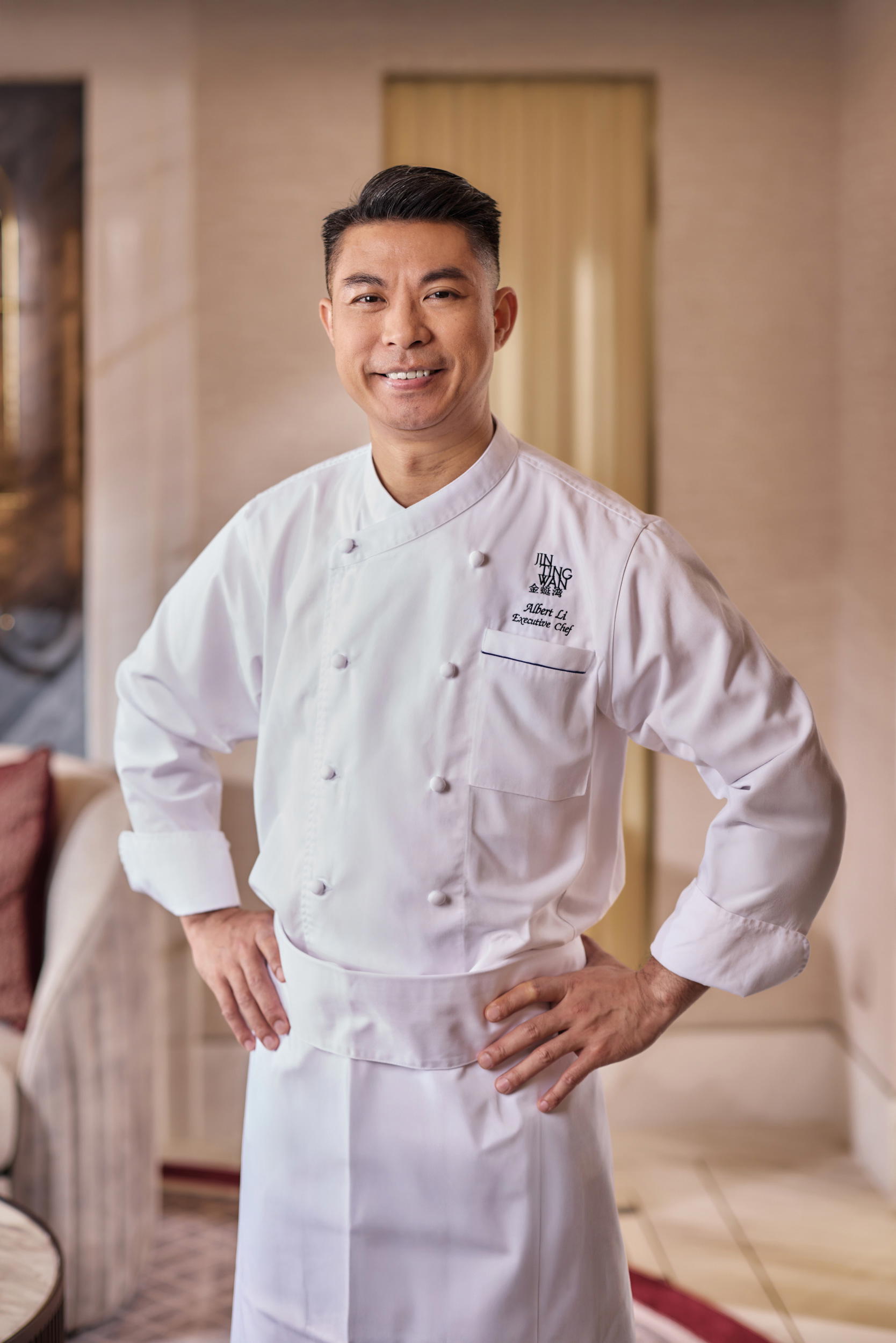
However, there is more to the name than meets the eye, as Executive Chef Albert Li explains. “Jin” (gold) is the first character of Marina Bay Sands’ Mandarin name; “Ting” refers to the dragonflies often seen in the vicinity, whose graceful flight the restaurant metaphorically emulates; and “Wan” (bay) signifies water, an element synonymous with luck and prosperity.
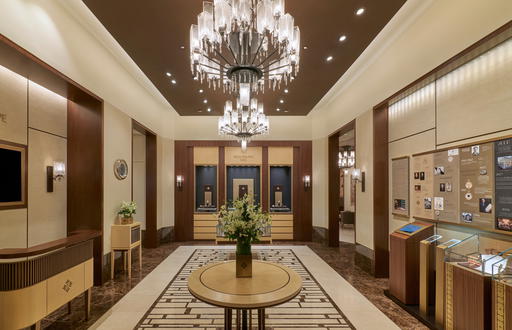
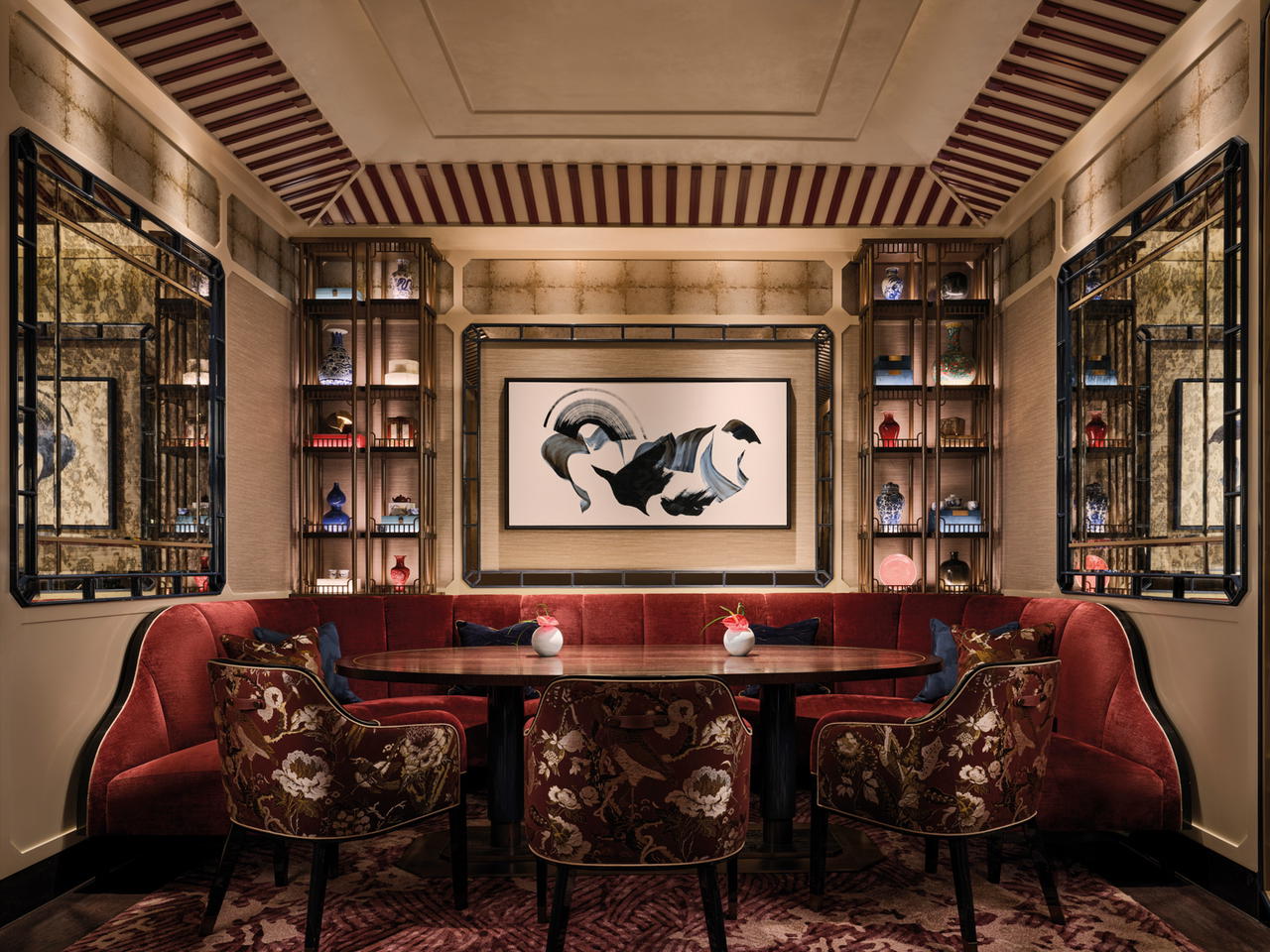
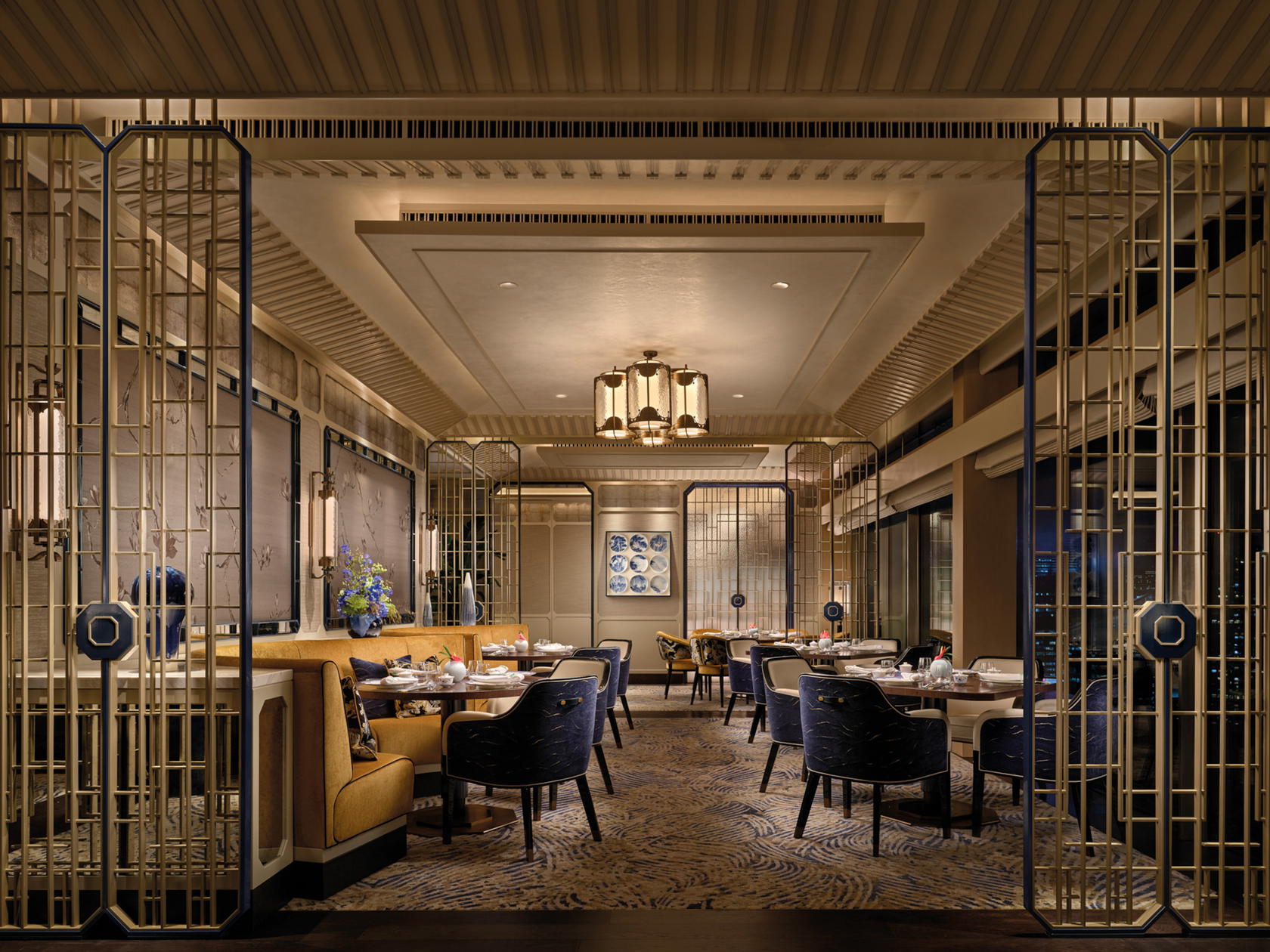
Singapore’s highest Cantonese restaurant, which seats 162, exudes poise and polish. Taking inspiration from the Song Dynasty, China’s Golden Age due to its vibrant culture and economic growth, its cool, minimalist vibe is accentuated by Oriental touches like intricate latticework and rich silk accents.
Apart from the main dining hall, Jin Ting Wan also offers two private dining rooms and private dining suites. But what makes a meal especially exclusive here is a far-from-the-madding-crowd sense of calm, courtesy of its panoramic views of the sea and skyline.
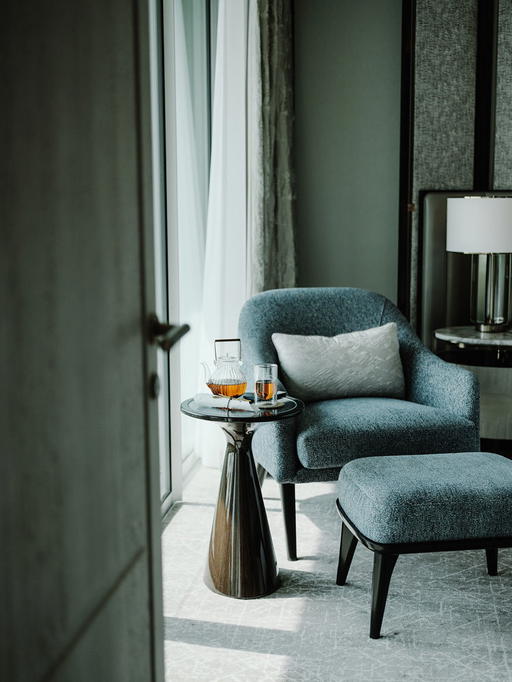
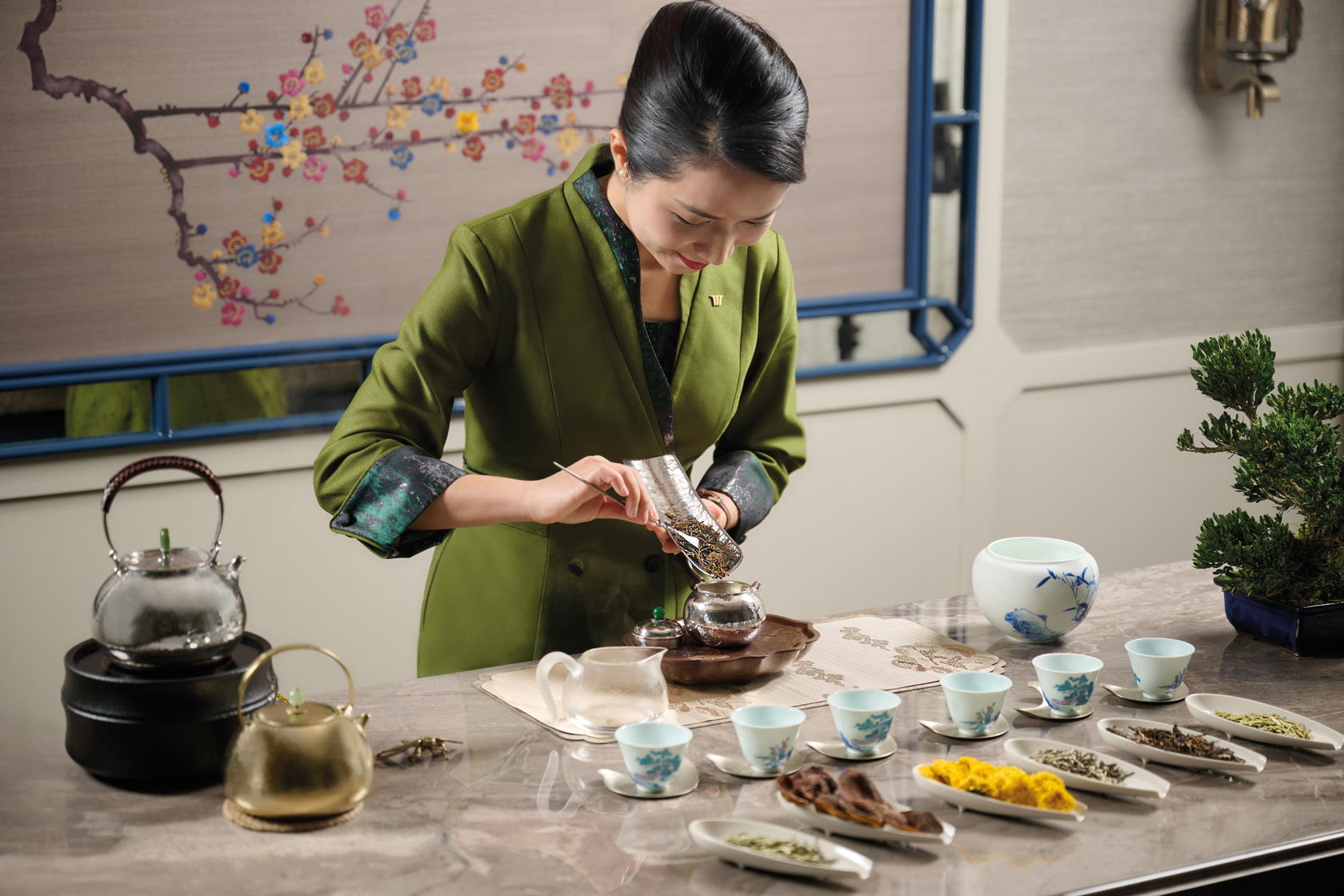
Our experience begins with a tea programme in the Art Lounge before our meal. There are over 100 Chinese wine labels and 80 tea varietals in the restaurant’s collection, according to Head Sommelier Joe Yang and Head Tea Master Jacky Zhao Gang.
We are served a special version of the restaurant’s signature tea, Fu Yu Jin Ting, which Zhao brews himself. It combines Yunnan Pu’er Jingmai Raw Tea, crafted from wildflowers and tender leaf buds, with Moonlight White tea. “With its floral aroma, it beautifully complements the clean, nuanced flavors of our Cantonese cuisine,” says Li.
At Jin Ting Wan, Li draws deeply on his decades-long experience helming Michelin-starred kitchens from Imperial Treasure Fine Chinese Cuisine (Shanghai) to Jin House at Four Seasons Hotel Tianjin.
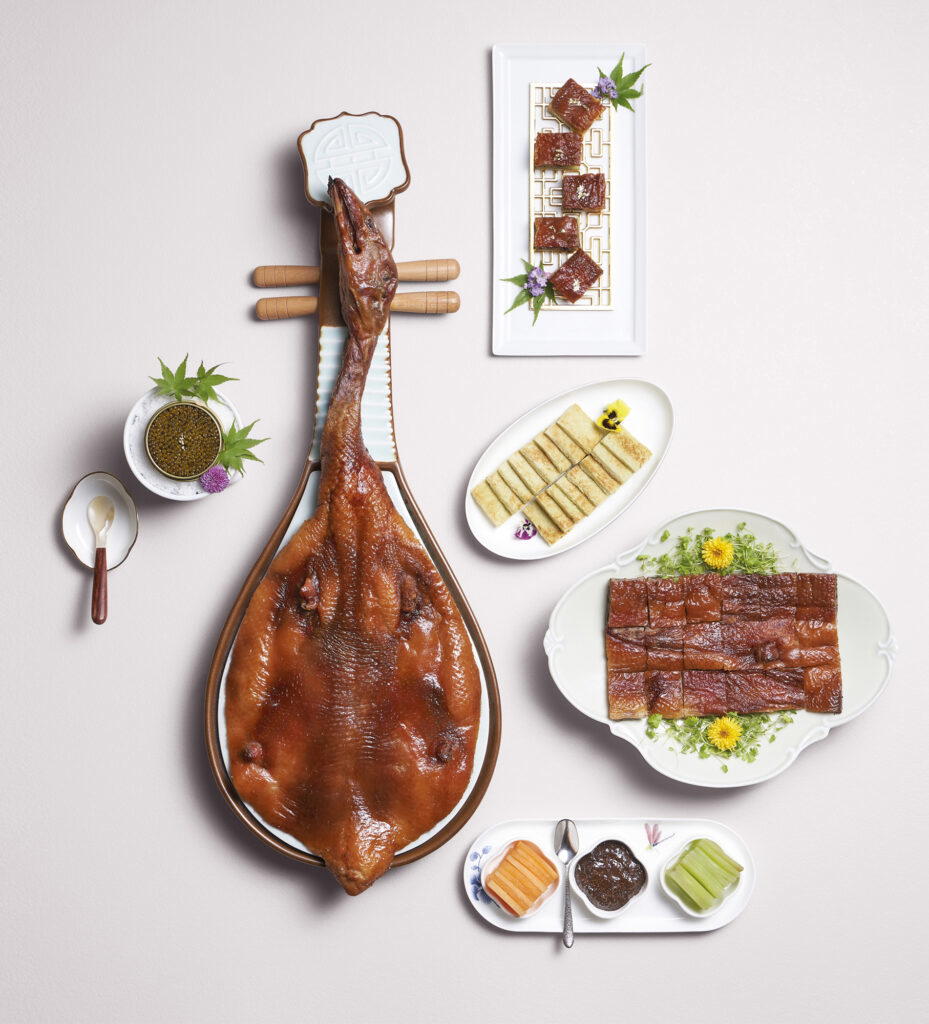
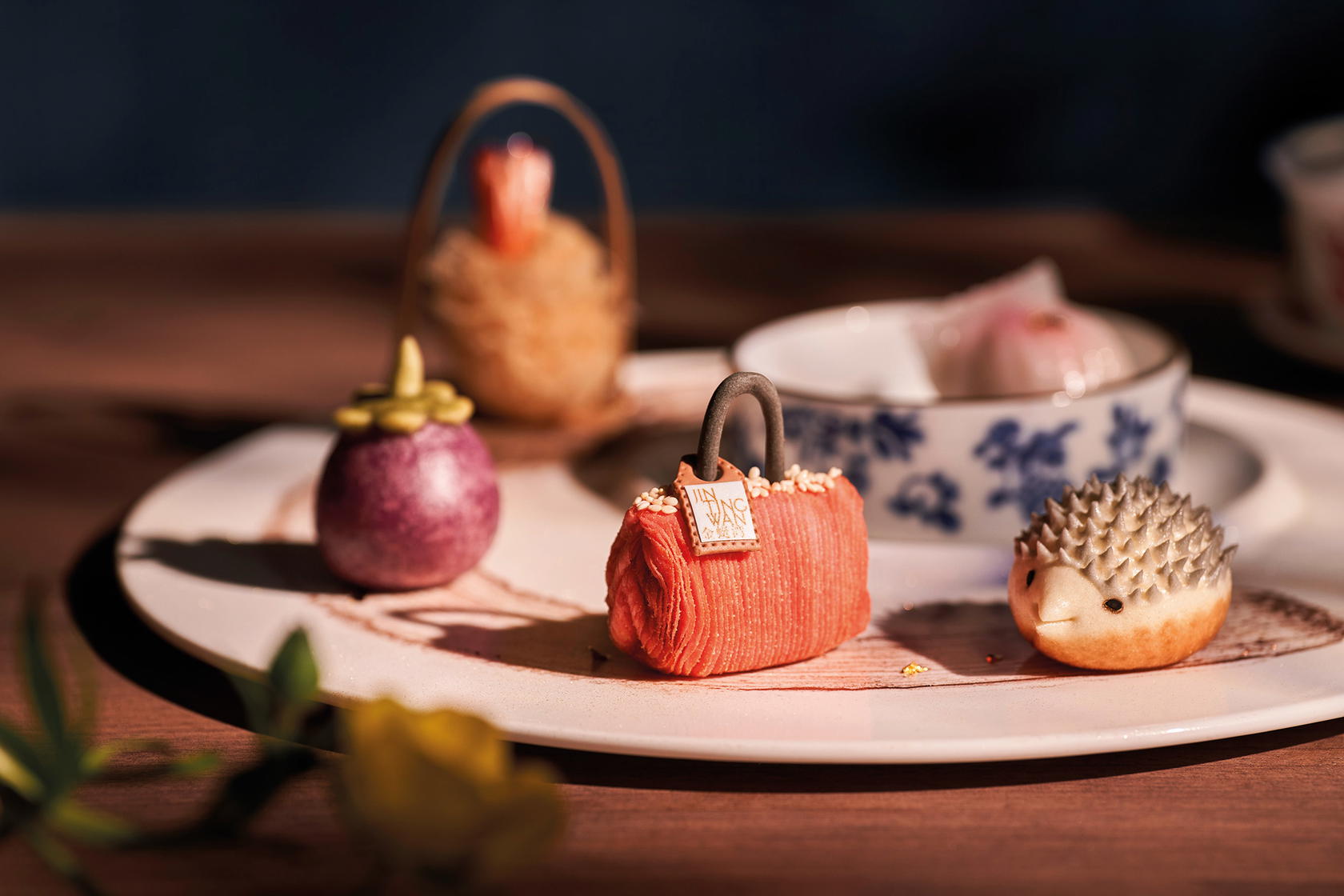
Guangxi-born Li, 43, has earned nods for his modern sensibilities despite his mastery of classical cooking techniques. Like morsels of art, his Radish Puffs are shaped like miniature handbags, each with a tiny charm carrying the restaurant’s name. The Steamed Crispy Red Rice Rolls stuffed with shrimp and pork, on the other hand, are a delightful contrast of textures and flavours.
Despite its deceptively simple appearance, Cantonese-Style Marinated Kale has a natural elegance. Li attributes this to strong knife skills, which are crucial to Cantonese cooking. “The way we cut our ingredients is not just about aesthetics; it impacts how flavours develop, textures change, and the dish comes together.
“In addition, the subtle, deliberate cuts allow the pickling liquid to penetrate evenly,” he explains. “This ensures every bite is infused with a balanced flavour and a satisfying texture, something you can only achieve through disciplined knife work.”
In Jin Ting Wang’s Pipa Duck, Li revives a roasting tradition. It is prepared using a technique that flattens the bird into the shape of a Chinese pipa lute for even cooking and crispier skin. The duck is seasoned with black pepper and spices, slow-roasted over lychee wood, and offers a unique presentation and deep, rich flavour.
“Every detail, from the marinade to the fire’s intensity, is meticulously calibrated,” says Li. “The result is a golden, lacquered duck with crisp, paper-thin skin and a smoky, lingering aroma.”
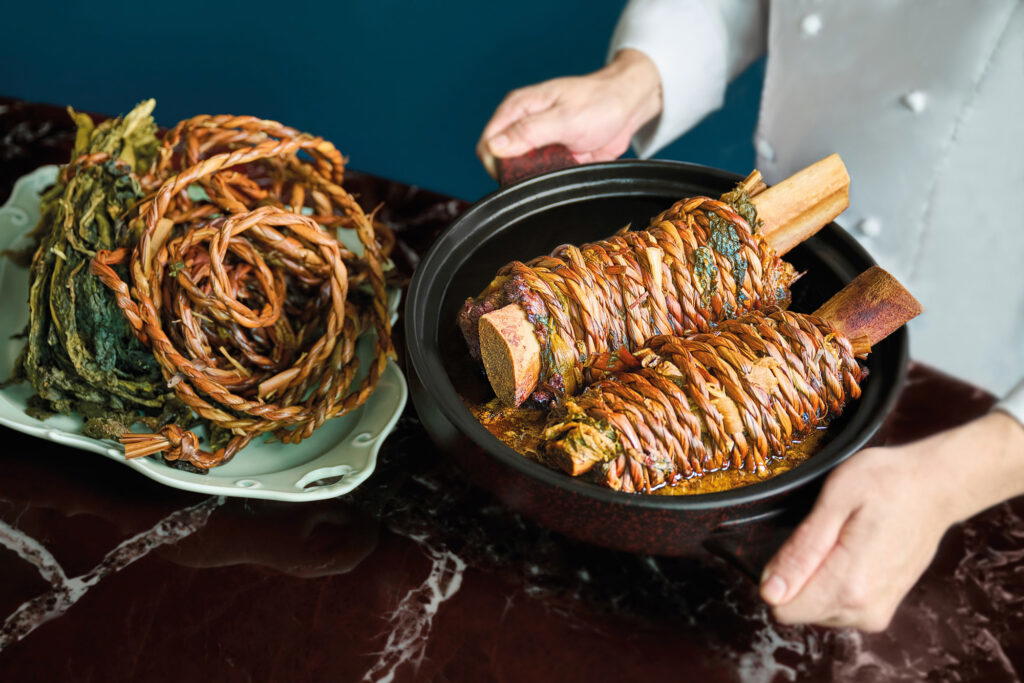
Another noteworthy dish is the Angus Short Rib with Preserved Vegetable Wrapped in Straw Leaves. Inspired by the classic Hakka delicacy Mei Cai Kou Rou from Meizhou, Guangdong, this elevates the traditional “nine-steam, nine-sun” technique in a complex process of steaming and sun-drying ingredients nine times to enhance their medicinal properties, texture, and taste.
Angus beef short ribs, of course, are prized for their rich marbling and deep, savoury aroma. Using preserved Guangdong mustard greens that have been through the entire nine-cycle process, the meat is encased in woven dried straw leaves and slowly braised over low heat.
“This allows the meat to absorb the sweet, earthy aromas,” says Li. “At the table, the ribs are gently unwrapped, warmed in the rich braising sauce, and served with tender romanesco cauliflower.”
A treat for the the eyes and tastebuds, and a prelude to everything else on Jin Ting Wan’s menu.