Jeremy Tan’s earliest memory of politics happened at Anglo-Chinese Junior College (ACJC), when a permanent secretary came to visit. Despite not remembering her name, the 34-year-old recalled asking, “Why are the returns on CPF not transparent?” before an entire hall filled with students and teachers. She replied simply that the returns were guaranteed, but Tan remained unconvinced: “I wasn’t sure how it was invested.”
Nine days after Singapore’s general election on 3 May, in which Tan emerged as the best-performing independent candidate since 1972, a+ caught up with the retired businessman in a noisy heartland shopping mall food court, where he was having lunch with his homemaker wife Felicia, 29. They live in a Marine Parade condominium with their three beagles.
It was reminiscent of candidate introductions during election campaigns, with many emphasising their humble roots and love of hawker food. “Who doesn’t like chicken rice?” the Mountbatten SMC candidate responded dryly, pointing out that he consciously chose to focus on his personality and ideas instead. “You cannot out-poor me, lah.”
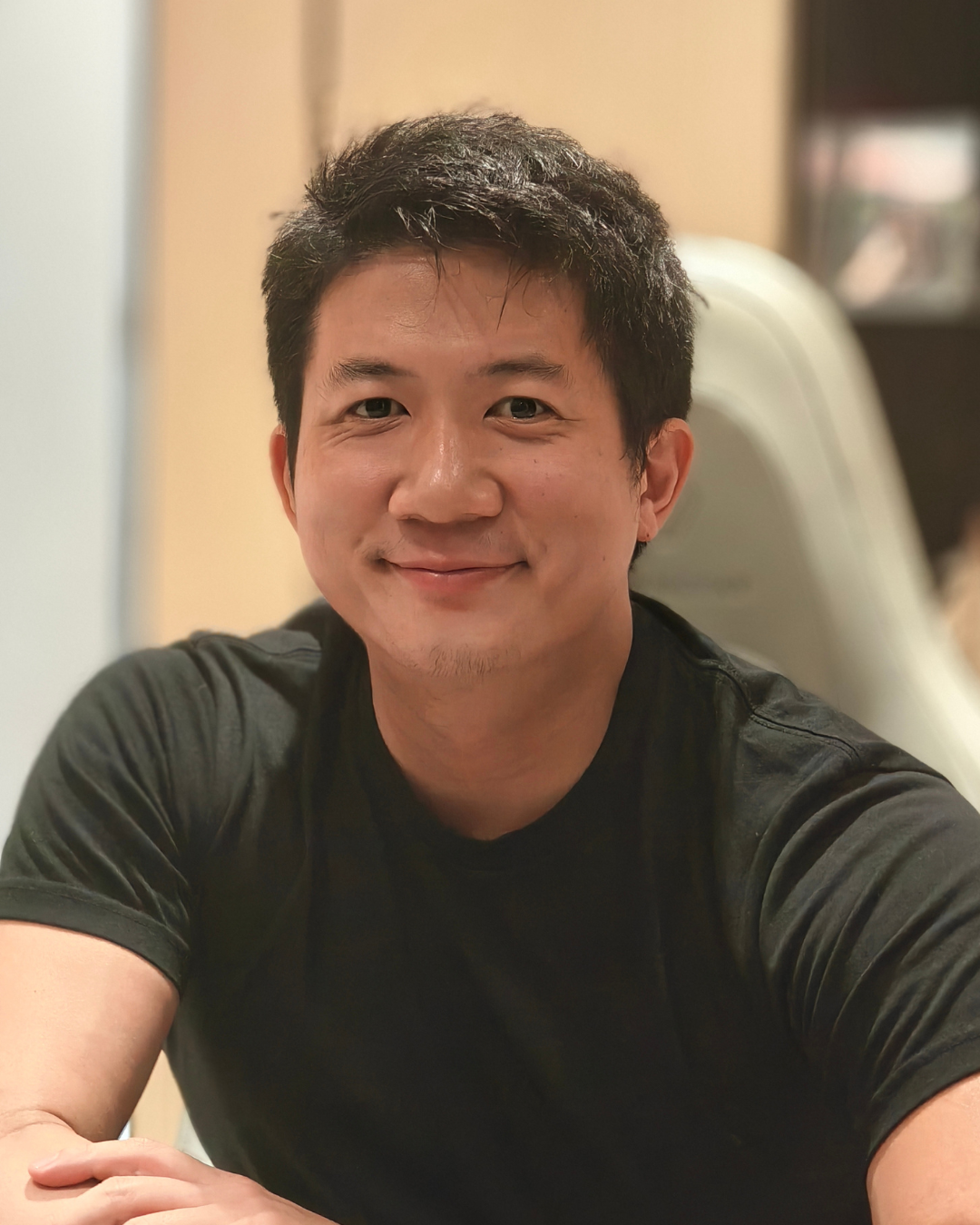
Tan’s everyman persona and his stripped-down wardrobe of a black tee, black trousers, and sneakers—“Uniqlo is the uniform for Singapore; $7.90 black T-shirt; and $29.90 for your pants”—certainly struck a chord with Mountbatten residents. An impressive 7,083, or 36.16 percent, eligible voters, checked Tan’s dog symbol on their ballot papers.

Some compared his solitary rally at Home of Athletics on Stadium Boulevard to a stand-up comedy roast, punctuated by repeated cries of his slogan, “Full-time pay, part-time job”, a jab at Members of Parliament who also hold another full-time job.
After his opponent Gho Sze Kee branded his Bitcoin advocacy as “gambling”, Tan challenged her to close a Singapore Pools outlet in the estate, dropping zingers like, “Maybe she doesn’t really have anything meaningful to say about why she’d be the best candidate, other than ‘Trust me, bro, I volunteer with PAP 13 years already’.”
The man has serious ideas, such as removing land costs from HDB flat pricing, capping BTOs at four times one’s annual income, and getting rid of CDC mayors. Additionally, he advocates allowing Singaporeans to invest their CPF funds in Bitcoin.
According to him, he could have run a Town Council if elected. “The way SMCs run the town council is very inefficient. In addition to managing complaints, inquiries, and tickets, they still use pen and paper for Meet-the-People sessions and store a lot of files and folders. Like any other business, they have to deal with disgruntled customers. It’s still managing complaints, inquiries, and tickets.
“It’s not as if only PAP MPs can resolve these things. There’s a laziness in the way they think about town councils. They’ve been trying to use this argument all the time; that nobody else can do it better.”
NO ELECTRICITY AT HOME
The first thing he said when asked about his background was, “Poor!” Tan, who has an older brother, comes from a different background than many Singapore office holders. His education did not begin at elite schools, but at River Valley Primary School, Queenstown Secondary School, and ACJC, before attaining a degree at Nanyang Technological University in Business and Information Technology.
His parents went bankrupt after their multiple business ventures, primarily in the bridal industry, failed. For a time, the family lived in rental housing in Jurong West before moving to Tanjong Pagar, where their MP was Lee Kuan Yew. “Growing up, there were times I had to walk over to my cousin’s house to shower because there was no electricity or water at home.”
As a teenager, Tan read The Economist from cover to cover before moving on to books like The Intelligent Investor and Zero To One: Notes on Startups. This might explain his entrepreneurial drive. “To make spare money, I’d go to Sim Lim Square to assemble parts and build computers for $50 a piece while I was in secondary school.”
Then he began selling skincare products while in university, before becoming a fulltime distributor for US brand Paula’s Choice. He also dabbled in a venue rental business and sold mechanical keyboards before selling off the skincare distribution business. Combined with some good investments like Bitcoin, it enabled him to retire around 2022, said Tan.
HIS POLITICAL AWAKENING
There was little indication that Tan might one day run as an independent. His extended family were “Rafflesian scholars” and pro-establishment, while his father regularly voted for the PAP. But the awakening began when his mother tried to sell off the family flat, and realised the proceeds would not be adequate for retirement. “I asked myself, Are there any other Singaporeans in the same boat? and I started researching that more and more.”
Then came the “consecutive incidents: former Speaker Tan Chuan Jin and former WP MP Leon Perera’s extramarital affairs; former Transport Minister S Iswaran’s conviction on corruption related charges; and the Fujian gang money laundering case. “I realised the quality of government is not as high as it used to be.”
After briefly considering and deciding not to join WP, and contemplating a run in Marymount SMC, Tan decided on Mountbatten. It is much nearer to home, as he explained, “I cannot be effective if I’m too far.”
Despite Tan saying he wasn’t taken seriously until Nomination Day (“Everyone thought I was kind of crazy, and I was scolded quite a bit for trying to be an independent person talking about Bitcoin.”), he eventually gained dozens of volunteers. Among them were experienced counting agents and polling agents of all ages. A former PAP MP even offered some advice.
“I was very comfortable getting scolded all the time,” said Tan matter-of-factly of his ground campaign, pointing to his experience in retail sales. “Some said, ‘You don’t disturb my lunch’. Others said, ‘I don’t want to talk about parliament. I only want to talk about the Town Council’.”
Nevertheless, many residents also thanked him for ensuring there was no walkover. The best experience of all: “When you walk around and actually get invited to people’s houses, because they want to have a chance to vote for you, but they must see who you are.”
He spent $17,000 on his campaign, which included about $10,000 on the stage and setup for his rally. In the end, was Tan surprised by the outcome, given his expectations of a vote count in the “high 40s and possibly 51/52”?
“Try your best, don’t talk rubbish, and think sensibly,” he said. “Speak nicely. Be friendly. Don’t attack people for no reason. You will get 30-something percent because people will just want to give you a chance.”
“It will be very good for me to learn even more. I can learn the dynamics of parliament and what is required of a parliamentarian.”
Jeremy Tan, on why he seeks a role as NMP
WILL JEREMY TAN BE BACK?
Tan said he intends to apply for a Nominated Member of Parliament (NMP) position: “It will be very good for me to learn even more. I can learn the dynamics of parliament and what is required of a parliamentarian.” However, this does not preclude him from joining a political party; he’s in informal talks with several parties.
He is already working with students, academics, data scientists, and the like to develop a toolkit on Town Council affairs, which he will make available online. Also on his plate is a hackathon that examines how electoral boundaries can be drawn based on science and demographics.
Otherwise, Tan will continue raising issues to his 26,000-odd Instagram followers. His top concern is the lease decay of HDB flats, citing the Future of Singapore policy paper which noted that more than 220,000 flats had already crossed the 40-year mark at the end of 2020.
“The men in white know that they have 60 months to fix the HDB issue, because half of Singapore’s flats will cross the 45-year mark in the next GE. When the lease decay really hits them, they are going to have a lot of problems.
“I want to see change for Singaporeans in terms of having more autonomy in their lives. The CPF and HDB are set up in such a way that the government dictates how you live and retire.
“It used to be a case where it made very good decisions, and everybody felt satisfied. However, given current times, where retirement adequacy is clearly inadequate, something must bedone.”