Many of you reading this most likely know what whisky tastes like. By ascending the knowledge ladder, we can assume you can differentiate Scotch from other whiskies. Those who have reached a certain level of enthusiasm should be able to rattle off the tasting notes of a Macallan 18. Some may even remember which direction Johnnie Walker’s striding man moves in (trick question: both directions) or what Glenmorangie’s spirit animal is (a giraffe).
However, these are big names backed by even bigger corporations and their prevalence in drinking culture, though appreciated and necessary, can feel a little, well, safe. It’s not that famous distilleries don’t make great spirits—they earned their fame for a reason, after all—but if your drams are becoming predictable, perhaps it’s time to look into some overlooked choices.
The Whisky Store invited a+ to explore the worlds of Angus Dundee Distillers and Duncan Taylor, two independent Scotch companies that have quietly been making waves in the industry for years. Angus Dundee, a 74-year-old independent bottler, also owns two single malt distilleries, Tomintoul in Cairngorms National Park and Glencadam in Brechin. With approximately 155,000 casks, it may be a smaller player compared to giants like William Grant & Sons’ Balvenie, which boasts about a million casks, but what it lacks in scale, it makes up for in character.
Established in 1965, Tomintoul has earned a reputation for creativity and a willingness to experiment, with regular releases of special editions that explore different cask finishes, such as madeira and cognac. Tomintoul’s exceptionally wide and tall stills—the second tallest in Scotland, after Glenmorangie’s—contribute to its signature profile: smooth, creamy, rounded, and laced with vanilla and honey with a biscuity backbone.
At the Scotch Whisky Masters this year, Tomintoul Tlath (created from whiskies of varying ages, exclusively matured in ex-bourbon American oak casks) and Tomintoul Pedro Ximenez Sherry Cask Finish both won gold medals.
Glencadam will celebrate its 200th anniversary next year, making it one of Scotland’s oldest distilleries. Its methods have remained largely unchanged—without chill filtering or added colouring for age-statement bottles—and its spirit is known for its bright and fruity character.
This distinctive fruitiness is attributed to Glencadam’s uniquely shaped stills, each featuring a lyne arm that angles upwards at a 15-degree slant (as opposed to the more common downward angle). This enhances vapour reflux during condensation, resulting in vibrant tropical and orchard fruit flavours.
Of course, what happens next will depend on cask maturation and the master blender’s expertise. For independents, that’s where the real fun begins. “The advantage we have over big brands is the ability to be more adventurous and creative,” says Angus Dundee’s Master Blender, Iain Forteath.
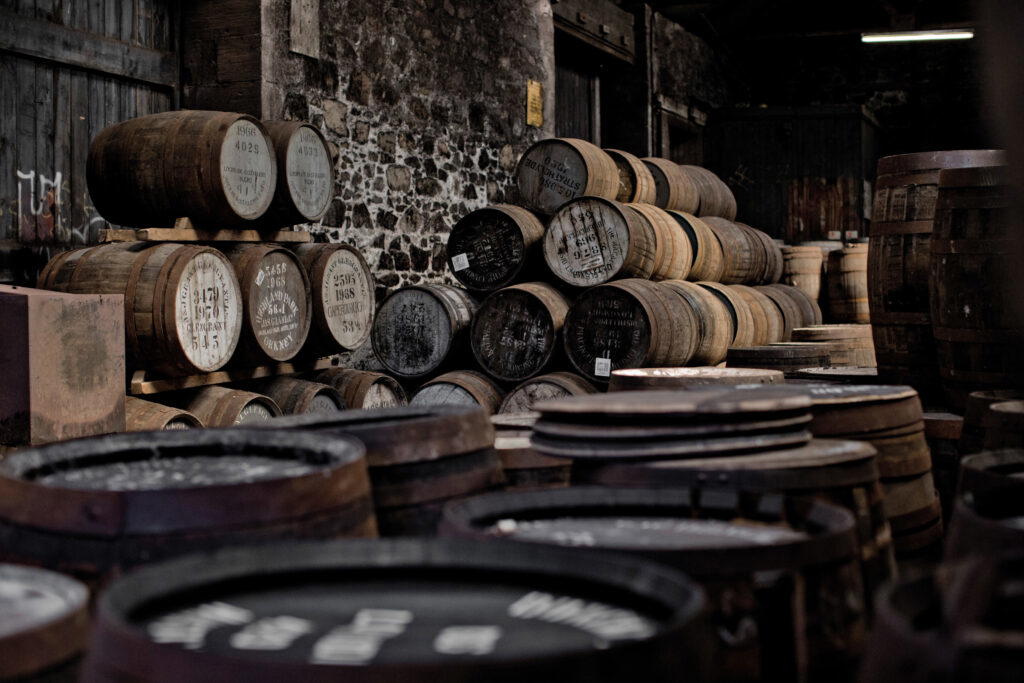
“Not that the bigger brands can’t do that, but their core ranges are what carry them, so the focus will always be on maintaining those. We can get away with doing smaller parcels of special finishes and releases.”
Tomintoul Cigar Malt is a novelty Forteath is particularly proud of. This expression combines the distillery’s classic and peated single malts, which are either fully matured or finished in Oloroso sherry casks. In the end, you get a whisky that is flavourful, creamy, and rich, with a subtle smokiness that makes it a great cigar pairing.
If you’re accustomed to mainstream brands and unsure of what to try next, Forteath suggests focusing on the flavour profiles you already enjoy and experimenting with distilleries that offer similar tasting notes. “Even better, find out where your favourite distilleries are based and try the whiskies from their neighbours,” he advises.
There is also the exciting prospect of exploring independent bottlings. Independent bottlers buy casks and bottle whisky or other spirits without owning the distillery that produced them. Some even release them under their own label with the original distillery’s name.
Distilleries aren’t necessarily offloading bad casks; they are often simply releasing those that don’t align with the style they aim to achieve. “A Glenmorangie 18 is going to taste the same every single time you buy it. The distillery will marry away the differences from all the casks they use to get a nice, consistent product,” explains Mark Thomson, Private Client Manager at Duncan Taylor.
“Independent bottlers tend to use only single casks, which can give you really interesting little snapshots from a distillery that you wouldn’t otherwise experience.”
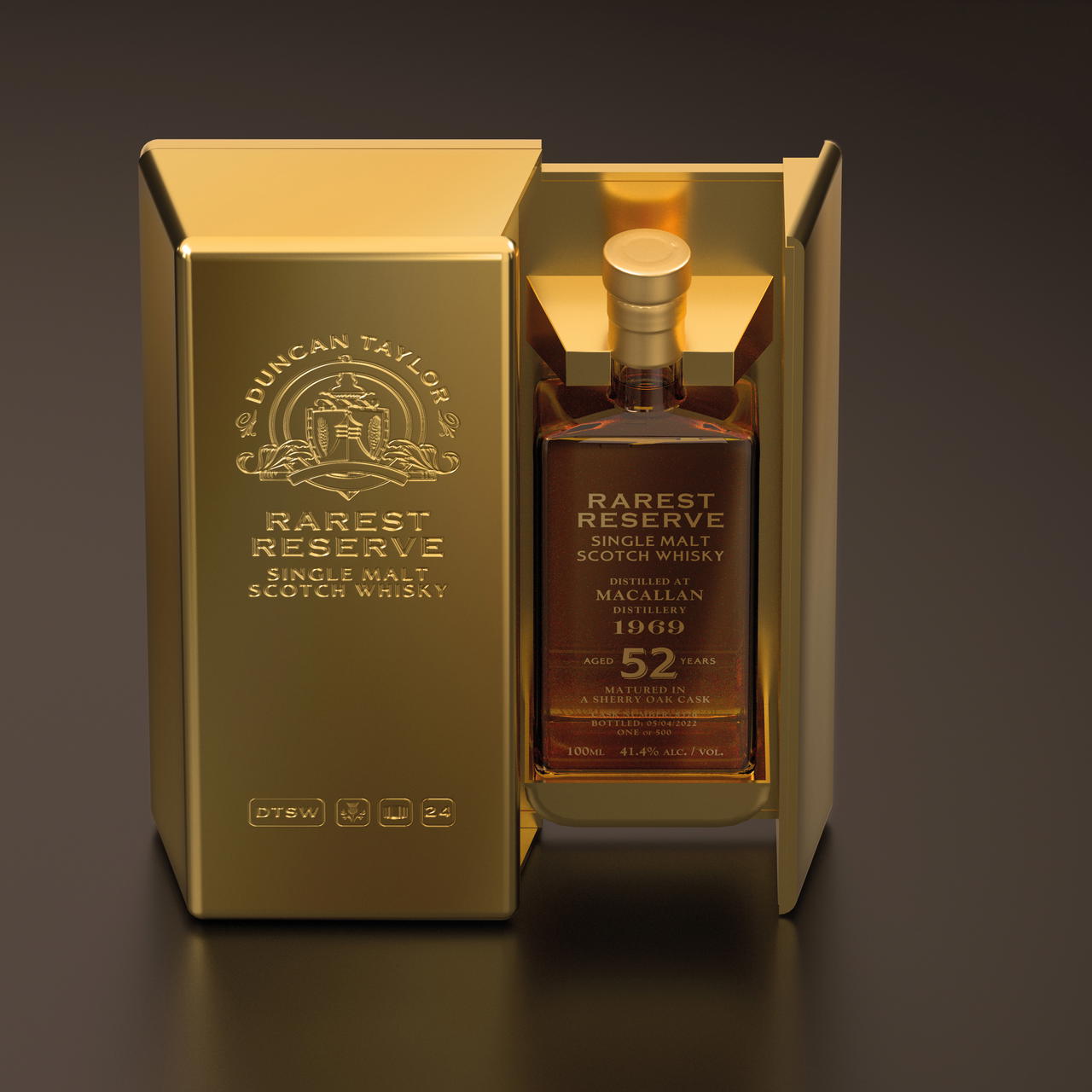
Case in point: As part of its Rarest Reserve series, Duncan Taylor released a Macallan 52 Year Old Macallan earlier this year. Besides being an impressively old expression, it was aged in an ex-bourbon cask—a rare find from a distillery known primarily for its sherry casks. It is so rare that it is only offered in 100-ml drams housed in gold bar casings and limited to 500.
Although 3,500 casks might not seem like a lot, many have extraordinary provenances. “There are many independent bottlers out there, but many buy already aged stock,” Thomson continues. You would need to ask a distillery if they have a 15-year-old cask available for bottling.
“In Duncan Taylor, we’ve held onto these casks since day one because [late owner] Abe Rosenberg had been amassing and laying down stock since the 1960s. Some come from distilleries that are no longer operating, such as Caperdonich, Lochside, Banff, and Kinclaith. It’s the whisky geeks who seek out these unusual casks.”
Two such Singaporean geeks may be familiar to you: Chua Khoon Hui and Joyce Ng, founders of The Whisky Store and organisers of the annual Whisky Journey. Since their first distillery tour to Springbank in 2011, they have built up an impressive line-up of unique bottlings for their F&B concepts.
“We serve a niche market and our customers’ preferences are wide and diverse,” says Chua. “Like us, they seek varied tastes, complexity, provenance, and history. The majority masses might prefer familiarity and simplicity, but we leave that segment to the big brands.”
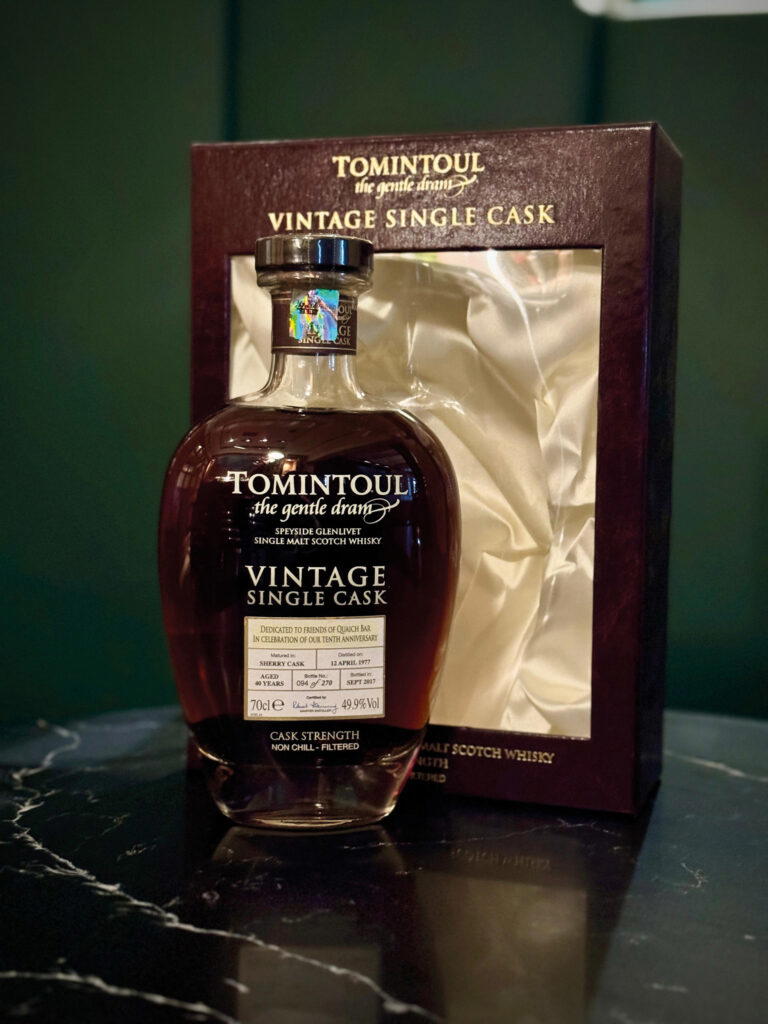
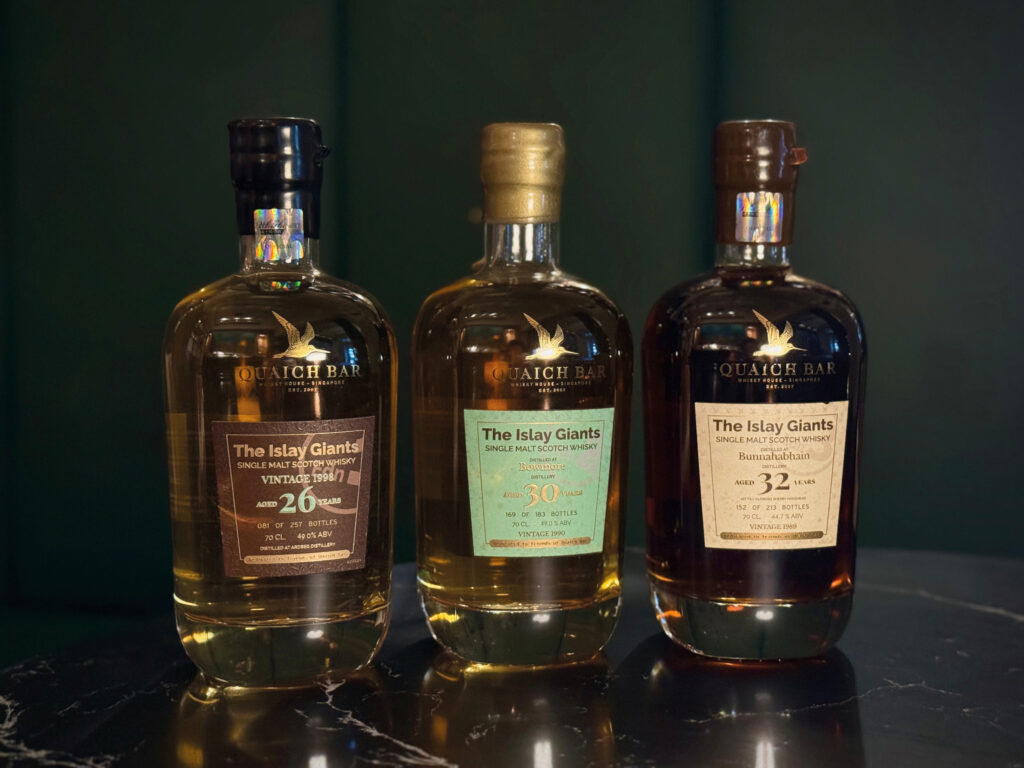
As a result of their close friendships with different companies and distilleries, Chua and Ng have been able to bottle expressions that can’t be found anywhere else. These include a Tomintoul 40 Year Old from 1977 matured in a sherry cask and the Islay Giants series, which features single cask bottlings from Ardbeg, Bowmore, and Bunnahabhain, all aged at least 25 years.
It’s common for bars to request special bottlings to commemorate an anniversary or milestone, and The Whisky Store certainly has no shortage of those. However, some of Chua and Ng’s bottlings are a result of their love for the people with whom they have worked.
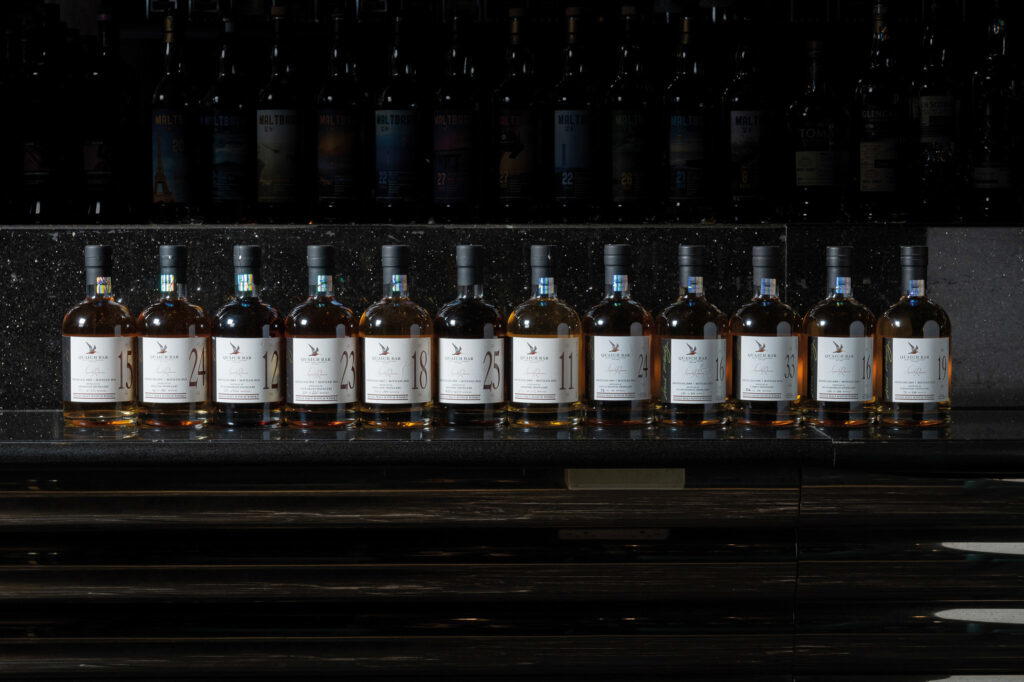
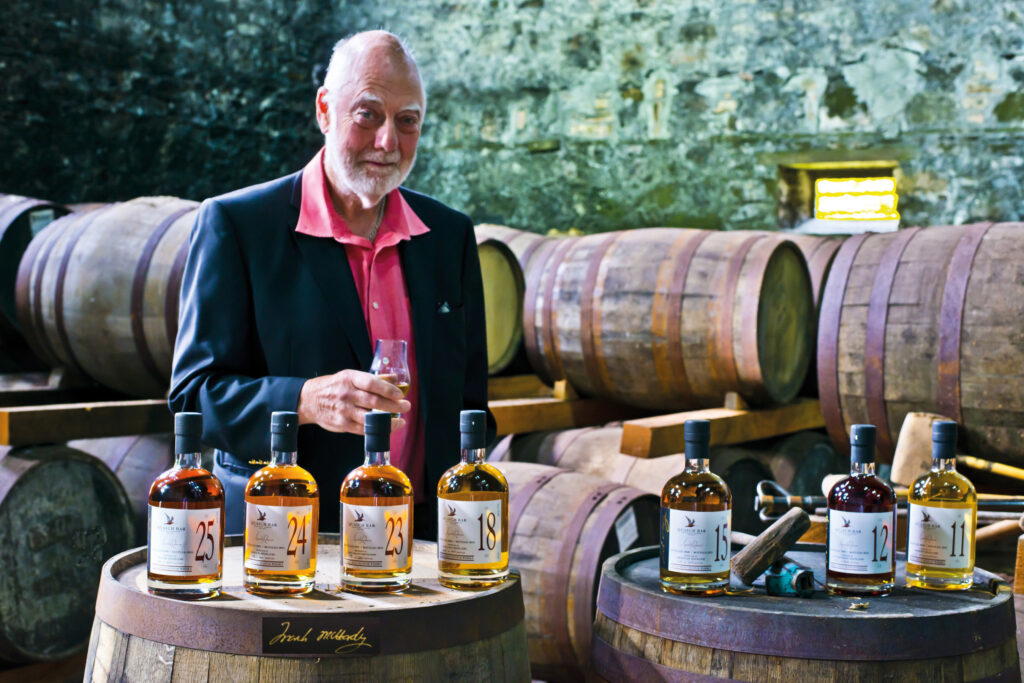
There is a 14-bottle series featuring casks personally selected by industry legend Frank McHardy, and another special edition from Duncan Taylor celebrating McHardy’s 60 years in the industry.
Chua shares that it has always been about people and friendships. “It enables us to develop deeper relationships with distilleries and blenders. Furthermore, it’s important to these masters who they sell their casks to, as it’s their life’s work. Their support has inspired us to share this philosophy with the many friends, customers, and community members who have supported us over the years.”
Every drop of whisky represents patience and skill—and a story waiting to be told. Few distilleries embody this philosophy better than the independents. The Whisky Store’s special bottlings are also available at Quaich Bar Collector, Quaich Bar Avant-Garde, Quaich Bar Wanderlust, The Other Room, Signature Reserve, and Capitol Cigar & Whisky Lounge by Quaich Bar.