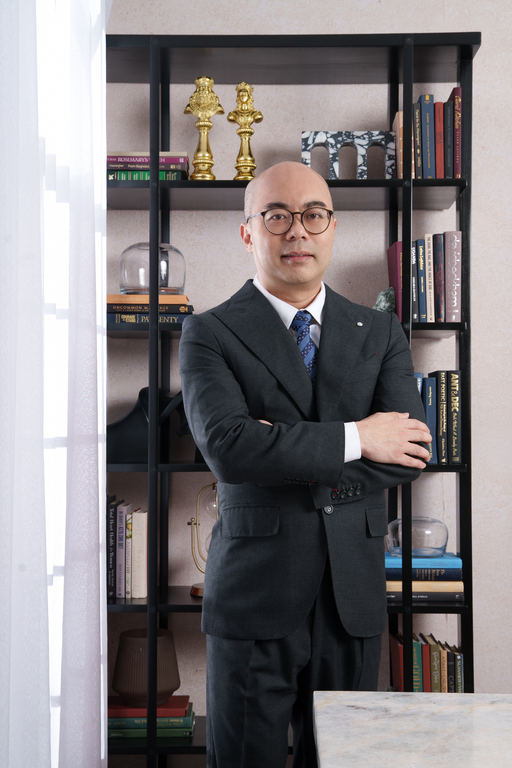
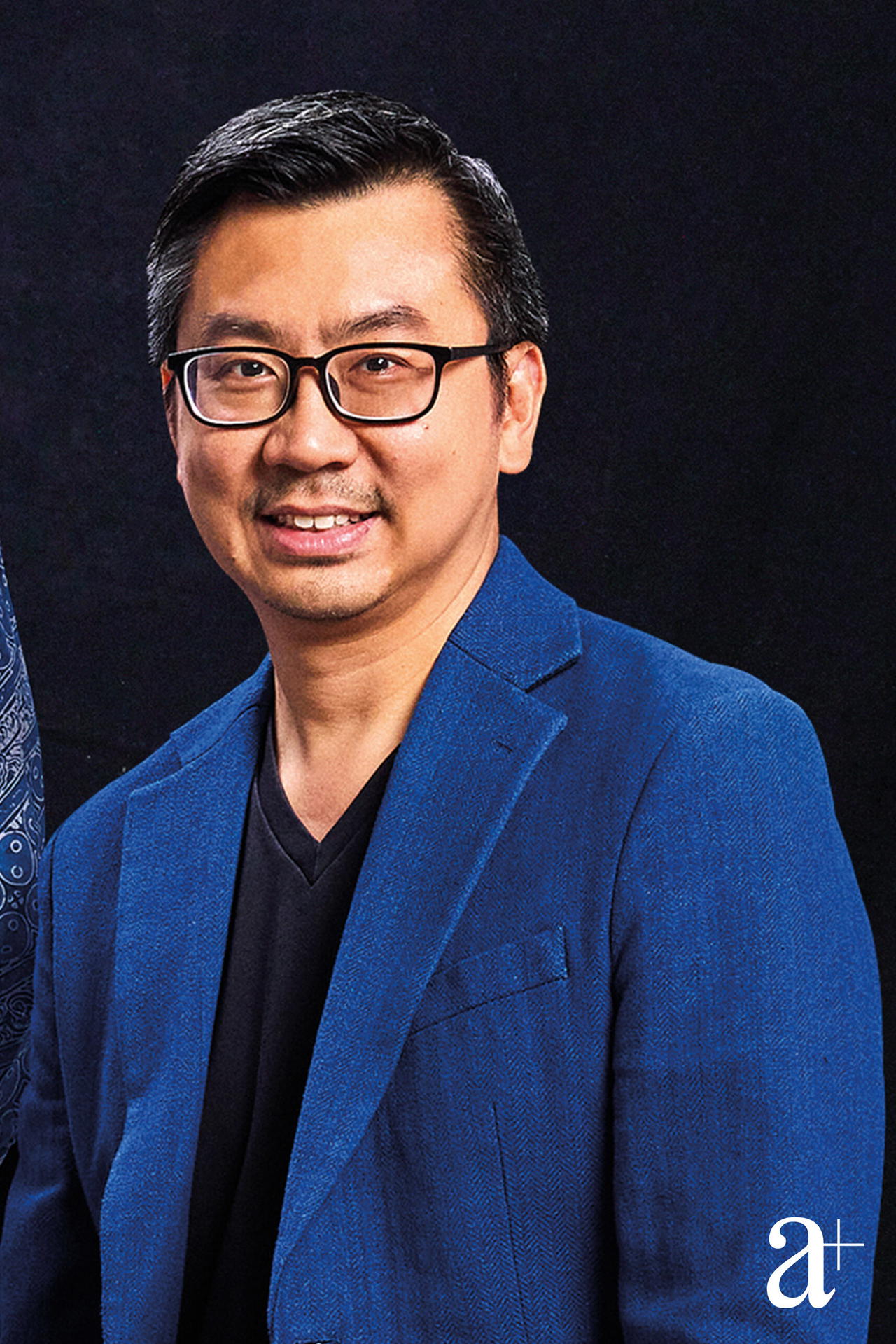
Hong Khai Seng is shaping a broader role for design in Singapore’s future. As President of the Design Business Chamber Singapore (DBCS), he sees design as not merely a creative discipline but also a strategic driver of business growth and innovation.
This perspective draws on Hong’s work at Studio Dojo, which he founded in 2018. It blends design thinking with futures thinking and leadership and organisation development. As he notes, businesses are facing challenges that usually cannot be neatly resolved by a single discipline.
Ultimately, Hong wants to shift the perceptions of design—from an aesthetic luxury or cost centre to a foundational, strategic capability. “Good design belongs in the boardroom and policy-making levels from day one.”
In what ways are design practitioners creating impact?
Beyond aesthetics, design is increasingly recognised for solving complex problems. One of the most memorable examples for me is Tessacast, which received a Singapore Good Design (SG Mark) in 2025. This 4D-printed orthopaedic cast, developed by local med-tech startup Castomize in collaboration with A*Star’s Innovation Factory@SIMTech, is lightweight, breathable, and waterproof. Thanks to its smart thermoplastic material, the cast can be reheated and remoulded as a patient heals. This improves patient outcomes, streamlines hospital workflows, and reduces medical waste. It also featured at Milan Design Week 2026.
What is the Most urgent challenge the design industry must overcome?
We need creative leaders who can navigate our increasingly complex world. Leadership must focus heavily on what I call the “diamonds in the rough”, or middle managers who are critical in translating strategic vision into day-to-day execution. This year, DBCS launched the Future Leaders Fellowship programme. By equipping participants with tools, insights, and coaching, it helps accelerate their leadership development.
YOUR OWN PRACTICE AT Studio Dojo works with clients on capability building and leadership development. What do you observe among businesses trying to navigate change? What do these PATTERNS reveal about the capabilities Singapore needs to develop?
At Studio Dojo, we integrate design thinking with three other disciplines: Futures Thinking, Leadership Development, and Organisation Development. This transdisciplinary approach recognises that businesses are increasingly encountering challenges that are not so clean-cut that a single discipline can resolve fully.
In a fast-paced world, before you implement one major change in your organisation, you’re already planning and embarking on the second and third wave of changes… So while businesses must solve the hard problems of infrastructure, policies, processes, and IT systems, they are also stewarding the even harder challenge of the social, relational, conversational experiences of people transitioning through changes.
All this means Singapore has a big opportunity to strengthen such transdisciplinary capabilities. We need to mature that even more by having designers who can step out of their comfort zones to collaborate with scientists, engineers, and business analysts. And to drive this, we established the Transdisciplinary Special Interest Group in our DBCS Executive Committee.
Singapore wants to be recognised for its creativity and innovation. How can design contribute to this goal?
Efficiency has been our superpower for decades. Systems that are efficient work well when the future is predictable but can suffer from disruptions when there isn’t an adequate diversity of responses. There’s no doubt Singapore has the creativity muscle; it’s just a matter of directing this creativity beyond efficiency towards human-centric challenges.
Although Singapore may never rival cities like Shanghai, Tokyo or Seoul in scale, we don’t have to. We can lead by shaping how design contributes to economic growth instead. Last year, DBCS’s World Design Business Organisation introduced the Design Power Index. It is the world’s first index that measures how design creates economic value for companies.
What does a design-led Singapore look like to you?
A design-led Singapore feels less like a cold, finely tuned machine and more like a nurturing ecosystem where well-being is baked into our daily lives, from healthcare to community spaces.
Photography Mun Kong
Art direction Ed Harland
Hair Sveta Klyn/The Suburbs Studio, using Goldwell
Grooming Keith Bryant Lee, using Laura Mercier
Photography assistant Hizaun Zailani