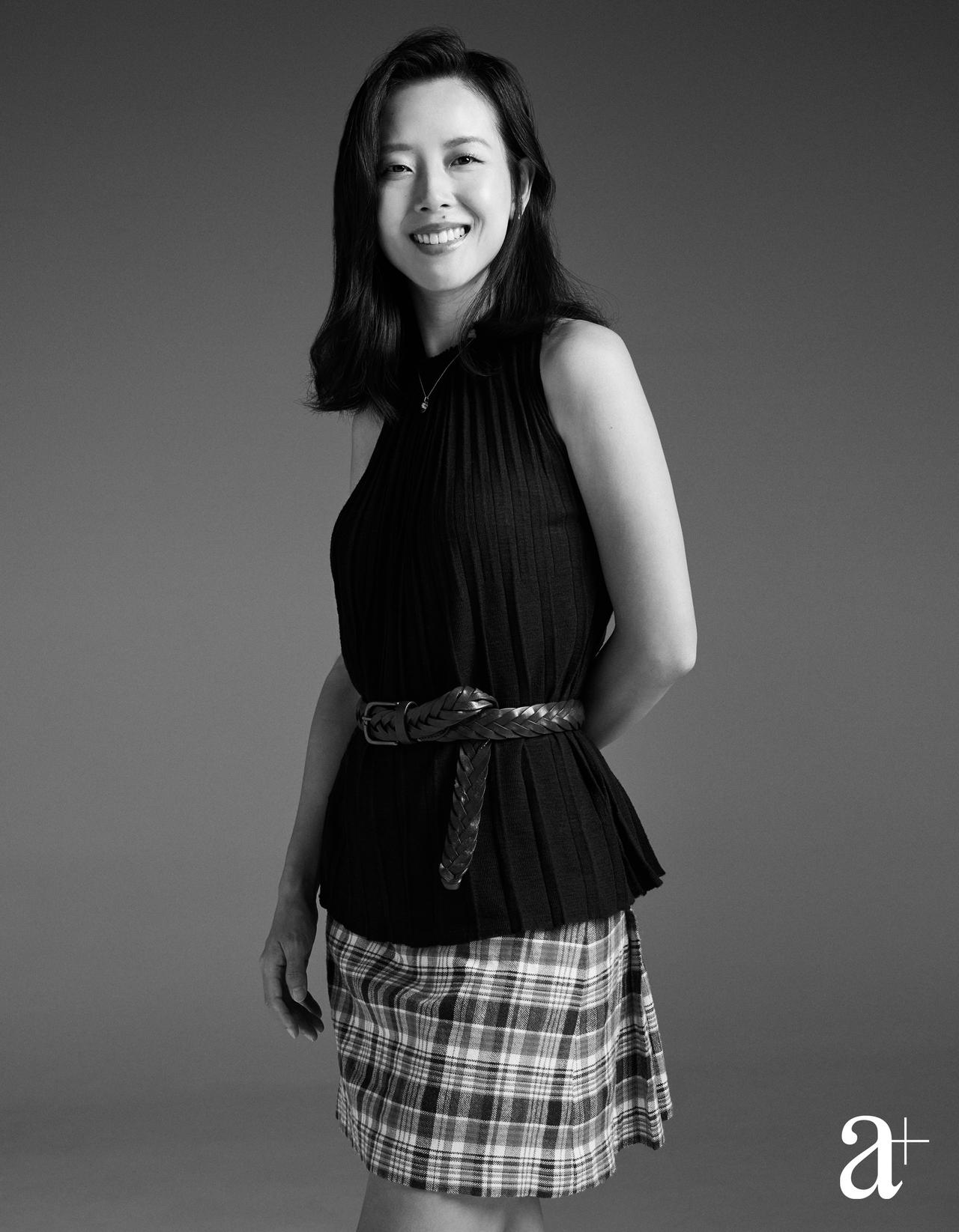
It is a misconception that inclusive fashion only caters to people with disabilities or special needs. Inclusive clothing is for everyone including people like you and me, says Elisa Lim. She founded inclusive fashion label Will & Well after graduating with a degree in fashion design in 2017. “Many people look at these design solutions and say, ‘Oh, this is for someone with a disability’. But the truth is that we all age and may eventually need these solutions, so why not adopt them now?”
When designing her pieces, Lim prioritises fabric considerations as many of her customers have sensory sensitivities, delicate skin or specific comfort needs. She is also particular about closures and construction to ensure that a garment “doesn’t scream adaptive clothing”, she explains.
“We hide functional elements so that the piece still looks beautiful—it just works a little harder for its wearer. We have a lot more to take into account than regular fashion manufacturers, so it’s a continual balancing act.”
Elisa Lim on inclusive clothing
She recently collaborated with individuals experiencing muscular dystrophy, visual impairment, ADHD, autism, wheelchair use, and other conditions on Project OneTee to design an inclusive T-shirt tailored to people with diverse needs through an assortment of features.
For instance, hidden fidget pockets have been sewn into the hem to allow ADHD patients more discretion. “Many fidget tools make noise, which can be distracting in meetings or quiet environments. Ours are silent and discreet—no one knows they’re there unless you tell them,” Lim says.
Side zippers allow the fabric to hang neatly instead of bunching up on wheelchair users’ laps. Also, because their shirts tend to ride up their waists, the backs of the garments are longer than the fronts.
Magnetic snaps at the shoulders allow the neck opening to be widened. This is useful for patients with breathing tubes, brain tumours, or mobility limitations around the neck and shoulders.
There are also tactile elements. The seams and fabric are soft, breathable, and non-prickly for autists and those with texture sensitivities. Braille instructions are printed on the T-shirt, so the visually impaired can distinguish the front from the back.
Lim’s biggest challenge in running Will & Well lies in cash flow. As it stands, a fashion business requires inventory and space, both of which need upfront capital. Additionally, production typically requires a minimum order quantity.
As part of her commitment to ethical production, she uses her creativity to minimise material waste, even refashioning clothing using leftover material. “It’s very hard for us to throw things away because there is a cost to every piece, from the labour, the resources, the water, and everything else that went into creating it.”
Having just moved out of its Kreta Ayer store, Will & Well is currently looking for a new shop space. However, its products are still available at Pinhole, The Social Space, and TechAble. Expansion plans are in the pipeline and the brand is also looking forward to hiring special needs people.
The brand regularly runs workshops, campaigns, and collaborations, and actively engages organisations, occupational therapists, and caregivers to introduce new inclusive apparel and solutions.
These all boil down to Lim’s focus on impact. “Knowing that what we design can change someone’s daily dressing experience means a lot. Also knowing our solutions bring hope, independence, comfort, and ease keeps us going.”
Photography Mun Kong
Art direction Ed Harland
Hair Michael Chiew/Hairform Salon using Goldwell and KMS Hair
Makeup Sarah Tan using Chanel Beauty
Photography assistant Melvin Leong