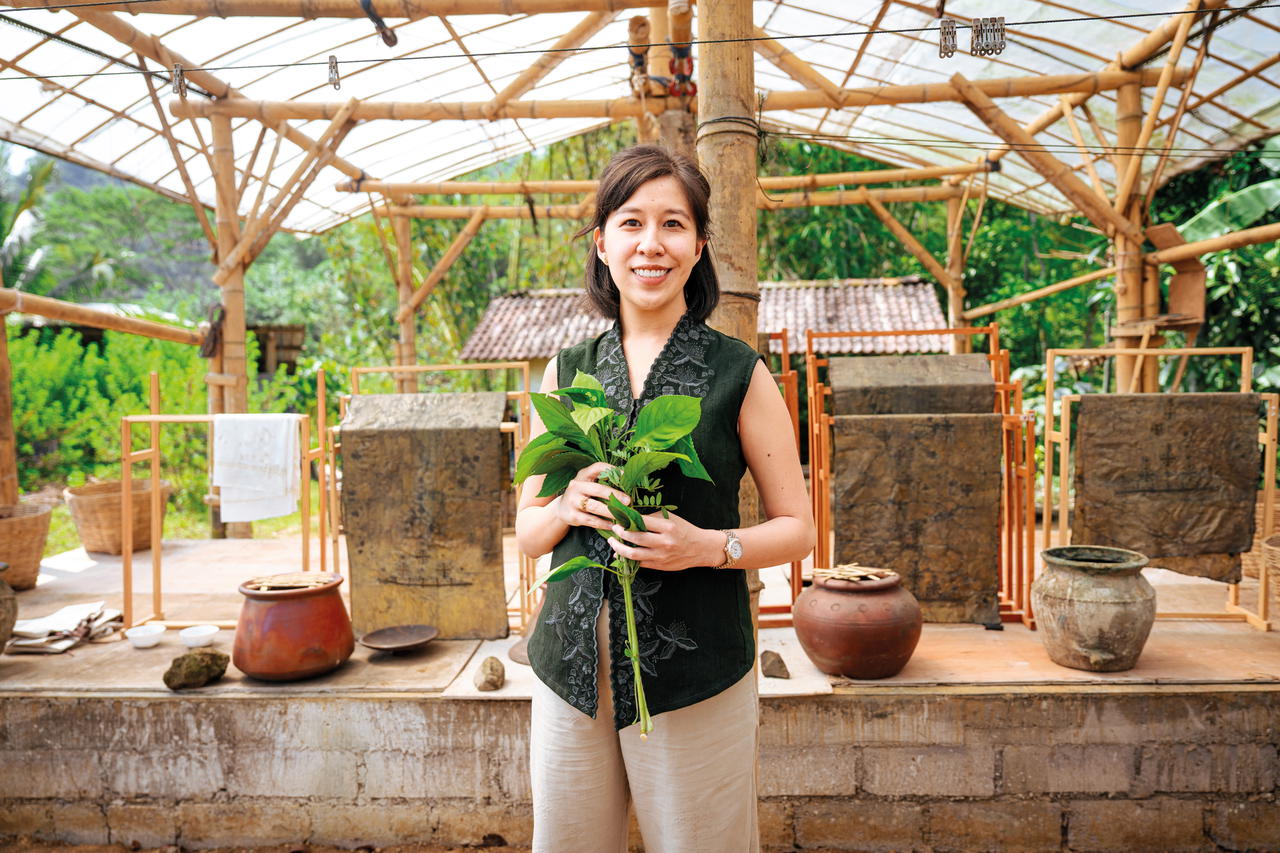
While it may be fashionable to label a brand sustainable these days, Denica Riadini-Flesch—2023 Rolex Awards Laureate and founder of SukkhaCitta—prefers to use the term “regenerative”.
Her farm-to-closet business began in 2016 with a simple premise: fashion should benefit the people it relies on and the land it uses. In a time when words like “sustainable”, “ethical”, and “greenwashing” are often mentioned in the same breath, this distinction is important.
SukkhaCitta’s claims are tangible: training that leads to fair wages, pricing that values time, support for smallholder farmers practising traditional, sustainable agriculture, and a short supply chain that keeps value close to its producers.
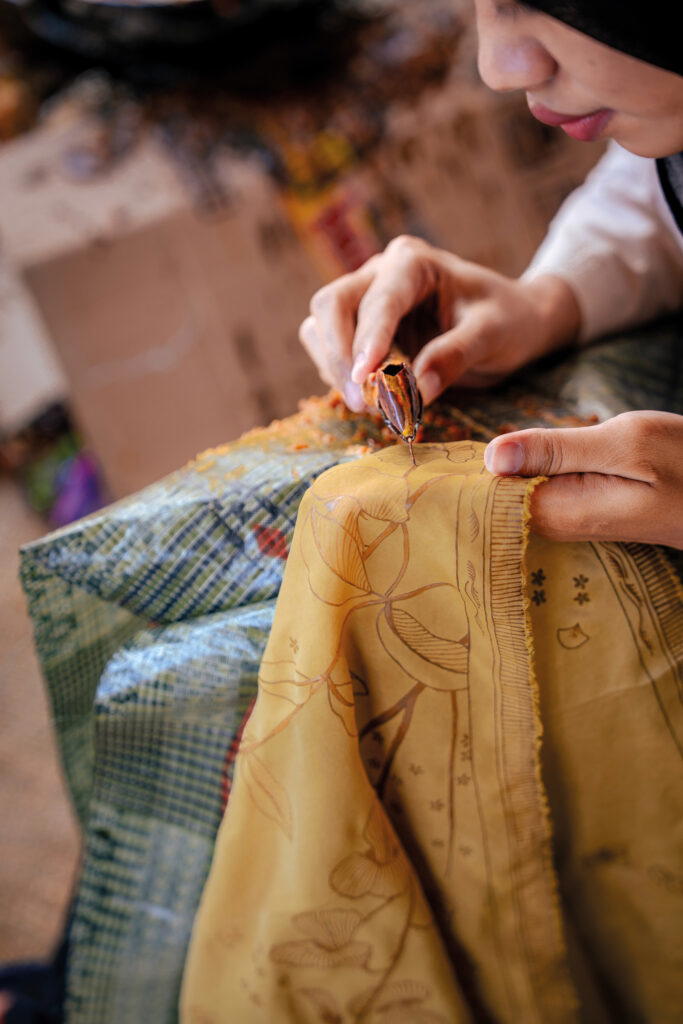
I travelled to Central Java to see how that promise holds true. In a classroom, my hand trembling, I traced hot wax over a cloth bearing pencil lines with a canting, a spouted tool for batik that resembles a pen. An ibu, which means “mother” in Bahasa Indonesia and is a respectful way to address the expert artisans, watched, nodded, and let me wrestle the line into place.
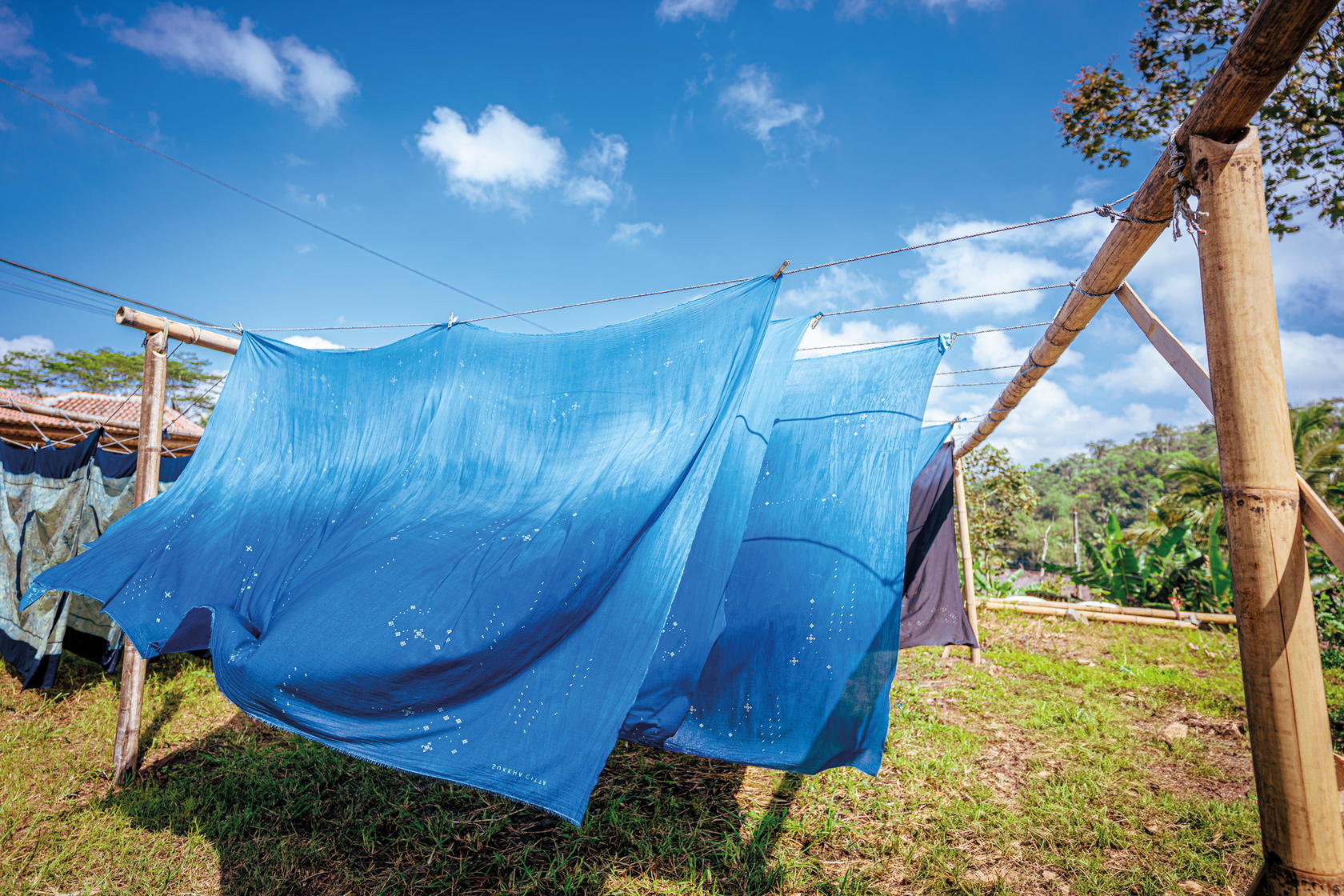
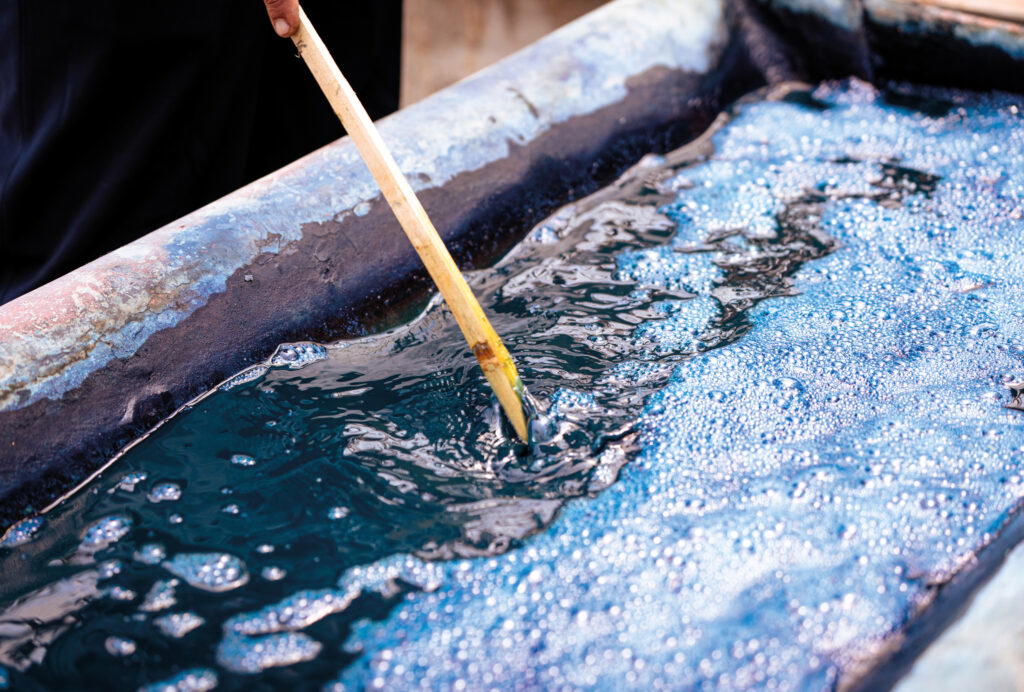
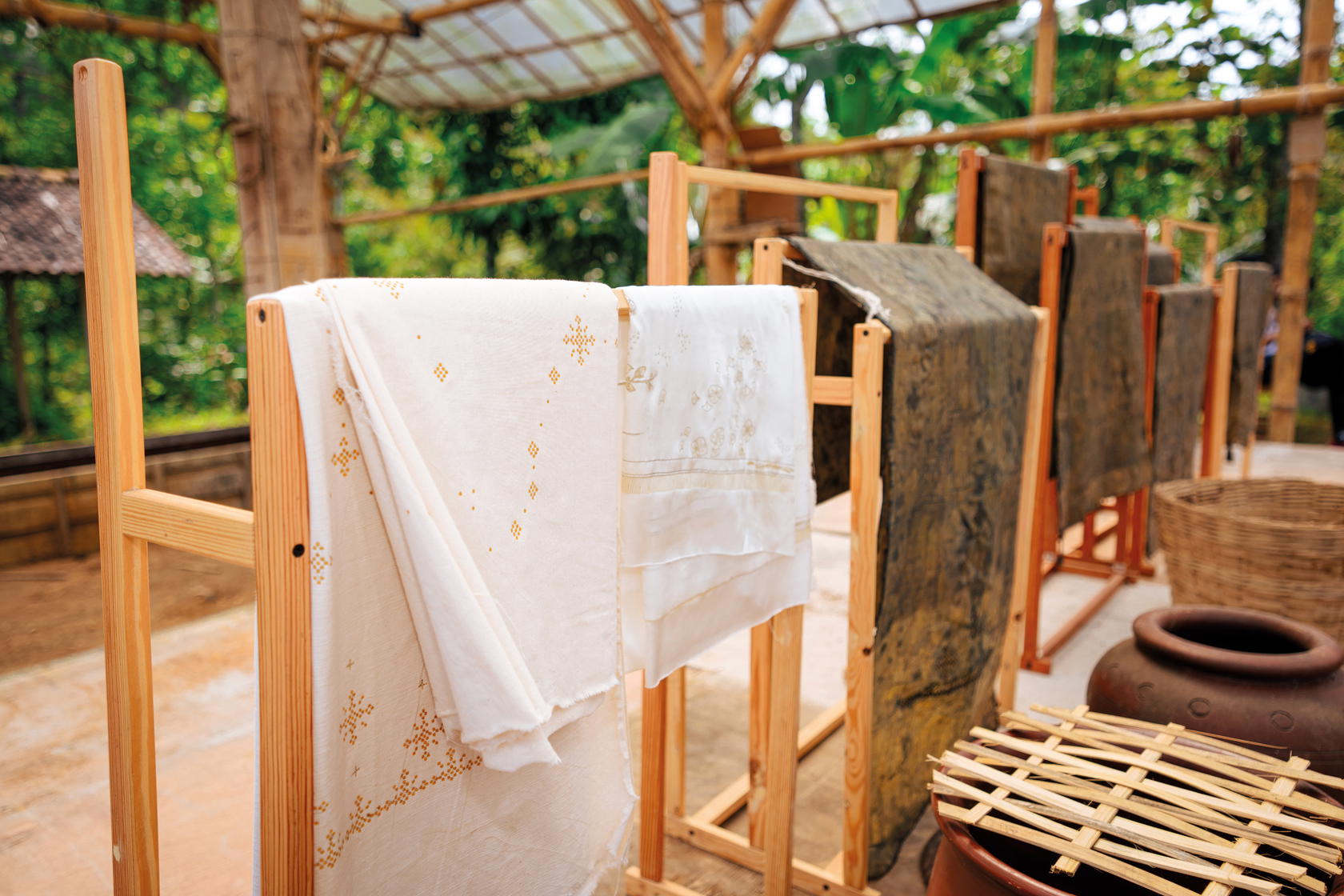
While the wax dried, I rode pillion across village roads to vegetation plots, where I waded the last metres on foot, past cotton shrubs in mixed rows and indigo plants growing under fruit trees. Back at the school, I dipped the same cloth into a basin of plant dye to watch the colour take. It was a demonstration swatch and definitely won’t be worn, but the care and knowledge put into it were evident.
WORK AND HOPE IN A CYCLE
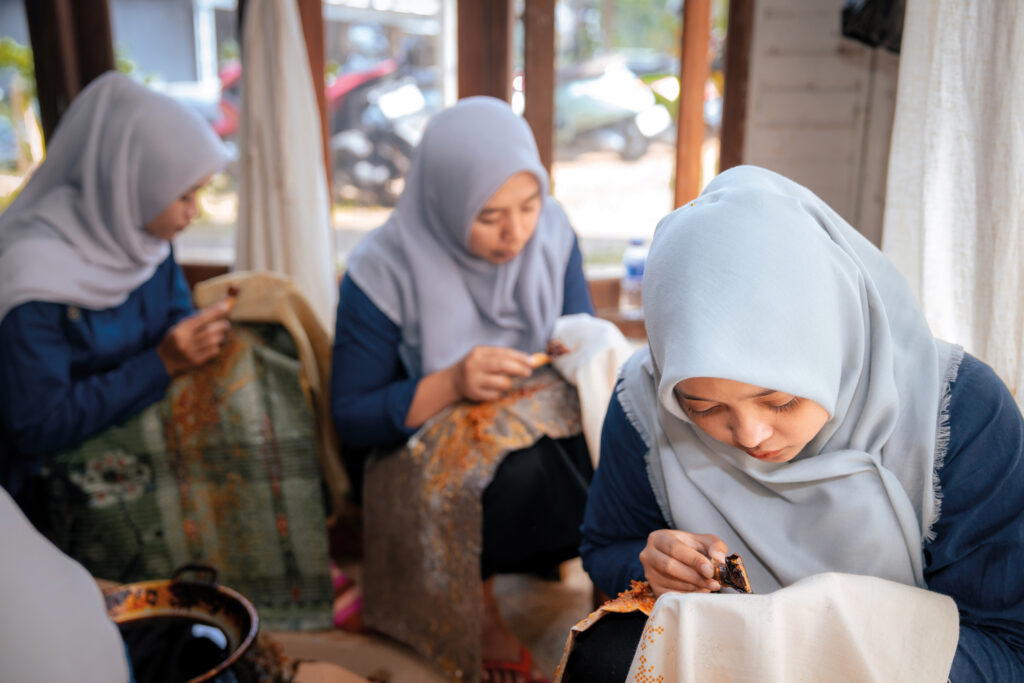
The brand’s Rumah SukkhaCitta centres—three in Java, one in Bali, and another in Flores—serve as training hubs and pathways to paid work. As part of a curriculum that goes beyond technique and includes wage-setting and business literacy, young women apprentice with older artisans.
“We work primarily with mothers in their home villages,” says Riadini-Flesch. “Our goal isn’t just to help them; it’s to partner with them, so they can become changemakers.” The company reports that a signature SukkhaCitta plant-based dye developed without chemicals or waste the women in its network earn, on average, about 60 percent more—gains that ripple through household decisions and, often, entire villages.
The regenerative claim is most evident in the fields. Cotton is known for being hard on soil when conventionally farmed. As a result, SukkhaCitta helps smallholder farmers adopt regenerative practices, such as intercropping, shade planting, and nitrogen-fixing legumes, which were revived from traditional practices and adapted to meet current needs.
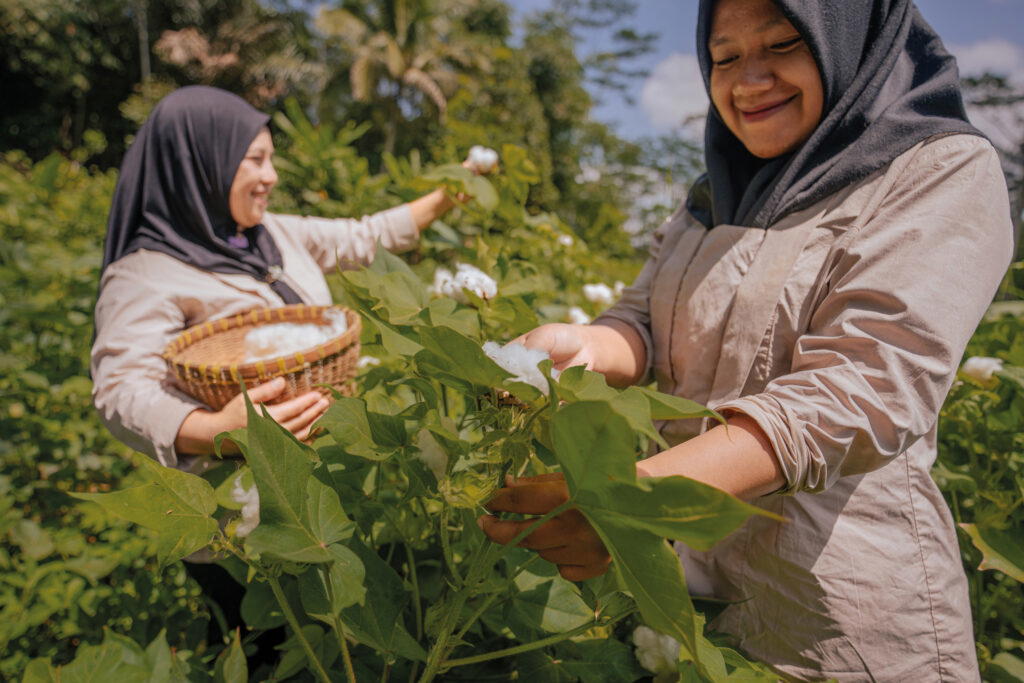
The results have been impressive. One farmer reported six times more cotton yields than before. She also said that growing crops with seasonal harvests allowed her to earn a steady income throughout the year.
Indigo plants, which provide the deep purplish-blue hue in Javanese batik, require comparable care. SukkhaCitta focuses on strobilanthes, a shade-tolerant variety traditionally cultivated in the Himalayas, as an alternative to indigofera tinctoria, the original source, which needs full sunlight and ample space to thrive. The former grows as an understorey plant nestled beneath fruit and timber trees, enabling farmers to incorporate it into agroforestry systems without clearing new fields.
The ethical brand’s contemporary heritage fashion also utilises colours derived from other locally grown plants, including terminalia bellirica fruits, which produce brown and dark tones, and sappan wood, which produces primarily vivid pinks and reds. The problem, Riadini-Flesch notes, is that “natural” dyes often depend on industrial reducers that foul waterways.
“You cannot call it a natural dye if you still must treat the waste before releasing it into water. Otherwise, it will continue to react and kill marine life. This is why it is so complicated and difficult. In the past nine years, we’ve been nerding out to find alternative solutions.”
SukkhaCitta’s workaround is simple chemistry: feed the vats with coconut sugar or overripe fruit to wake up the colour without toxic waste, ensuring dye baths remain active for years and fabrics retain colours well.
BUILDING A BRIDGE
Riadini-Flesch positions SukkhaCitta as a solution to a market failure. Her work as a development economist led her to meet craftswomen whose work travelled the world, but their wages stagnated, and she set out to change that. By selling directly online and through select shops, the company shortens the chain, paying above the local minimum wage, and sometimes double, depending on the region.
It has so far improved the lives of approximately 1,500 people, restored more than 30ha of degraded land, and prevented millions of litres of chemical-dye effluent by adopting plant-based systems.
However, although Riadini-Flesch has built a financially sustainable business, not every metric is easily quantifiable. “Our real success manifests in diverse ways. Whether it’s the pieces people connect with, or the techniques being revived, we know we’re succeeding when someone tells us they buy less—but better—because our clothing has helped them build a more intentional wardrobe.”
In her words, it is important to create spaces where artistry can thrive rather than disappear. “We did not bring these traditions. They already existed. Our job is to connect makers to the market, listen to them, and pay them what the work is worth.”
In the case of Rolex, the alignment is perfect. As part of the Rolex Perpetual Planet Initiative, the Rolex Awards have shifted from celebrating exploration to supporting people and projects that protect ecosystems and communities.
SukkhaCitta fits that brief: a fashion company measuring success not only in sales but in restored soils and verifiable wages. Winning the 2023 Rolex Award has enabled Riadini-Flesch to fund more schools and develop a digitalised curriculum. By 2030, she hopes to triple the number of training centres to reach 10,000 women and restore 1,000ha of land. “The amazing thing about this partnership is that Rolex gives you a microphone,” she emphasises.
SukkhaCitta’s story is not about a branding miracle. It is a collective attempt to rebuild a local economy using existing resources: seeds, farming knowledge, apprenticeships, patient capital, and a queue of customers willing to pay for work they haven’t seen yet.
There are days when the chemistry fails; there are seasons when the rain fails, too. The point is not the absence of failure, but the existence of buffers and the refusal to push the cost of failures onto the least powerful people in the chain.
More about the Rolex Awards here.