
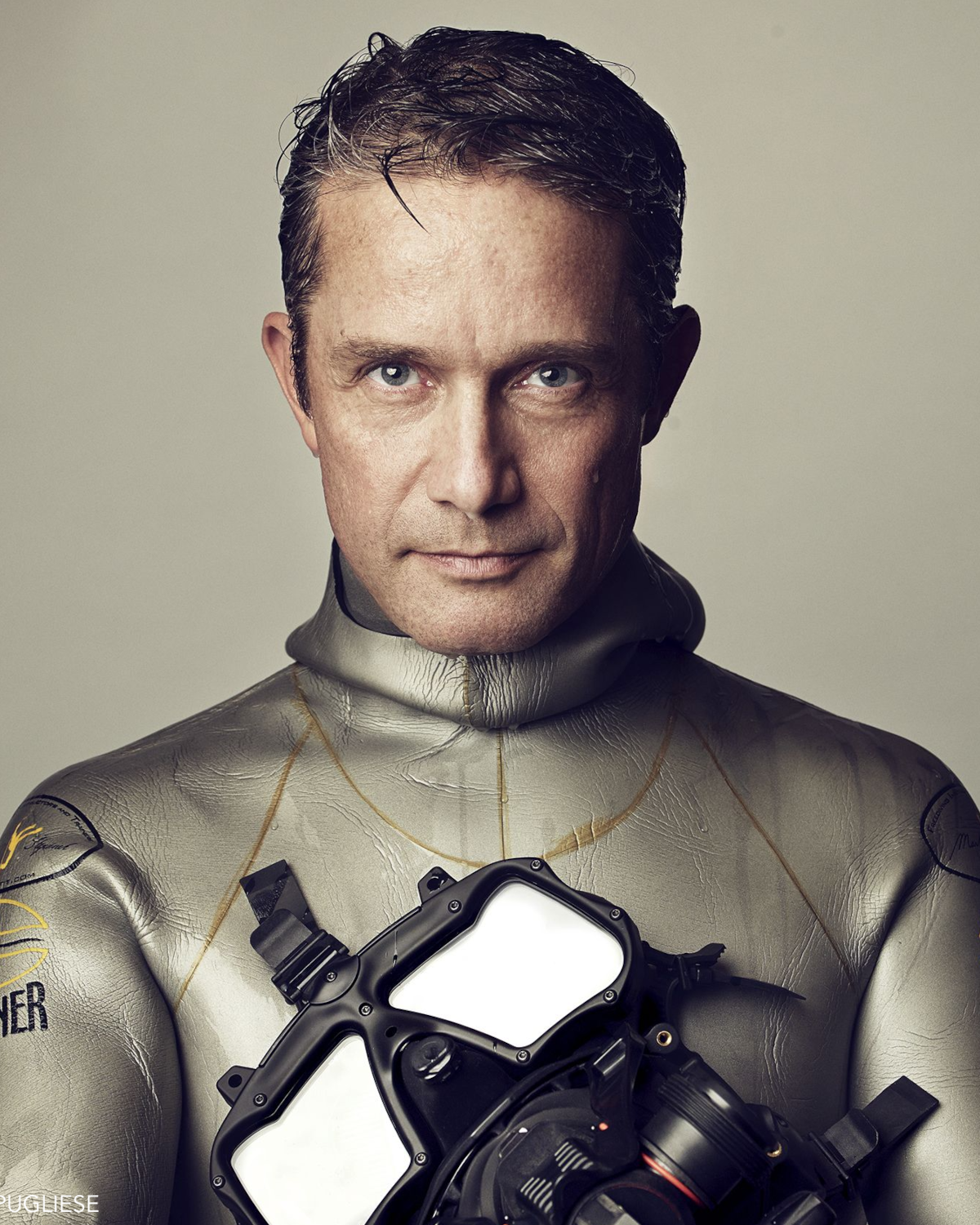
The one time Fabien Cousteau tried to see what sharks get up to after dark, he nearly met his end. “We’d done some data collection during the day and I thought, ‘Gee, this study is going so well. What do sharks do at night?’” the aquanaut recounts with a guffaw. Determined to find out, he installed infrared cameras on his submersible and made a descent at dusk. “Of course, anything that could go wrong, did.”
Both the communication and propulsion systems went kaput, leaving him shrouded in gloom at the bottom of the ocean with two options: swim to the surface, which he stresses is never a good idea at night; or to shore, and he was 200 nautical miles (370,000m) away from civilisation. He chose the latter. “In my 50 years of diving, 37 of which involved expeditions, this was the moment I was the least sure of my fate,” he lets on.
Navigating his way towards land required that he traverse along the seabed—it was just the safest way. All he had was a fast-depleting oxygen tank and a torchlight. “I looked around desperately the entire time to make sure there were no sharks near me. My imagination was going wild,” he says. At one point, he ran into bull elephant seal. “I think we scared the living daylights out of each other!”
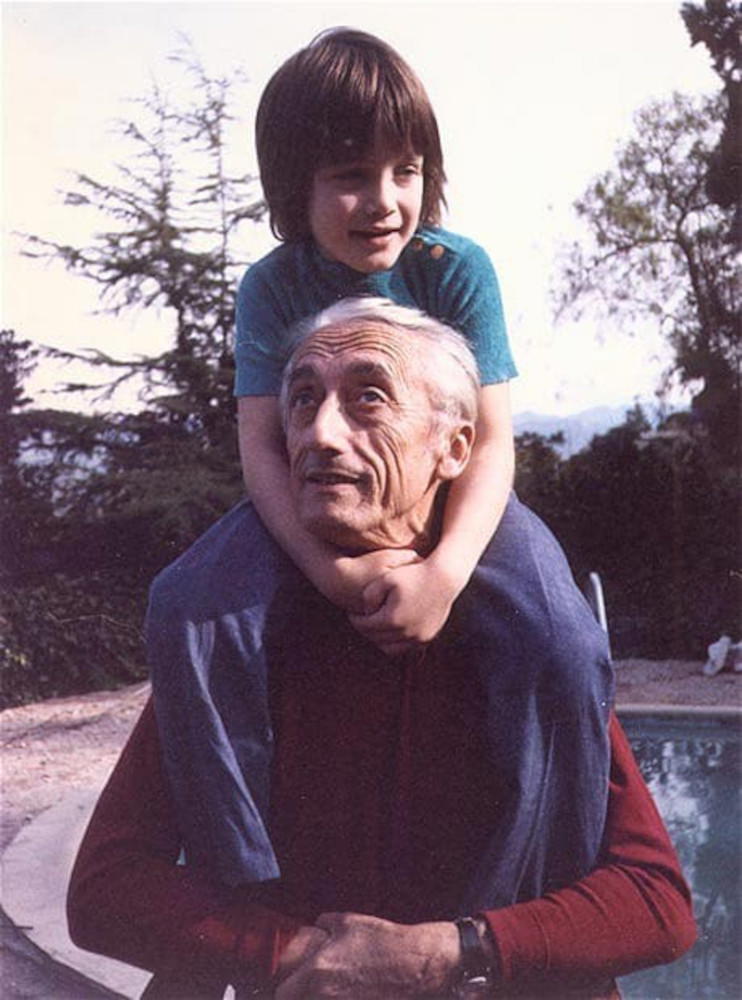
If his last name rings a bell, it’s because his grandfather was the late Jacques Cousteau—a pioneer of ocean exploration who was making ocean documentaries in the ’50s and co-invented the aqualung, today known as the regulator. Prior to its contrivance, the only options available for underwater exploration were the diving bell and the helmeted diving suit. The device set in motion giant strides in the field.
His father is Jean-Michel Cousteau—an oceanographer, film producer and founder of the non-profit marine conservation organisation, Ocean Futures Society. Suffice to say, Fabien Cousteau was destined for a life in the briny deep, learning to scuba dive at the age of four and participating in sea voyages at seven. As a teenager, he spent his summers scrubbing barnacles off boat hulls and abrading rust off engine parts.
The 56-year-old harks back on those experiences fondly. “They provided invaluable lessons for I was surrounded by people who thought outside the box—pioneers in their domains of marine biology, biochemistry, engineering, robotics and indigenous cultures. These people played a big part in who I am today.”
Fabien Cousteau has made sure to make his own mark: he’s an oceanographer, conservationist and documentary filmmaker who has accomplished a great deal from studying our oceans, but is raring to do more since only seven percent of our oceans have been explored. “Why do we dream of colonising Mars or the moon? In the same way, going longer, deeper and further is always something I strive for to better understand the undersea world.”
A shark-shaped submarine for science and storytelling
Following in the footsteps—or flippers—of the men in his family has not only cultivated Cousteau’s devotion to the ocean, but also a passion for sharks. “Everyone thinks, ‘Ah, shark.’ But they are fascinating creatures. They live in a matriarchal society, have a structured hierarchy, and exist as both individuals and pack animals,” he says. “Statistically speaking, we are 30 times more likely to be killed by a coconut. But that’s not sexy, right? So, Hollywood makes sure people stay fascinated and scared of sharks.”
There is much to learn about them because they are an essential apex species in the ecosystem, he adds. His documentary Shark: Mind of a Demon aired on CBS from 2003 to 2006. No, the shark isn’t the fiend. “The title was intentionally provocative. The demon really is the human being. We are by and large selfish,” he explains, citing overfishing and the resulting critical endangerment of the species.
“Sharks are now down to 10 percent of their original figure. We demonise them when we should be looking in the mirror.” The documentary’s main objective was to study great white sharks in their natural surroundings, without cages and chumming techniques. To achieve that, Cousteau engineered a 550-kg shark-shaped submarine that was four metres in length. He christened it Troy.
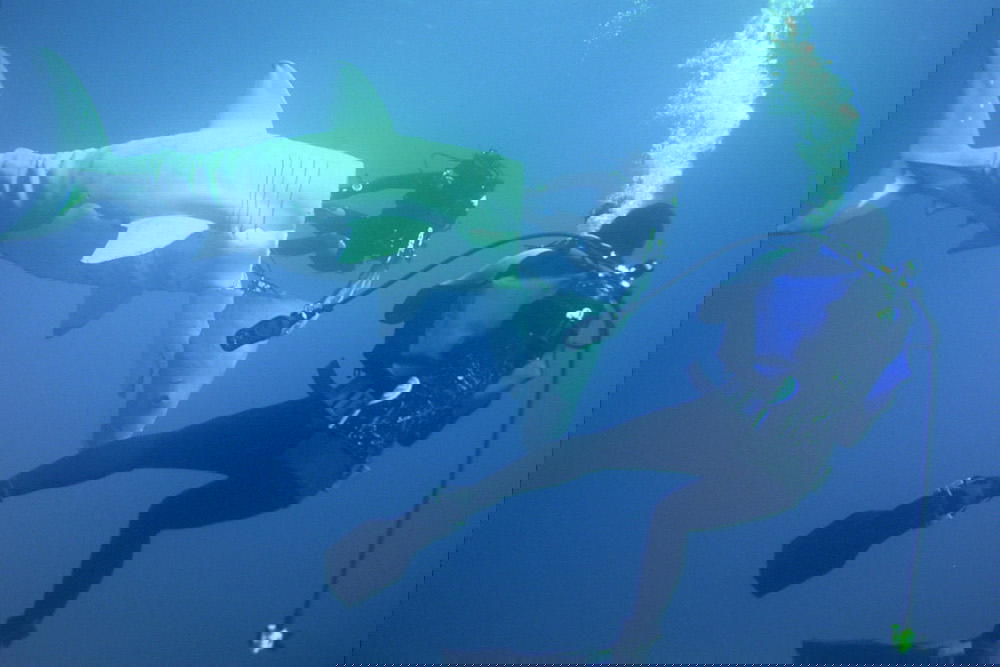
It was typically operated at 20 metres below sea level for three reasons. First, as a wet sub (an underwater vehicle that does not provide a dry environment for its occupants) it was subjected to dive rules. Second, hovering at that depth allowed it to operate for a longer period of time. Third, light still comes through at that depth, so decent images could be captured.
But as depicted in the series, Troy was plagued with problems during development and deployment. It is something he chuckles at in hindsight. “First of all, the submarine was very much overbuilt. The engineer I worked with used to do Hollywood stunts, so safety was his priority. However, Troy was difficult to wield,” he says, noting that it also suffered buoyancy issues.
“There was also a weak point in one of the parts, which would often break. And it’d break at the most inopportune times, usually when my surface support was not around and I was surrounded by sharks! I’d have to park at the bottom, get out, tinker around, then get back in, all while making sure they weren’t too curious.”
Nonetheless, he is proud to have given it a go as the series was equal parts science and storytelling. “How do we reach an audience who doesn’t think about marine biology? How do you teach them science without actually teaching it? It was about reaching out to people who usually watch something else completely unrelated.”
A phenomenal expedition with crummy food
Jacques Cousteau, among his many feats, conducted the first-ever experiment to prove saturation diving (living and working at a pressure higher than on the surface) is possible by spending 30 days in an underwater laboratory in 1963. The endeavour inspired the documentary World Without Sun, which won an Oscar for Best Documentary Feature.
In 2014, Fabien Cousteau honoured his grandfather’s undertaking with Mission 31. The expedition saw him live 31 days aboard the Aquarius Reef Base, the only remaining underwater marine laboratory in the world, with the aim of gathering scientific data. He surpassed Jacques Cousteau’s record for time spent underwater with a film crew by a day.
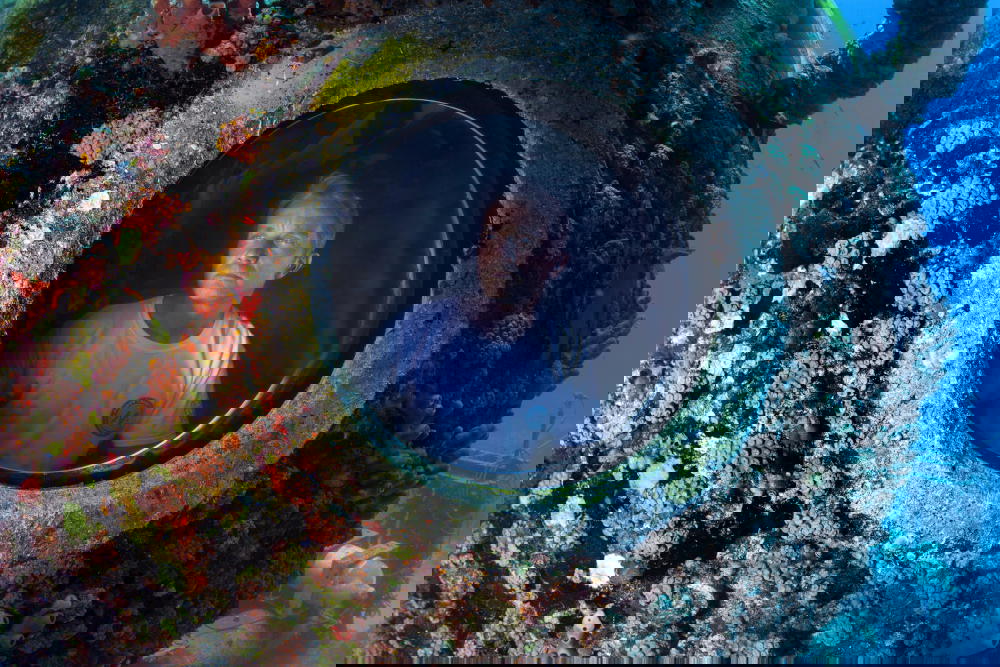
But overshadowing his grandfather was never the intention. “The press always latches onto breaking his record, but that was the least interesting part of it. I stayed 31 days because I wanted to follow a full lunar cycle,” he clarifies. “Like creatures on land, sea creatures behave differently during different times of the month.”
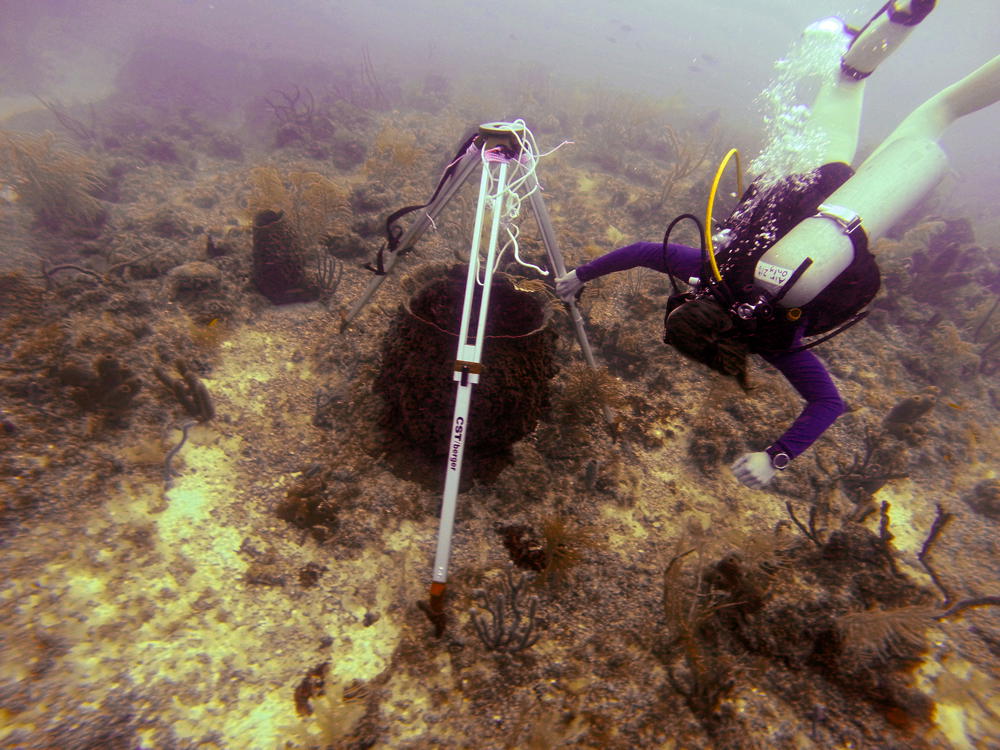
Aquarius Reef Base is pressurised and air-conditioned, and has wireless Internet access. In the mornings, Cousteau and five team members dived and conducted experiments on coral reefs to study the effects of climate change and pollution. In the evenings, they underwent physiological and psychological tests to determine the effects of long-term living without sunlight. Cousteau estimates that they collected three years’ worth of surface dive data during the 31 days, with key findings revolving around the different aspects of hydrocarbon pollution and pollutants on the coral reef ecosystem.
Predator-prey interaction was also a major focus. “What happens when you take predators off a reef? The foragers come in. But the foragers are also fishable, so now the coral reef ecosystem is barren and will take decades to replenish,” he illustrates.
“Human beings are not the most patient creatures but nature doesn’t care—it’s on its own timeline. It’s very important for us to understand these dynamics.”
Fabien Cousteau on being at the mercy of nature
He also wanted to explore two hypotheses. First, what the platform offers in terms of research. “Autonomous underwater vehicles, remotely operated vehicles, and submersibles are all fantastic instruments, but what does living and working in saturation look like?” he says. Second, whether the masses care. “Does the general public find the ocean as interesting as space or Taylor Swift? Can we grab their attention in a way that will impassion them?”
Mission 31 was broadcasted live round the clock and conducted live virtual lectures for students all over the world. “We had this crazy technology in the form of the Edgertronic high speed video camera, so we could show the cavitation bubble formed by the Atlantic goliath grouper,” says Cousteau. “It is hotter than the surface of the sun and is not something that can be seen with the naked eye, but we were able to capture that in real time from the bottom of the sea.”
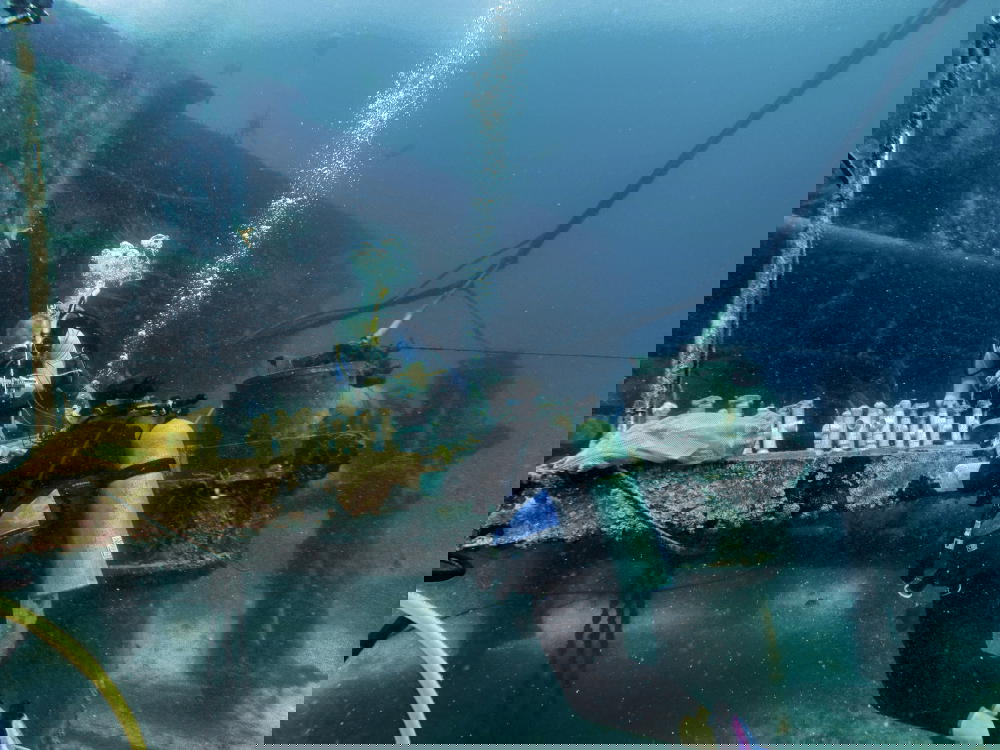
While a success, the operation was not without challenges. Aside from the physiological constraints of living at localised pressures for extended periods of time, the team had to huddle together in a 40sqm space. And because they had to sustain themselves on astronaut food—an open flame was out of the question because the oxygen could catch fire—there left much to be desired.
“As a French person, the food was the biggest insult,” jests Cousteau. It didn’t help that they had to consume three times the usual amount because they were burning three times the calories from fighting to keep warm around the clock. “The pressure and saturation made it difficult to taste things. Still, the food was terrible.”
All the reasons to save our oceans, stat
Why are we still hunter-gatherers of the ocean when we have few resources left? If anything, we should be farmers. “Obviously, there are already farming practices, but there should be fair trade—an equitable balance between environmental impact and economic success,” stresses Cousteau.
“We are happy to take from the ocean without considering the cost. Maybe I’m being facetious, but we’re stealing from the other sentient beings we live with. Every action has an equal and opposite reaction. I believe that none of us wants to go bankrupt. Unlike a financial structure, there is no bailout loan.”
We can start by being more selective about the food we consume, like opting for animals lower down the food chain instead of apex predators such as bluefin tuna.
“Whether you’re a meat eater, fish eater or vegetarian, the rules are the same. It’s important to diversify our consumption choices so that we put less pressure on a species. I’m not saying, ‘Don’t ever eat this’. But maybe have it on a special occasion, not every day.”
Fabien Cousteau underscores responsible consumption
Also, don’t treat our oceans as a garbage bin. “Whatever we throw out ends up somewhere. There is no such thing as throw ‘away’. It enters our beaches, rivers or food systems,” he asserts. Pollution also leads to a whole host of health issues, particularly since we consume about a credit card-size worth of microplastics every week. “The microplastics carry chemicals that are endocrine disruptors, which can affect both our health and mental cognition. In children, they can lead to behavioural problems and even physical disabilities.”
We should also spare a thought for climate change. There are droughts in some places, storms in others, and some floods kill thousands of people. “This should not be accepted as the norm,” he says, adding that he has faced plenty of resistance in advocating for his cause.
“The oceans have been regarded as an unlimited resource for as long as humans have existed on earth. No one takes responsibility for it and we’re seeing the repercussions right now.”
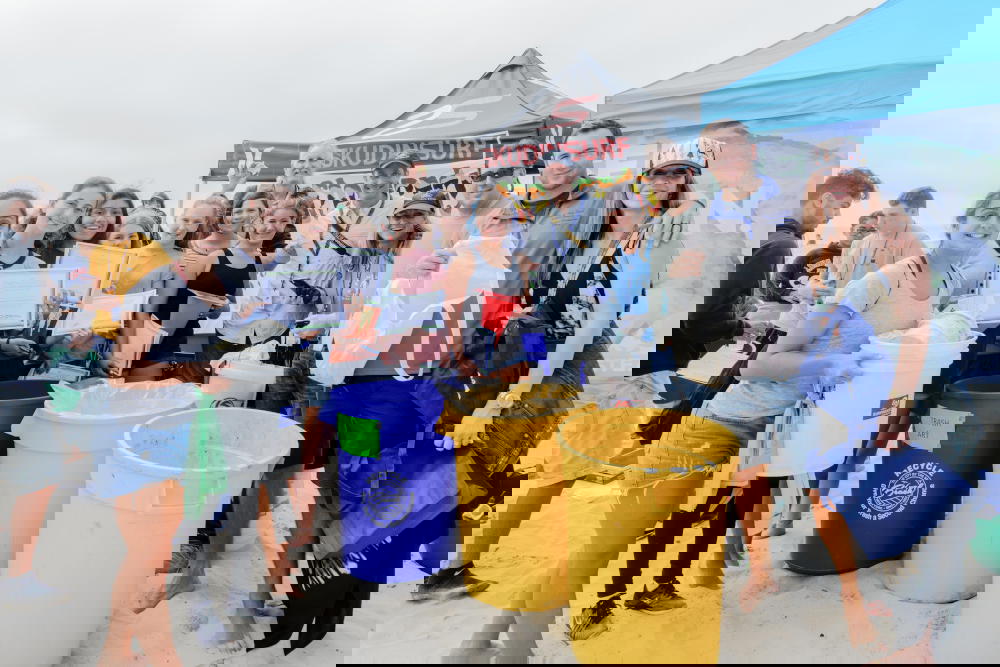
To drive further change, he founded the Fabien Cousteau Ocean Learning Center in 2016. A non-profit dedicated to protecting and preserving the planet’s oceans, coastal areas and marine habitats, it runs programmess like sea turtle conservation and coral reef restoration. It also has an educational arm that teaches students about protecting our fragile waterways.
An international space station of the sea
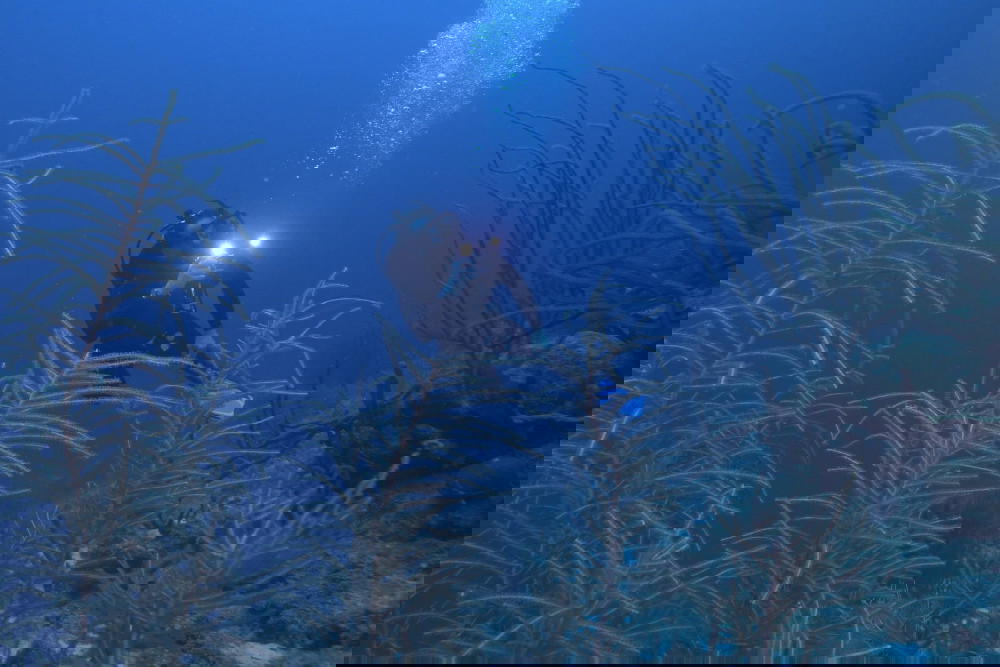
In spite of the hoops he has to jump through, Cousteau remains undaunted. He’s currently in the process of raising S$180 million to bring to life Proteus, a state-of-the art research facility he envisions to be the International Space Station of the sea. Named after the primordial sea-god, it will be 10 times the size of Aquarius Reef Base and can accommodate up to 12 people. Its position in a marine protected area off the coast of Curaçao, an island in the Caribbean Sea, means it will allow access to a wide variety of ecosystems. This includes mesophotic zones, areas 30 to 150m in depth that range from brightly-lit shallow waters to the deepest, darkest depths of the ocean.
If all goes as planned, Proteus will be ready in 2025, and partnerships with the US Navy and the National Oceanic and Atmospheric Administration have already been announced. On top of facilitating studies, it will also be able to accommodate tenanted projects—it can be rented by biochemistry companies to conduct research, or by astronauts looking to train in extreme environment. The eventual plan is to erect a network of underwater habitats in strategic locations around the globe so that the team can maintain a sharper pulse on oceanic health.
Cousteau reckons we aren’t actually aware of the price we pay for neglecting our waters. “According to UN estimates, the oceans represent the seventh largest economy in the world. Personally, I think that’s a gross underestimation. We’re not taking into account all the things we don’t put an economic value on,” he explains.
“How much does it cost to breathe? The oceans generate at least 50 percent of the world’s oxygen and are the largest conduit for transportation.” For this reason, all of us must take responsibility for preserving our high seas. “We need to be a part of the solution because we are the problem.”
This includes making more eco-conscious decisions like cutting down on the use of plastic—a material that lasts some 500 years for an item that we sometimes use for 30 minutes. Moreover, plastic constitutes chemicals that are harmful to us and the environment.
To be clear, he is not exacting judgment. He just hopes we can all do better. “I’m a consumer as well. I drive a petrol-based automobile. But to lower my carbon footprint, I make the effort to plan my schedule such that I only make a singular trip, as opposed to making multiple trips,” he says. “Many people do this already and I don’t presume most people are bad or lack awareness. We just ought to improve our decision-making process in general.”
Which is why he is tireless in sustaining his family legacy—it is all for a greater purpose. “My grandfather used to tell me, ‘People protect what they love, they love what they understand, and they understand what they’re taught’,” he muses.
“I am most appreciative of two things. First, the opportunity to have opened my eyes to the world at an early age. Second, understanding the mystery of our existence and its underpinnings.”