
We live a disposable life. A fast-paced state of living, with changes in mores occurring constantly. Take disposable chopsticks. These unlacquered twin sticks are as prevalent as the hair on our heads. As ubiquitous as they are, when discarded, they resemble miniature timber pilings, ready for incineration, never to be used again.
That is until ChopValue came along. Originally a Canadian startup, ChopValue’s proprietary process transforms chopsticks into a high-performance material that can be repurposed into a variety of products. From tables and desks to coasters and wall tiles, ChopValue has recycled over 100 million chopsticks worldwide.
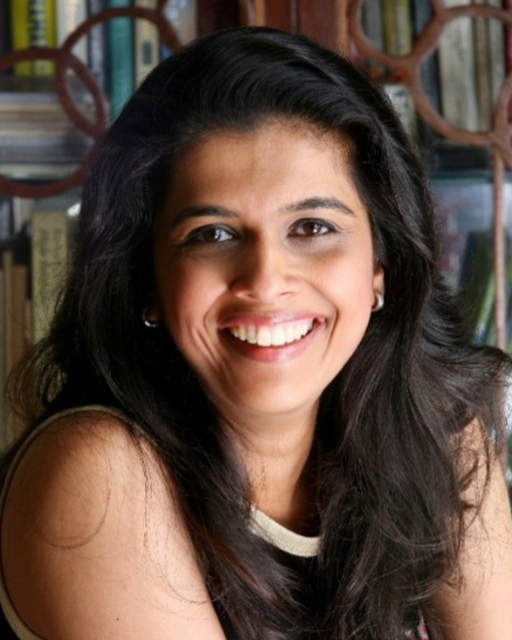
Evelyn Hew, 38, managing director for Smartcity Solutions, a sustainability consultancy, was looking for a commercially viable method to reduce wastage. While on Facebook, she chanced upon ChopValue Canada and learnt about the company’s model for upcycling chopsticks. In less than a month, Hew would secure an area development partnership with ChopValue for the Singapore and Malaysia markets.
Her lifestyle wasn’t always sustainable. She was a habitual shopper with a closet crammed with clothes. Unlike today, sustainability was not a burgeoning movement back then.
It wasn’t until Hew had her first child that she started fretting about the future.
“You realise that the environment will affect all aspects of life in the future. So, my husband and I decided that whatever we do going forward, profit cannot be the only objective. We needed to create better outcomes for the next generation.”
Evelyn Hew opens up about the mission of her upcycling business
One of the more unique aspects of ChopValue is its lean micromanufacturing model, which allows the company to operate in localised microfactories close to the source of the raw material. Besides reducing transportation costs and carbon emissions, it also supports local economies and communities.
ChopValue Singapore has a lean micromanufacturing model based in the Loyang area. Since the Singapore chapter started, Hew states that it is close to “reaching nine million upcycled chopsticks”.
Despite the swelling reception, the programme still has obstacles to overcome. “Most think that anything made from recycled material is inferior. Actually, our material outperforms solid wood. It’s stronger than oak and harder than maple. The other challenge is, of course, collection.” Hew elaborates that they can’t depend on a singular source for discarded chopsticks. She needed to find and convince partners to support the project.
Termed urban harvesting, ChopValue Singapore needs to collect chopsticks from hundreds of locations, while ensuring its carbon footprint isn’t counter-productive. Given the density of the island state, it was easy to pull off. Currently, ChopValue Singapore partners three main sources: hawker centres in Yuhua, Lau Pa Sat under the Kopitiam Group, and Frasers malls. “Restaurants, hospitals, schools, even individuals drop them off at our microfactory,” Hew adds. “Sometimes they mail them to us.”
ChopValue upcycles its chopsticks into home and office furnishings. Catering to varied industries, its biggest bestsellers are tables and desks. The company plans to expand its product line. According to Hew, it is constantly seeking new designs and applications, and is currently working on a “very important piece of home furnishing”.
With the growing global demand for sustainable products, ChopValue Singapore is on its way to meet the demand. Hew envisions a future draped in green, one that feels like a second chance with a renewed lease on life. “We must choose local lean manufacturing over importing what we need from huge distances. The carbon footprint for logistics often cancels out whatever good we are trying to do [but] we are excited to see how the market transforms, and we are certain it will.”
Videography: Yvonne Isabelle Ling
Photography: Cher Him
Producer: Adora Wong
Styling: Chia Wei Choong
Hair: Peter Lee, using Goldwell
Makeup: Keith Bryant Lee, using Shiseido
Photography Assistant: Glin