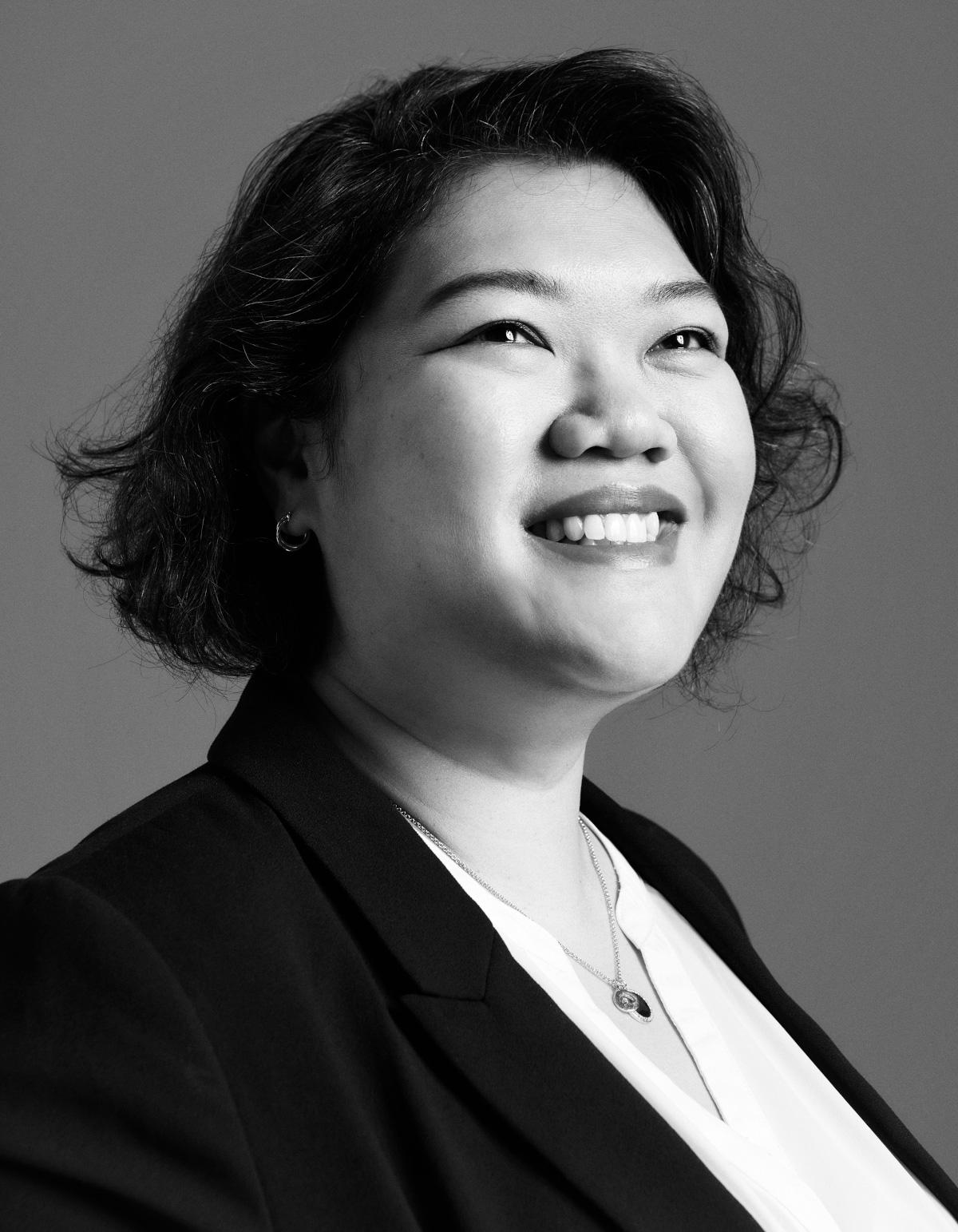
When Dr Siti Maryam discusses her work with blue carbon, which is carbon stored in the ocean, there is an urgency in her tone.
As senior director at the International Blue Carbon Institute (IBCI), she and her team connect science and real-world action, collaborating with researchers, practitioners, governments, and local communities on practical measures to protect and restore the blue carbon resource.
However, since climate change doesn’t wait for anyone, she wants to move faster. “We are far from achieving cheap, scalable technological solutions,” she says. “Blue carbon, on the other hand, offers a certain and scalable solution. The ecosystems are already capturing carbon (also called carbon sinks), so we’re not forcing them to do anything new. We’re simply tapping into its existing capabilities.”
IBCI was launched in November 2022 in Singapore by Conservation International to protect and restore blue carbon ecosystems that store significant amounts of carbon dioxide. Blue carbon is formed not only in plants, but also in the sediments and soil trapped beneath them.
“What makes these ecosystems incredible is that they capture carbon dioxide even faster than rainforests, making them a powerful tool in the fight against climate change. For example, seagrass meadows can sequester carbon up to 35 times faster than a tropical rainforest.”
Dr Siti notes the urgency of protecting and restoring blue carbon
She spent 10 years as an environmental consultant specialising in marine ecosystem restoration and working in diverse tropical marine habitats, from mangroves to coral reefs to seagrass meadows, which is her favourite study area. “I did a lot of research on this often-overlooked marine ecosystem,” she says. “To slow climate change, I naturally gravitated towards blue carbon as an actionable solution based on nature.
Dr Siti is also passionate about inclusivity and empowering communities. “Communities are very much at the heart of blue carbon work,” she says. “Their traditional knowledge of ecosystem management, often passed down for generations, offers valuable insights that complement scientific understanding.”
IBCI works alongside other Conservation International teams to ensure a holistic approach that supports a sustainable and equitable future for these communities. “I’m particularly proud of our drive to ensure gender equity and inclusion. Coastal communities, especially those with women and children, share profound socio-ecological connections with marine ecosystems,” says Dr Siti. “They depend on mangroves, seagrasses, and salt marshes for sustenance, building materials, and future economic prospects.”
IBCI will host a workshop in June to identify knowledge gaps regarding gender equality, equity, and empowerment in the conservation of blue carbon.
“We aim to raise awareness, establish a collaborative research agenda, and empower coastal women as vital partners in conservation,” she says.
In less than three years, IBCI has worked with governments and institutions to support their blue carbon journeys, creating and sharing knowledge to support a global community. While all of this is a step in the right direction, Dr Siti is still looking ahead.
“The key is to halt further destruction of these natural carbon sinks. We have identified areas where carbon loss is expected to be irreversible. Some ecosystems are so damaged that restoration wouldn’t be effective. These are the ones we absolutely cannot afford to lose,” she says.
Art director: Ed Harland
Videographer: Alicia Chong
Photographer: Mun Kong
Photographer’s assistant: Hizuan Zailani
Hair: Aung Apichai using Kevin Murphy
Makeup: Keith Bryant Lee using Laura Mercier