
Bangkok sinks up to two centimetres every year. With its precarious elevation of just 1.5m above sea level, 40 percent of the Thai capital could be flooded by 2030 due to extreme rains and changes in weather patterns, predicts the World Bank.
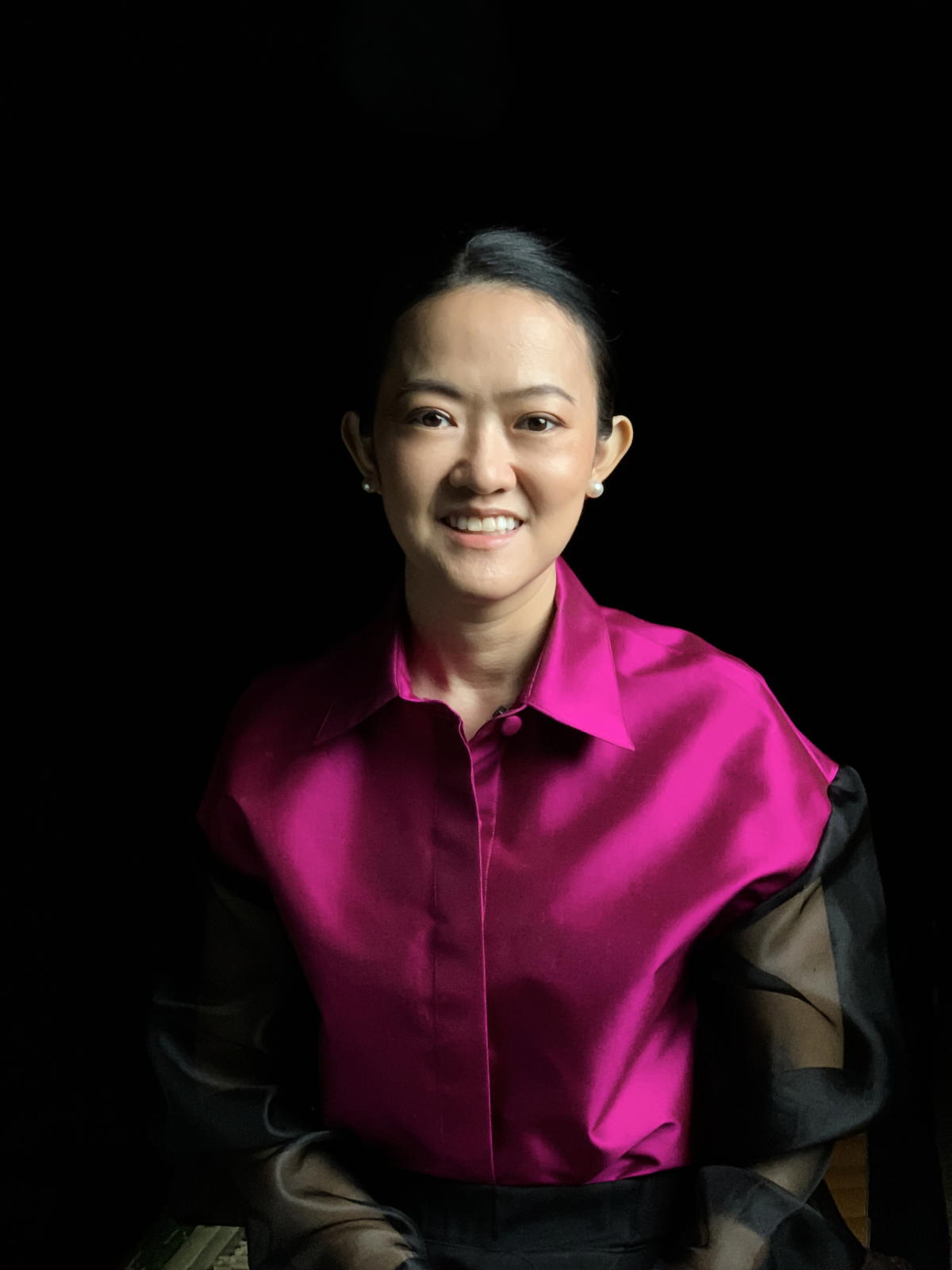
Thai landscape architect Kotchakorn Voraakhom strives to literally keep it afloat. The founder of Landprocess, a landscape architecture and urban design firm, earned her master’s degree in landscape architecture from Harvard University. Her other positions include Chair of the Climate Change Working Group of the International Federation of Landscape Architects and Design Critic Faculty at Harvard Graduate School of Design.
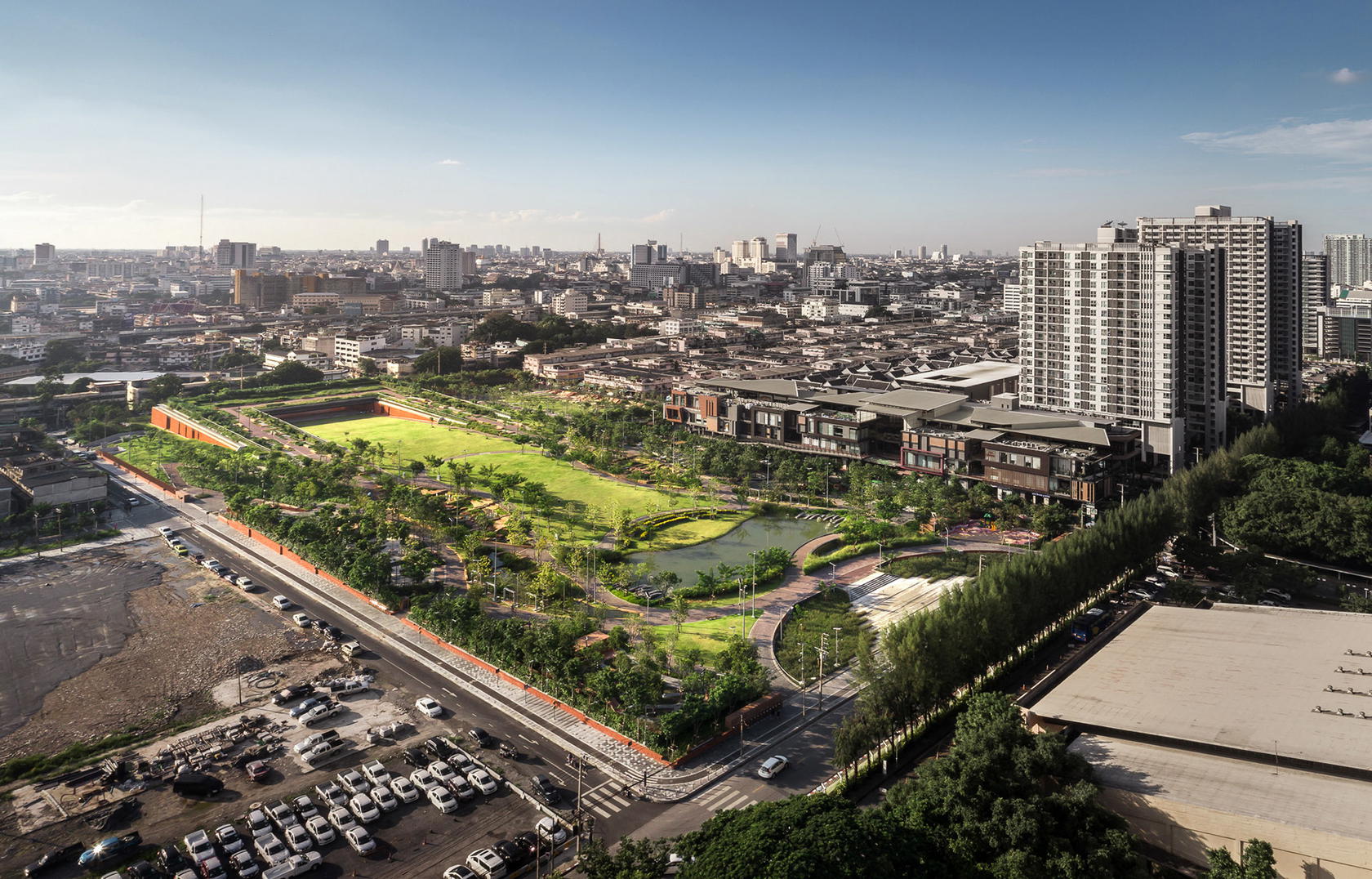
Voraakhom specialises in building productive green public spaces that address climate change in high-density urban areas and vulnerable communities. Her groundbreaking projects include Chulalongkorn University Centenary Park, the first critical green infrastructure in Bangkok, which opened in 2017.
In her view, green infrastructure can create “sponge cities” that more effectively soak up sudden downpours and manage flood water. The centenary park, for example, tilts downwards to collect rainwater flowing through the grass and wetlands.
Another iconic project of hers is Thammasat University Urban Rooftop, the largest organic rooftop farm in Asia. It facilitates water management through a rice terrace-inspired design that collects and stores run-off rainwater in four retention ponds. The water is used to irrigate the farm’s crops before being filtered through several layers of plants and soil and channelled into residential water sources and marine ecosystems.
Voraakhom sees the mitigation of flooding in sinking cities as a challenge in coexistence, not control. “The fundamental shift begins with embracing water rather than fighting it—designing spaces that give water room to flow safely while maintaining urban functionality,” she explains. “The critical consideration is the acceptance that we can’t win against nature. Climate change is human-caused, and we must relearn how to adapt and dance with water’s rhythms.”
The Thammasat Urban Farm Rooftop embodies this philosophy, she points out, because it’s more than a public space. It’s also a multifunctional system that addresses urban runoff, food security, renewable energy, and community needs in one integrated design. The goal was never just to build infrastructure, but to create public realms that are adaptable, educational, and even celebrate our relationship with water.
Interestingly, she finds that the biggest challenge in her projects is not necessarily in design or engineering, but in collaboration. During the development of Chulalongkorn University Centenary Park, for example, her most challenging obstacles were in aligning multiple government agencies, disciplines, communities, and stakeholders around a shared vision. Because public projects often require weaving competing priorities into a single actionable solution within a limited budget, her plans had to remain very flexible. “Even when budgets were slashed, we adapted by phasing construction and adjusting material selections to keep progress alive,” she recounts.
To address flooding at the grassroots level, Voraakhom also founded Porous City Network in 2017. The social enterprise partners with vulnerable communities in Thailand, Malaysia, Cambodia, and the US to raise awareness of climate challenges and co-create site-specific design solutions.
“We don’t just design for people, but we design with them,” she clarifies. “Our strength lies in its ethos: flooding isn’t just a technical problem to ‘fix’, but a cultural opportunity to redefine resilience. By engaging young designers and communities in hands-on projects, we’re planting seeds for a future where cities don’t ‘fight’ water.”
Singapore’s Smart Strategy
Voraakhom believes Singapore’s greatest defence against climate change is our ability to transform transboundary challenges into opportunities for regional cooperation. For instance, in negotiating solutions to shared problems like PM2.5 pollution with neighbouring countries, we used climate issues as catalysts for economic collaboration instead of sources of conflict.
“The real genius lies in creating win-win frameworks where environmental solutions become drivers of regional development. This model of turning shared vulnerabilities into shared opportunities is what makes Singapore’s approach to climate resilience truly exemplary in action.”
Meanwhile, as Vice-Chair of the jury panel for this year’s President’s Design Award— Singapore’s highest accolade for designers and design projects across all disciplines—she adheres to her belief that the best measure of good design is authenticity of purpose. As it stands, design today must respond to real-world challenges, regardless of whether it is dealing with the physical environment, technology, healthcare, or public services. “What moves me most are solutions born out of necessity, not luxury; designs that address urgent needs with clarity, empathy, and innovation.”
Voraakhom makes sure to be attuned to design that bridges gaps not only in function, but also in accessibility, equity, and cultural resonance. “The best entries don’t just solve problems; they inspire a nation to think differently about what’s possible.”
It is her hope that we do not view climate resilience as a trend; it is an existential imperative for cities and humanity. That said, in her experience, the most important trend isn’t technological, but conceptual. It doesn’t treat climate mitigation, adaptation, biodiversity loss, and urban development as separate challenges.
Innovation can only be achieved when we recognise these issues as interconnected parts of one complex system. As such, she wants us to consider that people are both the designers and the living essence of communities and cities.
True change can never be imposed from above, she argues, and must grow from within and be nurtured by a deep sense of collective ownership. “This ownership isn’t about possession, but about connection. It emerges from love: love for our neighbours, love for our shared spaces, and love for the places we call home. When communities develop this emotional stake in their environment, sustainability becomes personal rather than political.”