In front of me is a dish called Miedo—Spanish for “fear”—presented in a wooden box billowing with smoke. My instructions are to put my hand in the box and guess
its contents.
The third-best restaurant in the world, Disfrutar in Barcelona has two Michelin stars, and is helmed by a trio of highly respected chefs, so how bad can it be? Nevertheless, I am nervous.
Slowly, I dip my hand into the cold smoke, and my fingers brush against something thin and spiky. To my embarrassment, I let out a yelp. Feeling around, I touch something firm, slick and slightly pliable.
I lift out a giant prawn. Relieved, I laugh—fear of the unknown is often far worse than reality. A dipping sauce arrives at my table and I am left to eat the crustacean with my fingers.
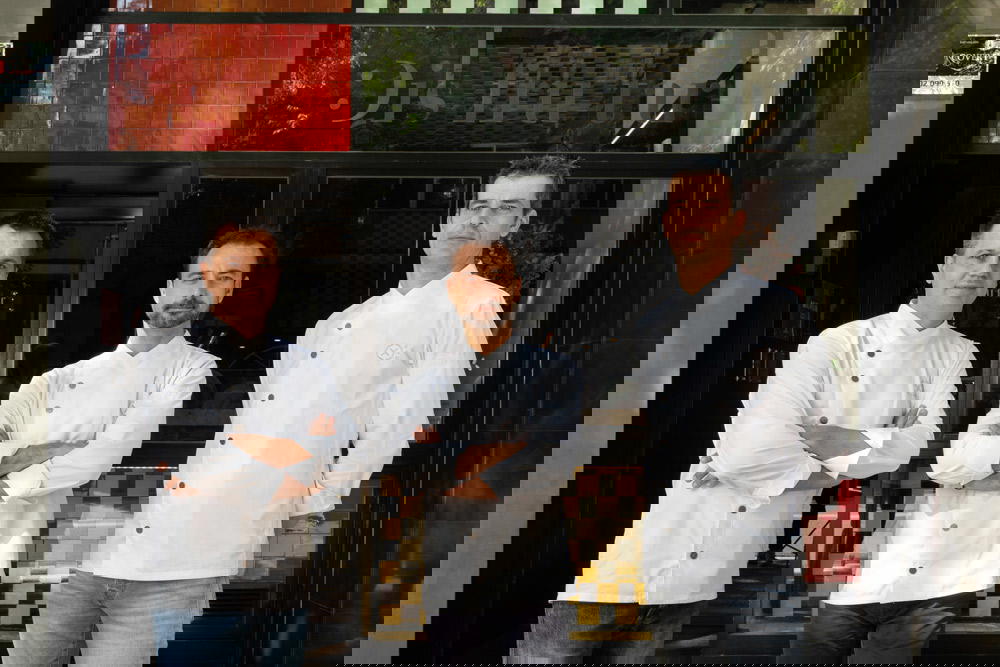
The drama of the box provokes an emotional reaction and provides entertainment—something chefs Mateu Casañas, Oriol Castro, and Eduard Xatruch, all alumni of El Bulli, the restaurant that redefined fine dining in the noughties, excel at. “You’re not coming here for an exam; the most important thing is that you enjoy your meal,” says Xatruch, which is why they called the restaurant Disfrutar, meaning “to enjoy” in Spanish.
Additionally, the smoking box’s theatricality ensures guests notice the prawn’s true magic.
It is prepared simply—boiled to perfection so the delicate flavours shine through. A potent reduction of chicken and prawn, the side sauce is equally delicious on its own.
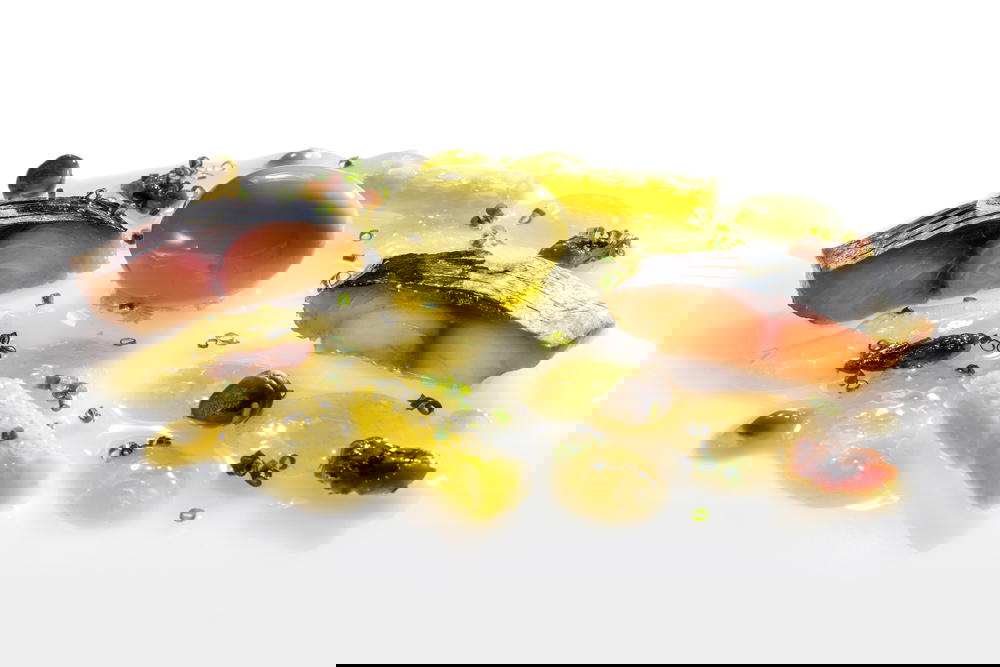
The prawns guests fish out were caught just a few hours ago. The chefs source their crustaceans further south down the coast, from the town of Vilanova i la Geltrú, which specialises in catching the red and pink deep-sea varieties native only to the Mediterranean Sea.
It is rare for the chefs to present a dish that appears so technically simple. With their roots in El Bulli’s molecular gastronomy, they are technique wizards. The three met in 1998, when Xatruch joined Roses-based El Bulli, where Casañas and Castro were already working.
El Bulli closed in 2011, and the trio opened Disfrutar in 2014.
Their breakthroughs in cooking techniques are recorded in Disfrutar Vol. 1 (2021), a two-volume box set weighing over 6kg. Disfrutar Vol. 2 is in the works. Lever arch files line the bookshelf in their innovation kitchen beneath the dining rooms where they meticulously record successes and failures. “We have thousands and thousands of recipes, so we need to record them or they’ll be lost,” says Xatruch.
Disfrutar is famous for extending the El Bulli technique of spherification to allow multiple blobs of liquid to be joined in various shapes through a thin gel membrane. The multi-spherical tatin of corn and foie gras, which plays with the concept—but not the flavours—of a tarte tatin (French apple tart), was the first dish the trio created with this technique.
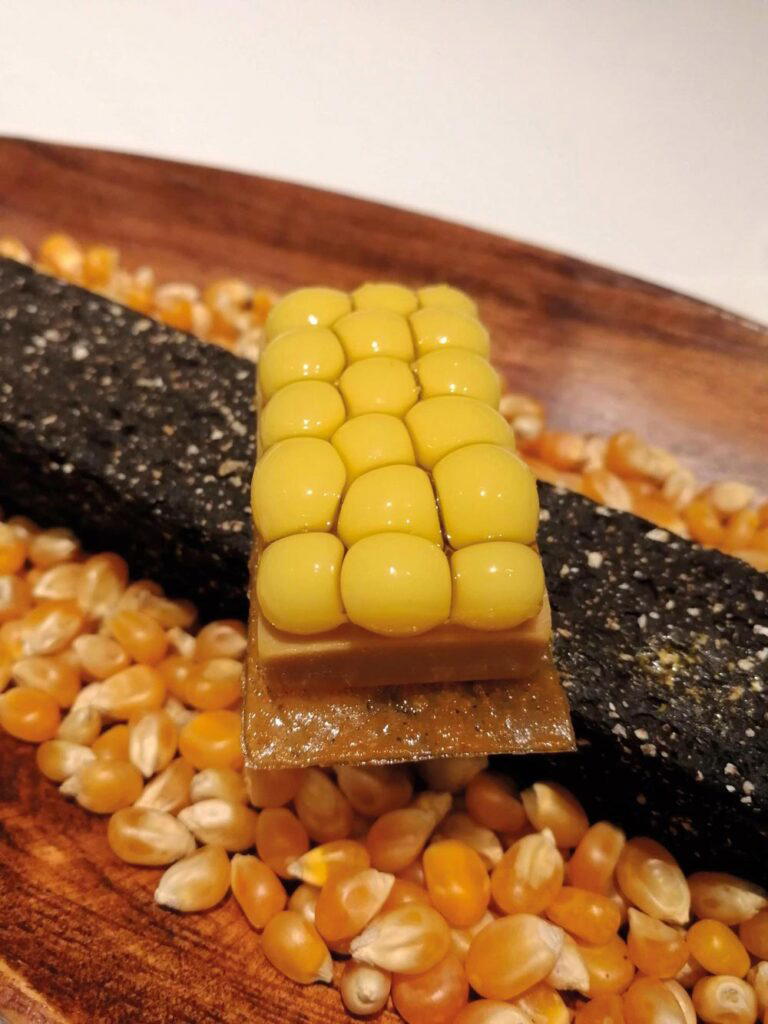
A thin crispy corn base supports a duck foie gras and Pedro Ximenez sherry terrine, topped by a rectangle of multi-spherical corn—a witty visual reference to the preferred grain of many birds.
The contrasting textures of the crisp base, creamy terrine, and spherified blobs explode in the mouth and combine for an unforgettable, utterly delicious dish. The multi-spherification technique is now used in restaurants around the world.
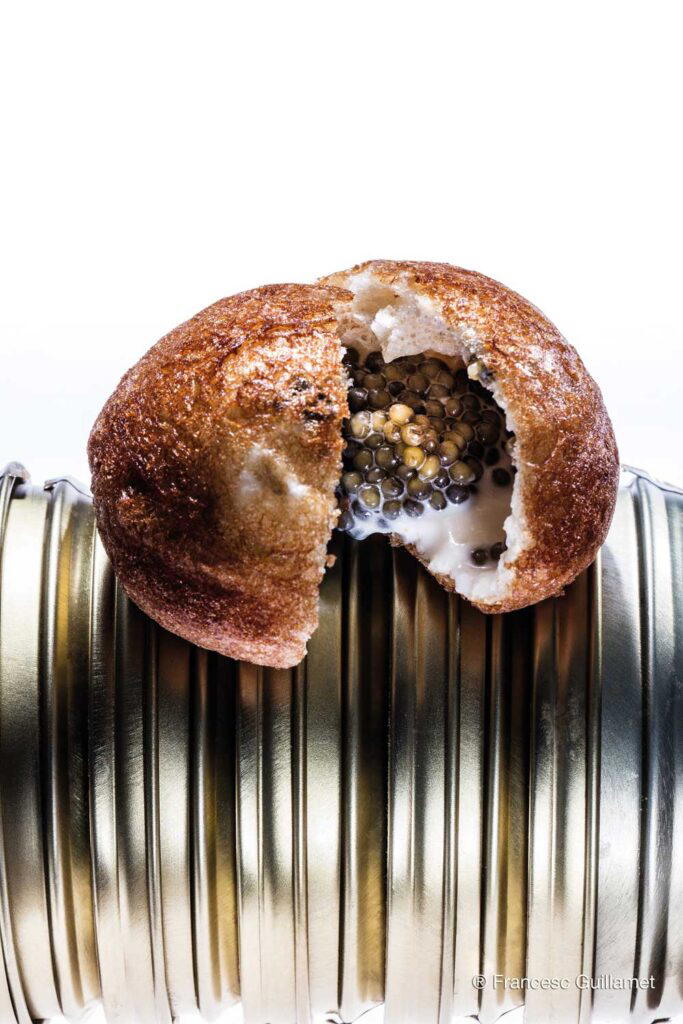
Additionally, they have perfected stuffed Panchino buns, a light and luscious tribute to the Chinese bao. Instead of using yeast and fermentation to make fluffy dough, they use a foam gun (a foaming device) to aerate it.
In a cup-shaped spoon, they squirt a layer of aerated dough, top it with stuffing, and squirt another layer over that. As the process is quicker than fermentation and baking, they can stuff the “brioche” with delicate fresh ingredients, such as caviar and sour cream, or even fruit sorbet. The balls are then deep fried for 20 seconds.
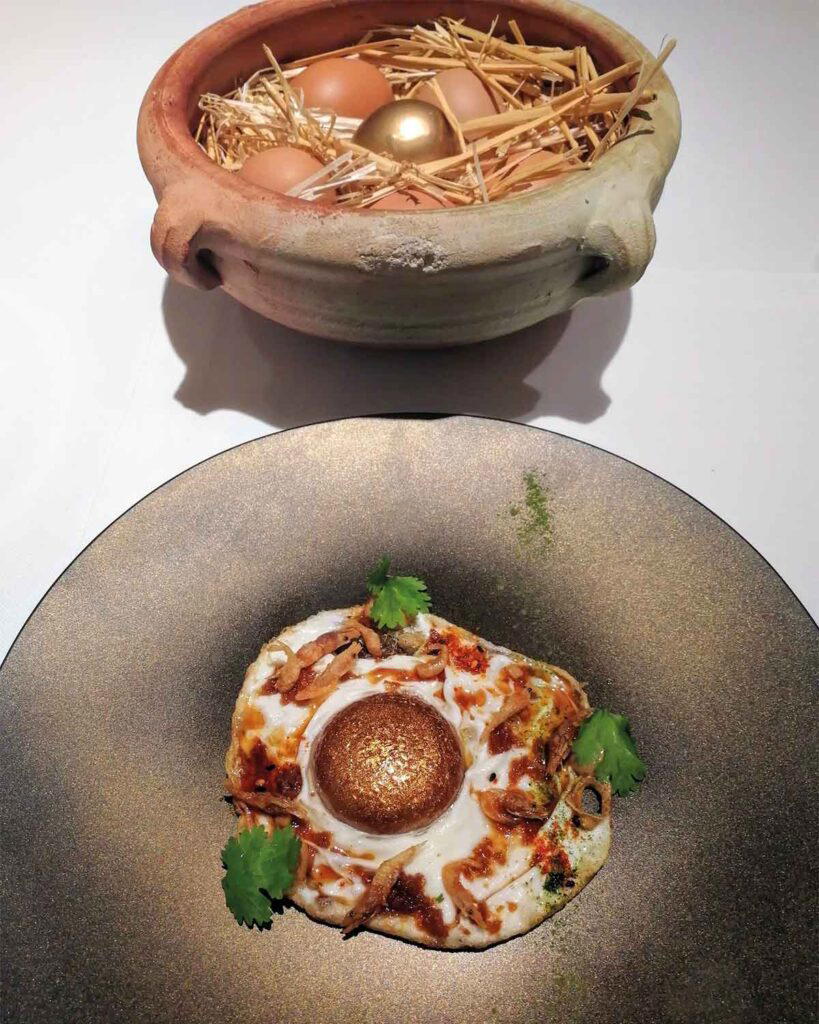
Other innovative dishes include Spain’s most famous gazpacho transformed into a sandwich and pine shoot “tempura” made from glutinous rice flour and cooked in the microwave rather than fried.
The high-tech treatment extends to drinks as well. During the pandemic, the team experimented with de-alcoholising wine through vacuum distillation using a Girovap machine. Disfrutar now offers red, white and sherry wines, beers, and sakes with almost zero per cent alcohol.
In spite of all this scientific precision, the prawn that elicits fear is rare. But that is often the case with Disfrutar, which excels in the exception—it refuses to fit neatly into any box. Casañas, Castro, and Xatruch are technique-driven, but not always. Often, their cuisine references Catalan and Spanish cuisine, but not exclusively. And while their produce is mainly sourced locally, they sometimes look further afield as well.
Although they systematically record their innovations in some of the world’s most detailed culinary catalogues, their creativity, both a science and a feeling, knows no bounds.
“You can tell when a restaurant is being true to itself,” says Xatruch. “You can taste it.” At Disfrutar, authenticity tastes like a joyful exploration of technique in the service of food, not at the expense of it.
Even though it is avant-garde, it is still dinner, with its 30-plus quirky, delightful, and delicious courses.