
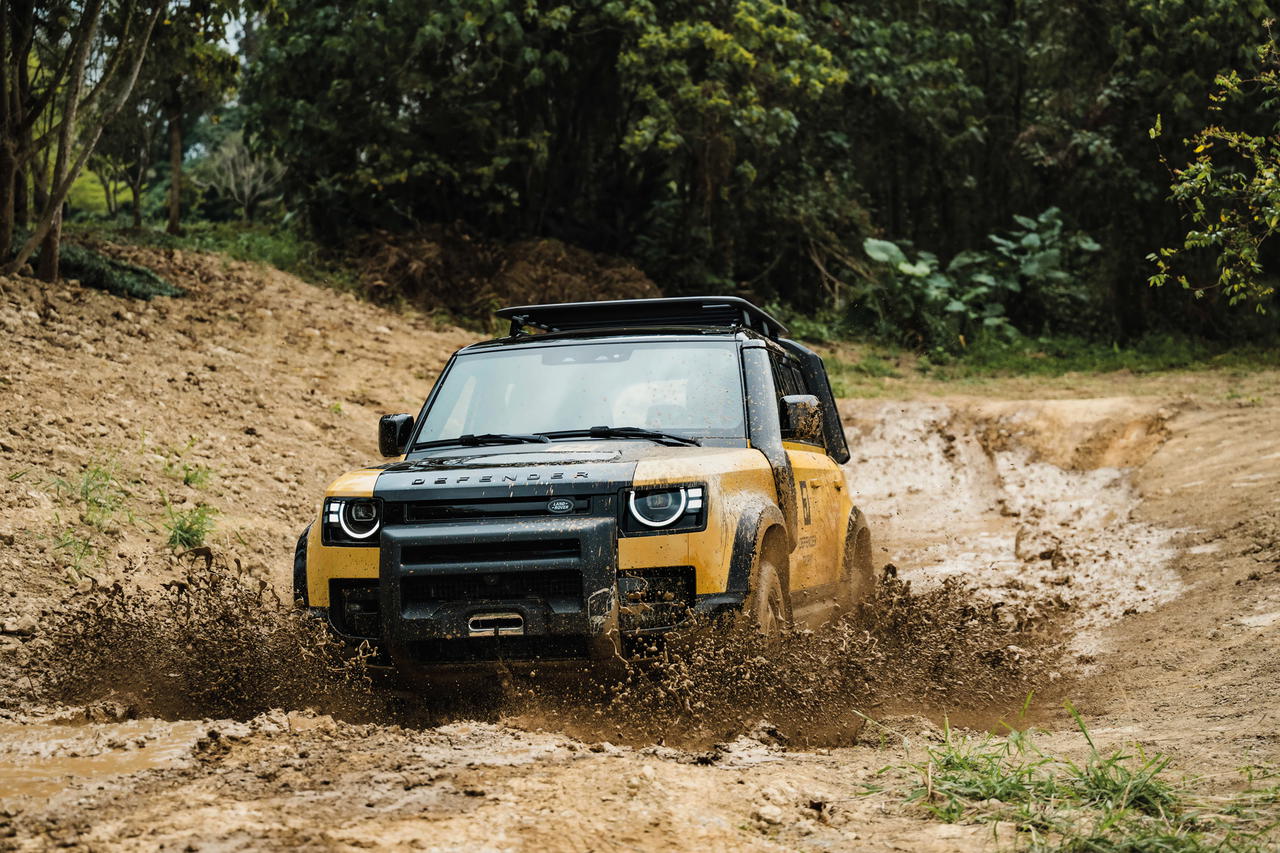
I couldn’t decline Defender’s invitation to experience some of the gruelling tasks the 24 competitors from Hong Kong, Indonesia, New Zealand, the Philippines, Singapore, Thailand, and Vietnam faced during the Asia-Pacific Defender Trophy Qualifications in March, despite not having a driver’s licence. I’d never done anything like it before, and the idea of participating was exhilarating.
In the days before the actual race, journalists tackled several of the 16 challenges drivers had to endure in Taiwan’s mountainous Kaohsiung region in a media preview. Starting at Yingda Mulu Camping Site, north of Pingtung in southern Taiwan, our first challenge, Flag It Up, involved raising a flag on a long pole using ropes. The catch? We couldn’t touch the pole or enter the circular boundary, so the ropes had to be tensioned precisely to raise the flag.
While this task was relatively straightforward, others were far more demanding. Peak Performance, for instance, involved constructing a three-section pyramid structure. Moving forward and backwards in tandem, our teams had to reposition the structures between marked squares using both MY26 Defender 110 models and Defender 110 Trophy Editions. The ropes were attached to pulley-like frames connected to the vehicles, and maintaining rope tension while coordinating between two drivers was a significant challenge.
Another task that baffled even seasoned automotive journalists was Fenced In, which involved manoeuvring our Defenders in an extremely tight space, turning them around, and driving out—all in 15 minutes! As a non-driver, I guided my teammate through his blind spots, but we fell short, missing the time limit by less than a minute.
power on
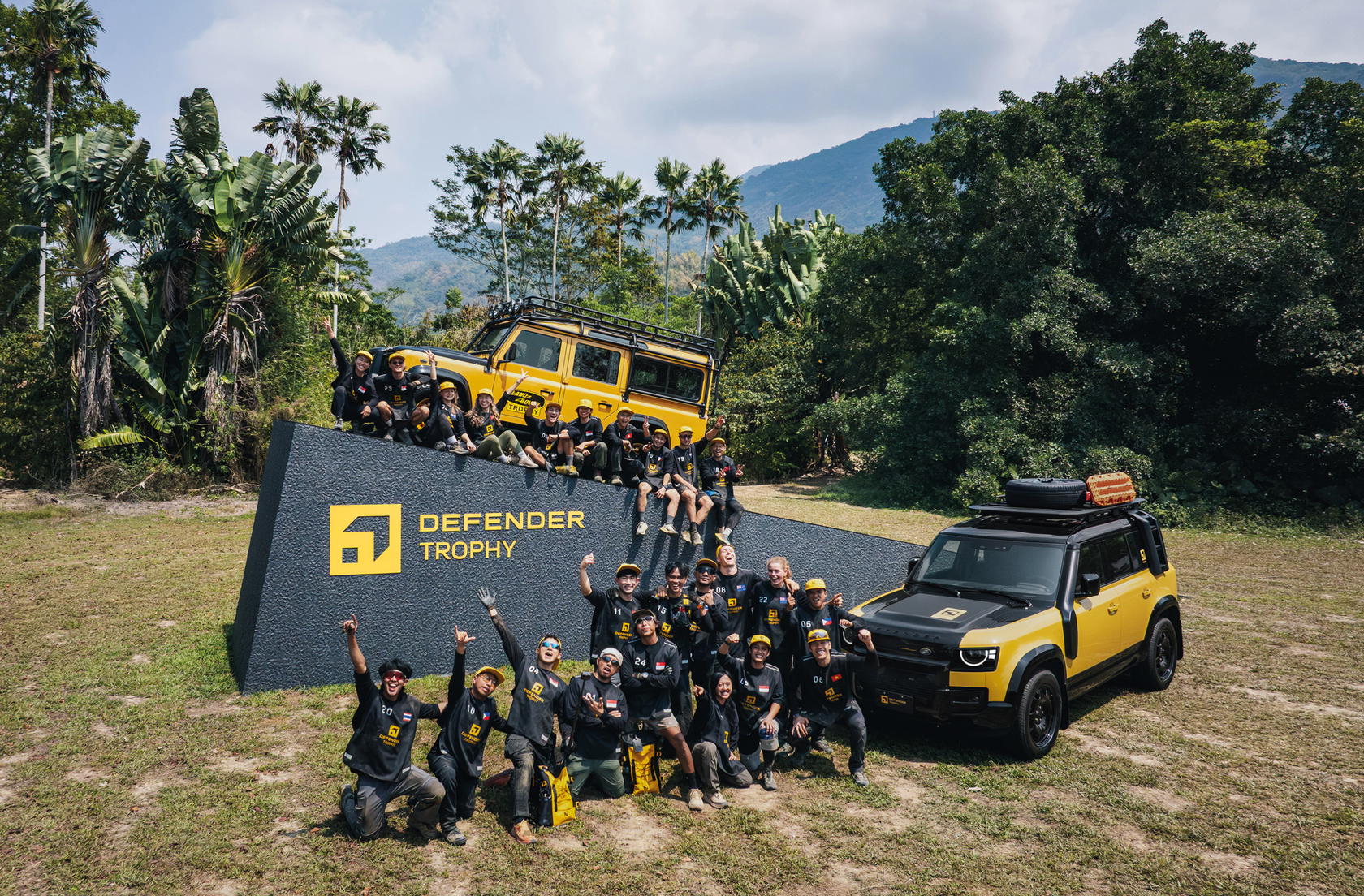
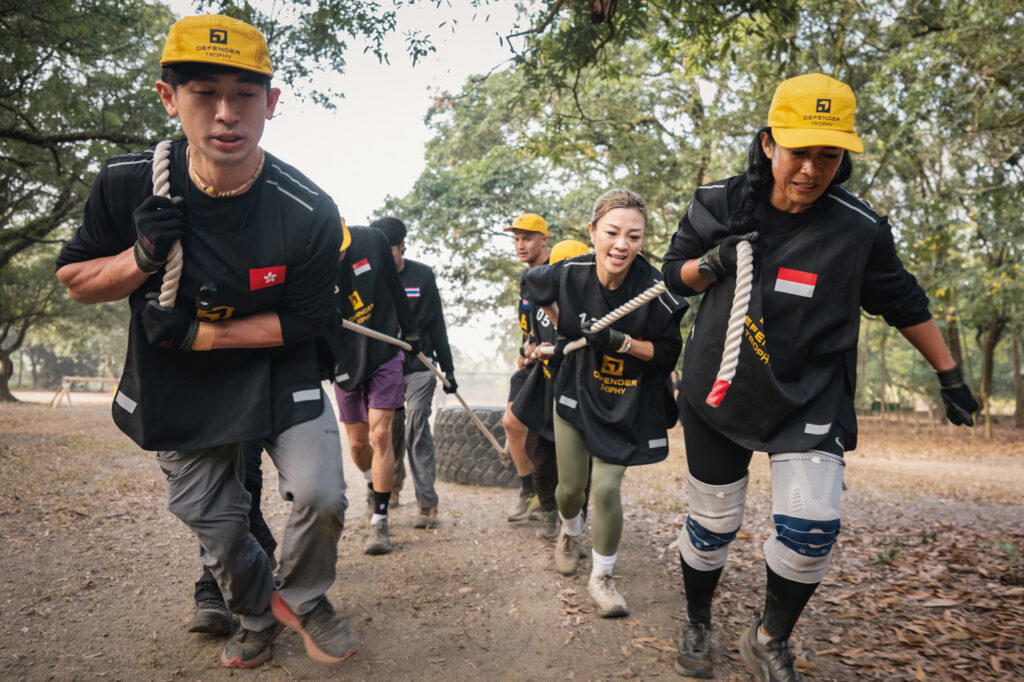
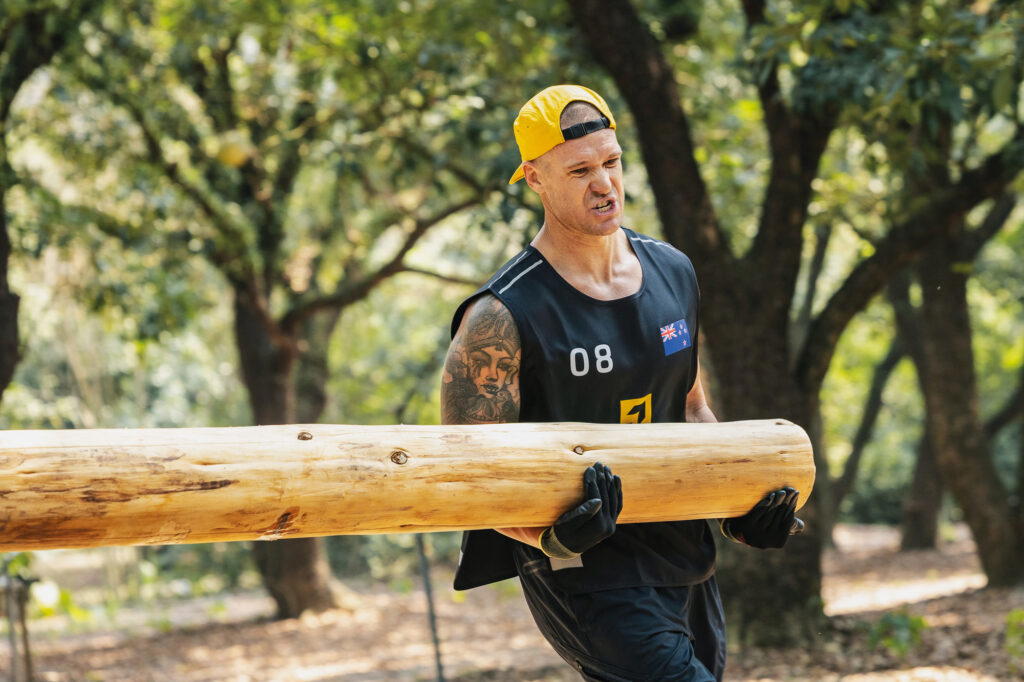
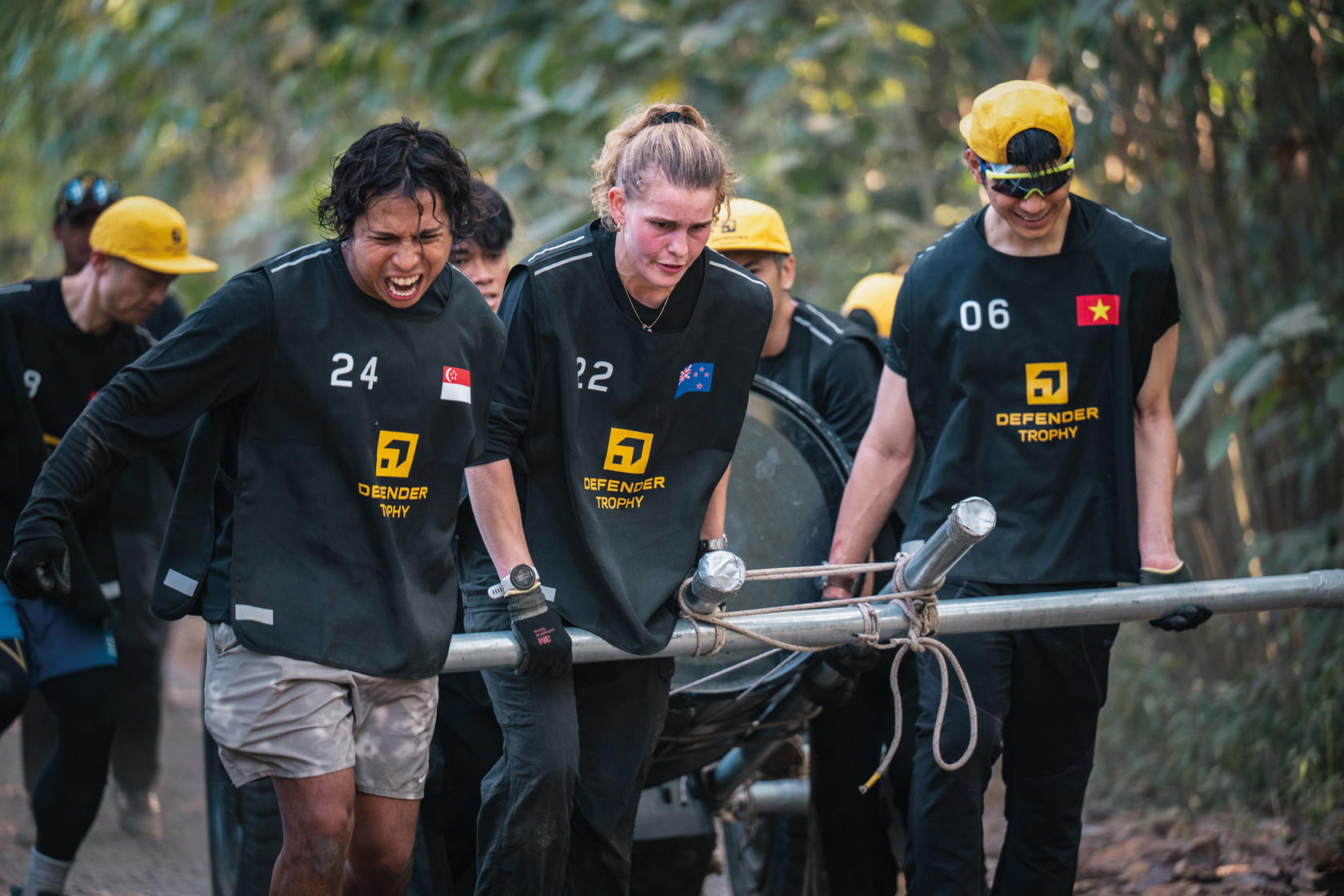
As these tasks grew more challenging, we gained respect for the race participants who had to face demanding vehicle-based challenges that would evaluate their physical endurance, intellectual agility, and teamwork under pressure from 21 to 22 March. They also included constructing rope-and-log bridges before driving over them, transporting equipment through unforgiving landscapes, and completing night-driving missions.
At the end of those two days, two finalists emerged victorious: Charles Murray of New Zealand and Singapore’s Ron Ng who will represent Asia-Pacific at the Defender Trophy Global Final in Africa, which will be hosted with Tusk later this year. Defender has partnered with Tusk for over 20 years, supporting African wildlife conservation through funding, vehicles, and projects like the Wildlife Ranger Challenge.
For both competitors and the brand, the Asia-Pacific Defender Trophy Qualification round in Taiwan was pivotal. “Asia-Pacific is one of the most diverse and dynamic regions in the world, and the calibre of competitors we saw reflected that. Defender Trophy represents more than technical capability; it’s about resilience, teamwork and a shared respect for the environments we explore,” says Garth Turnbull, Managing Director of JLR Asia Pacific.
made for more
More than 25 years after the legendary Camel Trophy, known as the “Olympics of 4×4”, which tested drivers and machines across some of the world’s harshest terrains, from the Amazon to Patagonia, Land Rover has revived the spirit of adventure in a modern format with the Defender Trophy. And if there’s one takeaway from this incredible experience, it’s that the Defender Trophy race goes beyond mere driving skills. It pushes competitors to their limits, while emphasising communication, trust, and adaptability.
Like the trophy, the Defender itself has stood for rugged adventure and community for decades, staying true to its roots that date back to the original Land Rover of 1948, as noted by Mark Cameron, Defender’s Managing Director.
“Our unique global adventure challenge brings nations together, as competitors cooperate to navigate tough terrain, conquer extreme physical challenges, and solve tactical tests—all united by a greater purpose.”
Few vehicles can meet these demands and conquer the finish line whether in competition or leisure time, but the adventurous instinctively know which one to choose. The new Defender 110 Trophy Edition marks the brand’s return to international adventure competitions, blending its rugged exploration heritage with enhanced passenger comfort.
It is available only in Deep Sandglow Yellow or Keswick Green, with the Trophy Edition featuring Gloss Black finishes on the bonnet, lower bodysides, brake calipers, and rear recovery eyes. Deep Sandglow Yellow reinterprets a colour historically associated with Trophy-style Defenders, while Keswick Green pays tribute to rural exploration in the brand’s UK homeland. There is also an option to add a matte protective film for added durability and protection when the vehicle is used off-road.
Among the extra adventure-ready features are Gloss Black 20-inch alloy wheels with all-terrain tyres for a reliable grip, a dark rear scuff plate, Gloss Black wheelarch protection, and a black front under shield.
If adventure is your happy place, you should also know that there’s only one unit of the Defender Trophy Edition available in Singapore, with the possibility of more to
order.
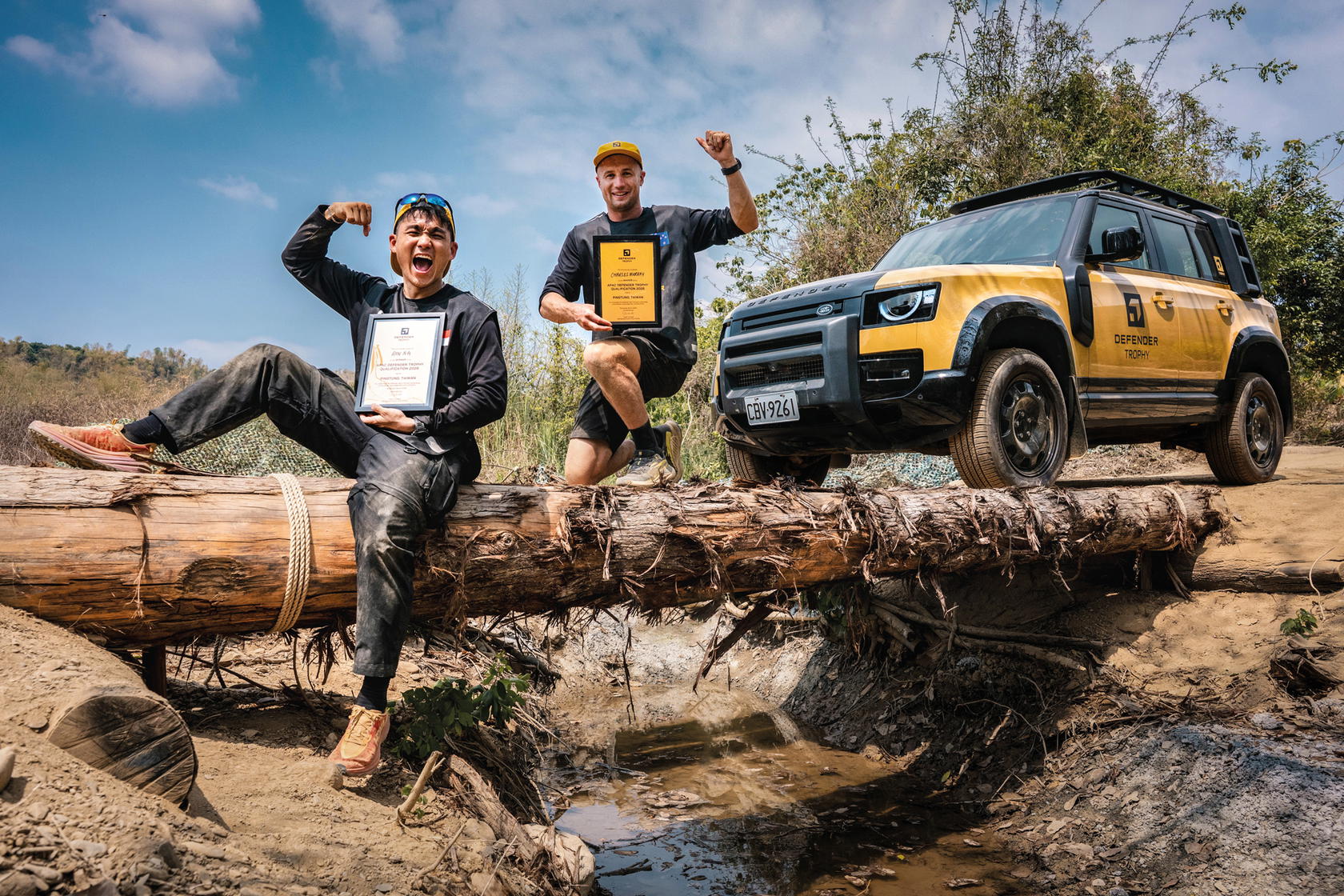
Challenging Terrain, Authentic Experiences
APAC finalists Ron Ng (RN) and Charles Murray (CM) share their toughest moments and how the Defender 110 delivered in those moments.
The Defender makes a great off-road vehicle, but what makes it stand out?
RN: It makes challenging terrain feel manageable. The biggest takeaway for me was how confident I felt throughout the journey. Even when navigating steep side slopes or wading through water and slushy mud, I never felt unsafe. Kaohsiung has the kind of terrain that looks far more intimidating from the outside but is more controllable from the driver’s seat when you’re in the right vehicle.
CM: It’s an incredible experience! As humans, we’re naturally adept at navigating our environment, whether on a busy footpath or out on a wilderness trail. We rely on instinct and spatial awareness. Driving off-road changes all of that.
Suddenly, you’re not just moving yourself, but managing a roughly 2.1-m by 5-m vehicle, weighing around 2,613kg, with four wheels that must find their right place on the ground. Soft patches of soil and narrow passage require careful consideration. Everything completely changes how you look at terrain and movement.
Did the vehicle make a significant difference in completing your challenges?
RN: The obstacle course was the highlight for me. One section required me to avoid red balls while hitting green ones with the Defender’s side mirror, all after wading through water on a steep slope. As I reached the slippery, uneven exit, I could feel how crucial the vehicle’s grip and power were — without them, I would have lost traction. In that moment, the Defender made the difference between finishing the stage and not.
CM: The Defender’s interface is incredibly intuitive. It made switching to the right off-road mode for technical driving an absolute breeze. I was confident that I could tackle even the trickiest section because I knew I had both the power and stability to do so.
Looking back, how did you prepare for the race?
RN: Typically, three to four runs and at least two strength and conditioning sessions each week. My biggest preparation was simply showing up with an open mind and embracing the experience.
CM: Mine centred on consistent gym sessions three to four times a week, along with regular 5-km runs that incorporated Zone 2 training with higher-intensity efforts. In the lead-up to the Asia-Pacific Defender Trophy Qualification, I also raced my bike in Tasmania, pushing maximum effort through technical terrain, strengthening my focus on the road, particularly when navigating a vehicle in varying conditions.