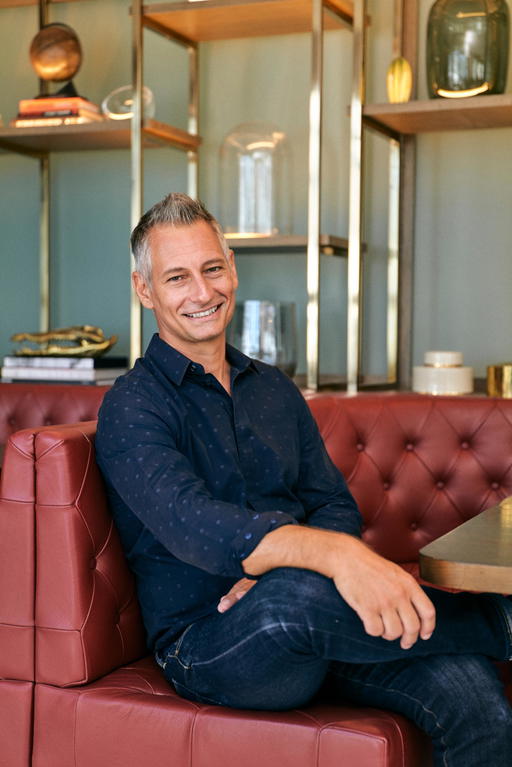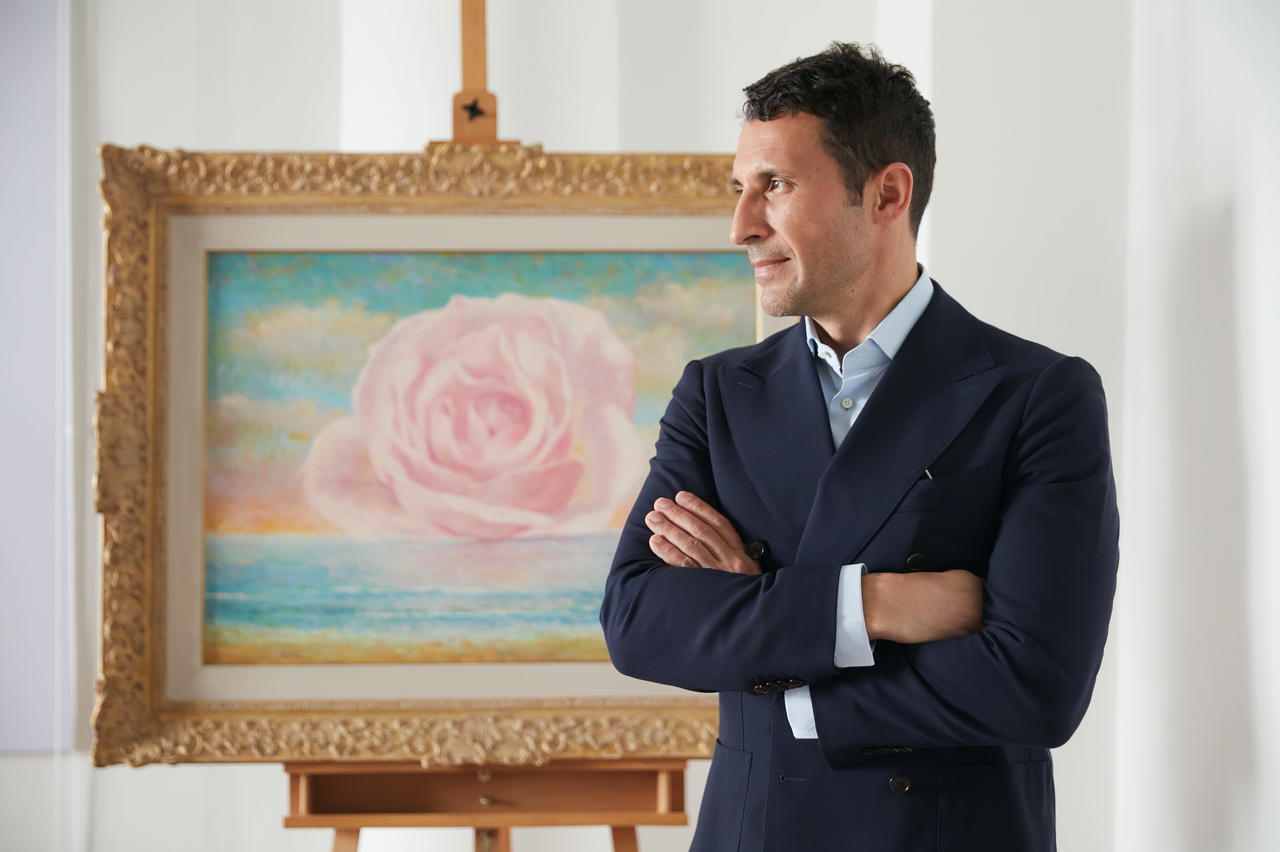
“Art shouldn’t be an alternative investment,” remarks Cristian Albu, deputy chair and
head of 20th- and 21st-century art at Christie’s Asia Pacific.
It’s a bold proclamation, and somewhat ironic coming from someone who works for one of the world’s leading auction houses. However, he loves art and sincerely believes everyone should be able to enjoy it.
Albu never studied art. He majored in economics instead in his home country of Romania. Then he discovered an exchange programme that allowed him to travel to the United Kingdom during the summer to learn English. Having an unquenchable thirst for knowledge, a young Albu applied for it and was approved. So, he packed his bags and flew off in 1997. His mornings were spent picking strawberries, gooseberries, and their fruity cousins, while his afternoons were spent studying a new language.
After participating in this programme for two years, he moved to London permanently in 1999 to be closer to the action. Several years later, Albu met the late Count Manfredi Della Gherardesca, a celebrated Italian interior designer, collector and art dealer at a party hosted by Mario Testino.
Little did he know that this coincidental meeting would change the course of his life. Through the years, they kept in touch sporadically. Then Albu, who had become disgruntled with his industry, asked him if he knew of any openings. He wasn’t hiring, but Albu told him he didn’t care about money. Malaise and disillusion had set in, and he wanted to feel invigorated again.
From 2005 to 2008, he apprenticed for the Count and did everything from making coffee to mending shoes. He also learned about art and its many facets. It was the best period of Albu’s life. “My eyes were opened to art as Count Manfredi walked me through this undulating path,” he says.
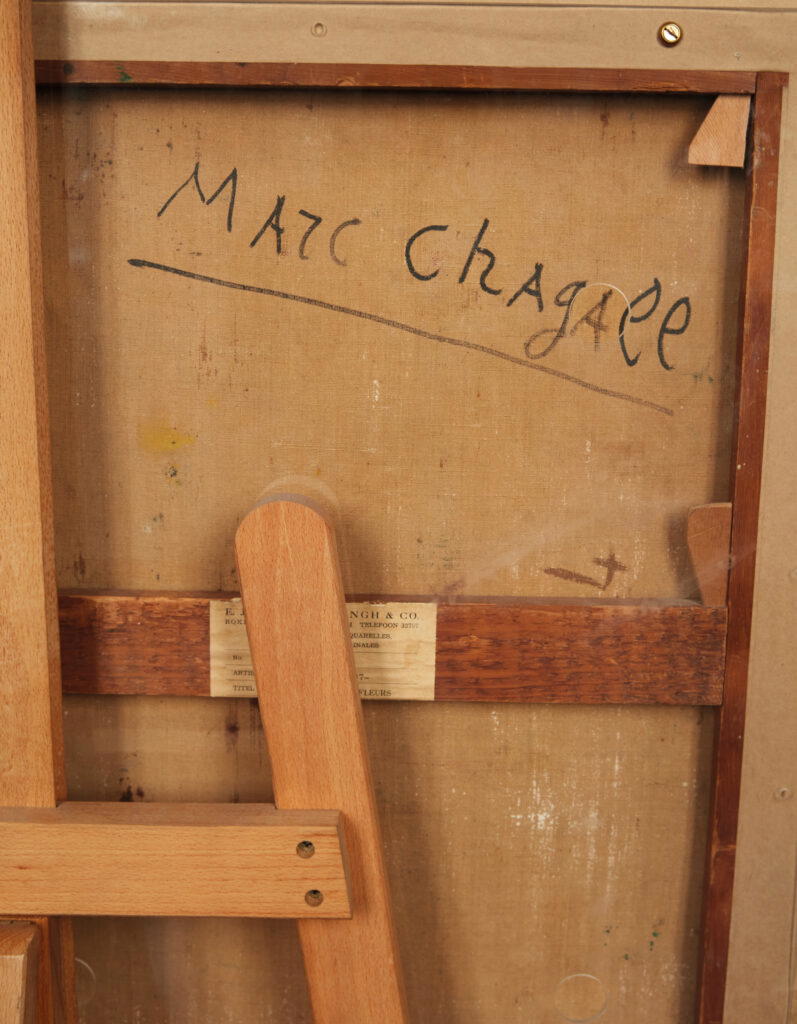
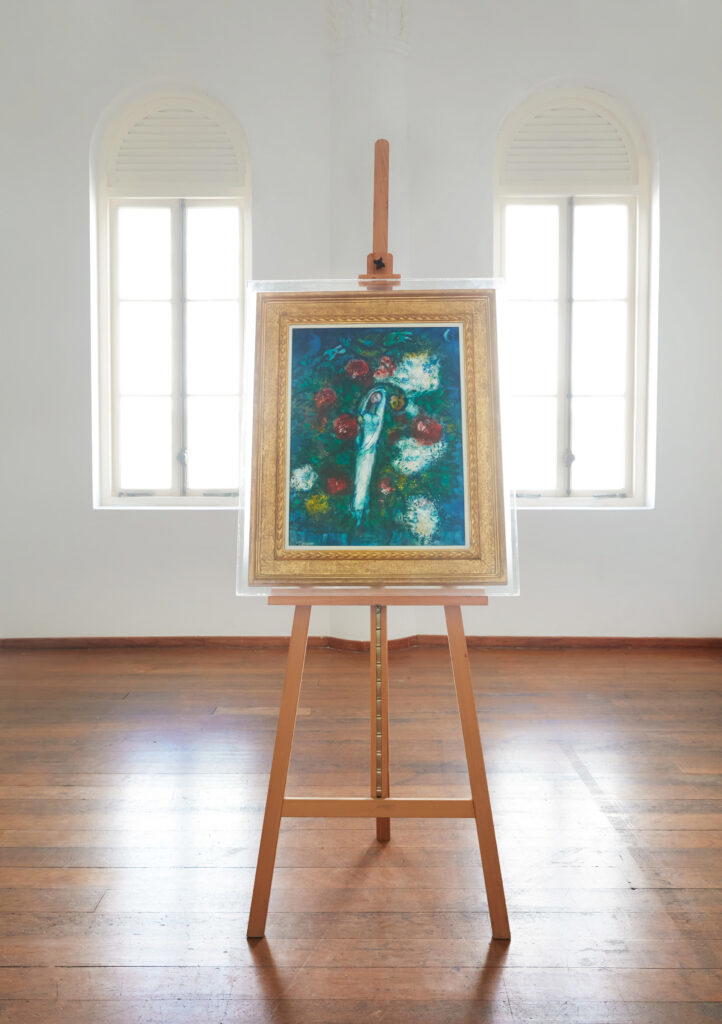
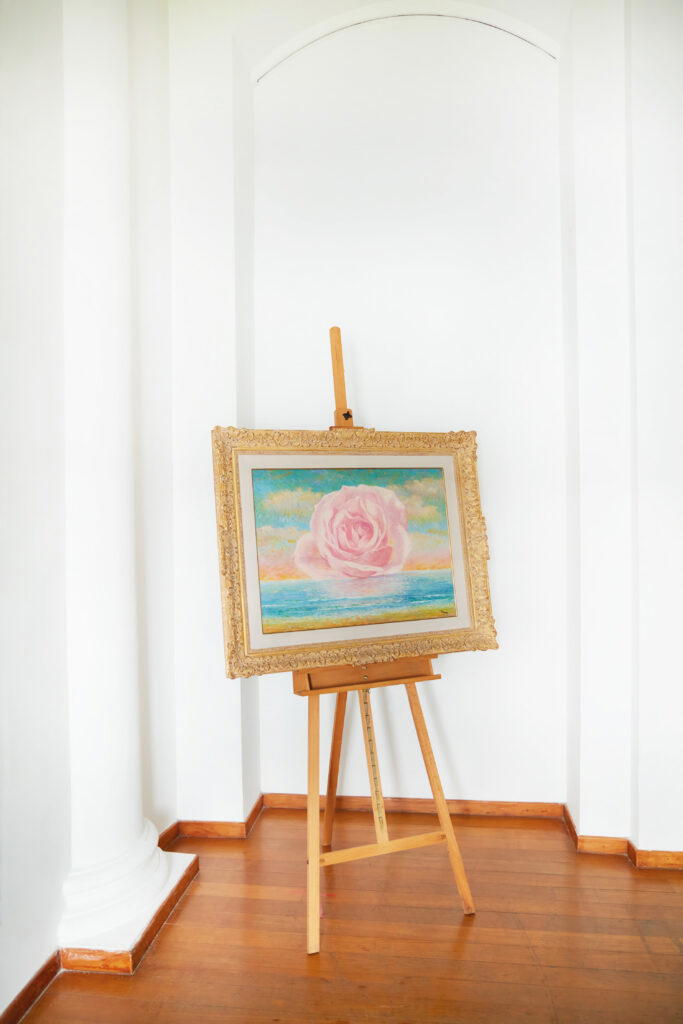
A rejuvenated Albu completed a master’s degree in art business at Sotheby’s Institute of Art in 2007, starting an international journey devoted to extolling the joys of art. Before this interview, he had spoken to a discerning audience about the rise of contemporary art. Behind him, paintings by Belgian surrealist René Magritte and Russian-French artist Marc Chagall competed for attention. They were travelling around Asia before being auctioned off in Hong Kong.
“The reason we brought them to Singapore is that the year 2024 marks a century of surrealism,” says Albu. The art movement emerged after World War I and encouraged surrealists to express their unconscious minds on canvas. Magritte and Chagall were two of the many forebears of this movement, but Asia has had limited experience with it. “My role is to introduce unfamiliar names to the market. Chagall is popular among Asian collectors, but Magritte is something different,” he says.
In the same vein, Albu isn’t worried about AI destroying the soul of art. While he believes it is still early days, he doesn’t think human creativity will be squelched by machines that produce artwork based on prompts in minutes. “Remember NFTs?” he asks, referring to the string of code that marked supposed ownership of digital visuals. It exploded in popularity during the pandemic, with trading volumes rising from US$82 million (S$110.4 million) in 2020 to US$17 billion in 2021, before cratering the year after.
“Everyone thought NFTs would take the world by storm. I’m not dismissing them or AI, for that matter. But, to quote curator Cecilia Alemani, I love the physicality of sculptures, artwork, and objects. I still believe in the old ways,” says Albu.
Twelve years after joining Christie’s, Albu continues to advocate for the value of art. “Art is food. Art is hope. Art is necessary. Art informs us, defines us, keeps us alive. Art reflects society and is an infinite well of possibilities. Art is also a spiritual meal. If I go to a resort and sit on the beach, I die,” Albu says, laughing.
In his view, art does not belong in the dusty confines of a private collection. Everyone should be able to enjoy it freely and easily.