The name Château Mouton Rothschild is legendary in winemaking. Currently, Château Mouton Rothschild owes much of its success to Baron Philippe de Rothschild, whose great-grandfather Baron Nathaniel de Rothschild acquired Brane-Mouton at auction in 1853 and added the Rothschild family name.
In the wine world, Baron Philippe turned age-old traditions on their heads. Médoc vineyards usually sold their wine to Bordeaux merchants who matured, bottled, labelled, and marketed it. It meant that owners did not have any rights over the final product.
He introduced the revolutionary concept of bottling the entire harvest before it left the estate in 1924, thus transferring responsibility back to the owner. Despite being commonplace today, it was a big deal back then.
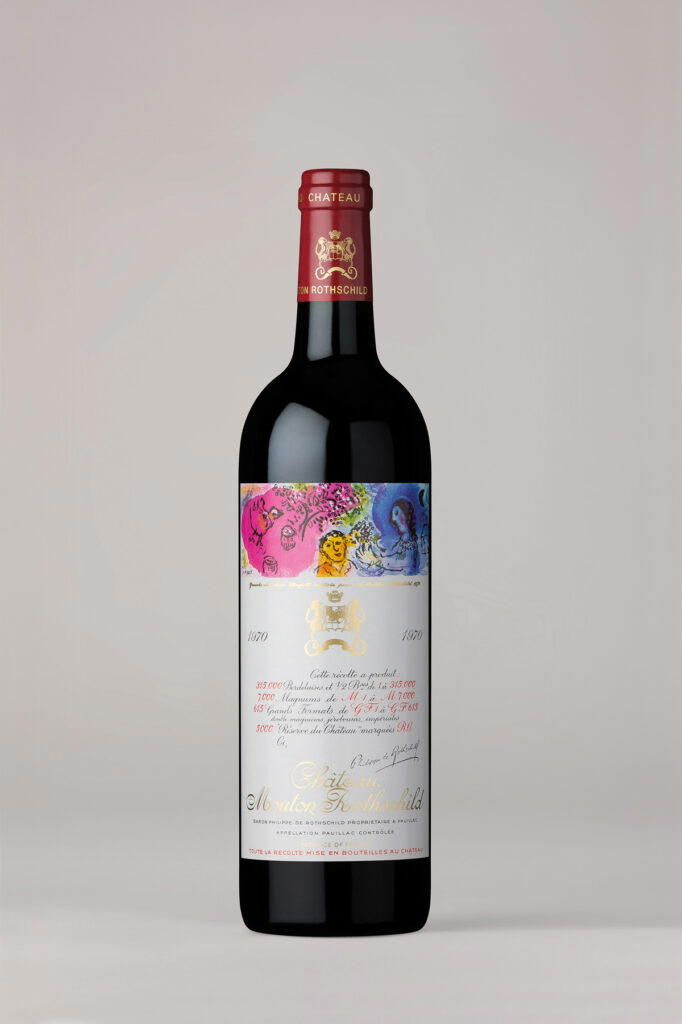
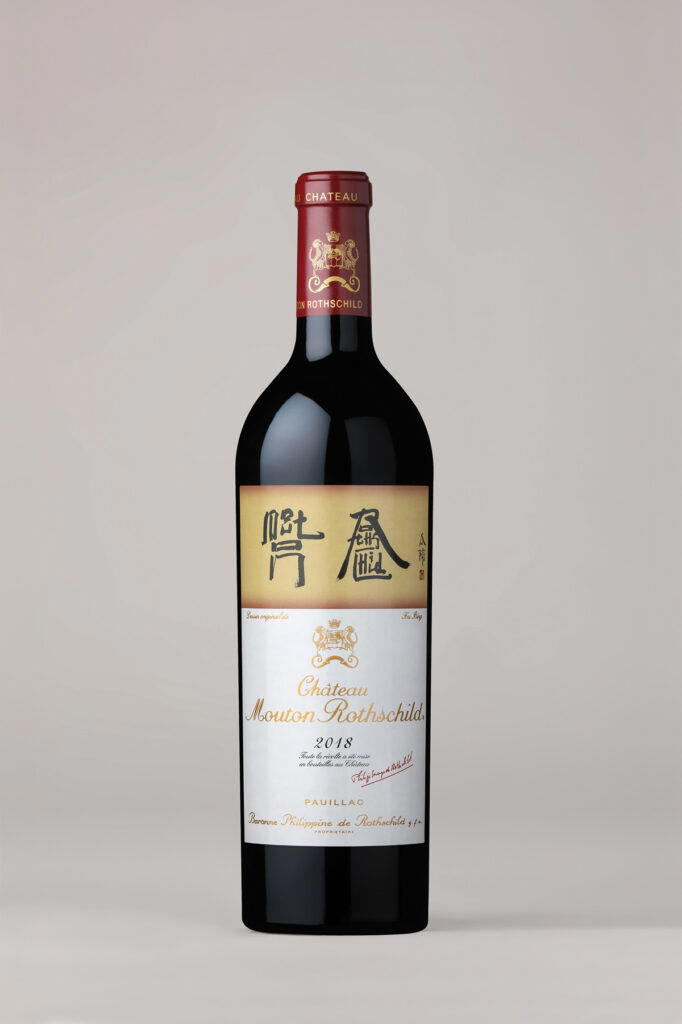
As part of his second initiative, he transformed staid, functional wine labels into distinctive trademarks bearing a combination of his name and signature, and iconic art. The works of Picasso, Dali, Warhol, and Keith Haring can all be found on the labels of Bordeaux first-growth wines, a classification reserved for only the best.
Producing world-class wine and creating wine labels illustrated by contemporary art’s most prestigious figures are equally important at Mouton. Its efforts resulted in a collection that chronicled key artistic advancements.
The young Rothschild was fascinated by making and selling wine even though his father, Henri, had little interest in the estate. At the age of 20, he began running the winery. Considering Mouton wasn’t classified as a first growth until 1973, he thought artistic wine labels would help it distinguish itself from other châteaux.
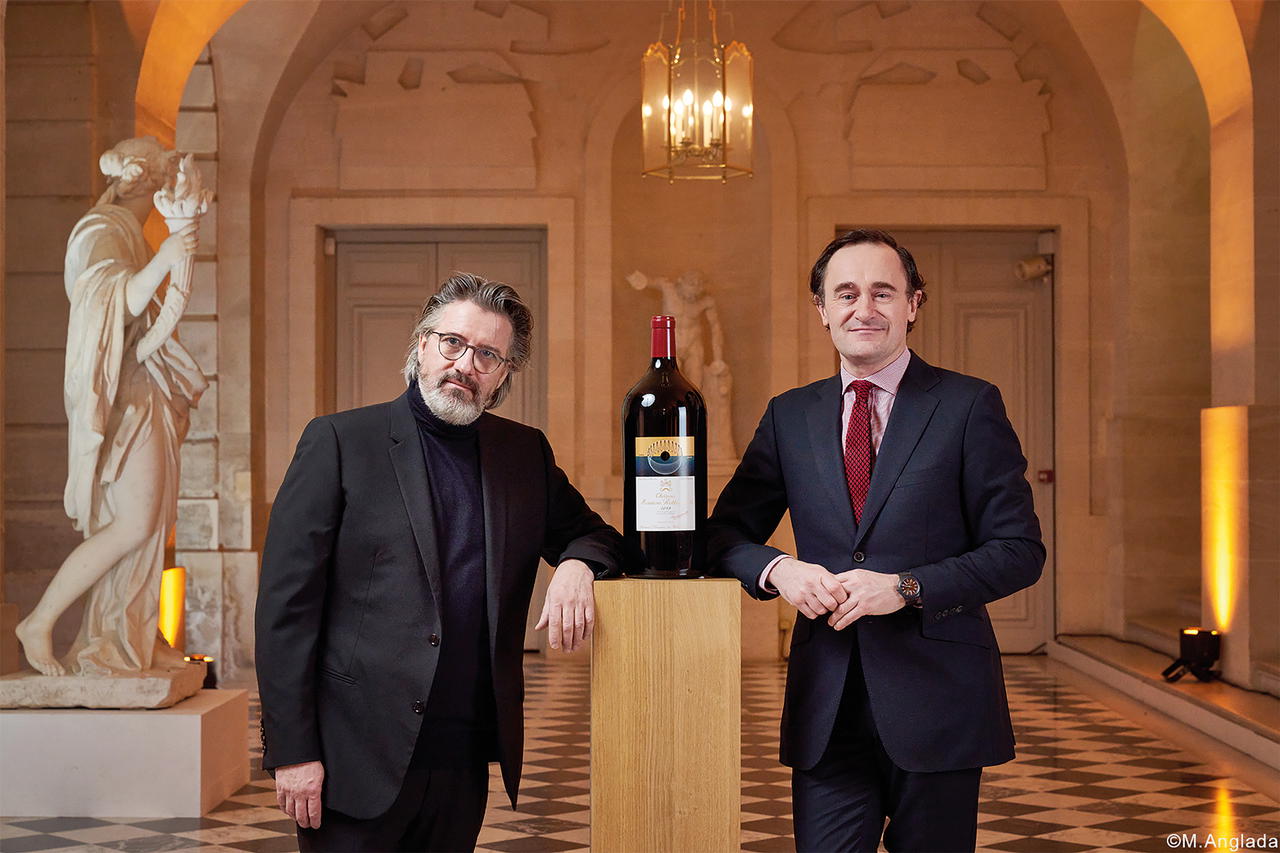
In his own words, sixth-generation family member and co-owner of Château Mouton Rothschild with his siblings Philippe Sereys de Rothschild and Camille Sereys de Rothschild, Julien de Beaumarchais de Rothschild, who produces the label today, explains: “Art was a way to say ‘I am different’ because my grandfather Philippe was the only one doing it. It’s rather recent that a lot of wine brands work with artists, but the label restricts us — we don’t do exhibitions of young artists or sculptures in gardens.”
It was only after his mother’s death in 2014 that Julien had the chance to access Baron Philippe’s archives and discover his grandfather’s experiments in designing and improving wine labels. To mark the new estate’s bottling, Baron Philippe had French graphic designer Jean Carlu, known for introducing Cubism to advertising, produce a distinctive label.
The artist must be like Mouton: an extremely well-known artist who does not need Mouton to promote his or her art. It’s important that we like the artist, what the artist creates and the artist’s career.
Julien De Beaumarchais de Rothschild
The commercial artist created an unconventional, Cubist-inspired composition depicting a ram’s head (the emblem of Mouton or the Baron’s Aries horoscope sign), alongside five arrows striking through a chai, symbolising the five powerful dynasties established by the five sons of Mayer Amschel Rothschild.
Unfortunately, the wine market thought it was too avant-garde and rejected the label. So Château Mouton Rothschild subsequently dropped it.
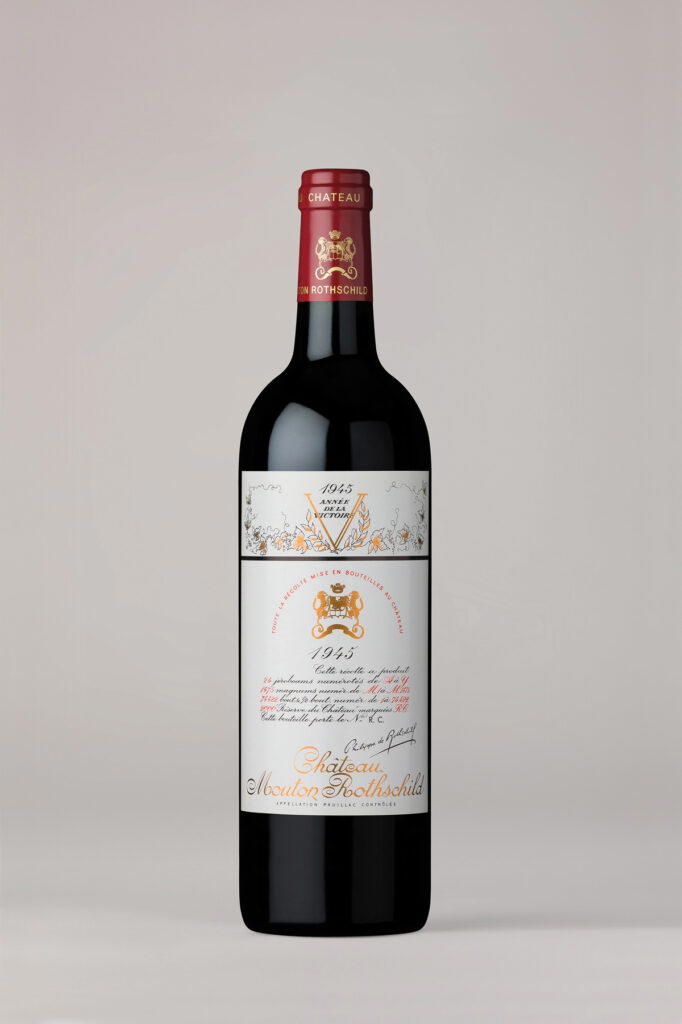
In 1945, Baron Philippe revived the idea to commemorate the end of World War II. Philippe Jullian, a young artist, conceived the V for Victory as a tribute to Winston Churchill. “My grandfather wasn’t an art collector, properly speaking,” Julien states. “He wasn’t someone who collected just for the pleasure of collecting.
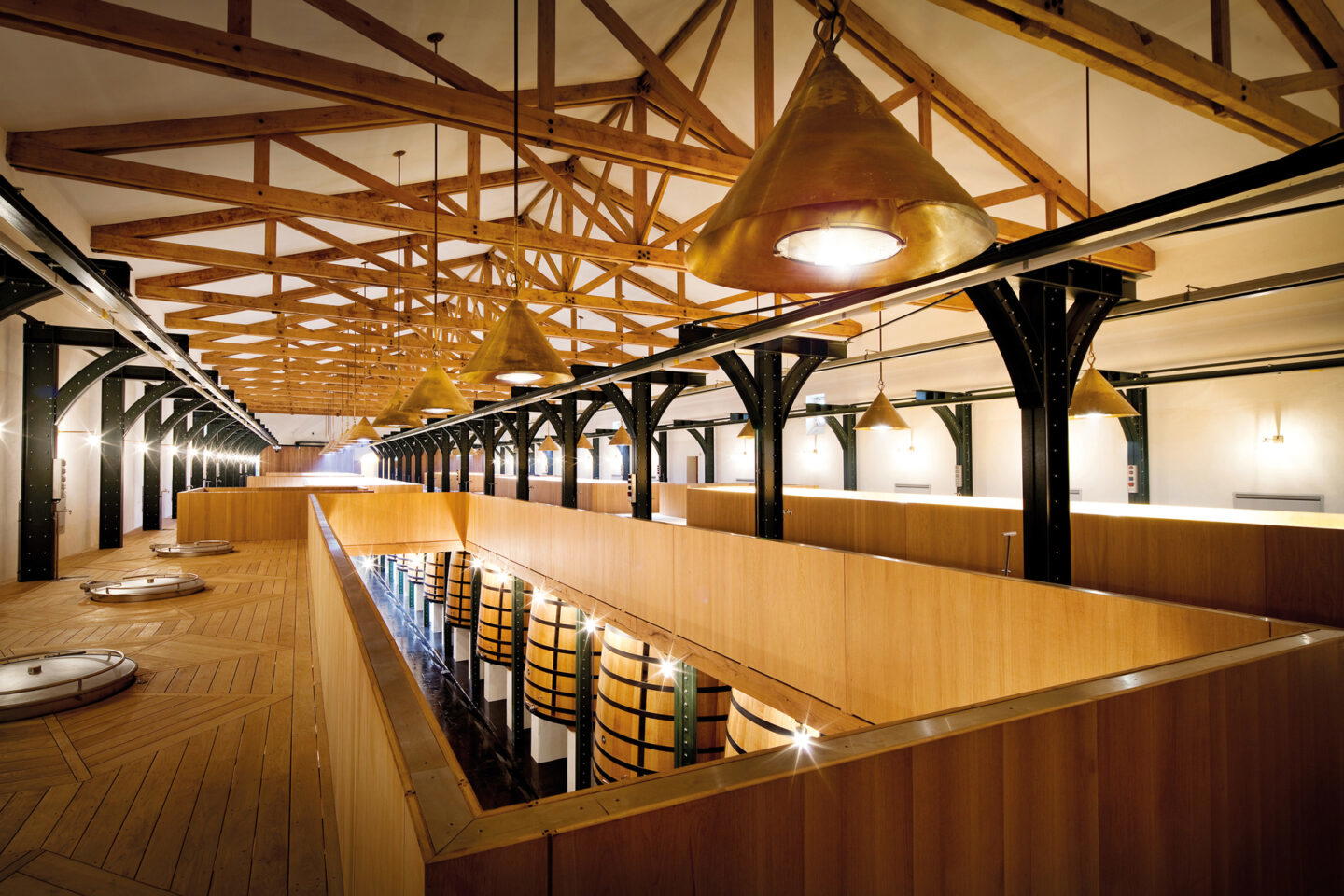
When buying art or asking artists to work with him, it was always to serve the wine. There was a reason behind asking a poster designer to design the 1924 label differently — it was like a flag that stated the new decision to do the entire château bottling at Mouton.” Artists close to the Baron created the early labels.
After Georges Braque contacted the Baron Philippe out of the blue to inquire about the project, everything changed.
On the 1955 label, Braque drew an ink-and-watercolour of a glass of wine beside a bunch of grapes, becoming the first artist of international stature to do so.
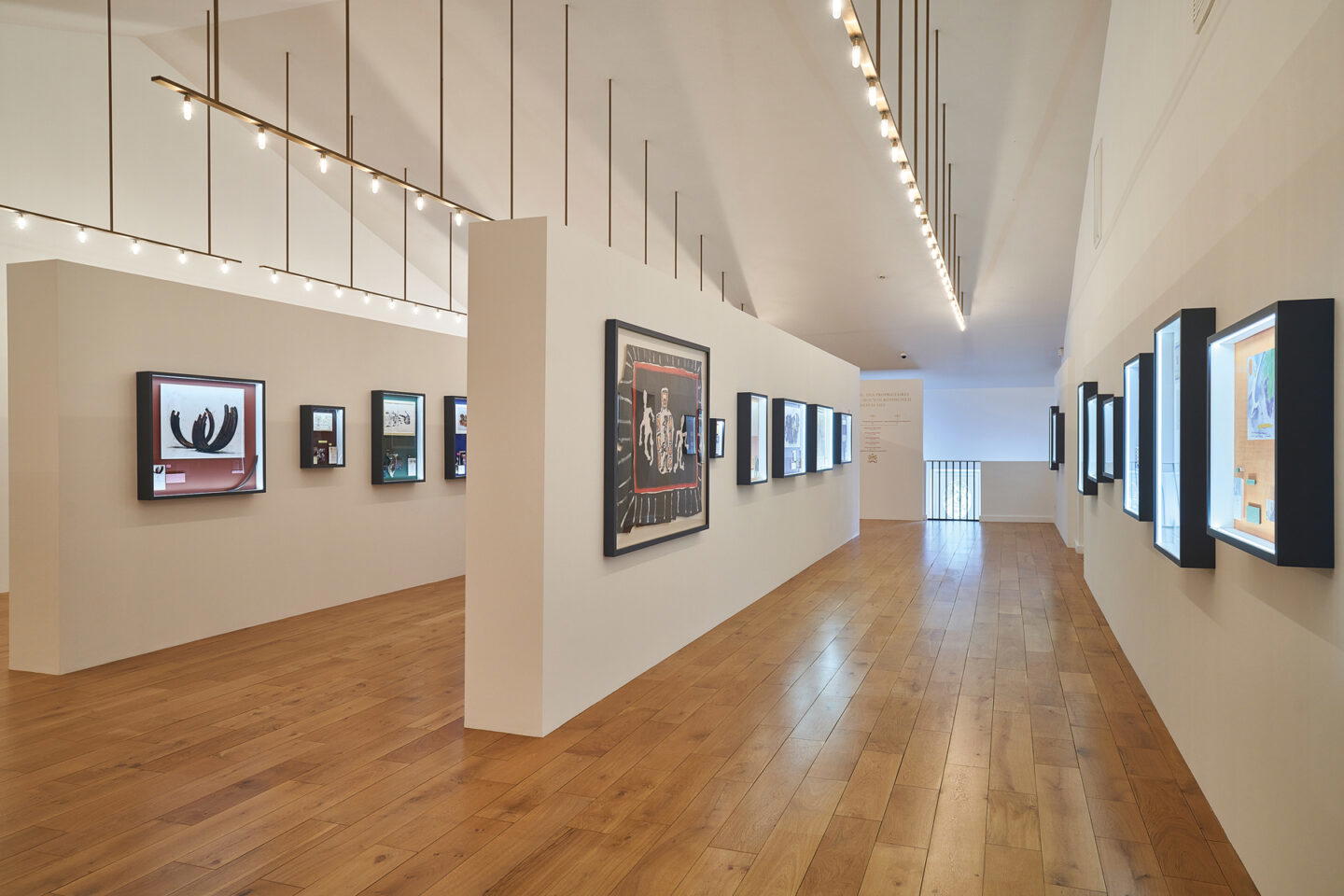
Other artists took notice of that. Following that, famous artists like Arman, César, Joan Miró, Pierre Soulages, Wassily Kandinsky, Hans Hartung and Anish Kapoor appeared on the label. “The artist must be like Mouton: an extremely well-known artist who does not need Mouton to promote his or her art,” explains Julien. “It’s important that we like the artist, what the artist creates and the artist’s career.”
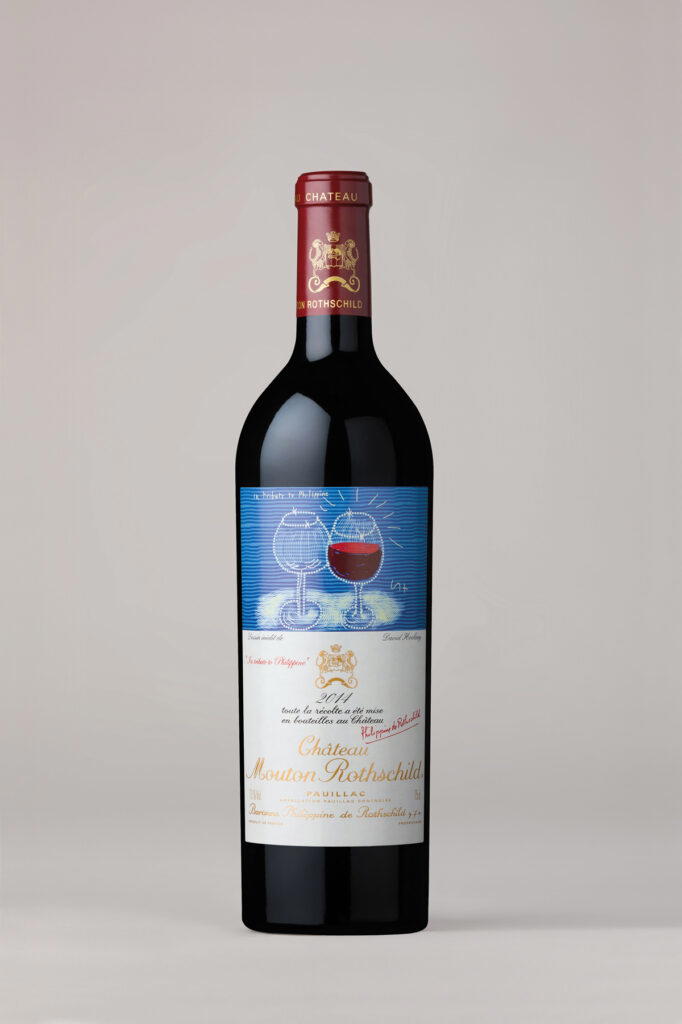
His grandfather’s straightforward manner sometimes upset certain artists like Antoni Tàpies and David Hockney when he declined their artwork. His daughter Philippine, who oversaw the labels following his death in 1988, wooed them back.
The Baroness was so determined that few could say no to her. Irish-born British painter Francis Bacon initially refused to see her, so she knocked on his door until he opened it in London. A few days later, she received his drawing, which was used for the 1990 vintage.
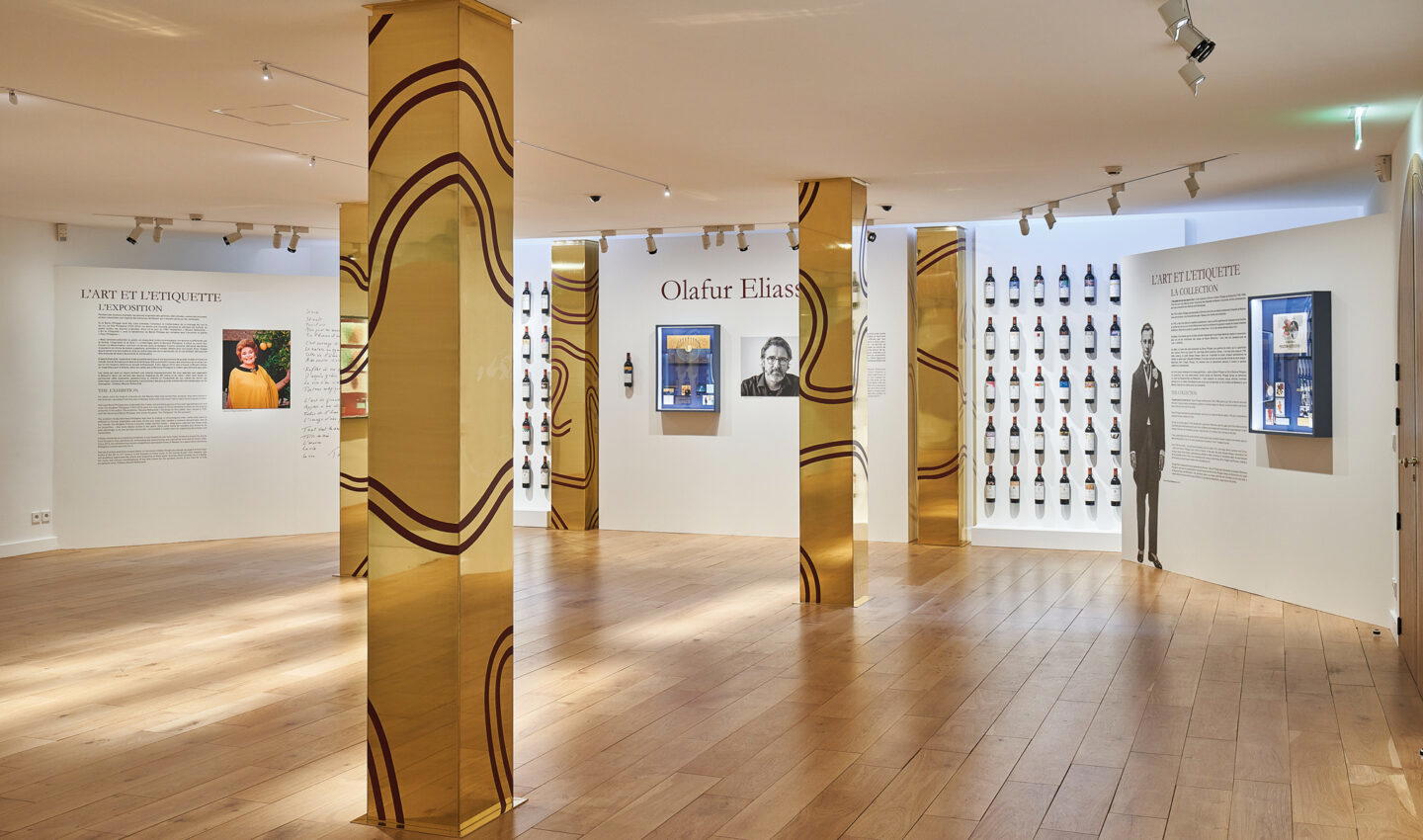
While continuing the tradition her father pioneered, she also ventured further afield by expanding the list of artists beyond Europe and the US to Asia.
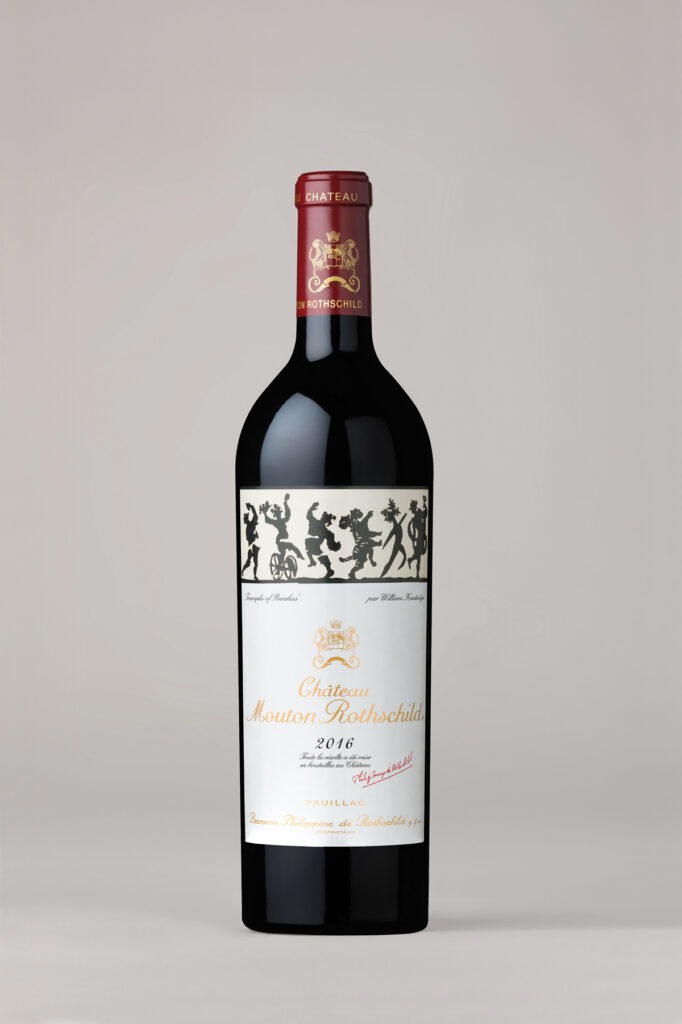
In terms of expression, the artists have carte blanche. Nevertheless, certain themes, such as the vine, the pleasure of drinking, and the ram, are powerful sources of inspiration. The works include Bernar Venet’s arcs evoked by hoops on a barrel or an open chalice, William Kentridge’s silhouettes of dancing Bacchic characters influenced by the work of Titian and Matisse, Georg Baselitz’s upside-down rams, and Jeff Koons’ reinterpretation of The Birth of Venus with a cup and a ship under the shining sun.
When asked, Lee Ufan, also a great wine connoisseur, immediately agreed. His label of a controlled, broad monochrome brushstroke in the colour of Mouton wine was launched in South Korea and Japan.
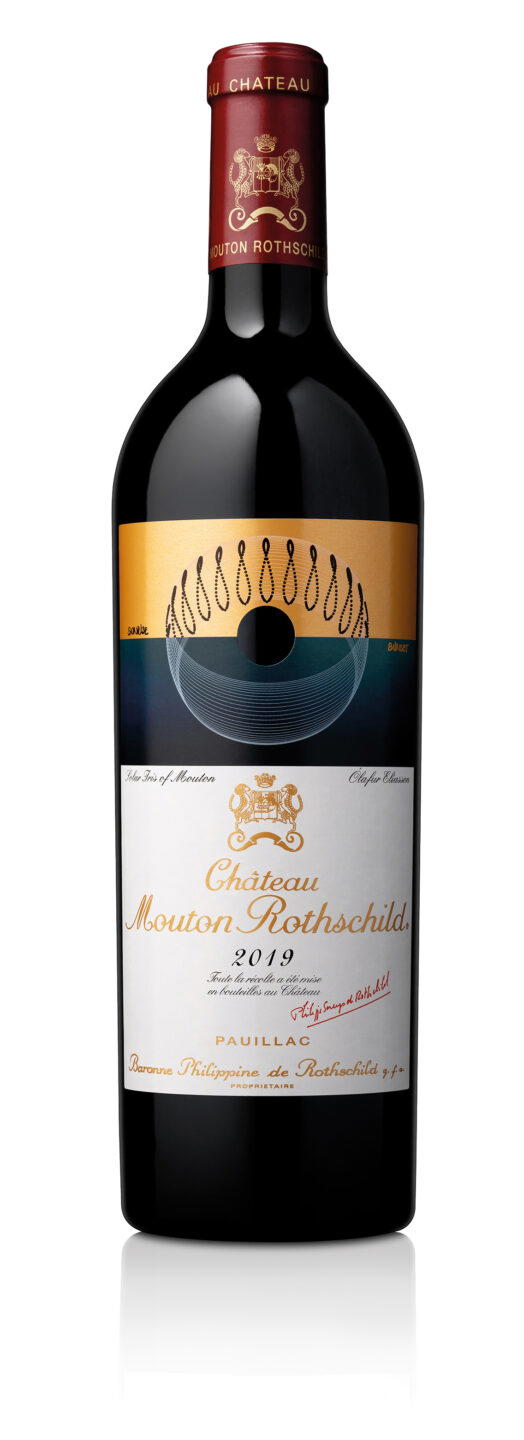
The 2019 label was designed by Olafur Eliasson with an eye-like image depicting the sun, the earth, and the seasons, in which the wine bears witness to the soil, the climate, and the year in which the grapes grew.
Although the next artist’s name is a well-kept family secret, Julien hopes to bring new technology and more variety to the labels, even a video. “The labels live their own lives and are not there to help the wine,” he notes.
“The art is there because it has always been there, and we don’t want to stop it. We continue because it’s a genuine pleasure we hope we can share with others as much as we share a glass of wine.”
Photos: Mathieu Anglada, Saison D; and Alain Benoit, Studio Dee.