A personal account of Chanel’s latest high jewellery launch, where symbolism and place shaped the experience as much as the pieces themselves.
Let me start by saying I don’t have any pictures or videos from the trip to La Pausa, Mademoiselle Gabrielle Chanel’s villa in Roquebrune-Cap-Martin. All I have is a terracotta pot with a ceramic plaque of a lion, and my memories.
In May, Chanel invited me to La Pausa for the international launch of its latest high jewellery collection, Signes & Symboles.
Only 14 editors from around the world attended, and from the beginning, we were told not to document the experience. At first, the restriction felt disconcerting. As journalists, we’re trained to document everything.
Yet as the evening unfolded, I found myself paying closer attention than I normally would—the texture of the stone walls, the scent of the olive trees, the way afternoon light drifted across the rooms. Deprived of a camera, memory became the means of preserving the day. That heightened awareness felt especially important because La Pausa is far more than a picturesque French Riviera backdrop. The French Riviera has long been a haven for artists, writers, and designers who built homes along its coast. Among them was Mademoiselle.
Built in the early 1930s on a secluded five-acre estate in Roquebrune-Cap-Martin, her villa was designed according to her own specifications and reflected her preference for simplicity and privacy.
Unlike the mirrored glamour of her Paris apartment on Rue Cambon, La Pausa was conceived as a retreat: it was one of the few places where she was not performing the role of Chanel the couturière, but simply living as herself.
Chanel’s choice to debut Signes & Symboles there wasn’t accidental.
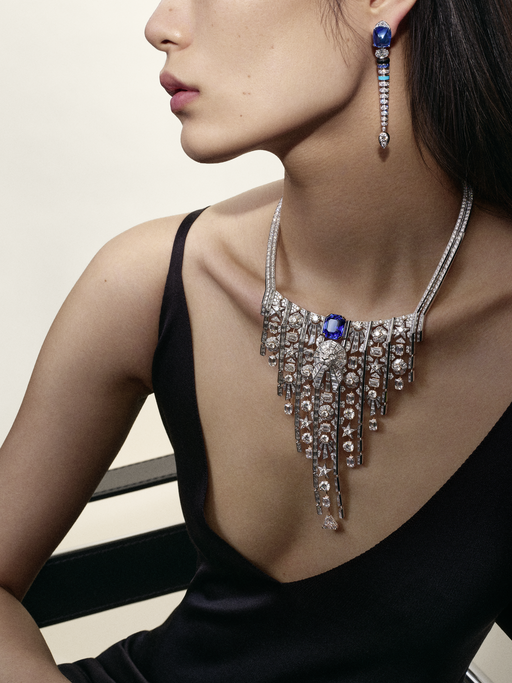
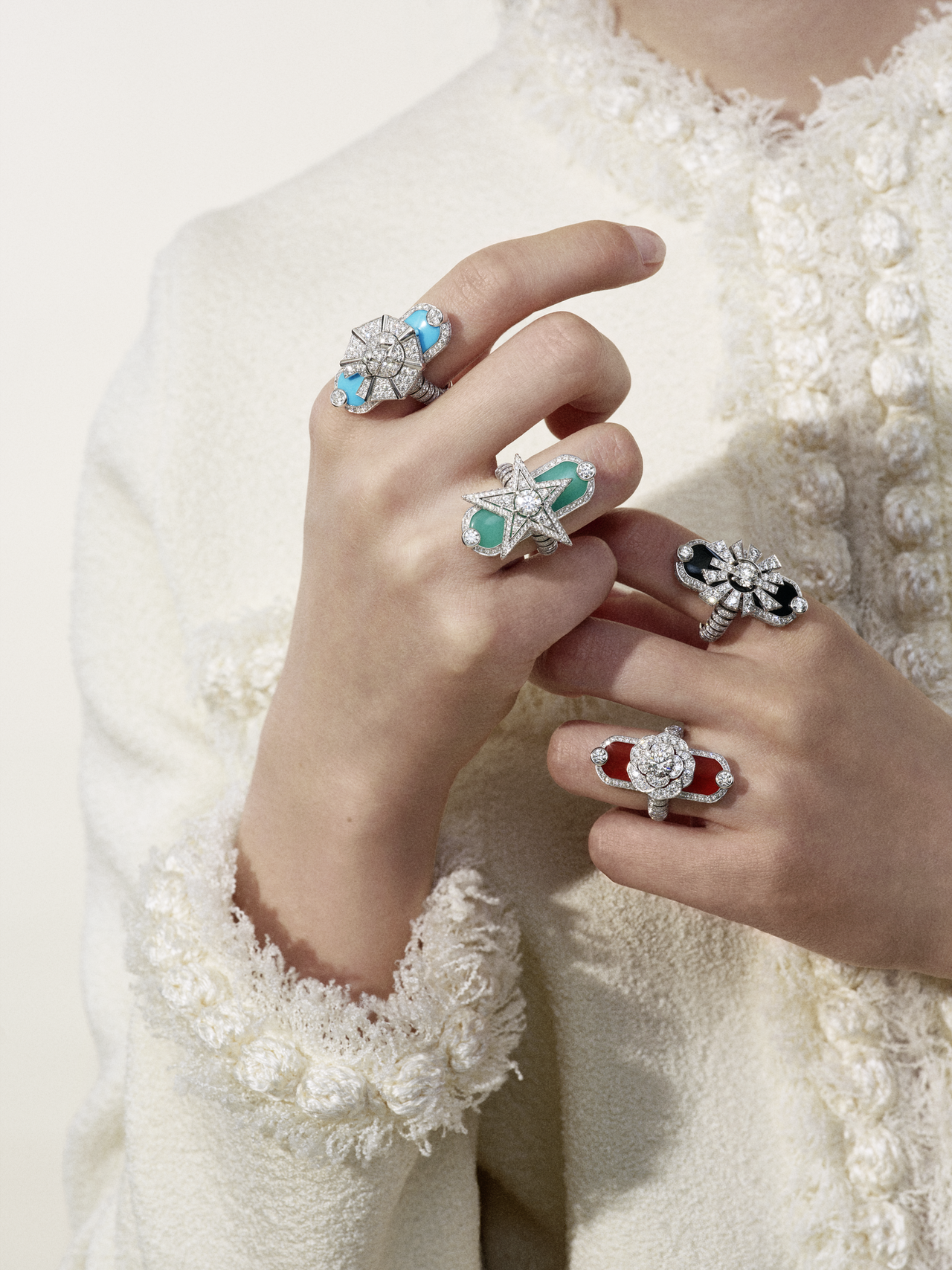
The collection features 85 pieces inspired by the house’s symbols: the lion, the camellia, celestial motifs, and Gabrielle Chanel’s talismanic symbolism. La Pausa was the perfect setting for a collection centred on her defining symbols. By presenting it there, Chanel transformed the launch from a commercial event into a private glimpse into the founder’s world.
That sense of controlled access is built into the arrival itself. We were dropped at the villa’s wrought iron gates, but from the road, La Pausa remained almost entirely out of sight. Set slightly uphill, it was concealed from view even if one paused to look through the entrance.
From there, we were driven up the gravel path in small vintage cars, moving slowly enough to absorb the stillness of the grounds. In that quiet, the only sound was the squawk of a partridge somewhere among the olive trees. The approach felt deliberate—discreet and entirely in keeping with the privacy that defines the house.
Between the driveway and the villa’s heavy wooden entrance door stands an olive tree that predates Mademoiselle’s ownership of La Pausa.
She called it her sentinel and reportedly gave strict instructions that it, along with the other 250 olive trees on the property, was never to be uprooted. It is an early indication that nothing here is incidental.
Beyond the doors, the foyer is striking in its restraint. The walls are whitewashed, and daylight pours in through large windows and doors opening onto the courtyard. It was in this light filled space that we were introduced to the four masterpieces of the Signes and Symboles, each centred on one of the four traditional precious stones.
We then explored the spaces once inhabited by Mademoiselle herself — the library with engraved wood panels, and the living room with plush velvet sofas where she would relax as friends played the grand piano. Going up the stairs—where Mademoiselle was known to pause and greet her guests—you reach her boudoir. Faithfully restored by Peter Marino, it preserves her original wrought-iron bed, purchased at auction, with a golden star still affixed to its headboard. Next door, her ensuite is a bright sanctuary with white marble, floor-length mirrors, and a freestanding porcelain tub that catches the last rays of afternoon light.
The jewellery pieces were displayed throughout, and in these rooms, they felt as if they had always belonged there.
It became easier to understand why Chanel continues to return to Mademoiselle Chanel’s personal mythology. When seen in isolation, these symbols can appear abstract, but within the spaces where she lived, entertained, and retreated, they felt more like fragments of a private language rather than mere brand emblems.
Eventually, we headed to the dining room where a buffet was set up—vegetables, meat, and seafood on the central table, with a separate table dedicated entirely to sweets: lemon tart, meringue, and fresh berries. We served ourselves and carried our plates outside.
The garden at night was cool, with an earthy and vegetal scent emanating from the grounds — the olive trees or the soil itself.
Champagne was poured, and conversations quieted into murmurs, occasionally broken by laughter or the clink of glasses. This quiet was different from the one inside the house—more relaxed, unhurried, with no further rooms left to explore.
Only later, after the plates were cleared and champagne flutes refilled, did the logic of the no-photography rule become clear. Signes & Symboles is inspired by a world that Mademoiselle Chanel created on her own terms — her symbols, superstitions, and sanctuary.
Documenting it would have simplified and diminished its essence. Days later, I realised how much of La Pausa I could still recall: the sound of the partridge in the olive grove, the golden star above Mademoiselle’s bed, the scent of the garden after sunset. I remembered these details not because I had recorded them, but because I had paid attention.
In an age when luxury is so often consumed through screens, Chanel’s most effective gesture was to remove the screen altogether. The lasting impression of La Pausa was a reminder that some experiences become more meaningful when they are observed rather than captured; that what we remember often reveals more about a place than what we photograph.