Chanel
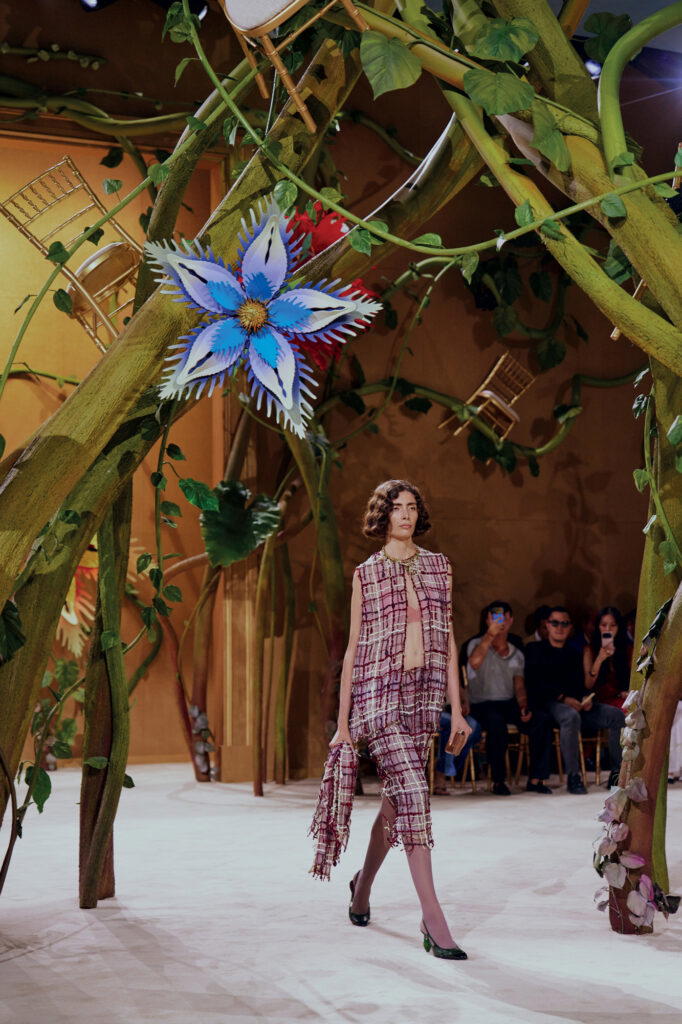
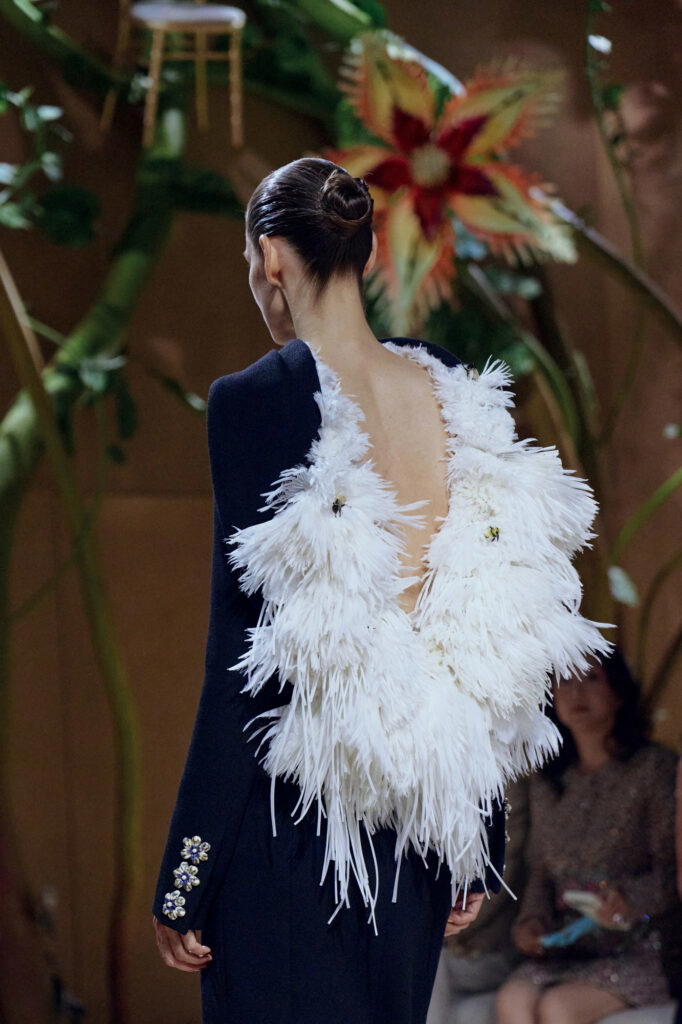
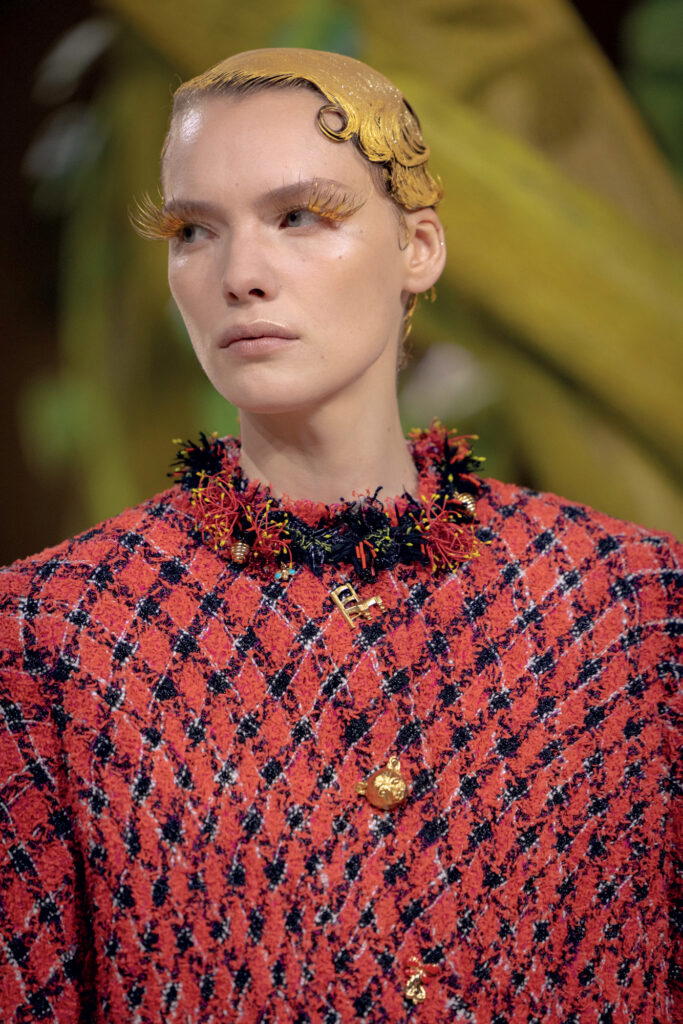
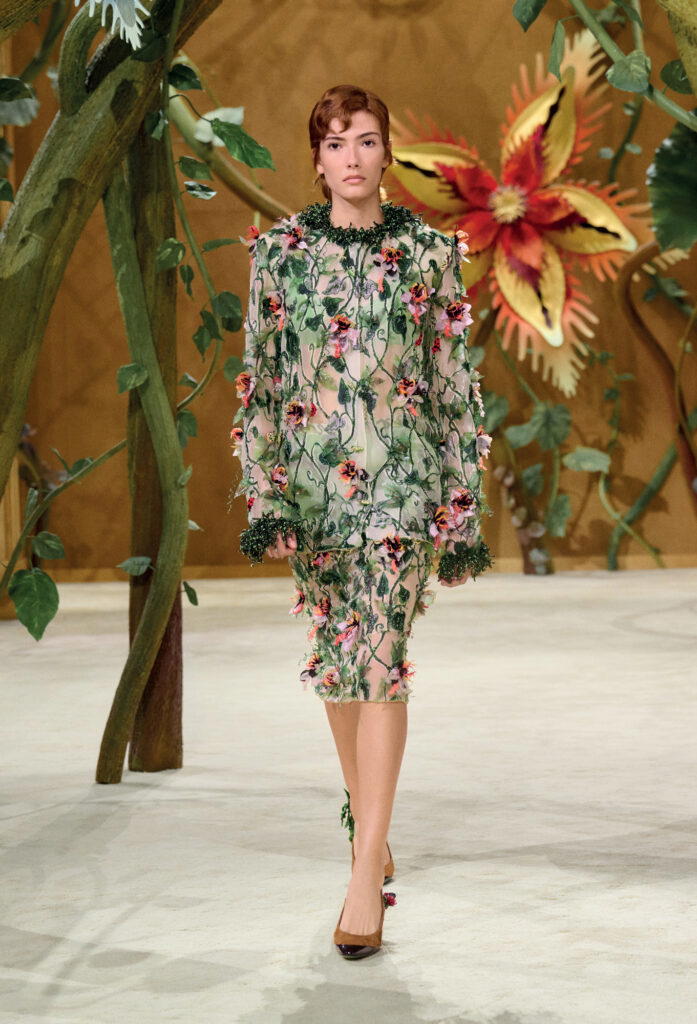
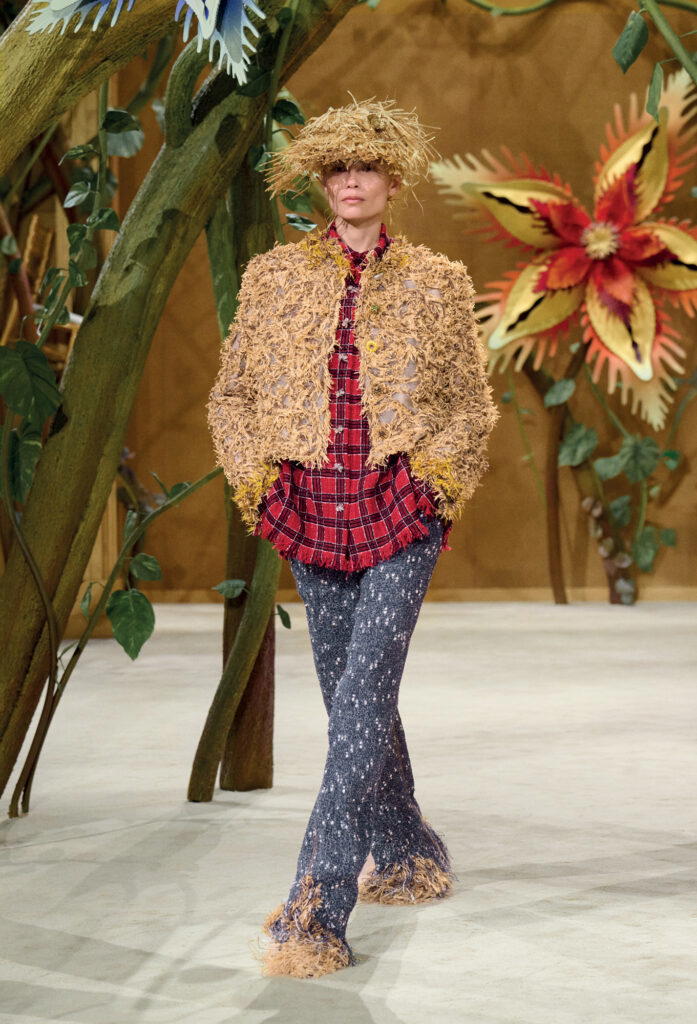
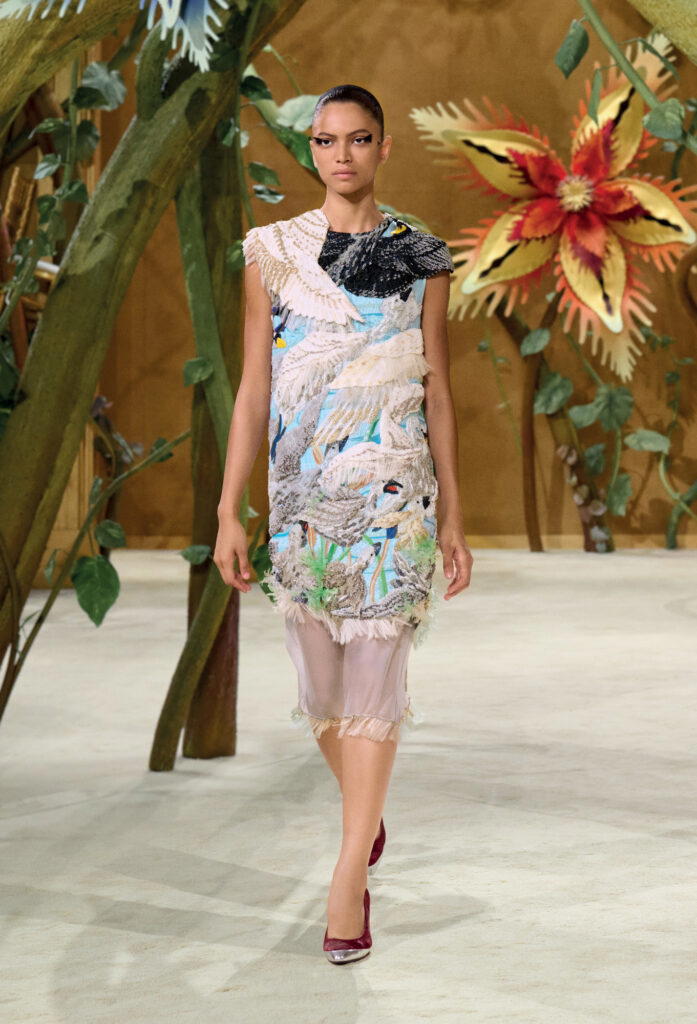
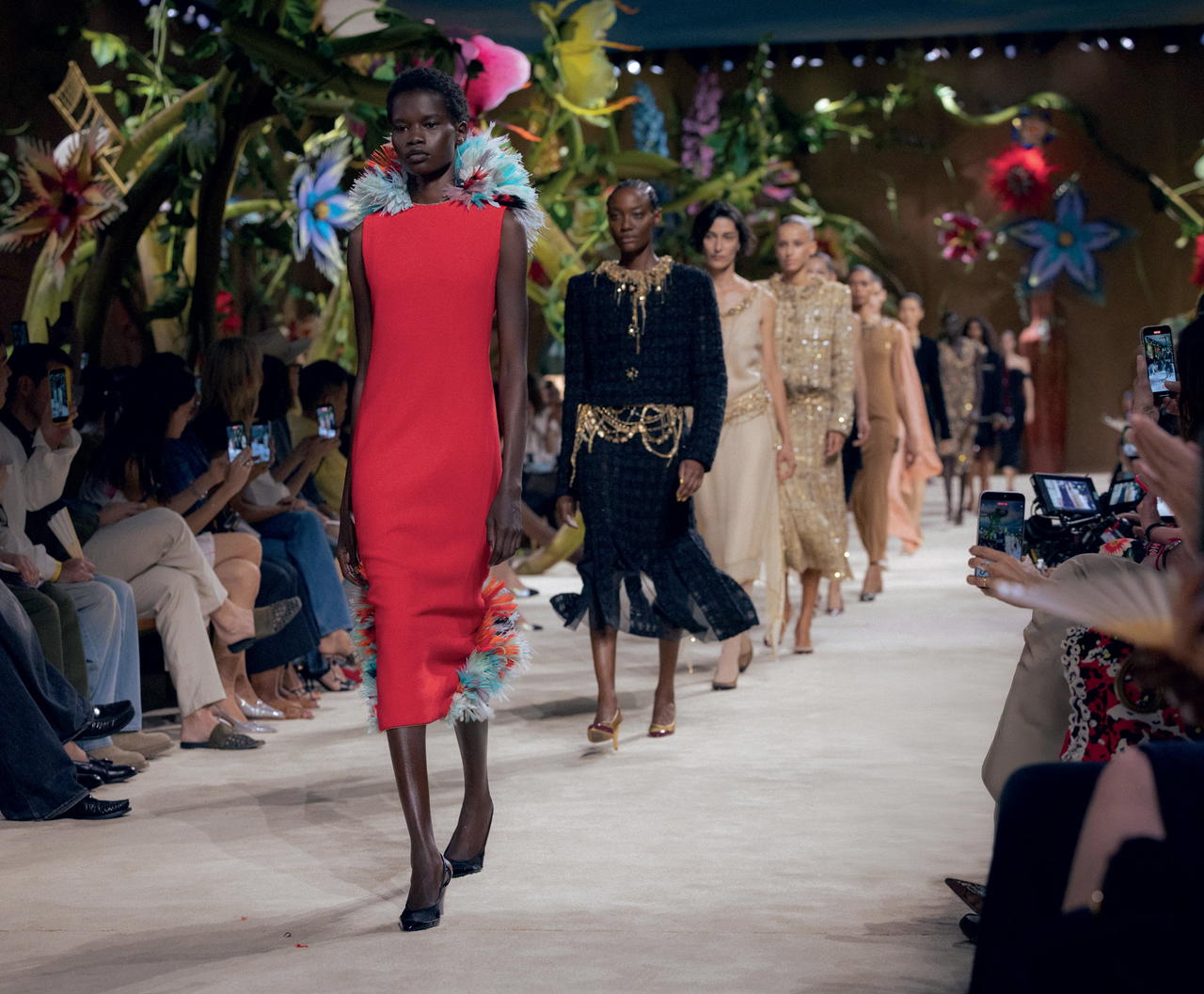
Among the things that make Matthieu Blazy’s Chanel stand out is how he transforms simple, almost childlike wonder into sophisticated clothes. His collection was inspired by fairy-tales, with winding vines and oversized blooms covering the set that drew on Jack and the Beanstalk.
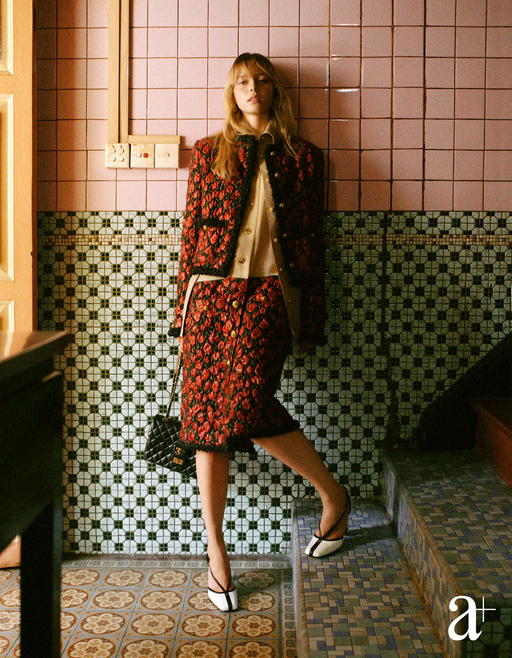
The fantasy was balanced, however, by a dose of real clothes. The opening look—a sleeveless tweed-like suit stitched with yarns and trims into a grid on sheer fabric—had tiny pea pods within its construction. Worn over couture underpinnings, it felt like a 2026 take on Gabrielle Chanel’s iconic suit that suggested modern elegance and female empowerment.
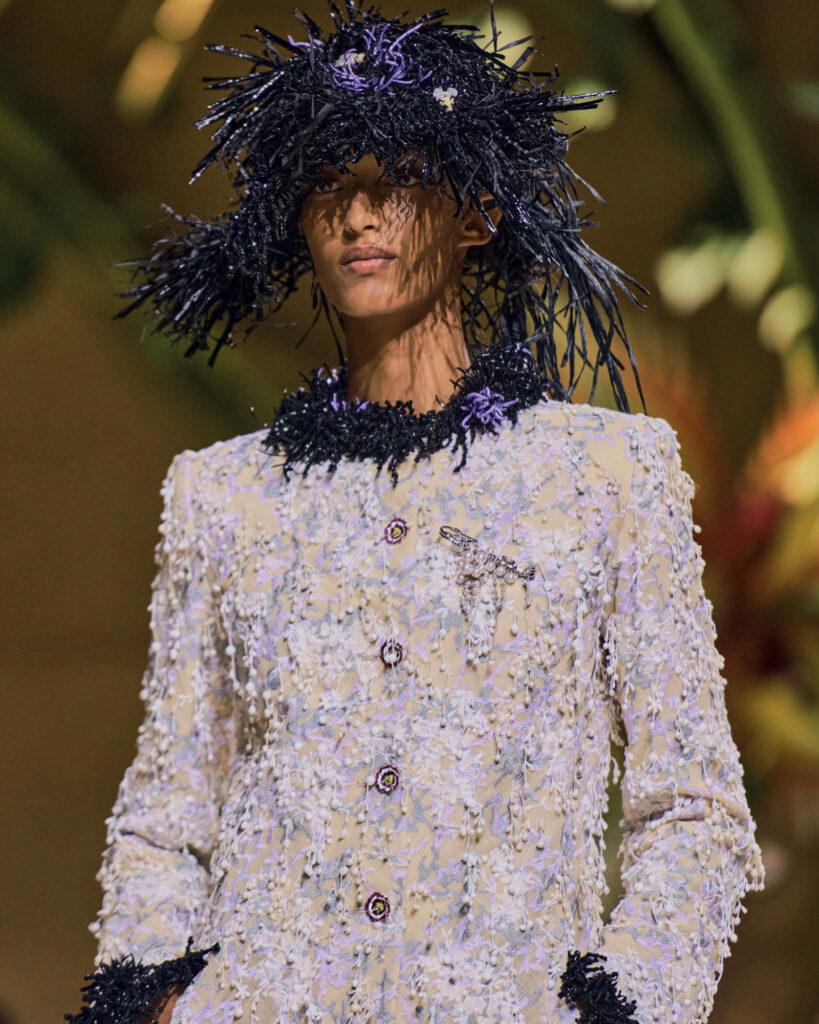
Botanical motifs continued throughout the collection, embroidered and embellished by Chanel’s various Metiers d’Art. An unexpected scarecrow look, with tousled straw hat, straw jacket, gingham shirt and jeans, was elevated by extraordinary craftsmanship without losing its ease.
Halfway through, a bride appeared in a vintage-style ankle-length lace dress. Its lightness and unconventional length felt particularly fresh. Peppered between the fantasy were black
shifts and tailoring—a reminder that couture need not be reserved for the red carpet.
From the office to the supermarket to the school run, Blazy’s collection made a convincing case for clothes that can follow a woman through all the less glamorous moments of life as well.
Dior
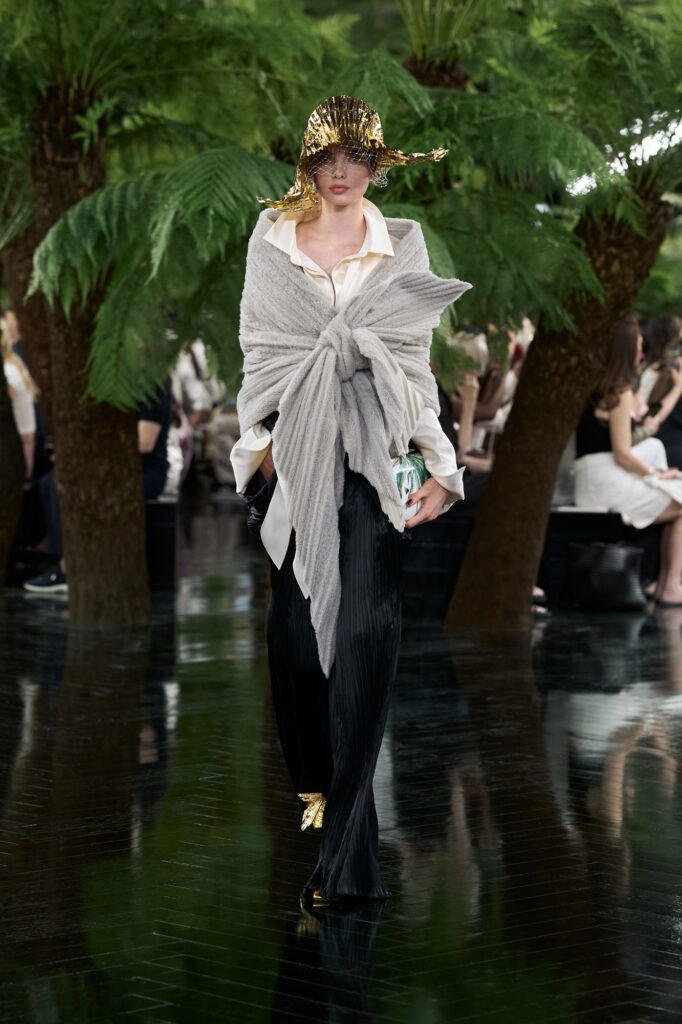
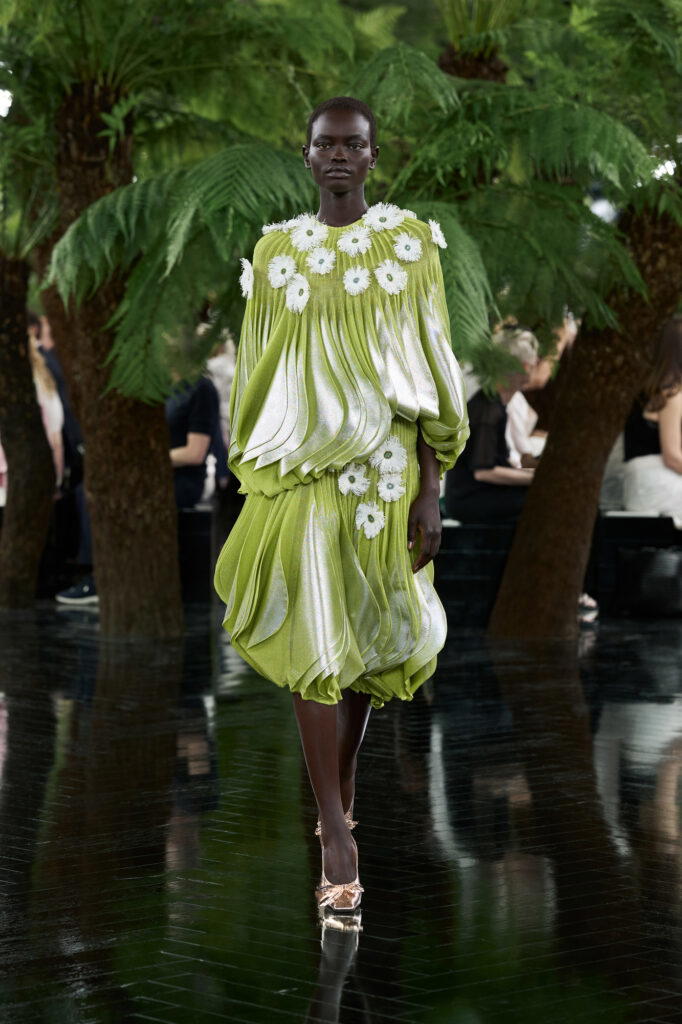
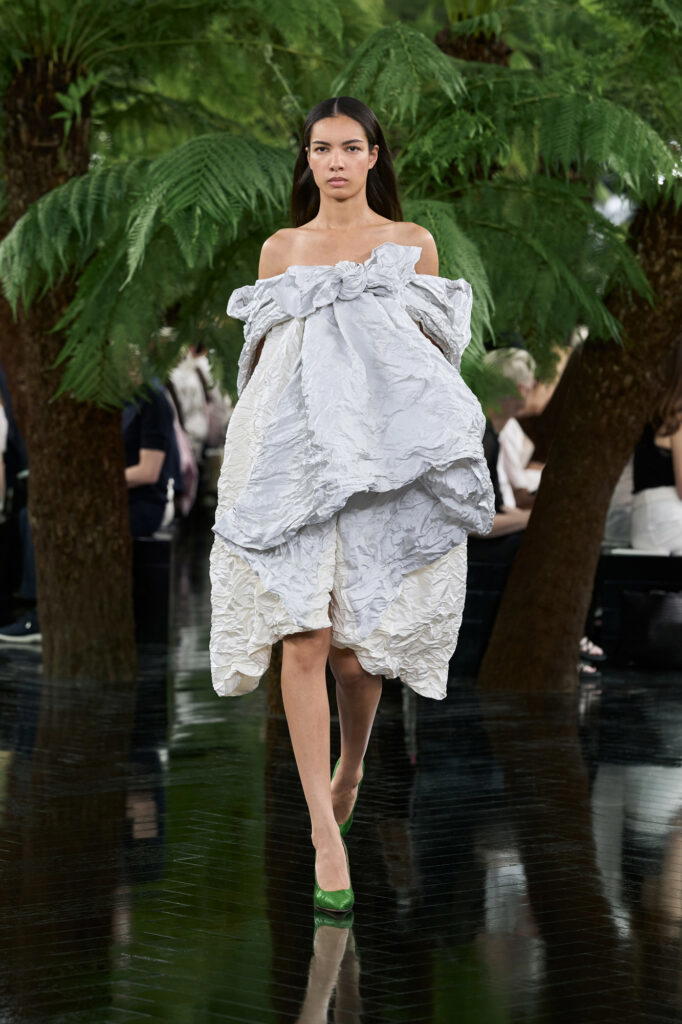
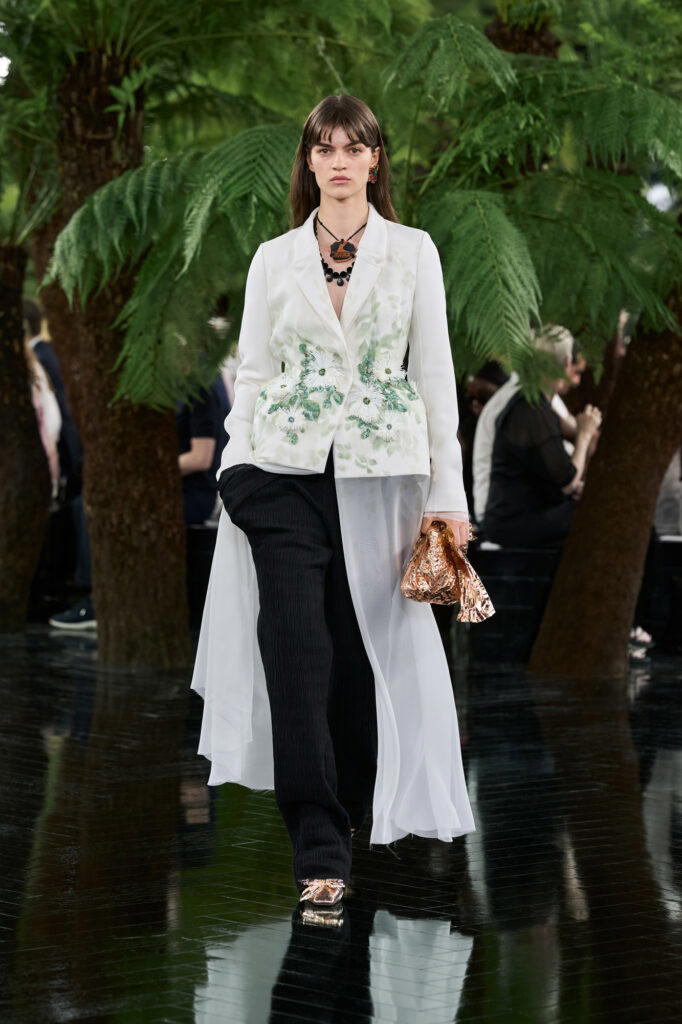
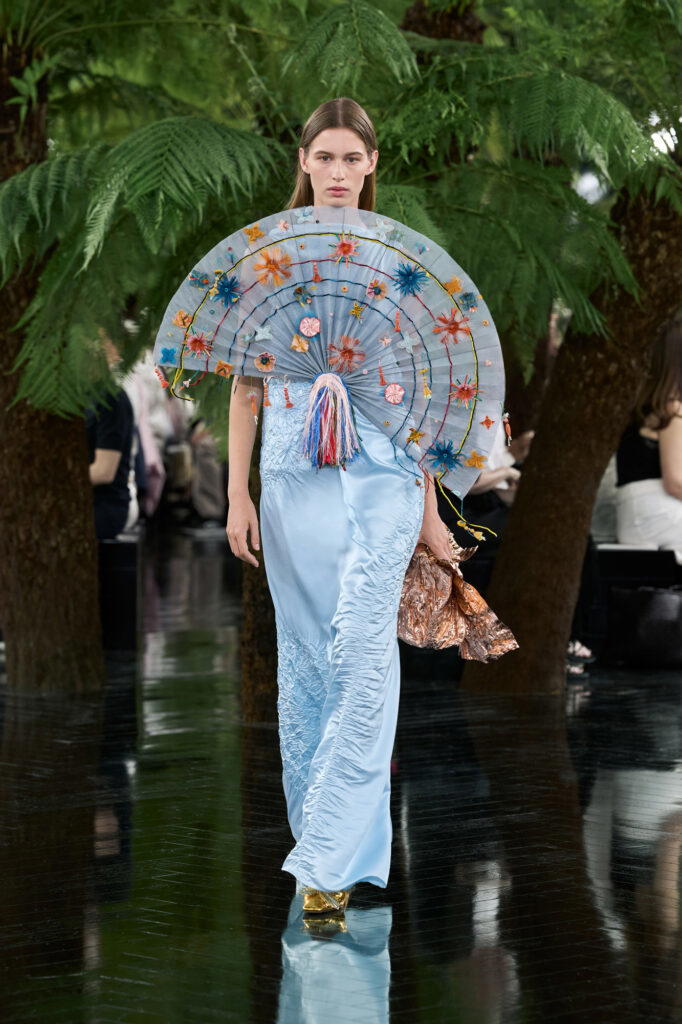
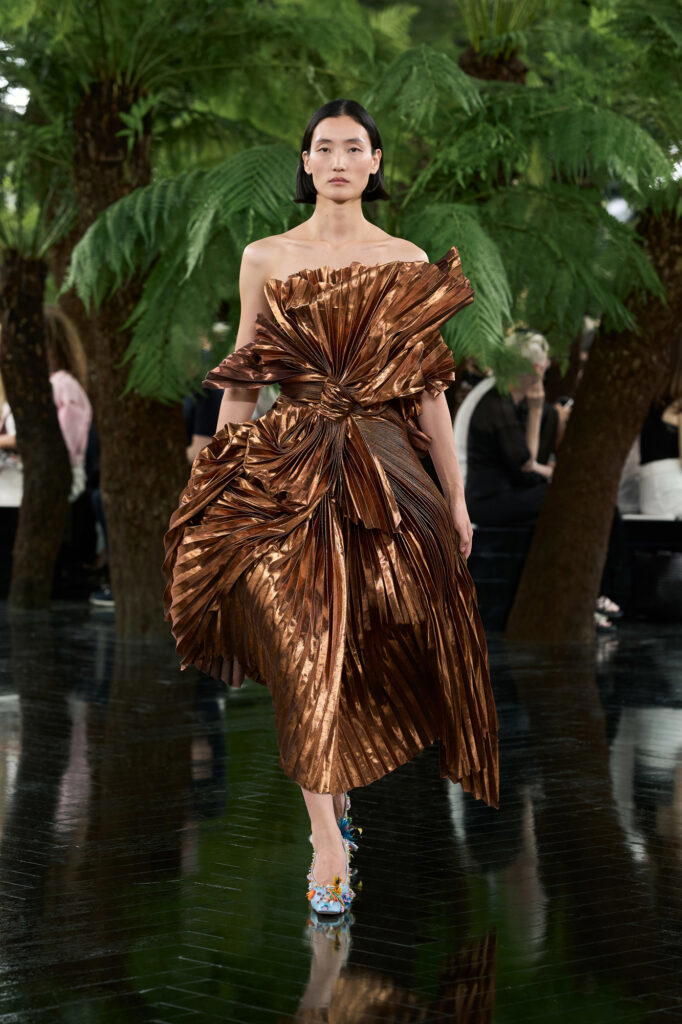
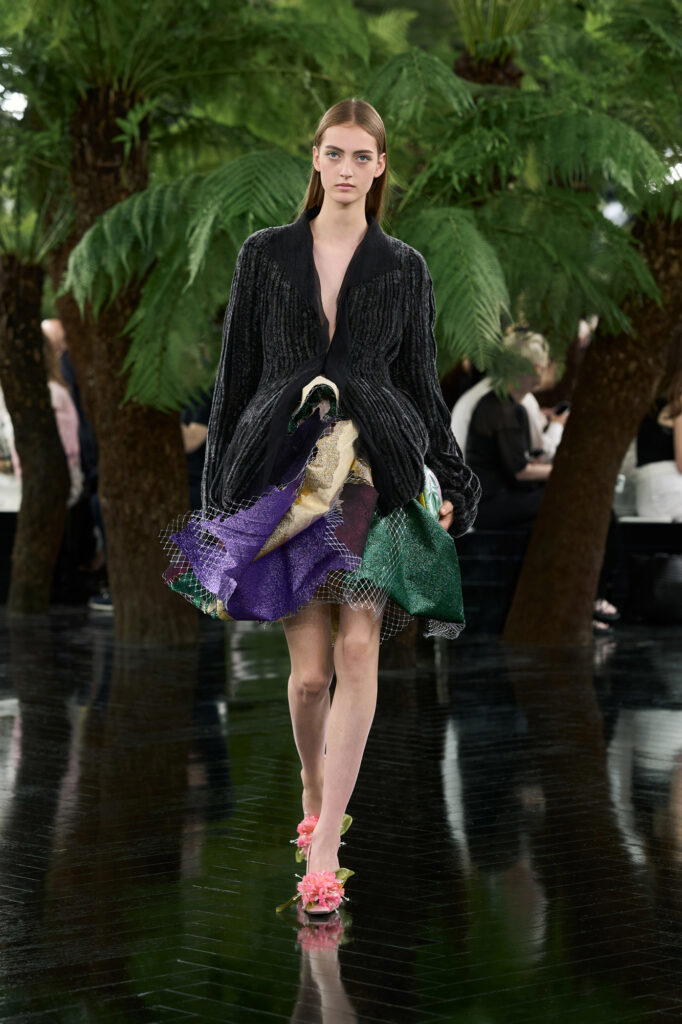
Jonathan Anderson turned to American sculptor Lynda Benglis for his second couture collection, transforming her love of texture into wearable art. The organic pleats from her metal sculptures were translated into abstract dresses that swayed alluringly on the wearer, while iridescent and paper-like surfaces mimicked her tactile work.
Dior’s ateliers even reimagined the Peacock Series, a fan-shaped sculpture originally made from wire mesh, enamel, glass, and plastic, using couture techniques and materials. In one instance, a skirt that seemed to be made from chicken wire was actually metallicised netting.
With the exception of two looks featuring fans inspired by Benglis’ ‘Zanzidae’, Anderson’s surrealist streak appeared to have mellowed, but in a great way. The vibrant colours reflected Benglis’ time at the Sarabhai family estate in Ahmedabad, India.
In his designs, Anderson also channelled India through 18th-century chintz and indiennes—finely woven cottons hand-painted or block-printed in India that made their way to Europe and influenced decorative arts for generations. Antique fragments from a specialist dealer were also incorporated into the collection and visible on Petit Diner and mini Lady Dior bags.
As Anderson is interested in the same transformation of flat materials into something dimensional and characteristic of both Benglis’ sulpture and the couture process, this connection felt particularly appropriate.
Balenciaga
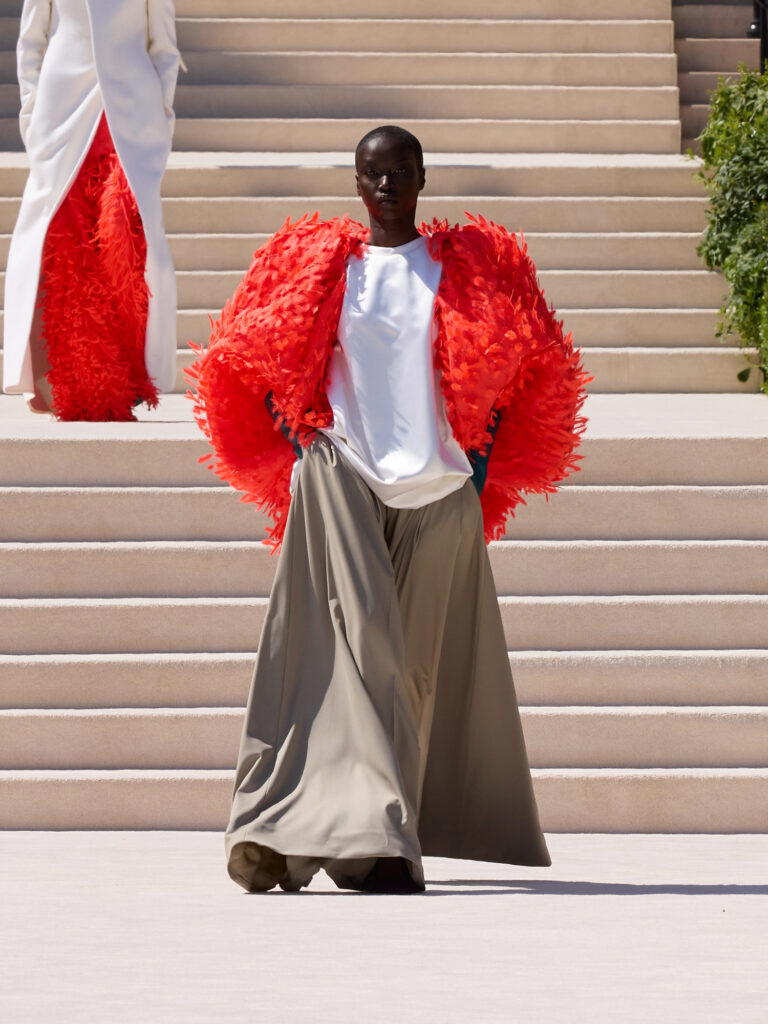
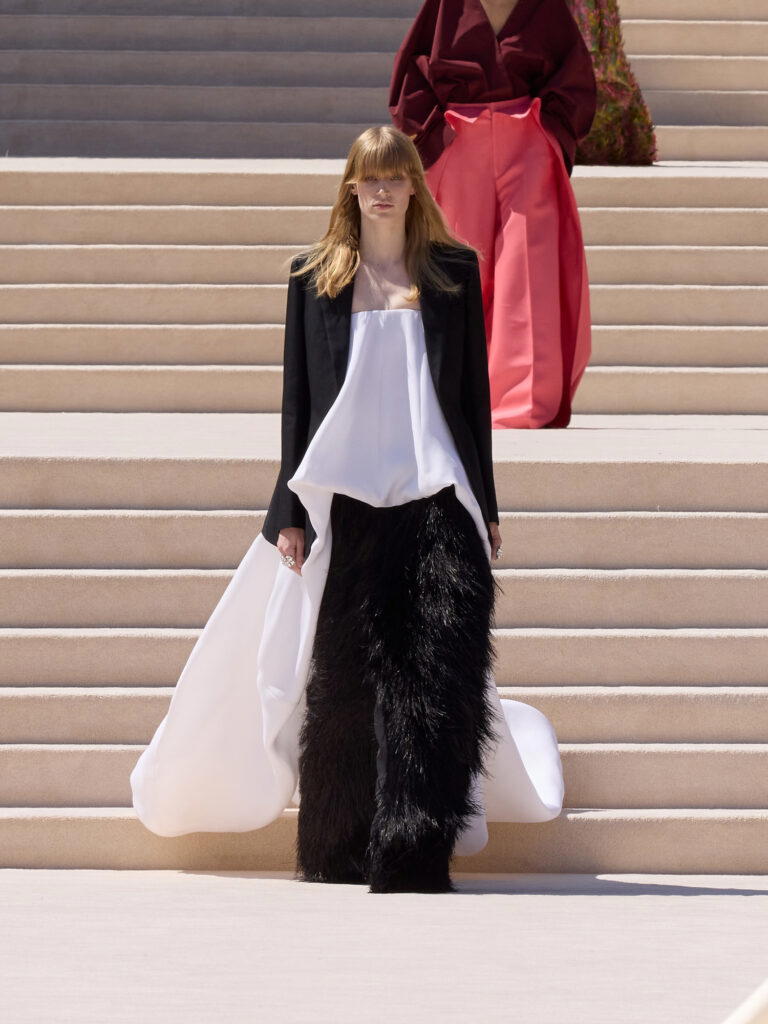
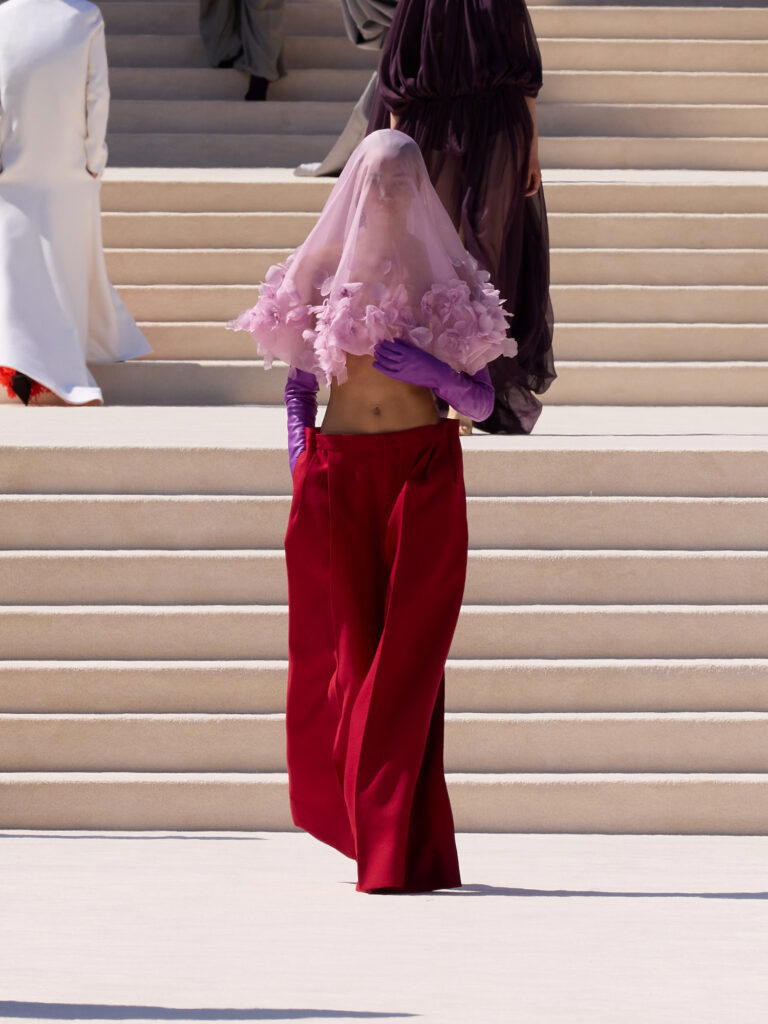
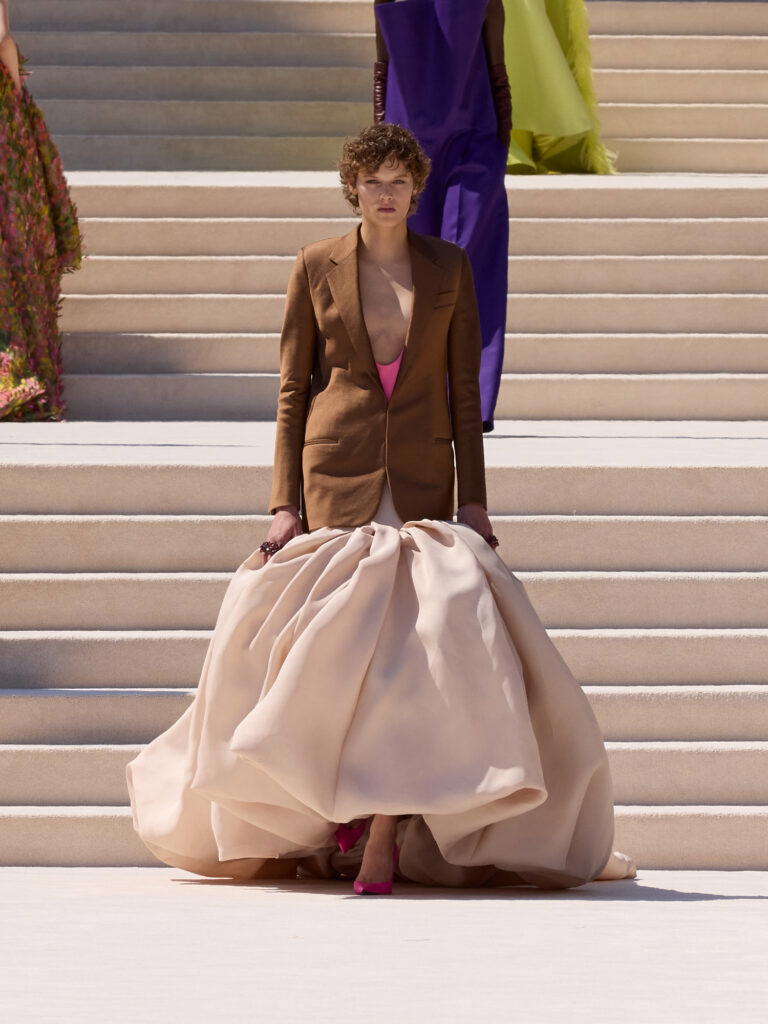
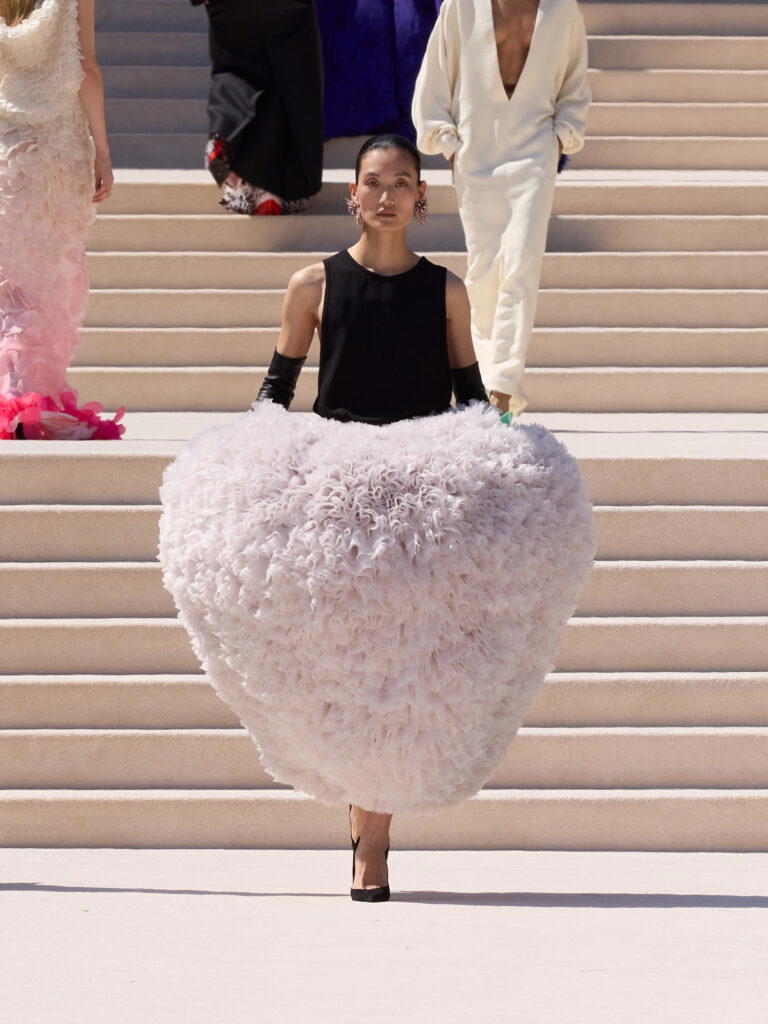
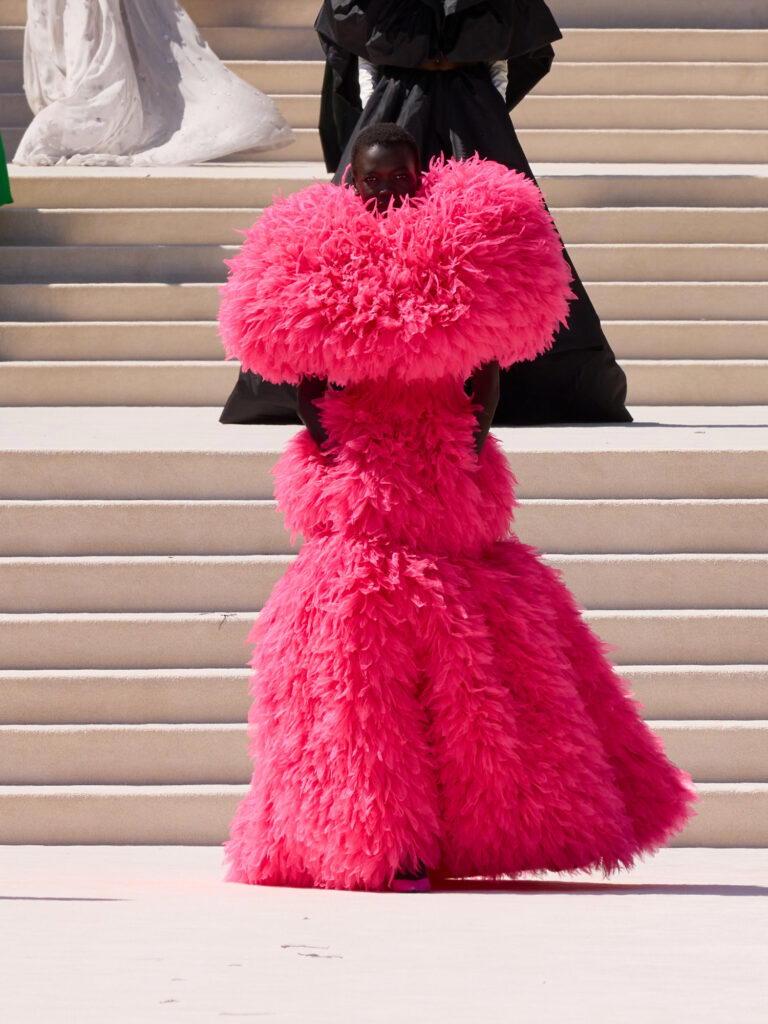
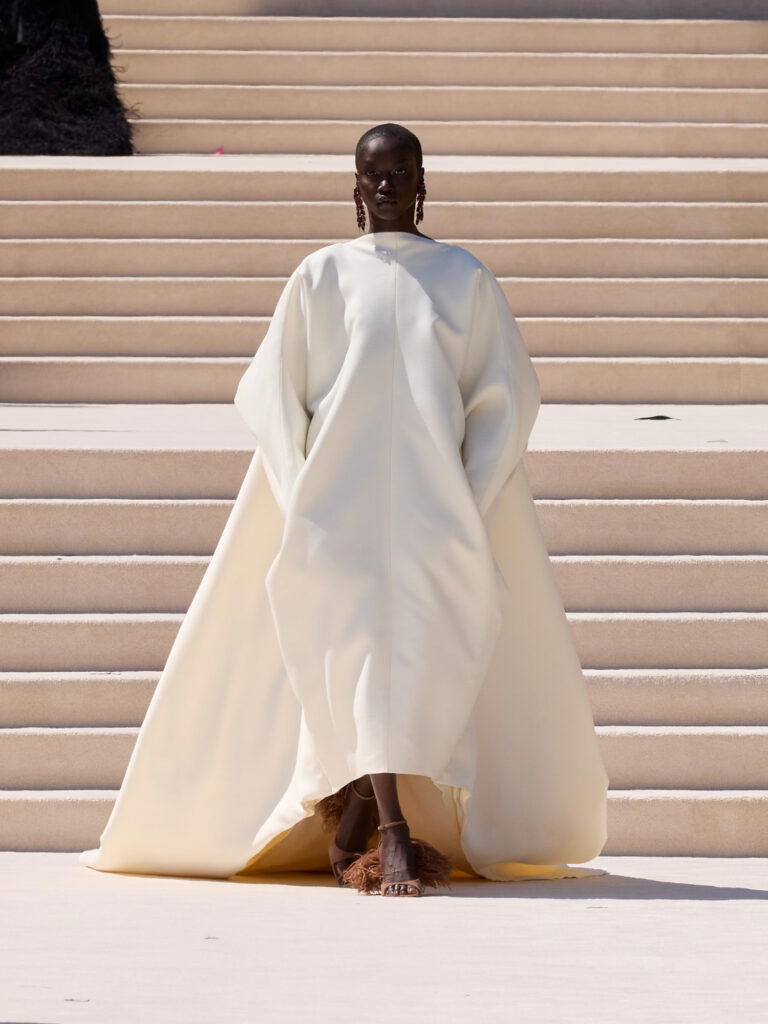
Pierpaolo Piccioli’s first couture collection for Balenciaga met all the expectations: fantastic form, references to founder Cristobal Balenciaga’s designs, and exquisite savoir-faire. Yet, somehow, it fell short.
The ingredients were all there. His sharp colour sense came through in eye-searing crimson opening the show in a voluminous cape-shrug over oversized trousers, and an emerald-green bustier dress moulded to the body like sculpture. In addition, he used pop pink to convey the founder’s signature puffball silhouettes.
However, some creations didn’t feel particularly modern. Piccioli knows how to flatter the body, whether through slouchy or hourglass shapes, and his clothes are flawlessly cut. Even so, several highly constructed looks felt clunky, especially as women gravitate towards something more relaxed and louche.
The strongest looks were those that embraced airiness and soft volume, recalling Balenciaga’s work in the 1950s and 1960s. The focus was less on stiff, structured construction and more on fabrics and cuts, including the new Neo-Gazar, a modern take on the founder’s legendary stiff-yet-lightweight fabric, and AMSilk, a bioengineered silk alternative inspired by spider silk.
In the end, it was the space between the clothes— the volume, movement, and lightness—and the body that felt most modern.
Fendi
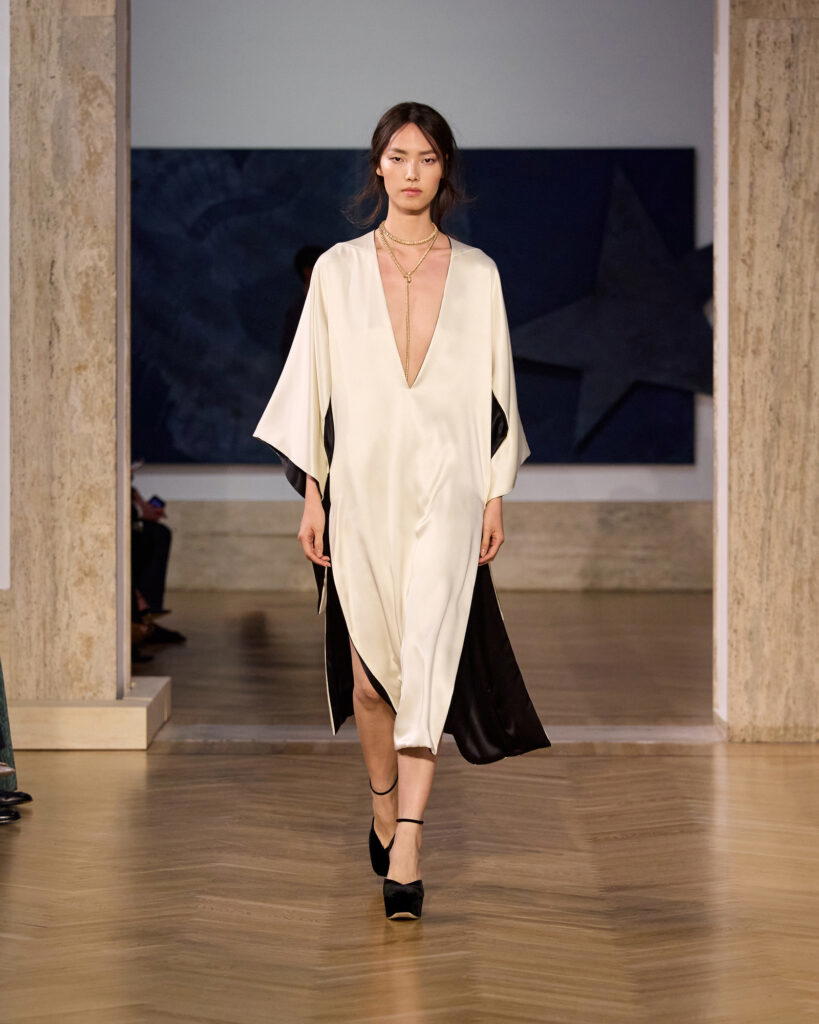
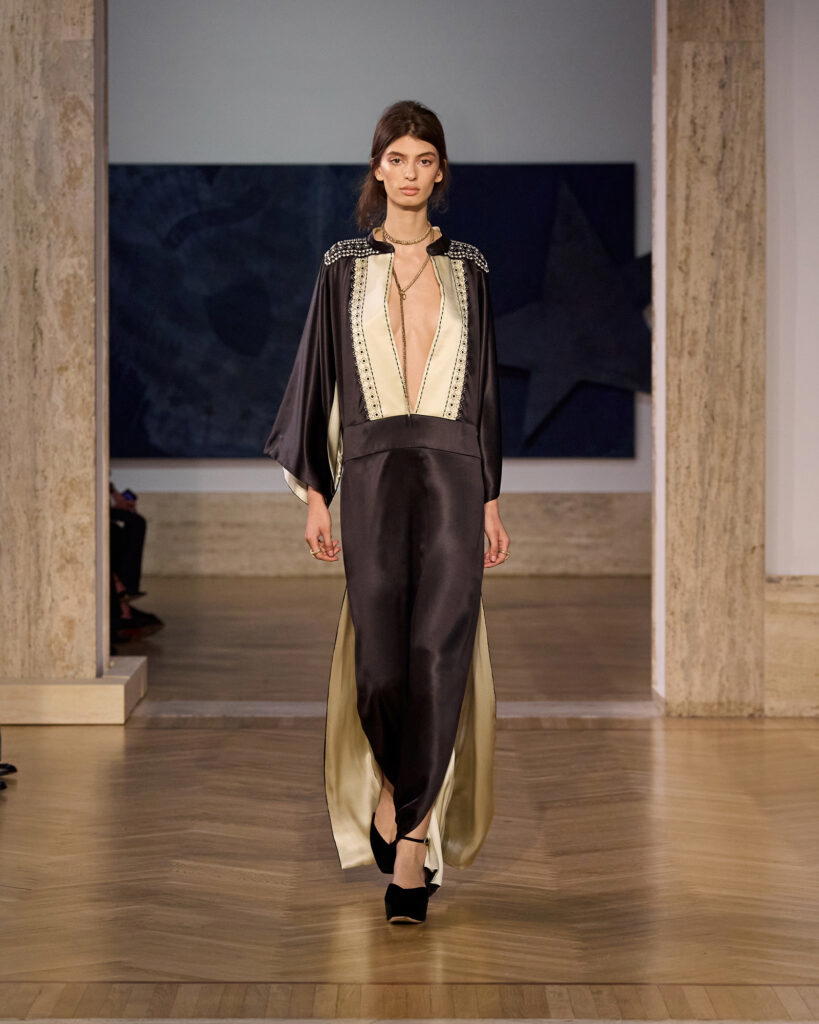
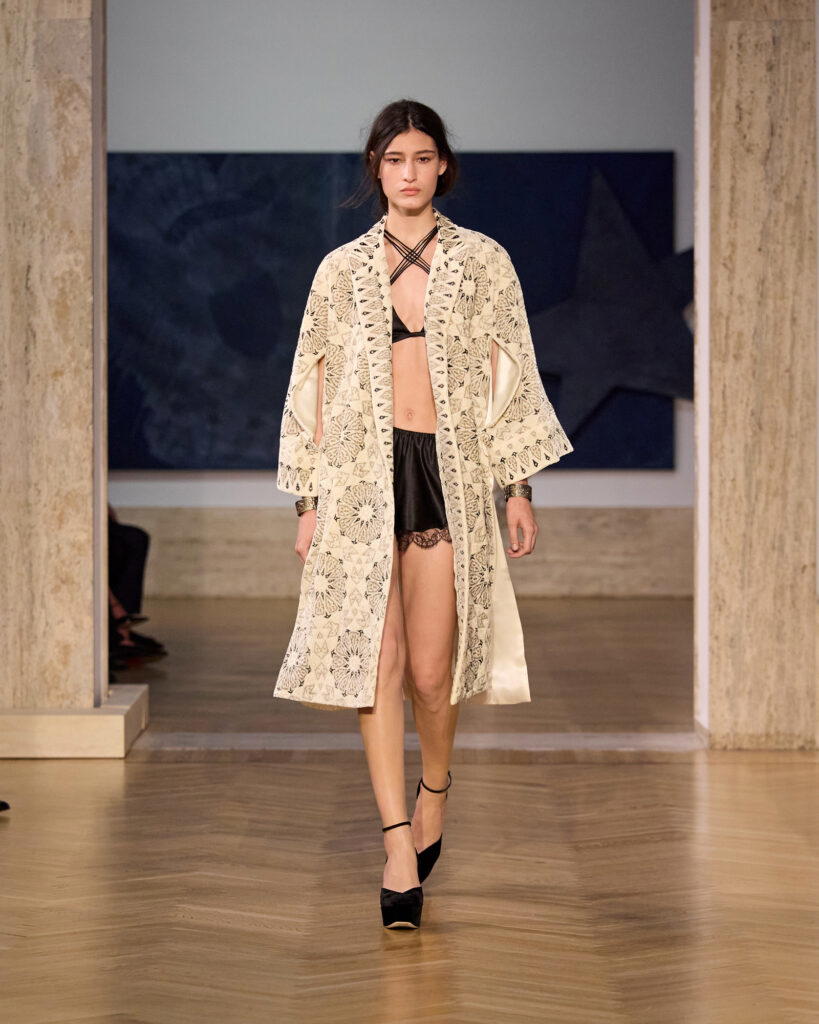
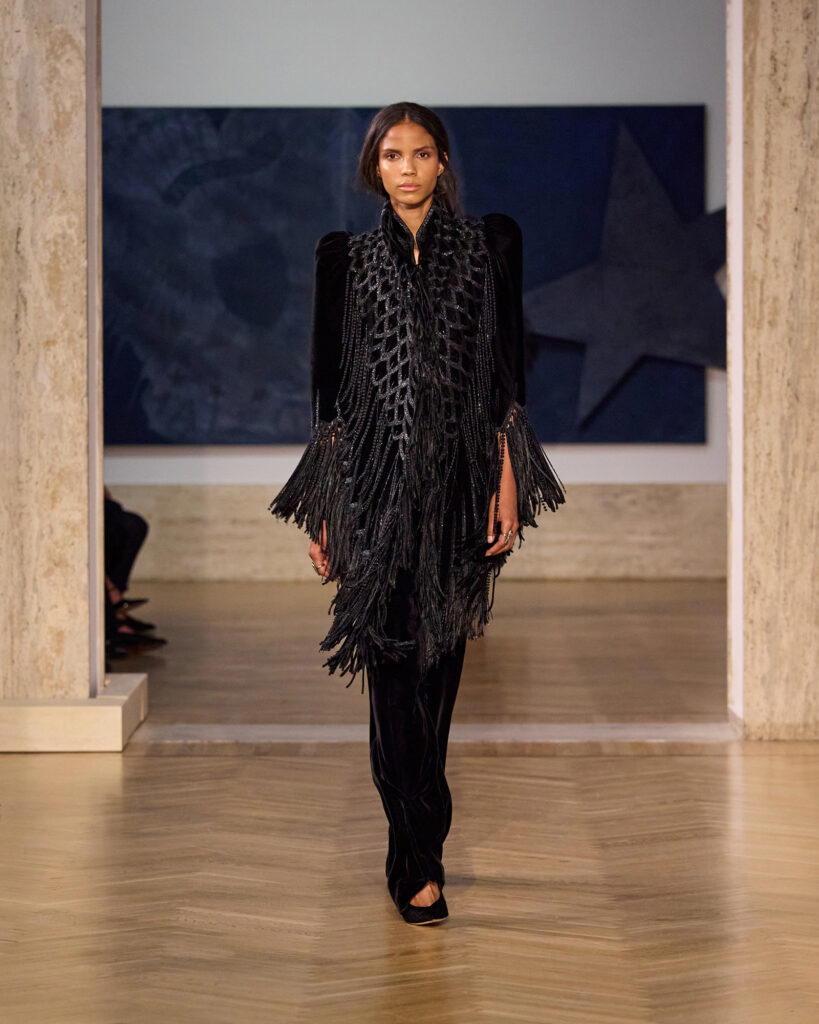
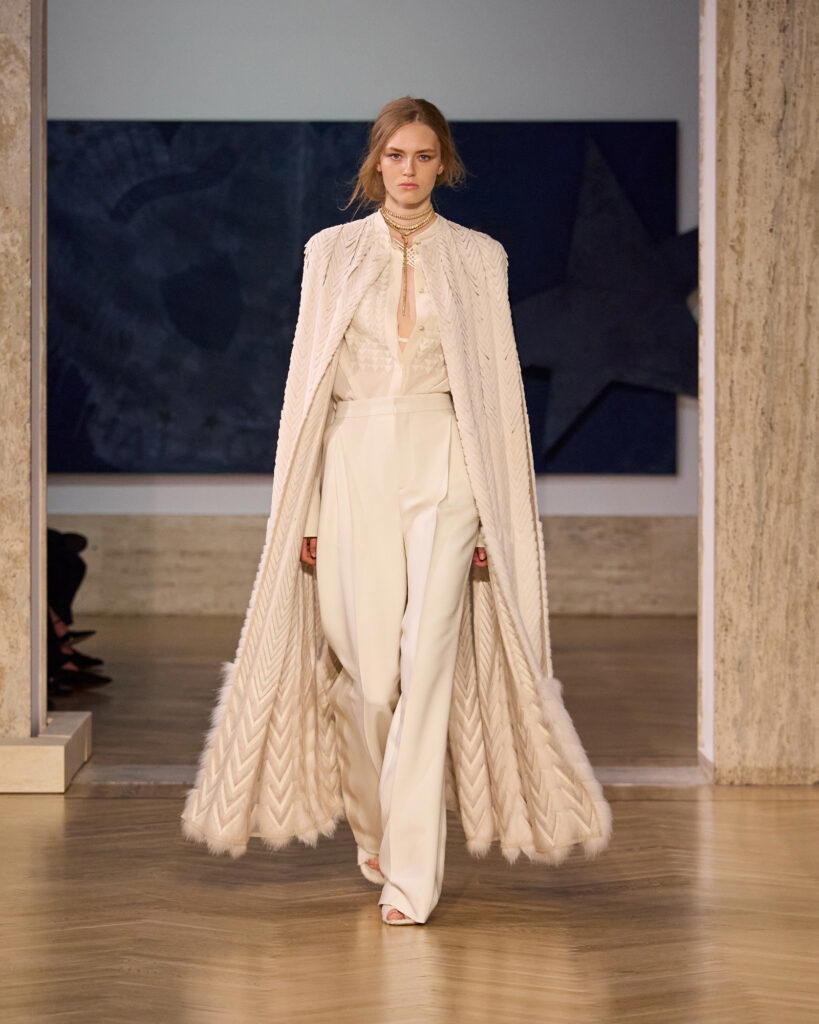
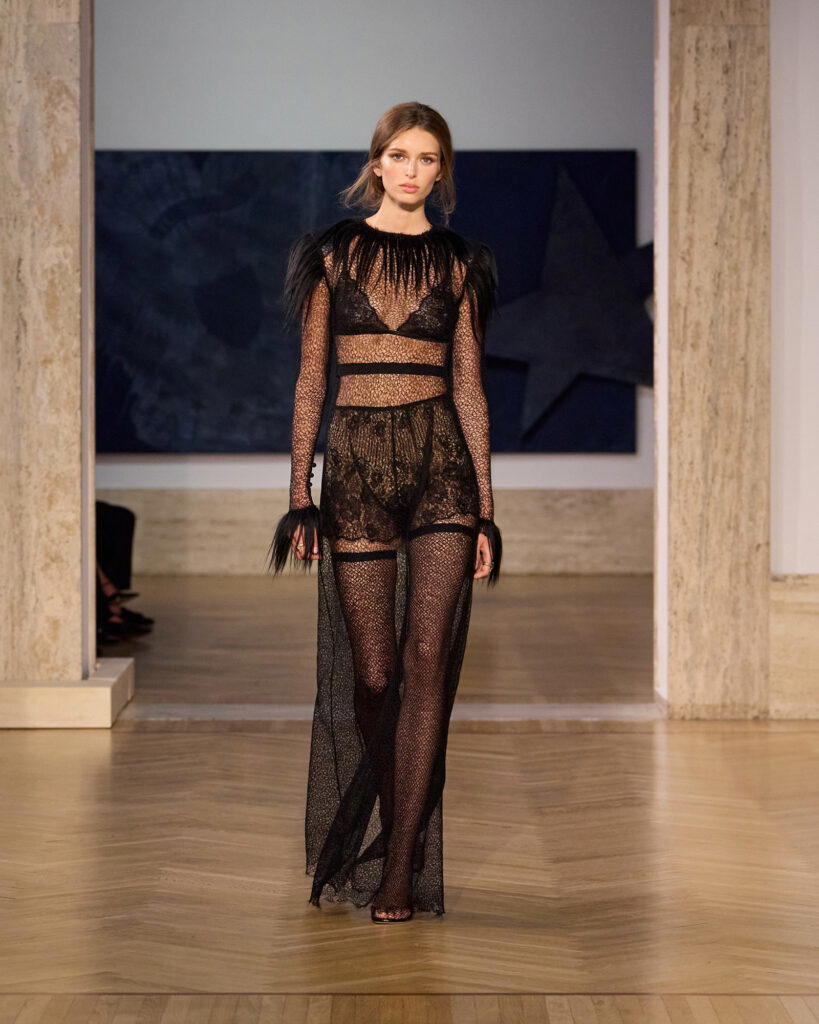
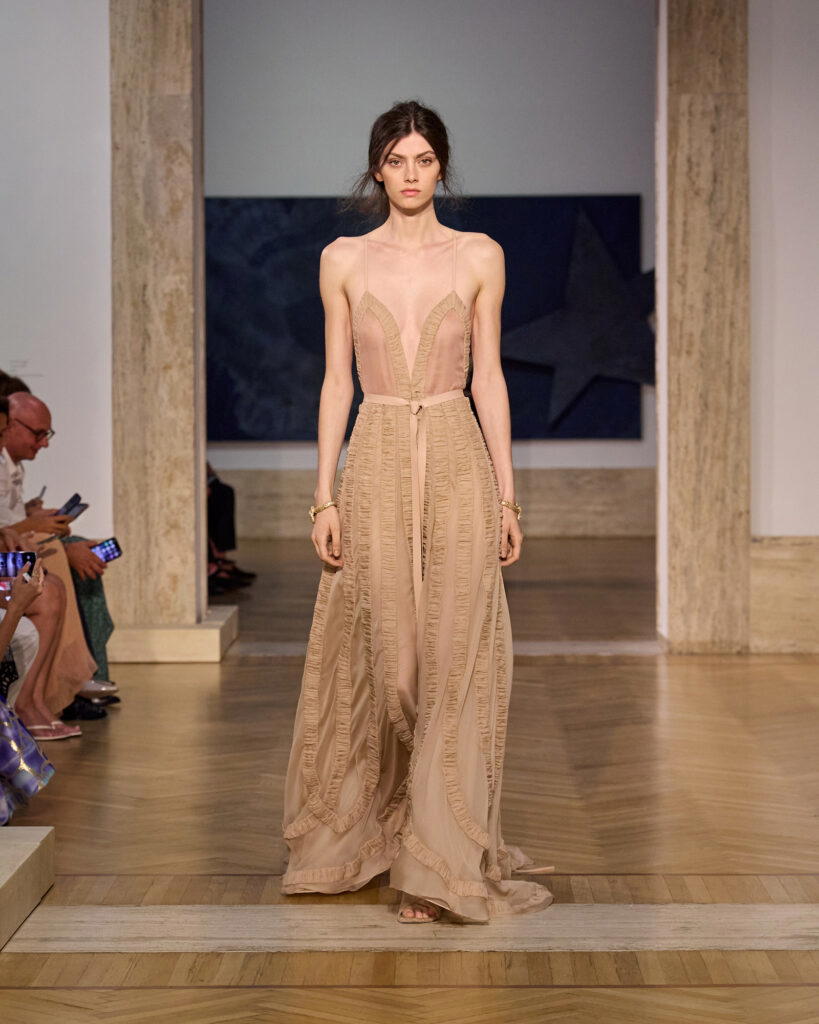
Maria Grazia Chiuri’s debut collection for Fendi hinged on desire, exploring sensuality with attire that didn’t restrict the body. Black-and-white stripes skimmed and curved with the figure, while tailored jackets flowed into a languid drape.
There was also an undercurrent of undressing as kimono jackets and sheer lace dresses revealed delicate lingerie. Despite the collection’s predominantly black-and-white palette and pragmatic mix of tailored separates and eveningwear, it read familiar rather than transformative. Her lace gown, reworked tuxedo shirt, and breezy kaftan were reminiscent of her Dior tenure rather than a departure.
Perhaps bringing Chiuri’s vocabulary to Fendi was a way of cementing her legacy at Dior. However, in this palette, novelty was limited. Other than that, the craftsmanship was undeniable, from fur treatments to intricately crafted lace, demonstrating the expertise of Fendi’s ateliers.
A broader view of how women dress today would have been helpful and appreciated. In addition, a better understanding of what makes Chiuri at Fendi different from Chiuri at Dior.
Schiaparelli
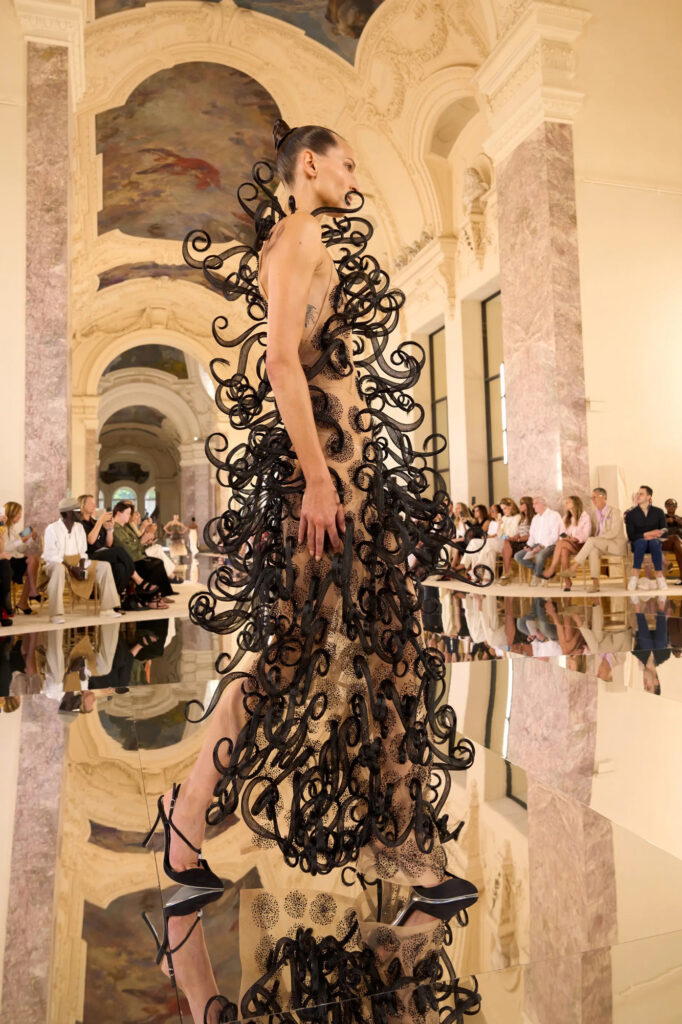
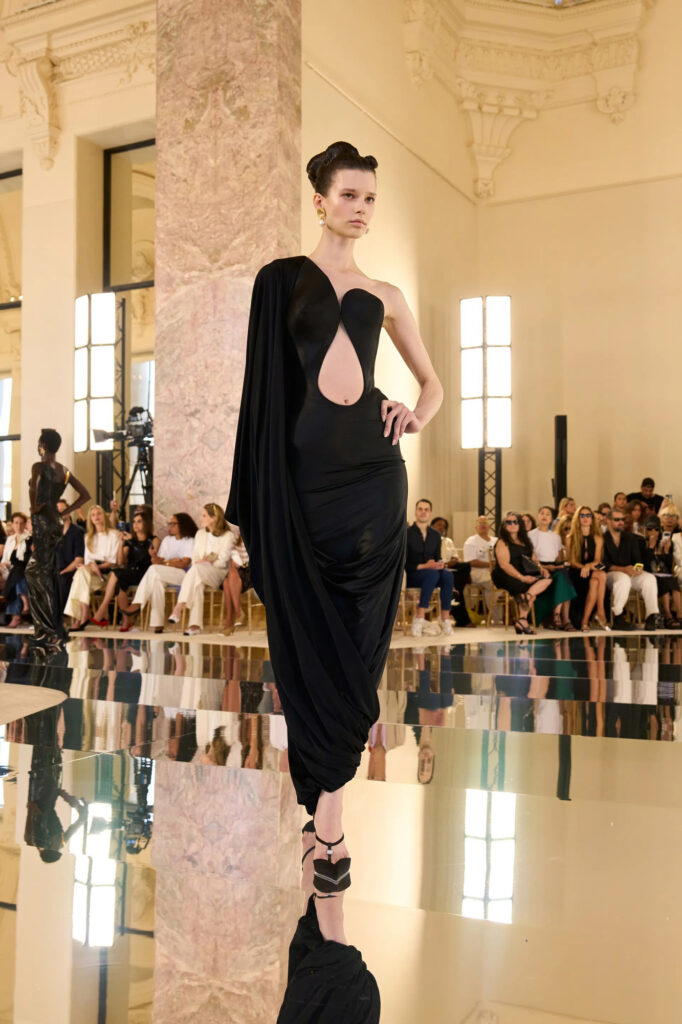
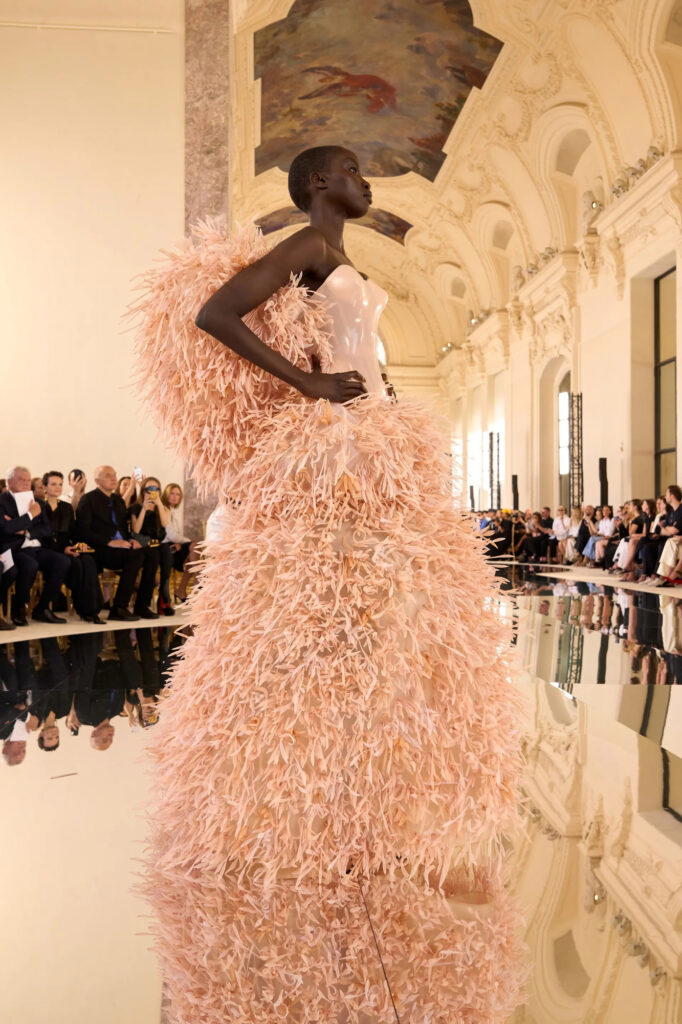
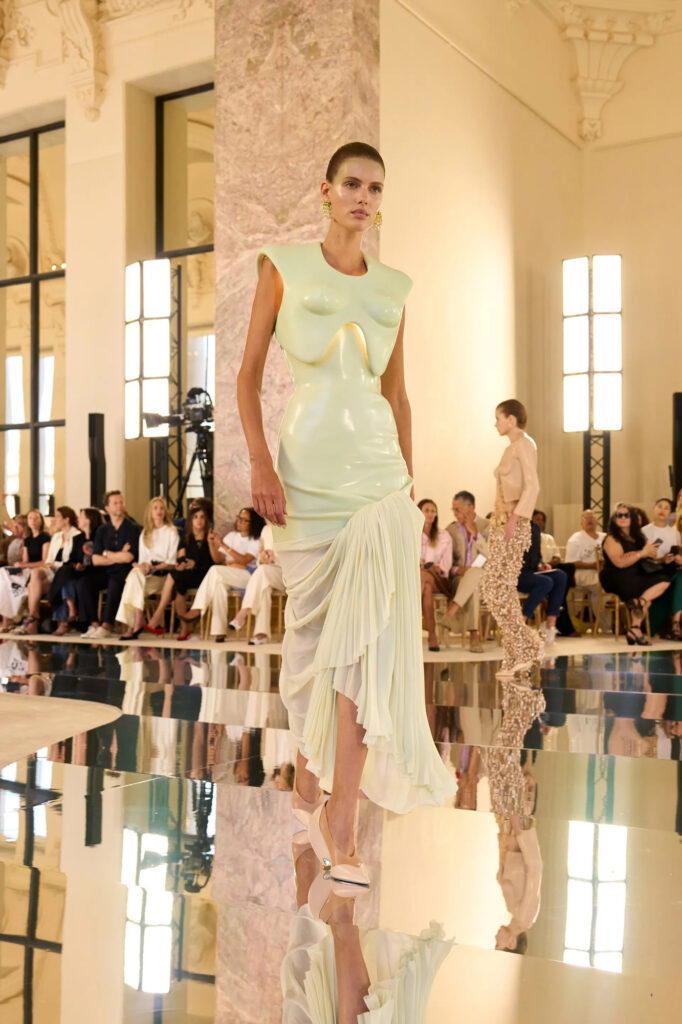
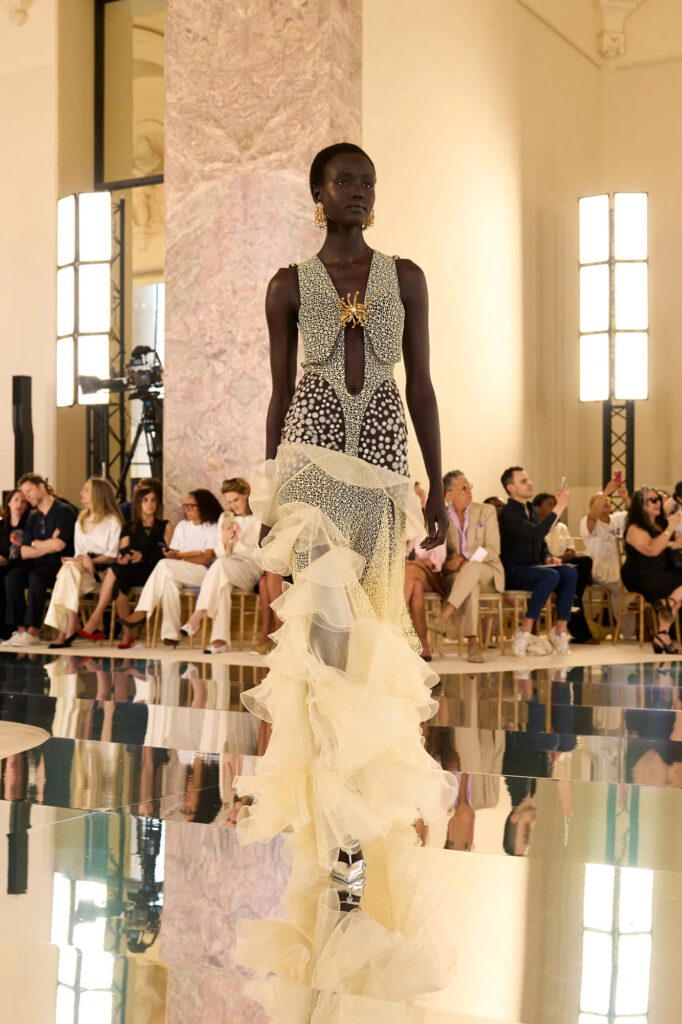

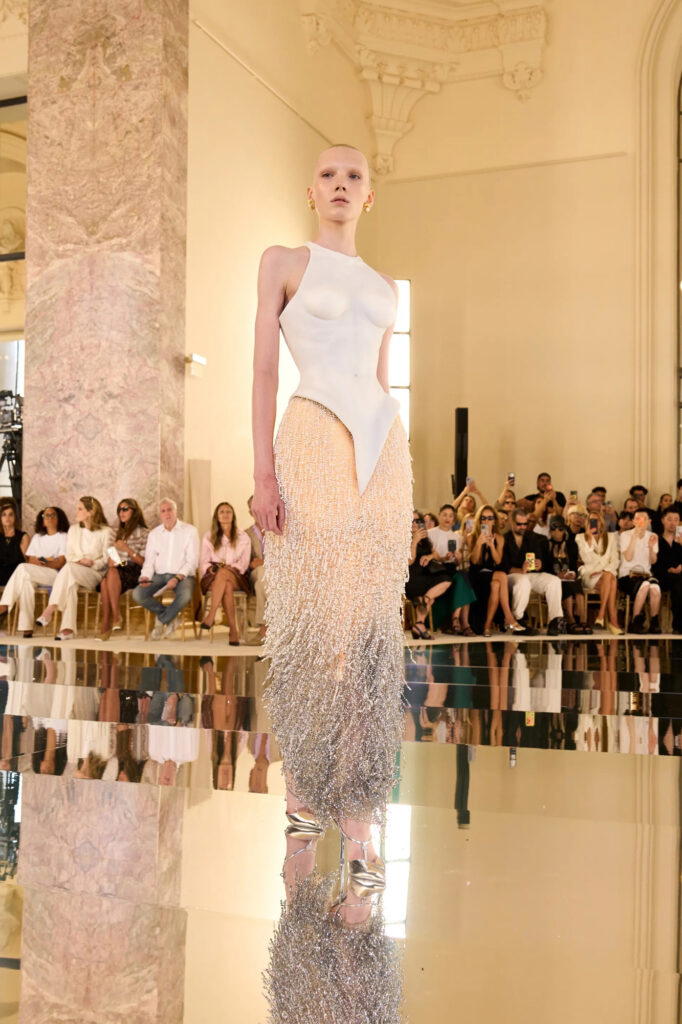
Count on Daniel Roseberry to bring the drama to couture week. One dress went straight from Paris Fashion Week to Zendaya’s London red carpet appearance for The Odyssey. Styled by Law Roach, the look quickly became one of the season’s most viral moments because of its sculptural silhouette and mythological undertones that echoed the film’s world of gods and heroes.
In Into the Abyss, the collection’s title, Roseberry provided a lighter offering than usual for the house, although there was still plenty of spectacle. Hidden LED strips illuminated several dresses, and specialised silicone techniques created pieces resembling moulded body armour.
One of the strongest looks was also one of the simplest: an asymmetric draped gown with a keyhole cutout that framed the body without overtly sexualising it. There was a distinctive note of Schiaparelli drama in its sculptural, sensual and refreshingly ambiguous quality.
Armani Prive
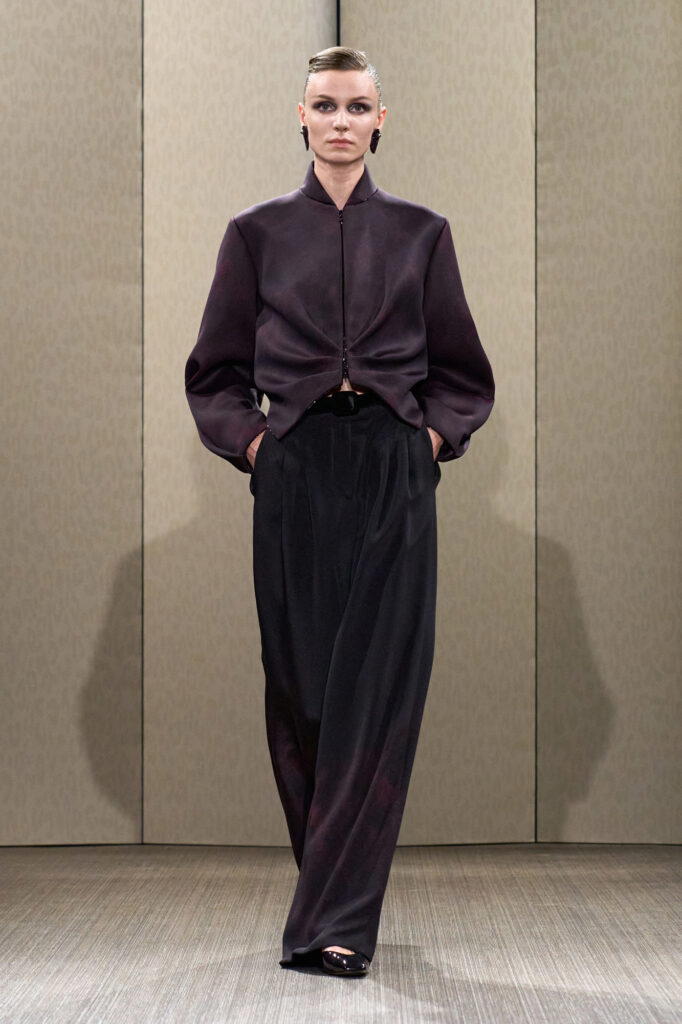
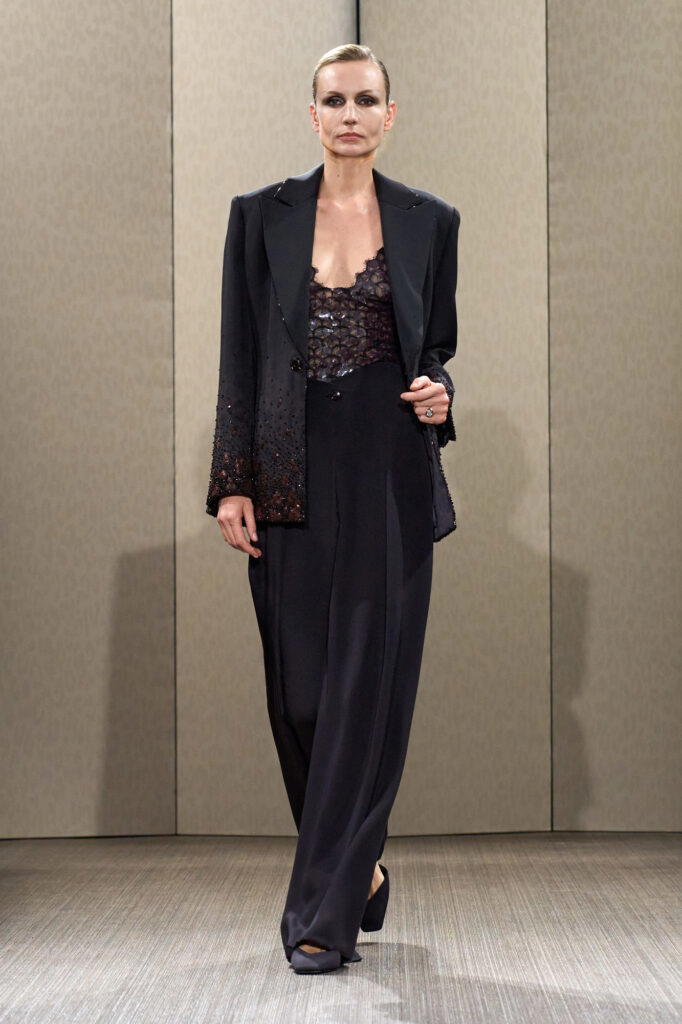
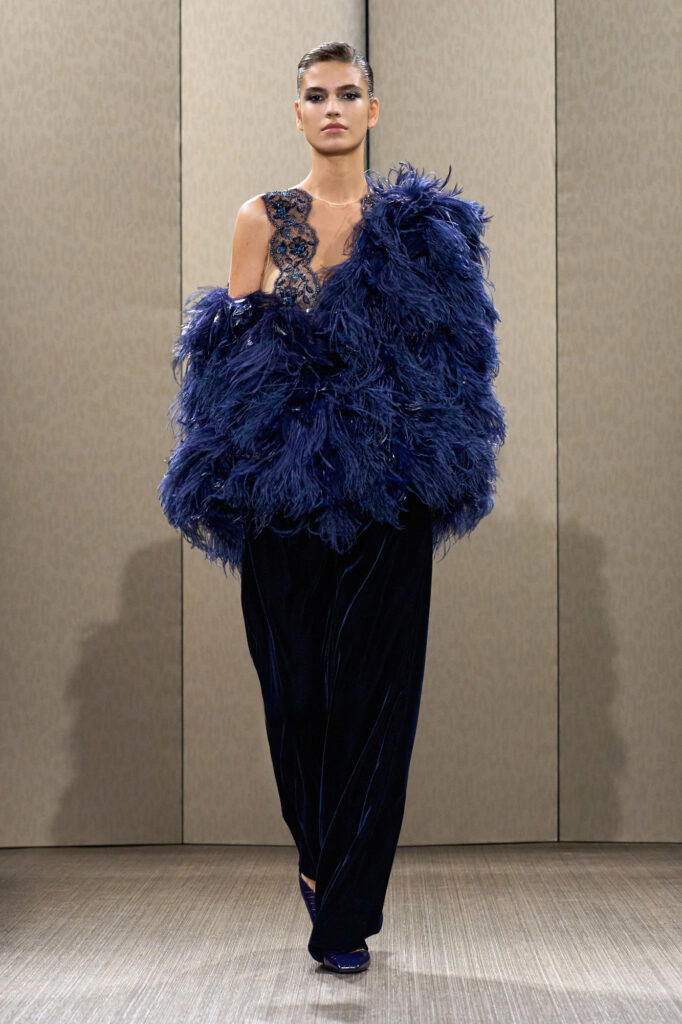
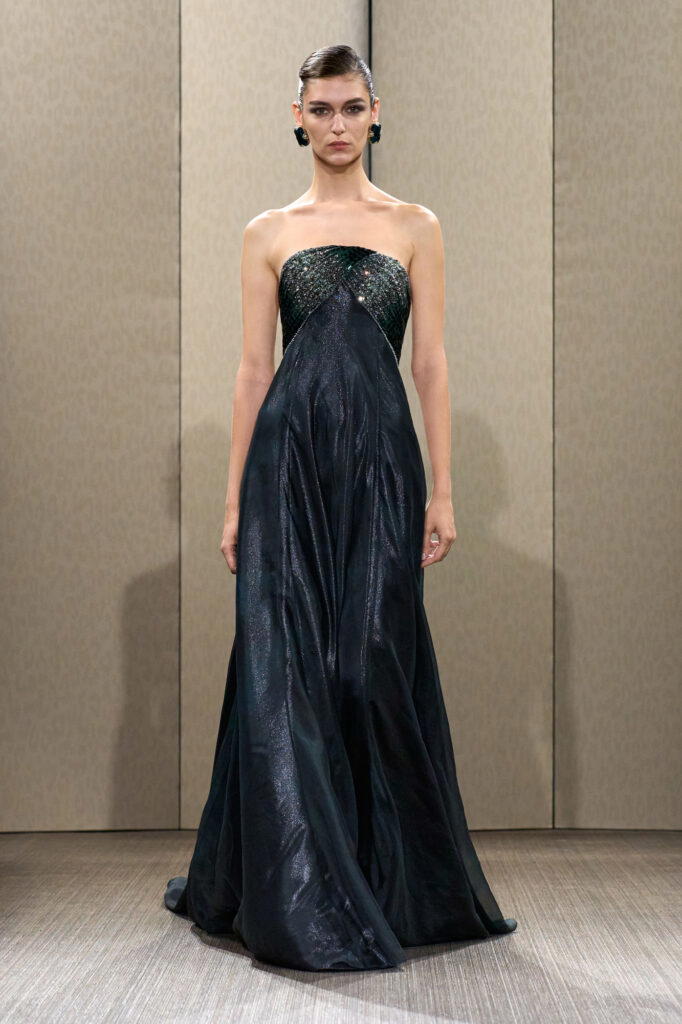
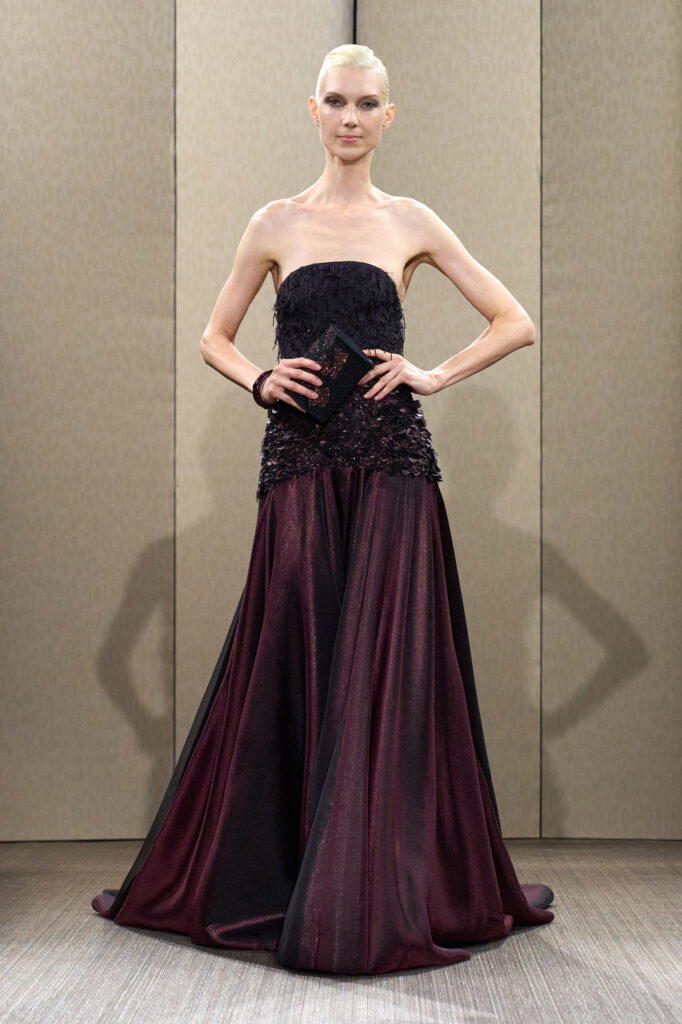
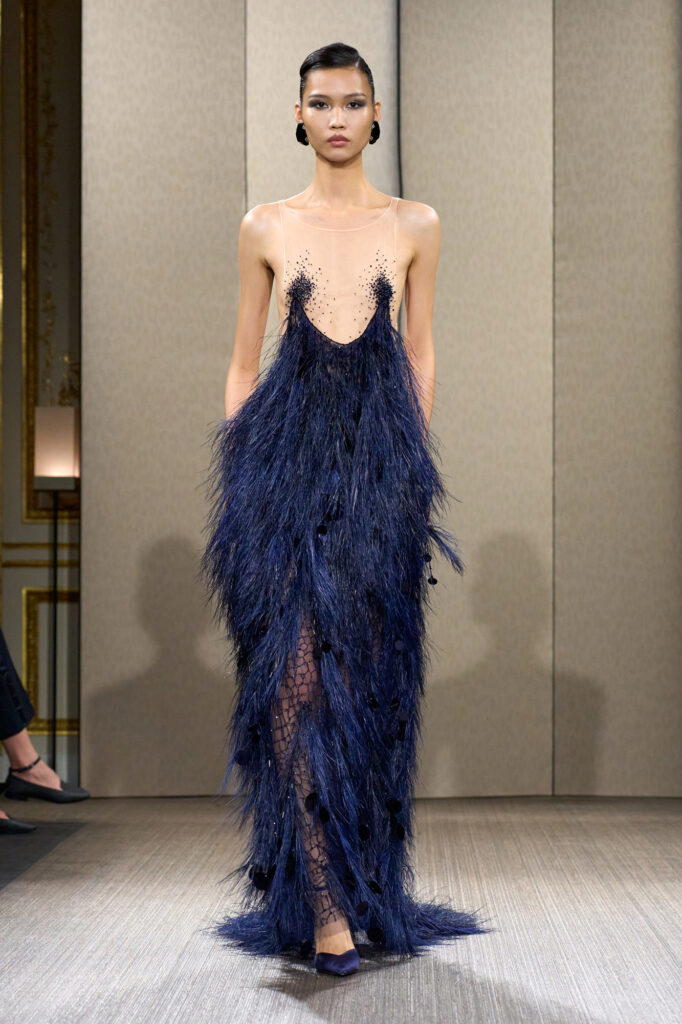
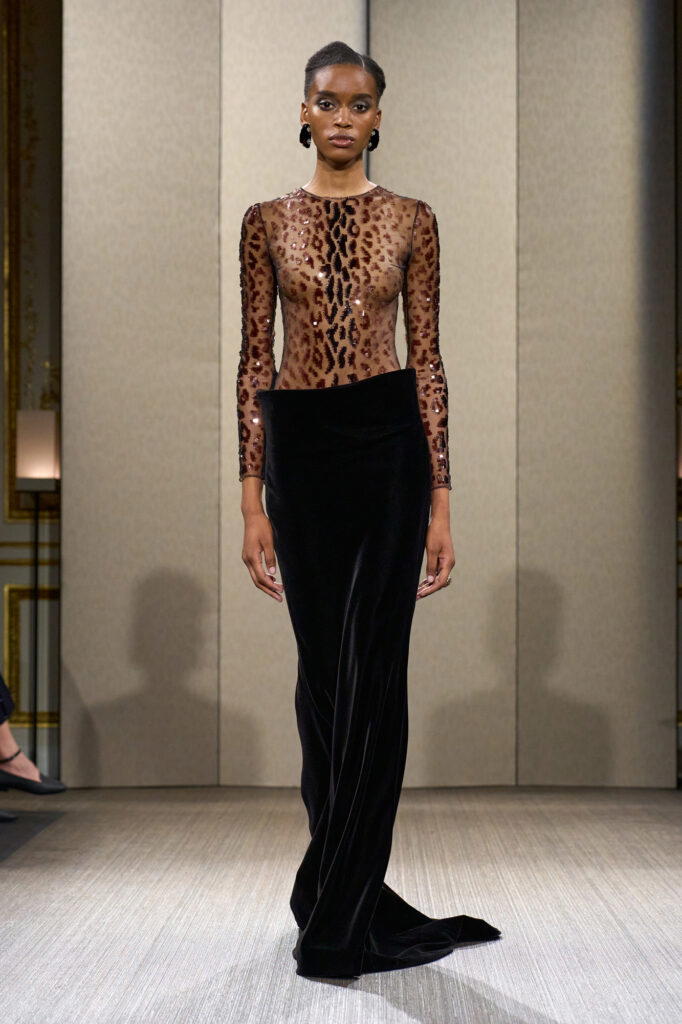
For Fall 2026, Armani Prive stepped into the boudoir, turning getting dressed into something far more intimate than a simple act of putting on clothes.
Giorgio Armani had long mastered sensuality without shouting about it. It was a balance reflected in the women he dressed—Jodie Foster, Michelle Pfeiffer, Julia Roberts, and Cate Blanchett—who brought a certain intelligence and self-possession to his designs. Even Julia Roberts’s iconic 1990s Armani power suit was sexy because it wasn’t trying to be.
A similar tension between the masculine and feminine was evident here. The sharp jackets and precise tailoring gave way to fluid gowns, and velvets, embellished surfaces, and animal prints added a sense of sensuality. In one dress, a nude mesh top was embellished with what looked like nipple tassels, toeing the line between bedroom and red carpet. Elsewhere the familiar Armani silhouette endured, with long, slender columns punctuated by sequins, feathers, and a glossy shine.
This collection also marked another chapter for Armani Prive under Silvana Armani, the founder’s niece and long-time collaborator, who took over the couture line after his passing. Having worked with him for more than four decades, she knows the Armani vocabulary inside out.
Her approach has been less about rewriting it than gently loosening it, bringing a softer, more feminine sensuality to the codes she inherited. It will be interesting to see how she cultivates a new language for Armani Prive that speaks more to today’s woman—not just the red carpet.
Robert Wun
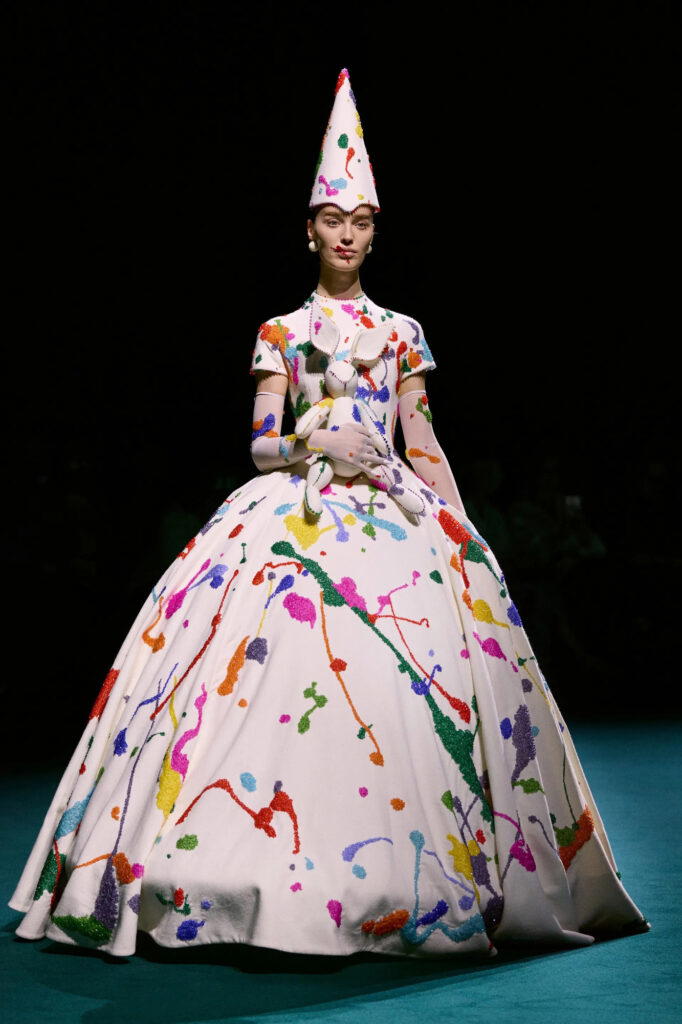
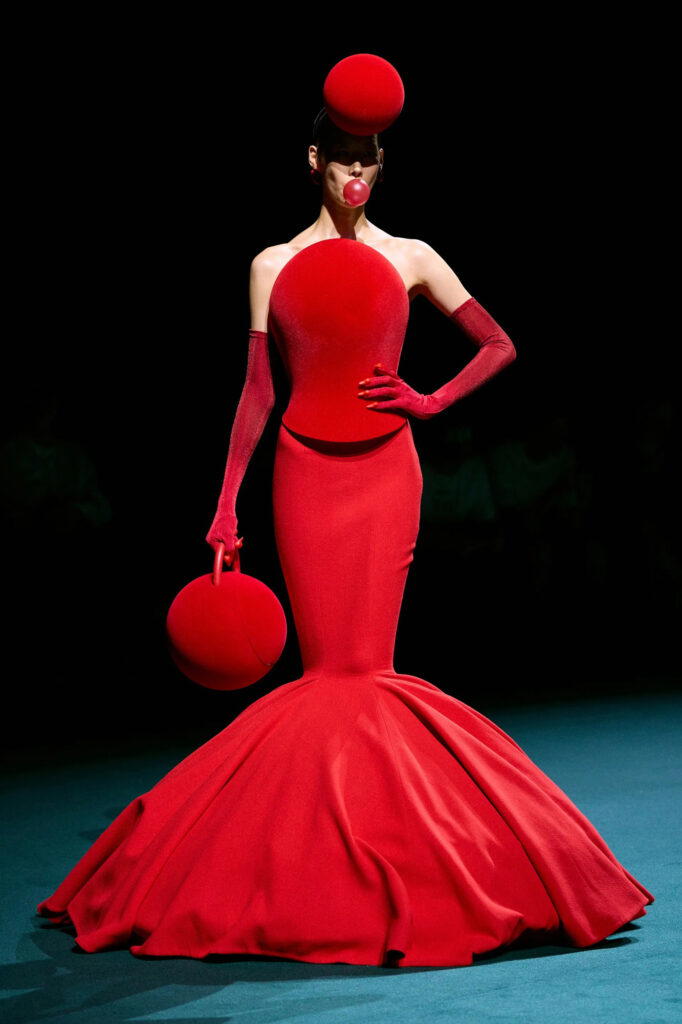
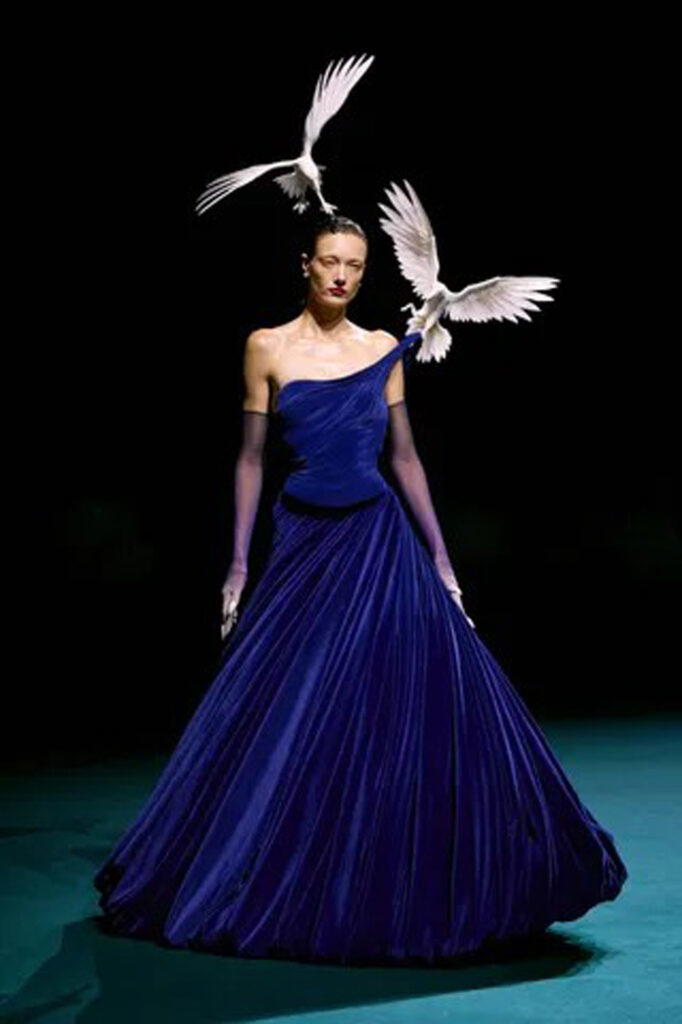
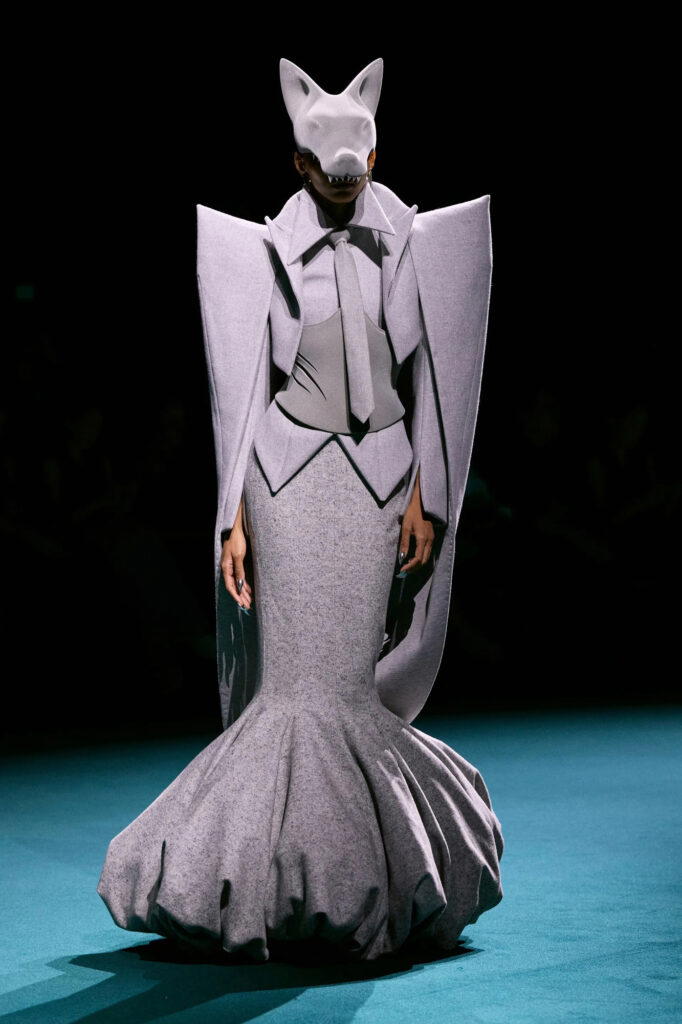
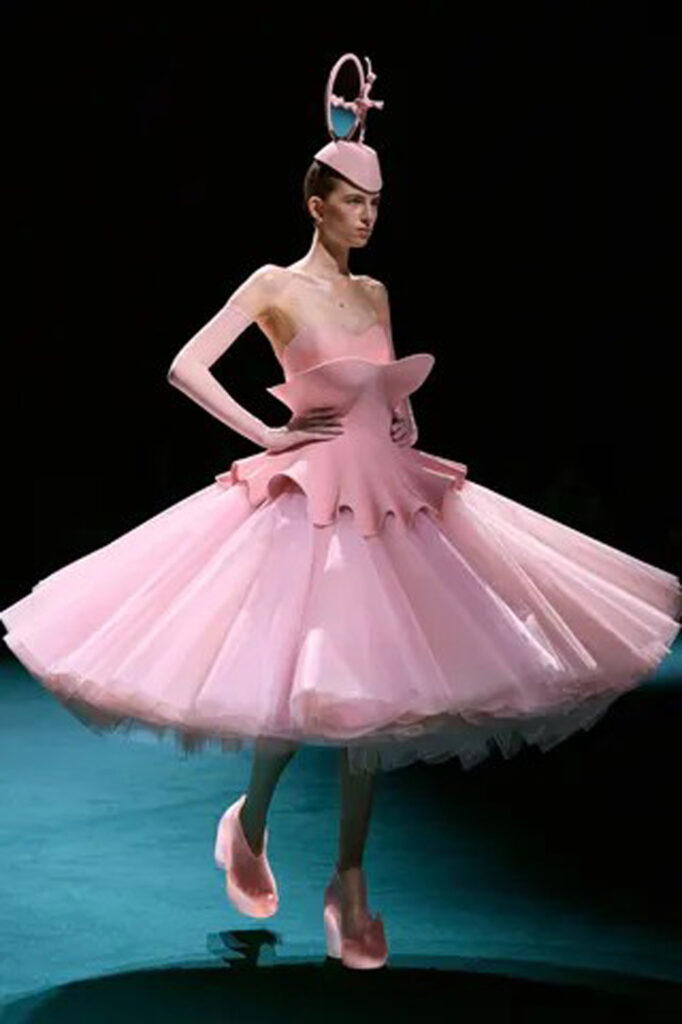
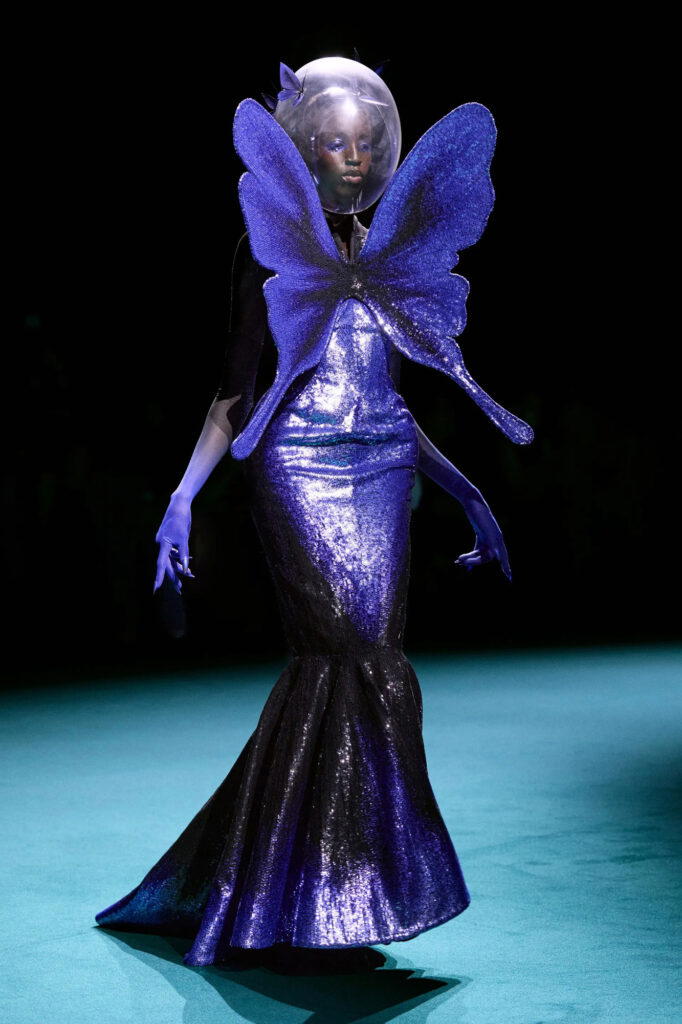
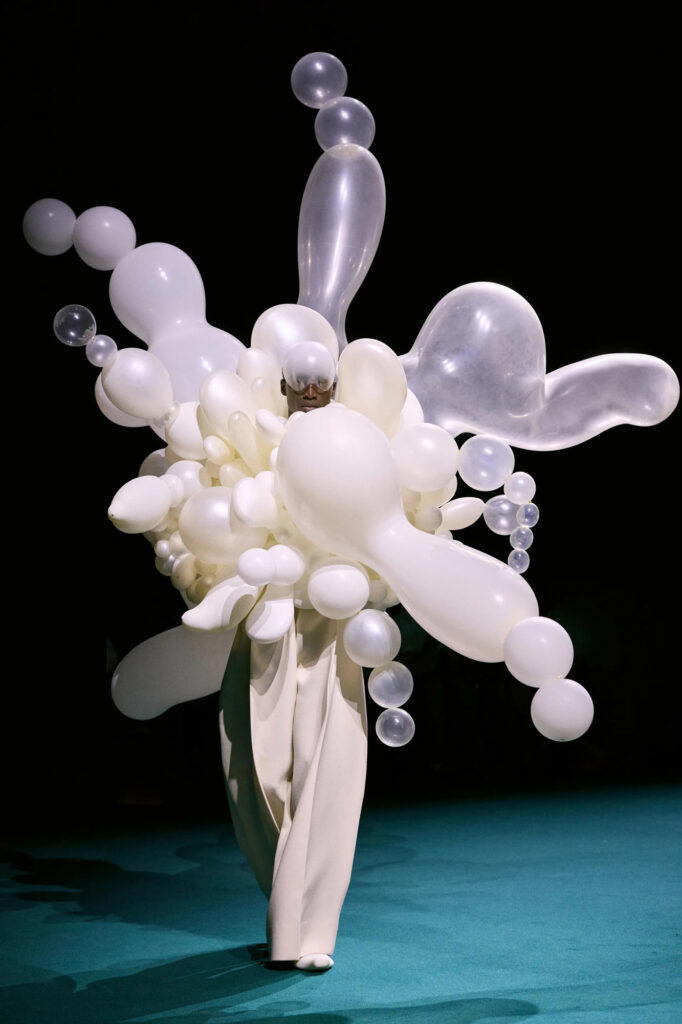
Robert Wun’s Fall 2026 couture pushed his familiar fascination with the dark into a more playful, childlike world.
Inspired in part by Japanese animator and filmmaker Hayao Miyazaki and the idea that seemingly innocent stories can carry darker truths, Wun populated the line up with recognisable fairy-tale characters—from Cinderella and Red Riding Hood to Snow
White, Maleficent, and the Big Bad Wolf.
The references were integrated into the garments rather than applied superficially. The characteristics of Snow White appeared in a draped blue gown with straps suspended by two doves. The Big Bad Wolf loomed large with oversized shoulders angled skywards.
There were also childlike splatters, geometric shapes in primary hues, and two looks decorated with balloons (the white look was seen on Bjork during a performance at a rave in Iceland during a solar eclipse) that closed the show. With these designs, Wun infused spontaneity and whimsy with his signature graphic silhouettes.
There is also something noteworthy about his place on the couture calendar. Born in Hong Kong and based in London, he became the first Hong Kong designer to join the Paris Haute Couture Week schedule in 2023.
While Asian representation remains limited, seeing a Hong Kong-born designer build a distinctive, internationally recognised couture language is significant and warrants highlighting on its own terms. Wun may not define Asian fashion”, but his success broadens the picture of who gets to shape couture today.