Chanel
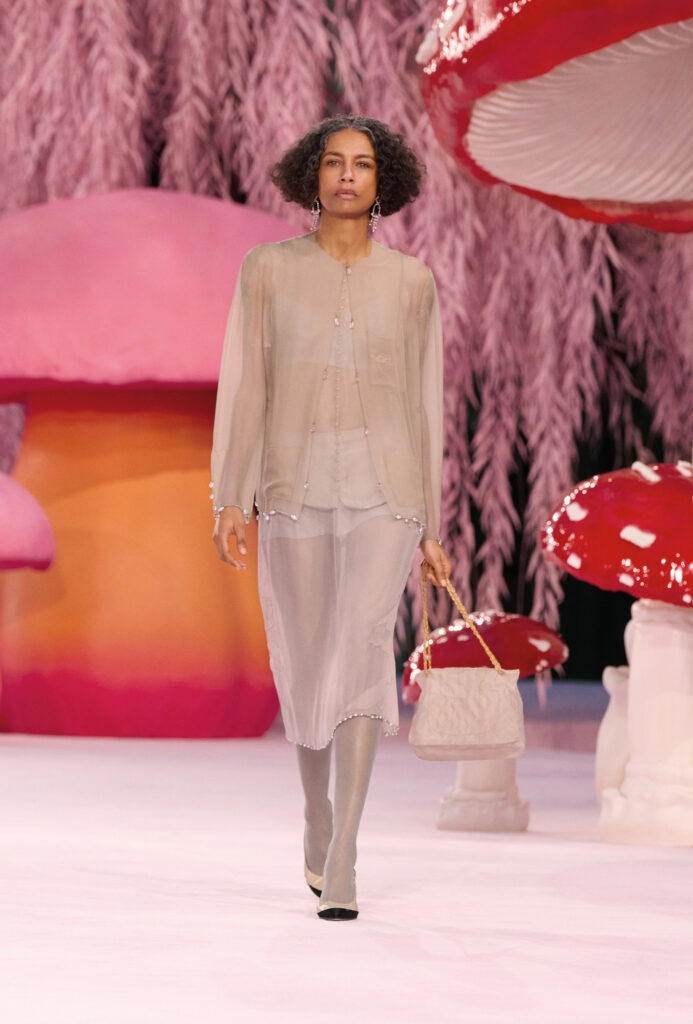
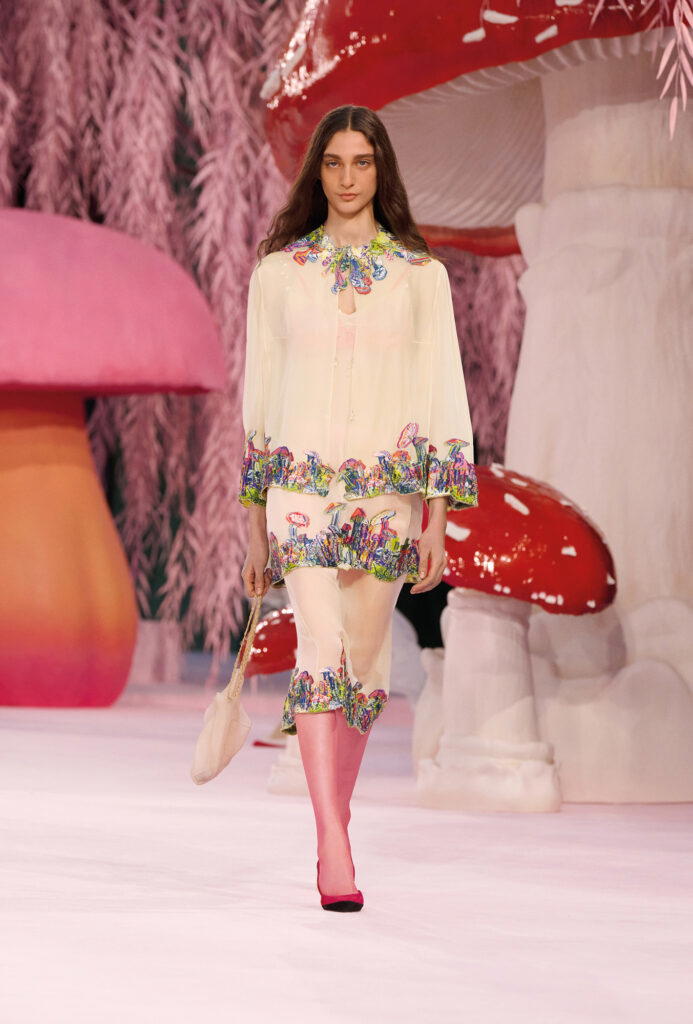
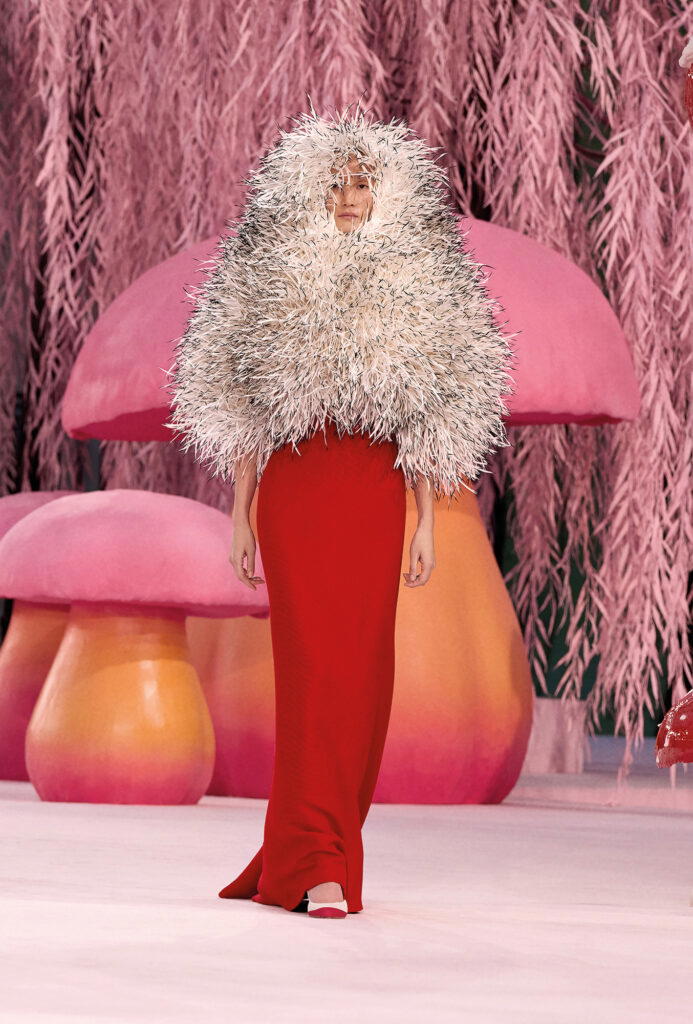
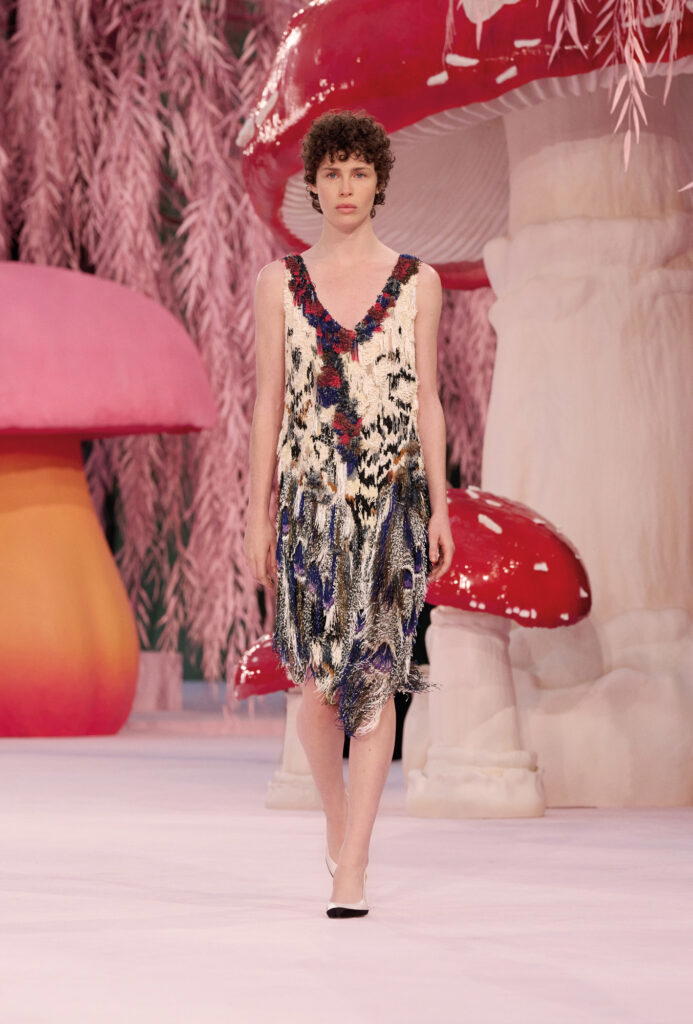
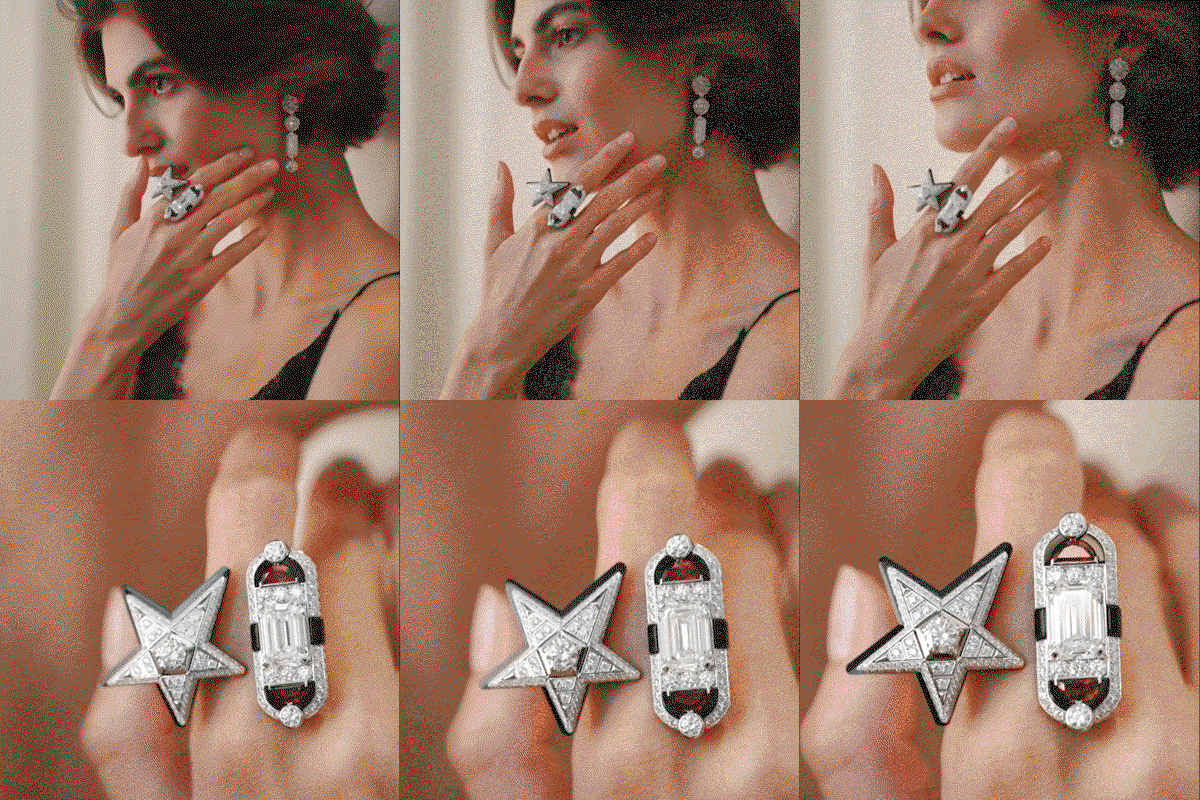
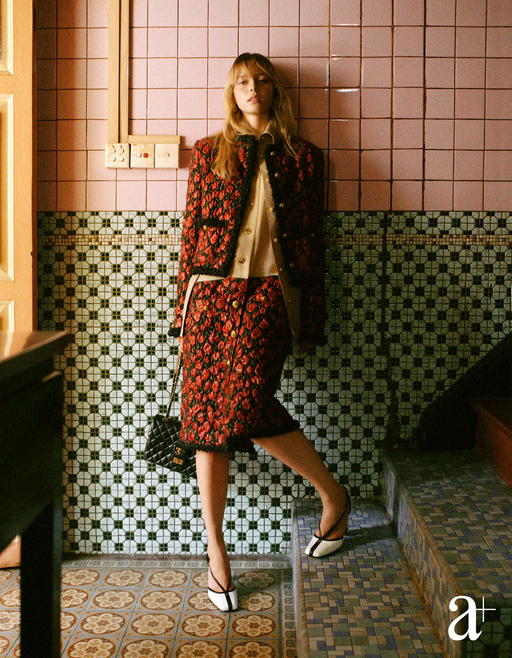
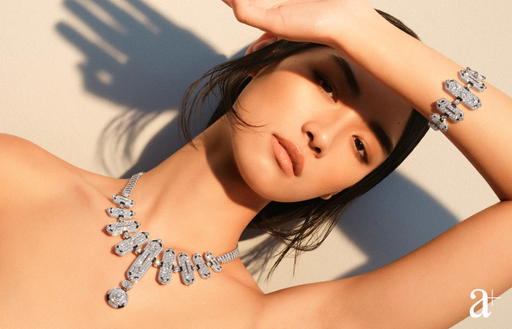
Mathieu Blazy’s debut couture show for Chanel began with a whisper. The opening look was a classic suit ensemble, reimagined in sheer silk chiffon with a matching bag in the same fabric that was handmade in the couture workshops. Its delicate subtlety crystallised his couture vision for the brand: providing the client with an entire wardrobe that can be worn from day to night.
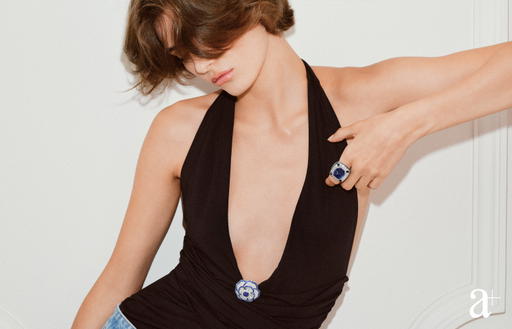
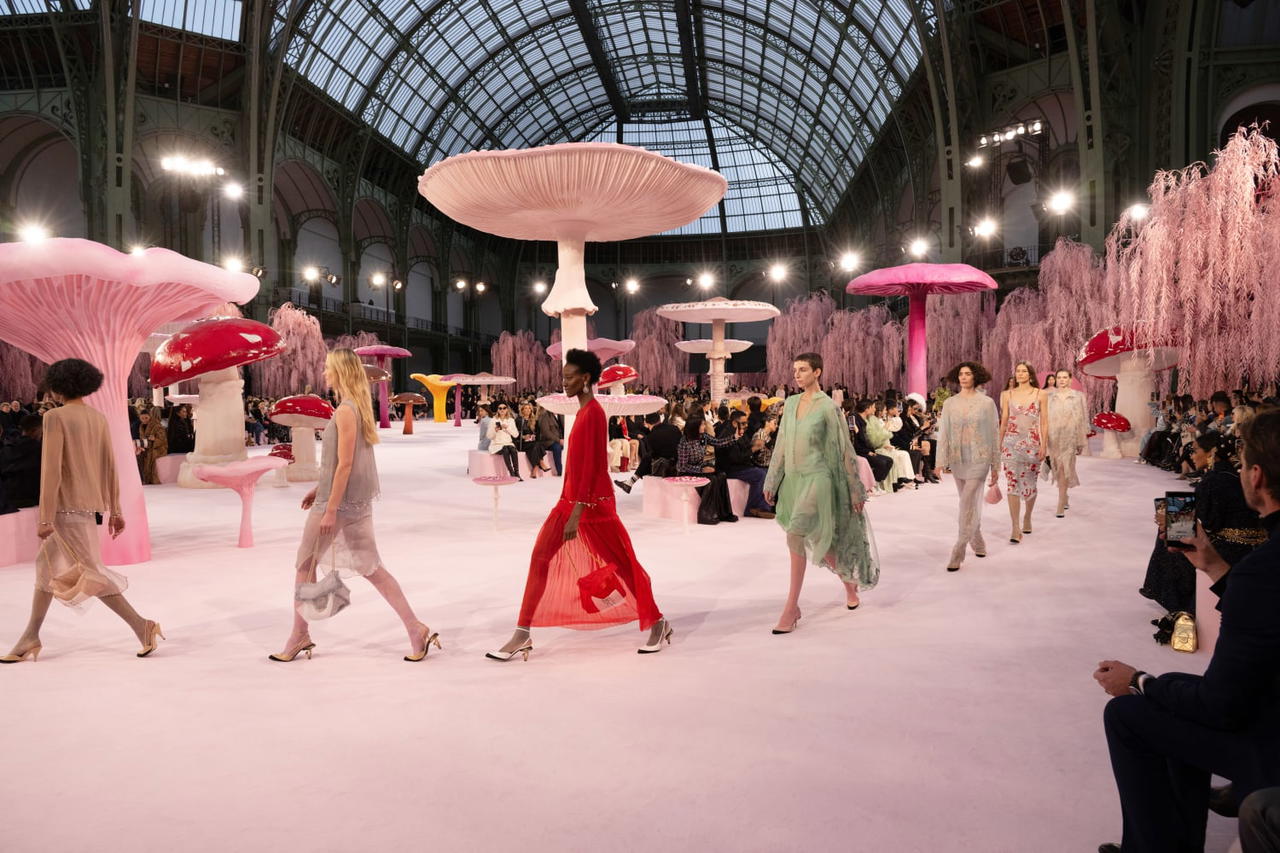
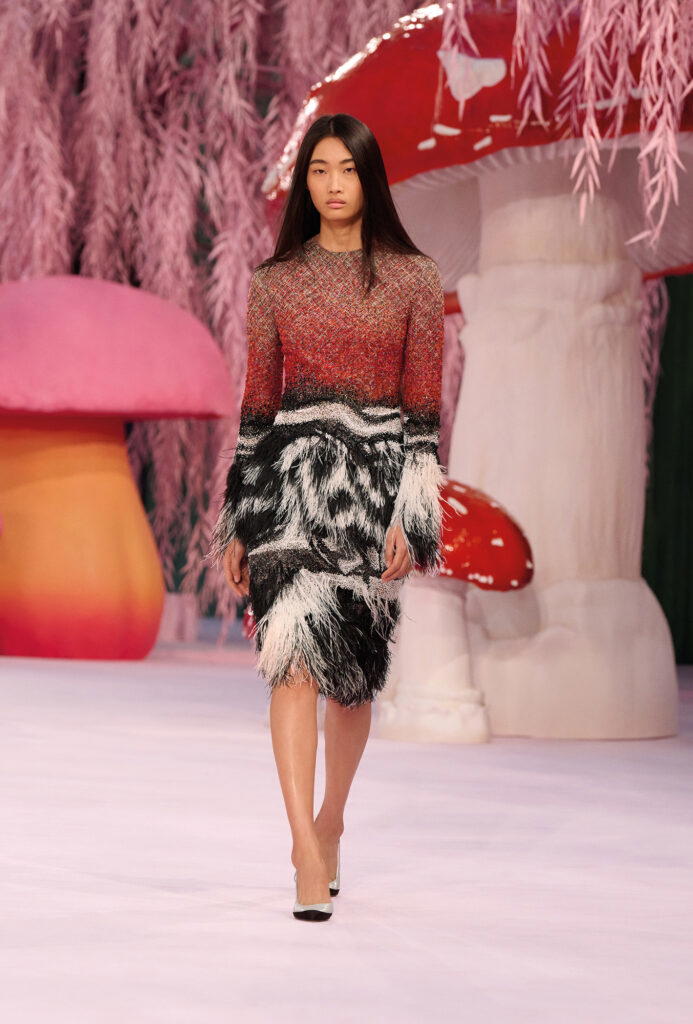
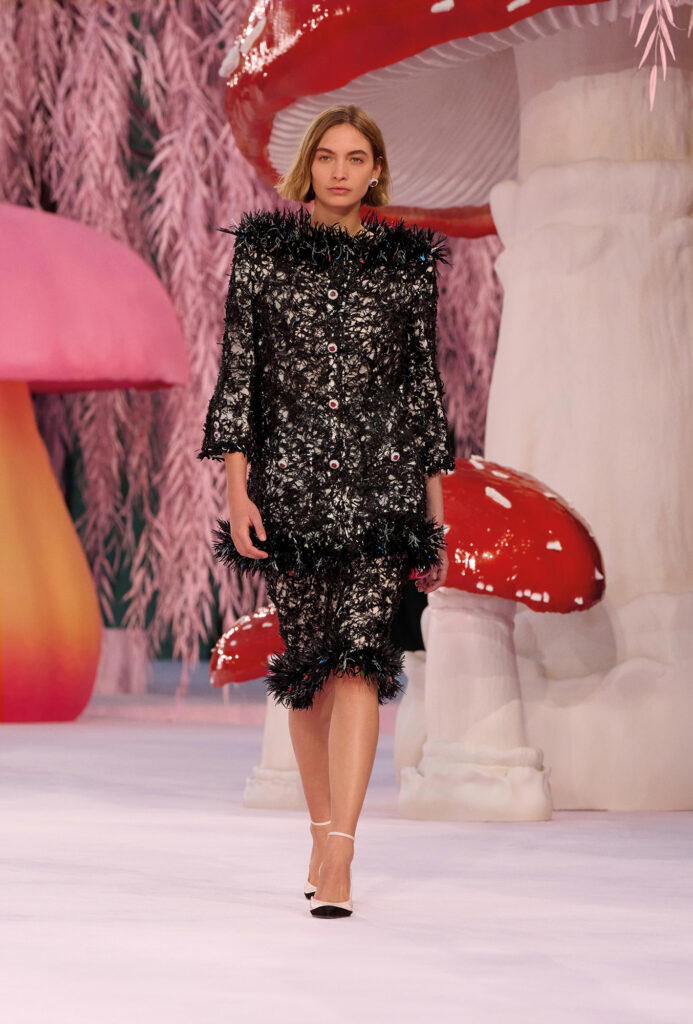
As Gabrielle Chanel created clothes for women who lived, danced, played sports, and socialised in them, this concept relates back to her ethos. On the psychedelic stage of pink willows and fantastical mushrooms, the contrast of the collection’s wearability felt deliberate. The concept of lightness was explored again in another look that, at first glance, seemed like a regular tank top and jeans number but was printed on silk, creating a trompe-l’oeil illusion. It transformed the everyday into something exquisitely couture.
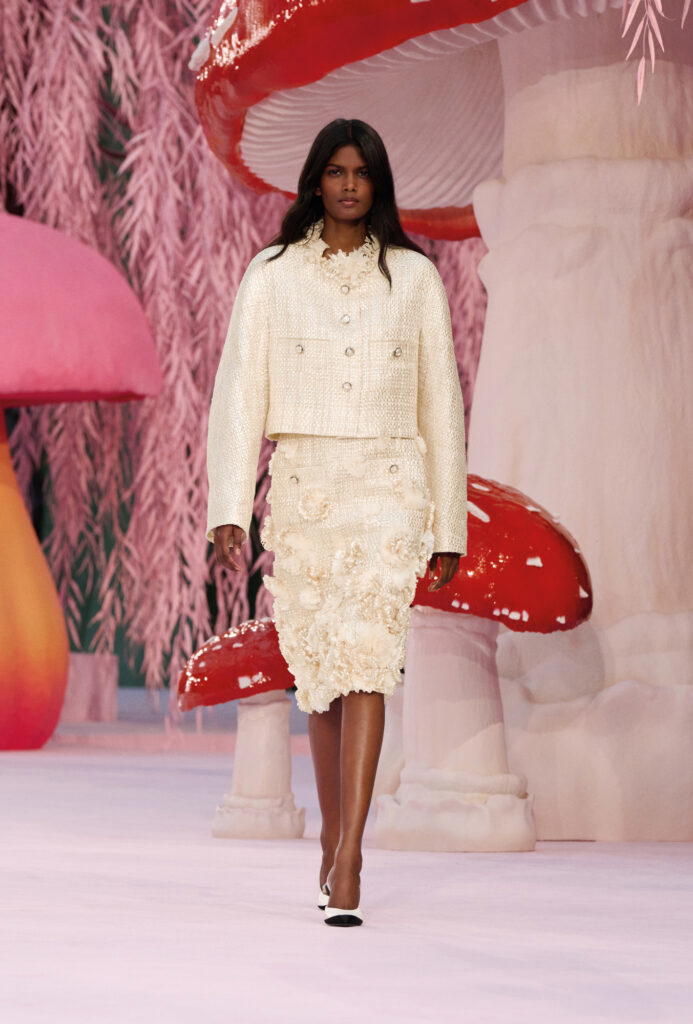
Some looks even veered towards avian references with feathers or feather-like embellishments inspired by a haiku about a bird on a mushroom—an obvious nod to Coco Chanel herself, who incorporated feather embellishments into her collection. In this case, Maisons d’Art’s artistry was evident. Lesage’s tweeds, for example, used ostrich feathers and silk fibre tufts that blurred the lines between what was real and what wasn’t. In the finale bridal ensemble, Atelier Montex embroidered a shirt and skirt combo with mother-of-pearl sequins, an easy-to-wear proposal for the contemporary bride.
Dior
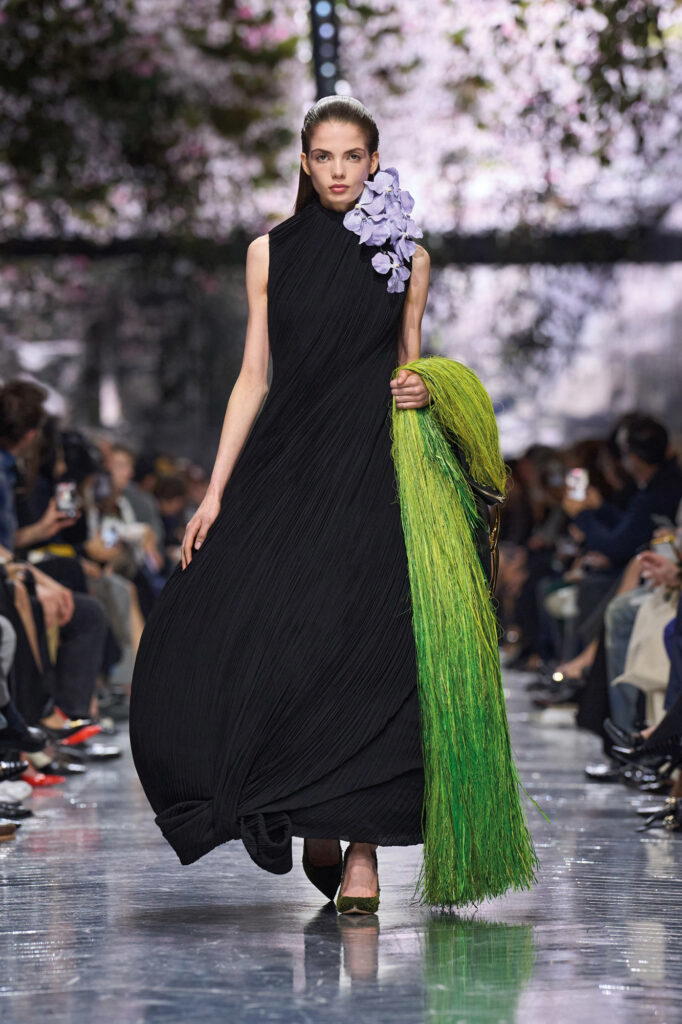
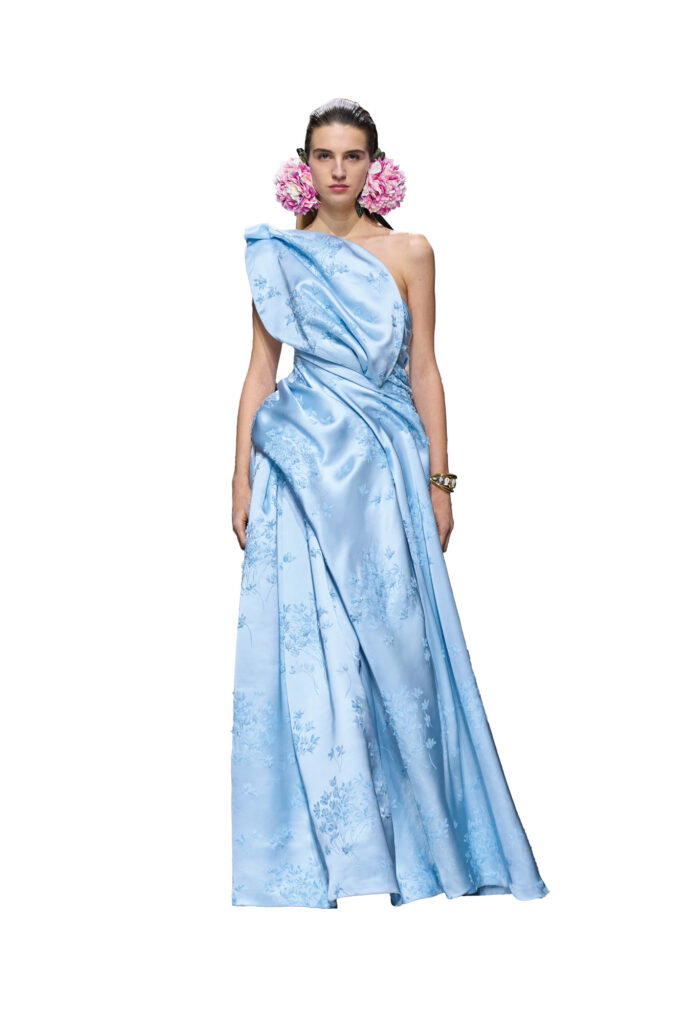
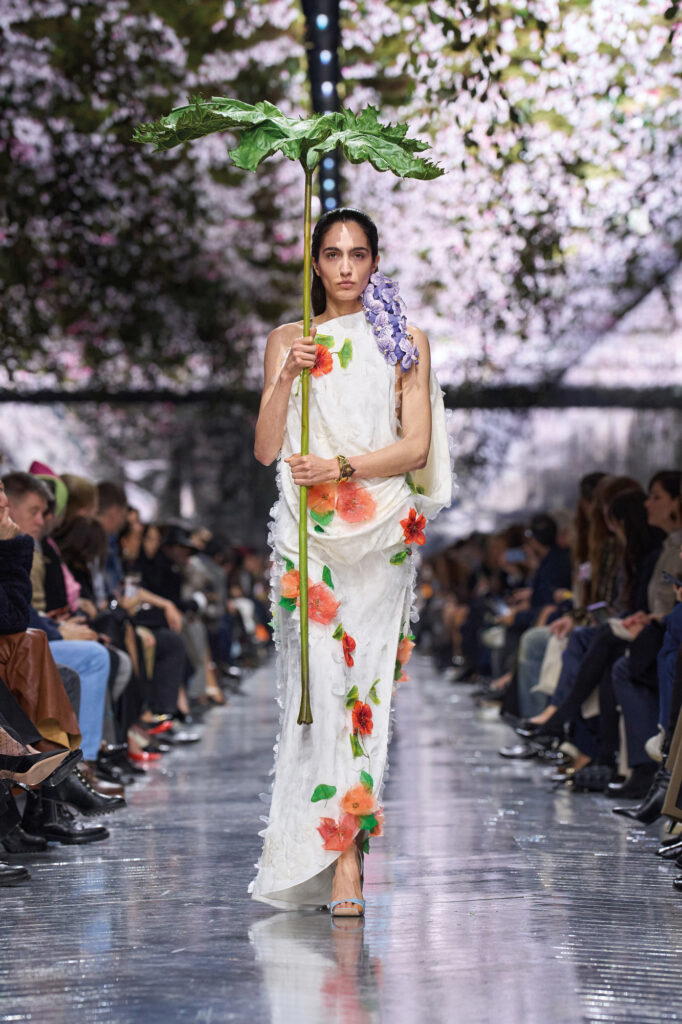
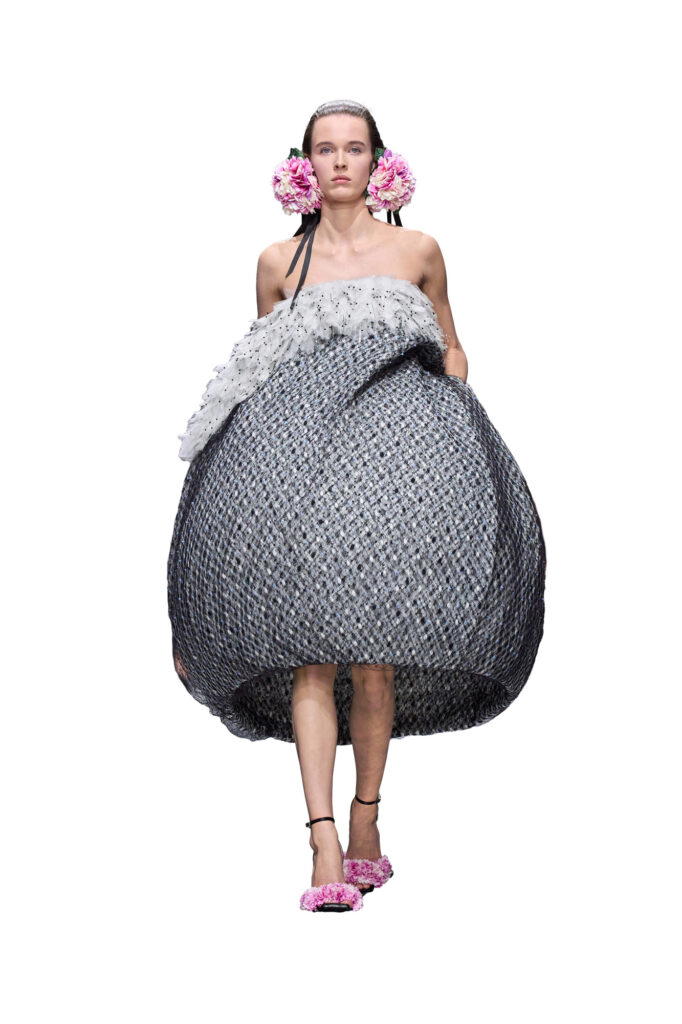
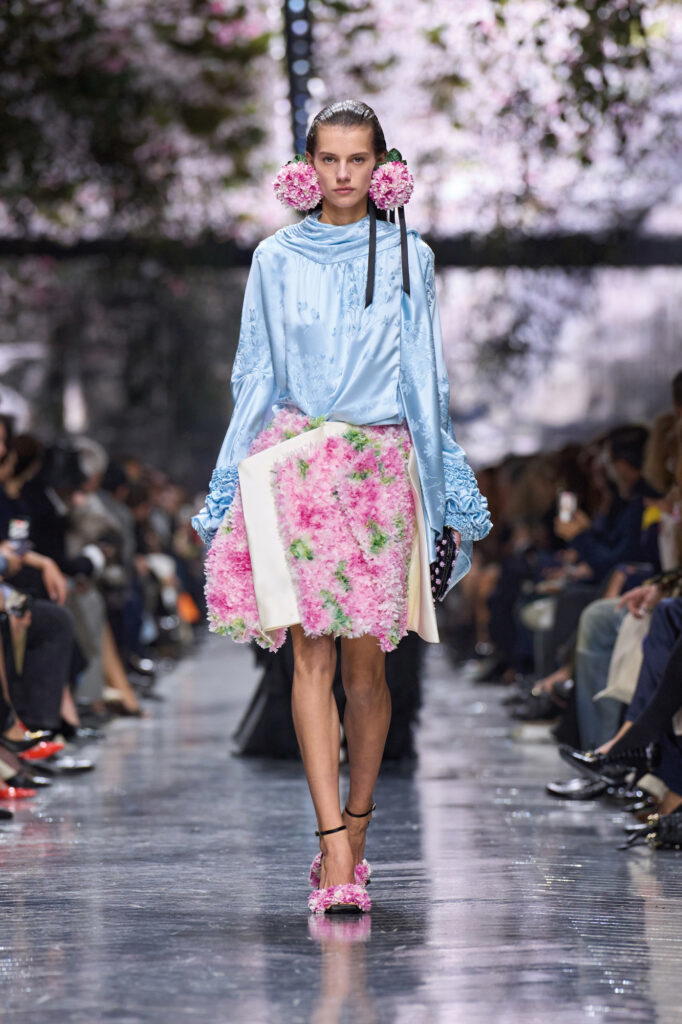
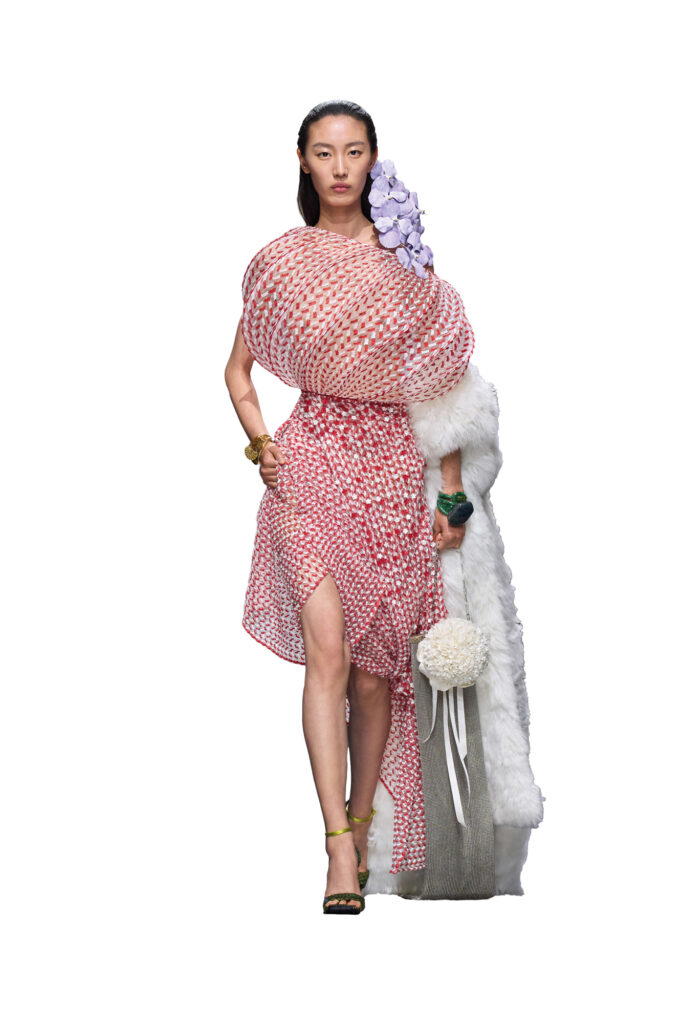
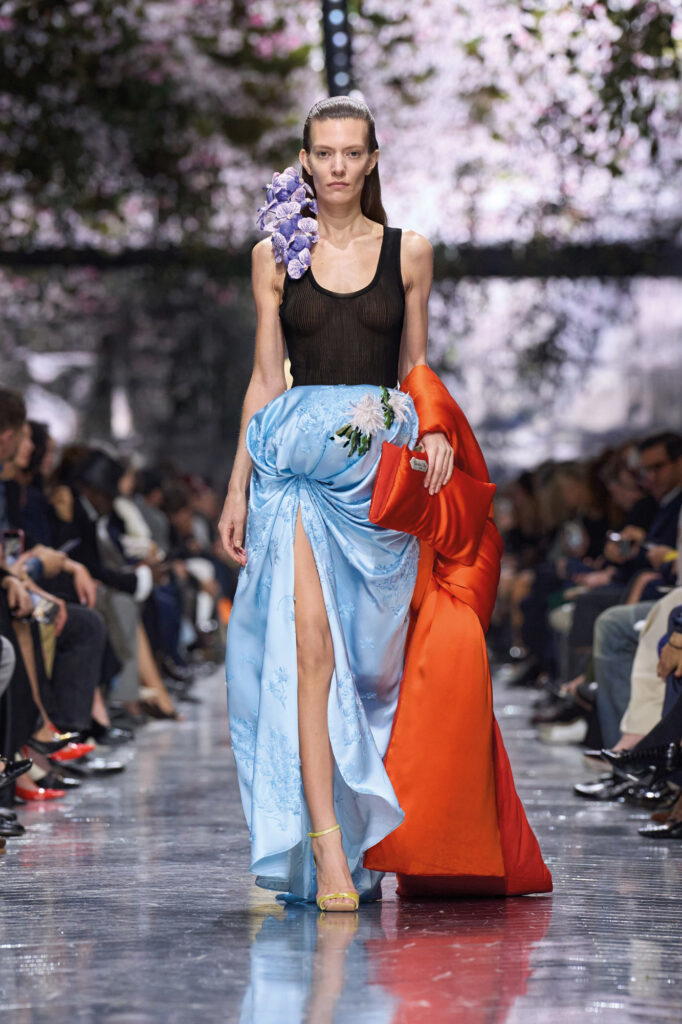
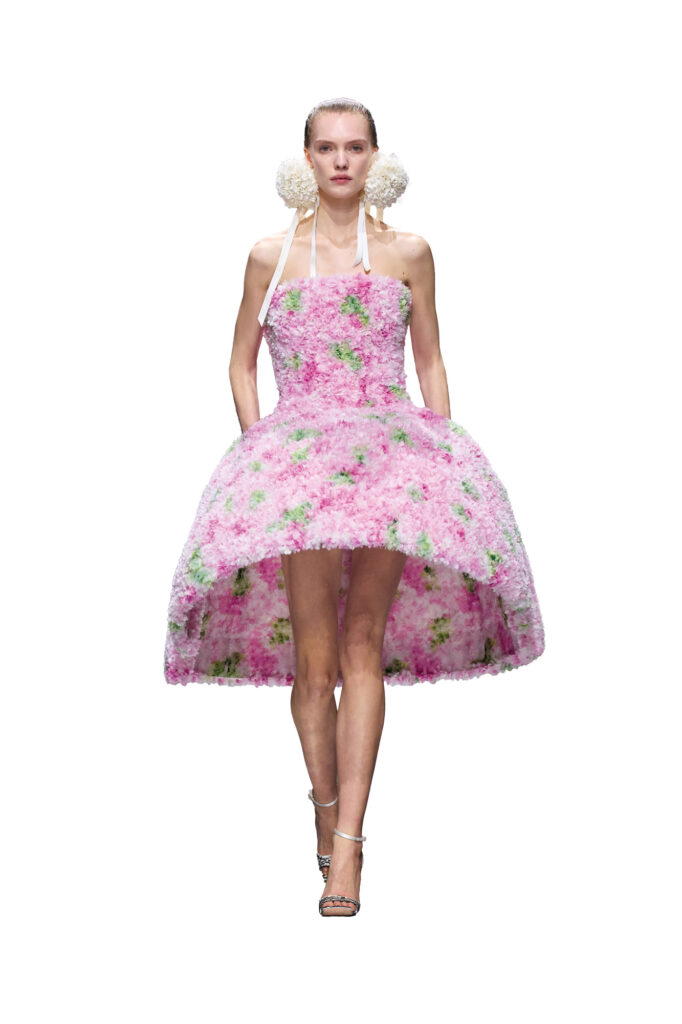
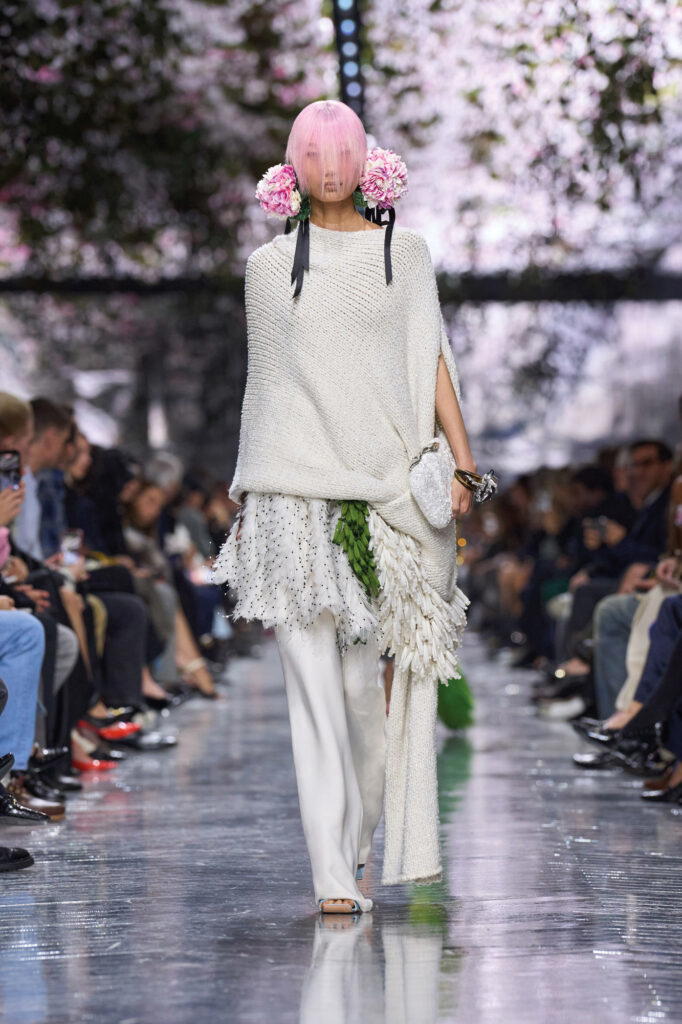
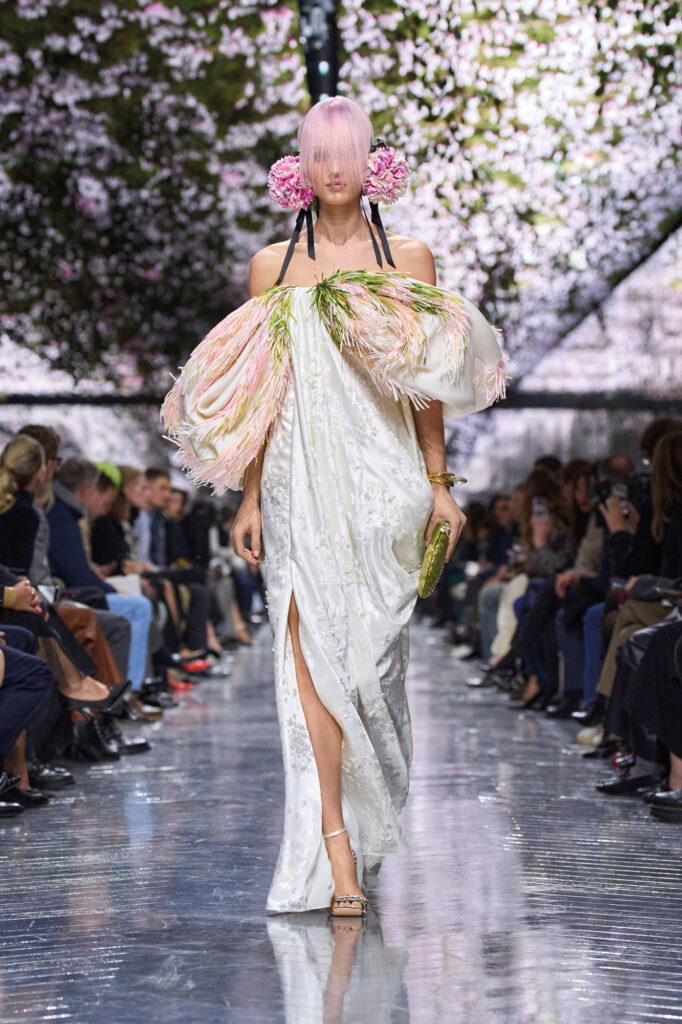
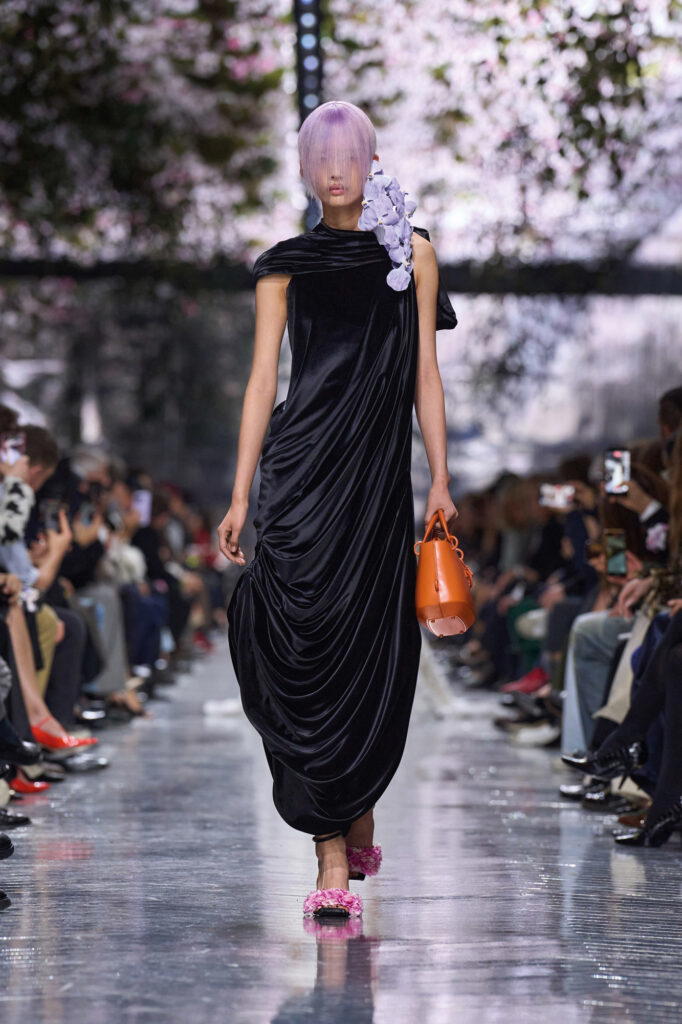
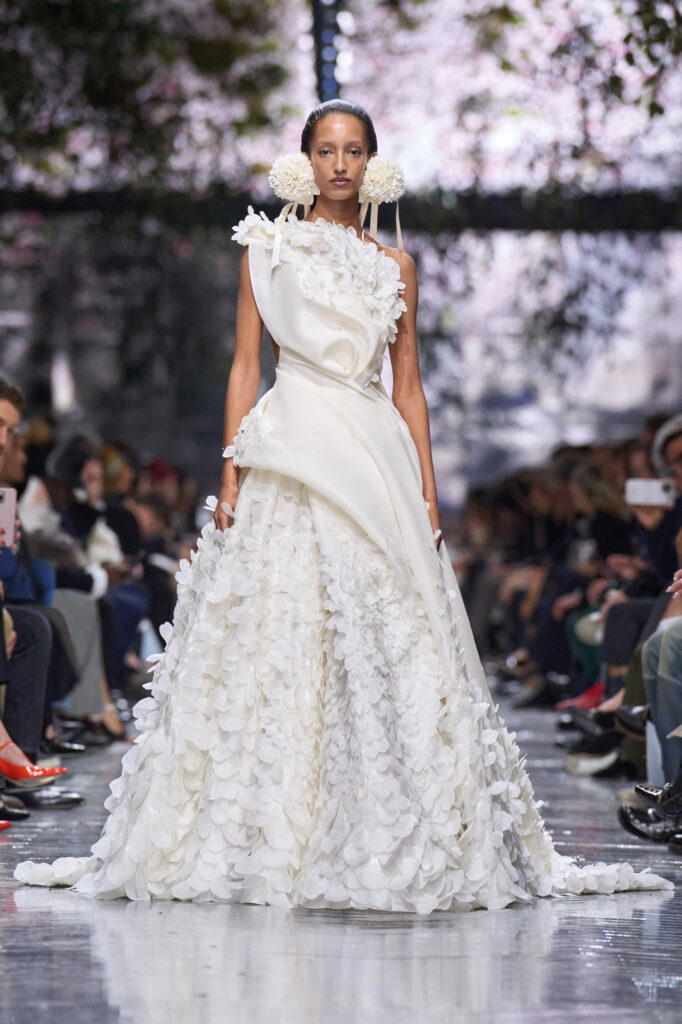
Jonathan Anderson focused heavily on the natural world in his debut. Using florals as the primary motif, he imagined a collection with distinctive silhouettes and mind-boggling techniques. While florals may seem obvious, Monsieur Dior himself was obsessed with flowers and compared women to them. Inspired by Magdalene Odundo’s ceramic work, an hourglass shaped dress opened the show with pleated silk that swirled around the dress, ending with a sweet bow at the hem. Besides keeping the dress buoyant and light, the couture ateliers designed an internal structure that was flexible and moved with the wearer.
Other shapes inspired by Odundo’s work seemed more experimental, such as the eggshell-shaped skirts covered in hand-cut feathers and reminiscent of Anderson’s surrealistic shapes at Loewe. Additionally, although his draped dresses recalled Galliano’s bias-cut dresses during his tenure at the house, his approach was rather refreshing.
Asymmetric and organic drapes, incorporating techniques such as hand-shorn velvets and floral embroideries fashioned from organza and chiffon, wrapped the wearer in an almost haphazard way. As part of the presentation, accessories were also added. They included grass like bags perched on models’ arms, 18th-century fabrics transformed into shoes and bags, and cyclamen pom-pom earrings. However, these were not intended to make a practical statement, but rather to add layers of meaning and interpretation to silhouettes.
Schiaparelli
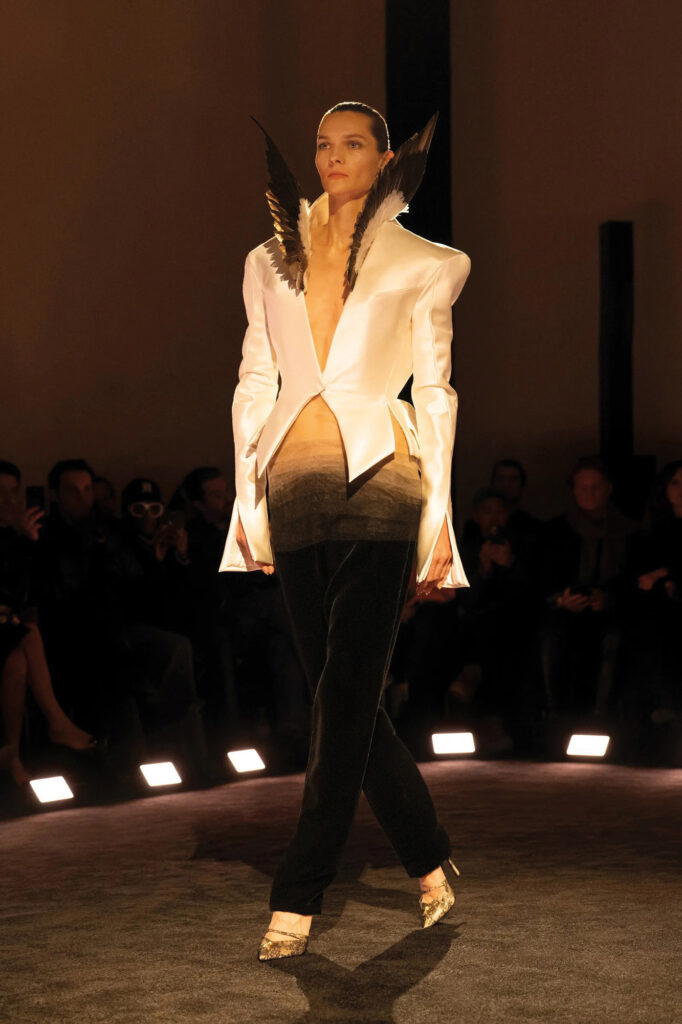
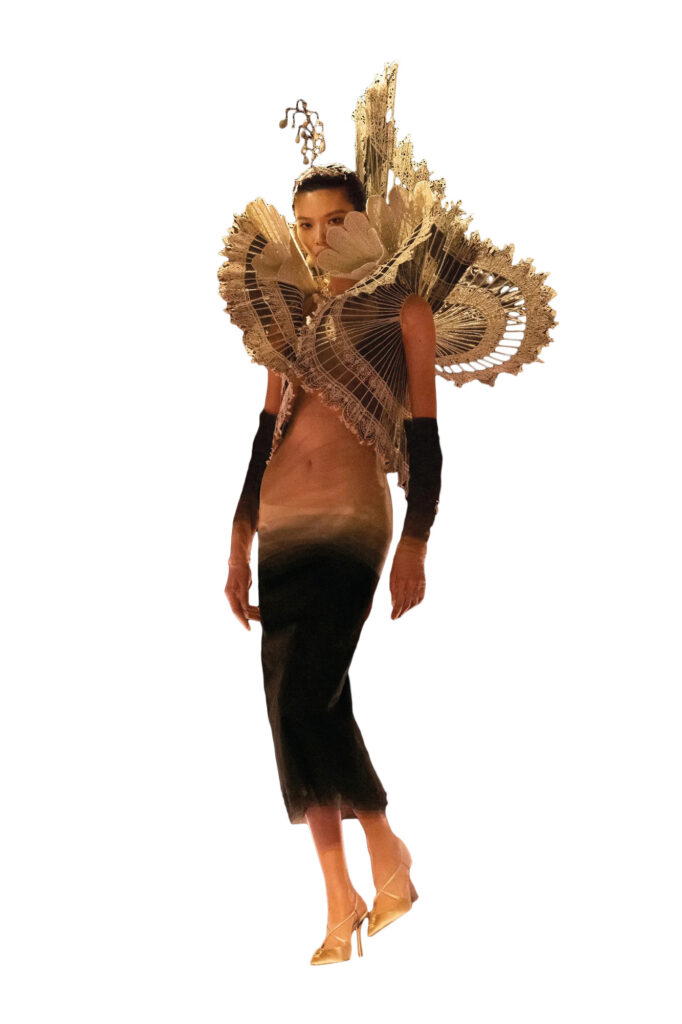
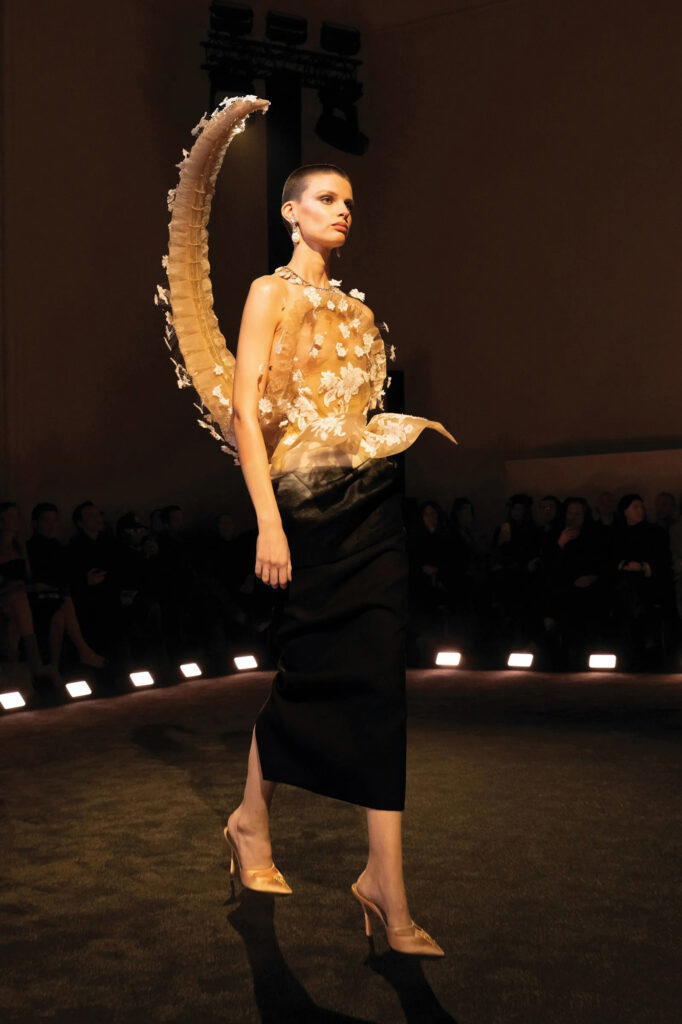
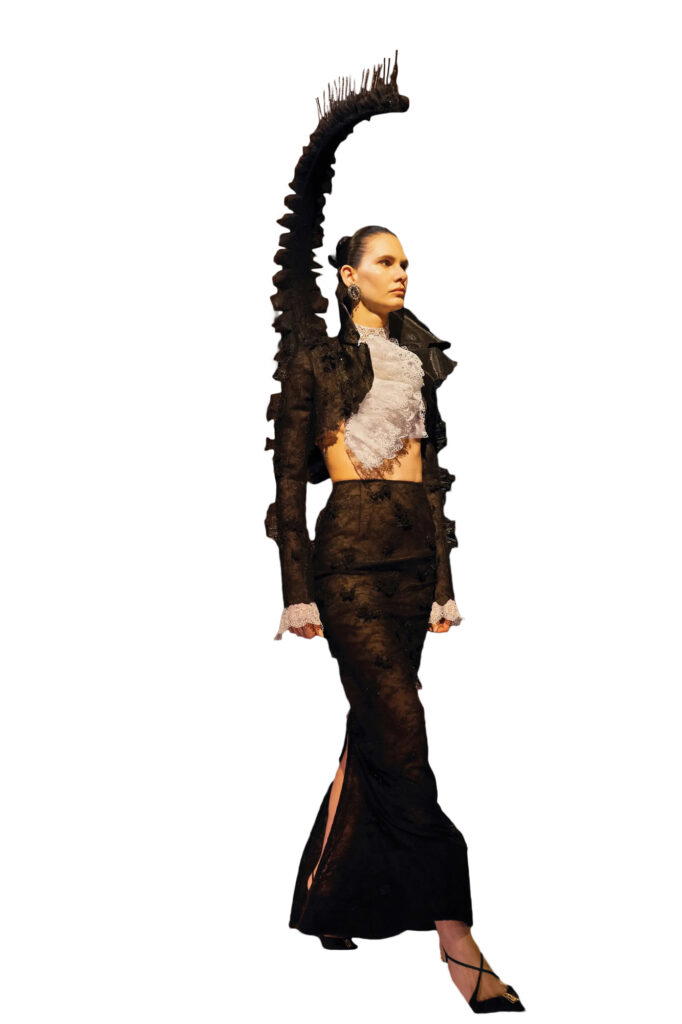
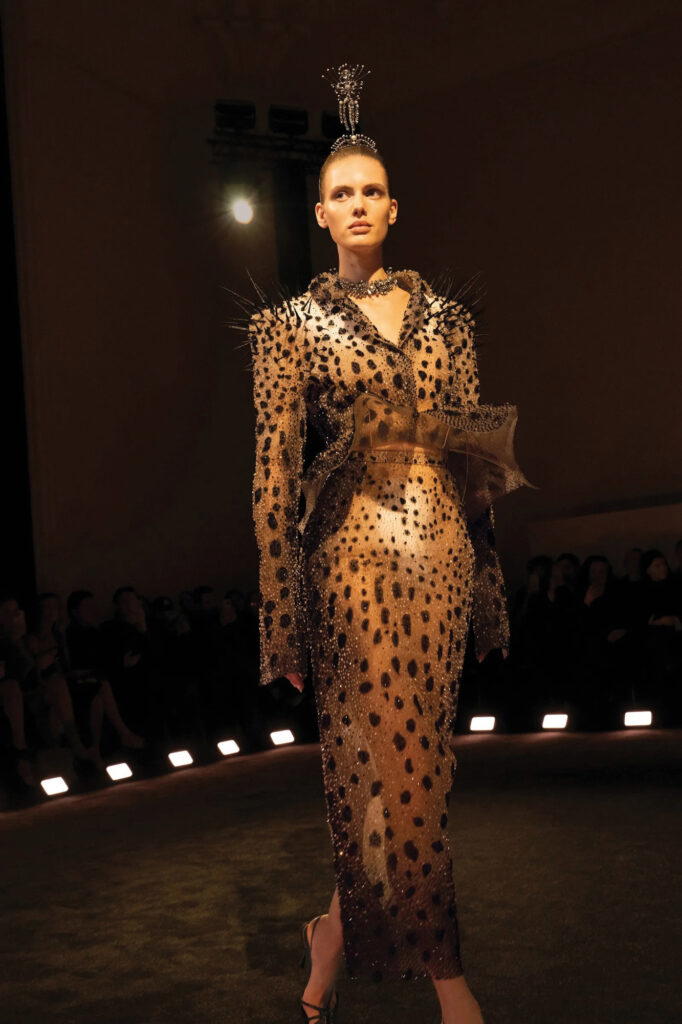
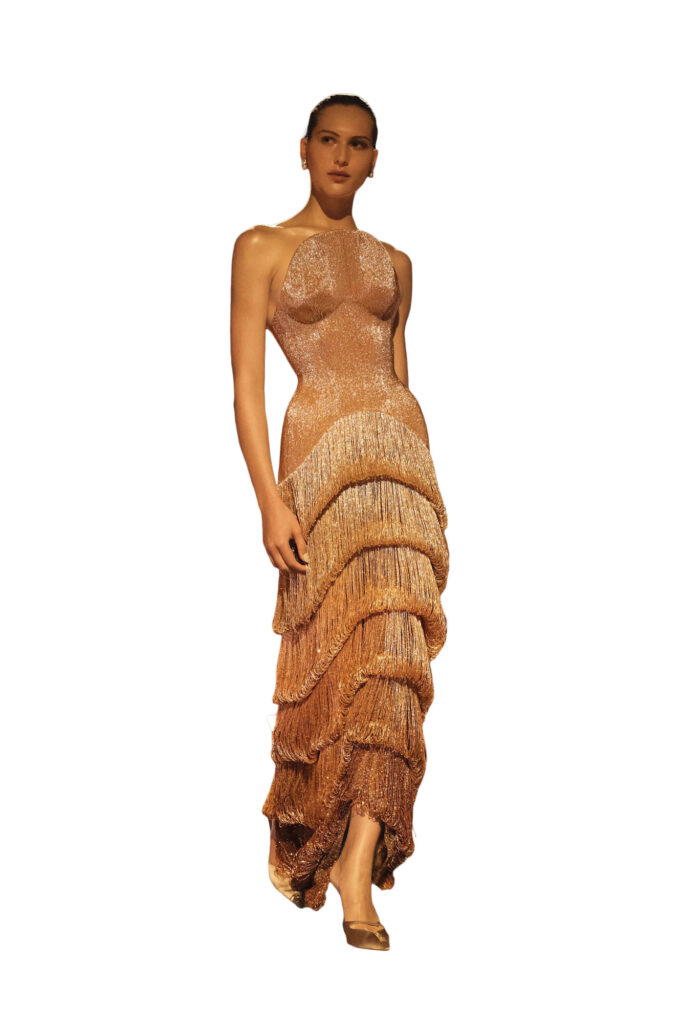
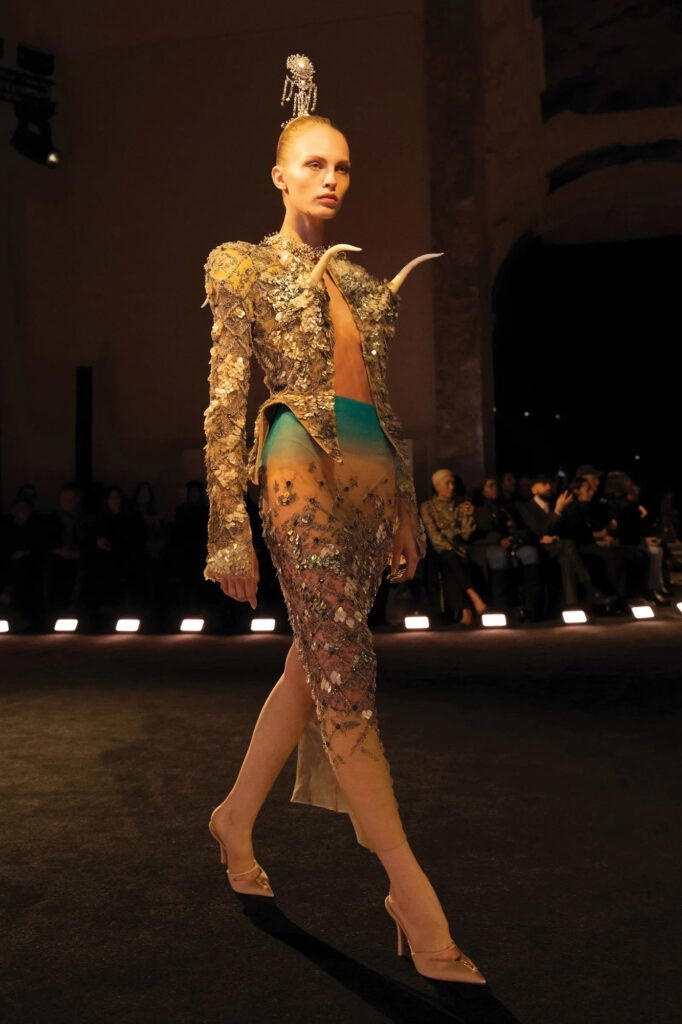
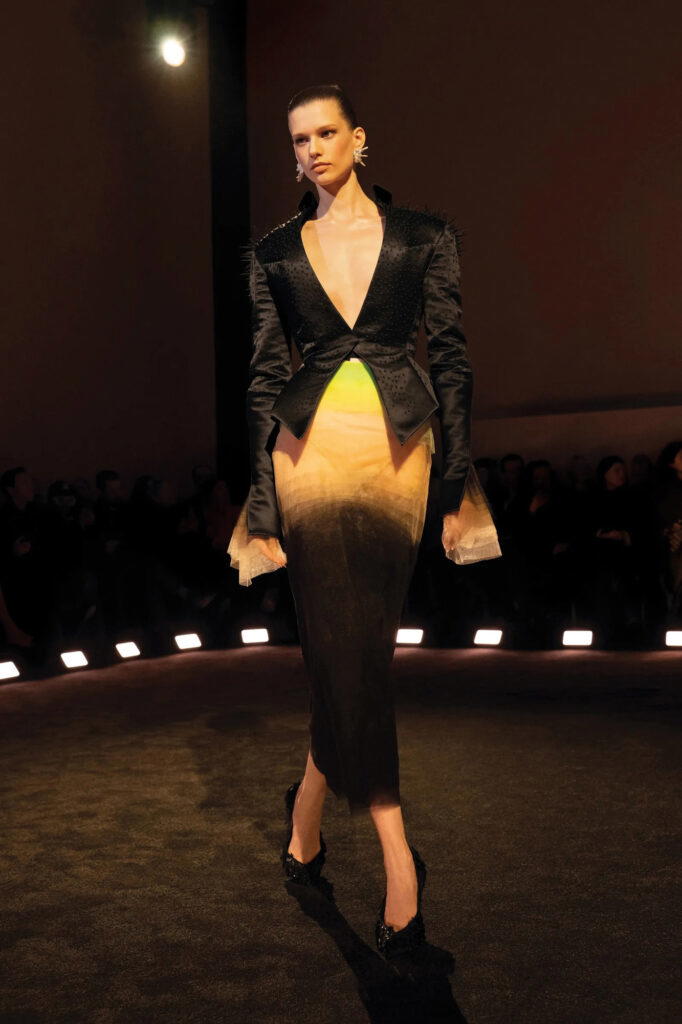
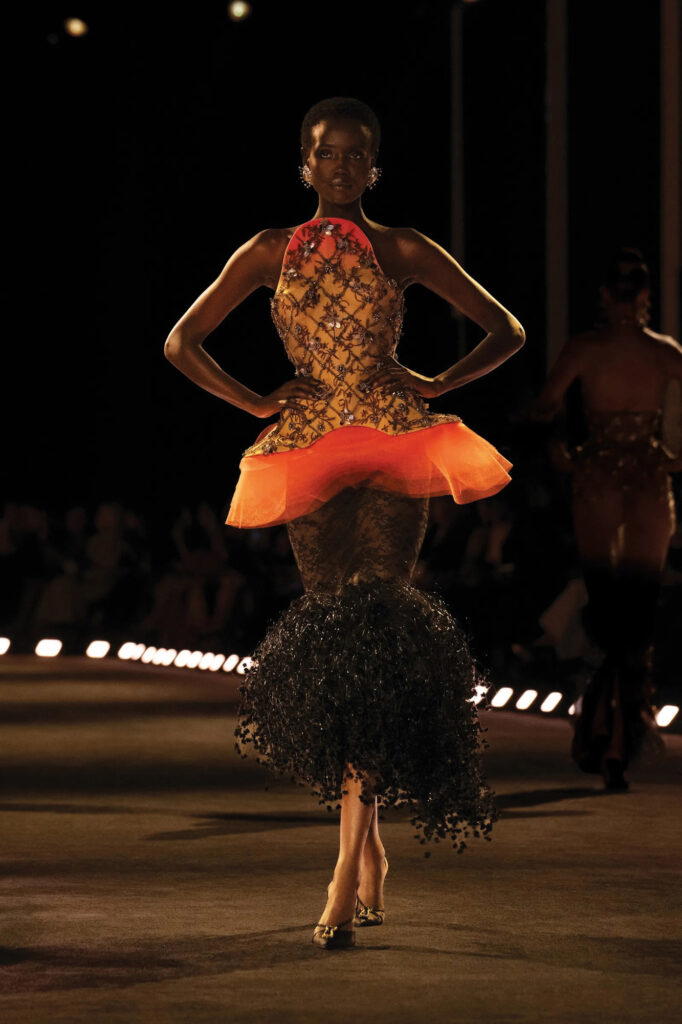
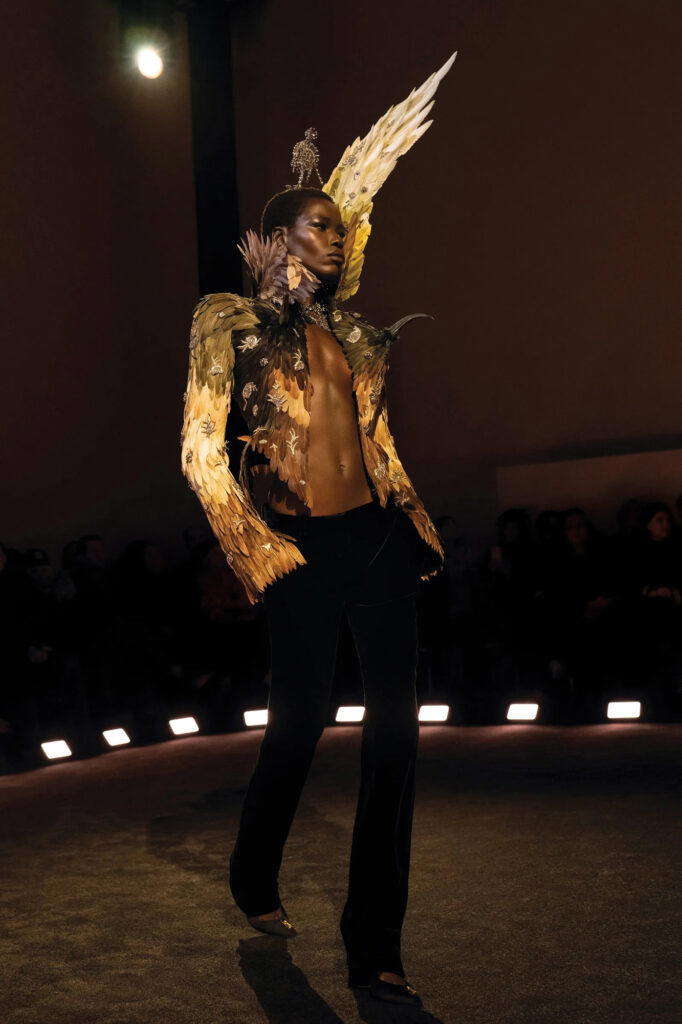
Daniel Roseberry’s Schiaparelli was provocation-driven. It wasn’t about being pretty. This show was about tension, about pushing silhouettes into something unusual, sinister—and compellingly irresistible. Winged lapels adorned a sharply cut jacket. Another, encrusted in beads, sprouted horns from its bust. There was a neat skirt suit with spiked shoulders and a faintly slick sheen that mimicked blowfish skin. There were also looks with crescent structures arcing from the back, rising high above the models’ heads. These structures were part armour and part deep-sea apparition. His ability to balance theatrics with stunning pieces destined for the red carpet is remarkable.
Roseberry’s gift lies in his control, however. For all the theatrics, there were also gowns of undeniable glamour: a sculpted, beaded column with loops of molten gold fringe cascading from the hips in waves as well as ombre jackets, trousers, and dresses layered with graduated shades of tulle, the same technique used in Margot Robbie’s gown at the premiere of Wuthering Heights. Roseberry’s collection, wearable or not, reminded us that couture exists to entice us to indulge in pure fantasy.
Valentino
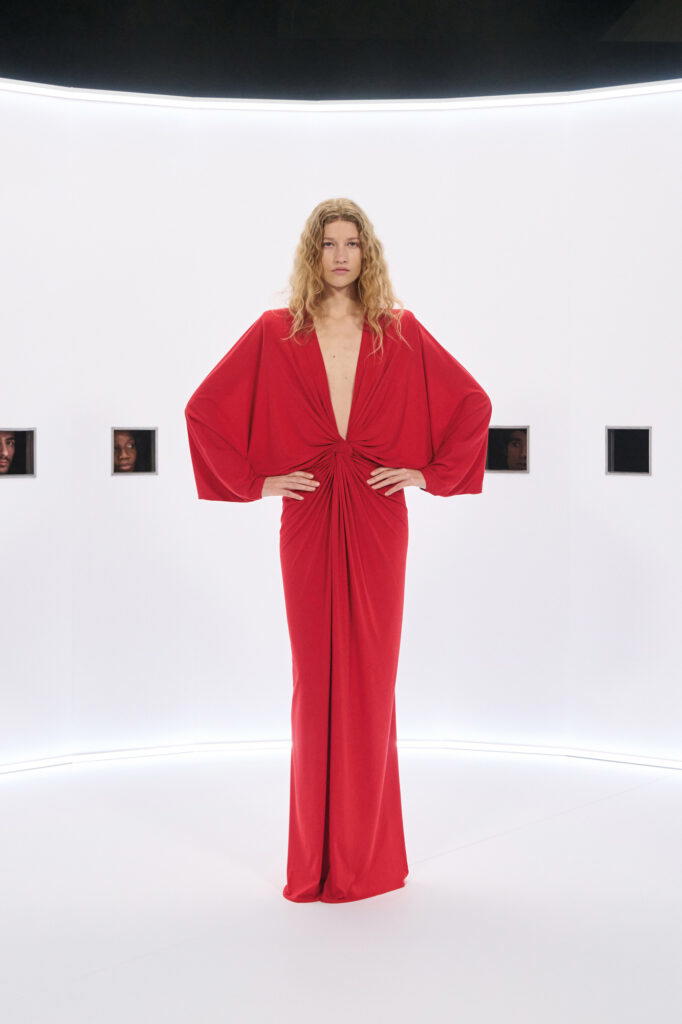
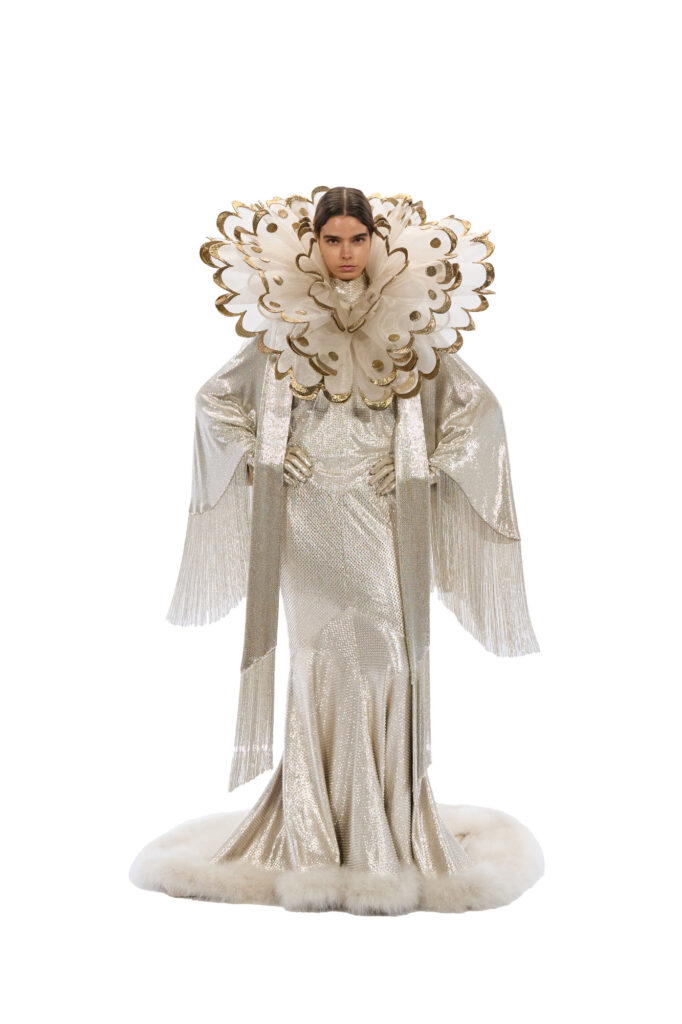
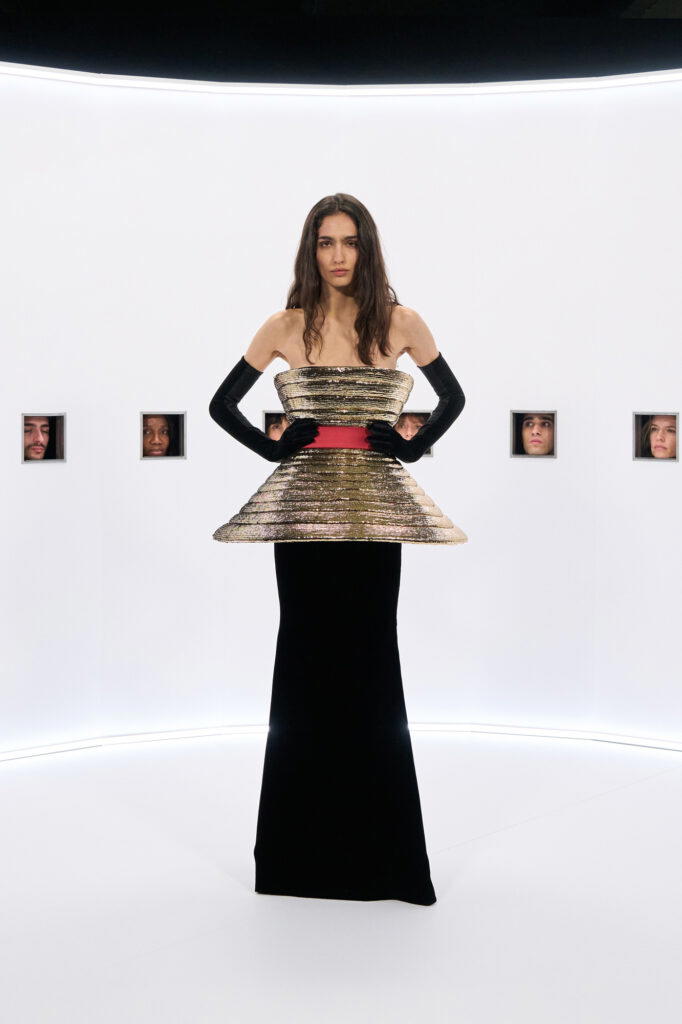
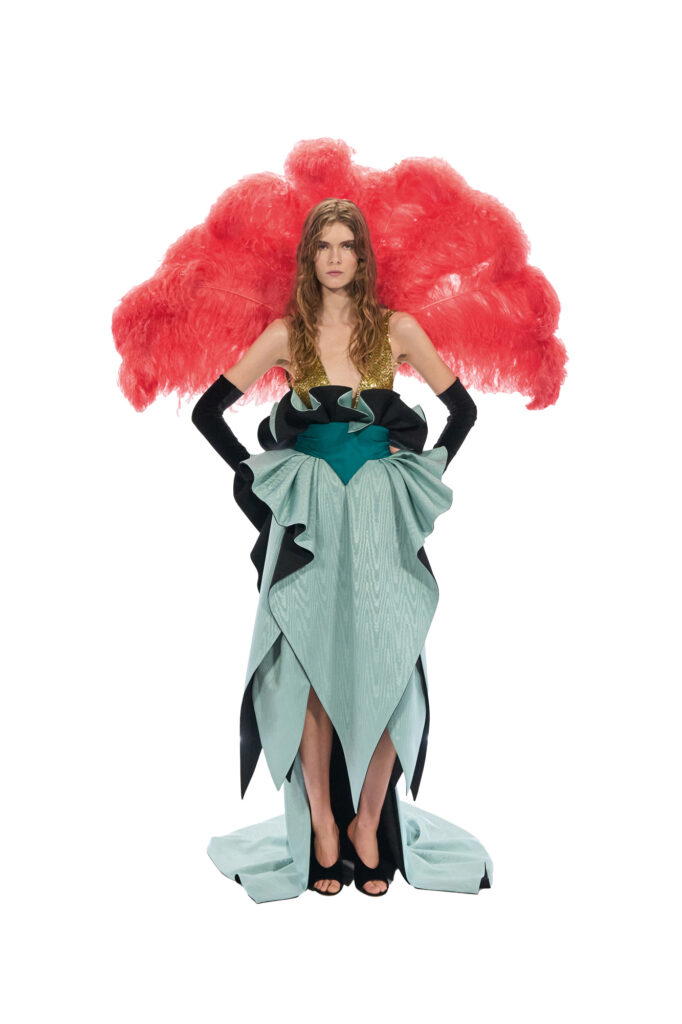
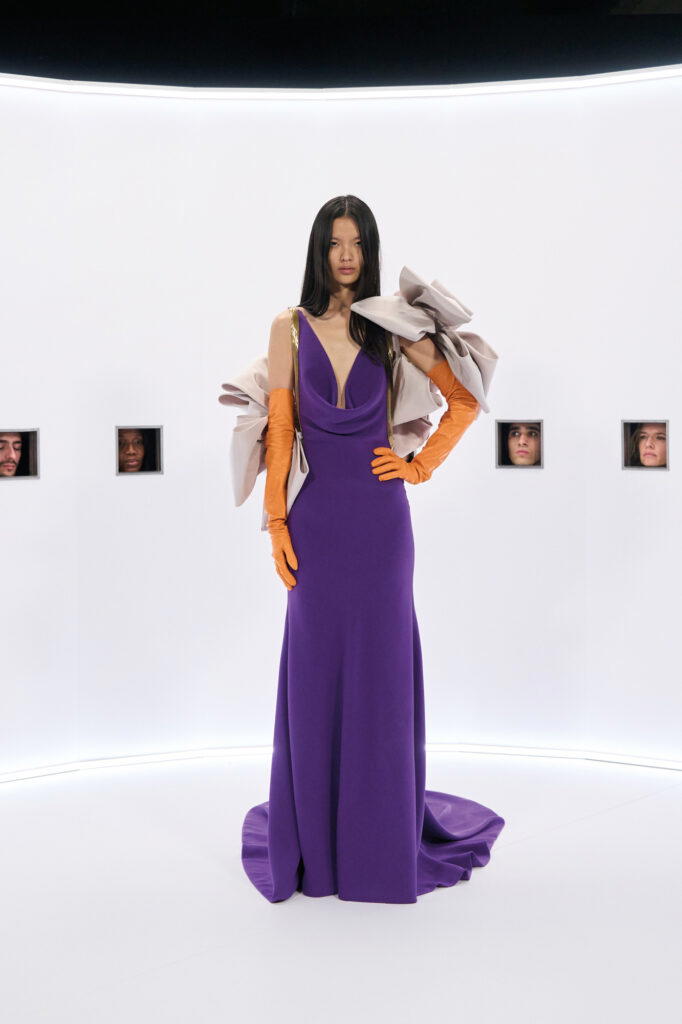
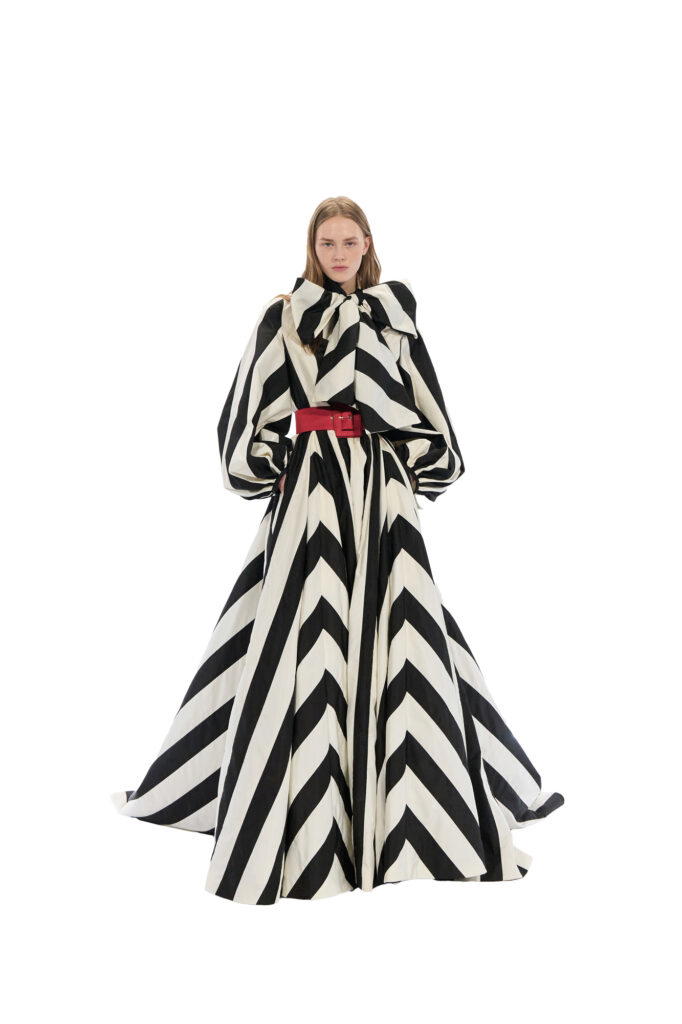
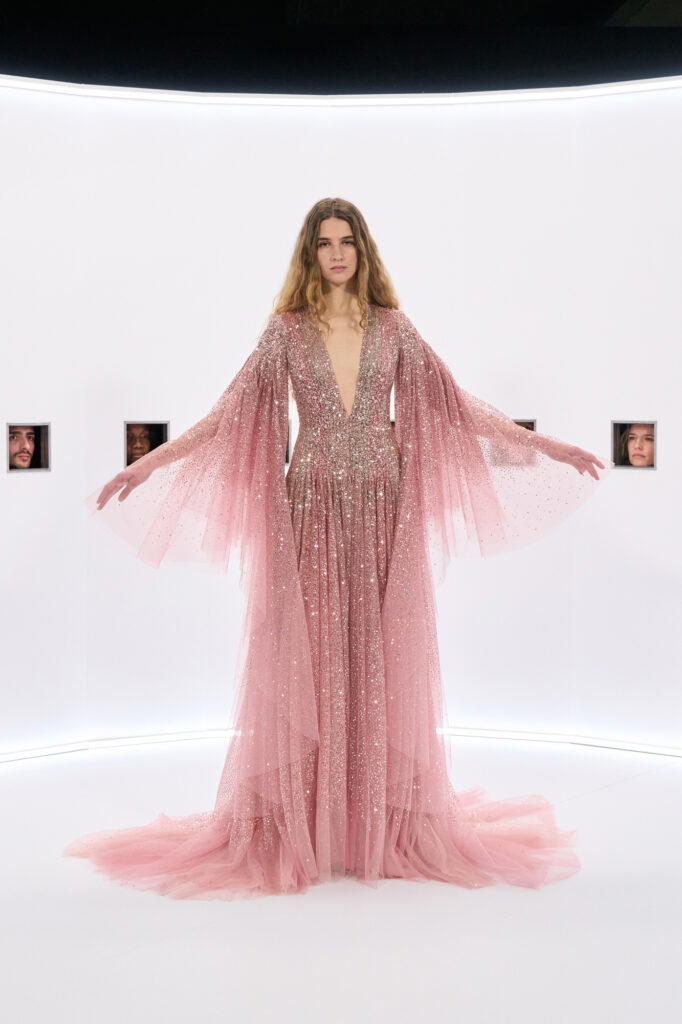
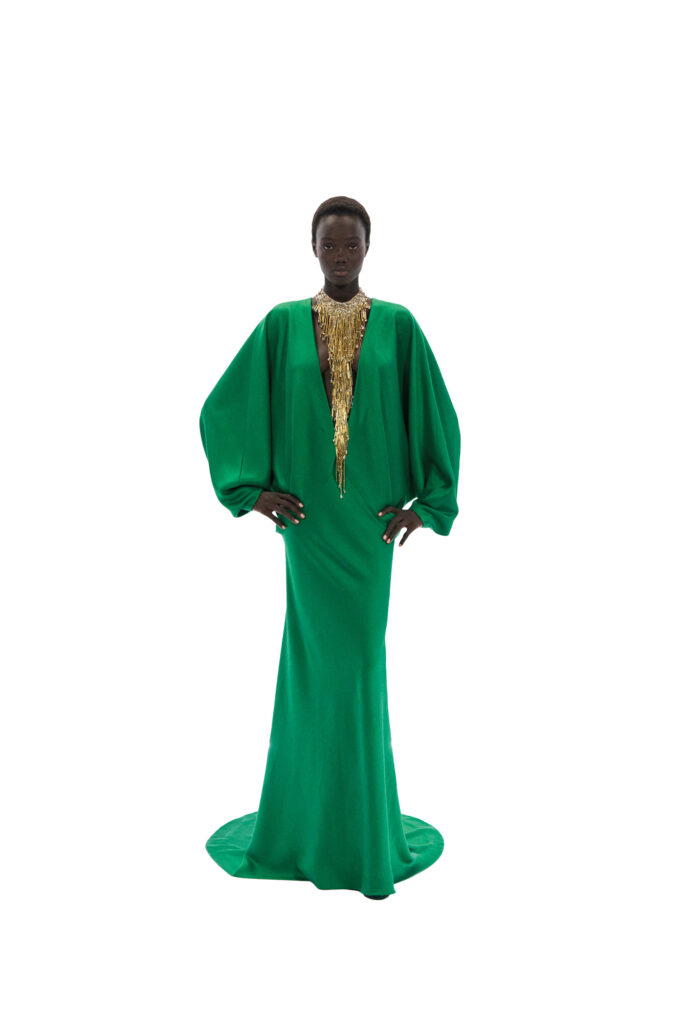
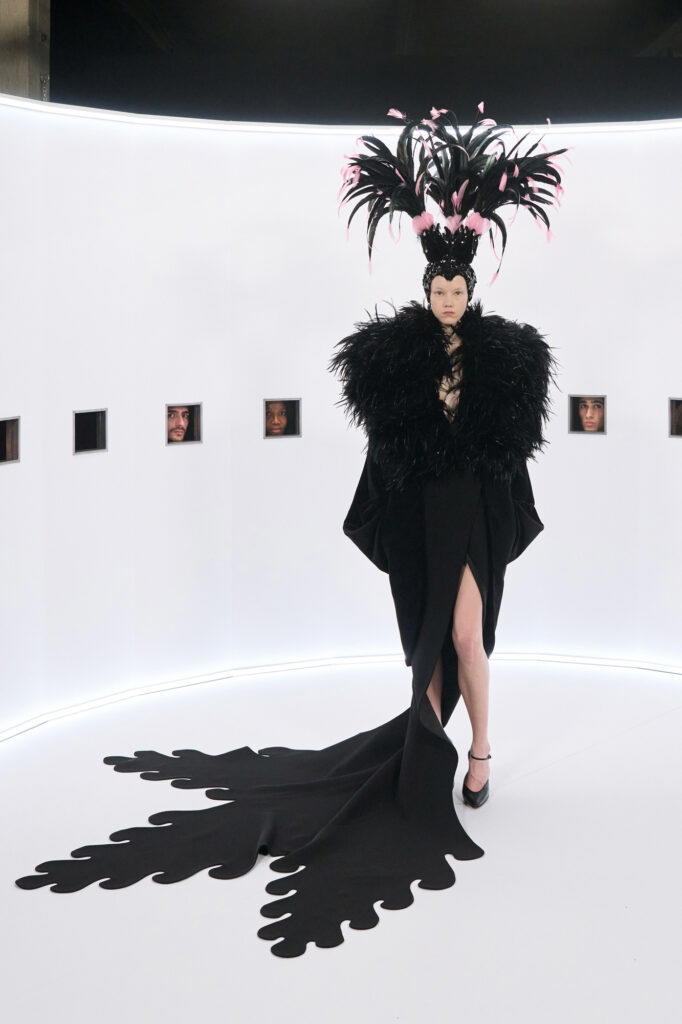
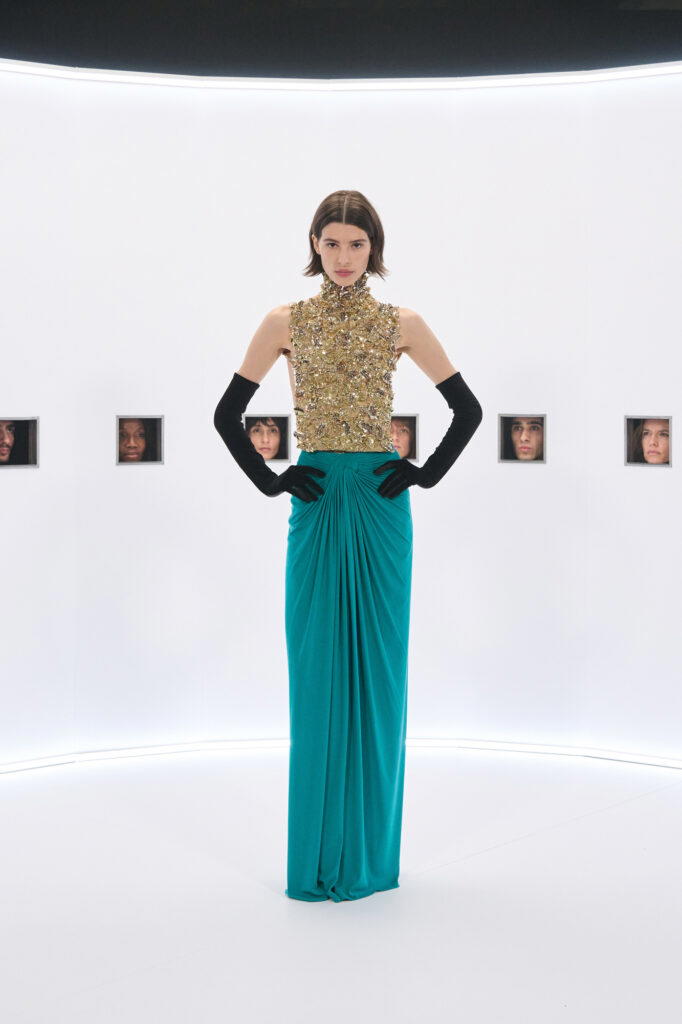
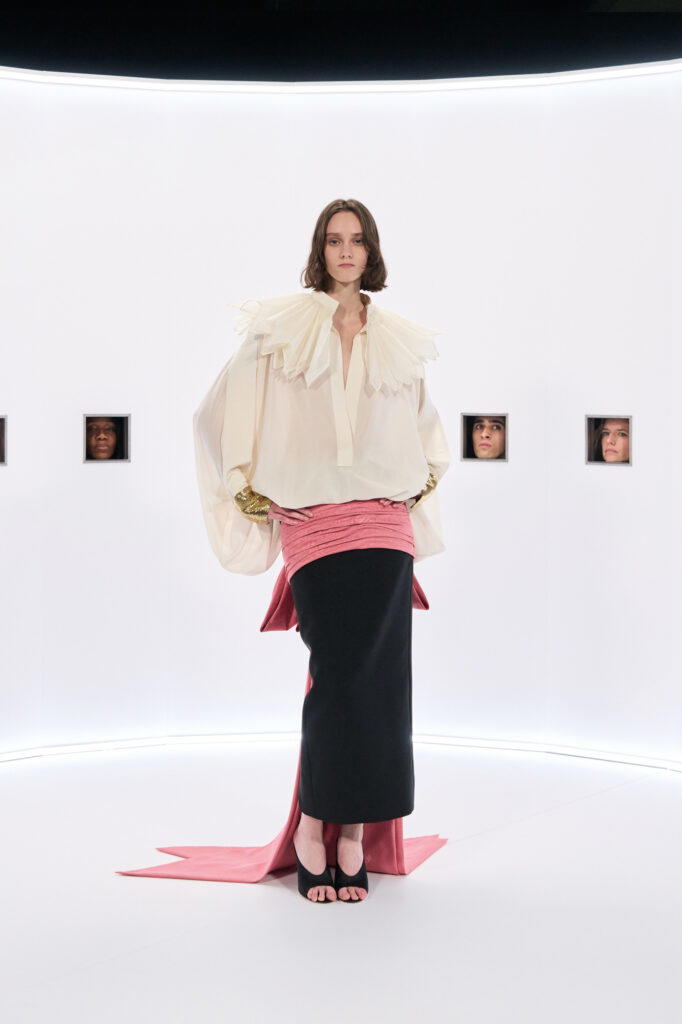
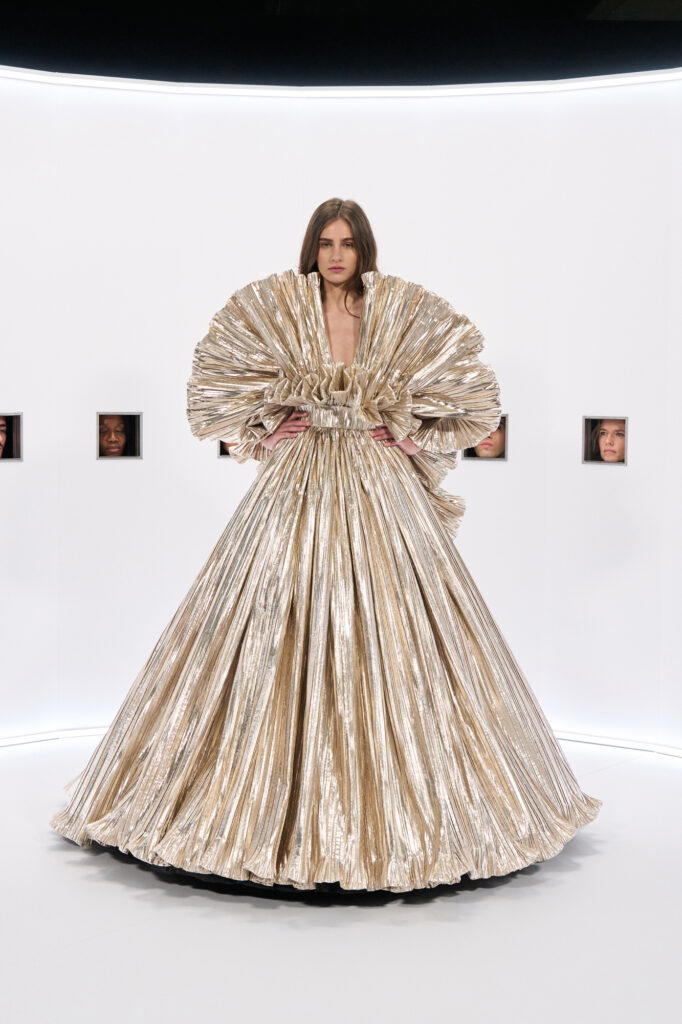
Following Valentino Garavani’s passing, many expected a collection steeped in nostalgia and house codes. In response, Alessandro Michele did what he does best: he trusted his instincts. While he opened with a batwing gown in Valentino’s signature red, its motion, cut, and drape revealed a much more intricate and compelling story. Valentino’s grandeur, romance, and unmistakable drama were evident, of course, but filtered through Michele’s singular lens.
The collection acknowledged his legacy with respect while remaining distinctly and unapologetically Michele. Having to peer through a peephole only heightened the atmosphere. As if spying on a decadent world, it transformed the presentation into something intimate and cinematic with an air of old Hollywood glamour and high camp throughout.
A silver gown trimmed in fur appeared crowned with an exaggerated ruff, recalling the elegance of 1940s screen sirens. A seafoam-green outfit, featuring a burst of feathers at the back, captured the showgirl fantasy. Following these were vibrant creations in a riot of colour as Michele experimented with other greens, bruised pinks, and saturated jewel tones.