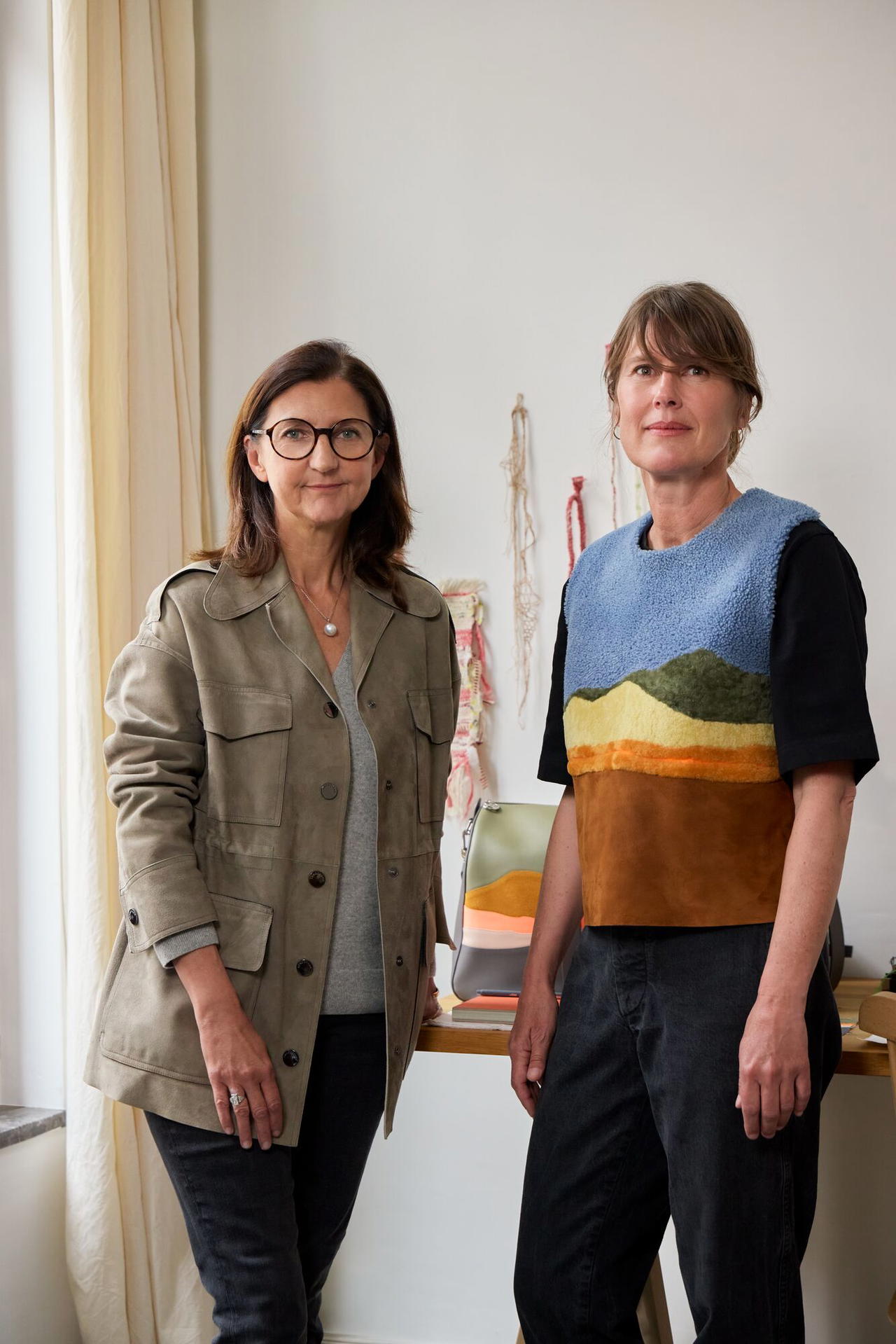
There are landscapes you remember long after you’ve left them. For French textile artist Caroline Hélain, those memories form the very foundation of her work.
Known for her abstract textile compositions, she creates layered scenes that hint at coastlines, cliffs, and open skies without literal depictions. Cut freehand from fabric and assembled by hand, her pieces sit between paintings and sculptures, drawing on texture and colour to captivate the senses.
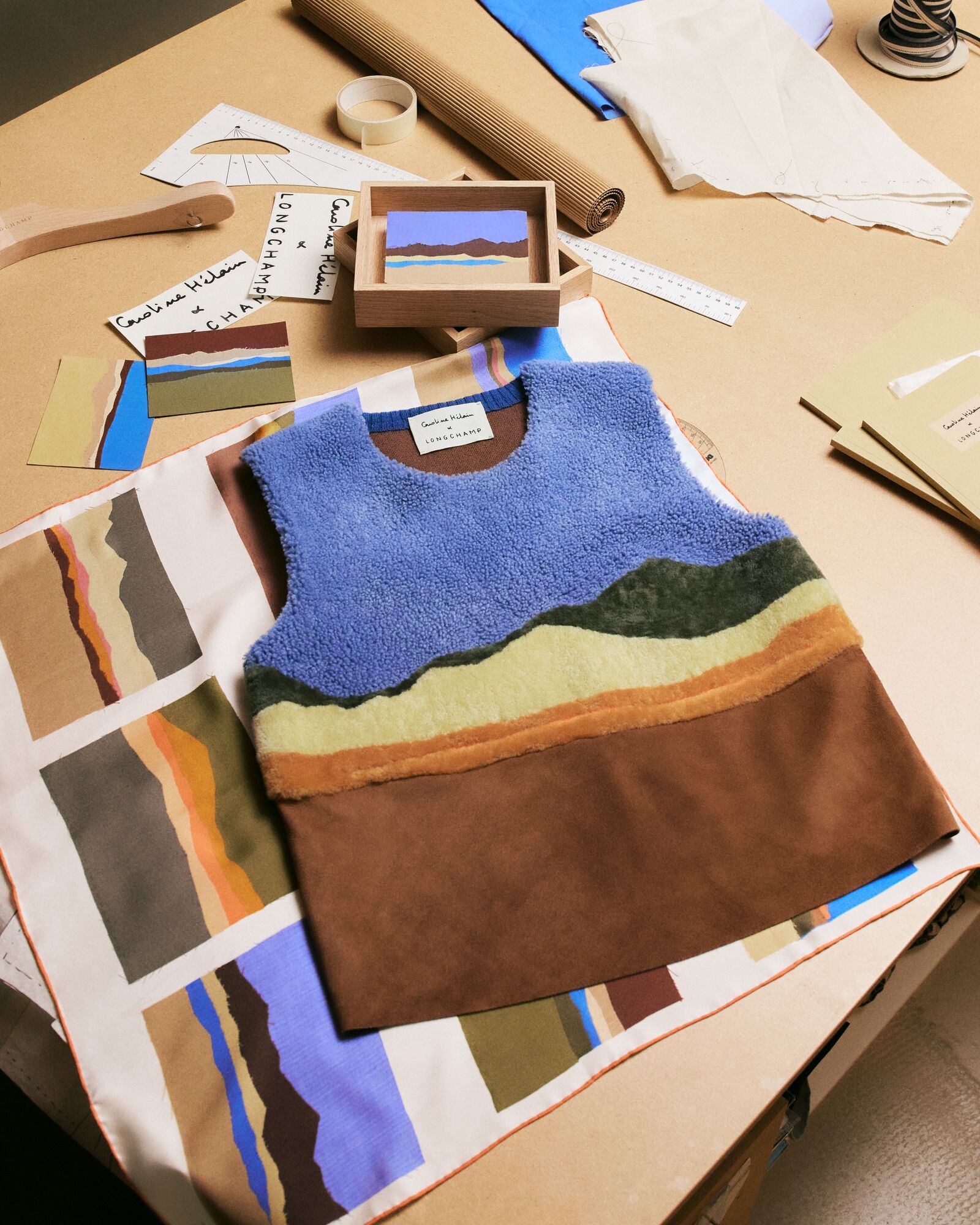
For Fall/Winter 2026, those landscapes become wearable art through a collaboration with Longchamp. Hélain has created nine original works for the French maison that it has translated into a capsule of ready-to-wear, bags and accessories.
Rather than simply printing her art on products, the collection reinterprets them through leather marquetry, knitwear, silk, and cashmere—a fusion of two worlds that share a passion for craft and material excellence.
The partnership also deepens Longchamp’s ongoing relationship with contemporary art, pairing an emerging artist whose tactile practice resonates with its own values. “Beyond recognition or profile, we value an artist’s vision most,” says Creative Director Sophie Delafontaine. “We are exploring collaborations that build a genuine dialogue between our
brand story and the artist’s creative universe.”
Hélain’s creative universe begins with memory: “My landscapes are the sum of those I observe and make.” She spent most of her childhood at her grandparents’ home overlooking Normandy’s Alabaster Coast, where chalk cliffs rise above the sea and constantly change with the light and tide. “It was only as an adult that I realised how deeply ingrained my childhood landscape was.”
The memories of those early years have blended with more recent ones that come from years spent sailing. Observing coastlines from the water, she began to see landscapes differently—not as a fixed places, but as shifting compositions of shapes, colours, and layers. This explains why her work feels familiar without being literal.
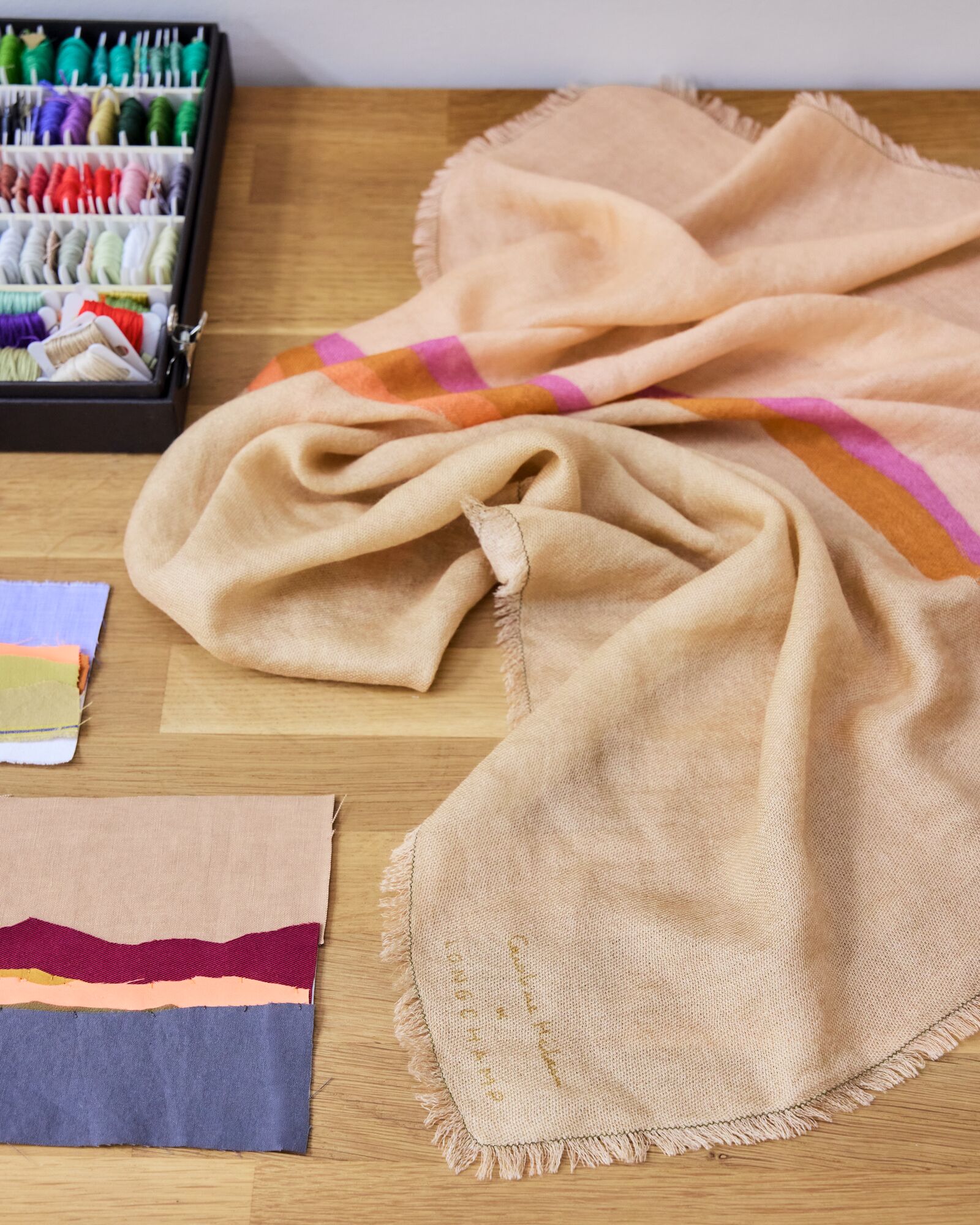
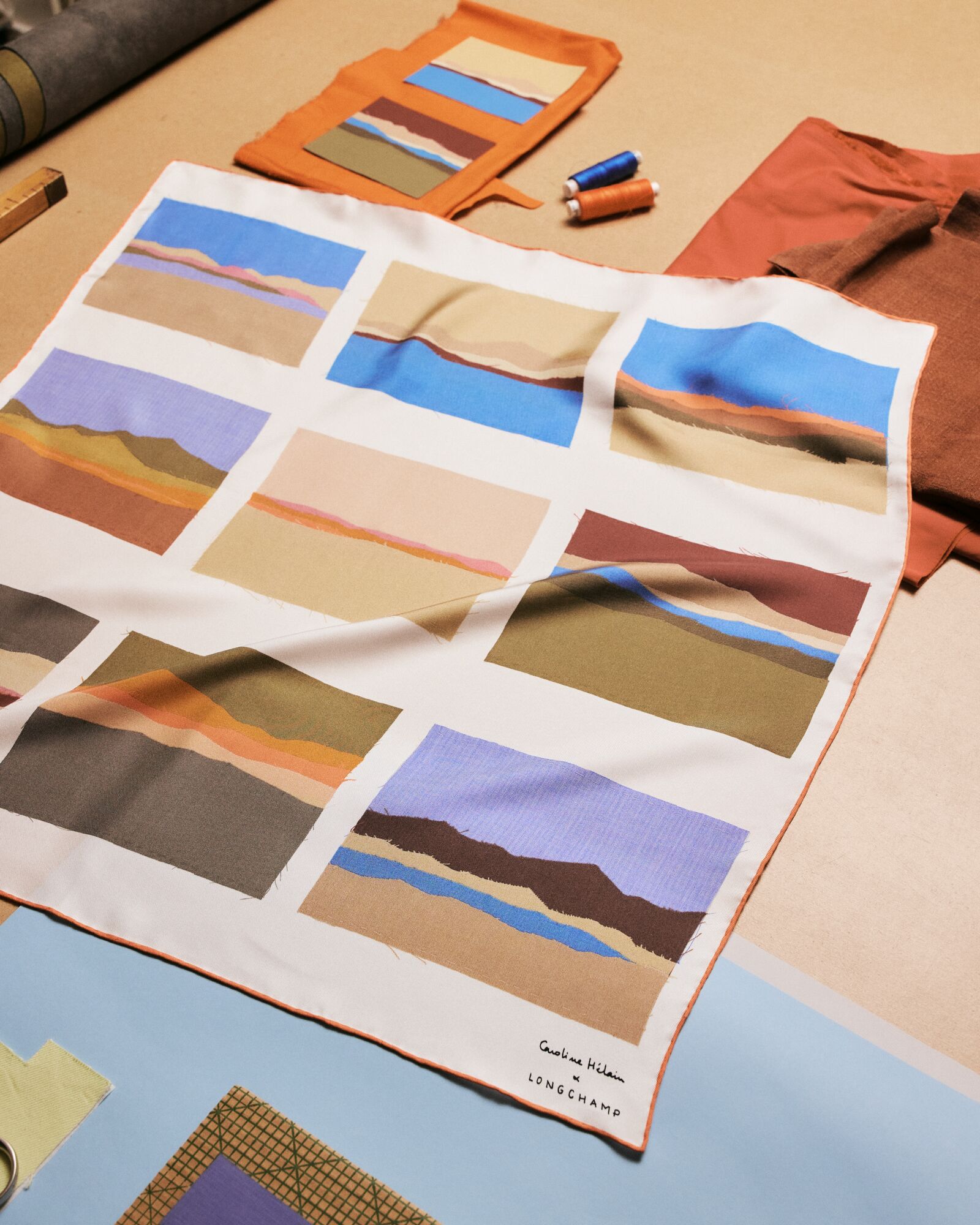
“I hope people feel invited to escape into these imagined landscapes, ” she says. “They are not intended to represent a specific location, but to evoke a feeling, a memory, or a mood.” Her process is as intuitive as the concept. Each composition begins with scissors, not a brush. “Layering brings depth and perspective, allowing colours to interact organically way,” she explains. Shaping the material with scissors is a tactile, almost intuitive gesture that lets her sculpt as she goes.
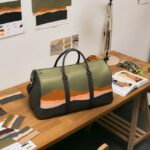
Texture is just as important as colour. The touch of the fabric engages the senses from selection through cutting and assembly, she highlights. Longchamp’s artisans translated Hélain’s work into different materials. On the Daylong mini bag and weekender, the landscapes become intricate leather marquetry assembled layer by layer in its workshops.
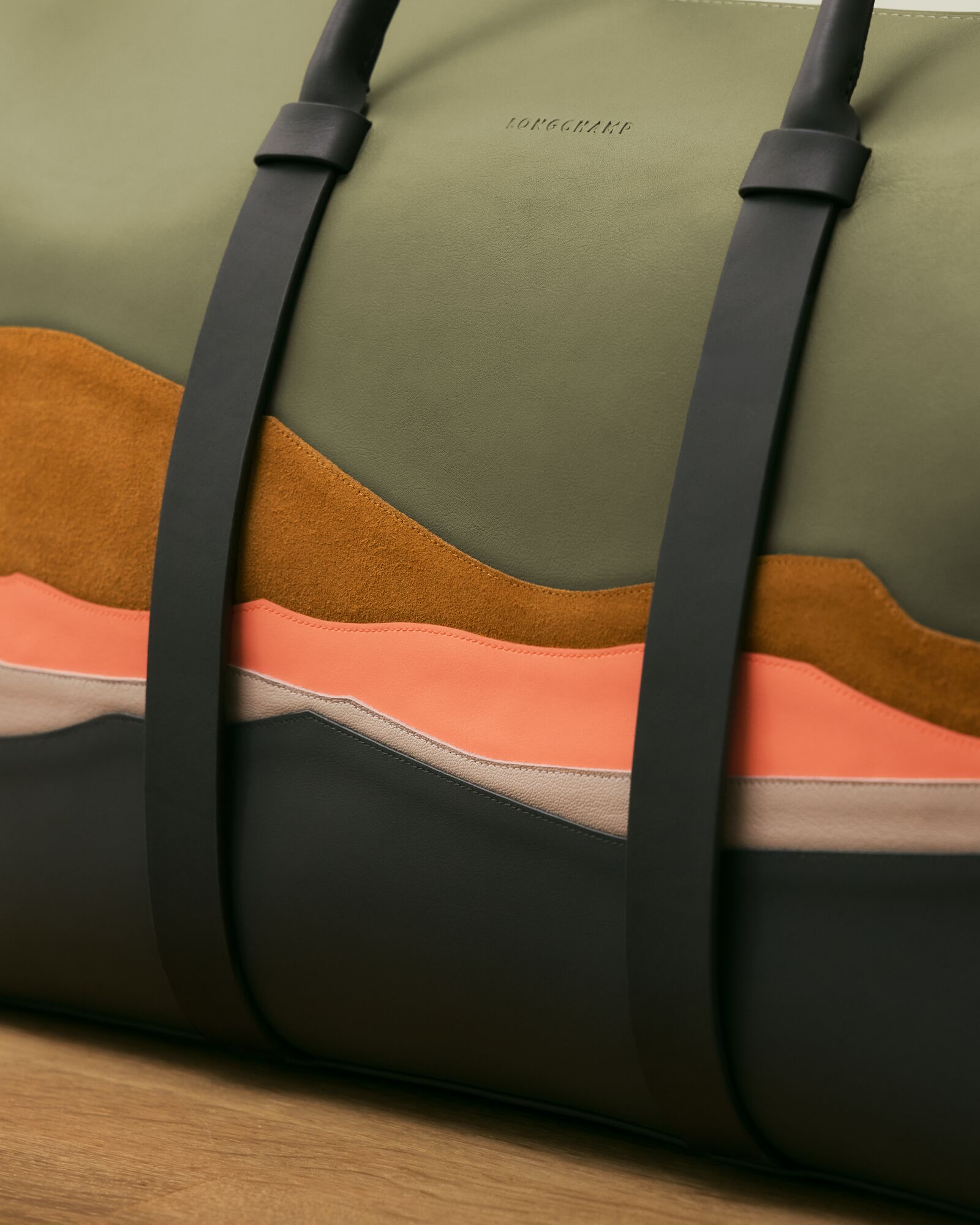
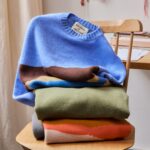
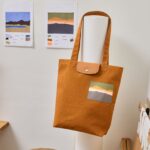
Sweaters and long dresses turn her compositions into soft knitted art, while a sleeveless calfskin top paired with boucle virgin wool reflects rolling sand dunes beneath a blue sky. The motifs also appear on silk scarves, cashmere squares, Le Pliage canvas totes, and T-shirts in earthy shades.
“We started from our Fall/Winter colour palette and gave her complete creative freedom,” says Delafontaine. Turning art into wearables required close collaboration between artist and atelier, including adjusting stitch height, leather cuts, and even fabric fraying to stray true to Hélain’s original compositions.
Visiting Longchamp’s production centres in Segré and Ernée in north-western France gave the artist a deeper appreciation of the craftsmanship behind the collection. It wasn’t about shaping her work to fit a brand, but about listening and letting her art speak freely.
She says she never felt pressured to change how she worked, despite this being her first collaboration with a fashion brand. That freedom is what sets this partnership apart: art informs fashion, not the other way around.
“At first, I was concerned that working with a brand might influence or limit the way I create,” she admits. “But from our very first conversations, I quickly realised this wouldn’t be the case at all. I felt genuinely listened to.”
That freedom was equally important for Delafontaine: “It was essential to allow her art to fully express itself, rather than imposing an approach centred around the brand.” Perhaps that’s what sets this collection apart from many artist collaborations today. Rather than using art as decoration, Longchamp allows Hélain’s visual language to guide the collection’s design.
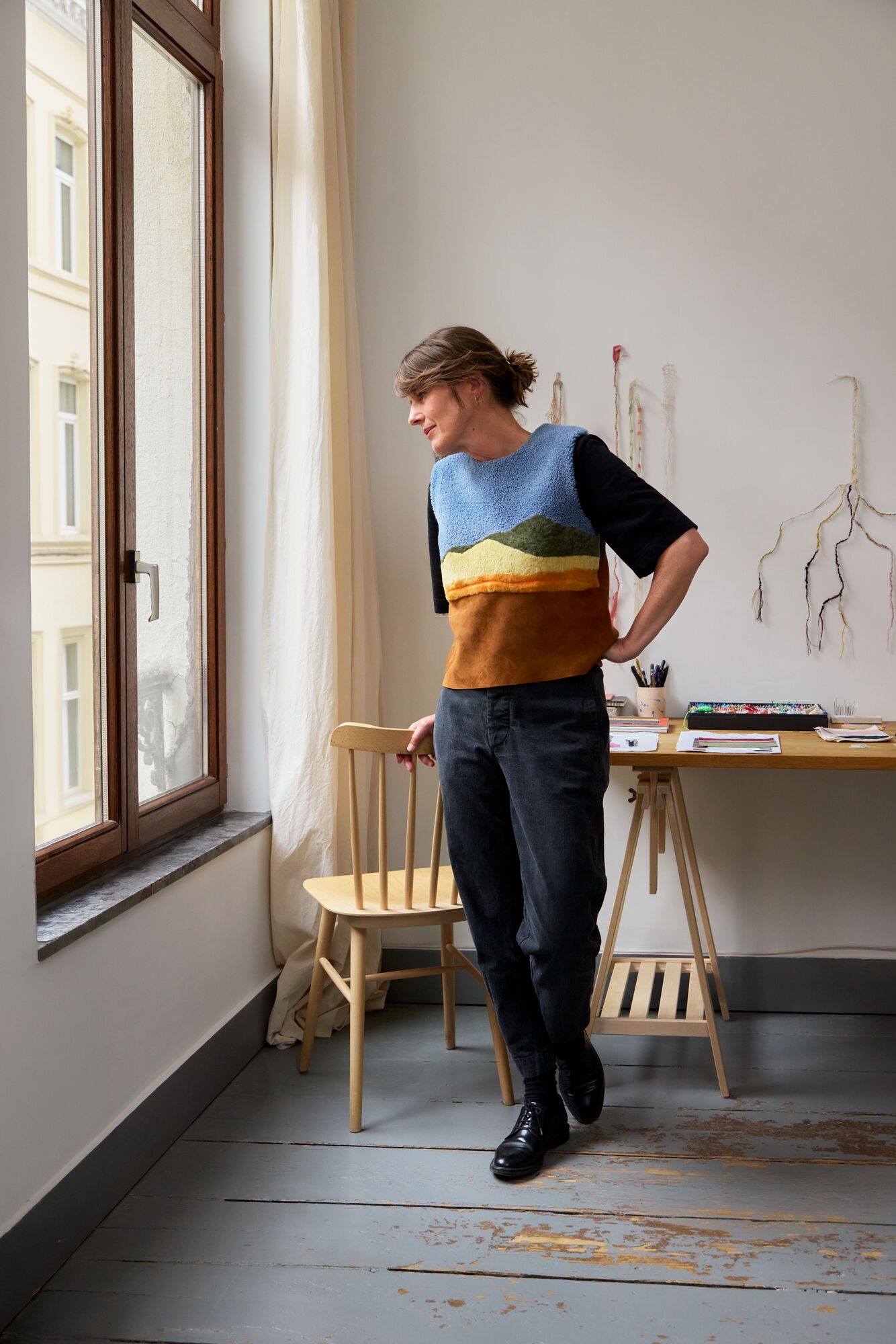
Also, it has helped Hélain consider how people encounter her art differently. “The art world often presents work through galleries or museums, where the encounter is intentional,” she says. “Fashion introduces another rhythm—more intimate, more immediate, and connected to everyday life.” That shift changes the artwork too. “Through the movement of the person wearing it, the landscapes come to life. In the same way that our environment shapes us, these landscapes shape our bodies,”
Hélain observes. It is perhaps this aspect that is most compelling. Her landscapes are not meant to represent any particular place. Instead, they leave room for interpretation, for memories of places you’ve been or imagined. As they move from the gallery to the wardrobe, they gain another layer of complexity. Rather than being static artworks, they travel with the wearer, collecting new stories along the way. You feel more like you’re carrying a landscape than wearing a print.