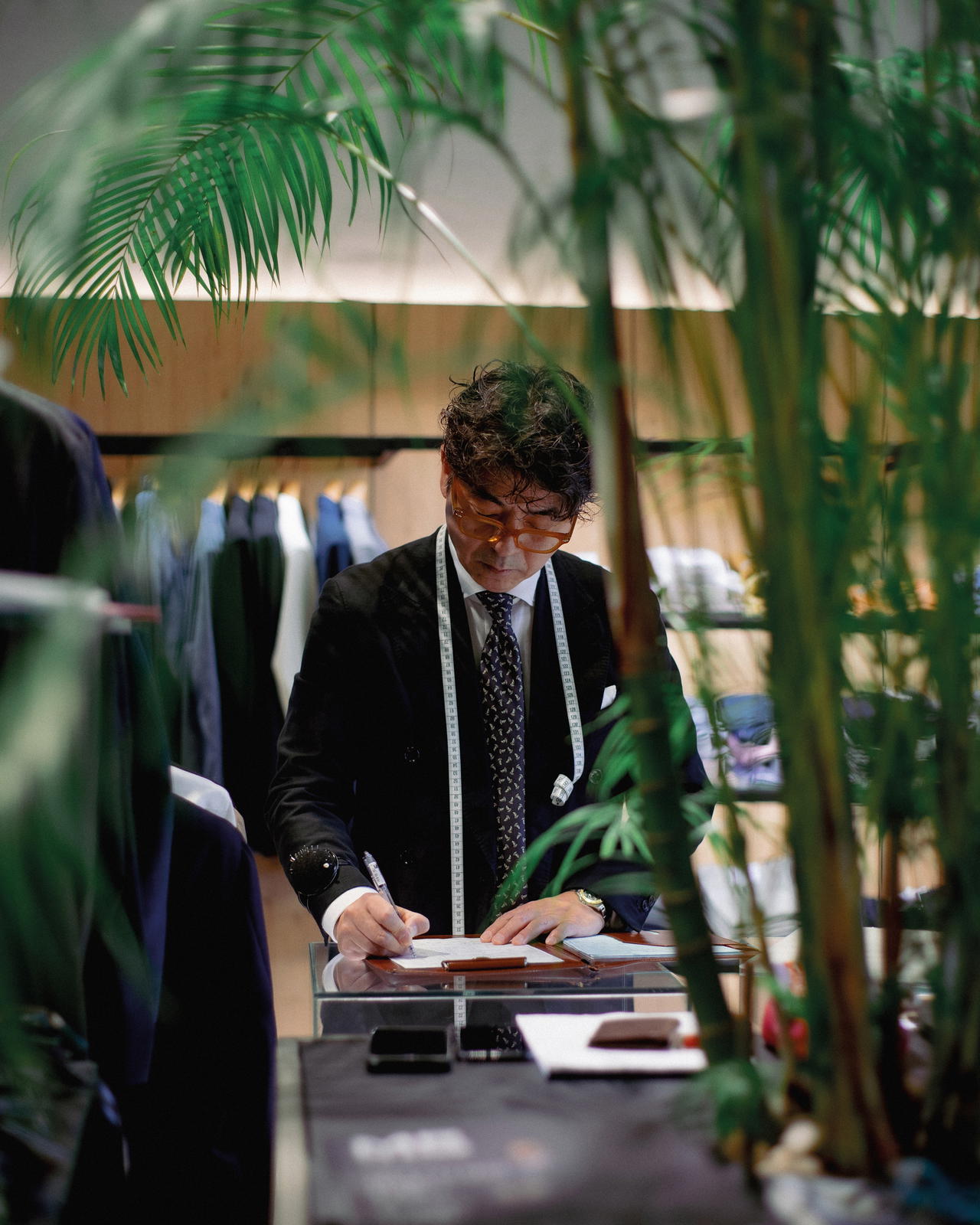
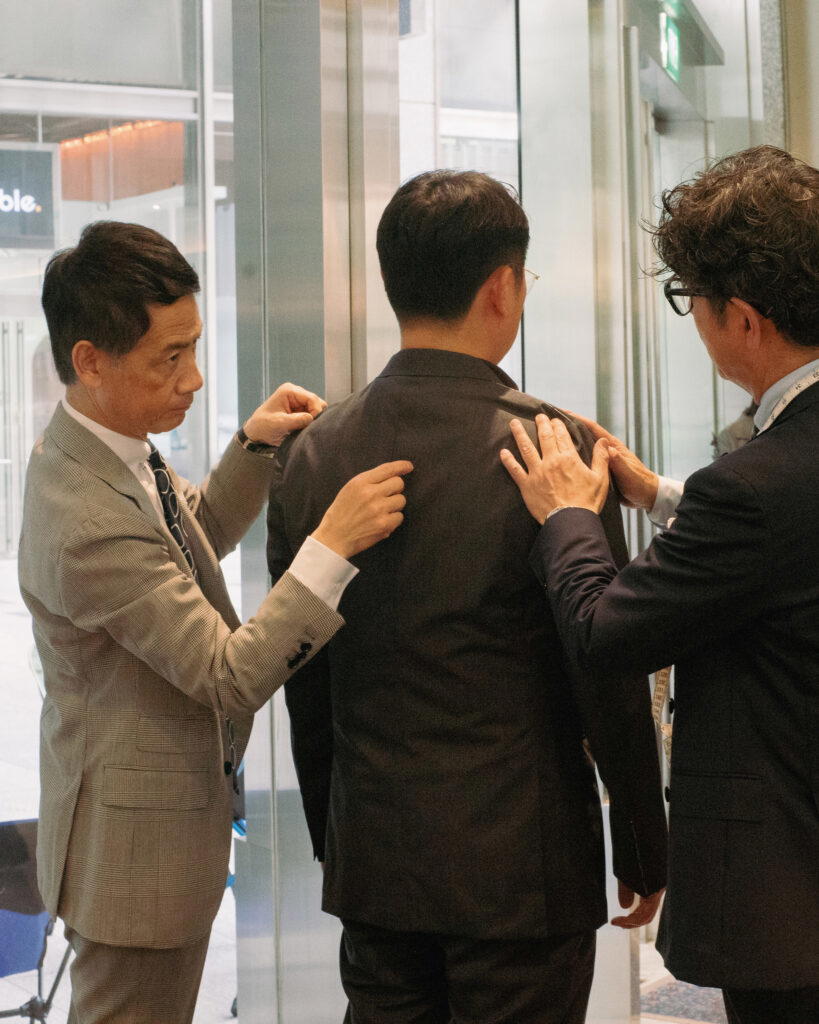
Tamao Shirai frowns slightly as he looks me over at Colony Clothing’s UE Square premises. He talks to Tatsuya Nakamura, Creative Director of Beams Japan, who nods and explains, “Your shoulders have around three degrees of slope difference, so we will construct the shoulders to match.”
I fight the urge to shrug my right shoulder slightly to compensate. It’s an incredible observation, considering I’m not seeing an orthopaedist. As Beams’ Suiting Expert, Shirai oversees high-fashion collaborations, sports and streetwear, and Made-to-Order (MTO) suiting.
The MTO programme was launched 35 years ago during the height of Japan’s salaryman culture. Nakamura felt mid-level office workers needed suits that looked sharp after pulling gruelling all-nighters. By studying how Europe’s finest tailoring companies operated, he developed a process of his own.
“We have had 70 seasons and we are currently using version 70 of the MTO programme,” he shares. Singapore is the first test bed for it outside of Japan.
Most tailoring services look at a suit’s construction from a style-centric perspective, but Beams takes an empirical approach: is it right for you? “A suit is meant to be worn,” says Nakamura. “It must be useful to the owner’s routine.”
Shirai, whose philosophy of tailoring is partly based on sports and streetwear, offers: “The suit should have a light construction, keep its form well, and allow you to move comfortably and easily.”
He adds that an understanding of the client’s musculoskeletal structure is required for this. Due to the amount of personal contact necessary, especially around the hips, waist, ribcage, and limbs, MTO is not available to women.
As we progress with my measurements, Nakamura asks about my lifestyle. What is a
typical suit-wearing day like? At work, do I stand or sit, or am I mostly on the move? Is this suit intended for formal events or daily wear? What designers do I like?
Shirai uses all of this information to decide what to focus on during the fitting. For instance, the fit of the waist varies from standing (higher) to sitting (lower, stretched). There is even an in-between fit for hybrid use.
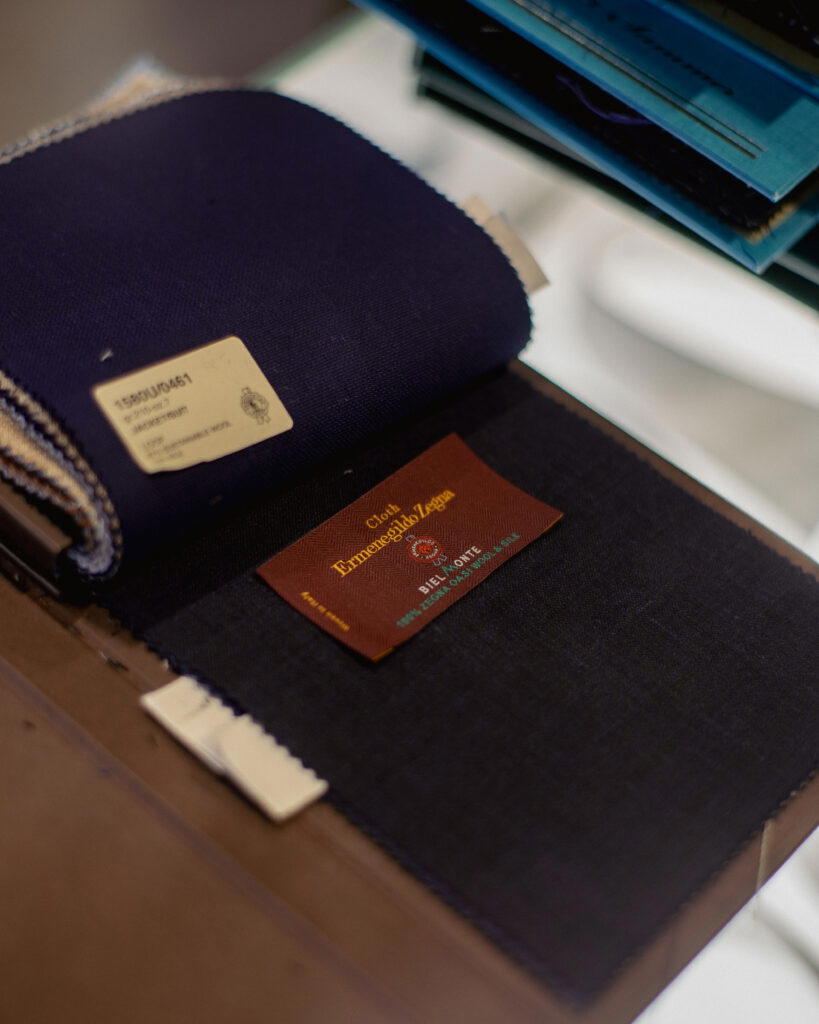
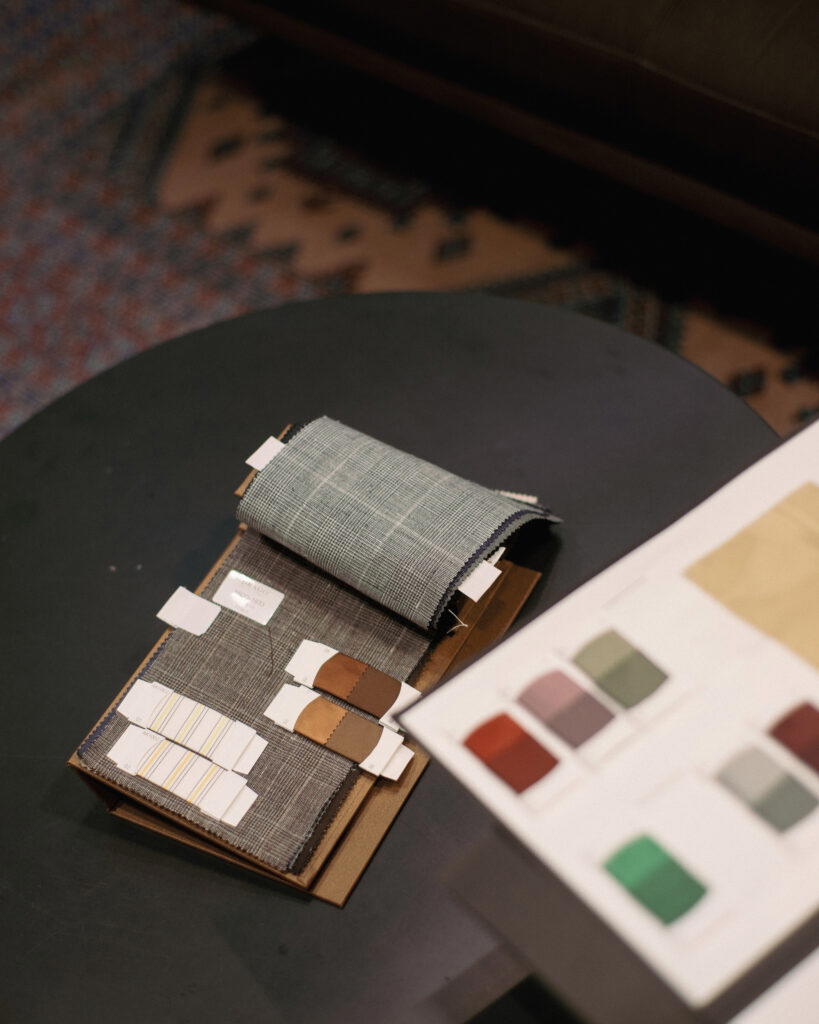
My answers also inform Nakamura of the fabrics to recommend. Beams offers a wide range of fabrics, including Super 120s wool and ultra-fine vicuna, buttons, and linings. Interestingly, Nakamura once bought an entire warehouse of deadstock in Cyprus during a quest for fabrics.
The company also has meticulous production processes in place to achieve his vision. The shoulder panel, for example, is hand-ironed using a 3D mould. This alone takes 15 minutes; ironing a flat shoulder panel only takes a minute.
In closing, I ask how the programme might be tweaked. Shirai smiles, “Singaporean men work out a lot. We need to accommodate that better.” Clearly, he was not referring to me.
Make Your Suit Last Longer
Dry-clean once every month. Suits made from natural animal fibres such as wool, silk, and vicuna are naturally oily, which helps to repel dirt. Dry-cleaning too often can strip away these oils.
Brush after every use. Using a suit brush, gently brush downwards to dislodge dust or dirt trapped in the fabric.