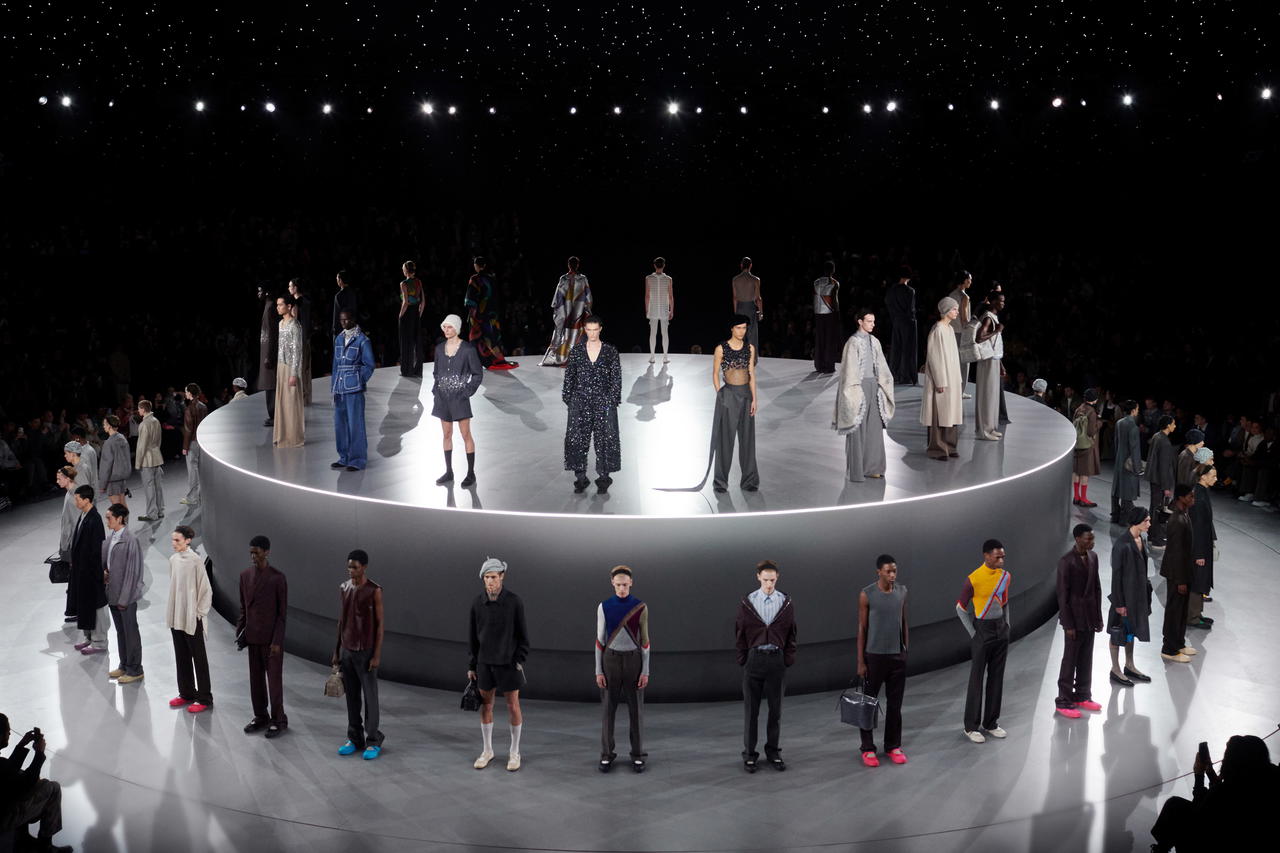
Derived from the French term for suivre (“to follow”), the suit often refers to a combination of jacket and matching pants. From its initial origins in the the French courts of Louis XIV during the 17th century—jacket, vest, breeches and fitted shirt—it would evolve to include a knee-length frock coat during the 1800s in Victorian England. Since then, the suit became the standard formal wear for gents. On the runways of Fall/Winter 2024 menswear, meanwhile, fashion houses took the suit further. See our favourite looks.
Classic Silhouettes
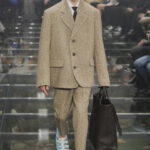
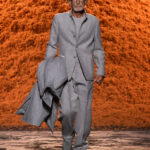
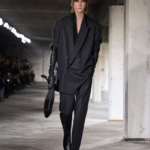
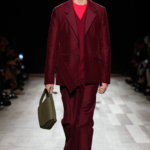
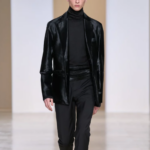
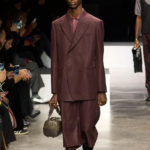
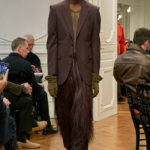
The theme of quiet luxury was very much on everyone’s minds, with a strong showing of beautifully crafted suits and then some. Fendi’s English Balmoral-inspired burgundy double-breasted jacket pairs perfectly with roomy bermuda shorts (Siesta bag optional). Also drawing on English countryside charms, Hermès elevated its fluid shapes with a cold-weather combo of tweed and wool, lavishing neutral tones of grey, black and brown with matte and shiny finishes. Also contributing to the conversation, Prada’s outsized tweed suits played up the desire to ditch the office and venture outdoors.
Elegant Details
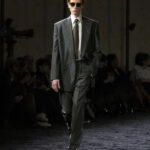
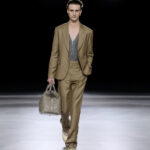
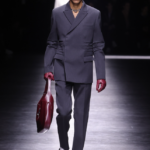
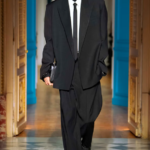
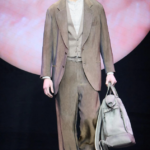
While sleek tailoring took centre stage, fashion houses worked hard to explore other aesthetic possibilities. By drawing inspiration from its founder’s dressing—grey flannel double-breasted suit, white shirt, and dark tie—Saint Laurent built an incredibly wearable wardrobe. Its use of fabrics such as crepe georgette and satin softened the effect of structured tailoring for a modern vibe.
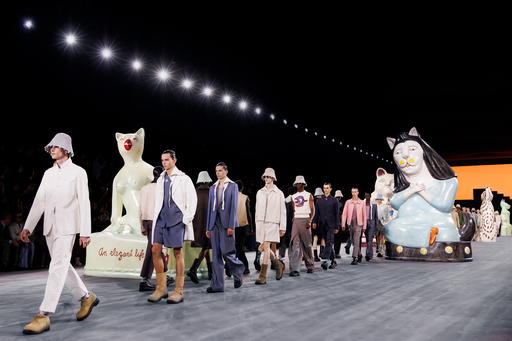
Even though Emporio Armani’s suits were streamlined, they were no less sophisticated. Several were reimagined with fabrics like herringbone twill or jacquard birdseye, while others had collarless necklines inspired by the East. Meanwhile, Dior Men offered jackets with a sleek fit and softly flared trousers that incorporated utility and opulence. It was a “coming together both practically and poetically,” as described by creative director Kim Jones, who refashioned the Bar Jacket and merged it with his Oblique Suit. So CEO-worthy, no?
Frills & Thrills
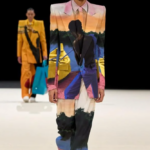
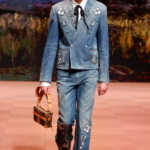
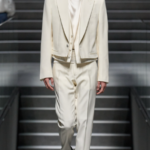
Hubert de Givenchy’s sartorial blend of masculine and feminine inspired a très chic collection for the maison he founded in 1952. Boxy fits and slim silhouettes were juxtaposed with massive fringe trousers for drama. Putting a tantalising twist on classic tailoring, Dolce & Gabbana presented a monochromatic menagerie. Its clean, geometric cuts for day gave way to glamorous accents (all that glitter, ooh!) and embellishments (lapel pins, anyone?) after dark.
Balmain’s medley of smartly cut suits in exuberant hues and captivating prints honoured sapeurs, black African men known for their original and offbeat dressing styles. Finally, Louis Vuitton redefined office dressing with a streetwear-worthy collection packed with cowboy symbols, glittery beads, and checkerboard patterns.