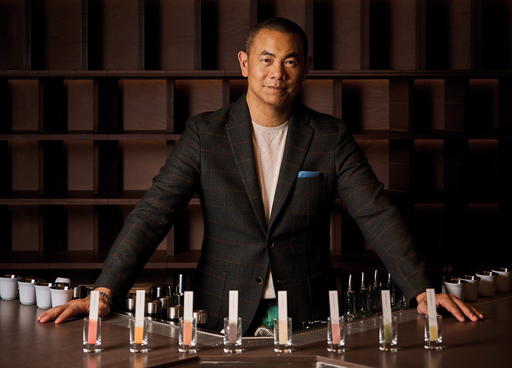

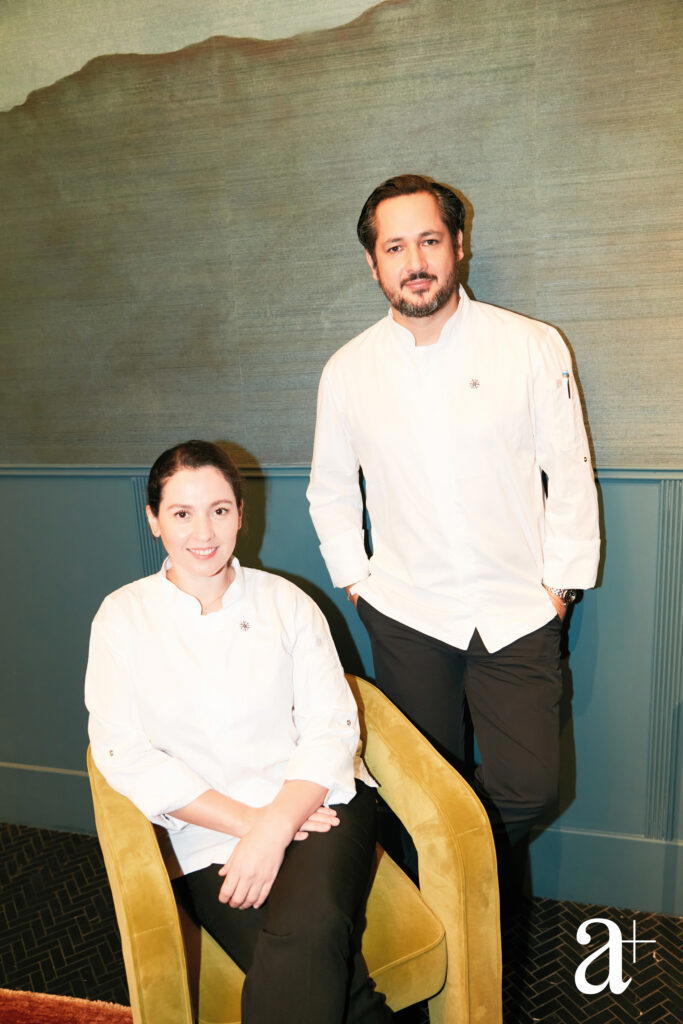
The ceviche is a dish that perfectly encapsulates the relationship between Francisco Araya and his partner in work and life, Fernanda Guerrero. “Because it’s spicy and fresh,” quips Francisco with a cheeky grin as he glances at his partner. The two first met as teenagers but have honed their skills in the culinary world for close to a decade.
Their latest venture, Araya (named after Francisco), is an intimate 30-seater that celebrates Chilean South Pacific flavours through contemporary menus. Located in the confines of Mondrian Singapore Duxton, it is the first to offer South American fine dining in the Lion City.
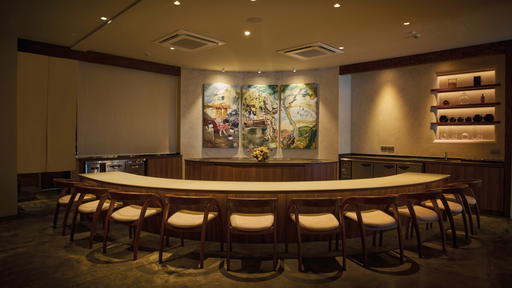
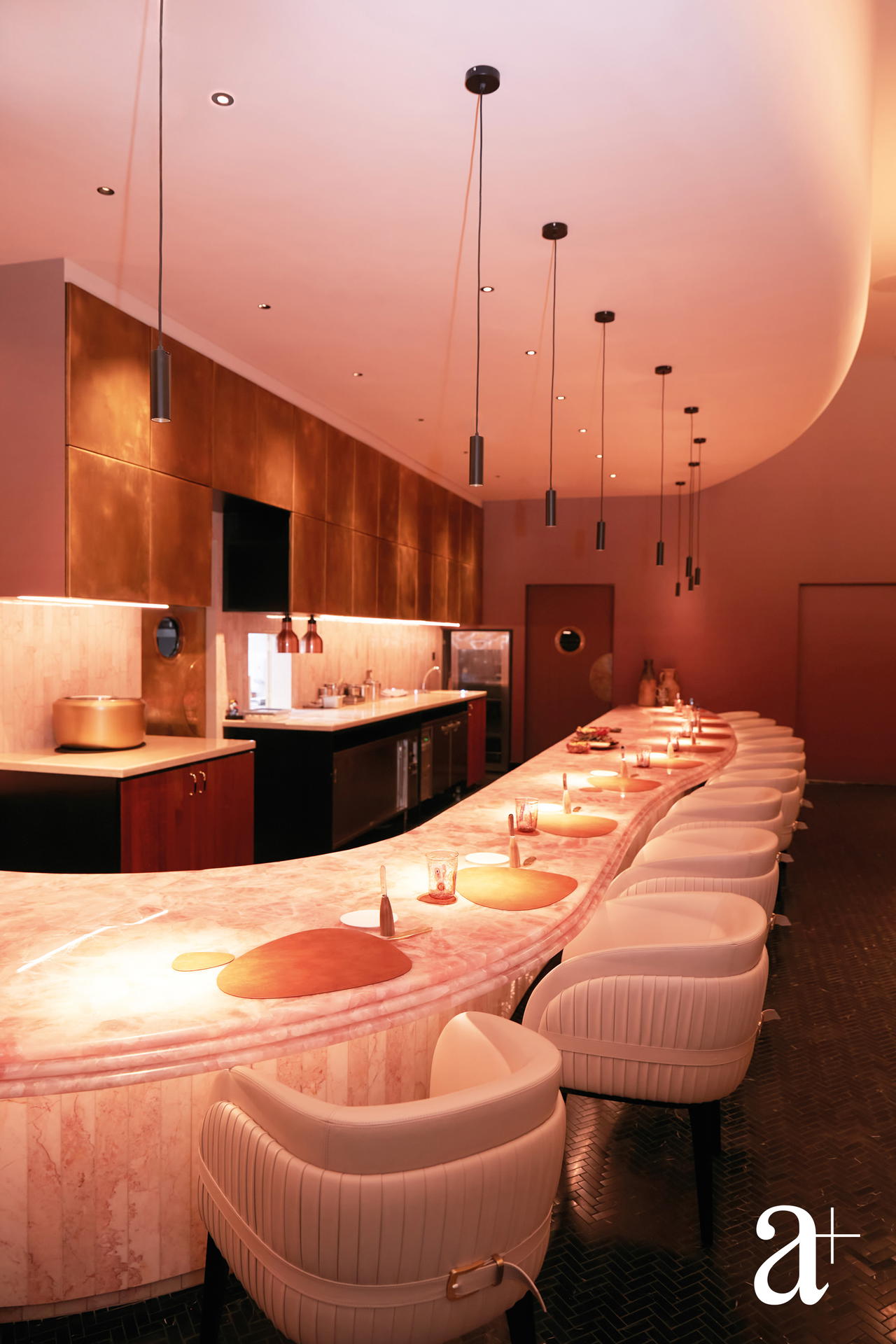
Tucked away behind a copper-accented sliding door, the establishment floors me with its beauty. The centrepiece is a 12-seat, curved rose quartz counter that anchors the main dining room with its grandeur. The gemstone promotes self-love, healing, and peace, says Francisco.
Being in the space does indeed leave me feeling calm. Then again, maybe it’s the refreshing tepache I’m drinking. After fermenting for 10 days, the pineapple juice is served with an aromatic elderflower liqueur sphere that bursts with my last slurp.
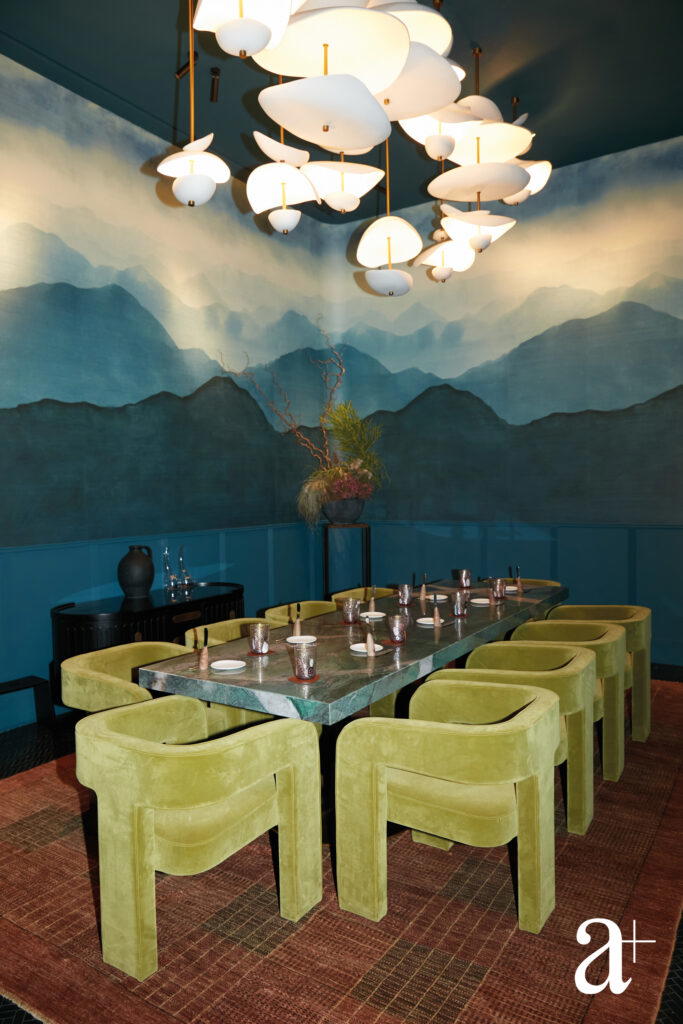
The restaurant design, created by Australian interior designer Emma Maxwell, draws inspiration from natural Chilean materials such as Alamo timber. The dramatic ombré-effect walls transport guests to Chile’s motherland by referencing the sunrises and sunsets over its landscape.
With front-row views of the chefs at work, dining by the rose quartz counter is a treat. Francisco and Fernanda fuss over us as if we’re esteemed guests at their cosy abode, fascinating us with stories about Chilean produce and nuggets of fun facts about their culinary journeys. They are so warm that it’s easy to forget you’re at a restaurant.
Dining at Araya is a courtship dance that mirrors their love story. As each dish is presented, guests are invited to awaken their senses by touching and smelling the raw ingredients used. My palate is wooed by a trio of snacks, including tepache, ama ebi meringue, and acorn flan. Marinated in clarified tomato water, the ama ebi meringue’s rich umami flavour hints at the seafood dishes to come.
According to Francisco, the hallmarks of South American and Chilean cuisine lie in the generosity and freshness of the ingredients. He enjoys using seafood as it reminds him of his childhood living near the coast. “Our cuisine is characterised by acids, meat, naturally sweet ingredients, quinoa, potatoes, and most importantly, seafood. This is a well-loved ingredient in South America because it is affordable and delicious,” adds Fernanda.
Her partner’s culinary career spans stints at prestigious establishments like Alma in Santiago, Andoni Luis Aduriz’s Mugaritz in Spain, and El Bulli in Spain. In 2012, he opened 81 Restaurant in Tokyo, focusing on seasonal Japanese ingredients with South American flavours. The eight-seater earned its first Michelin star in 2013 when he was just 29 years old.
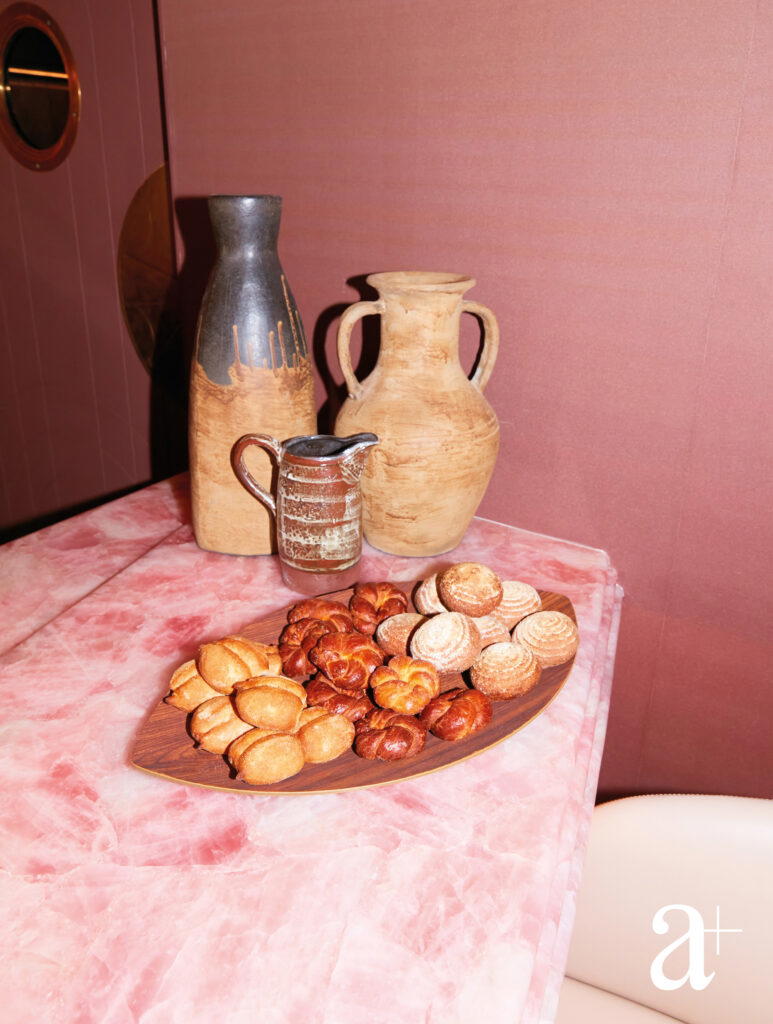
Joining him at the helm, Fernanda is one of the world’s most promising pastry chefs. Her experiences include fêted restaurants like Alegre in Chile and NAPA Wine Bar & Kitchen. Her flair for creating unique breads and pastries is clear from the get-go. She emerges from the kitchen with a basket filled to the brim with freshly baked la panera, drawing gasps of excitement.
In Chile, bread is life. Not only is it a snack, it’s also eaten at every meal. Her marraqueta (a baguette-esque bread), chapalele (potato sourdough), and chorizo (a soft potato bun) serve as delicious vessels to mop up the delicious sauces. They also pair well with the accompanying Uruguayan butter infused with house-made merkén, a traditional Chilean spice blend of house-smoked dried chillies ground with coriander seeds, salt, and sugar.
The classic ceviche sets the tone for the evening’s multi-course feast. Hokkaido scallops, a nod to Francisco’s love for Japanese produce, are marinated in shio koji to permeate them with natural umami. Served with leche de tigre or tiger’s milk sorbet infused with ginger and topped with cava foam, the dish’s bright flavours bowled me over.
At Araya, the dishes highlight native South American crops like corn and Andean potatoes, as well as fruit like lucuma and Chilean cherries. “These humble ingredients are the heart and soul of Chilean South Pacific cuisine. We elevate and celebrate them with fine culinary techniques and the addition of proteins from Japan and beyond,” says the chef.
An unexpected favourite turns out to be the causa, an appetiser resembling potatoes and caviar. With oca, an Andean tuber as the key ingredient, his version takes inspiration from the namesake Peruvian dish. The tuber has a peppery, wasabi-like taste when raw but tastes just like a potato when cooked. Baked to tender perfection, it is topped with lightly smoked chutoro, N25 oscietra caviar, and a crunchy potato nest.
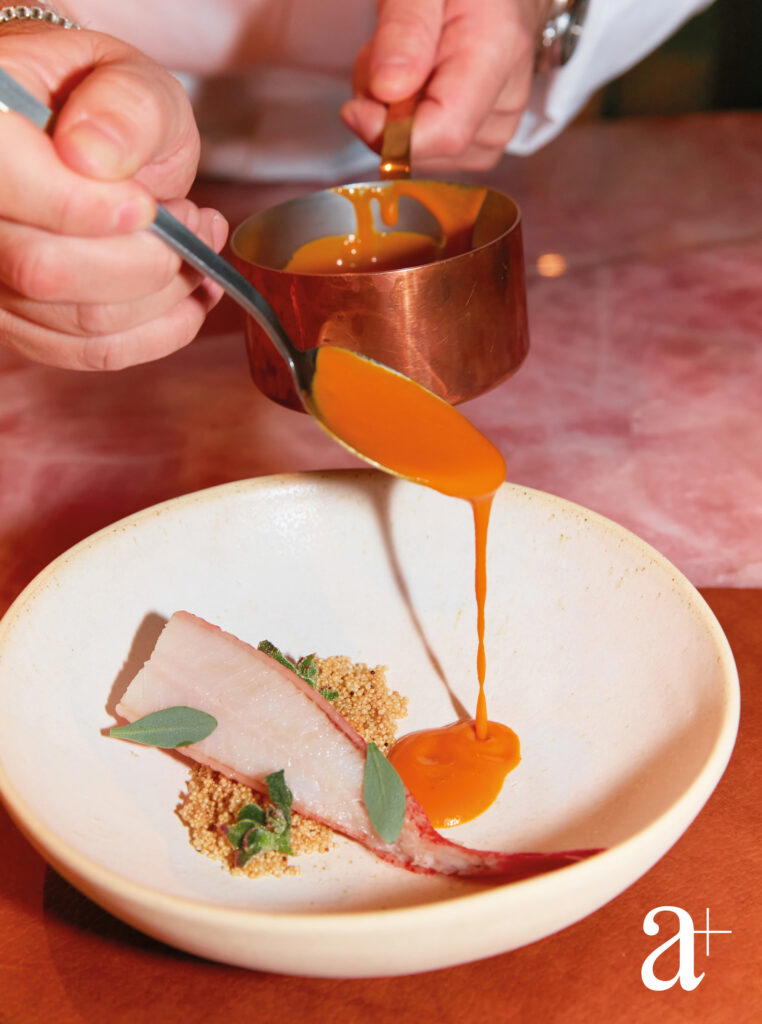
“It’s important to respect the qualities of the produce, so I try not to interfere too much with their flavours. Instead, I highlight them with gentle cooking. For example, the menu features a beautiful kinki or channel rockfish, which I’ve cooked slowly to highlight its delicate flavours,” says Francisco.
What he describes is the moqueca, which features poached kinki painstakingly deboned and served with its tail intact. The dish is named after a traditional Brazilian fish stew, with its flavour profile translated to a delicate, almost Japanese-like creation. Cooked gently to keep its natural sweetness and silky texture, the “wagyu of the sea” is paired with moqueca sauce made with the bones of the kinki, palm kernel oil, coconut milk, and crunchy amaranth for an added dimension of texture.
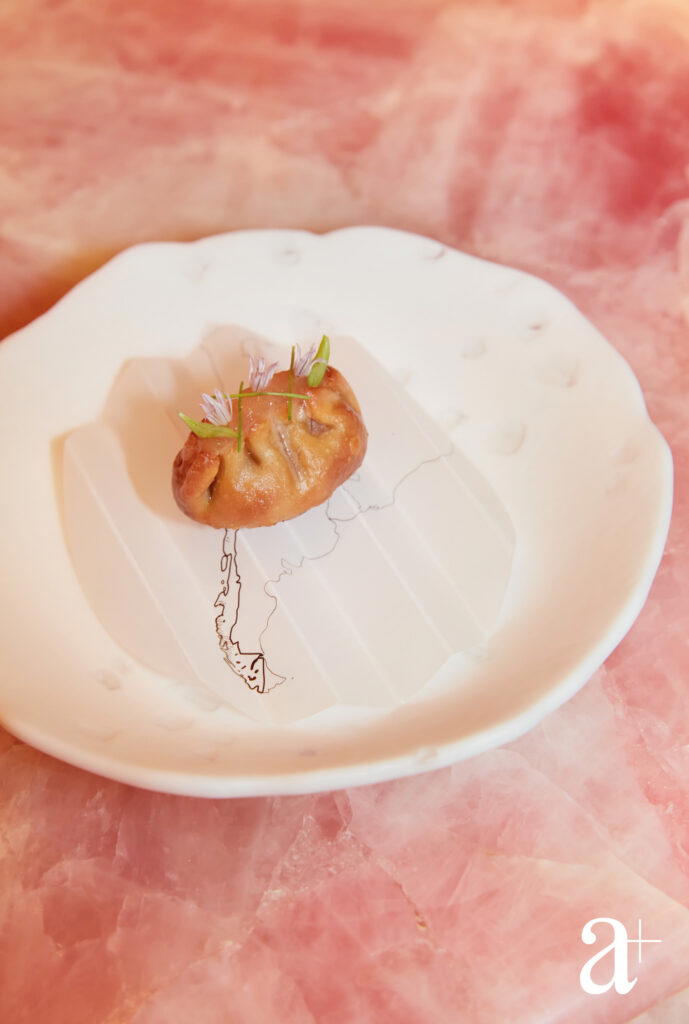
As a fitting prelude to the meat dish, we’re served the empanada de pino or beef empanada. Filled with wagyu offcuts from the picaña course, the fried turnover is a moreish snack topped with a pebre gel and micro herbs. The chefs tell us these are traditionally served on Sundays and usually always accompanied by a glass of red wine. It’s absolutely delicious.
The star of the meal is the char-grilled wagyu picaña served with chimichurri made from shallots, coriander, and raspberry vinegar to balance out the richness. Considered the “people’s cut” in South America, the rump cap is packed with texture. Sure, it’s on the chewy side but every bite yields a juicy, meaty flavour.
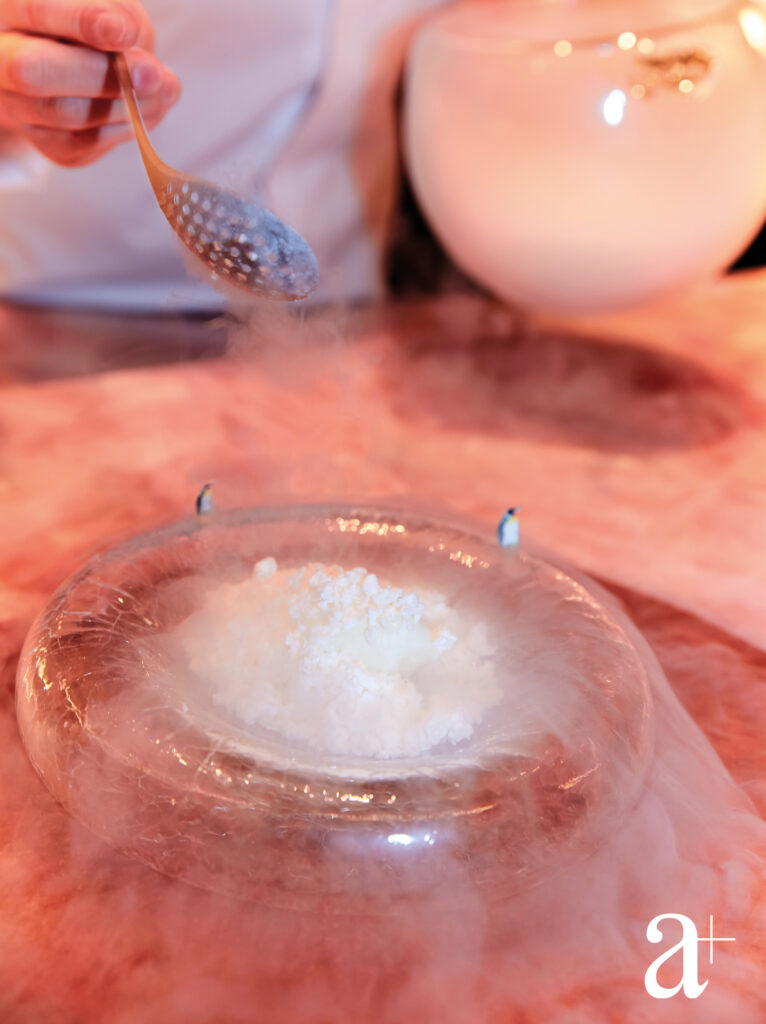
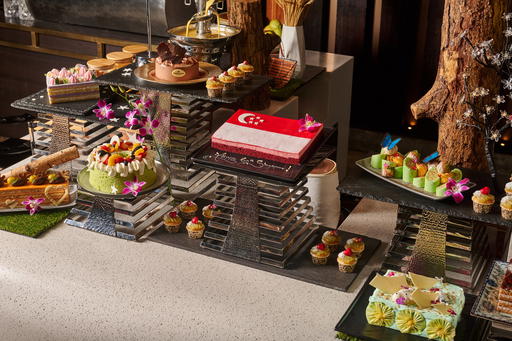
Satisfied with the savouries, I was ready for Fernanda’s sweet treats presented in four acts: a light palate cleanser, two main desserts, followed by a trolley of petit fours made from single-origin South American chocolate. “My favourite ingredient is chirimoya or custard apple. I am proud to showcase our local ingredients to diners in Singapore,” she tells me.
Without giving away the surprises, the desserts are presented interactively and gave me precious insight into the fruits from the fertile lands of Chile. The desierto florido came with crushed honey orange meringue smothered in a chirimoya alegre or custard apple espuma, as well as an orange flan infused with mango and pineapple. A smorgasbord of fruit-forward flavours, the dessert left a smile on my face.