

The world’s richest man believes money will soon outlive its usefulness. During a recent interview with The Economist, Elon Musk predicted that AI and robotics could create such an abundance of goods and services that money would become largely irrelevant by 2036. If machines can produce more than humans could ever consume, he reasoned, why would we need money? Also, work could become optional, allowing humans to focus on whatever they want instead of what they must do to earn a living.
It is an arresting proposition, not least because it comes from one of the world’s most prominent capitalists. Musk built his fortune in an economy based on scarcity and ownership, but now imagines technology will permanently displace those principles.
It is easier to imagine the technological direction than the economic endpoint. The use of AI can increase certain kinds of intelligence, and robots could make production faster and cheaper. However, greater productivity does not necessarily mean greater abundance. There is no technology that can produce more land in a city, create infinite energy or produce an unlimited number of hours in a day.
Nor does making something cheap automatically render it worthless. When what we can easily replicate becomes abundant, what we cannot replicate may simply become more valuable. Then arises the awkward question of who owns the machines behind all this production.
Musk’s prediction therefore raises a more complex set of questions than whether money will matter in 2036: what remains scarce, what retains value, and who controls the systems generating that abundance?
SCARCITY WILL NOT DISAPPEAR
The first challenge with a moneyless future is not whether machines can produce enough. It is how society allocates what remains scarce.
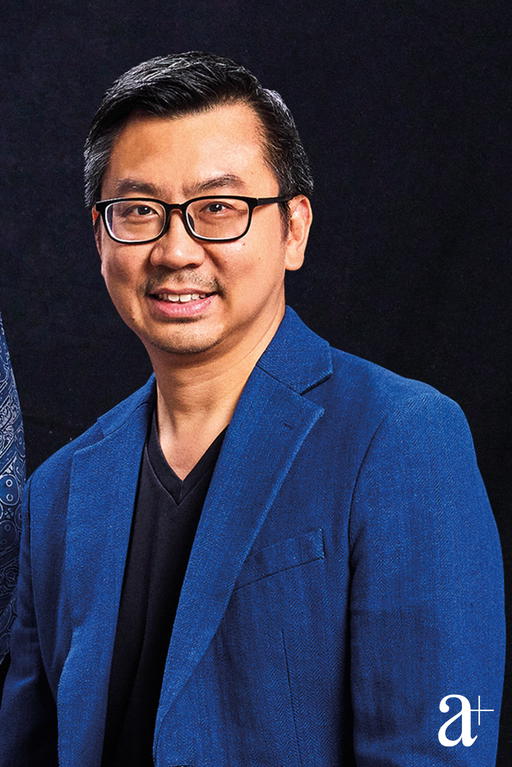
“Money is ultimately a means of allocating scarcity—and AI will not abolish scarcity in land, energy, minerals, housing, attention or care,” notes Simon Chesterman, David Marshall Professor of Law and Vice Provost (Educational Innovation) at the National University of Singapore, where he is also the founding Dean of NUS College.
He notes that ‘post-scarcity’ will always encounter scarcity at the margins.
“Abolishing money does not abolish allocation. It merely replaces prices with queues, lotteries, rationing, political discretion, reputation or force.”
Simon Chesterman on why allocation is unavoidable
In his view, money may still be the least bad mechanism for allocating genuinely scarce goods, provided basic needs are met and markets are not dominated by a handful of actors.
Cusson Leung, Chief Investment Officer of financial services firm KGI Asia, highlights another complication: “A low marginal cost does not automatically translate to a near- zero price; it often widens profit margins.”
Automation can reduce production costs without eliminating the costs of the inputs behind them. “Primary raw materials remain finite and inherently scarce, keeping marginal costs well above zero.”
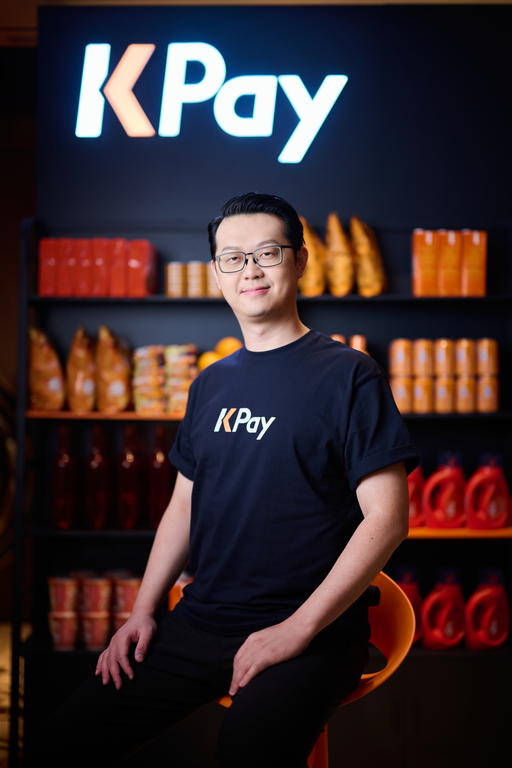
Kelvin Sutedja, a founding partner at consumer-focused investment group Skavana, sums it up simply: “Money isn’t just for buying things. It’s how we decide who gets what when there isn’t enough to go around.”
He uses being at a restaurant as an example: the food may be affordable, but there are only so many tables available on a Saturday night. No matter how efficient the kitchen becomes, someone must decide who gets a seat.
The point isn’t that money is indispensable; it’s that removing it does not eliminate the allocation issue. As Sutedja puts it, “Prices are the least ugly way anyone has found to do it.”
VALUE WILL SHIFT
If some things become abundant, the next question is what happens to value. For Sutedja, the answer begins with something no machine can manufacture. “If machines produce everything and work becomes optional, what every person gains is not more goods, but time. Time is the one thing abundance cannot manufacture.”
This element, he argues, tends to find its way into experience. “Free time must land somewhere. History says it lands on experience,” he says. As productivity rises, leisure evolves into new forms of consumption—from travel and dining to entertainment. In a world where machines handle more of the work of production, Sutedja expects that shift to intensify. “It deflates the functional aspect of consumption while heightening the value of the experience.”
Businesses will need sharper differentiation as AI makes standardised products and services easier to reproduce. When differentiation becomes harder and potentially more valuable, true value hinges on what can’t be easily copied. Leung sees this as increasingly central to how companies will be valued. “The core valuation question centres on identifying companies capable of differentiating their offerings, establishing high barriers to entry, and retaining pricing power amid broad cost deflation.”
That could come through proprietary data, specialised expertise or customised services. In addition, qualities that are harder to replace could also contribute to it. Leung describes this as “experience-driven value” created by “experiential, relational, or customised human elements that cannot be replicated by automated systems”.
The implication is not that value disappears when things become abundant, but that it shifts. As AI strips away the premium on inexpensive, repeatable output, the elements that resist replication—an experience, a relationship, specialised knowledge or human judgement—will command more value. And as those things grow more valuable, the question of ownership comes into sharper focus.
WHO GETS THE FUTURE?
In Chesterman’s view, ownership ultimately comes down to power. “The greatest danger is not autonomous machines but concentrated human power exercised through machines.” If a handful of companies control models, chips, cloud infrastructure, data, and robots, abundance could manifest itself as a “private empire”.
The solution, he argues, lies partly in the governance of that power: competition law, interoperability, public-interest access to compute, and limits on vertical integration will be important. That said, governance must ask not only what AI systems may do, but who gets to decide and who captures the value”, he adds.
Yet, technological dominance is rarely permanent. Sutedja points to the history of once-untouchable companies that were overtaken. “Every dominant player funds its own challenger. Apple lost digital music to Spotify; Blockbuster to Netflix; Nokia and BlackBerry to the iPhone; and Intel, which lost its semiconductor lead to Nvidia. Google invented the transformer, but OpenAI commercialised it first, while DeepSeek shook the AI establishment. Even Uber was displaced by Grab in Southeast Asia. Nobody stays on top by default.”
That perspective counterbalances the idea that today’s AI leaders will inevitably control tomorrow’s economy, even as the speed of technological change tests the institutions meant to manage it.
Leung is likewise cautious about treating Musk’s prediction as a timetable: “Investors treat these announcements as speculative vision statements rather than actionable forward guidance.” The bigger constraint, he argues, may be political rather than technological.
“The most significant impediment to Musk’s vision is socio-political acceptance.”
Cusson Leong on the greater obstacle
That matters because disruption could arrive long before any post-money economy. Governments may regulate technologies that threaten employment or concentrate economic power, while workers and communities may resist changes whose benefits are distant, but whose costs are immediate.
According to Chesterman, what happens along the way cannot be treated as an afterthought. “The transition is not a footnote; it is the central political problem.”
That transition has a geopolitical component as well. It is possible that countries lacking the ability to participate in the AI economy could become increasingly reliant on those who control it, deepening existing economic divides rather than eradicating them.
The promise of abundance, then, goes beyond technology. It is about how societies distribute the gains, how institutions respond to disruption, and whether greater productivity benefits more than those who own the systems that produce it.
For all the talk of a world beyond money, the bigger problem may be everything that has to happen before we reach that goal. As Chesterman says, “It would be irresponsible to destroy livelihoods today on the promise of abundance tomorrow.”