Van Cleef & Arpels continuously challenges watchmaking hierarchy, which judges legitimacy based on chronometric accuracy or complication count, by using watches as storytelling devices.
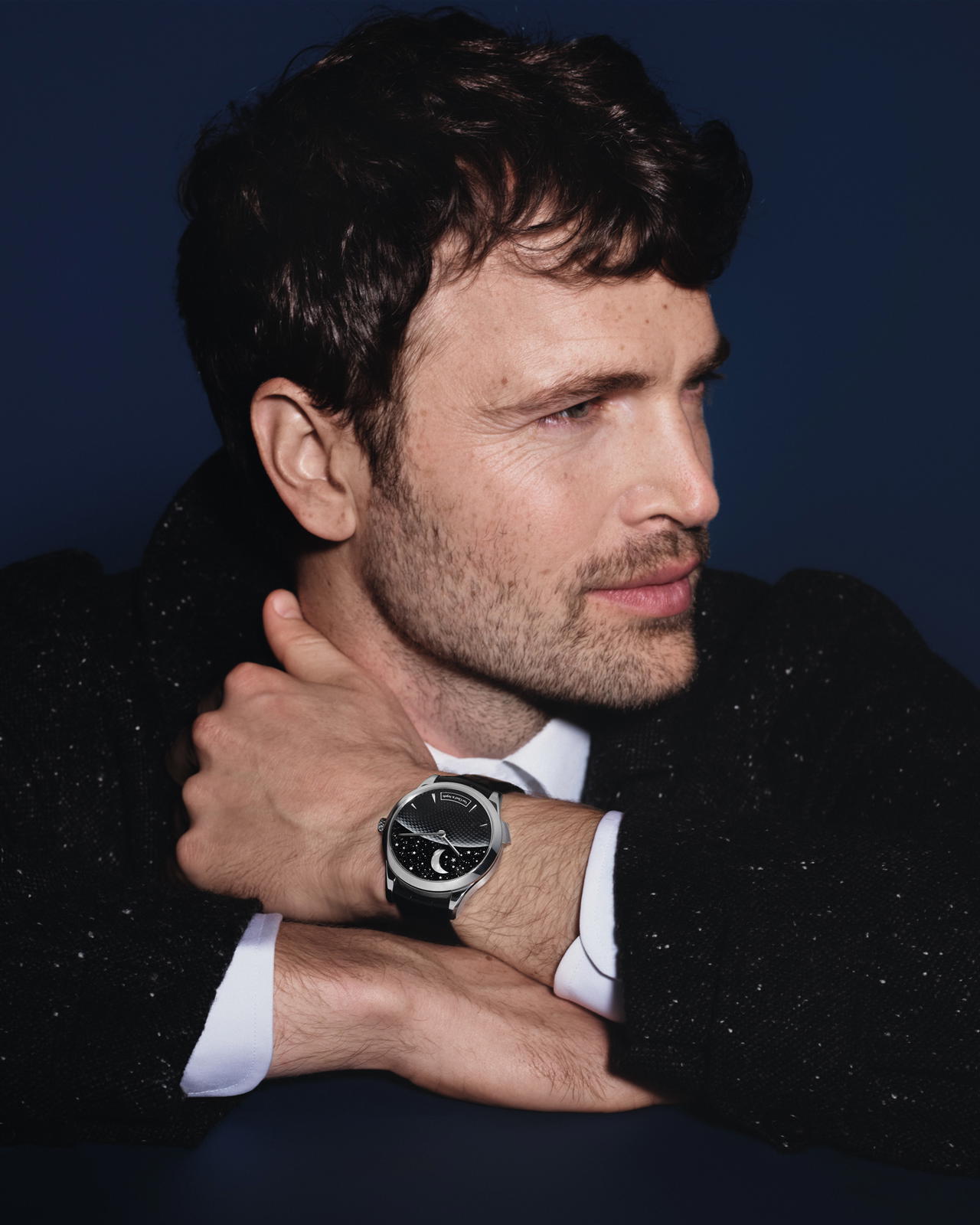
The Midnight Jour Nuit Phase de Lune further exemplifies this philosophy with a day-night indicator, an astronomical moonphase, and on-demand animation. Rather than tucking the moonphase into a small, separate display, the French maison integrates it into a broader celestial scene, making the indication feel part of the day-night cycle.
Originating in 2008 and recently revived within the Poetic Astronomy theme, the Jour Nuit concept presents a simple yet striking design: a 24-hour rotating disc shows the sun and moon traversing the dial, dramatising the transition from day to night as a graceful celestial dance.
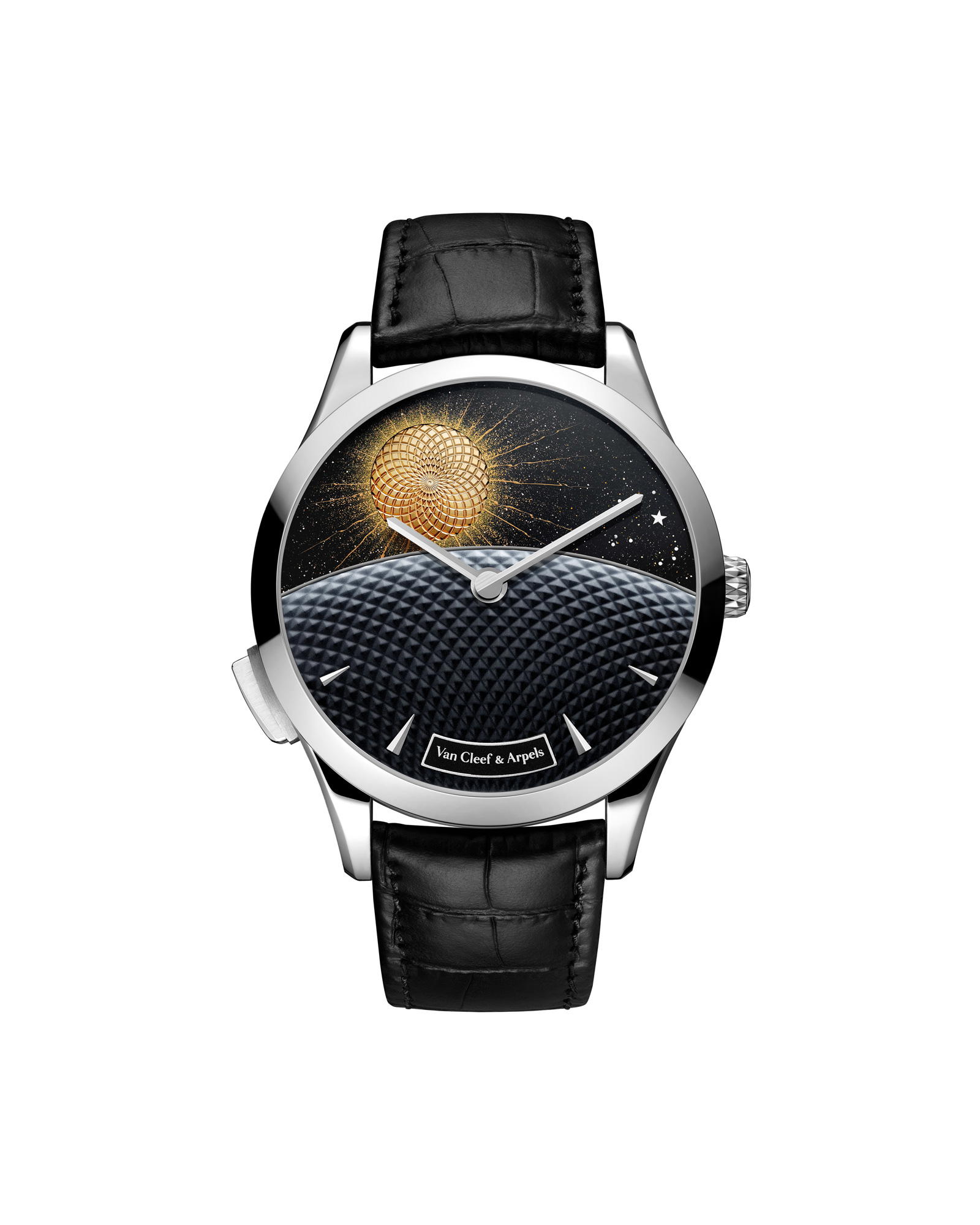
This latest version adds a lunar complication that tracks the moon’s 29.5-day cycle. It features two layered displays. The primary Jour Nuit mechanism has a 24-hour rotating disc that depicts the daily sun-moon. The secondary display is the astronomical moonphase, progressing through the lunar cycle. Typically, a moonphase indication is viewed through an aperture, but in the Midnight Jour Nuit Phase de Lune, this is incorporated into the broader day-to-night scene, making the on-demand animation meaningful rather than a novelty.
Pressing the case-side pusher rotates the dial a full 360 degrees in about 10 seconds, revealing the current moonphase against the starry aventurine background. Van Cleef & Arpels notes that the challenge here was engineering this animation without compromising the accuracy of the moonphase.
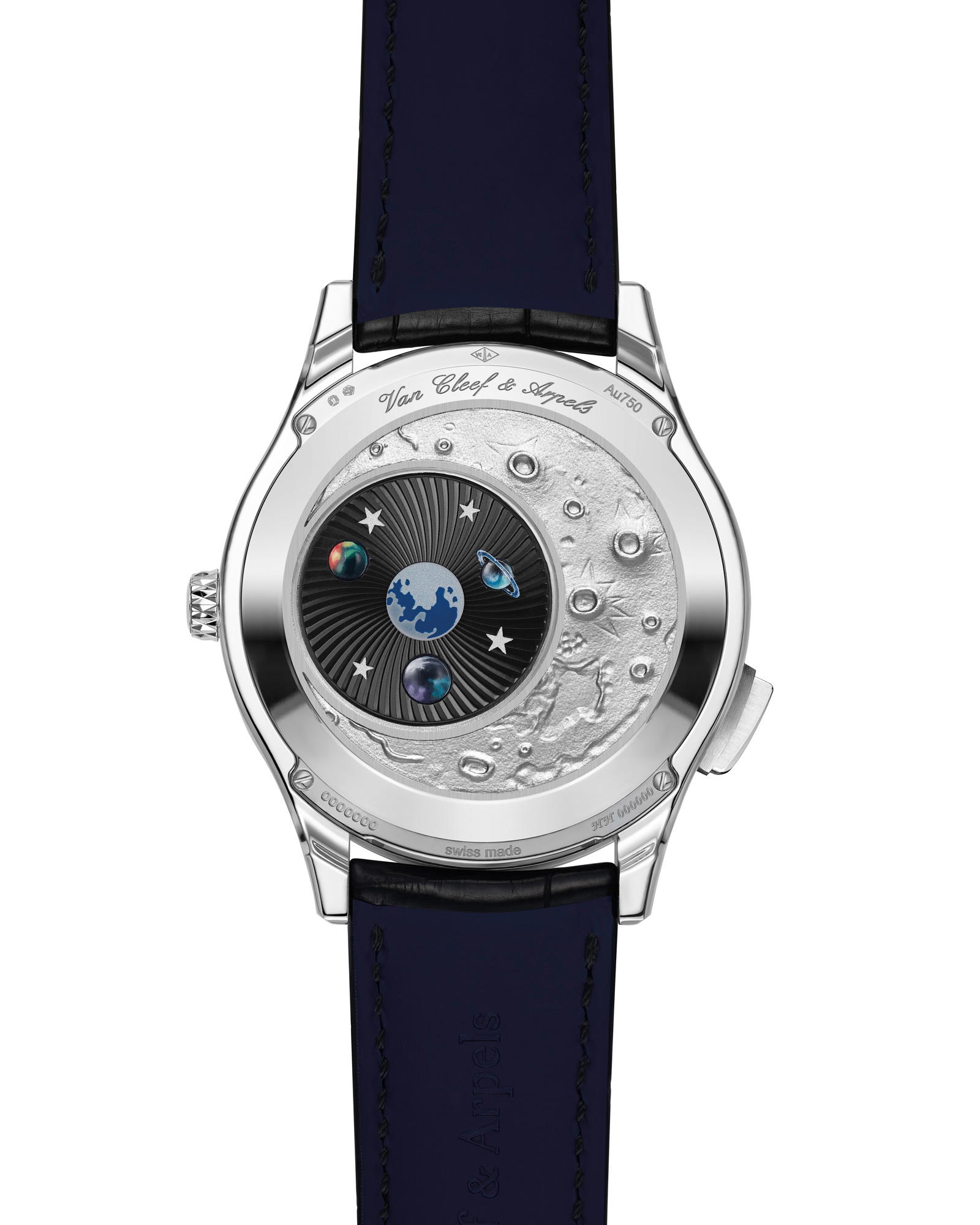
The self-winding mechanical movement provides a 36-hour power reserve as well as a combined day-night and moonphase display. In addition, instead of just showing the movement, the caseback continues the celestial theme. White gold engraving depicts the moon’s topography, while the oscillating weight is topped with a sapphire crystal, featuring miniature planets over a guilloche background.
The watch’s perspective is intentionally reversed: the front frames the heavens as seen from Earth, while the back suggests the universe from the moon’s viewpoint.