
Takayuki Kimura is sad. He’s lamenting the inevitable death of the internal combustion engine, usurped from its throne by environmentally friendlier variants powered by electricity and hydrogen. But the car enthusiast and managing director of Maserati Asia-Pacific knows no one can stand in the way of progress. He’ll miss the sonorous engine grunts the most, but doesn’t rule out an aural return, made possible by technology.
Sound is an integral part of the Italian carmaker’s DNA and it’s no surprise that the marque has a team of engineers working to recreate that beautiful roar for its electric line-up, according to Kimura.
Maserati has a unique electrification energy. By 2025, all of its models will have a fully electric variant. In 2030, the entire range will be electric. Still, Kimura acknowledges that its current strategy also depends on legislation in different countries.
“It’s difficult to predict lawmakers’ decisions while still meeting the demands of our customers. That’s why Maserati has different options: ICE-powered, plug-in hybrids, full electric, and more.”
What it’ll never compromise on though is its dedication to Italian craftsmanship. Its latest, the petrol-powered Grecale GT, continues this tradition. Sculpted lines along the side of the car flow backwards to the boomerang shaped tail lights while the exhausts continue belching that signature Maserati sound. Within the cabin, the designers carefully pair lush materials such as leather with cool, tactile wood and carbon fibre to create a cocoon you don’t want to get out of. Even the interior door handle has disappeared, replaced with a button instead.
Kimura is especially proud of the new trident framing the grille and the modern oval logo just above it. A design identity that started with the MC20, these elements signify Maserati’s new era.
Last month, Maserati also presented exclusive variants of its iconic GranTurismo—the One Off Prisma and the One Off Luce—at Milan Design Week to showcase its prowess in design, innovation and heritage.
The first of its kind was unveiled in 2007 and based on the first car the marque ever made, the grand touring Tipo 26, back in 1926. Since then, the GranTurismo has been in continuous production. As part of Maserati’s electrification strategy, the model also comes in a fully electric version.
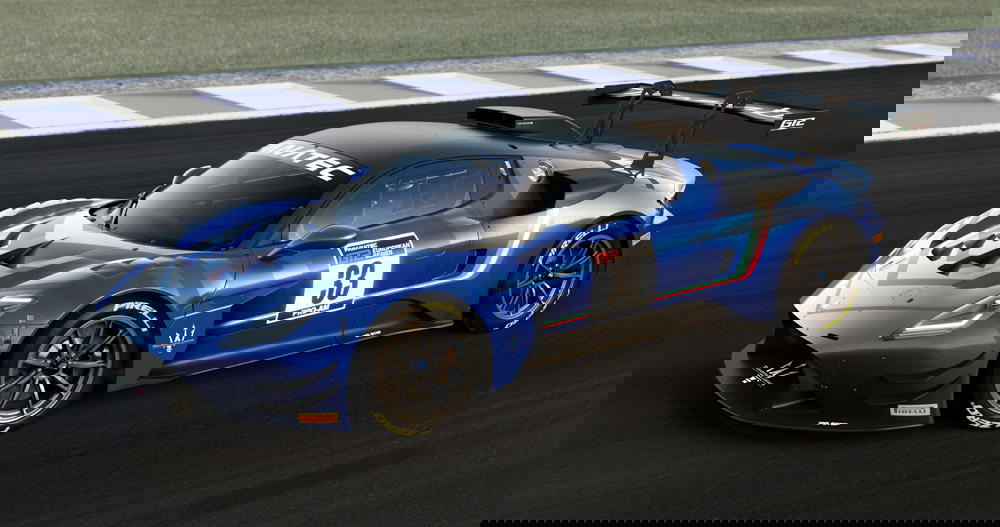
These are exciting times for Maserati. The backlog of deliveries caused by the pandemic is clearing, according to Kimura, and the Asia-Pacific region will welcome over 2,500 deliveries of the Grecale GT. A customer in Singapore recently received the first.
Kimura says that Maserati isn’t planning to increase production. “Volume-wise, Asia-Pacific is only 3 percent of the total global market, but that doesn’t mean we want to expand our quantity. We still want to focus on the quality of our automobiles,” he explains.
Fiat’s investment of 1.6 billion euros (S$2.33 billion) in Maserati back in 2019 is bearing fruit. With the merger of Fiat and Peugeot in 2021 to form Stellantis, Maserati’s development has accelerated. “Starting with MC20, we are now entering a new phase, combining our past heritage with the advancements we’ve made and will make for the future,” says Kimura.
Hopefully, that future includes the signature Maserati sound.