With recent fashion shows plagued by gimmicks aimed at virality, homogeneity, and purposeless archival references, there was a welcome spirit of originality permeating January’s couture presentations.
A feverish desire for dopamine-producing creativity seemed to be driving the market, with several couturiers finding comfort in reviving the lost art of storytelling with a unique perspective. These houses reaffirmed the importance of fashion at a time when its relevance was being questioned. They did so by examining the inhabitants of their maison’s collections and focusing on the triadic relationship between clothing, physicality, and wearer.
Bows and All
As this season’s guest maestro, Irish-Cantonese designer Simone Rocha brought a playful, feminine charge to Jean Paul Gaultier. Combining Gaultier’s subversiveness with Rocha’s light-hearted approach to femininity created an original fairytale that put a contemporary twist on Rococo aesthetics.
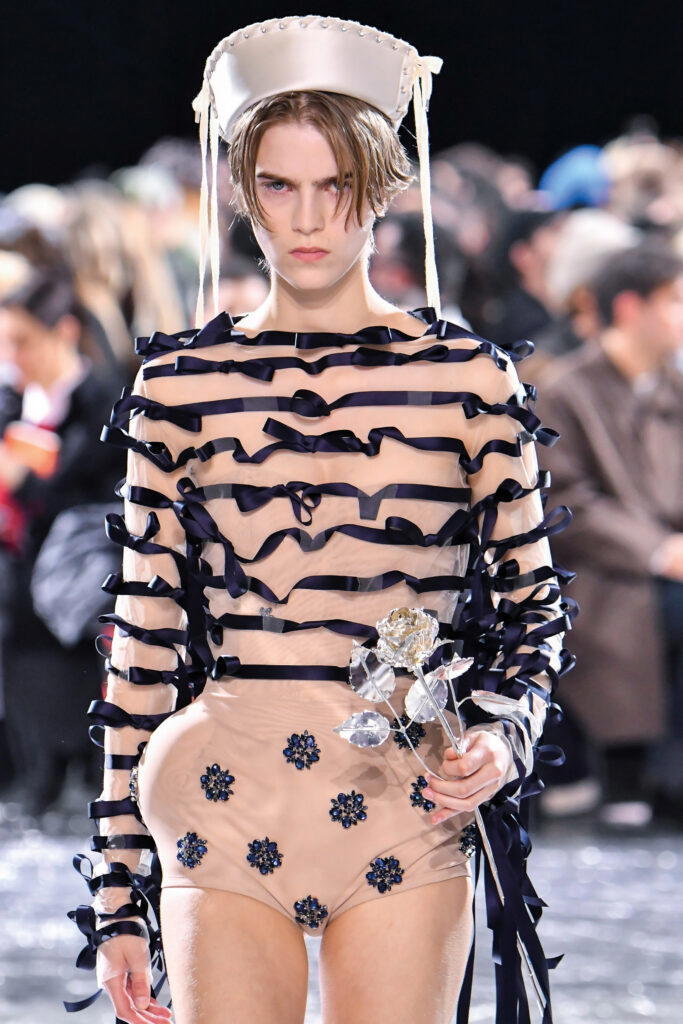
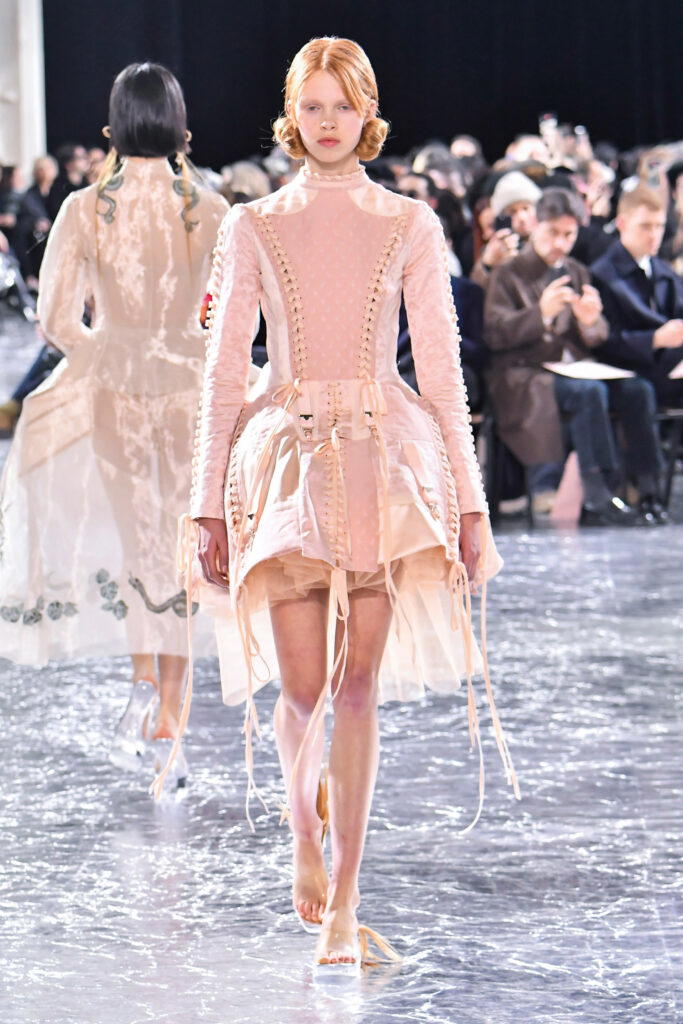
Ever the witty provocateur, her collection displayed coquettish whimsy and sensual quirkiness. There were bows, corset-laced panels, décolleté gowns adorned with rhinestone flowers, négligées, and padded boy shorts in nude and rose poudré. Barely-there panniers and bodices also came in varying degrees of stiffness and opacity.
For instance, the opening look revealed high-waisted underwear beneath a semi-sheer dress with a crinoline underskirt. In place of breast pockets, there were Eyes of Providence, and the hems and cuffs were embroidered with motifs of palms, roses and thorns.
There were also reinterpretations of the house’s signature styles and nautical codes. Satin ribbons, both tied and unfurling, translated the masculine allure of Gaultier’s sailor hats and marinières into soft, delicate forms. Bustiers appeared razor-sharp as Rochas turned the tips of Madonna-esque cone bras into upward-curling thorns. Tulle skirts, Irish lace and hair-trimmed platform heels added touches of frivolity.
With her collection, Rocha rewrote the ancient régime’s rules of modesty, resisting polite society’s need for perfection. The idiom “put a bow on it” echoed this sentiment. Corsetry and ribbons—no matter how tight, tangled or undone—could be appreciated for their beauty without the burden of misogynistic connotations.
Rocha’s audacious line reminded us that there is room to challenge the status quo within the cage of commercialised luxury. Hefty price tags aside, the rebellious feminine charm of her sartorial attitude possessed staying power. Off-kilter heroines who resonate with Bella Baxter from Poor Things, which had 11 Oscar nominations this year and won four awards, including Best Actress in a Leading Role and Best Costume Design, would have been delighted.
Seeing Red
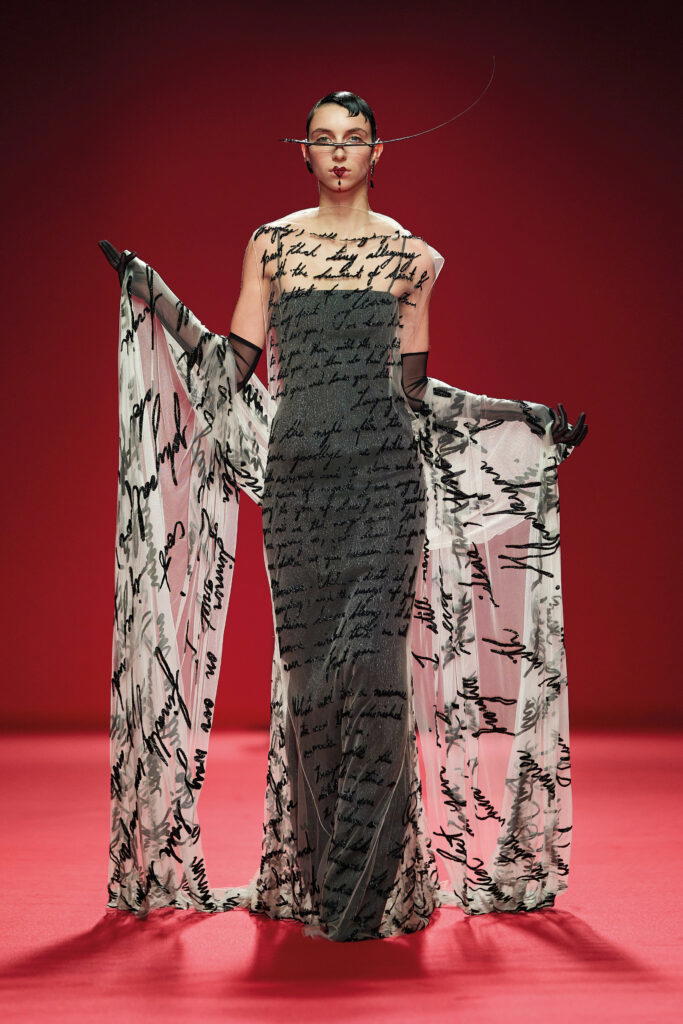
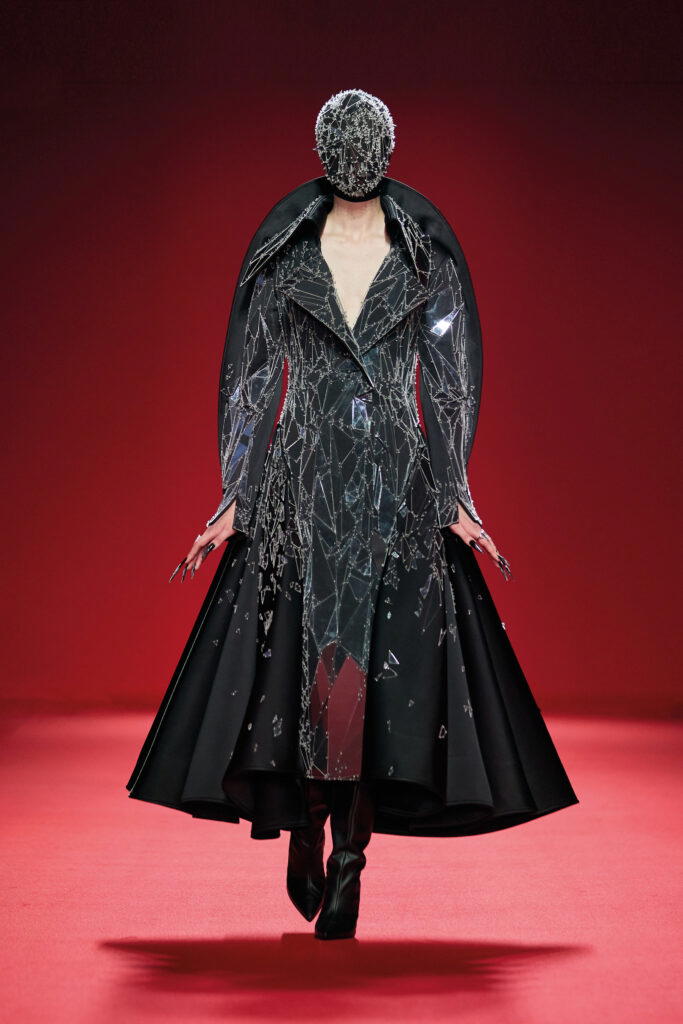
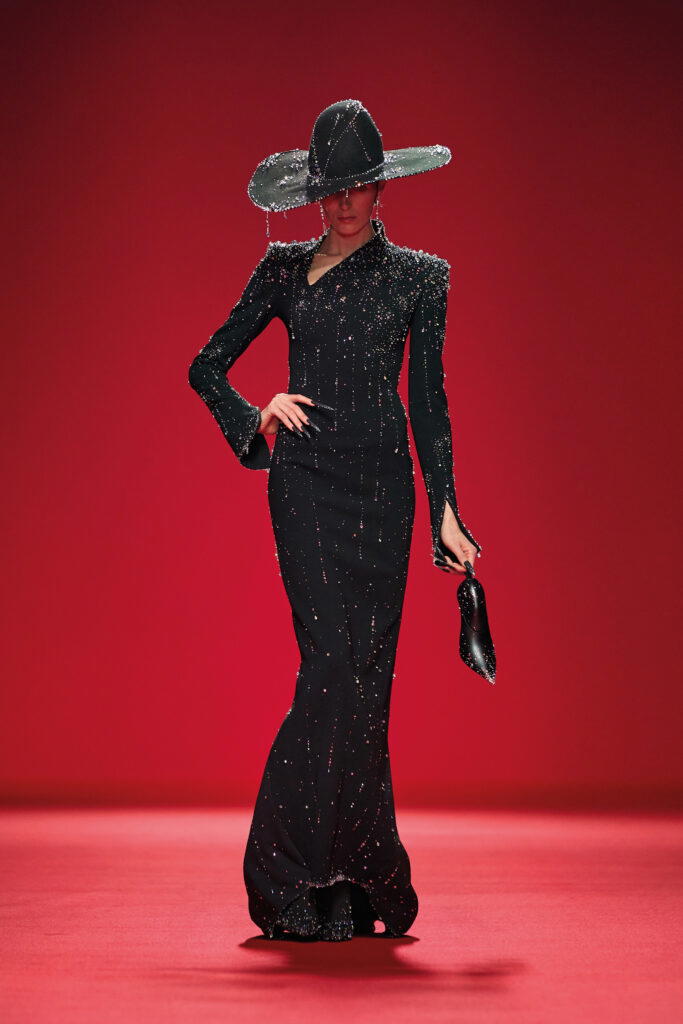
Over at Robert Wun’s, there was a synthesis of architectural precision and macabre visions. The underpinnings of the Hong Kong-born, London-based designer’s collection were his trademark creations: pleated armour suits, voluminous floral ruffles, and rained-on gowns dripping in Swarovski crystals.
However, beneath the fragile beauties, a menacing undertone incited feelings of fear and admiration. Wun could not have conjured a more Faustian-like runway, sending down models covered in shattered glass, red dagger nails, and hand signs symbolising the Buddhist Wheel of Law. Drawing inspiration from horror movies, his surreal forms maintained their sensuous appeal with the elegant craftsmanship of milliner Awon Golding and jeweller Anabel Chan.
Wun is a poetic dreamer. Embroidered evening dresses were poignant nods to grief, pain, and passion. Also amplifying the dark romance were gowns that presented the illusion of spilled ink, paint splatters, and bleeding bodies. A layered tulle gown with over 750 written words was dedicated to the memory of Wun’s cat Taro.
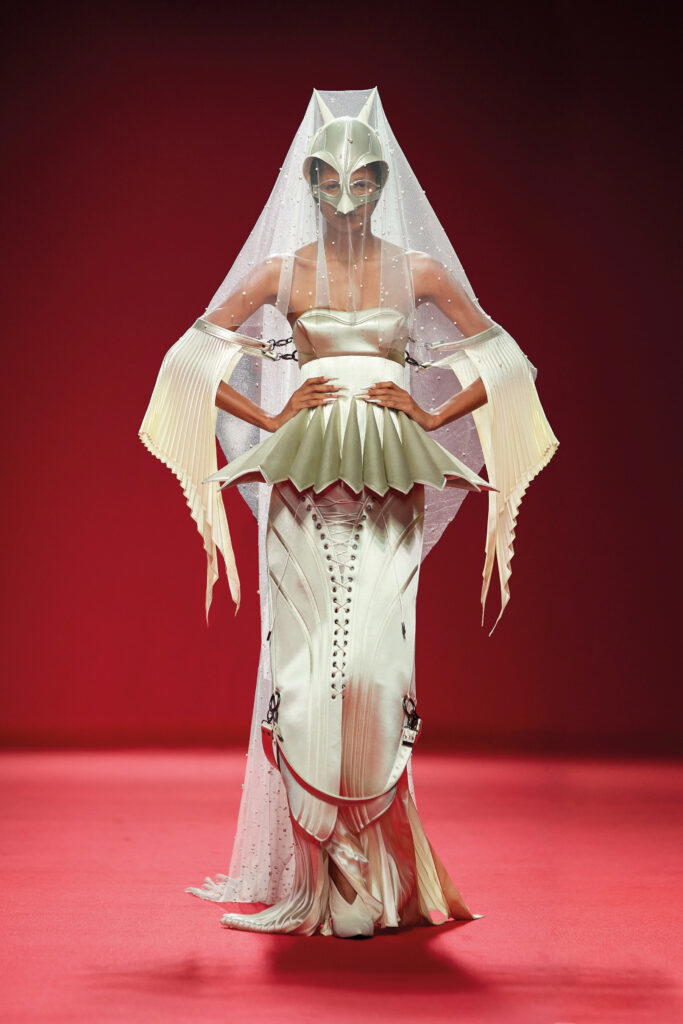
As far as couture shows go, bridal comes last. This time, Wun’s interpretation of a wedding ensemble was a spangled white gown and veil “bloodstained” with red sequins. Following the bride was his final look: a crimson dress constructed with visual artist Yuma Burgess’s 3D sculpture of a sinister, faceless human protruding from the back, precariously tugging at the gown’s neckline and strap.
The ending was unsettling yet profound. It takes two to make an accident and occasionally, the words “I do” forms the chasm separating good and evil. Wun’s sophomore couture collection, which coincided with the brand’s 10th anniversary, solidified the couturier’s reputation. All that glory and gore left us looking forward to the house’s bright future.
Sense and Sensibility
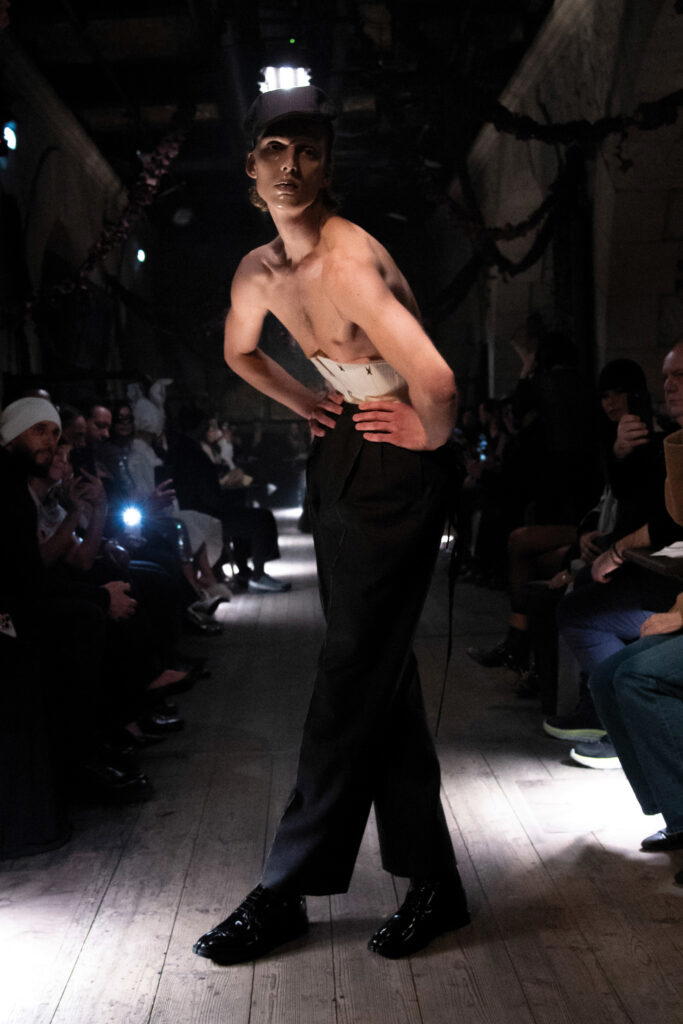
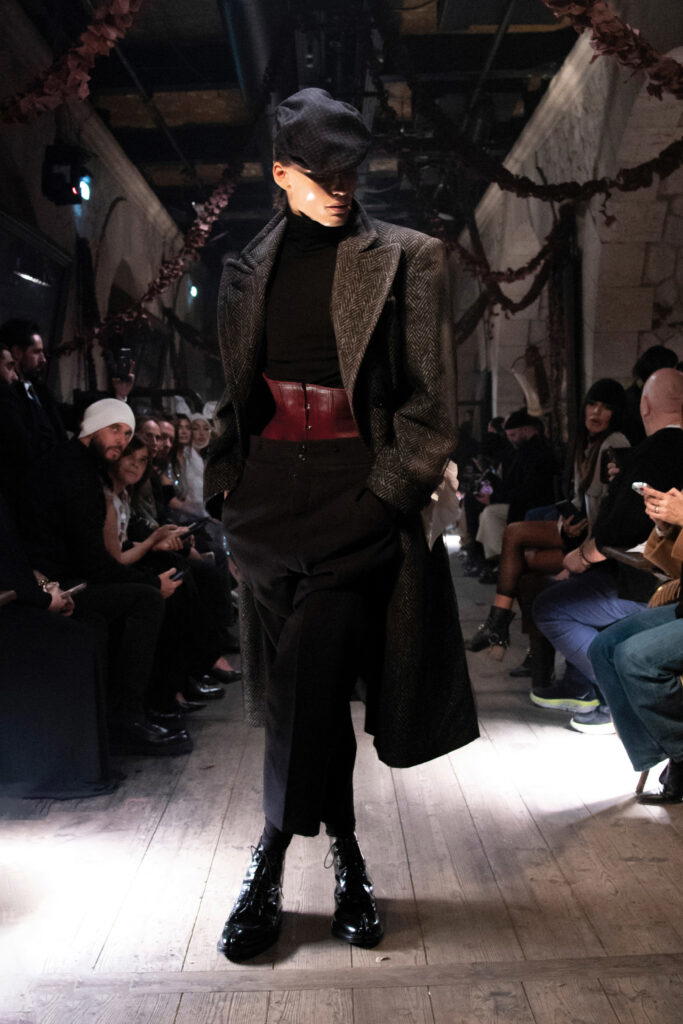
The unforgettable presentation of Maison Margiela’s Artisanal Collection wrapped up the couture season. John Galliano reawakened the underbelly of early 20th-century Paris beneath Pont Alexandre III at three in the morning with models embodying the hoodlums, hedonists, and city walkers in Brassaï’s and Toulouse-Lautrec’s paintings with their phantasmagorical images.
Galliano is no stranger to decadent theatrics and romantic fantasies. Since his 1984 graduation collection, Les Incroyables, he has continually enchanted us with flamboyant collections that shaped fashion history. But never has Galliano conveyed nor explored perversity and abjection—territories anchoring Lee McQueen’s oeuvre—until this couture show.
This spectacle took over a year to create, connecting a cinematic prelude with a staged runway for live and digital audiences and causing a frenzy on the Internet. Its visceral evocation of a bygone era transcended the flatness of screens, reminding us that fashion was back with a capital F.
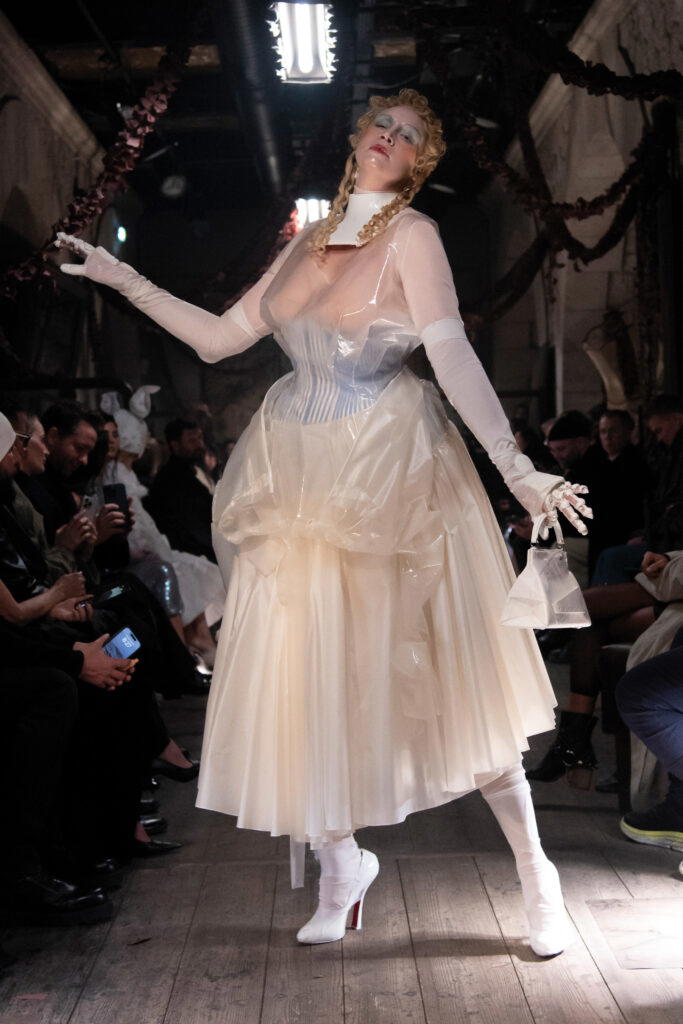
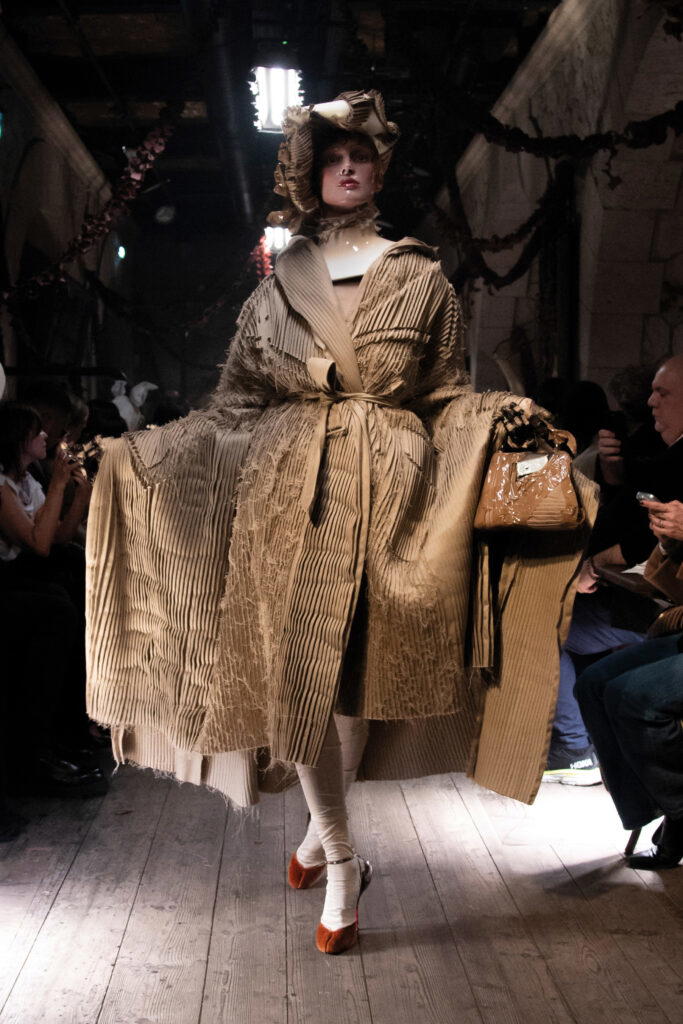
Exactly why? Over 12 months, Galliano and his team developed innovative techniques. Milletrage created feather-light garments imitating heavy fabrics and caisetting had delicate fabrics resembling corrugated cardboard. With aquarelling, printed tulle voilettes (hat veils) mimicked watercolour painting techniques to produce textures that were sun-bleached, tobacco-stained, and moonlit.
As per the show notes, the invitation “to take a walk with me, offline” was a voyeuristic exploration of a sordid cityscape. Galliano’s proposition that the self is shaped by appearances was expressed through his magnification of the unnoticed: the interior lives of night-time revellers whose garments and bodies kept the score.
In an industry where buccal fat removal, Ozempic drugs, and waifs reign, Galliano’s celebration of those with outlawed existences and unconventional rituals of dress felt urgent. His curvaceous porcelain dolls, garish apparitions, and corseted wanderers unabashedly embraced themselves and their supposed disrepute.
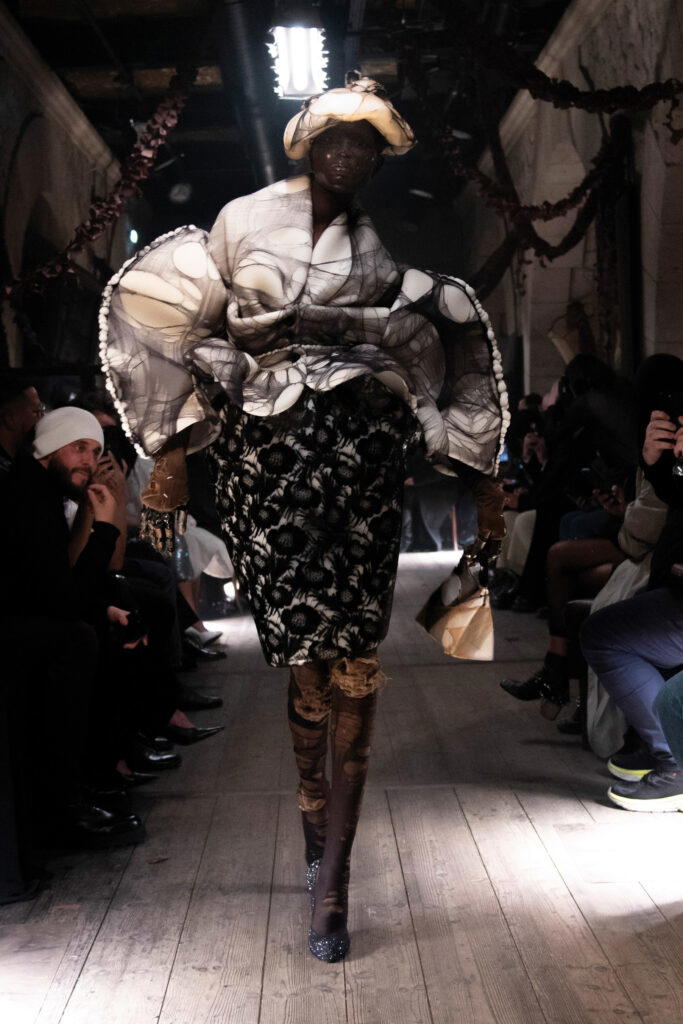
The show’s emotional core came through in the corsets, a manipulative garment inducing pain and pleasure. Accepting our natures was a journey oscillating between dysphoria and euphoria—and performed admirably by Leon Dame as a fugitive-turned-dandy.
The pressure to regulate the physical and social bodies we inhabit never ends. But what set Galliano’s underworld apart was the possibility of freedom and forgiveness.
Maison Margiela’s Artisanal Collection could not have been more poignant with its apt closing track, Adele’s ‘Hometown Glory’. Galliano’s ode to valiant outsiders was unmistakably a show that will live on in our memories. It reminded us why people care about fashion and how it unites us.
May this beacon of hope light the way forward before it is too late for Galliano to hand over the torch.