
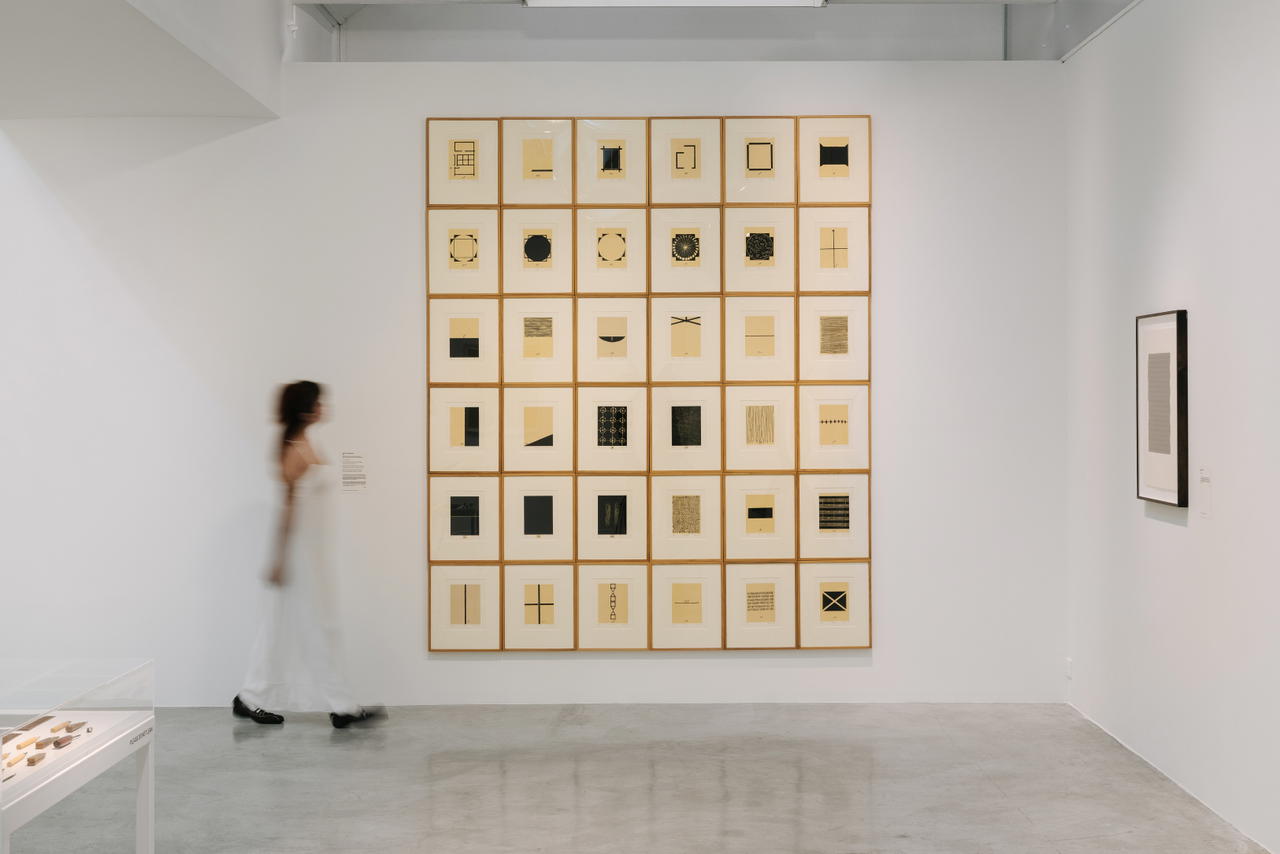
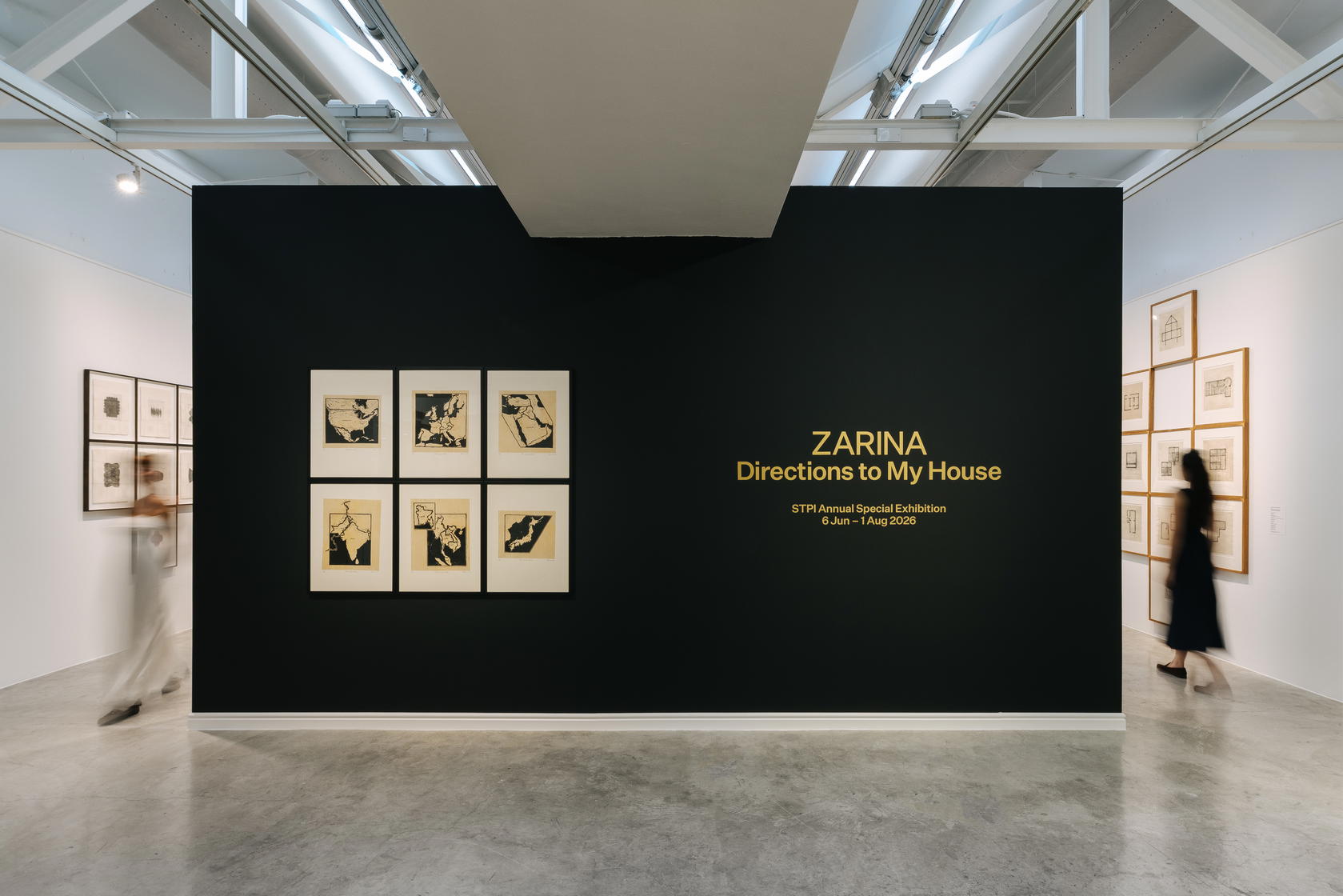
I spent a longer time at the media preview of “Zarina: Directions To My House” than intended. Running until 1 August 2026 at Singapore Tyler Print Institute (STPI), it spotlights the Indian-born printmaker, whose pared-back, geometric pieces about belonging and displacement have placed her among South Asia’s most influential creative voices.
It wasn’t Zarina Hashmi’s maps, grids, and abstract forms that kept my gaze; I just couldn’t tear my eyes away from ‘Spool’ (1975). The work depicts a spool of thread—embossed in white on white paper. Just a few days earlier, I’d been patching my bolster; it already bore bright red stitches in two spots from six months ago, so I chose black this time. And while at it, I pricked my finger.
‘Spool’ was created alongside other all-white prints such as ‘Button’ and ‘Untitled’ from 1975. They feature everyday objects at home—thread, buttons, and fragments of repair—that hold things together.
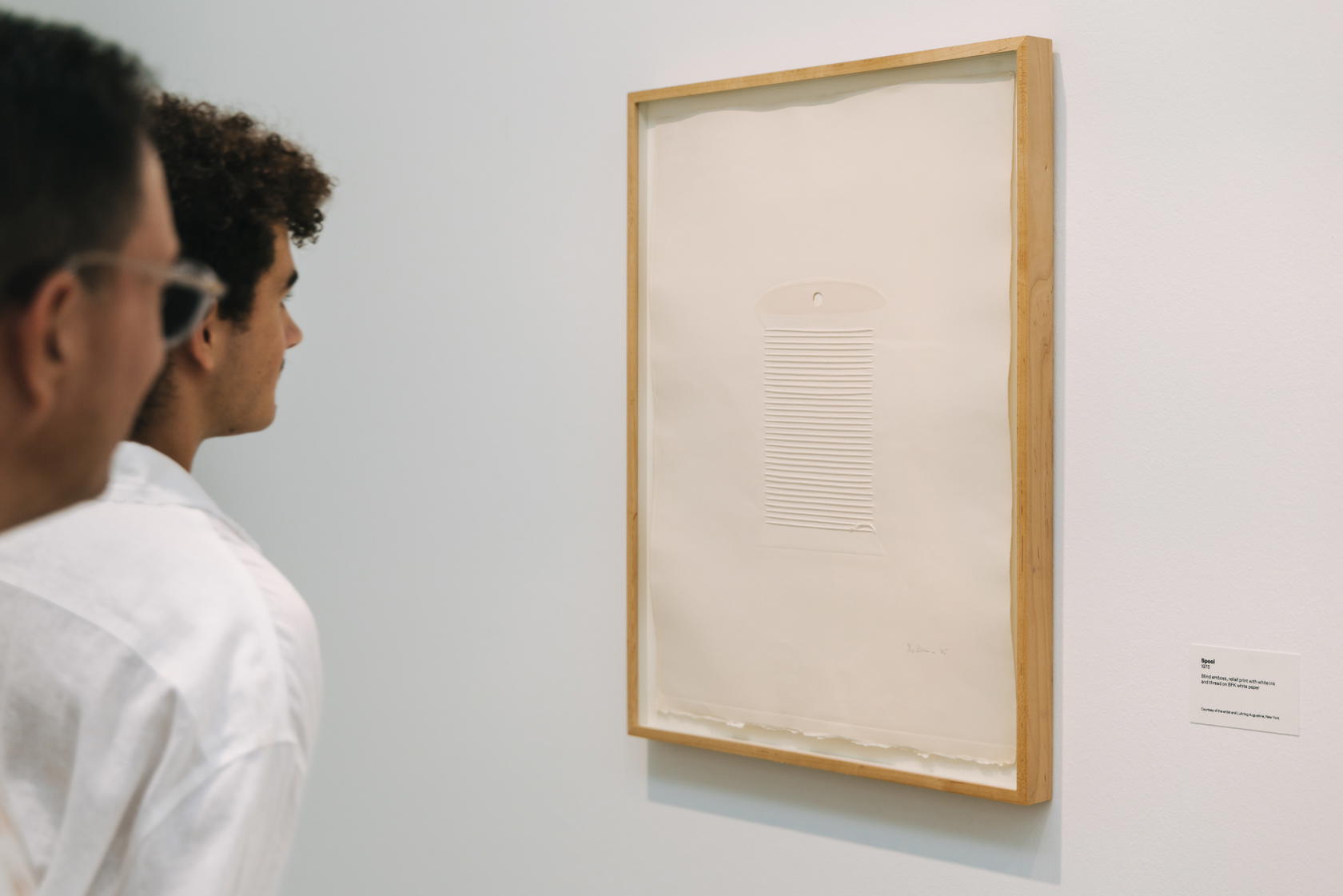
Zarina (who eventually gave up her last name) produced these works after studying traditional Japanese woodblock printing in Tokyo in 1974. By pressing a carved, uninked plate into damp BFK Rives paper, the surface is physically reshaped. The impression lingers even after the plate is removed.
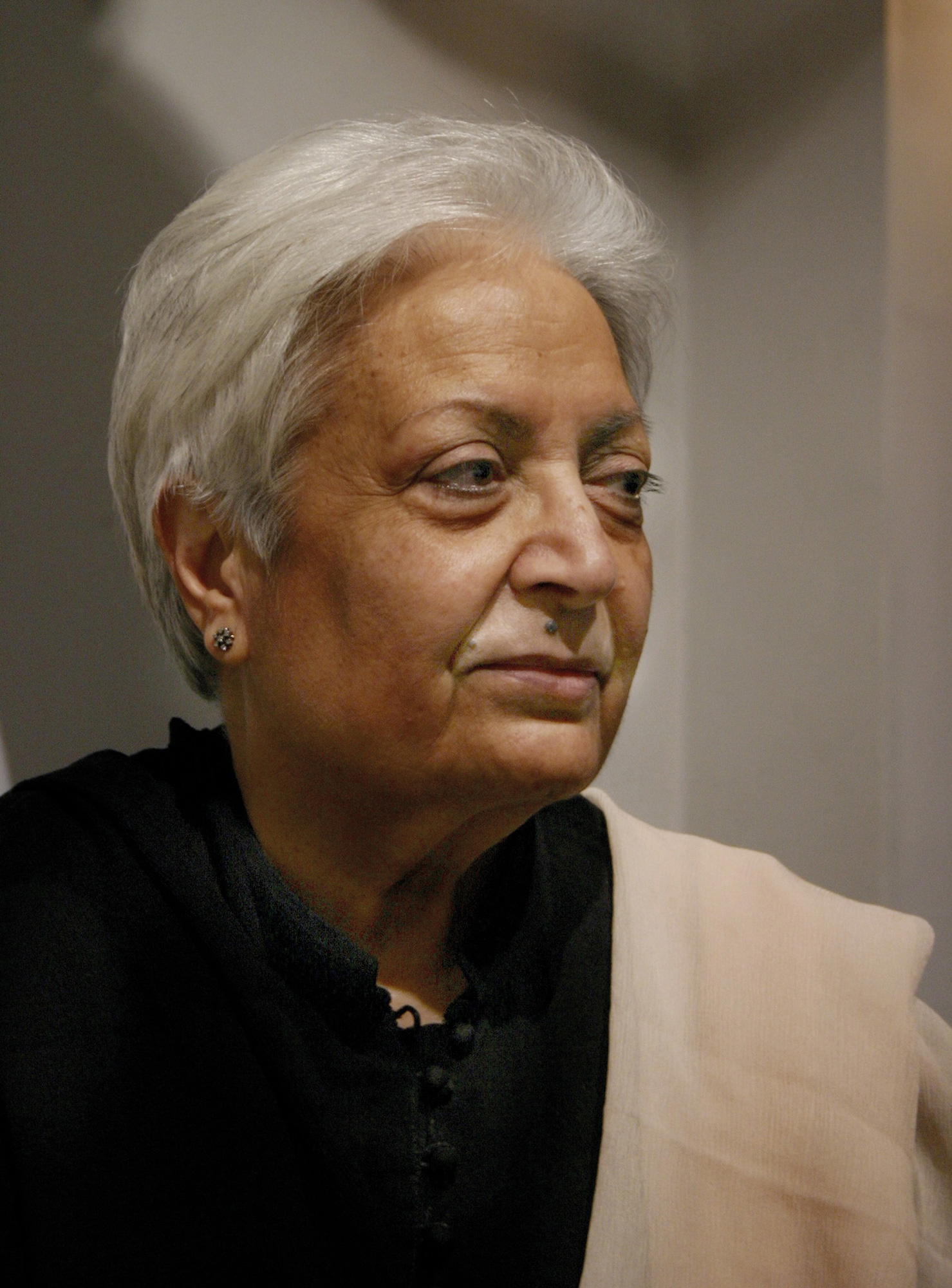
For Sarah Burney, ‘Spool’ also chronicles her own journey. Based in New York, she first worked with Zarina as a studio manager and later as a collaborator until the latter’s passing in 2020. Burney is also the curator of “Zarina: Directions To My House”.
“I met her when I was 23, Since then, I’ve become a wife and mother, lost friends, and watched too many wars from afar. I have also developed a greater reverence for domesticity and the quiet rhythms of family life—things that seemed entirely uninteresting to me at 23. ‘Spool’ reminds me to cherish the most intimate version of home, to protect it and savour it.”
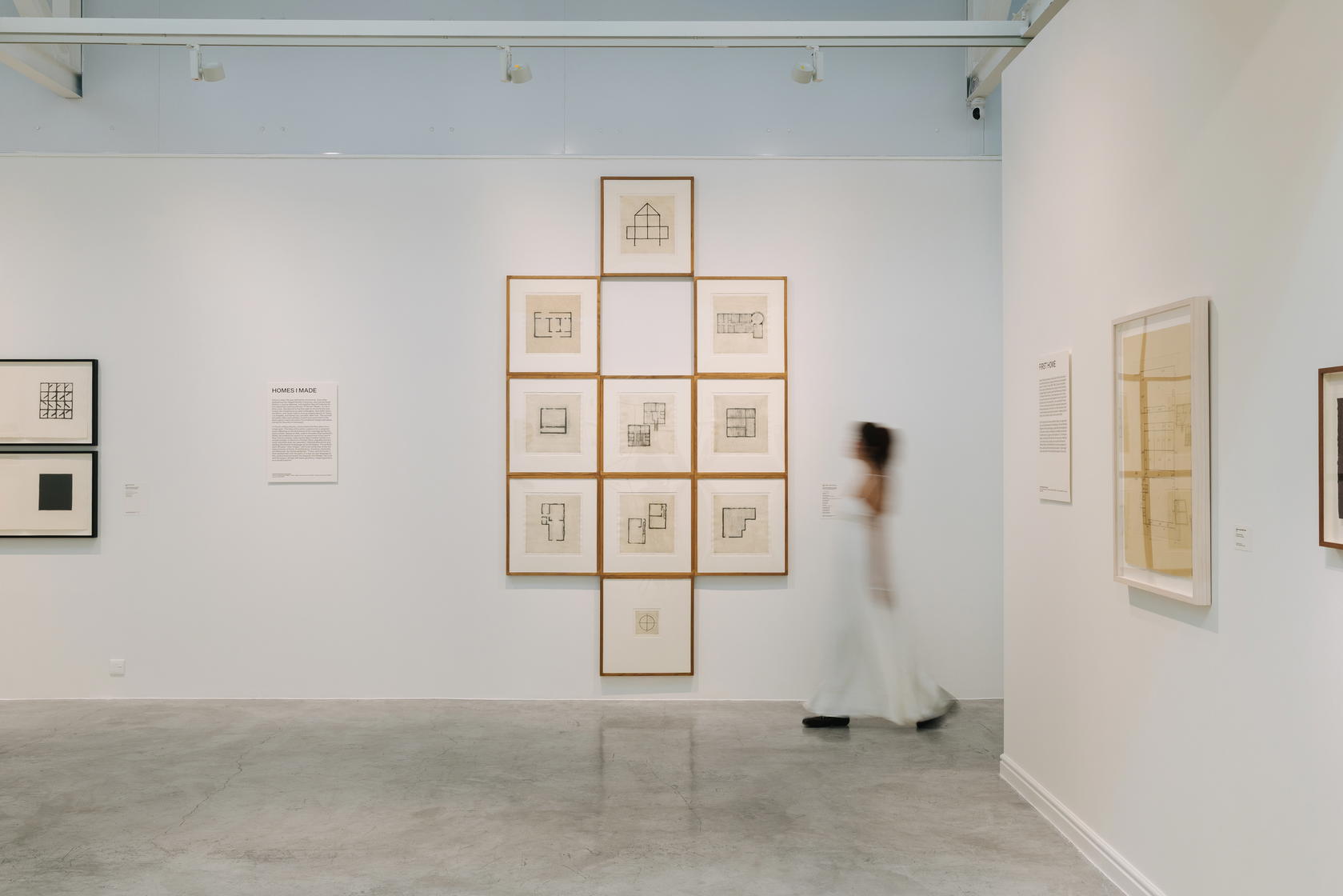
‘Spool’ is one of more than 50 works, including floor plans, maps, and woodcuts, brought together for this exhibition.
YOU CONCLUDED The exhibition with ‘Spool’. What emotion did you seek to create?
I start my tours with ‘Father’s House’, a print of the floor plan of Zarina’s childhood home, then move through homes she inhabited as an adult, her abstractions of home, the borders she crossed, the displacements she bore witness to, and the stars she contemplated. So, I want to end back at home.
Through ‘Spool’, and two works near it, ‘Family Portrait (Page From An Album)’ and ‘Family Portrait II’, Zarina contemplates domesticity, specifically familial domesticity, by memorialising one of its symbols. A spool of thread will be familiar to many of us who grew up with a parent darning clothes by hand.
‘Spool’ and the white works that surround it are also Zarina’s work at its most elemental. She has removed colour entirely and created an image out of touch and shadow only. It is an embossed shape of a spool of thread, a simple image and yet, to me, just as powerful as Zarina’s bolder, more graphic works. Zarina’s cartographic works get a lot of attention, and they deserve it, they are such powerful meditations on displacement, global politics, and migration.
Yet I have always found these quieter white works—where she contemplates a more personal, interior definition of home—to be even more moving. They linger in my psyche longer. In the same way a whisper is so much more convincing than a yell. Their success is a testament to Zarina’s mastery of balance and form.
But I should add that the exhibition doesn’t have to end with ‘Spool’. One of my favourite things about the STPI space, and ironically one of its biggest curatorial challenges, is that viewers can move through the space in many different ways. I chose to move viewers through it a certain way, but someone else might end at a completely different space.
‘Spool’ requires contemplation. How does speed affect our reading of it?
I fear a quick walk-by of ‘Spool’ won’t give the emotional charge of the work time to envelop you. But if I’m honest, I think all work requires contemplation, or maybe more accurately, my appreciation for an artwork always deepens the longer I spend with it.
Home is a recurring theme in this exhibition.
I hope to illustrate how Zarina’s art has given us a framework to consider the complicated idea of home, from the global and political to the interpersonal and domestic. ‘Spool’ allows me to highlight her consideration of domesticity. It is one definition of home, and Zarina insisted on making space for it within her broader meditation on belonging.
Southeast Asia has its own history of migration and displacement. How do audiences here interpret Zarina’s ideas of home and belonging?
I felt her work would resonate with its community. Singapore has such a diverse population, with many crossing borders, juggling multiple languages, and rebuilding homes away from family—experiences shared by many people here and throughout Southeast Asia. Audiences here may find these parallels more immediate than those in the US.
As a curator, how do you prevent the reading of works such as ‘Home is a Foreign Place’ from becoming fixed?
Zarina’s work is never didactic; there are always multiple points of entry, especially with ‘Home is a Foreign Place’. Honestly, I think my most important job as a curator is to not get in the way of that multivalent magic of her art. I always try to gesture to the many points of entry but I also believe there’s only so much a curator can do regarding how a work is read. I make suggestions but at the end of the day, the work’s reading is a private conversation between the art and the viewer
You’ve spent so much time with Zarina’s work. What are some patterns that show up only after time with the work?
The more time I spend with Zarina’s work, the more I revel in her process and materials. The way she carved a block, the way she drew a line on a plate, how intentionally she chose her paper, her gold leaf, and ink. She approached her materials with the keen eye of a craftsperson and I think her intentionality and insistence on organic helps explain the magnetism of her art. Her imagery is, of course, incredibly powerful. But the more time I spend with her work the more I’m fascinated by the many decisions she has made before an image forms.
Register for a guided tour here.