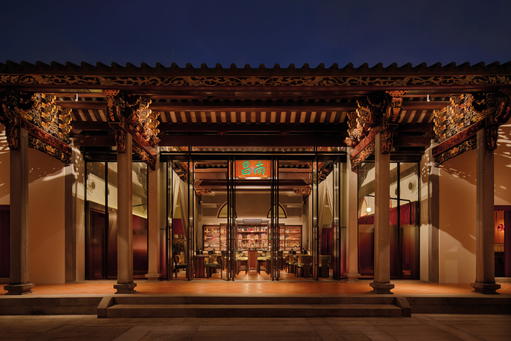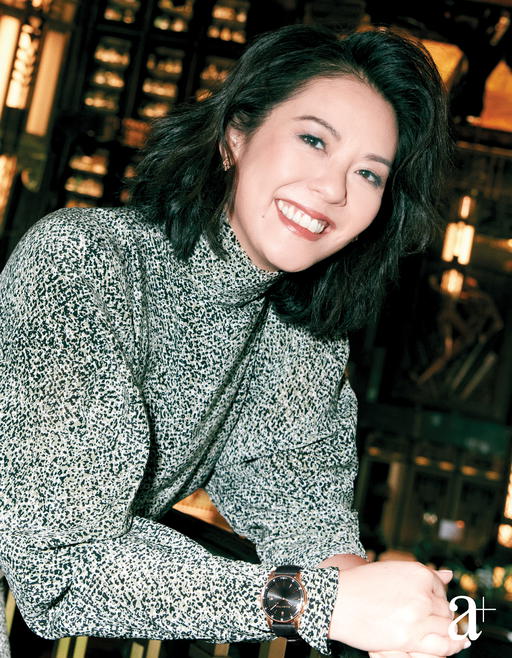
Musician Inch Chua and bartender Andrew Pang met virtually in 2007 on the defunct social media website Friendster. In the days before Facebook and MySpace, it was the social network where people connected. Friends could add each other and share life updates. Eight years later, they finally met in person at Pang’s old bar named Belljar and hit it off immediately.
The number eight is a recurring theme in their lives because eight years after their first meeting in Belljar, Chua and Pang now run Spectre, a psychology-themed gastrobar in Tanjong Pagar, together.
“I read a survey last year that found 66 percent of respondents in Singapore were concerned about the stigma surrounding mental health,” says Pang. “I thought the bar would be an excellent platform to introduce and talk about simple therapy techniques.”
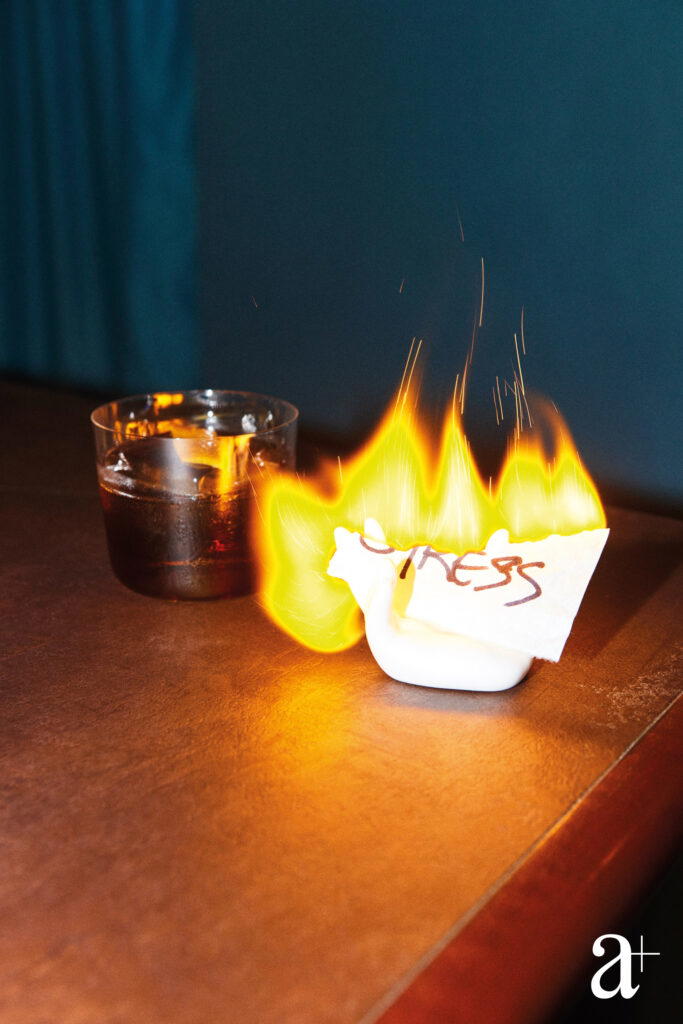
Therapy begins before you even place an order. The server presents a piece of paper and asks you to write “whatever you like” on it. It could be a mantra, a person’s name, or a feeling. Then you’re encouraged to burn it with a lighter. This happens in a brilliant, blinding flash and leaves nothing behind—no paper, sediment or anything else that might leave a trace of that feeling.
The idea, according to Pang, is that whatever you carry with you that day disappears. You are unburdened and renewed. It’s a common therapy technique. It is also great for Instagram. Some might accuse Spectre of being gimmicky. Besides burning the flash paper, the bar asks patrons to do other simple actions, depending on the drinks they order.
Pang reassures me that they are serious. Mental wellness isn’t simply about asking someone to turn that frown upside down. The partners share that they work with psychologists and TCM practitioners to ensure their techniques are aligned and explained clearly. They’ve also scattered QR codes in their menu that link directly to therapy and TCM clinics.
Pang says, “We want to influence Singapore’s F&B industry policy regarding mental wellness. We also recently secured 70 hours of free therapy for industry professionals and hope to work with more therapists and organisations to help subsidise future sessions.”
They want to perfect the food and drink options before they begin this gargantuan task.
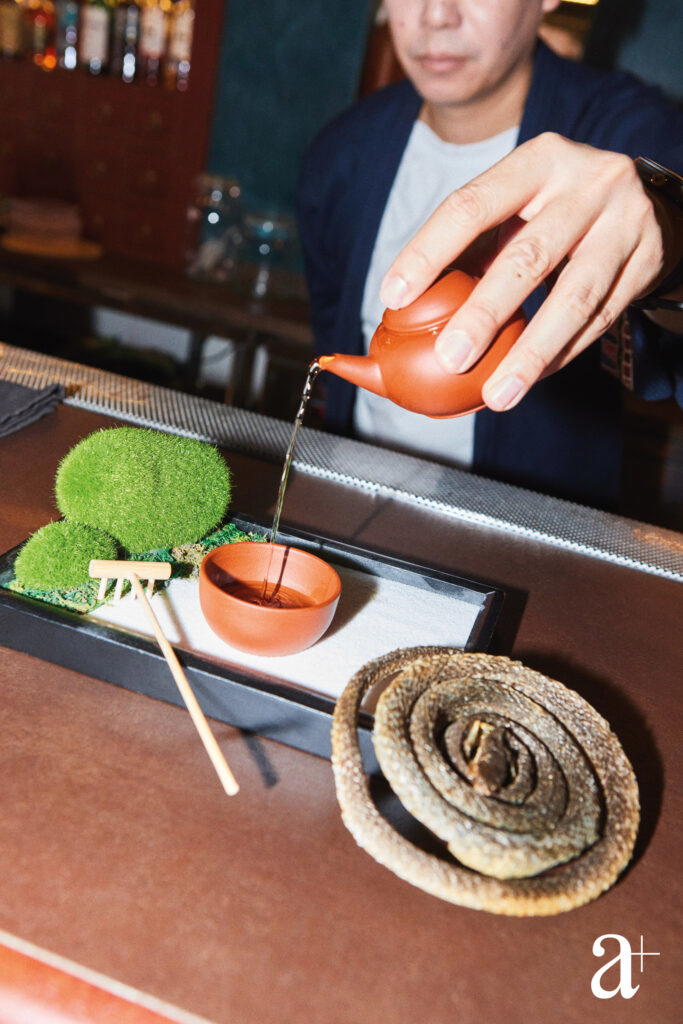
For example, Spectre’s kitchen is smokeless. That meant Chua had to design a menu that didn’t use fire, which was ironic. “Food to me is man’s first real creative endeavour. And, like all creative things, you can’t think outside of the box without a box. In designing the menu, nutrition was a priority. As my culinary education started with my grandmas, their philosophies came to mind,” says Chua.
Spectre doesn’t serve fried food, a common theme in other bars. Chua wants to fill your stomach and prime your palate for cocktails. The team serves food on ceramic ware made by local artisans at Mud Rock Ceramics, and plans to incorporate Kintsugi, a Japanese concept that finds beauty in broken imperfection and involves repairing dishes subjected to the rigours of service with precious materials.
It’s poetic and sends a message: you are more beautiful when you are broken and made whole again.
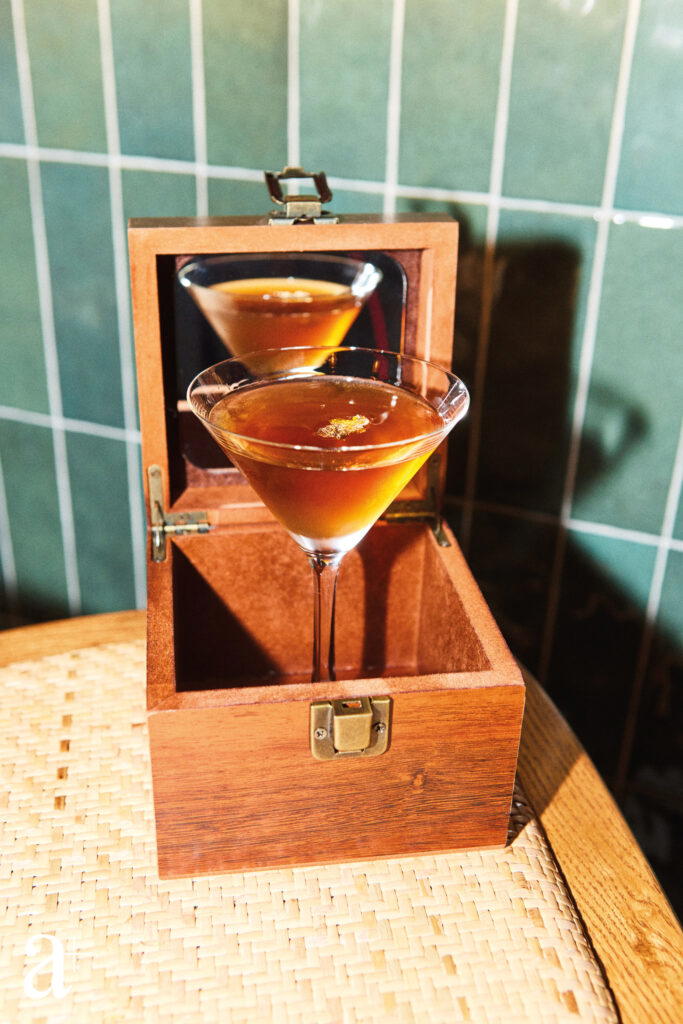
As she shares space with the bartenders, storage becomes a massive balancing act, especially at their busiest times. Regardless, it’s a marvel to see Chua at work in her corner, chopping, stirring, and plating her creations. I recommend the sambal smoked duck because it goes swimmingly well with Retrospect, a concoction of gin, sherry, dry vermouth, olive oil, and Benedictine D.O.M. It comes in a box with a mirror, and you are encouraged to look at yourself while sipping it. It’s a common therapy technique.
Chua and Pang have also dealt with mental issues. She struggles with self-worth. So she pours herself into her work and clocks long hours juggling different responsibilities. She acknowledges that it’s unhealthy. “I’m still navigating. Learning to balance healthy distractions with people pleasing fodder is something I struggle with.”
Pang, on the other hand, often feels incomplete. He believes he could do something more, and cannot explain why he has this sense of restlessness.
Spectre might not be able to resolve our traumas. It may, however, encourage us to befriend or accept them—with a little help from food and drink, of course.