

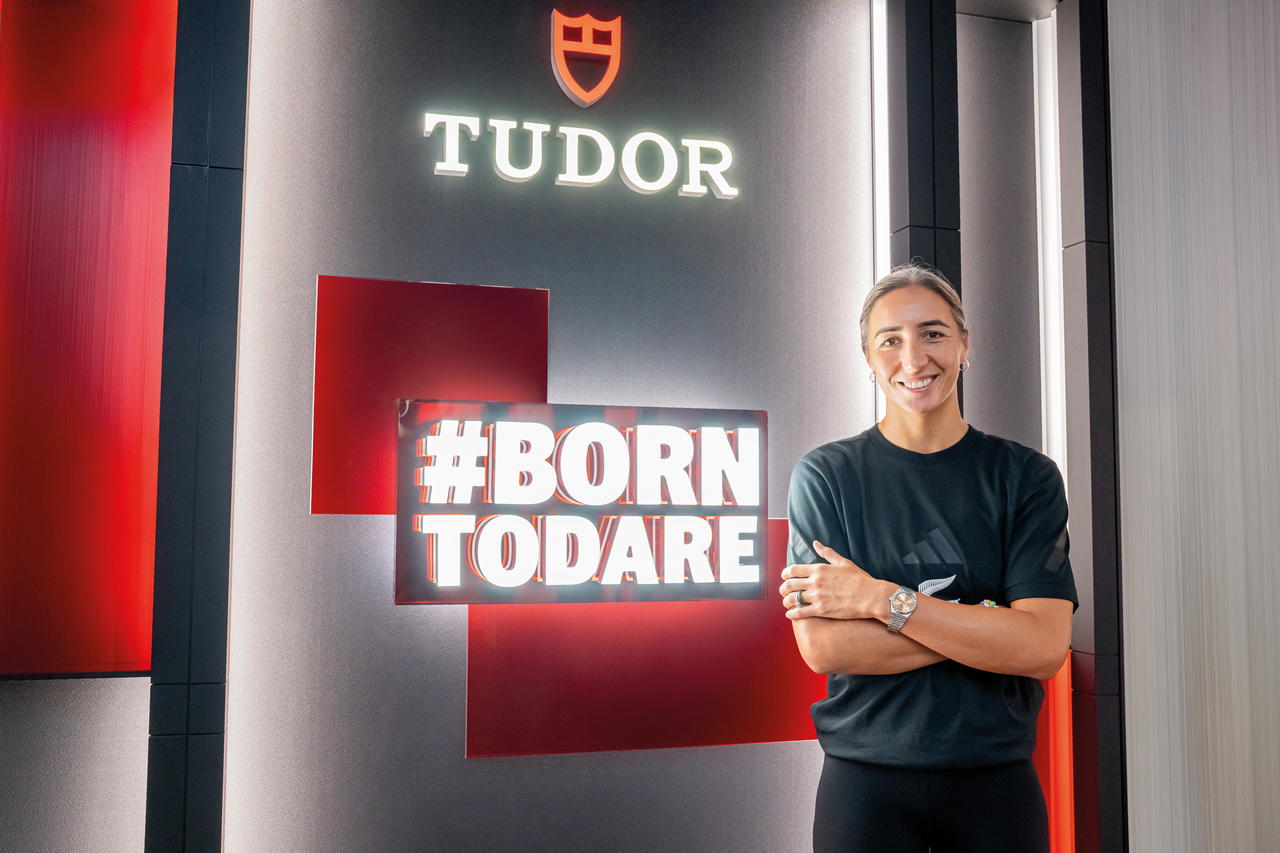
When Sarah Hirini speaks, it is with the calm authority of someone who has spent years at the highest levels of competition. She has been tested on the pitch and far beyond it—bruised, doubted, and at times written off. Through it all, she has endured, adapted, and led.
As a Tudor ambassador, there’s no better candidate than Hirini, a leader who embodies the Swiss watchmaker’s motto Born to Dare, not as a slogan, but as a way of life. The 32-year-old player has become one of the most influential figures in women’s rugby, driving New Zealand’s Black Ferns Sevens to Olympic gold in a sport once almost exclusively reserved for men. In spite of this, she assumed leadership as captain at just 21 under a cloud of uncertainty.
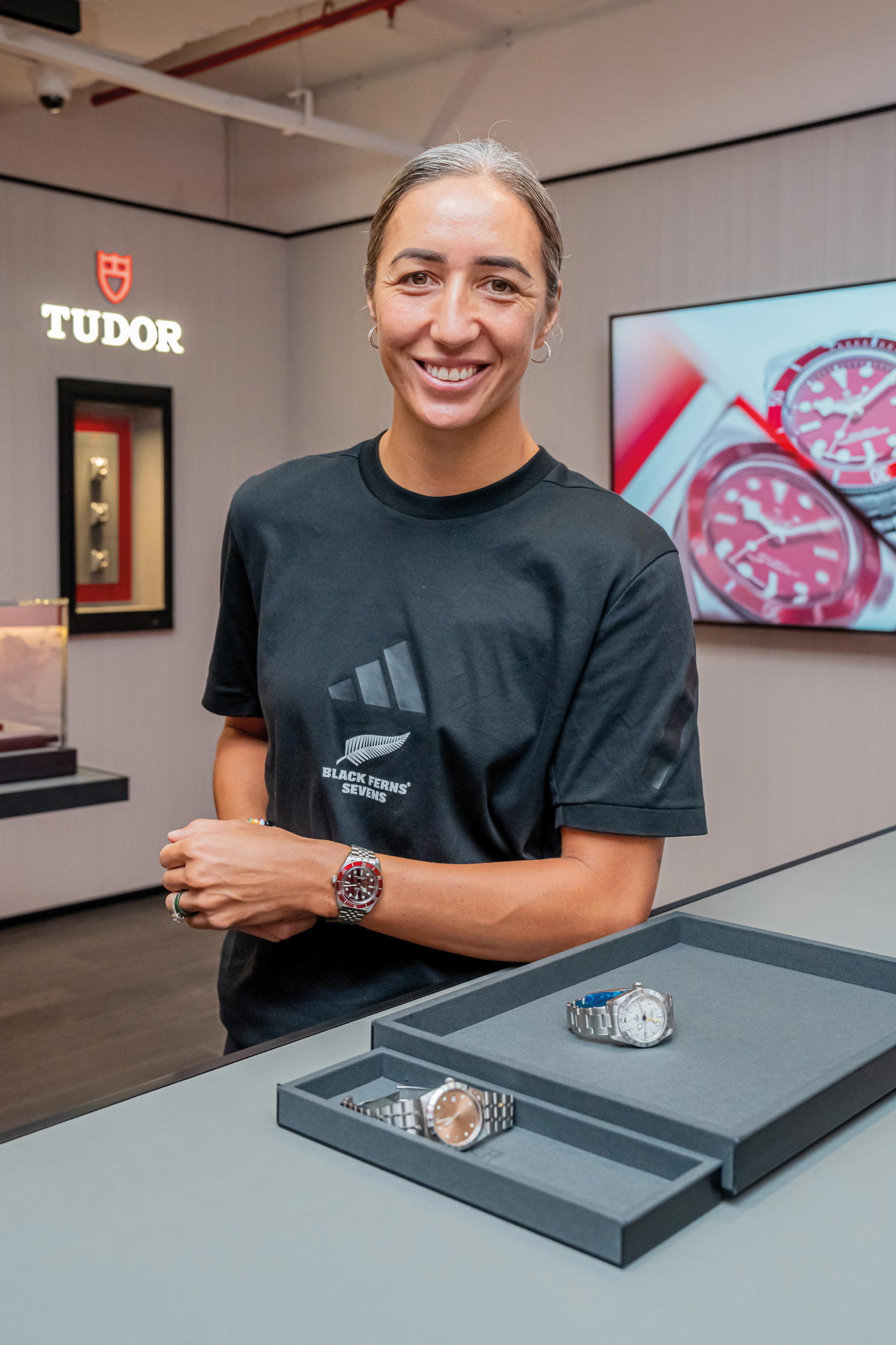
“There were people in the team older than me who didn’t think I was up for the job,” she recalls. “I had to grow up quickly and figure out who I wanted to be and what I was going to stand for as a leader.”
That introspection shaped her not only as a player, but also as a presence—calm, analytical, and deeply intentional. As a result of her stewardship, the Black Ferns Sevens emerged as a dominant force and a beacon for a new generation of players she now helps nurture. “They are so talented, way more talented than I’ve ever been,” she says. “In 14 years’ time, they’re going to be taking our game to a whole other level.”
Being daring, for Hirini, has never been limited to the scoreboard. In the lead-up to the Tokyo Olympics, she had ACL surgery, which typically takes up to a year to recover. Hirini, however, returned after seven months and made the Olympic team. “We won gold, and during that final match, I broke my face in five places but continued playing.”
She shares this story casually, as if it were just another ordinary day. Then, with a smile, she adds, “It’s not too bad now, I think.”

Her Olympic journey began with heartbreak, not triumph. With only gold on their minds, the Black Ferns Sevens went to Rio in 2016. “That’s the only thing. But we fell short of that dream. We played Australia in the final and it was just completely heartbreaking to lose.” That loss would later become a turning point. “A lot of that was around off-field culture and making sure we were the best team that could possibly be.”
By Tokyo 2021, the Black Ferns Sevens were transformed. “To me, that [win] was a lot of relief… lots of relief. Doing it in the next cycle heading into Paris, I was going to enjoy everything I possibly could about this cycle. Paris was probably more joy than anything else.” It was a feeling she shared with 14 family members who had flown in to watch her. “Just to see their faces after that Olympic gold, it was lots of joy.”
The mental side of sport is something Hirini has learnt to embrace. “I didn’t think it was so important until you’ve had a couple of losses… when you’re really struggling to find yourself in professional sport.” She now works closely with what she calls her “mental skills lady” along with a trusted circle that includes her husband and a group of confidants.
“It’s about having people around you who are good for you, not just someone who’s going to sympathise with you because sometimes I need to be checked,” she says.
This foundation has helped sustain a team culture she considers essential to success. “Every team is great. Every team works really hard. Unless you’ve got a great culture off the field, it’s a pretty challenging place. We’re away from home for more than 100 days a year. Some girls have kids. If you’re happy off the field, you’re going to be amazing on the field.”
This balance between joy and grit, nurturing and dominance, is what makes
New Zealand’s Black Ferns Sevens so captivating. It’s a spirit captured in the team’s guiding concept of Mauri, a Māori word that refers to life force and energy. “It’s about leaving with something more than just wins or titles. We want to make an impact.”
Hirini finds strategic delight even in the smallest technical details. She is equally enthralled by the mental game as she is by the physical game. “We’ll dive deep into social media on other teams to better understand them. It’s tactics. The Sevens game is so short that if you can get into someone like that, then you can kind of get on top of things. It’s not just rugby—it’s very much a mental game too, which I enjoy.”
She never forgets, however, that her role extends beyond the pitch. Hirini understands the weight of the jersey, regardless of whether she’s mentoring a teen teammate or walking the streets of Singapore during Sevens week. “Wherever we go, and whether or not we’re wearing our logo, people see us as the Black Ferns Sevens team. That’s so much more important than just playing rugby on the field.”