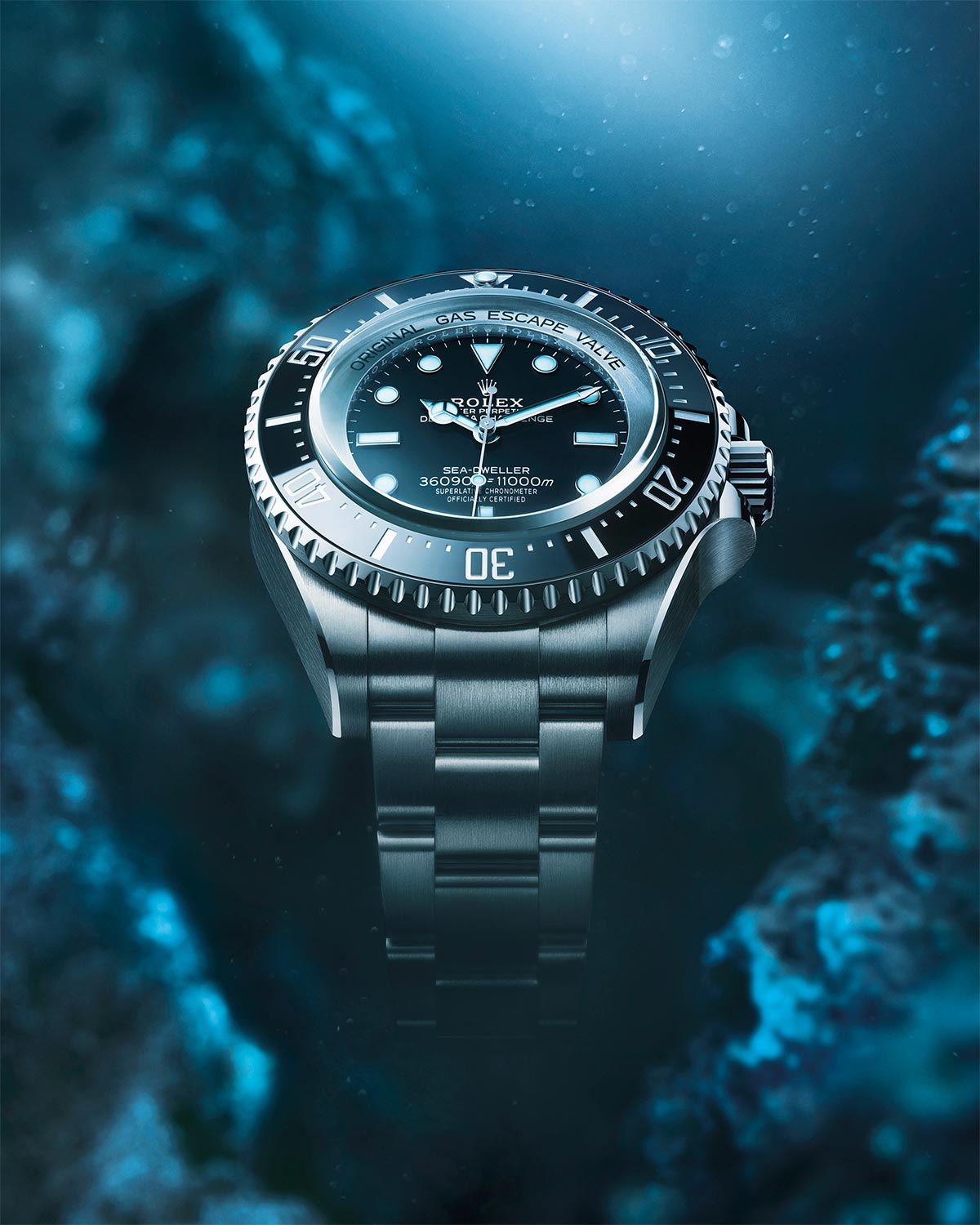
Technical advancement in watchmaking is usually progressive, with small, incremental improvements accumulating over time with every new generation. For instance, power reserves of movements have been gradually lengthening over the past decade. However, paradigm shifts do occur. The new Rolex Oyster Perpetual Deepsea Challenge is a good example. Waterproof to 11,000m, it breaks the previous record for any regular production timepiece.
Long history of oceanic exploration
Rolex has developed dive watches to support the exploration of our oceans since 1926, when the brand introduced the Oyster—the world’s first waterproof wristwatch. As saturation diving evolved, other milestones were introduced, including the helium escape valve in 1967.
Two achievements stand out in particular, both involving the Mariana Trench’s Challenger Deep, the deepest point on Earth. The Swiss-designed, Italian-built deep-diving research Trieste bathyscaphe was fitted with the Rolex Deep Sea Special in 1960 before diving 10,916m into Challenger Deep. The watch resurfaced in perfect working order.
Rolex achieved a similar feat in 2012. The Rolex Deepsea Challenge, a second experimental watch, accompanied filmmaker and explorer James Cameron on his solo expedition in the Deepsea Challenger submersible. In the same way as its predecessor, it was attached to the submersible. It reached Challenger Deep as well, emerging unscathed.
The new Oyster Perpetual Deepsea Challenge is the spiritual successor of these experimental watches. Due to its 11,000m rating, it can also reach Challenger Deep and more. Additionally, as the world’s deepest diving watch in regular production, it represents the culmination of Rolex’s diving watch efforts to date as well.
Technical triumphs
Rolex considered every aspect of the watchmaking process when developing this engineering marvel. To begin with, Oyster Perpetual Deepsea Challenge was designed to function as a wristwatch. As a result, the Rolex Deepsea Challenge experimental watch from 2012, from which it was derived, had to be reduced in size.
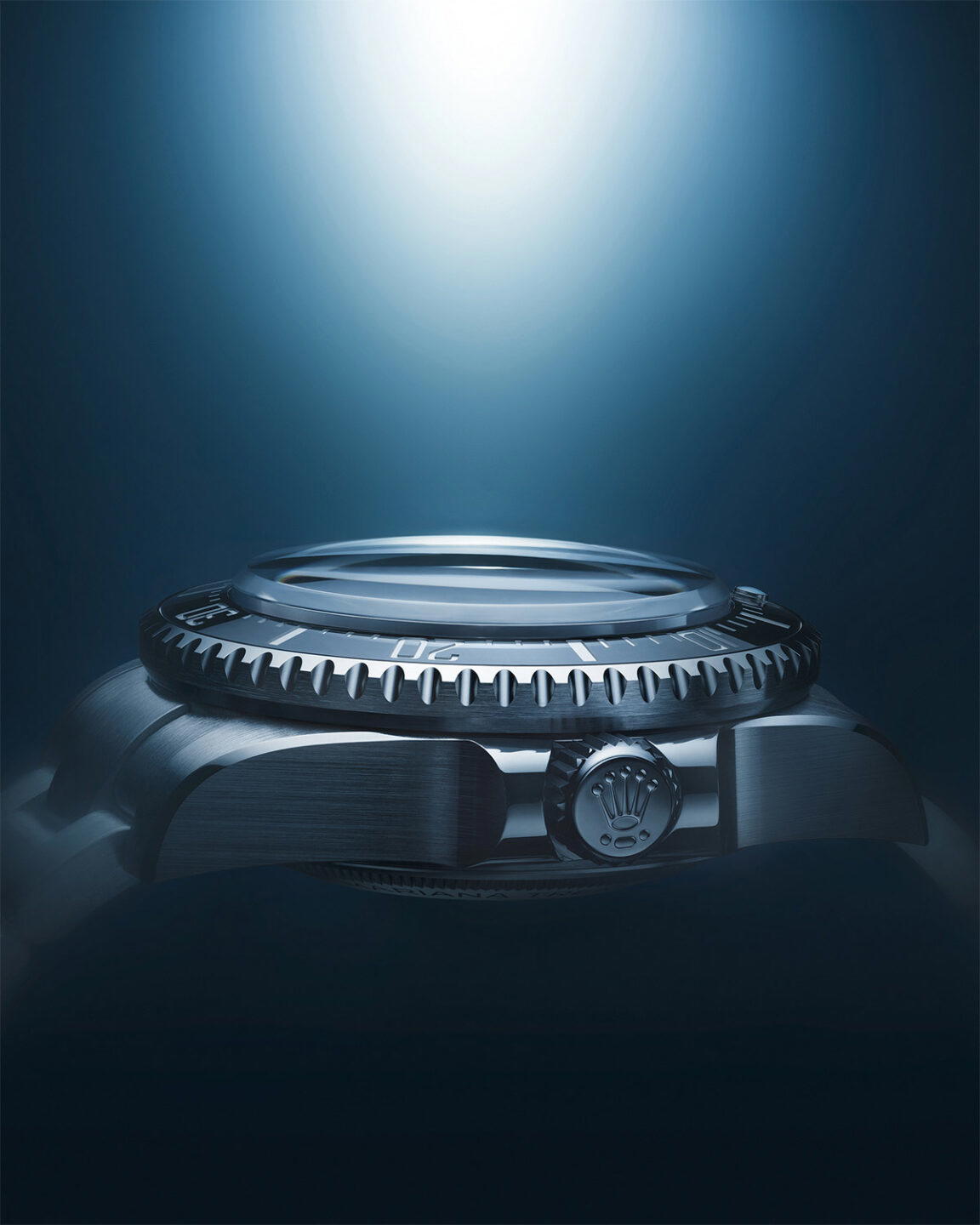
Photo: Rolex.
In addition, Rolex revised the proportions. Instead of the prototype’s 51.4mm diameter and 28.5mm thickness, the new timepiece is slimmer at 50mm diameter and 23mm thickness. The thinner crystal made reducing the thickness easier. It also improved the aesthetics of the timepiece.
A full suite of Rolex waterproofing technologies was also applied. A key feature is the Ringlock system, which involves a modified case architecture. Regular watches require larger, more robust cases for deeper dives due to the crystal and case back exerting increased pressure on the case. With the Ringlock system, however, the crystal and case back are mounted on an extraordinarily tough inner ring, reducing the load on the case, and allowing it to be thinner. When the watch’s depth increases, the greater forces exerted by the crystal and caseback actually compress the sealing gaskets, making it even more waterproof.
Another potential entry point for water is the crown. To ensure maximum waterproofness, the Triplock system—a dive watch staple—seals three different zones in the crown. Additionally, the Oyster Perpetual Deepsea Challenge is equipped with a helium escape valve, which makes saturation diving possible. A diver can vent excess helium from the watch during hyperbaric chamber decompression with this feature.
A wrist-mounted companion
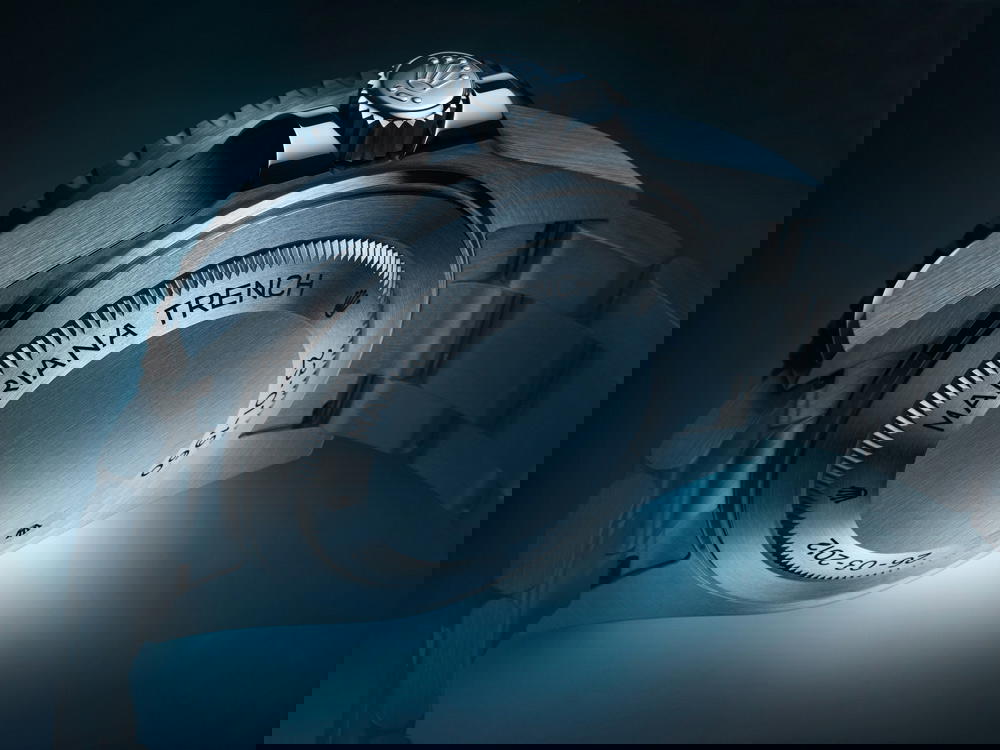
Photo: Rolex.
However, technical features alone do not make a timepiece suitable for use as a tool watch. The Oyster Perpetual Deepsea Challenge had to be built to make it user-friendly for divers of all levels. To achieve this, the brand incorporated its Glidelock and Fliplock bracelet extension systems to enable users to wear diving suits up to 7mm thick. In addition, the matte black dial and the Chromalight display deliver high contrast and ease of reading under any circumstance.
With an approximate 70-hour power reserve as well as shock and magnetic resistance, the calibre 3230 keeps time. Similarly to every other Rolex timepiece, the complete watch is a Superlative Chronometer that’s accurate to -2/+2 seconds a day.
Given its size, the Oyster Perpetual Deepsea Challenge would have been unwieldy if it were made of steel. Rolex opted for a grade 5 titanium alloy, RLX titanium, for the case and bracelet. This reduction in mass is significant—the Oyster Perpetual Deepsea Challenge is 30 per cent lighter than its experimental predecessor. The watch is also the first Rolex entirely made of titanium.
Another step forward
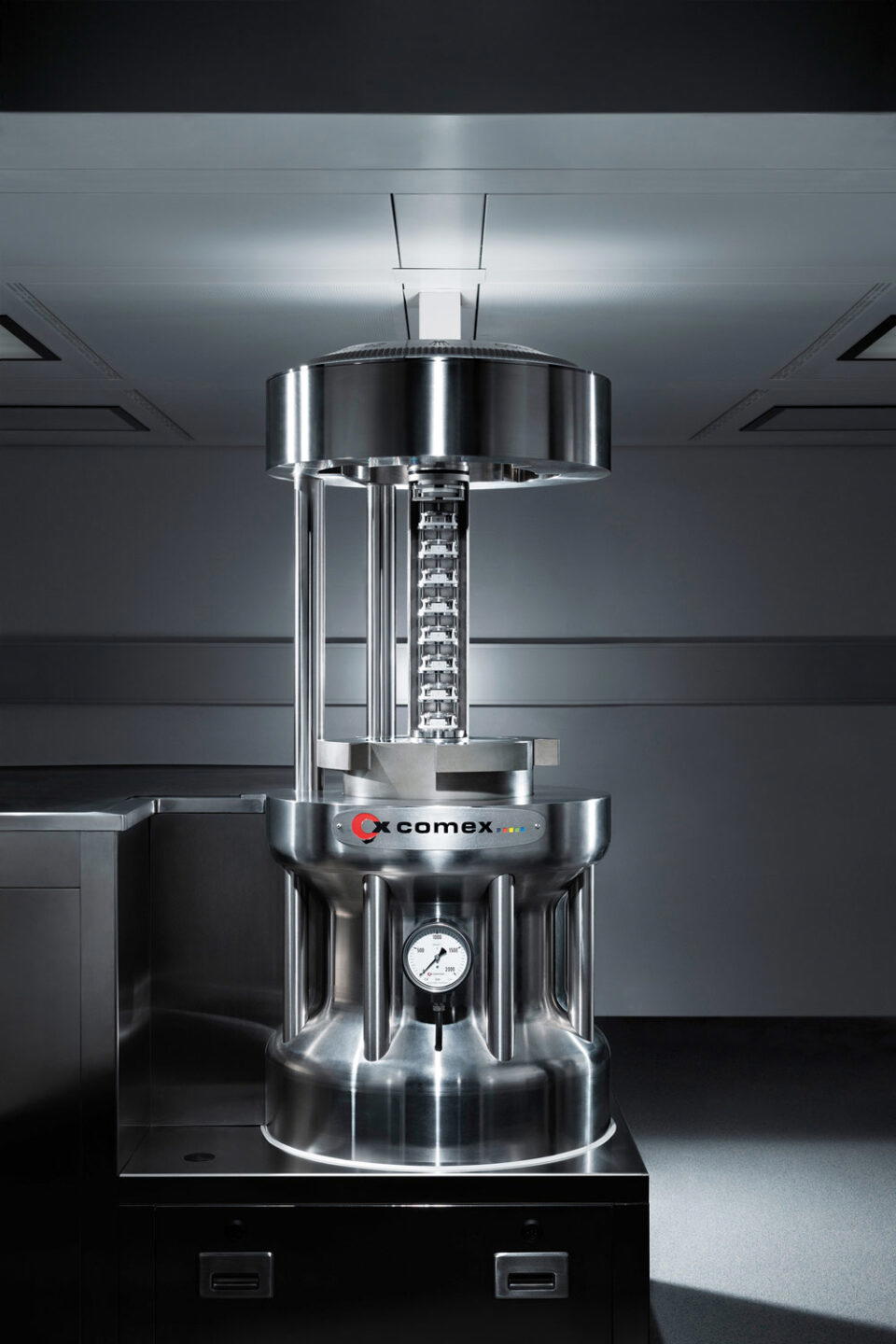
To test the waterproofness of each Oyster Perpetual Deepsea Challenge, Rolex worked with its long-time partner Comex (Compagnie Maritime d’Expertises) to develop a unique ultra-high-pressure tank. The new apparatus creates a test pressure equivalent to water at a depth of 13,750m, which provides a safety margin of 25 per cent over the watch’s certified depth of 11,000m.
As a result of the Oyster Perpetual Deepsea Challenge, Rolex has advanced watchmaking and human exploration in yet another way—both internally and for the industry at large.