

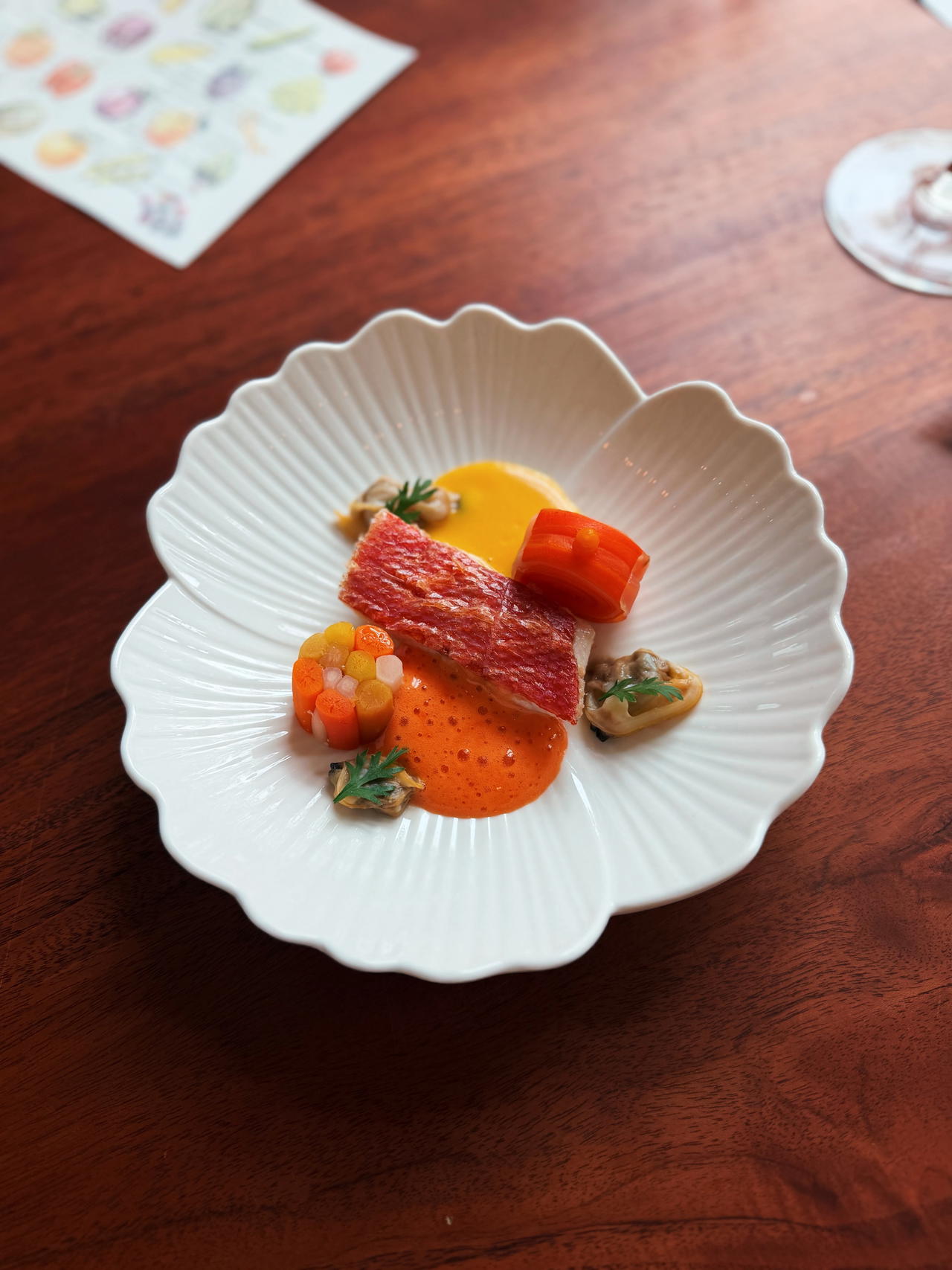
What does autumn taste like in a city where the seasons rarely change? At one-Michelin-starred Restaurant Jag, the answer lies in the earthy sweetness of Japanese chestnuts, the fragrance of matsutake mushrooms, and the acidity of Cameron Highlands tamarillos.
These seasonal treasures take centre stage in Executive Chef Laurence Tan’s latest tasting menu, a celebration of nature’s autumn bounty. Grounded in classical French techniques yet influenced by the familiar flavours of his Singaporean upbringing, Tan’s creations show that vegetables are not merely accompaniments but the stars of every plate.
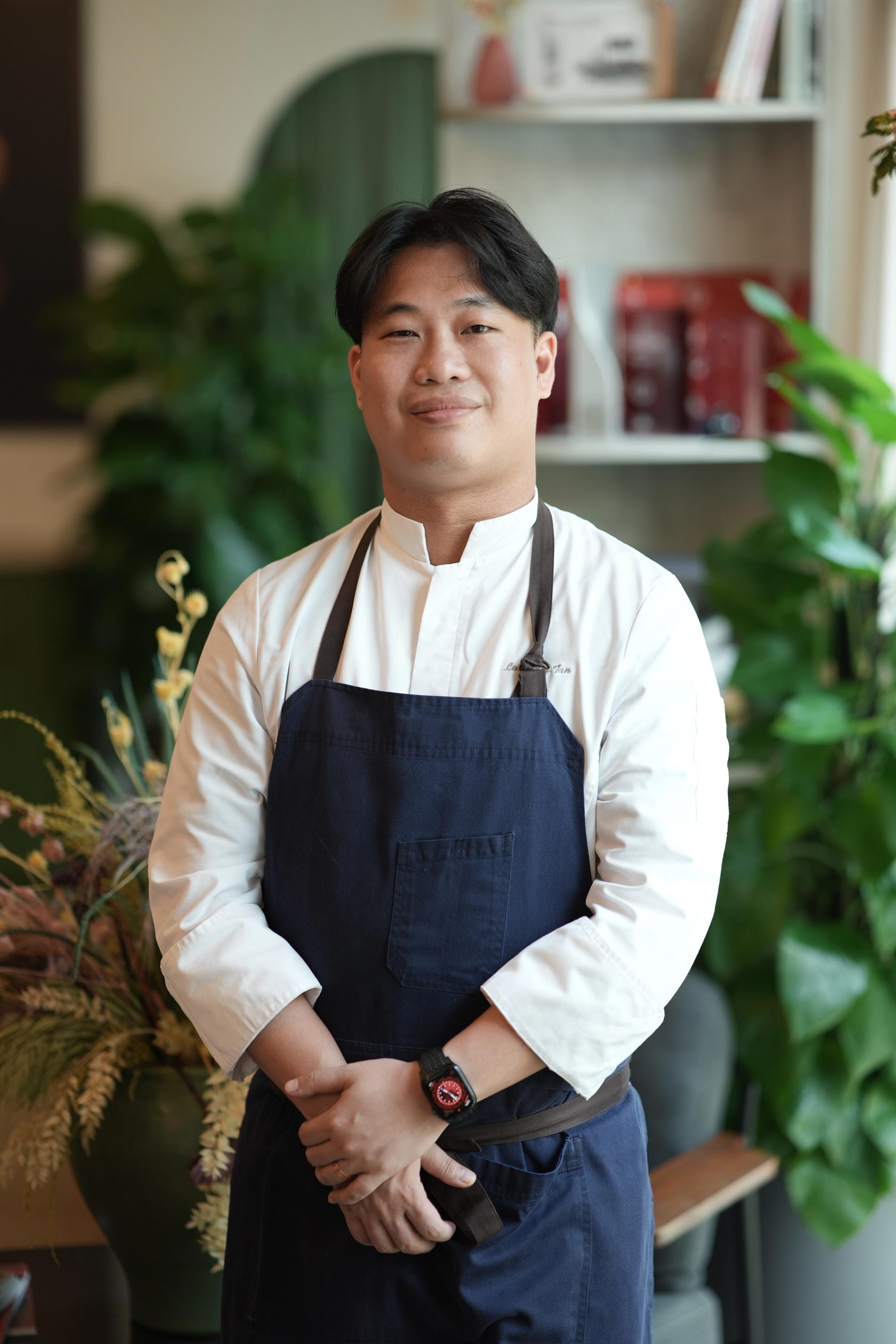
A defining moment for Tan came during his time at The White Rabbit, where he worked under Chef Benjamin Tan and progressed from commis cook to chef de partie. The experience instilled discipline and an appreciation for fundamental culinary techniques.
At Jag, where he has led the kitchen since 2025, Tan has found an opportunity to develop his own identity while respecting the restaurant’s founding philosophy. “Restaurant Jag has taught me to trust my own judgment and find my voice as a chef,” he shares.
That confidence is reflected in the restaurant’s latest offerings. Rather than allowing elaborate techniques to overshadow the ingredients, Tan favours preparations that enhance their natural qualities. His approach has already earned recognition. Jag retained its Michelin star in the 2026 Michelin Guide Singapore, an achievement Tan credits to the collective efforts of his team.
“Retaining the star was a meaningful recognition of the team’s hard work and consistency,” he says. “However, our focus has never been solely on achieving or retaining a Michelin star. It has always been about serving good food and creating memorable experiences for our guests.”
The Grand Dinner Tasting Menu unfolds as an exploration of the season, balancing comforting warmth with refreshing acidity and delicate textures. The experience begins with three seasonal canapes. A crisp kohlrabi tartlet layered with apple and sorrel delivers a bright opening, while a potato croustade inspired by the familiar local kueh pie tee offers a combination of slow-cooked leek and pickled potato. A delicate radish cylinder filled with assorted radishes and sesame praline completes the trio.
A Japanese sweet potato brioche follows, its airy crumb carrying the vegetable’s natural sweetness. Accompanied by house-made butter infused with cinnamon, cloves, and star anise, it brings a festive warmth to the table.
The salsify veloute offers a more indulgent expression of autumn. Enriched with Maison Marou white chocolate, the creamy soup is complemented by braised salsify, roasted pistachios and sakura ebi, bringing together nutty and savoury notes.
Yet autumn at Jag is not defined by richness alone. A delicate parsley root creation, featuring the vegetable in pureed, braised, and raw forms, is paired with citrus-cured hamachi or Japanese sea bream. A parsley root soubise, poured tableside, brings depth without overwhelming the dish’s refreshing character.
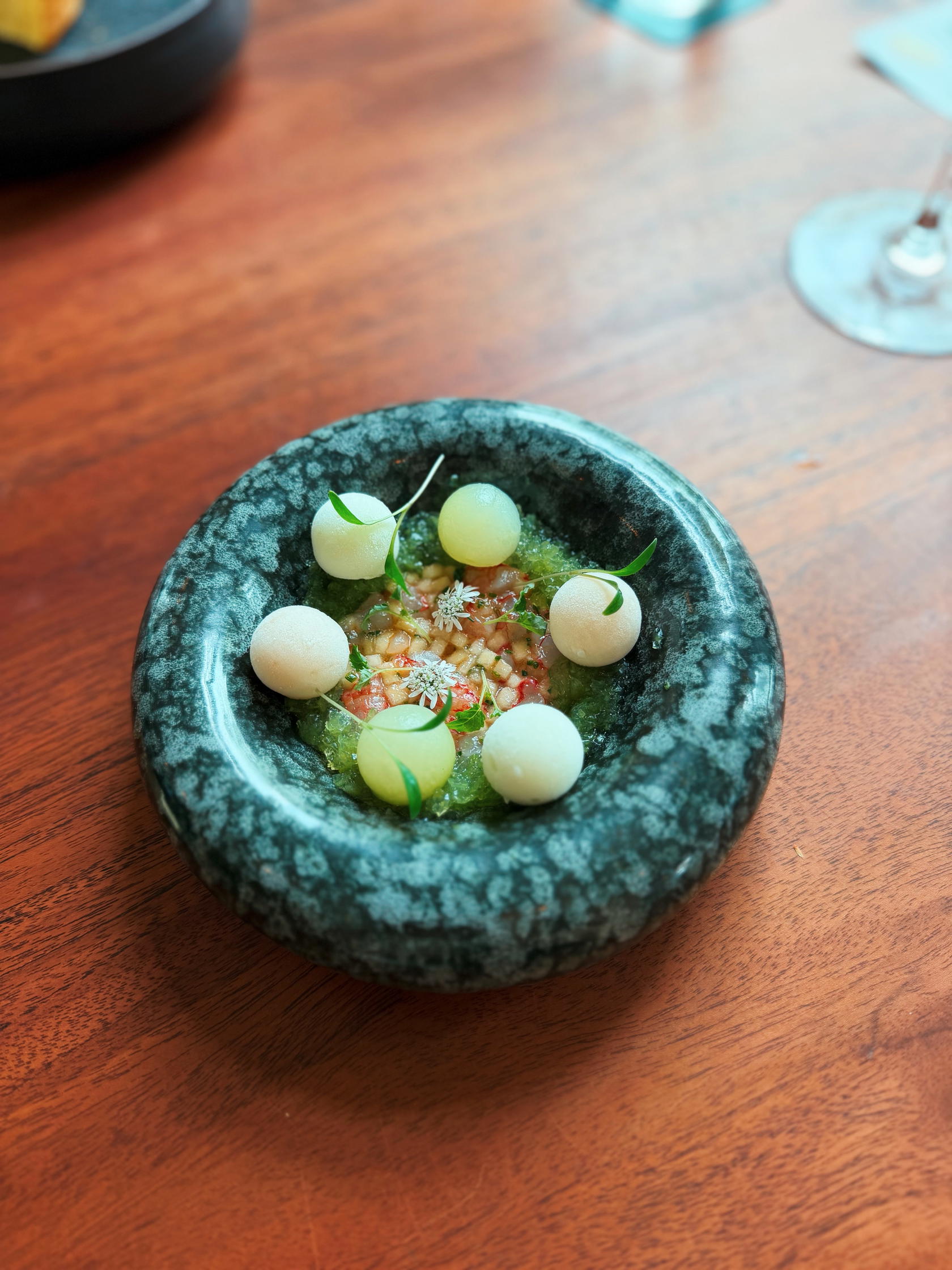
Another intriguing course pairs chayote and pear in an interplay of temperatures and textures. Chayote sorbet, pear sorbet, braised chayote, and fresh pear accompany a tartare of langoustine or another raw crustacean, allowing clean sweetness and gentle savouriness to come through.
These dishes illustrate Tan’s belief that vegetables possess versatility. “I hope diners discover that vegetables are remarkably expressive and memorable,” he says. “By giving vegetables the due care and attention we hope guests will appreciate their depth, versatility and natural character in a new way.”
Among Tan’s personal favourites is the chestnut, mushroom and sweetbread creation, a dish that captures the evocative character of an autumn forest. At its centre is a delicate chestnut flan, surrounded by sauteed maitake mushrooms and pickled shimeji. A mole sauce, deepened with Maison Marou dark chocolate, is poured tableside, while veal sweetbread contributes another layer of richness and texture. Finally, aromatic matsutake mushrooms are shaved over the dish.
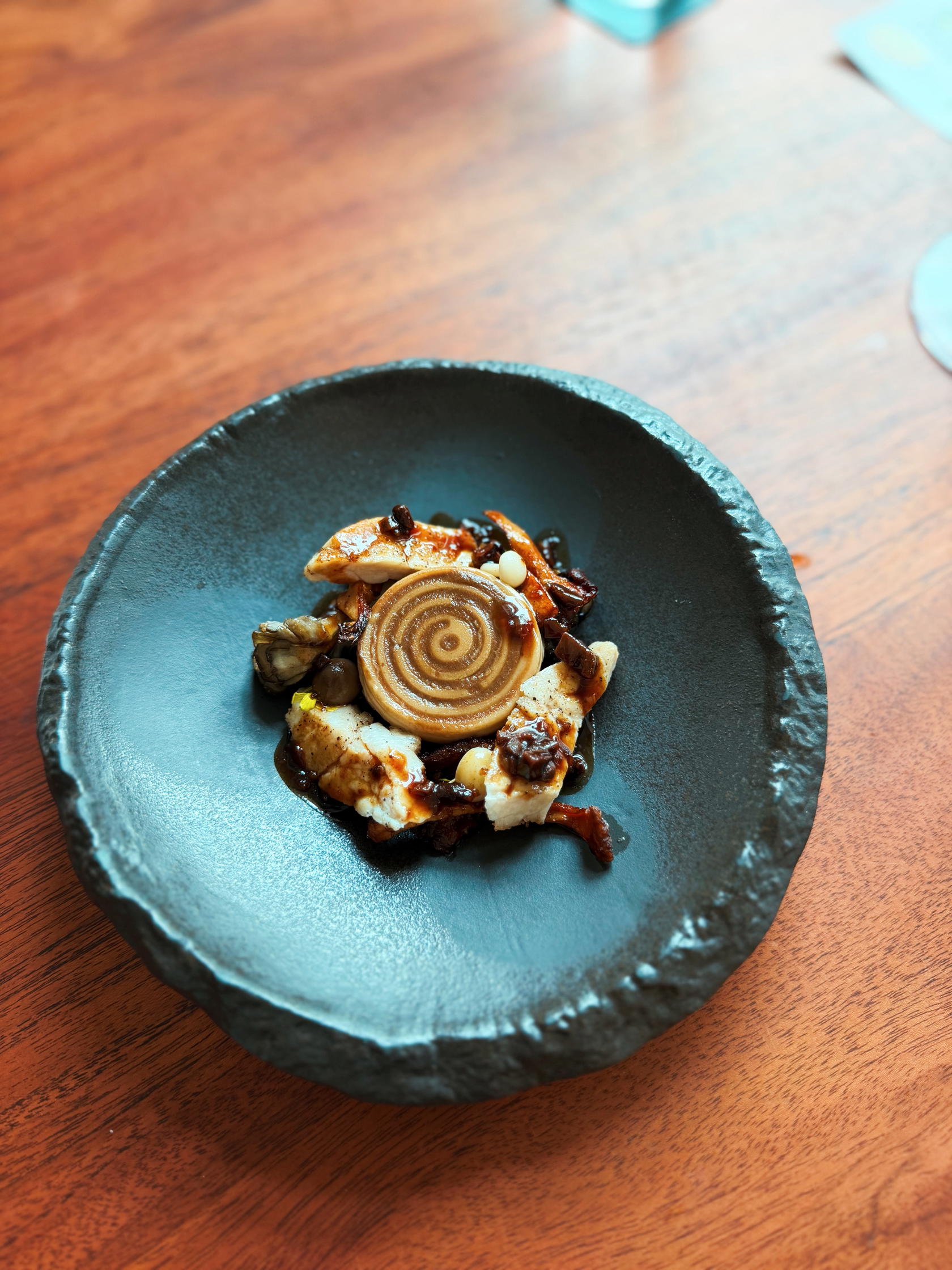
The ingredients themselves tell a story of provenance. Tan is especially excited by chestnuts from Japan’s Tokushima Prefecture and matsutake mushrooms from Shangri-La City in China. “Matsutake mushrooms have a distinctive aroma that brings a sense of autumn to a dish, while chestnuts offer a natural sweetness and earthiness that work beautifully in savoury preparations,” he explains.
For Tan, however, storytelling should never come at the expense of flavour. “I believe the story should support the food, not overpower it,” he says. “Guests should be able to appreciate the dish through its flavours and textures even before hearing the explanation.”
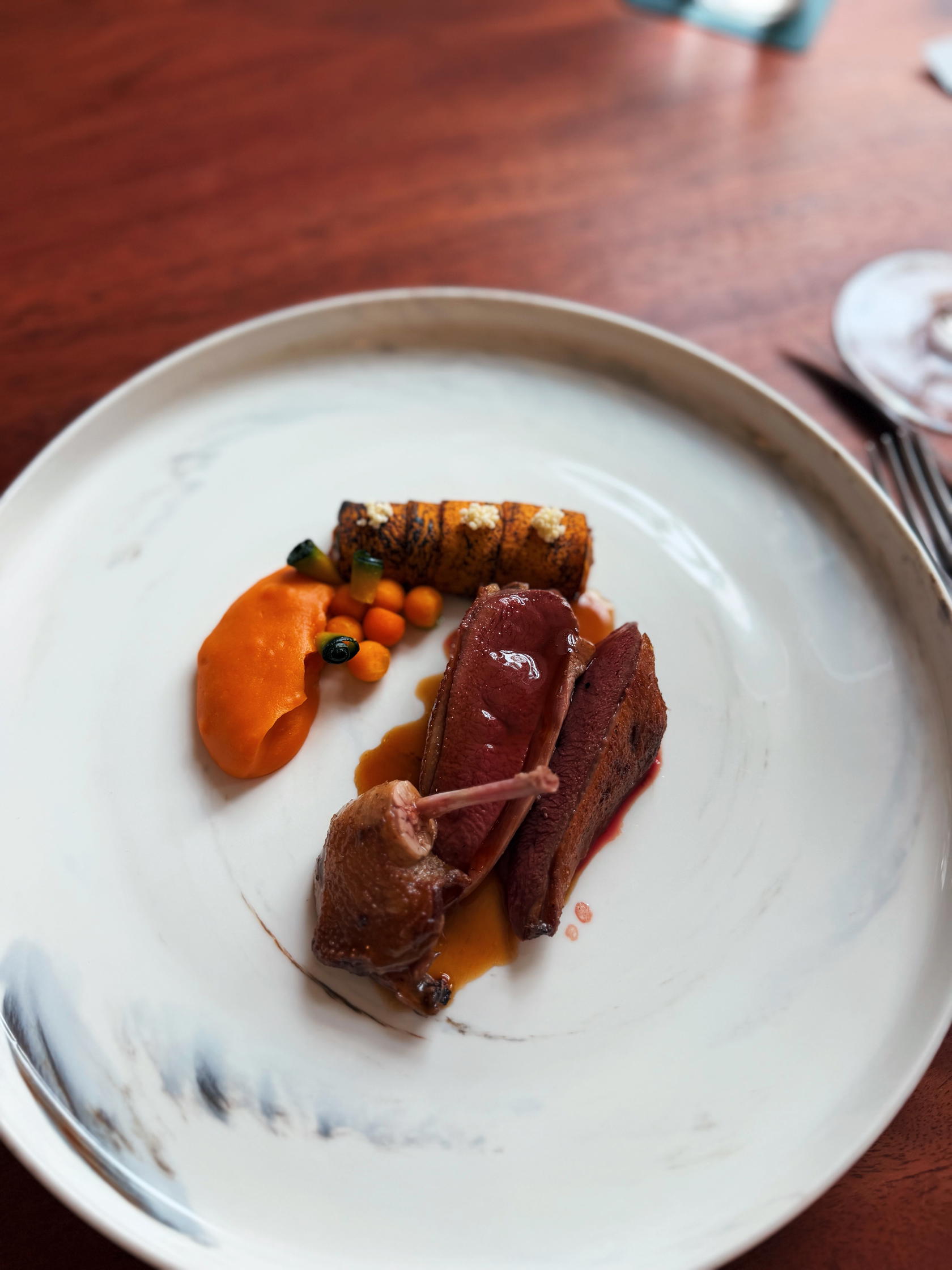
The main course features kuri and kabocha squash prepared in multiple textures, alongside pigeon finished over binchotan charcoal. A savoury roll of grilled duck heart, raw pumpkin, and pumpkin puree adds intensity, while a maple-accented meat jus brings the elements together.
Interestingly, Tan entrusted the development of this course to his colleague Dong Jin, reflecting his collaborative approach to kitchen leadership. “My role was to guide the process, exchange ideas, and ensure the dish aligned with our overall menu philosophy,” he says. “It is always rewarding to see the team develop their own perspectives and grow in confidence as chefs.”
After the earthy richness of the savoury courses, the desserts offer a refreshing change of pace. A tamarillo pre-dessert is close to Tan’s heart. Featuring tamarillo sorbet finished with delicate edible flowers, the dish highlights the fruit’s distinctive acidity and vibrant character.
Sourced from Cameron Highlands, tamarillo is among the seasonal ingredients that most excite the chef. “The tamarillo offers a bright acidity and fruity flavour, which makes it interesting to work with, especially when balancing richer courses,” he explains.
The final dessert brings together clementine and persimmon in a graceful combination of citrus freshness and mellow sweetness. A silky clementine posset is layered with thin slices of fresh persimmon, accompanied by persimmon ice cream. The result is creamy yet light, allowing the fruit’s natural flavours to take the lead.
The meal concludes with seasonal mignardises, including sticky date pudding, a dark chocolate caramel bonbon, argousier and cranberry pate de fruit, and a pineapple sable inspired by the familiar pineapple tart. It nods to Singapore’s culinary heritage, demonstrating how Tan’s regional sensibilities can find their place within Jag’s contemporary French repertoire.
While the cuisine remains central to Jag’s identity, the restaurant’s evolution extends beyond the kitchen. Under General Manager Maryjoy Lim, recipient of the Michelin Guide Singapore 2026 Service Award, hospitality is designed around the individual rather than a prescribed fine-dining ritual.
Guest preferences and dietary considerations are taken into account even before arrival, with menus customised where appropriate. The experience is intended to feel intuitive and personal.
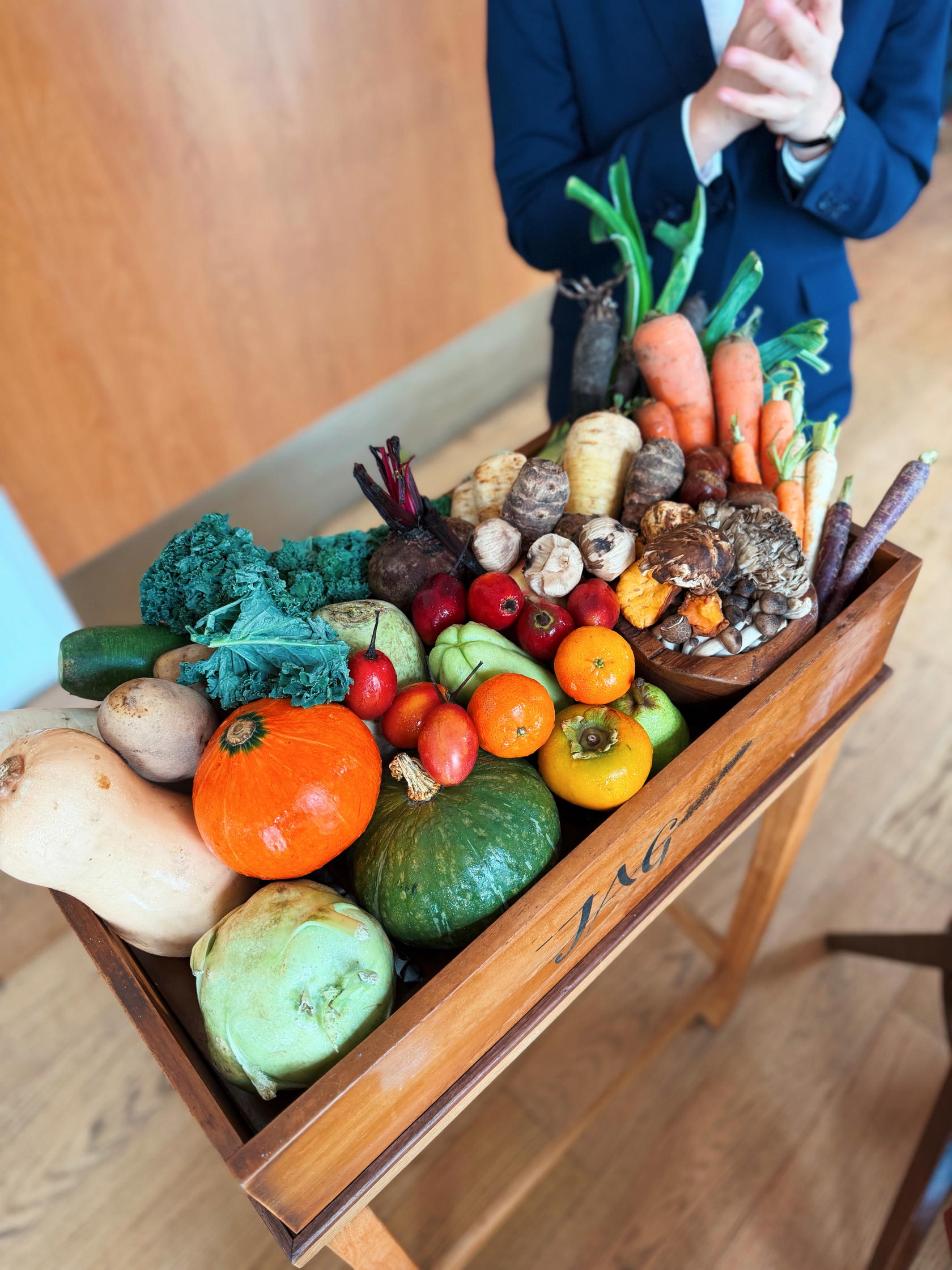
Even the farewell is thoughtfully considered. Local diners receive a selection of seasonal vegetables to take home, accompanied by a QR code offering simple preparation suggestions. Overseas guests are presented with a hand sanitiser infused with the restaurant’s seasonal fragrance, offering a sensory reminder of their visit.
It is a charming extension of the philosophy first established by founder Anant Tyagi when Jag opened in 2018, that vegetables deserve to be celebrated not only for their culinary possibilities, but also for their contribution to nourishment and everyday enjoyment.