Phuay Li Ying was never interested in joining the family business. It would seem unlikely that Excelpoint, a company that distributes electronic components and provides engineering design services, would be the perfect employer for a young woman who dreams in watercolour. Despite this, her path was like so many others who grew up in our pragmatic society. Phuay’s traditional parents did not allow her to pursue a career in the arts, so she went to college, graduated, and worked for a bank.
A year and a half working as a credit analyst with UOB was all she needed to realise she needed an outlet for her creativity. After a brief stint as a marketing manager for fashion e-commerce platform Shopthemag, Phuay started her clothing line in 2014, applying her watercolour designs to apparel to create wearable art. She called it Ying The Label.
The story of successful artists usually ends here. However, the struggles Phuay faced while setting up her label gave her story a plot twist — one that not only brought her back to the business she swore she would never join, but also allowed her to transform, grow, and help sell it for $232.2 million to a Taiwanese distributor in April.
“My dad would say the reason I changed my mind was because I was jobless,” the 34-year-old laughs, who started Ying The Label using her savings from her banking days. But an initial infusion of $25,000 soon turned into $100,000.
“It depleted so quickly that I needed another job if I wanted to keep the brand going. That’s when my father asked if I wanted to join Excelpoint. He needed someone who knew how to brand a company, and who understood public and investor relations — things I learned at Shopthemag — so I gave it a shot. That’s how I got in.”
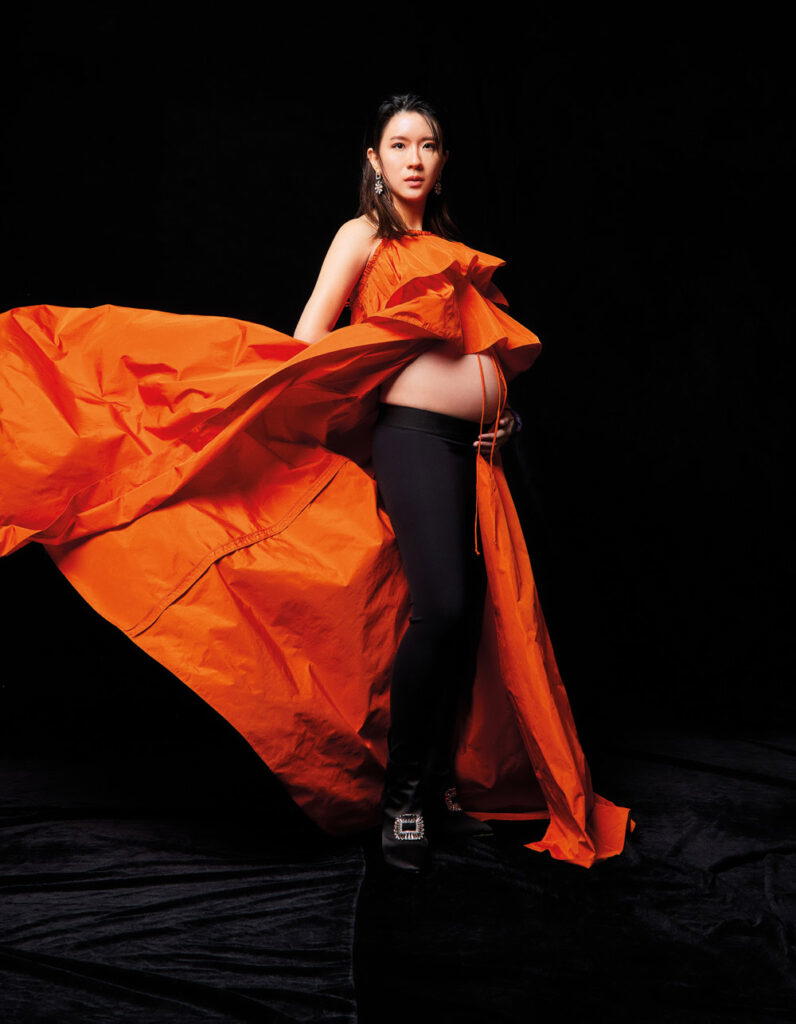
Photo: Mun Kong.
She never left.
Although she was close to her family, it was her familial obligations that kept her at Excelpoint. It was also a chance to channel her creativity in another way. “What can I do to make it different? How do I make an unsexy business sexy? I always asked myself these questions.”
She began in corporate development, so she prioritised the company’s growth strategies. Through networking events, she built connections, garnered media support, and obtained government grants. Four years later, she had figured out how to add that elusive “sexiness” to the business.
During that time, she says, “I was talking to someone from Enterprise Singapore who suggested we could design new technologies and be part of the ecosystem in a stronger way, rather than just focusing on chips. That planted the seed in my mind.”
Phuay took two more years to turn that idea into a reality. “The idea was shot down many times before we even had a proper plan, either by my father or the board because it would require a lot of investment and we wouldn’t see the returns for five years,” she recalls.
Eventually, Excelpoint’s seniors were swayed, thanks to Enterprise Singapore’s enthusiastic support. In 2021, Phuay successfully launched PlanetSpark, an entrepreneurial and investment arm that collaborates with and supports early- and mid-stage AI and IoT startups. “We are also investing in sustainable technologies, like electric vehicles, agritech, and so on.”
Phuay is creative, but she would better be described as a creator. “When I founded Ying The Label, it wasn’t because I had aspirations to be a fashion designer. I’m not technically trained, but I have experience in business so I can operate somewhere in the middle. It’s also worth mentioning here that I launched PlanetSpark although I’m not a technical engineer. I saw startups needing help, and Excelpoint filled the void.”
The fact that she is the boss’ daughter had little to do with the confidence she relies on to follow through on these instincts. Her father has always maintained a strict separation between work and family and refused to be involved in her hiring process for fairness and transparency.
Phuay fought for her own salary and benefits with the HR department, and she recalls how he greeted her on her first day of work with a formal handshake. “Once, I brought home a document for him to sign. He told me to bring it to the office the next day since it was already after-hours.”
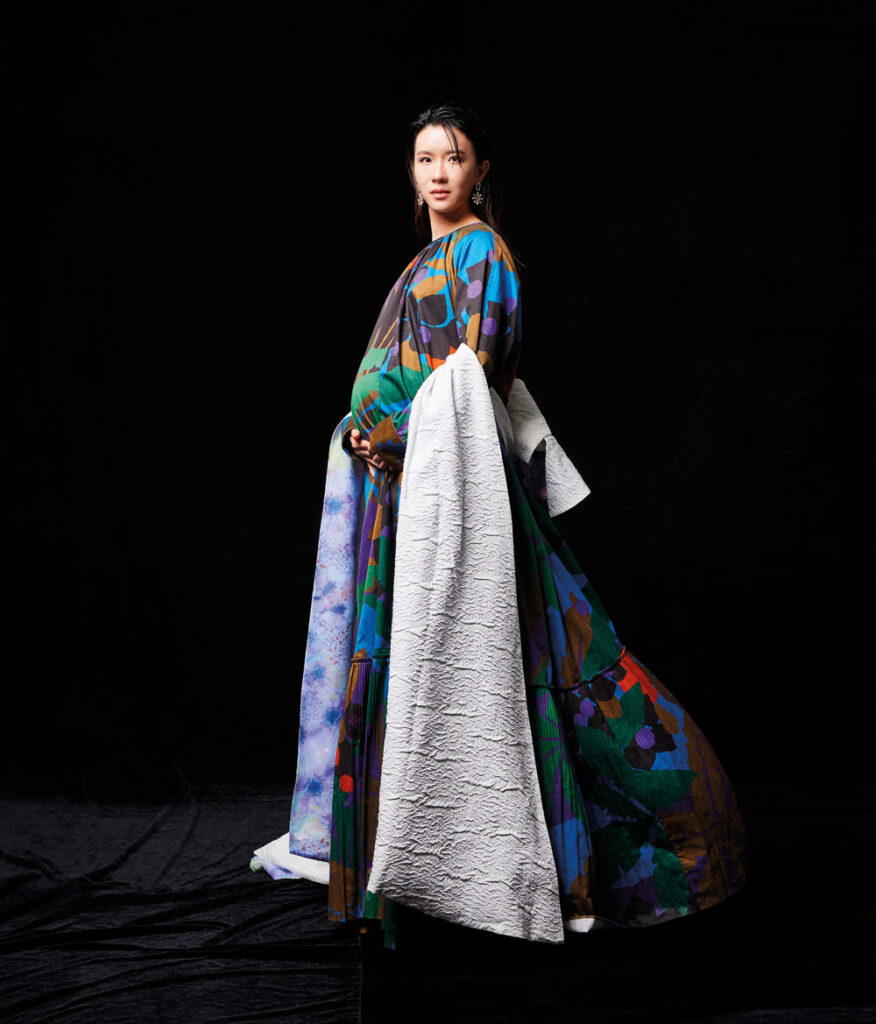
Photo: Mun Kong.
Phuay, however, has never needed any handholding. Her entrepreneurial streak was evident from an early age. “I was a really naughty kid,” she shares. “Once, I wanted a classmate’s pencil, and she wanted one of my handkerchiefs for it.
Since my handkerchief was more expensive, I asked for three pencils to make it a fair trade. My parents asked where all my handkerchiefs went, and I blamed it on the helper.”
Phuay would have likely found something else to focus her seemingly endless energy on if she hadn’t been managing Ying The Label. “I didn’t want to be a shadow of my dad, nor did I want to be like him. My goal is to establish a reputation as someone who can add value. It doesn’t matter whether it’s for Ying or future opportunities, I must have something to offer. Without that, I would simply be a follower.”
It isn’t always easy to follow one’s conviction, though. The National Day 2017 capsule collection by Ying The Label, commissioned by Senior Minister of State Sim Ann for her fellow politicians to wear at the parade, was compared to “ketchup spilled on a napkin” in one comment on social media. “I’m usually quite emotional but I wasn’t affected by that,” she muses. “All I wanted was to improve and do more.” Her optimism paid off. After that project, Ying the Label scored collaborations with clients such as Singapore Airlines, DBS, and Lloyd’s Inn.
Unwinding was not an option before the pandemic. Phuay only learned the importance of slowing down over the last two years. When the world locked down, she discovered the “amazing new world of Netflix” and devoted more time to reflection, napping and honest conversations with loved ones.
She also enjoyed breathing exercises and singing and recently released an original song ‘爱的收藏’ (which roughly translates to Keepsake Love) on Spotify under her Chinese name, 潘丽颖. Despite putting a pause on two more songs after becoming pregnant five months ago, she hasn’t slowed down at work.
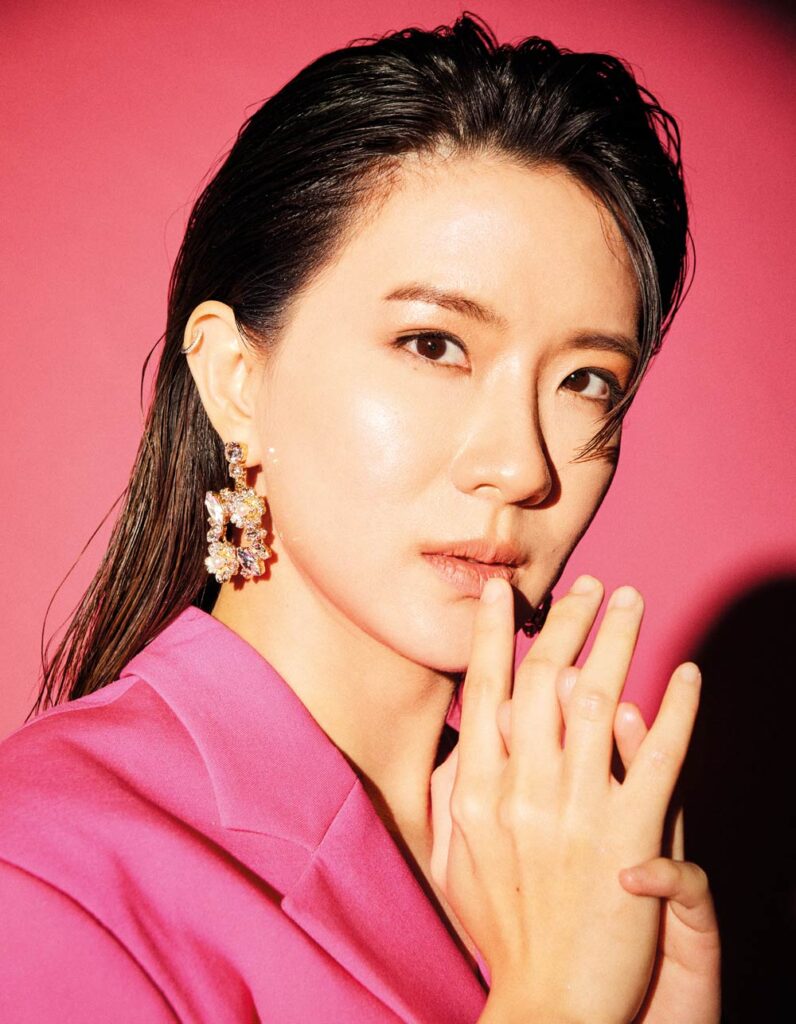
Photo: Mun Kong.
“I used to think money was my motivation, but I realised I’m happiest when I get to impact someone or something. It always surprises people to learn that I still feel like there’s more that I can do. Some might say doing too many things means you’re all over the place, but I like to think of myself as a focused opportunist.” It’s a mindset she encourages at the workplace, too.
“The previous generation believed that once you’ve found your ‘thing’, you should stick to it forever. But I want to be the leader who encourages people to pursue anything and everything they are interested in.”
One of her assistants at PlanetSpark expressed interest in Search Engine Optimisation (SEO), and she told him to go for it. “He ended up taking the initiative when it came to setting up our websites. It’s not his main role, but I saw that passion in him. It’s a leadership style that allows for growth.”
Although generational differences can create contentious attitudes, Phuay respects what those before and after her have contributed. “The last generation was all about survival,” she admits. Her generation has been able to run on passion because of their sacrifices. “I am happy that I can combine my corporate job with my creative side. Neither world has to exist independently of the other.”
In terms of the next generation, it’s all about “making the impossible possible,” she says.
“Who would have thought that things like Bitcoin and being a YouTuber could turn into such big things? I believe the next generation can do anything!”
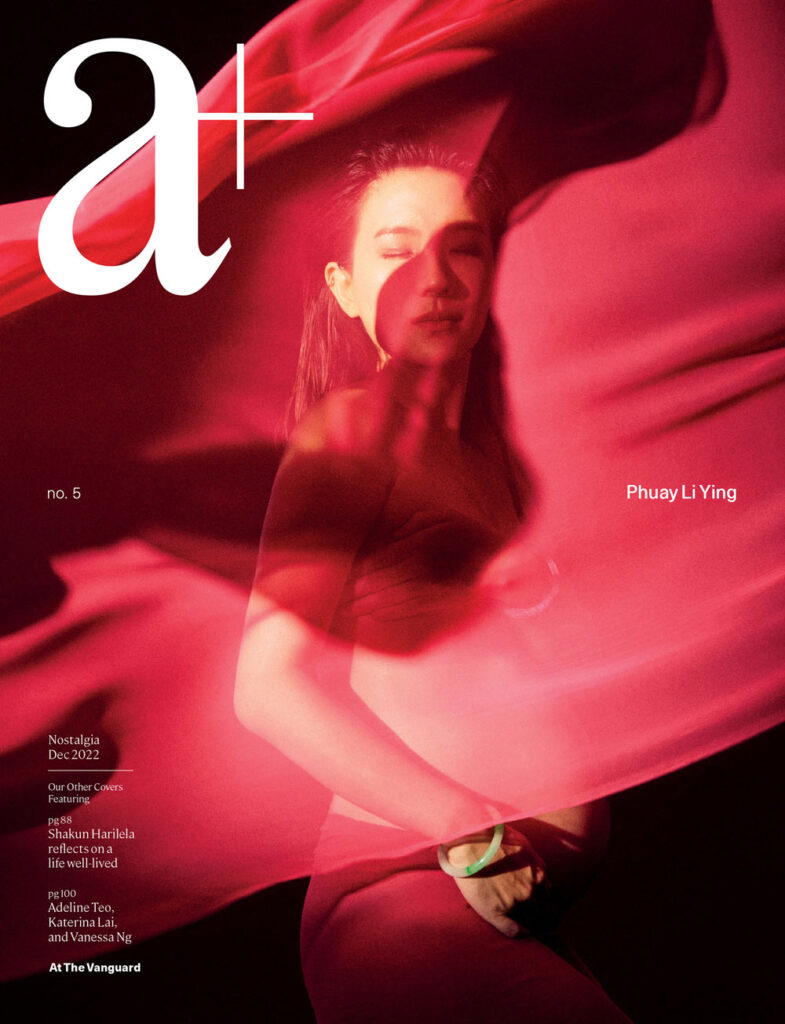
Photography: Mun Kong
Videography: Marcus Lin
Styling: Chia Wei Choong
Hair & Makeup: Marc Teng, using Chanel Beauty & Kevin Murphy
Photography Assistant: Chao Fan
Styling Assistant: Nicholas See