The story of how the panther became Cartier‘s symbolic icon is fascinating. The brand’s official narratives attribute its emergence to the creative juices of artistic director Jeanne Toussaint, who oversaw the maison’s aesthetic style from 1913 to 1970. However, there is more to the story. According to Francesca Cartier Brickell — whose book The Cartiers: The Untold Story of the Family Behind the Jewelry Empire reveals never-before-seen letters by the three Cartier brothers, Pierre, Louis and Jacques — Toussaint was the love of Louis Cartier’s life.
Toussaint and Cartier’s love flourished throughout the First World War, much to the consternation of his family, who believed his association with a demimondaine “risked demeaning the family name they were trying hard to build”. Despite this, their love endured.

Photo: Cartier.
Expressions of their affection for one another include a sketch Louis drew for Toussaint, showing a cat curled up on a bed. Cats, big and small, always found their way into the Belgian-born French jeweller’s universe. In 1917, he gave her a case embellished with the panther’s full form. She was also one of the first Parisian women to wear a leopard fur coat, perhaps in reference to the nickname “PanPan” Comte Pierre de Quinsonas, her lover before Louis, had given her after they saw majestic panthers in Africa.
However, it wasn’t just Toussaint who was fascinated by these creatures. Jacques Cartier was also enamoured of panthers. The only Cartier sibling to have witnessed them in the wild, he and his wife Nelly regaled the family with tales of their “grace and power”. Years later, a copy of Rudyard Kipling’s The Jungle Book, which he read to his son as a bedtime story, turned up. An illustration of Bagheera the panther being chased by a bear appeared next to the annotation “without the bear”.
The sleek and beautiful cat first appeared in Cartier’s menagerie in 1914. Louis commissioned artist George Barbier to illustrate a woman wearing jewellery next to a panther, which was used in its advertising campaigns. A wristwatch featuring spotted patterns on the dial — an abstract representation of its fur — was introduced that year.
Over time, the panther has often inspired the maison. However, it gained unsurpassed public attention when the Duke of Windsor commissioned Cartier to create a gold and black onyx panther clip for his wife, the Duchess of Windsor, in 1948. Toussaint worked closely with designer Pierre Lemarchand, who was also passionate about animals and birds and had observed the big cats in the wild in pre-war India. The powerful women of that time were captivated by his artistic talent for reimagining animals in realistic, bejewelled forms — and that fascination persists to this day.
At the heart of these tales, however, lies a potent emotion. That of enduring love symbolised in the animal’s grace, power and elegance — whether it’s as forbidden love (Louis and Jeanne, and the Duke and Duchess of Windsor), a couple’s love for adventure (Jacques and Nelly), or simply a father’s love for his son (Jacques’ bedtime reading).
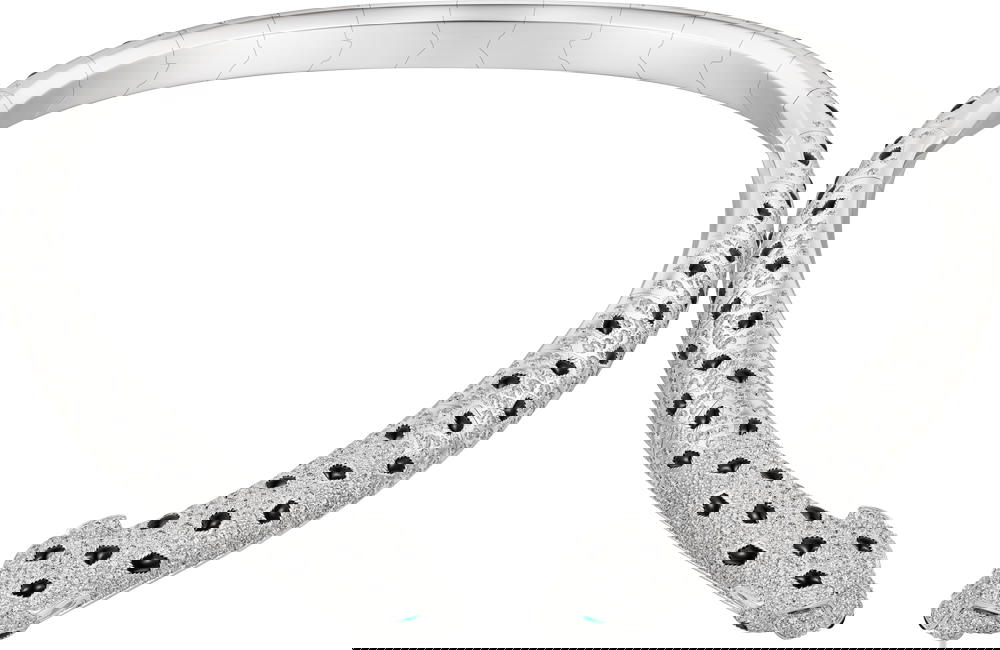
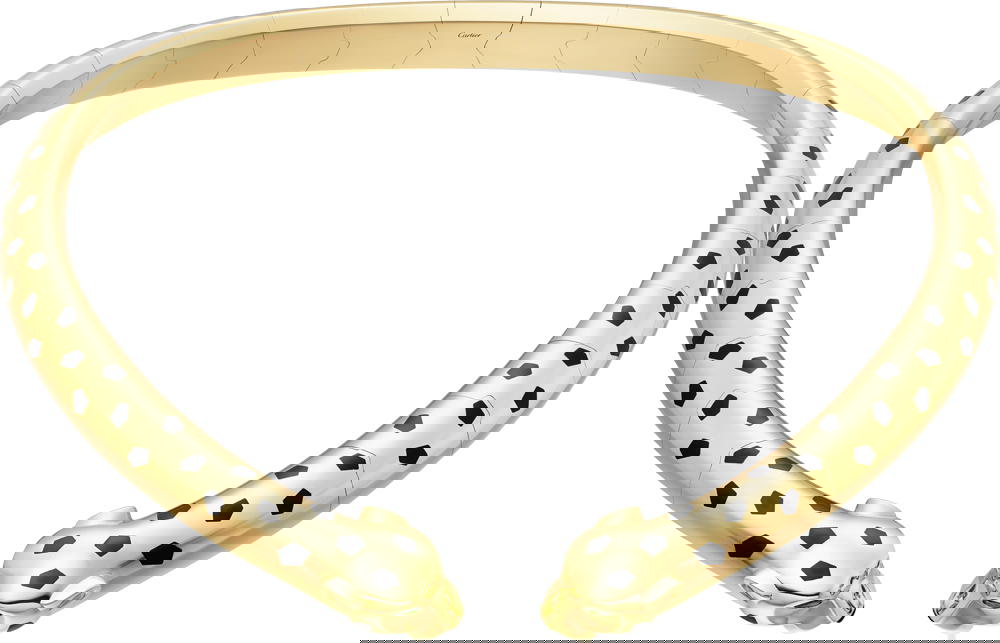
More than a century after the panther entered the Cartier lexicon, it continues to be redefined and reimagined. The craftsmanship and design know-how are evident in every iteration. Similarly to the way wine improves with age, its form has become increasingly lifelike over time.
This year, two panthers rear their heads in the Panthère de Cartier collection. Available as a necklace, bracelet and ring, they come face to face, almost embracing one another and gazing at each other with intense emotion.
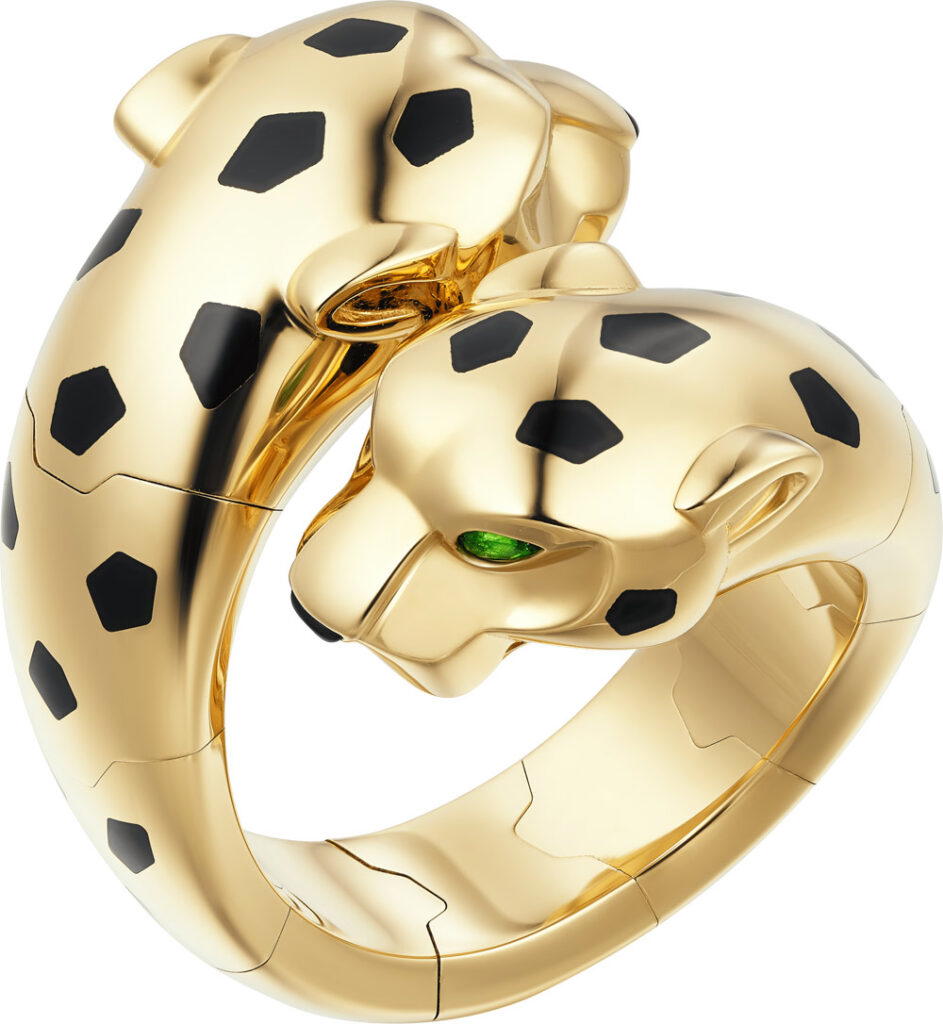
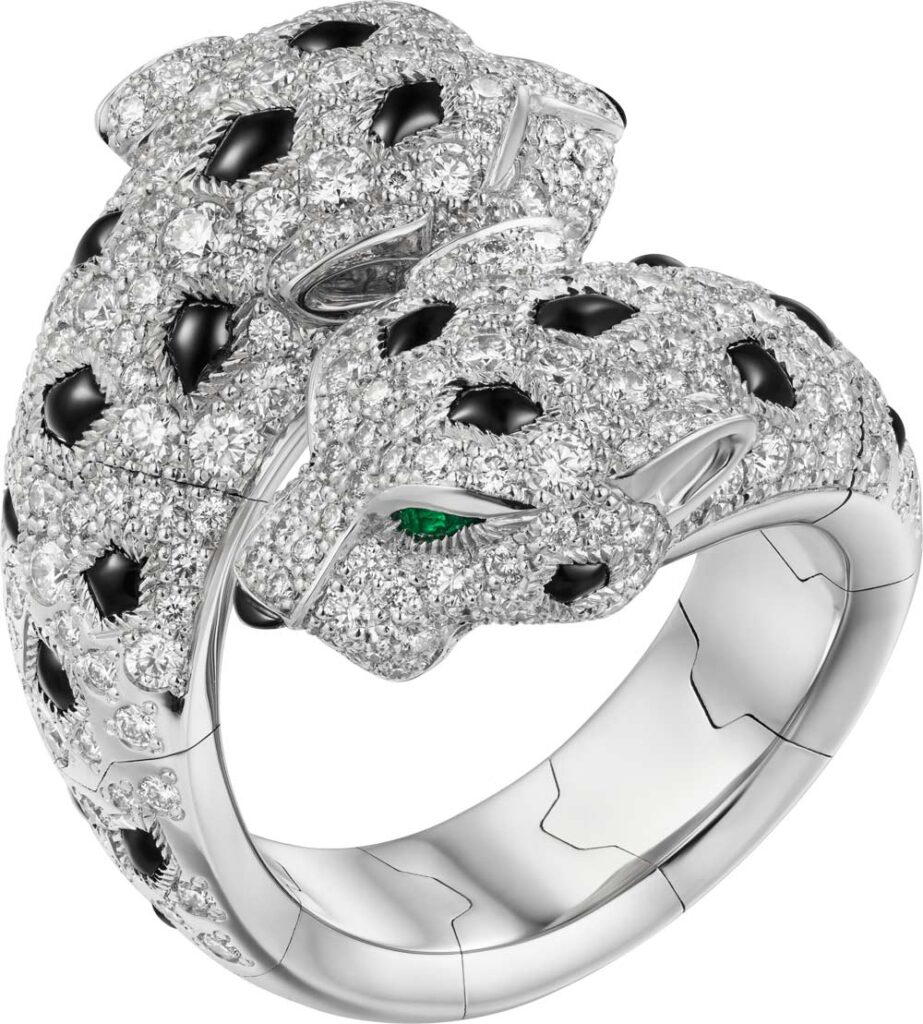
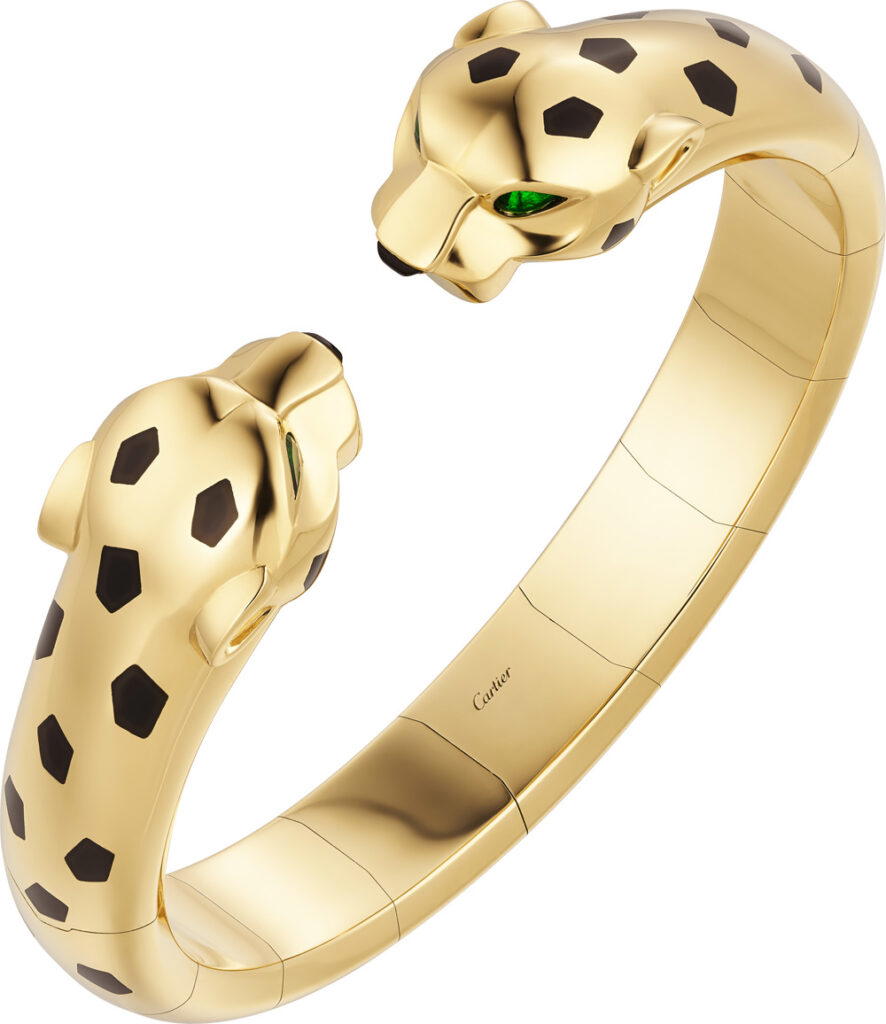
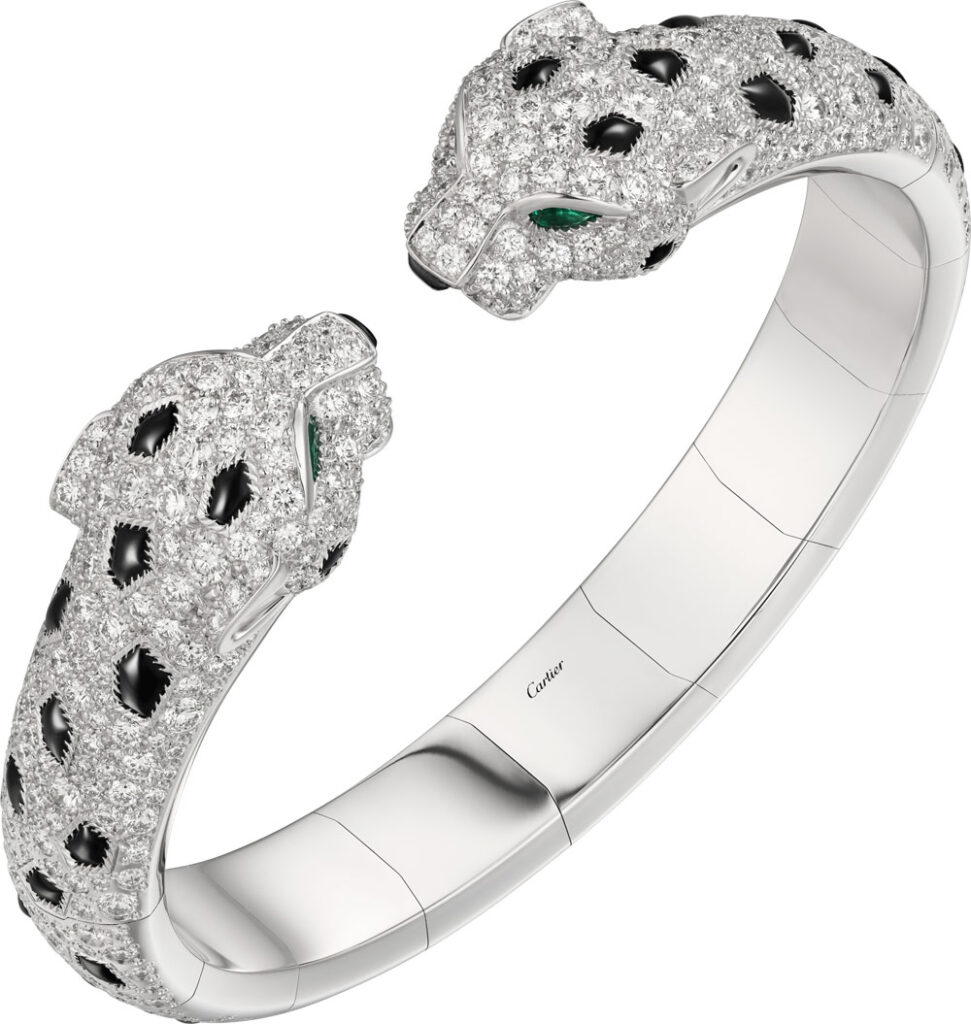
The effect is mesmerising. In addition to capturing the big cats’ emotions, Cartier has also designed a fully articulated collection without hinges. Two springs in their heads allow the bracelet and necklace to wrap around the curves of the wearer’s body, ensuring a perfect fit. To further enhance their realistic appearance, craftsmen use a “fur setting” technique. The onyx — distributed carefully around the body — is cut meticulously to emulate their silky coat.
The Panthère de Cartier comes in either yellow gold with onyx, tsavorite garnets and lacquer, or white gold with emeralds, onyx and diamonds.

Photo: Cartier.
Explore the world of the Panthère de Cartier in an experiential exhibition. The ‘Into The Wild Experience’ is set to run from 16 to 30 October 2022 at the Bayfront Pavillion at Gardens by the Bay. Pre-bookings for 30-minute slots are now open.